
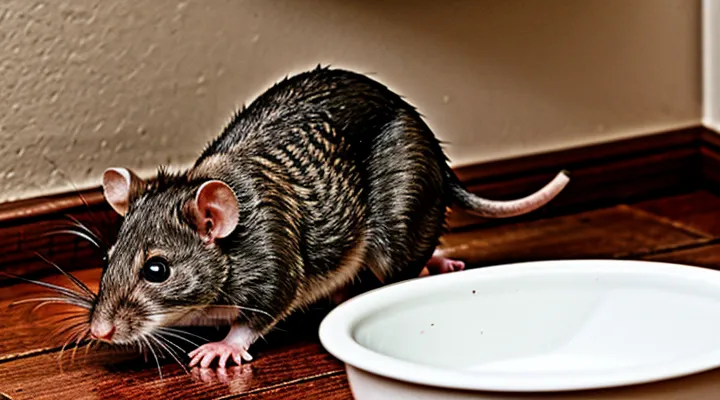
Understanding Rat Behavior
Natural Instincts and Foraging
The Role of Scent and Exploration
Rats rely heavily on olfactory cues to locate and assess food. When a bowl is placed on a surface, the surrounding air carries volatile compounds from the food, the bowl material, and any residual scents in the environment. Detecting these signals, a rat samples the perimeter, often nudging the container to expose fresh scent layers and verify the source’s authenticity.
Exploratory behavior drives the physical manipulation of objects. Rats exhibit a stereotyped pattern: approach, sniff, probe with whiskers, then apply force to the bowl’s edge. Overturning the container reveals hidden portions of the food and eliminates barriers that might conceal odor gradients. This action also allows the animal to evaluate the bowl’s stability, a factor influencing future foraging efficiency.
Key factors influencing bowl overturning:
- Concentration of food‑related volatiles near the bowl rim
- Texture and weight of the container, affecting tactile feedback
- Prior experience with similar objects, shaping the expected outcome of manipulation
By integrating scent detection with active exploration, rats maximize nutrient intake while minimizing the risk of ingesting spoiled or contaminated material. The behavior reflects a coordinated sensory‑motor strategy rather than random disturbance.
Scatter Hoarding Tendencies
Rats that tip over their food containers are often exhibiting scatter‑hoarding behavior. Scatter hoarding involves distributing food items across multiple locations to reduce the risk of loss to competitors, predators, or spoilage. When a bowl is overturned, the animal creates a temporary cache of crumbs and pieces that can be quickly retrieved and stored elsewhere.
Key aspects of scatter hoarding that drive this action include:
- Immediate redistribution – By spilling the contents, the rat can separate individual pieces and transport them to hidden sites.
- Risk mitigation – Dispersed caches lower the probability that a single theft or contamination will eliminate the entire supply.
- Spatial memory reinforcement – The act of moving food reinforces the rat’s internal map of safe storage spots, improving future retrieval efficiency.
- Energetic optimization – Small, portable portions require less effort to carry than a full bowl, allowing the rat to cache food while minimizing exposure to threats.
Consequently, the overturning of a feeding bowl reflects an adaptive strategy that maximizes resource security through the principles of scatter hoarding.
Environmental Factors and Stress
Bowl Design and Material
Rats overturn feeding bowls when the container’s shape or weight fails to provide stability. A shallow, wide rim reduces the lever arm needed to tip the bowl, while a narrow base concentrates the rat’s pressure on a small area, making overturning effortless.
Material properties further affect the outcome. Dense plastics or ceramics resist displacement, whereas lightweight polymers or thin metal sheets shift under minimal force. Surface texture influences grip; smooth finishes allow the rat’s paws to slide, while textured surfaces increase friction and discourage movement.
Practical design guidelines:
- Use a low‑center‑of‑gravity bowl with a broad, flat base.
- Select dense, rigid materials such as high‑density polyethylene, ceramic, or stainless steel.
- Apply a non‑slip coating or textured bottom to enhance friction.
- Avoid excessive height or narrow necks that concentrate force.
Implementing these specifications minimizes the likelihood of a rat flipping its bowl, ensuring consistent access to food.
Location of the Feeding Bowl
The position of a rat’s feeding bowl strongly influences the likelihood of tipping. Bowls placed on smooth, hard surfaces such as glass, polished metal, or glossy plastic provide minimal friction, allowing a rat to push the edge with its forepaws and overturn the container. Conversely, bowls set on textured or uneven substrates—e.g., coarse wood, rubber mats, or ceramic tiles with a rough finish—increase resistance and reduce the chance of displacement.
Key environmental factors that affect bowl stability:
- Height relative to the cage floor: bowls mounted on elevated platforms create a lever arm that amplifies force applied by the animal.
- Proximity to walls or cage bars: bowls positioned against a solid barrier limit lateral movement and give the rat fewer angles for leverage.
- Presence of additional obstacles: placing a low barrier or a shallow trough around the bowl confines the rat’s reach and distributes pressure more evenly.
Optimizing bowl location by selecting high‑friction surfaces, securing the container to a stable base, and limiting open space around it minimizes overturning incidents and promotes consistent access to food.
Perceived Threat or Competition
Rats frequently tip over feeding containers when they encounter a situation that suggests danger or rivalry. The action serves to expose hidden food, eliminate a potential shelter for predators, and assert dominance over a limited resource.
A perceived threat prompts immediate bowl overturn. Visual or olfactory cues indicating a predator, unfamiliar human, or sudden movement trigger an instinctual escape response. By toppling the bowl, the rat reduces the structure’s ability to conceal an attacker and creates an open space that facilitates rapid retreat.
Competition among conspecifics also drives this behavior. When another rat approaches the same food source, the individual may invert the bowl to claim the contents, disrupt the rival’s access, and signal territorial control. The overturned bowl acts as a physical barrier that the competitor must navigate, providing the initiator with a temporal advantage.
Typical triggers include:
- Sudden vibrations or shadows near the feeding area.
- Presence of an unfamiliar rat within a few centimeters.
- Human handling of the bowl or nearby objects.
- Changes in ambient scent that suggest a predator’s proximity.
These factors combine to produce a consistent pattern: the rat overturns the feeding bowl to mitigate risk and maximize its share of the available nourishment.
Communication and Learning
Expressing Dissatisfaction
Rats frequently flip their feeding bowls when the provided food or environment fails to meet their expectations. This action serves as a clear signal of displeasure and prompts caregivers to adjust conditions.
The overturning behavior conveys dissatisfaction through several observable cues:
- Persistent nudging of the bowl before the flip, indicating frustration.
- Rapid, forceful lifting of the bowl’s edge, showing urgency.
- Repeated attempts after the initial overturn, suggesting unresolved issues.
Underlying factors that trigger this response include:
- Inadequate food quality, such as stale or contaminated pellets.
- Incorrect bowl size or shape that hinders easy access.
- Placement of the bowl in a high‑traffic area, causing stress or competition.
- Presence of odors or residues that deter consumption.
Recognizing the flip as a communication tool allows handlers to modify feeding strategies promptly, improving welfare and reducing waste. Adjustments—fresh food, appropriate vessel dimensions, quiet location—eliminate the need for the rat to express dissatisfaction through bowl overturning.
Learned Behavior and Reinforcement
Positive Reinforcement (Accidental)
Rats often flip their feeding bowls when the act produces an immediate, rewarding outcome. If the bowl contains food that spills onto the cage floor, the rat gains easy access to additional morsels. This unplanned reward strengthens the flipping behavior through accidental positive reinforcement.
- The rat experiences a sudden increase in food availability after each overturn.
- The sensory cues (sound of spilling food, scent of exposed crumbs) act as immediate reinforcers.
- Repeated exposure to this contingency consolidates the motor pattern of bowl inversion.
When the environment consistently pairs bowl overturning with a surplus of edible material, the rat’s neural circuitry registers the action as beneficial. Consequently, the animal repeats the behavior with higher frequency, even in the absence of deliberate training.
To reduce the unintended reinforcement, modify the feeding setup so that bowl inversion does not yield extra food. Options include:
- Securing the bowl to the cage wall or base.
- Using a shallow, spill‑proof dish that limits displacement.
- Providing a separate, easily accessible food source that does not depend on bowl stability.
By eliminating the accidental reward, the rat’s propensity to overturn the bowl diminishes, demonstrating how unintended reinforcement can shape seemingly puzzling animal actions.
Attention-Seeking Behavior
Rats often overturn feeding bowls as a deliberate strategy to attract caretaker attention. The behavior emerges when a rat learns that the act of spilling food provokes immediate human response, such as re‑filling the bowl or providing additional treats. This reinforcement strengthens the likelihood of repetition, especially in environments where caretaker interaction is limited.
Key characteristics of attention‑seeking bowl overturning include:
- Rapid, repeated tipping of the bowl after a brief pause.
- Immediate cessation of the action when the caretaker intervenes.
- Increased frequency when the caretaker consistently restores the food supply.
Experimental observations confirm that rats exposed to consistent caregiver reactions exhibit higher rates of bowl overturning than those whose actions receive no response. The pattern persists across multiple sessions, indicating that the behavior is not random but conditioned by social reinforcement.
Effective management involves breaking the reinforcement loop. Strategies include:
- Ignoring the overturning act and allowing the bowl to remain empty.
- Providing food only after a calm, uninterrupted feeding period.
- Using a stable, non‑tippable feeding container to eliminate the opportunity for the behavior.
By eliminating the caregiver’s reactive reinforcement, the rat’s attention‑seeking motive diminishes, leading to more stable feeding habits.