
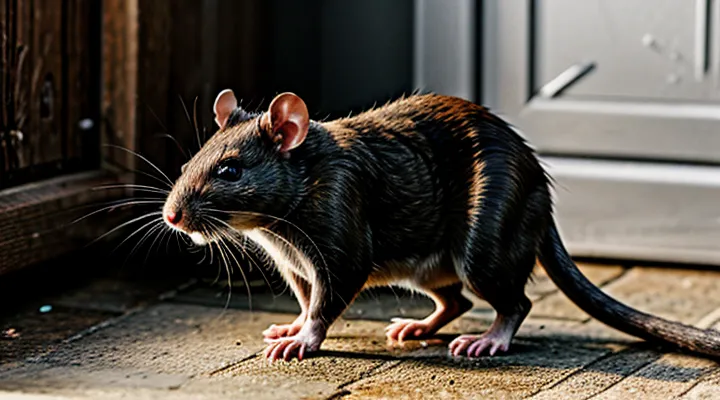
Understanding Rat Vocalizations
The Spectrum of Rat Sounds
Ultrasonic Communication
Rats produce a low‑frequency, coarse sound when they vocalize in air, yet most of their social signaling occurs at ultrasonic frequencies beyond human hearing. The raspy quality of their audible calls results from a specialized laryngeal structure that is simultaneously adapted for high‑frequency emission. When a rat emits ultrasonic pulses, the vocal folds vibrate at rates exceeding 20 kHz, generating narrow‑band tones used for territory marking, mate attraction, and predator avoidance. The same musculature, when forced to operate at slower speeds for audible communication, creates turbulent airflow that manifests as a harsh, breathy timbre.
Key aspects of ultrasonic communication in rats:
- Frequency range: 20 kHz – 100 kHz, varying with age, sex, and emotional state.
- Production mechanism: Rapid oscillation of the vocal folds, aided by a thin, elastic membrane that reduces phonatory resistance at high rates.
- Function: Convey precise information about identity, dominance, and stress without alerting predators that cannot detect ultrasound.
The dual‑mode system explains why rats’ audible calls sound raspy: the larynx is optimized for ultrasonic output, and when operating outside that optimal range, the resulting acoustic waveform is irregular and noisy. Consequently, the hoarse quality observed in human‑perceivable vocalizations directly reflects the anatomical compromise required for efficient ultrasonic signaling.
Auditory Range for Humans
Humans perceive sounds from roughly 20 Hz to 20 kHz, with peak sensitivity between 2 kHz and 5 kHz. Sensitivity declines sharply above 15 kHz, and most adults lose the ability to hear frequencies above 12–14 kHz. Age‑related and exposure‑related hearing loss further narrows the effective range.
Key characteristics of the human auditory spectrum:
- Low‑frequency limit: ~20 Hz (infrasonic perception, felt more than heard)
- Mid‑frequency region: 500 Hz – 4 kHz (speech intelligibility, greatest acuity)
- High‑frequency limit: 20 kHz (young listeners, diminishes with age)
- Critical band width expands with frequency, reducing frequency discrimination at the upper end
Rats emit vocalizations that extend well beyond 20 kHz, often reaching 50 kHz or higher. The human ear cannot detect these ultrasonic components, which contribute to the perceived raspiness when rats produce lower‑frequency, audible sounds. Consequently, the limited human auditory range shapes how we experience rodent vocalizations.
Factors Influencing Rat Voice Quality
Anatomy of the Rat Vocal Apparatus
Larynx Structure
Rats produce a characteristic hoarse sound because their larynx differs markedly from that of larger mammals. The cartilaginous framework is reduced, leaving a narrow, elongated glottis that limits airflow and forces vibration of the vocal folds at lower frequencies. The vocal folds themselves are thin, loosely attached, and contain a high proportion of collagen fibers, which increases pliability and promotes turbulent airflow during phonation.
Key structural elements influencing the raspiness include:
- Short, stiff thyroid cartilage that provides limited support for the airway, causing rapid closure of the glottis.
- Elongated, narrow cricothyroid membrane that stretches the vocal folds, lowering pitch and adding a breathy component.
- Abundant extracellular matrix rich in collagen and elastin, allowing the folds to vibrate irregularly and generate a gritty timbre.
- Reduced epiglottic size that offers minimal protection, permitting direct exposure of the vocal folds to inhaled particles and increasing irritation.
These anatomical adaptations create a constricted passage for air, generate irregular fold vibration, and result in the distinctive raspy vocalizations observed in laboratory and wild rats.
Vocal Cords and Airflow
Rats emit a harsh, low‑frequency sound because the structure of their larynx forces air through a narrow, partially folded glottis. The vocal folds are short (≈ 1 mm), thin, and composed of loosely arranged collagen fibers that lack the dense muscular layering found in larger mammals. This configuration limits the ability to achieve a smooth, elongated vibration, resulting in a coarse oscillation pattern.
Airflow through the rat’s glottis is characterized by elevated subglottal pressure and rapid, turbulent jets. The small glottal aperture creates a high-velocity stream that intermittently contacts the vocal fold edges, producing irregular vibration cycles. The combination of reduced tensile tension and turbulent airflow generates the distinctive rasp.
Key factors producing the raspy quality:
- Short, flexible vocal folds with minimal muscular control.
- Narrow glottal opening that forces high‑speed air.
- Elevated subglottal pressure during vocalization.
- Turbulent airflow causing irregular fold vibration.
These anatomical and aerodynamic elements interact continuously, ensuring that every rat vocalization carries a characteristic rough timbre.
Environmental and Health Considerations
Respiratory Infections and Inflammation
Respiratory infections trigger inflammation of the trachea, larynx, and bronchi, which directly affects the quality of a rat’s vocalizations. Pathogens such as Streptococcus pneumoniae, Mycoplasma pulmonis, and various paramyxoviruses invade the airway epithelium, causing edema, mucus hypersecretion, and irritation of the vocal folds. The resulting narrowing of the airway and altered vibration of the laryngeal tissue produce a hoarse, rasping sound.
Typical clinical signs accompanying a raspy voice include:
- Nasal discharge or sneezing
- Labored breathing and increased respiratory rate
- Coughing or wheezing
- Reduced activity and appetite
These symptoms reflect the underlying inflammatory response: cytokine release leads to vascular permeability, while infiltrating neutrophils and macrophages exacerbate tissue swelling. Persistent inflammation can cause chronic fibrosis of the vocal cords, making the hoarseness permanent unless treated promptly with appropriate antimicrobial or anti‑inflammatory therapy.
Dehydration and Mucosal Dryness
Dehydration reduces the water content of the respiratory mucosa, causing the lining of the larynx and trachea to become thin and less pliable. The loss of fluid increases the viscosity of mucus, which hampers its ability to coat and protect the vocal apparatus.
When the mucosal surface dries, lubrication between the vocal folds diminishes. The resulting friction alters the vibration pattern of the folds, producing a harsh, rasping quality to the emitted sound. Additionally, dry tissue is more susceptible to micro‑abrasions, which further aggravates the acoustic irregularities.
Key physiological changes associated with fluid deficit include:
- Decreased epithelial hydration → stiffer mucosal surface.
- Thickened mucus layer → impaired clearance and increased airway resistance.
- Elevated tissue temperature → heightened sensitivity of sensory nerves, leading to altered vocal fold tension.
Collectively, these factors explain why rats exhibit a coarse voice during periods of inadequate hydration.
Stress and Behavioral Responses
Rats emit a hoarse, rasping sound when confronted with acute stressors. The vocal alteration originates from increased tension in the laryngeal muscles, which narrows the airway and forces air through a restricted glottis. Elevated catecholamine levels during the fight‑or‑flight response stimulate sympathetic nerves that innervate the vocal folds, producing the characteristic rough timbre.
Behavioral observations link the raspy call to specific coping strategies. When a rat perceives a threat, it may:
- Emit short, low‑frequency chirps that signal distress to conspecifics.
- Increase grooming or freezing behavior while maintaining the hoarse vocalization.
- Transition to rapid, high‑pitched squeaks if the stress escalates to panic.
Experimental data show that pharmacological blockade of adrenergic receptors reduces both muscle tension and the raspiness of the call, confirming the role of sympathetic activation. Conversely, exposure to chronic mild stress prolongs the hoarseness, indicating that sustained cortisol elevation can alter laryngeal tissue elasticity.
The raspy voice therefore serves as a reliable proxy for measuring stress intensity in laboratory settings. Researchers can quantify vocal parameters—frequency, amplitude, harmonic content—to infer the animal’s physiological state without invasive procedures. This approach enhances the precision of behavioral assays and supports the development of interventions aimed at mitigating stress‑induced vocal impairments.
Age and Development
Vocal Changes in Young Rats
Young rats exhibit distinct vocal characteristics that evolve rapidly during the first weeks of life. At birth, pups produce high‑frequency squeaks that serve as distress signals and facilitate maternal retrieval. These sounds are generated by a relatively simple laryngeal structure and a thin, compliant vocal fold membrane, which enables efficient vibration at ultrasonic frequencies.
Within the second post‑natal week, the laryngeal cartilage begins to ossify and the vocal folds thicken. This morphological shift reduces the maximal vibratory rate and introduces lower‑frequency components into the call repertoire. Concurrently, the development of the respiratory musculature increases airflow pressure, allowing the production of louder, more sustained vocalizations. The combined effect of structural maturation and enhanced breath control yields a progressively raspier timbre.
Key physiological changes responsible for the emerging raspiness include:
- Cartilage calcification that stiffens the laryngeal framework.
- Hypertrophy of the vocal fold epithelium, increasing mass and damping.
- Strengthening of the diaphragm and intercostal muscles, raising subglottal pressure.
- Refinement of neural control over laryngeal adductors and abductors, improving modulation of glottal closure.
By the third week, vocal output resembles the characteristic hoarse quality observed in adult rodents. This progression links the anatomical development of the larynx with the acoustic signature that researchers associate with the raspy voice of mature rats.
Aging and Vocal Cord Degeneration
Rats develop a hoarse timbre as they grow older because the laryngeal tissues undergo structural changes. Collagen fibers accumulate in the vocal folds, reducing elasticity and limiting the ability of the cords to vibrate symmetrically. Cellular turnover slows, leading to thinning of the epithelium and loss of protective mucus. These alterations increase friction during phonation, producing the characteristic rasp.
Key physiological factors include:
- Reduced elastin content – diminishes stretch capacity, causing stiff vibrations.
- Fibrotic deposition – replaces supple muscle fibers with dense connective tissue.
- Decreased vascular supply – limits nutrient delivery, impairing tissue repair.
- Neuromuscular decline – weakens control of the intrinsic laryngeal muscles, affecting tension regulation.
The combined effect of these age‑related modifications mirrors patterns observed in other mammals, where vocal cord degeneration correlates directly with the emergence of coarse, irregular sounds. In laboratory settings, monitoring the acoustic profile of rats provides a non‑invasive indicator of laryngeal health and overall physiological aging.
Common Misconceptions About Rat Voices
Comparing Rat and Human Voices
Rats emit vocalizations that often sound coarse because their laryngeal architecture limits precise control of airflow and vibration. Human speech, by contrast, relies on a larger, more flexible larynx that permits fine modulation of pitch and timbre.
The primary anatomical distinctions include:
- Laryngeal size – Rat larynx is proportionally small, producing high‑frequency, broadband noise; human larynx supports a broader range of frequencies with clearer harmonic structure.
- Vocal fold composition – Rat vocal folds are thin, loosely attached to cartilage, leading to rapid, irregular oscillations; human vocal folds are thicker, layered, and capable of sustained, regular vibrations.
- Respiratory control – Rats use brief, high‑pressure bursts for ultrasonic calls; humans employ controlled exhalation for continuous speech.
Acoustic analysis shows that rat calls concentrate energy above 20 kHz, contain chaotic spectral components, and lack the periodicity typical of human phonation. Human voices concentrate energy in the 85–255 Hz range for males and 165–255 Hz for females, with well‑defined formants that shape vowel quality.
Functionally, the raspy quality of rat vocalizations enhances detection of distress or territorial signals among conspecifics, while the clarity of human speech facilitates lexical discrimination and social interaction. The contrast underscores how divergent laryngeal designs shape species‑specific communication strategies.
Interpreting Sounds in Pet Rats
Pet rats communicate through a limited but distinct acoustic repertoire. The most common vocalizations include high‑pitched squeaks, low‑frequency chirps, and a coarse, rasping sound that often raises concern among owners. Each sound reflects a specific physiological or emotional state, allowing caregivers to assess health and welfare without invasive measures.
A rasping voice typically originates from partial obstruction of the airway or inflammation of the laryngeal membranes. Respiratory infections, allergic reactions, or dental overgrowth can compress the trachea, forcing air through a narrowed passage and producing the characteristic hoarse tone. Persistent raspiness warrants veterinary examination to rule out bacterial or fungal pathogens, as untreated infections may progress rapidly in small mammals.
When a rat emits short, sharp squeals, the signal usually conveys acute pain or fear. These high‑frequency calls travel efficiently through the cage environment, alerting conspecifics and prompting escape behavior. In contrast, soft, rhythmic chirps accompany grooming, contentment, or social bonding; the low amplitude and regular pattern indicate a relaxed autonomic state.
Interpreting these sounds benefits from systematic observation:
- Record baseline vocal patterns during routine handling.
- Note changes in frequency, duration, and intensity after environmental alterations.
- Correlate auditory cues with visual signs such as nasal discharge, wheezing, or altered posture.
- Consult a veterinarian if raspiness coincides with labored breathing, weight loss, or reduced activity.
Understanding the acoustic language of pet rats enables early detection of respiratory distress, improves enrichment strategies, and strengthens the human‑animal bond through responsive care.
When to Seek Veterinary Advice
Identifying Abnormal Vocalizations
Rats produce a range of ultrasonic and audible calls that vary with age, sex, and social context. Normal vocalizations exhibit consistent frequency bands (typically 20–80 kHz for ultrasonic calls) and smooth harmonic structures. Abnormal vocalizations are characterized by irregular frequency modulation, increased noise components, and reduced amplitude, often perceived as a raspy or hoarse quality.
Identification relies on systematic acoustic monitoring. The process includes:
- Recording baseline calls from healthy individuals under standardized conditions.
- Capturing suspect vocalizations using calibrated microphones and high‑resolution spectrographs.
- Analyzing frequency spectra for deviations such as:
- Broadening of fundamental frequency.
- Emergence of irregular peaks or subharmonics.
- Elevated spectral entropy indicating increased noise.
- Measuring temporal parameters:
- Shortened or elongated call duration.
- Variable inter‑call intervals.
- Comparing amplitude envelopes for diminished peak intensity.
Clinical correlation strengthens interpretation. Respiratory infections, laryngeal inflammation, or neural impairments commonly produce the described acoustic irregularities. Consistent detection of these patterns across multiple recordings signals a pathological change rather than transient variation.
Confirmatory steps involve physical examination of the airway, microbiological testing for pathogens, and, when necessary, imaging to assess structural damage. Integrating acoustic data with physiological assessment enables reliable discrimination between normal communication and voice pathology in rats.
Potential Medical Causes for Raspy Voice
Rats occasionally emit hoarse vocalizations that differ from the typical high‑pitched squeaks. Such a raspy quality often signals underlying pathology rather than normal communication.
Common medical conditions associated with a raspy voice in rats include:
- Upper respiratory infections – bacterial or viral agents inflame the laryngeal mucosa, producing rough sounds.
- Laryngeal edema – fluid accumulation from allergic reactions or irritant exposure narrows the airway, altering vibration patterns.
- Neoplastic growths – benign or malignant tumors in the larynx or surrounding tissues distort the vocal folds.
- Neuromuscular disorders – peripheral nerve damage or central nervous system lesions impair coordination of the vocal apparatus.
- Dental malocclusion – severe overgrowth of incisors can shift jaw position, indirectly affecting laryngeal tension.
- Environmental toxins – chronic inhalation of smoke, ammonia, or chemical fumes irritates the respiratory epithelium.
Veterinarians diagnose the cause through a combination of physical examination, otoscopic inspection, radiographic imaging, and, when necessary, biopsy. Identifying the specific condition guides appropriate treatment, which may involve antimicrobial therapy, anti‑inflammatory medication, surgical removal of masses, or environmental remediation. Early intervention prevents progression to chronic respiratory compromise and preserves normal vocal function.