
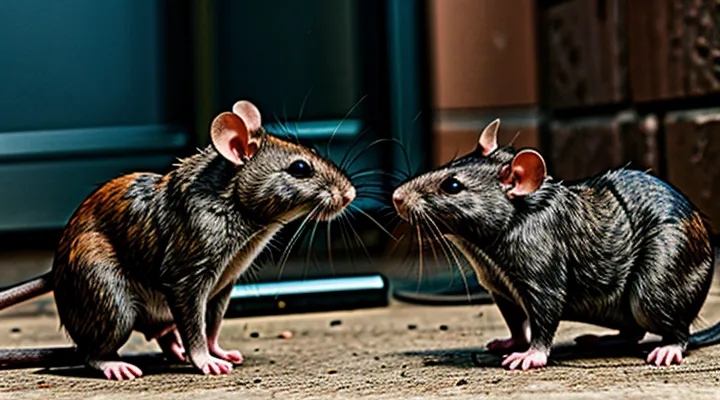
Understanding Rat Behavior
The Social Dynamics of Rats
Hierarchy and Dominance
Rats maintain social order through a structured hierarchy in which dominant individuals secure priority access to resources such as food, nesting sites, and mates. Dominance is established and reinforced by overt aggression, including biting, chasing, and wrestling, which explains the frequent confrontations observed among conspecifics.
The hierarchy develops through several mechanisms:
- Physical contests – Direct fights determine rank; winners gain higher status, losers submit to future challenges.
- Chemical signaling – Dominant rats emit higher concentrations of urinary pheromones that suppress the reproductive and aggressive responses of subordinates.
- Postural cues – Elevated standing, tail lifting, and aggressive vocalizations signal confidence and deter rivals without physical contact.
Once a clear rank order emerges, aggression levels decline because subordinates recognize the established authority and avoid unnecessary risk. Disruption of the hierarchy—through introduction of unfamiliar individuals, removal of a dominant rat, or changes in resource availability—triggers renewed fighting as the group renegotiates its social structure.
Understanding the dominance hierarchy clarifies why rats engage in repeated aggressive encounters: fights serve as the primary mechanism for establishing and maintaining the social framework that governs resource distribution and reproductive success.
Territoriality
Rats defend specific zones that contain food caches, nesting material, and shelter. When an intruder enters a known area, the resident rat perceives a threat to its resources and initiates aggressive behavior to re‑establish control.
Territorial boundaries are marked by scent deposits from urine, glandular secretions, and cheek rubs. These chemical signals convey ownership and deter conspecifics. If a newcomer fails to recognize or respect the scent marks, the resident responds with biting, chasing, and wrestling.
Key factors influencing territorial aggression include:
- Population density: higher densities increase overlap of home ranges, raising encounter frequency.
- Resource abundance: scarce food or nesting sites intensify competition for limited space.
- Social hierarchy: dominant individuals maintain larger territories and enforce them more vigorously.
Repeated clashes reinforce the spatial map each rat uses to navigate its environment. Successful defense secures access to essential resources, while repeated defeat can force relocation or subordination within the group.
Reproductive Instincts
Rats engage in frequent aggression primarily because reproductive drives compel individuals to secure mating opportunities and protect offspring. The drive to reproduce triggers competition for access to females, especially when estrus signals are present. Males intensify scent marking and vocalizations to attract mates, simultaneously signaling dominance to rivals. When two males encounter the same receptive female, each attempts to assert priority, often resulting in violent encounters.
Hormonal fluctuations underpin this behavior. Elevated testosterone levels increase aggression thresholds, while estrogen surges in females heighten receptivity, creating a volatile environment where any overlap of reproductive readiness can spark conflict. Dominance hierarchies form quickly; higher‑ranking rats obtain preferential breeding rights, forcing subordinates to challenge the hierarchy or withdraw.
Key mechanisms linking reproductive instincts to fighting:
- Scent detection of pheromones indicating female estrus.
- Rapid rise in testosterone among males during the breeding season.
- Establishment of territorial boundaries marked by urine and gland secretions.
- Formation of linear dominance structures that allocate mating privileges.
- Immediate retaliation against intruders that threaten reproductive access.
The net effect is a self‑reinforcing cycle: successful combatants gain mating success, their offspring inherit aggressive traits, and the population maintains high levels of competition. Consequently, rat aggression is not random but a direct expression of the species’ reproductive imperatives.
Triggers for Aggression
Resource Competition
Food and Water Scarcity
Rats engage in frequent aggression when essential resources become limited. Scarcity of food forces individuals to defend access points, leading to repeated confrontations.
When available nourishment dwindles, rats expand territories to encompass additional foraging sites. The expansion increases overlap with neighboring ranges, prompting direct clashes. Scent marking intensifies, reinforcing boundaries that are constantly challenged.
Reduced water availability produces similar effects. Dehydration heightens stress hormones, lowering tolerance for intruders near remaining water sources. Competition for these points often escalates into violent encounters.
Key mechanisms linking resource shortage to combat:
- Elevated patrol frequency around scarce food or water locations.
- Increased scent‑marking intensity to signal ownership.
- Heightened cortisol levels, reducing aggression thresholds.
- Lowered social cohesion as individuals prioritize personal survival over group stability.
These factors collectively explain why rats often fight each other under conditions of food and water scarcity.
Shelter Disputes
Rats engage in frequent aggression primarily because individuals compete for limited shelter. When nesting sites are scarce, each rat attempts to claim the most secure location, leading to direct confrontations. The following factors intensify shelter disputes:
- Resource scarcity – dense urban or laboratory environments often provide only a few viable burrows or crevices, forcing multiple rats to vie for the same space.
- Territorial marking – rats deposit urine and glandular secretions at entry points; newcomers that ignore these signals trigger defensive attacks.
- Social hierarchy – dominant individuals enforce control over preferred shelters, expelling subordinates through biting and chasing.
- Population pressure – rapid breeding increases local density, reducing the distance between competing nests and raising encounter rates.
- Environmental disturbance – removal of debris, cleaning operations, or temperature fluctuations displace established shelters, prompting immediate contests for new sites.
The outcome of these disputes determines which rats secure stable microclimates, protection from predators, and access to stored food. Victorious individuals maintain higher survival prospects, while losers experience heightened stress, reduced body condition, and increased susceptibility to disease. Understanding shelter competition clarifies the broader pattern of rat aggression and informs pest‑management strategies that aim to reduce habitat overlap by providing abundant, well‑distributed nesting options.
Mating-Related Conflicts
Male-on-Male Aggression
Male‑on‑male aggression in rats is a primary driver of the frequent combat observed in laboratory and wild populations. This behavior emerges when adult males encounter rivals and is shaped by a combination of hormonal, neural, and environmental factors.
Testosterone and other androgens increase during puberty, sensitizing neural circuits that mediate attack. The medial amygdala, hypothalamic ventromedial nucleus, and periaqueductal gray form a pathway that translates hormonal signals into aggressive actions. Lesions or pharmacological blockade of these regions reduce the incidence of male‑to‑male fighting.
Aggression intensifies under conditions that heighten competition for limited resources:
- Access to a dominant nesting site
- Control of a preferred feeding area
- Opportunity to mate with receptive females
When such resources are scarce, males establish a dominance hierarchy through repeated bouts. The winner gains priority access, while the loser exhibits submissive behaviors that suppress further challenges.
Housing density, lighting cycles, and prior social experience modify aggression levels. Overcrowding raises encounter rates, whereas enriched environments with multiple shelters lower conflict frequency. Early exposure to conspecifics can either dampen or amplify later aggression, depending on the stability of the initial social group.
Overall, male‑on‑male aggression results from the interaction of endocrine activation, brain circuitry, resource competition, and environmental context, accounting for the high prevalence of fighting among rats.
Female Defensive Behavior
Female rats exhibit defensive strategies that shape the pattern of inter‑rat conflicts. When a conspecific approaches a nest or a valuable resource, a female typically adopts a series of rapid, high‑intensity responses: vocalizations, aggressive posturing, and direct attacks using teeth and claws. These actions protect offspring, food stores, and personal space, thereby reducing the likelihood of prolonged, costly fights.
Key components of female defensive behavior include:
- Auditory signals: sharp squeaks that warn intruders and alert nearby group members.
- Postural changes: raised fur, flattened ears, and a lowered body that signal readiness to strike.
- Physical attacks: brief lunges, bites to the neck or tail, and swipes that incapacitate the opponent.
- Territorial marking: increased urine and glandular secretions that delineate occupied zones.
The intensity of these responses correlates with the perceived threat level. Females facing unfamiliar males or rival females intensify aggression, while familiar group members provoke milder displays. Hormonal fluctuations, especially elevated estrogen during estrus, amplify responsiveness, leading to higher aggression peaks. Consequently, female defensive actions contribute significantly to the overall frequency of rat fights by initiating confrontations, escalating encounters, and enforcing social hierarchies.
Stress and Environmental Factors
Overcrowding
Overcrowding creates competition for limited resources such as food, water, and nesting sites. When many individuals occupy a confined area, the scarcity of essential supplies triggers aggressive encounters as each rat attempts to secure its share.
High density forces rats to share territories that would otherwise be defended individually. The constant proximity reduces the effectiveness of natural spatial boundaries, leading to frequent breaches and direct confrontations. Increased physical contact also accelerates the spread of pathogens, which elevates stress hormones and lowers tolerance for conspecifics.
Key mechanisms linking crowding to heightened aggression include:
- Resource scarcity: diminished access to food and water prompts fights over consumption.
- Territorial overlap: compressed space eliminates clear borders, resulting in repeated incursions.
- Elevated stress: dense populations raise corticosterone levels, reducing inhibition of hostile behavior.
- Disease transmission: higher pathogen load intensifies irritability and defensive actions.
The cumulative effect of these factors explains why rats in densely populated environments engage in more frequent battles with one another.
Unfamiliarity and Introductions
Rats that encounter strangers often respond with aggression because they lack established scent profiles and social cues. When a newcomer enters an established group, the resident individuals perceive the unfamiliar odor as a potential threat to resources and hierarchy. The immediate reaction is to test the intruder’s strength and willingness to submit, which frequently escalates into fighting.
Key factors driving conflict during introductions include:
- Absence of familiar pheromonal signatures – rats rely on urine and glandular secretions to recognize allies; unfamiliar scents trigger defensive behavior.
- Territorial defense – established colonies guard nesting sites and food caches; a new rat challenges this protection.
- Hierarchy establishment – dominant individuals assert rank by confronting newcomers, forcing the latter to either submit or be expelled.
- Stress‑induced hypervigilance – the novelty of an encounter raises cortisol levels, reducing tolerance for ambiguous social signals.
Effective mitigation requires gradual exposure to neutralized scent cues, such as shared bedding, and controlled, short‑duration meetings in a neutral arena. These practices allow scent familiarization and reduce the likelihood of violent encounters.
Illness or Injury
Illness or injury often precipitates aggressive encounters among rats. When a rat experiences pain, weakness, or physiological stress, it may display heightened territoriality and reduced tolerance for conspecifics. The affected individual can emit atypical vocalizations and scent cues that signal compromised health, prompting rivals to challenge or expel the weakened competitor to protect resources and minimize disease transmission.
Common health conditions that trigger such behavior include:
- Respiratory infections (e.g., Mycoplasma pulmonis) that cause coughing and reduced stamina.
- Parasitic infestations (e.g., mites, lice) that irritate the skin and alter pheromone profiles.
- Dental malocclusion leading to chronic oral pain and altered feeding patterns.
- Limb injuries or fractures that limit mobility and increase vulnerability.
These factors disrupt normal social hierarchies. Healthy rats may perceive the diseased or injured individual as a threat to group stability, leading to confrontations that manifest as fights. The resulting aggression serves both to remove a potentially contagious member and to reassert dominance structures within the colony.
Forms of Rat Conflict
Physical Confrontations
Biting and Scratching
Biting and scratching constitute the most direct physical tactics rats employ during aggressive encounters. The actions serve to inflict pain, establish dominance, and deter rivals from contested resources.
Territorial disputes, competition for food, and hierarchy challenges increase the likelihood of these behaviors. High population density, limited nesting material, and environmental stressors amplify the frequency of bites and scratches. Hormonal fluctuations, particularly elevated testosterone, further intensify aggressive impulses.
When a rat bites, it uses sharp incisors to penetrate the opponent’s skin, targeting vulnerable areas such as the ears, tail, and abdomen. The puncture delivers immediate nociceptive feedback, often leading to rapid retreat or submission by the target. Repeated bites can cause hemorrhage, tissue necrosis, and secondary infections.
Scratching involves rapid forelimb movements that expose sharp claws. The motion creates superficial lacerations, which may be less lethal than bites but effectively incapacitate an opponent by damaging fur, exposing skin, and creating entry points for pathogens. Scratches also function as visual signals of aggression, marking the aggressor’s intent.
Consequences of frequent biting and scratching include:
- Open wounds susceptible to bacterial colonization
- Reduced body condition due to energy loss from healing
- Disruption of social structure, prompting further conflict
- Increased mortality rates in overcrowded colonies
Understanding the mechanics of these behaviors is essential for managing captive rat populations, designing enrichment strategies, and preventing unnecessary injury.
Chasing and Pinning
Rats engage in a distinct sequence of aggressive actions known as chasing and pinning. During a confrontation, the attacker rapidly pursues the opponent, maintaining high speed and erratic direction changes to prevent escape. This pursuit forces the defender into a corner or confined space where the attacker can execute a decisive grip.
The pinning phase follows the chase. The aggressor seizes the opponent’s neck or torso with its forepaws, applying downward pressure that immobilizes the target. This maneuver restricts movement, delivers a bite threat, and often ends the encounter by establishing dominance.
Key characteristics of chasing and pinning:
- Pursuit speed: 1.5–2 m s⁻¹, sustained for 2–5 seconds.
- Body posture: lowered spine, extended forelimbs, tail lifted for balance.
- Grip location: cervical region or flank, pressure calibrated to subdue without lethal force.
- Outcome: submission, retreat, or escalation to further aggression.
These behaviors constitute the primary method by which rats assert hierarchical status and resolve resource competition.
Non-Physical Displays
Scent Marking
Rats deposit urine, feces, and glandular secretions on objects and surfaces to create a chemical map of their environment. This map conveys individual identity, reproductive status, and recent presence, allowing conspecifics to assess occupancy without direct contact.
When two rats encounter overlapping scent territories, each evaluates the relative intensity and composition of the markings. Higher concentrations indicate a dominant individual who has recently defended the area. The subordinate perceives a threat to its own space and may initiate aggression to contest the claim.
Key functions of scent marking that influence conflict include:
- Territorial delineation: establishes boundaries that reduce ambiguous overlap.
- Dominance signaling: conveys hierarchical rank through marker frequency and composition.
- Resource advertisement: signals access to food, nesting sites, and mates, prompting competition.
If markings are sparse or ambiguous, rats rely on visual and tactile cues during encounters, often escalating to physical fights. Conversely, clear, strong scent borders can suppress overt aggression by communicating established dominance, thereby shaping the pattern of frequent confrontations among rats.
Vocalizations
Rats emit a range of vocal signals during confrontations, and these sounds convey information that influences the outcome of fights. Ultrasonic vocalizations (USVs) above 20 kHz dominate aggressive encounters; males typically produce 22‑kHz calls that are low‑frequency, long‑duration, and associated with threat and submission. In contrast, 50‑kHz USVs appear during play and mating and are rarely observed in hostile contexts. Audible squeaks, usually 4‑10 kHz, accompany intense biting or lunging and serve as immediate alerts to nearby conspecifics.
Key functions of vocalizations in rat aggression include:
- Signaling intent: low‑frequency calls announce a willingness to fight, prompting rivals to assess risk.
- Modulating escalation: prolonged 22‑kHz emissions often precede withdrawal, reducing physical injury.
- Coordinating group response: audible squeaks trigger avoidance or defensive behavior in bystanders, limiting spread of conflict.
Neurophysiological studies show that the amygdala and periaqueductal gray regulate production of aggressive USVs, while the auditory cortex processes incoming calls to guide decision‑making. Pharmacological suppression of these pathways diminishes vocal output and alters fight dynamics, confirming a causal link between sound production and aggression control.
Posturing
Rats employ a visual display known as posturing to assess rivals before physical confrontation. The behavior includes raising the forepaws, flattening the ears, and extending the tail upward, which signals dominance and readiness to fight. These cues allow each animal to gauge the opponent’s strength without immediate injury.
Key components of rat posturing:
- Forepaw elevation – lifts the body, enlarges silhouette.
- Ear flattening – reduces perceived target area, indicates aggression.
- Tail extension – accentuates body length, conveys confidence.
- Body stiffening – contracts muscles, prepares for rapid movement.
The sequence typically begins with a brief pause, followed by a rapid series of these gestures. If both rats display comparable postures, escalation to biting or wrestling is more likely. When one individual exhibits weaker or absent posturing, the opponent often retreats, avoiding costly combat. This ritualized assessment conserves energy and limits injury within densely populated colonies.
Mitigating Rat Fights
Environmental Enrichment
Adequate Space
Rats that are confined to cramped environments exhibit higher levels of aggression, leading to frequent fighting. Limited space forces individuals into constant proximity, disrupts established hierarchies, and prevents avoidance of dominant conspecifics. The resulting stress elevates cortisol, which intensifies hostile encounters.
Insufficient area affects behavior through several mechanisms:
- Overlap of personal zones triggers territorial disputes.
- Competition for scarce nesting sites increases confrontations.
- Inadequate distance hampers retreat, preventing de‑escalation.
Providing sufficient floor space and vertical structures reduces conflict. Recommended standards include:
- Minimum of 0.1 m² per adult rat in group housing.
- Additional 0.02 m² per extra individual to accommodate hierarchy formation.
- Access to multiple levels or platforms to expand usable area.
Implementing these measures lowers aggression frequency and promotes healthier social dynamics.
Hiding Spots
Rats often engage in aggressive encounters when the availability of secure shelters is limited. A shelter provides protection from predators, a place to rest, and a site for nesting; when such locations are scarce, individuals compete fiercely to claim and defend them.
A hiding spot can be any concealed area that offers safety from external threats. Common examples include:
- Narrow crevices in walls or foundations
- Burrows dug into soft soil or compost
- Overhead clutter such as insulation, cardboard, or stored boxes
- Gaps beneath appliances, cabinets, or furniture
When a rat discovers a suitable hiding place, it typically marks the perimeter with scent cues. Other rats entering the same area encounter these markers and may perceive an intrusion, prompting confrontations that manifest as chases, bites, or prolonged fights. The intensity of these disputes rises in proportion to the number of rats sharing a limited number of shelters.
Increasing the number of accessible hiding spots reduces competition. Providing multiple, evenly distributed shelters—such as stacked wooden boxes with entry holes, PVC tubes, or dense vegetation—allows each individual to establish a personal refuge. This spatial separation diminishes the need for territorial defense and consequently lowers the frequency of aggressive interactions.
Toys and Stimulation
Providing rats with appropriate enrichment reduces the frequency of aggressive encounters. Physical objects such as chew tunnels, climbing structures, and puzzle feeders occupy the animals’ time and redirect energy that would otherwise be expressed toward conspecifics. When environmental complexity is low, rats compete for limited space and resources, which escalates to fighting.
Effective enrichment includes:
- Chewable wooden blocks or sisal ropes for dental activity.
- Multi‑level platforms and ladders that create vertical space.
- Interactive toys that dispense food when manipulated, encouraging problem‑solving.
- Nesting material bundles that allow construction of private shelters.
Regular rotation of items prevents habituation and maintains novelty, sustaining interest and lowering tension. Monitoring the group’s behavior after introducing new toys helps identify which objects most effectively diminish aggression, allowing targeted adjustments to the enclosure design.
Proper Socialization
Gradual Introductions
Gradual introductions reduce aggression by allowing rats to become accustomed to each other’s presence before sharing the same enclosure. The process relies on controlled exposure, scent exchange, and incremental time increases, which diminish territorial threats and prevent immediate confrontations.
The protocol typically follows these stages:
- Separate housing: keep individuals in distinct cages with visual barriers for several days.
- Scent swapping: exchange bedding or cotton swabs between cages to familiarize each rat with the other’s odor.
- Adjacent placement: position cages side‑by‑side, removing visual barriers while maintaining separate food and water sources for 24–48 hours.
- Supervised mesh interaction: allow rats to view and smell each other through a perforated divider for another 24 hours, monitoring for signs of stress.
- Short, monitored sessions: introduce the animals in a neutral arena for 5–10 minutes, observing body language and intervening at the first sign of hostility.
- Extended cohabitation: if no aggression occurs, increase shared time daily, eventually merging cages once stable social behavior is evident.
Key considerations include maintaining identical environmental conditions, providing ample hiding spots, and avoiding abrupt removal of barriers. Consistent observation during each phase ensures that escalating tension is detected early, allowing the caretaker to revert to the previous step or adjust exposure duration. Implementing these measured steps minimizes the likelihood of fights and promotes harmonious group dynamics among laboratory or pet rats.
Monitoring Group Dynamics
Monitoring the social structure of laboratory rat colonies provides direct insight into the drivers of frequent aggression. Continuous video surveillance captures onset, duration, and participants of each encounter, allowing precise quantification of conflict frequency and intensity. Automated motion detection algorithms flag rapid locomotor bursts characteristic of fights, reducing observer bias and ensuring consistent data collection across large cohorts.
Key parameters recorded during monitoring include:
- Initiation latency: time from group formation to first aggressive act.
- Dominance hierarchy index: rank ordering based on win‑loss outcomes over repeated bouts.
- Spatial proximity matrices: distances between individuals before, during, and after conflicts.
- Vocalization spectra: ultrasonic emissions correlated with escalated aggression.
Physiological sampling integrated with behavioral observation strengthens interpretation. Blood or saliva collected at predetermined intervals reveals cortisol spikes and testosterone fluctuations associated with heightened fighting. Implantable RFID tags enable real‑time identification of individuals in dense groups, facilitating correlation of physiological states with specific aggressive events.
Experimental designs that manipulate environmental variables while maintaining rigorous monitoring clarify causal relationships. Adjusting cage enrichment, altering group size, or varying resource distribution produces measurable changes in hierarchy stability and conflict rates. Data extracted from these controlled conditions inform predictive models of aggression, guiding refinements in husbandry practices to minimize unnecessary fighting.
Nutritional Considerations
Consistent Food Access
Consistent food availability directly influences the intensity and frequency of aggressive encounters among rats. When a stable supply of nourishment is present, individuals can satisfy their nutritional needs without resorting to confrontation over resources. Conversely, unpredictable or limited access creates competition, prompting territorial disputes and dominance battles.
Key mechanisms linking reliable feeding to reduced fighting:
- Predictable meals diminish the need for individuals to guard or steal food, lowering the incentive for aggressive behavior.
- Stable nutrition supports healthier physiological conditions, decreasing stress‑induced irritability that can trigger attacks.
- Regular feeding schedules allow social hierarchies to stabilize, as dominant rats are less compelled to assert control through repeated bouts.
In environments where food supply fluctuates, rats experience heightened vigilance and frequent skirmishes. The scarcity forces individuals to monitor potential sources, leading to repeated challenges and escalated conflict. Maintaining consistent nourishment therefore serves as a practical method to mitigate the underlying drivers of rat aggression.
Balanced Diet
A rat’s propensity to engage in aggressive encounters intensifies when its nutritional intake deviates from the requirements for optimal physiological function. Adequate provision of macronutrients and micronutrients stabilizes hormone levels, supports neural development, and reduces stress‑induced behaviors that often precipitate fights.
Protein supplies essential amino acids for neurotransmitter synthesis; insufficient protein triggers elevated cortisol and heightened territoriality. Carbohydrates furnish glucose for energy, preventing fatigue‑related irritability. Fats, particularly omega‑3 fatty acids, modulate inflammatory pathways and influence aggression‑related brain regions. Vitamins and minerals—such as vitamin E, B‑complex, magnesium, and zinc—contribute to antioxidant defenses and neurotransmission balance, mitigating impulsive attacks.
Deficiencies or excesses disrupt homeostasis, leading to:
- Increased irritability and hyperactivity
- Altered serotonin and dopamine signaling
- Compromised immune function, provoking sickness behaviors that manifest as aggression
Implementing a diet that meets established rodent nutrition standards reduces the frequency of confrontations. A practical composition includes:
- Protein: 18‑22 % of total calories, sourced from soy, fish, or lean meat
- Carbohydrates: 45‑55 % of total calories, using whole grains and tubers
- Fats: 5‑10 % of total calories, emphasizing omega‑3‑rich oils
- Vitamins: adequate levels of A, D, E, and B‑complex, supplied through fortified feed
- Minerals: calcium, phosphorus, magnesium, and trace elements at recommended ratios
Consistent delivery of these nutrients stabilizes hormonal profiles, supports brain health, and diminishes the triggers that commonly lead rats to fight one another.