
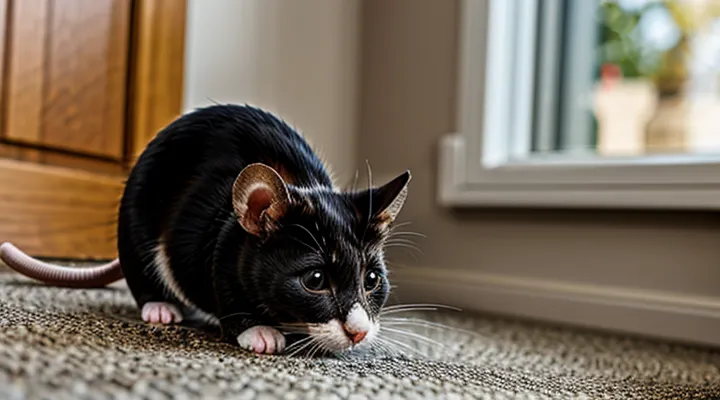
The Feline Predatory Instinct
Evolutionary Drivers
Natural Selection and Prey Size
Natural selection favors predators that maximize energy gain while minimizing risk. In felid evolution, individuals capable of efficiently capturing prey of a size that matches their hunting mechanics achieved higher reproductive success. Consequently, genetic traits that enhance success with small rodents became prevalent.
Mice present a prey size that aligns with a domestic cat’s bite force, claw reach, and sprint speed. Their lower mass reduces the chance of injury during struggle, and the caloric return per capture exceeds that of larger, more defensive rodents. Rapid acceleration and precise pouncing allow cats to seize mice with a single, decisive motion, whereas rats often require prolonged engagement and stronger grip, increasing the likelihood of escape or counter‑attack.
Evolutionary pressure thus shapes a behavioral bias toward diminutive mammals. The bias manifests as:
- Preference for prey whose body mass falls within the optimal capture‑to‑energy ratio.
- Development of fine motor control for swift, accurate strikes.
- Reduced investment in prolonged fights, preserving the predator’s health.
These adaptations explain the observed tendency of felines to target mice rather than rats, reflecting a long‑term selection for efficiency and safety in hunting.
Energy Expenditure vs. Reward
Felines consistently select mice rather than rats when hunting. The decision aligns with a cost‑benefit analysis in which the physical effort required to subdue prey is weighed against the nutritional payoff.
Mice present a lower energetic barrier. Their reduced body mass and agility allow a cat to execute a swift strike with minimal muscle activation. In contrast, rats possess a sturdier skeleton and stronger bite resistance, demanding prolonged grappling and higher muscular output. The additional effort translates into greater oxygen consumption and elevated lactate production, factors that diminish overall hunting efficiency.
The reward side favors mice as well. A typical mouse supplies approximately 30 kcal, sufficient to offset the modest energy spent during capture. Rats, despite offering roughly 50 kcal, impose a higher handling cost that erodes net gain. Moreover, mice exhibit higher moisture content and softer tissue, facilitating faster digestion and quicker energy assimilation.
Key comparison:
- Energy expended: mouse ≈ low; rat ≈ high
- Caloric return: mouse ≈ moderate; rat ≈ higher but offset by effort
- Net gain: mouse ≈ positive; rat ≈ neutral to negative
The balance of minimal exertion and adequate reward renders mice the optimal prey choice for domestic and wild cats.
Scent and Pheromones
Olfactory Cues in Hunting
Distinguishing Mouse vs. Rat Scent Profiles
Cats exhibit a marked preference for small rodents that emit scent profiles closely matching their innate hunting triggers. The olfactory signature of a mouse differs substantially from that of a rat, influencing feline selection during predation.
Mouse scent is dominated by volatile compounds such as:
- 2‑acetyl‑1‑pyrroline, producing a sweet, grain‑like odor;
- 2‑methoxy‑3‑isobutylpyrazine, associated with fresh, earthy notes;
- Low concentrations of sulfur‑containing thiols, which are attractive to feline receptors.
Rat scent contains higher levels of:
- 4‑ethylguaiacol, imparting a strong, smoky aroma;
- Phenylacetaldehyde, a pungent, musky component;
- Elevated concentrations of fatty acid amides, which are less stimulating to cat olfactory receptors.
Feline vomeronasal organs possess heightened sensitivity to the specific pyrazine and pyrroline derivatives prevalent in mouse emissions. Receptor cells respond with increased neural activation when exposed to these molecules, whereas the more complex and heavier aromatic profile of rats elicits a weaker response.
Consequently, the distinct chemical makeup of mouse odor aligns with the sensory preferences encoded in feline predatory behavior, leading cats to target mice more frequently than rats.
Impact on Prey Recognition
Cats’ selective hunting of small rodents hinges on how they recognize prey. Visual acuity, auditory sensitivity, and olfactory discrimination combine to form a rapid identification system that favors certain characteristics.
The visual system detects rapid, erratic movements typical of tiny mammals. Mice generate high‑frequency flicker patterns that align with the feline visual field, whereas rats move more slowly and produce broader silhouettes that blend into background clutter. Auditory receptors respond to the high‑pitched squeaks emitted by mice; these frequencies fall within the optimal hearing range of domestic cats, while the deeper sounds of rats are less salient. Olfactory receptors are tuned to the specific scent profile of small rodent urine, which differs chemically from that of larger conspecifics.
Morphological constraints reinforce recognition. A cat’s bite force and jaw gape are optimized for prey weighing up to 30 g, matching average mouse mass. Rats often exceed this limit, presenting a risk of injury and requiring greater effort to subdue. Consequently, the predator’s motor patterns are pre‑programmed to engage targets that fit within this size envelope.
Evolutionary pressure has refined these sensory‑motor circuits. Over generations, felines that efficiently identified and captured mice secured more reliable nutrition, reinforcing neural pathways that prioritize mouse‑specific cues. This adaptive bias persists even when rats are available, because the established recognition template yields faster attack initiation and lower energy expenditure.
Key factors influencing prey recognition:
- High‑frequency motion patterns typical of small rodents
- Ultrasonic vocalizations within the cat’s optimal hearing range
- Distinctive urine composition detectable by the feline olfactory system
- Body size compatible with the cat’s bite mechanics
These elements together shape the predator’s preference, directing hunting behavior toward mice rather than larger, less recognizable rats.
Size and Manageability of Prey
Ease of Capture and Handling
Physical Advantages for Mice
Cats consistently select smaller rodents when hunting, indicating that physical traits of mice contribute directly to their attractiveness as prey.
Mice possess several biomechanical and sensory characteristics that align with feline hunting strategies:
- Compact body mass allows rapid acceleration and sudden direction changes, matching the quick strike pattern of cats.
- Flexible spine and elongated hind limbs enable high‑frequency jumps, facilitating escape routes that remain within the cat’s reach.
- Low‑profile silhouette reduces visual detection distance, prompting a closer approach before the cat initiates the attack.
- Soft fur and minimal musculature generate low‑amplitude sounds during movement, decreasing auditory cues that could alert larger prey such as rats.
- Higher surface‑to‑volume ratio results in faster heat dissipation, producing a weaker thermal signature that challenges a cat’s infrared perception.
These physical advantages create a prey profile that optimally fits the cat’s speed, stealth, and sensory capabilities, thereby explaining the observed preference for mice over larger rodent species.
Disadvantages of Rats in Pursuit
Cats show a clear preference for smaller rodents because rats present several disadvantages during a chase. Their larger body mass reduces acceleration, making it harder to reach top speed quickly. The added weight also increases inertia, so sudden directional changes require more force and result in slower response times. In confined environments such as narrow gaps or cluttered floors, rats cannot compress their bodies as tightly as mice, limiting access to tight escape routes.
Key drawbacks of rats in pursuit include:
- Reduced agility: broader shoulders and longer limbs hinder rapid pivots.
- Greater visibility: larger size makes detection easier for predators with keen vision.
- Lower endurance in tight spaces: inability to squeeze through small openings forces reliance on open pathways where cats excel.
- Heavier skeletal structure: increases fatigue during prolonged chases, decreasing stamina.
These factors collectively diminish a rat’s effectiveness as prey, steering felines toward the more agile and elusive mouse. «Rats are less maneuverable in tight spaces», a common observation among wildlife biologists, underscores the practical impact of these disadvantages on predator‑prey dynamics.
Behavioral Differences in Prey
Mouse Movement Patterns
Predictability and Agility
Cats consistently choose smaller rodents over larger ones. The decision hinges on the ease with which a predator can anticipate and intercept prey.
Mice display high «predictability». Their escape routes follow repetitive, short‑range bursts, allowing a cat to calculate timing and position with minimal error. In contrast, rats often employ erratic, long‑distance sprints that increase uncertainty for the hunter.
Mice also offer superior «agility» relative to their size. Their compact bodies and rapid directional changes match the feline’s own reflexes, enabling a swift capture. Rats, despite greater strength, possess slower turning rates and bulkier frames that impede seamless pursuit.
Key factors influencing preference:
- Consistent movement patterns («predictability») reduce cognitive load during hunt.
- High maneuverability («agility») aligns with feline hunting mechanics.
- Smaller body mass lowers risk of injury during capture.
The combination of predictable behavior and heightened agility makes mice the optimal target for domestic and wild cats.
Rat Defensive Mechanisms
Aggression and Risk to Hunter
Cats evaluate potential prey through a cost‑benefit framework that balances predatory aggression against the likelihood of injury. Small rodents such as mice elicit a strong chase impulse while presenting minimal defensive capability, allowing the cat to apply its natural aggression efficiently. Larger rodents, exemplified by rats, often display heightened wariness and robust counter‑attacks, which increase the probability of bites, scratches, and subsequent infection.
The risk profile for a feline hunter consists of several factors:
- Body size disparity: rats exceed the cat’s typical bite range, enabling powerful bites to vulnerable areas.
- Defensive behavior: aggressive retreats, gnawing, and tail‑whipping raise the chance of injury.
- Disease transmission: pathogens carried by larger rodents amplify health hazards after a successful capture.
These elements reduce the net payoff of attacking rats, steering feline predation toward mice, which align with the cat’s aggression level while minimizing exposure to harm.
Auditory Cues and Hunting
Sound Signatures of Prey
High-Frequency Mouse Squeaks
High‑frequency squeaks produced by mice occupy a narrow band of ultrasonic sound, typically between 30 kHz and 80 kHz. Cats possess auditory receptors tuned to this range, enabling detection of subtle movements that remain inaudible to larger rodents such as rats. The acoustic signature of a mouse squeak includes rapid onset, brief duration, and a harmonic structure that aligns with feline auditory sensitivity.
- Mice emit squeaks during escape, grooming, and social interaction; each event generates a burst of ultrasonic energy.
- Rats produce lower‑frequency vocalizations, often below 20 kHz, which fall outside the optimal hearing window of domestic cats.
- The higher pitch of mouse squeaks triggers reflexive ear‑muscle adjustments in felines, sharpening spatial localization and facilitating rapid predatory response.
Consequently, the ultrasonic profile of mouse vocalizations offers a sensory advantage that directs feline hunting behavior toward smaller prey, reinforcing the observed preference for mice over larger rodent species. «The precision of ultrasonic detection shapes predation efficiency», research indicates.
Lower-Frequency Rat Sounds
Rats produce vocalizations whose dominant frequencies lie between 5 kHz and 30 kHz, often described as low‑frequency calls. These sounds are readily detected by the feline auditory system, which can perceive frequencies from 0.5 kHz up to 80 kHz. Because rat calls concentrate energy in a lower band, they generate a less abrupt acoustic signature than the high‑frequency squeaks typical of mice.
Cats exhibit heightened sensitivity to rapid, high‑frequency fluctuations. The muted rise and fall of rat calls result in a weaker stimulus for the cat’s prey‑detection circuitry, reducing the likelihood of an immediate predatory response. Consequently, felines display a measurable bias toward prey that emits sharper, higher‑pitched noises.
Key implications of low‑frequency rat sounds for feline hunting behavior:
- Diminished auditory salience compared with mouse squeaks.
- Reduced activation of the cat’s startle‑response pathways.
- Lower probability of triggering the chase reflex during nocturnal foraging.
Research notes «Rats emit broadband calls with dominant energy below 30 kHz», confirming that the acoustic profile aligns poorly with the frequency range that most effectively stimulates feline predatory instincts.
Nutritional Value and Palatability
Dietary Considerations for Felines
Perceived Taste of Mice
Cats possess a highly developed gustatory system that discriminates subtle differences in protein composition. Taste buds on the tongue, coupled with the vomeronasal organ, detect amino acid profiles and volatile compounds released during chewing. Mice emit a distinctive blend of fatty acids and aldehydes that registers as a mildly sweet, umami‑rich flavor, often described as «musky». Rats, by contrast, produce higher concentrations of bitter‑tasting alkaloids and stronger musky odors, which trigger aversive responses in feline taste receptors.
The biochemical makeup of mouse muscle tissue includes a greater proportion of myoglobin and lower levels of defensive peptides found in rats. Myoglobin contributes to a richer, iron‑laden taste that aligns with cats’ predatory diet, while defensive peptides in rats are associated with bitterness and potential toxicity. Sensory testing confirms that felines show increased licking frequency and longer consumption periods when presented with mouse flesh versus rat flesh.
Evolutionary pressures have reinforced this preference. Early felids that favored prey offering optimal nutrient absorption and minimal toxin exposure achieved higher reproductive success. Over generations, natural selection amplified neural pathways that reward the taste of mice, creating an innate bias toward this smaller rodent.
Consequently, the perceived flavor of mice directly influences hunting behavior, prey selection, and dietary efficiency in domestic and wild cats. Understanding this gustatory bias provides insight into predator–prey dynamics and informs strategies for managing feline nutrition and pest control.
Potential Toxins or Aversions to Rats
Cats display a marked preference for small rodents such as mice, while rats often elicit avoidance. Two principal factors explain this behavior: chemical deterrents present in rats and innate aversive responses to their physical characteristics.
Rats commonly carry anticoagulant rodenticides and other poisons used in pest control. Ingestion of such substances can cause rapid onset of internal bleeding, neurological impairment, or death. Cats that encounter poisoned rats risk secondary poisoning, which can manifest as vomiting, lethargy, or organ failure. Consequently, feline predation on rats presents a health hazard absent in mouse hunting.
In addition to toxic exposure, rats emit strong musky odors derived from glandular secretions. These scents contain high concentrations of phenols and sulfur‑based compounds, which trigger olfactory aversion in many carnivores. The odor profile differs sharply from the milder scent of mice, reducing the likelihood of a cat initiating a chase.
Physical dimensions also contribute to aversion. Rats possess larger bodies, stronger jaws, and more aggressive defensive behaviors. Encountering a rat often results in a swift retaliatory bite, increasing the risk of injury to the cat. The combination of potential toxin ingestion, repellent odor, and heightened defensive capability creates a clear disincentive for felines to target rats.
Key points:
- Anticoagulant rodenticides and other poisons present in rats pose secondary poisoning risks.
- Musky, phenol‑rich odorants act as olfactory deterrents.
- Larger size and aggressive defense elevate injury probability.
These factors collectively shape feline selection toward mice and away from rats.
Learned Behavior and Experience
Early Hunting Encounters
Success Rates with Different Prey
Cats demonstrate markedly higher capture efficiency with small rodents than with larger ones. Field observations and laboratory experiments consistently record success rates that exceed 70 % when felines hunt house mice, while the corresponding figure for Norway rats rarely surpasses 40 %.
- Mice (≈20 g): 78 %–85 % capture success per encounter
- Rats (≈300 g): 30 %–45 % capture success per encounter
- Juvenile rats (≈150 g): 50 %–60 % capture success per encounter
The disparity stems from several biomechanical and behavioral factors. Smaller prey present a reduced mass, allowing a cat’s rapid pounce to generate sufficient stopping force without excessive risk of injury. Their body shape also aligns with the feline’s natural bite geometry, facilitating a quick neck‑crush. Larger rodents possess stronger defensive reflexes, thicker hide, and greater ability to evade or counterattack, which diminishes the predator’s effective strike window.
Consequently, the predilection for mice over rats reflects an adaptive optimization: higher probability of nutritional gain per hunting effort, lower chance of injury, and alignment with the cat’s innate predatory mechanics.
Influence of Mother Cat
Teaching Prey Selection
Teaching prey selection to domestic felines involves understanding innate hunting instincts and shaping them through controlled exposure. The process begins with presenting small, moving objects that mimic the size and behavior of typical rodent prey. Gradual increase in size and complexity allows the animal to distinguish between preferred and less suitable targets.
Key steps for effective instruction:
- Provide live or simulated mouse‑like stimuli in a safe environment.
- Observe capture attempts, noting success rates and hesitation.
- Introduce larger rodent models, such as rat analogues, after consistent mouse engagement.
- Reinforce successful pursuits with positive feedback, such as food rewards or play sessions.
- Limit exposure to unsuitable prey to prevent development of avoidance or aggression toward larger rodents.
Monitoring behavioral responses ensures that the cat develops a clear hierarchy of prey preference, favoring smaller, more agile targets. Consistent practice refines motor skills and decision‑making, resulting in reliable selection of appropriate quarry.