
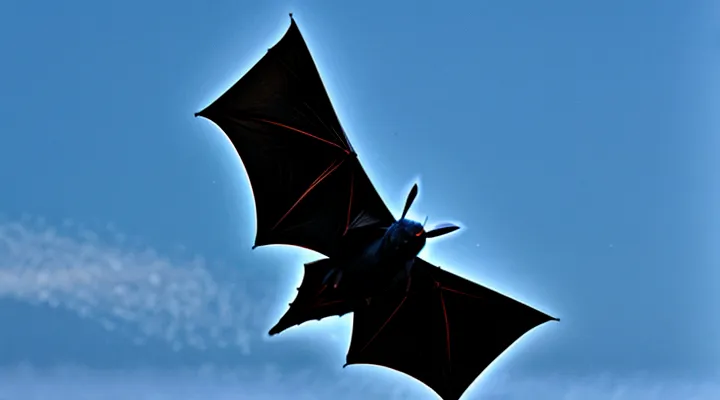
The Enigmatic Nature of Bats
Evolutionary History and Diversity
Bats belong to the order Chiroptera, which diverged from other mammals more than 80 million years ago during the Late Cretaceous. Early chiropterans developed powered flight, a unique adaptation among mammals, enabling exploitation of aerial niches and the colonization of diverse habitats worldwide. This ancient split produced two major suborders—Yinpterochiroptera (including fruit‑eating and nectar‑feeding species) and Yangochiroptera (primarily insectivorous forms)—each containing multiple families that exhibit distinct morphological and ecological traits.
The evolutionary radiation of bats generated a broad spectrum of body sizes, wing morphologies, and sensory specializations. Notable variations include:
- Size range: from the 29‑mm wingspan of the bumblebee bat (Craseonycteris thonglongyai) to the 1.7‑m wingspan of the giant golden‑crowned flying fox (Acerodon jubatus).
- Feeding strategies: frugivory, nectarivory, sanguivory, insectivory, and carnivory, each linked to specific dentition and digestive adaptations.
- Echolocation systems: high‑frequency narrowband calls in insectivores, low‑frequency broadband calls in fruit bats, and reduced or absent echolocation in some species that rely on vision and olfaction.
These evolutionary innovations contributed to bats’ ecological success but also to human apprehension. The ability to navigate in darkness, emit ultrasonic sounds, and roost in concealed locations creates sensory experiences that differ markedly from those of more familiar mammals. Such differences trigger innate threat detection mechanisms, especially when unfamiliar nocturnal activity intersects with cultural narratives that emphasize disease transmission and predation. Consequently, the deep evolutionary history and extensive diversity of bats shape both their biological roles and the psychological fear they evoke.
Unique Biological Traits
Nocturnal Habits and Echolocation
Bats are active after sunset, exploiting the darkness that limits human visual perception. Their preference for crepuscular and nocturnal periods forces observers to rely on indirect cues—primarily sound and movement—when assessing their presence. This sensory gap amplifies uncertainty, a core driver of fear. The lack of ambient light reduces the ability to anticipate trajectories, making sudden aerial maneuvers appear unpredictable and threatening.
Echolocation, the acoustic navigation system bats employ, generates high‑frequency pulses that humans cannot hear. The invisible nature of these emissions contributes to the perception that bats operate beyond human comprehension. When a bat emits a rapid series of clicks, the surrounding air vibrates subtly, producing a faint, eerie ambience that many associate with menace. The physiological mechanism—emission of ultrasonic waves reflected off objects to construct a spatial map—demonstrates a level of precision that contrasts sharply with the human reliance on visual cues, reinforcing the notion of an alien, hidden capability.
Psychologically, several mechanisms link nocturnal activity and echolocation to fear:
- Darkness reduces situational awareness, triggering a primal alertness to potential threats.
- Unheard ultrasonic emissions create a sense of invisible presence, heightening anxiety.
- Sudden, erratic flight patterns, amplified by limited visibility, are interpreted as aggressive or erratic behavior.
- Cultural narratives often portray night‑active mammals as omens, embedding fear in collective memory.
Biologically, bats’ adaptations reinforce the emotional response:
- Wing morphology enables swift, agile flight, allowing rapid changes in direction that are difficult to track.
- Echolocation pulses can reach up to 200 kHz, far beyond human hearing, producing a covert sensory field.
- Roosting habits in caves and attics place bats in confined, poorly lit spaces, where human encounters are brief and often startling.
Together, nocturnal habits and ultrasonic navigation establish a context in which human observers experience heightened apprehension. The combination of limited visual information, invisible acoustic signals, and rapid, unpredictable movement creates a potent psychological stimulus that readily translates into fear.
Wing Structure and Flight Capabilities
Bat wings consist of dramatically elongated fore‑digit bones, primarily the second through fifth digits, that support a pliable skin membrane called the patagium. The membrane attaches to the body along the torso, the hind‑limb, and the tail, creating a single aerodynamic surface. Thin, vascularized tissue supplies the membrane with nutrients and flexibility, while a network of small muscles and tendons adjusts tension for rapid shape changes during flight.
The wing’s aerodynamic profile features a high aspect ratio and low wing loading, allowing low‑speed flight and exceptional maneuverability. Lift is generated by the large surface area, while thrust results from the powerful downstroke of the fore‑limb musculature. Variable camber, achieved through localized muscle contraction, enables bats to execute tight turns, hover briefly, and fly through dense vegetation. Flight speed typically ranges from 5 to 20 m s⁻¹, with rapid accelerations possible during predator evasion.
These structural and functional traits produce flight behaviors that contribute to human fear:
- Irregular, erratic flight paths that defy expectations of linear bird movement.
- Near‑silent wingbeats generated by the thin membrane, reducing auditory cues that normally warn of approaching animals.
- Ability to navigate in complete darkness using echolocation, allowing sudden appearances in low‑light environments.
Combined, the unique wing architecture and flight capabilities generate visual and auditory ambiguities that trigger instinctive threat responses in people.
Psychological Roots of Bat Fear
Cultural and Historical Narratives
Folklore and Mythology
Bats appear repeatedly in global folklore as omens of danger, death, or malevolence. Ancient Egyptian mythology associated the bat with the goddess Serqet, protector of the dead, linking the animal to the underworld and the fear of mortality. In Greek legend, the bat symbolized darkness and was linked to the god Hecate, reinforcing the perception of nocturnal creatures as carriers of hidden threats.
Across Asian cultures, bats embody both auspicious and ominous meanings. Chinese tradition sometimes regards the bat as a symbol of good fortune, yet literary works frequently portray it as a harbinger of illness, reflecting a duality that fuels ambivalent attitudes. Japanese folklore includes stories of bats transforming into yokai that deceive travelers, reinforcing the association between flightlessness in daylight and supernatural peril.
European medieval tales often depict bats as familiars of witches, reinforcing the connection between nocturnal activity and sorcery. The imagery of bats swarming over villages during plagues amplified collective dread, cementing the animal’s role in narratives of contagion and moral corruption.
Key mythic motifs that sustain bat‑related fear:
- Darkness as a veil for hidden danger
- Association with death or the afterlife
- Connection to witchcraft or demonic forces
- Transformation into malevolent spirits
These recurring themes illustrate how cultural narratives embed bats within a framework of fear, complementing psychological and biological explanations for the animal’s unsettling reputation.
Media Portrayals and Stereotypes
Media representations shape public perception of bats by repeatedly linking them to danger, disease, and malevolence. Horror films depict bats as carriers of supernatural threats, reinforcing an association between nocturnal flight and terror. News outlets often spotlight isolated incidents of rabies transmission, presenting them as typical bat behavior rather than exceptional cases. Animated cartoons exaggerate bat features—sharp teeth, screeching cries—to elicit shock, establishing a visual shorthand for fear.
These portrayals generate stereotypes that persist across cultures:
- Bats as symbols of death or evil.
- Bats portrayed as aggressive, blood‑thirsty predators.
- Bats presented as vectors of widespread disease.
- Bats characterized as unsettling due to their nocturnal habits and echolocation sounds.
The repeated exposure to such images triggers innate aversion mechanisms, amplifying anxiety through learned associations. Cognitive research shows that repeated negative framing increases threat perception, while biological studies confirm that heightened stress responses activate physiological pathways linked to fear. Consequently, media-driven stereotypes reinforce both psychological dread and exaggerated biological risk assessments, perpetuating a cycle of misperception that sustains public fear of bats.
Innate Human Aversions
Fear of the Unknown
Bats trigger fear largely because they embody the unknown. Their nocturnal activity, silent flight, and association with dark spaces create sensory gaps that the brain interprets as potential threats. When information about a creature is scarce, the mind defaults to caution, activating neural circuits that prioritize survival over curiosity.
Psychologically, the uncertainty surrounding bat behavior engages the amygdala, the region responsible for rapid threat assessment. Lack of visual cues and limited cultural exposure increase the perceived unpredictability, reinforcing a learned association between bats and danger. This response intensifies in environments where bats are rarely observed, amplifying the fear of unseen movement.
Biologically, several mechanisms amplify the reaction:
- Sensory ambiguity: Low‑light conditions reduce visual detail, prompting reliance on auditory and tactile cues that are less precise.
- Evolutionary bias: Ancestors who avoided unfamiliar nocturnal animals enjoyed higher survival rates, embedding a predisposition to mistrust.
- Physiological arousal: Exposure to bat‑related stimuli raises heart rate and cortisol levels, reinforcing the emotional memory of fear.
The combination of cognitive uncertainty and innate defensive pathways explains why bats, as representatives of the unknown, consistently generate apprehension.
Association with Darkness and Night
Bats are active at dusk and throughout the night, a temporal niche that aligns them with low‑light environments. Human ancestors evolved under conditions where darkness limited visual detection of predators, fostering an innate wariness of organisms that emerge when illumination wanes. This evolutionary bias predisposes people to associate nocturnal mammals with hidden danger.
Biologically, bats possess sensory systems optimized for darkness. Echolocation operates independently of visual cues, allowing flight in total obscurity. To observers, the combination of silent flight, rapid maneuvering, and absence of visible movement amplifies the perception of an unseen threat. The lack of a clear visual profile in dim settings reduces the ability to assess intent, heightening apprehension.
Psychologically, several mechanisms reinforce the connection between bats and fear:
- Darkness triggers heightened vigilance in the brain’s threat‑detection circuitry.
- The unfamiliar acoustic signatures of echolocation create a sense of alienation.
- Cultural narratives frequently portray nocturnal winged creatures as ominous, reinforcing learned associations.
- Ambiguity about disease transmission, amplified in low‑light contexts, fuels anxiety.
Together, the temporal alignment with night, sensory invisibility, and deep‑rooted cognitive responses create a robust link between bats and the emotion of fear.
Perception of Threat and Disease Vectors
Bats elicit fear largely because human perception of threat is calibrated to cues associated with disease transmission. Visual and auditory signals—such as nocturnal activity, erratic flight, and high‑frequency echolocation—activate innate alarm mechanisms that have evolved to protect against pathogens carried by animals that live in close proximity to humans. This automatic response is reinforced by cultural narratives that link bats to epidemics, creating a feedback loop between individual cognition and collective belief.
Two biological factors intensify the fear response:
- Pathogen reservoir status – Bats host viruses (e.g., rabies, coronaviruses, filoviruses) that can spill over to humans. Their immune systems tolerate high viral loads without illness, increasing the probability that contact results in infection.
- Ecological overlap – Roosting sites in urban structures, agricultural settings, and caves bring bats into contact with people and livestock, raising the perceived risk of exposure.
Psychological mechanisms further shape the reaction:
- Evolutionary hazard detection – Early humans who avoided unfamiliar, nocturnal mammals experienced higher survival rates, embedding an aversion to such species in the human brain.
- Social learning – Stories, media reports, and educational materials that emphasize disease outbreaks associated with bats transmit fear across generations, strengthening the association between bats and danger.
Consequently, the convergence of innate threat detection, empirical disease risk, and cultural reinforcement explains why bats are routinely perceived as threatening vectors of illness.
Biological Factors Contributing to Fear
Disease Transmission Concerns
Rabies and Other Zoonotic Diseases
Bats harbor several zoonotic pathogens that directly influence human fear responses. Rabies, a neurotropic virus transmitted through saliva, remains the most lethal disease linked to bat bites. The virus replicates in peripheral nerves, travels to the central nervous system, and causes encephalitis, leading to a mortality rate approaching 100 % without post‑exposure vaccination. Because rabies symptoms include agitation, hydrophobia, and aggressive behavior, the association of bats with such a deadly outcome intensifies public anxiety.
Other bat‑associated zoonoses contribute to the perception of danger:
- Hendra virus – a paramyxovirus causing severe respiratory and neurological illness in humans, with a case‑fatality rate above 50 %.
- Nipah virus – a paramyxovirus responsible for encephalitis and respiratory failure, mortality ranging from 40 % to 75 % in outbreaks.
- Marburg virus – a filovirus producing hemorrhagic fever, mortality between 23 % and 90 % depending on the outbreak.
- SARS‑related coronaviruses – bat reservoirs for viruses that can spill over to humans, leading to severe acute respiratory syndromes.
These pathogens share common biological features: they reside in bat saliva, urine, feces, or tissues; they can survive in the environment for extended periods; and they often require close contact or aerosol exposure for transmission. The rarity of direct human‑bat encounters reduces actual infection risk, yet the potential severity of disease amplifies fear.
Psychological studies demonstrate that perceived threat magnitude correlates with disease severity. When a species is linked to high‑mortality illnesses, risk appraisal escalates, triggering avoidance behavior and negative emotional reactions. The vivid media coverage of rabies deaths and emerging viral outbreaks reinforces this association, creating a feedback loop that sustains public apprehension toward bats.
Mitigation strategies focus on education, vaccination, and habitat management. Pre‑exposure rabies immunization for high‑risk groups, post‑exposure prophylaxis for bite victims, and monitoring of bat colonies for viral shedding reduce transmission likelihood. Understanding the biological reality of bat‑borne diseases clarifies the roots of fear and informs evidence‑based public health policies.
Public Health Implications and Misconceptions
Bats intersect public health policy through their role as reservoirs for zoonotic pathogens, their impact on ecosystem services, and the societal reactions they provoke. Viral agents such as rabies, Nipah, and coronaviruses have been linked to bat populations, prompting vaccination campaigns, surveillance programs, and habitat management strategies. Rabies control relies on post‑exposure prophylaxis and targeted oral vaccine baits for bat colonies, reducing human mortality in regions with high exposure risk. Nipah outbreaks in South and Southeast Asia have led to restrictions on raw date‑palm sap collection, a practice that creates direct contact with fruit‑bats. Coronavirus research informs pandemic preparedness by mapping bat species diversity and monitoring viral spillover hotspots.
Misconceptions amplify fear and hinder evidence‑based interventions. Common errors include:
- Assuming all bat species transmit rabies; only a minority carry the virus.
- Believing that bat bites are the primary transmission route for most bat‑associated diseases; aerosolized secretions and contaminated food are often more relevant.
- Equating bat colonies with unsanitary conditions; many roosts are clean and support insect control, reducing agricultural pesticide use.
- Overestimating the risk of direct human infection from casual encounters; most pathogens require prolonged exposure or specific behaviors.
Addressing these misunderstandings requires clear communication from health authorities, integration of ecological data into risk assessments, and community education that distinguishes myth from measurable threat. Effective policies balance disease prevention with conservation, recognizing that bat population declines can increase insect‑borne diseases and disrupt pollination networks, ultimately affecting human health.
Physical Characteristics and Perceptions
Unconventional Appearance
Bats possess a suite of morphological traits that diverge sharply from familiar mammalian forms, prompting instinctive aversion. Their wings consist of elongated digits covered by a thin membrane, creating a silhouette that blends skeletal structure with translucent tissue. This configuration contrasts with the fur-covered bodies of most mammals, producing an ambiguous visual cue that the brain interprets as “non‑human.”
Key aspects of the atypical appearance include:
- Membranous wings extending from the forelimbs, lacking feathers or fur.
- Facial morphology featuring reduced snouts, prominent ears, and sometimes nose‑leaf structures.
- Hairless, glossy skin on the wing membrane, reflecting ambient light and emphasizing movement.
- Unusual posture during roosting, with limbs spread and bodies inverted, further disrupting typical mammalian posture expectations.
From a psychological standpoint, the human visual system categorizes threats by comparing observed forms to stored templates of predators or disease vectors. The bat’s hybrid visual signals do not match any benign template, triggering a generalized fear response mediated by the amygdala. This response is amplified when the creature appears in low‑light environments, where limited visual information heightens reliance on shape and motion cues.
Biologically, the unconventional morphology aligns with ecological specializations such as echolocation and aerial insect predation. The same traits that confer evolutionary advantage—flexible wing membranes and specialized facial structures—also produce sensory anomalies that the human brain flags as potentially dangerous, reinforcing the pervasive apprehension toward these nocturnal mammals.
Erratic Flight Patterns
Erratic flight patterns create a perception of unpredictability that activates innate threat‑detection systems. Sudden changes in direction, speed, and altitude produce visual cues associated with dangerous predators, prompting rapid emotional responses.
- Unpredictable trajectories disrupt the brain’s ability to anticipate movement, increasing anxiety and startle reflexes.
- High‑frequency wingbeats generate acoustic signals that differ from typical animal sounds, intensifying discomfort.
- Rapid, three‑dimensional maneuvers exceed the resolution of human motion‑processing, leading to a sense of loss of control.
- Evolutionary conditioning links erratic aerial motion with insects that carry disease or venom, reinforcing avoidance behavior.
These psychological triggers intersect with biological characteristics. Bat wing morphology enables agile, silent flight, while echolocation produces echo patterns that humans cannot interpret, reinforcing the perception of threat. Recognizing the link between erratic movement and fear informs strategies for public education, habitat design, and humane management of bat populations.
Habitat and Human Interaction
Proximity to Human Dwellings
Bats that roost close to houses provoke heightened anxiety because humans associate enclosed, dark spaces with hidden threats. The visual cue of a small, fast‑moving creature emerging from a roof void triggers an instinctive alarm response rooted in the brain’s amygdala, which prioritizes rapid detection of potential predators.
- Limited visibility near eaves hinders accurate identification, amplifying uncertainty.
- Audible echolocation clicks create unfamiliar soundscapes that the human auditory system interprets as warning signals.
- Historical narratives linking bats to disease and folklore reinforce negative expectations.
Biologically, proximity increases the likelihood of direct contact with saliva, urine, or feces, which can harbor pathogens such as rabies or histoplasma spores. The perceived risk of infection escalates fear, even when actual exposure probability remains low. Moreover, close roosting can lead to accidental entry into living spaces, violating personal boundaries and intensifying discomfort.
Cultural conditioning reinforces these reactions. Media portrayals often depict bats as ominous carriers of danger, shaping collective attitudes. When a bat appears on a balcony or in an attic, the convergence of sensory ambiguity, health concerns, and cultural bias produces a rapid fear response that guides avoidance behavior.
Perceived Invasion of Space
Bats often provoke fear because their flight patterns intrude on the personal space humans instinctively protect. When a bat approaches, its rapid, erratic movements create a sensation of uncontrolled proximity, triggering a defensive response rooted in evolutionary mechanisms that prioritize avoidance of unpredictable threats.
The perception of space invasion operates through several psychological and physiological channels:
- Visual processing registers sudden, three‑dimensional motion, amplifying the sense of encroachment.
- The autonomic nervous system reacts to perceived closeness with heightened arousal, releasing cortisol and adrenaline.
- Mirror‑neuron systems interpret the bat’s aerial maneuvers as potential aggression, even when the animal poses no direct danger.
Biologically, the mammalian brain contains specialized circuits for detecting breaches of personal boundaries. These circuits, located in the parietal and amygdalar regions, generate rapid threat assessments that bypass conscious deliberation. When a bat flies near a person, these pathways activate, producing an immediate emotional response that is interpreted as fear.
Cultural exposure reinforces the response. Media portrayals often emphasize bats as nocturnal invaders, conditioning individuals to associate their presence with spatial violation. This learned component magnifies the innate reaction, resulting in a compounded fear response that combines instinctual alarm with socially acquired expectations.
In summary, the fear of bats is intensified by the perceived invasion of personal space, a phenomenon that merges automatic threat detection, physiological arousal, and cultural reinforcement.
Overcoming Chiropterophobia
Educational Initiatives and Awareness
Dispelling Myths and Misinformation
Bats provoke fear largely because false beliefs circulate faster than scientific data. Misconceptions link bats to deadly diseases, supernatural powers, and aggressive behavior, creating a perception that exceeds reality.
Common myths and their factual corrections:
-
Myth: All bats carry rabies and are likely to bite.
Fact: Less than 1 % of bat species are rabies carriers; most bites occur only when a bat is cornered or handled. -
Myth: Bats are blind and navigate by sight alone.
Fact: Vision varies among species, but echolocation provides precise spatial awareness, allowing navigation in complete darkness. -
Myth: Bats roost in houses to cause harm.
Fact: Most roosting sites are natural shelters such as caves, tree hollows, or attics; bats avoid human contact when undisturbed. -
Myth: Bat populations are uniformly harmful to agriculture.
Fact: Insectivorous bats consume billions of insects nightly, reducing crop‑damage pests and decreasing pesticide use.
Psychological drivers of bat fear include pathogen‑avoidance heuristics, which evolved to steer humans away from disease vectors. Cultural transmission reinforces these heuristics; stories, media portrayals, and folklore repeatedly associate bats with horror, strengthening avoidance responses even when evidence contradicts them.
Biological realities counter fear narratives. Bat immune systems efficiently control viral loads, limiting transmission risk. Their low body temperature during torpor reduces pathogen replication. Moreover, pollinating species such as the Mexican long‑nosed bat enable the reproduction of economically valuable plants like agave, demonstrating ecological benefits.
Eliminating fear requires replacing anecdotal narratives with peer‑reviewed research, public education, and transparent communication about disease risk and ecosystem services. Accurate information reshapes perception, fostering coexistence and conservation of these scientifically valuable mammals.
Highlighting Ecological Importance
Bats sustain ecosystem balance through multiple biological functions. Their nocturnal foraging reduces insect populations that damage crops and transmit disease, directly lowering agricultural losses and public‑health risks. By consuming billions of insects annually, bats limit the need for chemical pesticides, preserving soil quality and water resources.
In tropical and temperate regions, fruit‑eating and nectar‑feeding species enable plant reproduction. Pollination of agave, mango, and durian, among others, depends on bat visitation; seed dispersal by frugivorous bats expands forest regeneration across fragmented habitats. These processes maintain plant diversity, support wildlife corridors, and enhance carbon sequestration.
Bat guano enriches cave and forest soils with nitrogen, phosphorus, and potassium. Nutrient deposits foster microbial communities and promote growth of specialized flora, contributing to cave ecosystem productivity and surface‑soil fertility.
The perception of bats as threatening entities stems from cultural myths, misidentification of disease vectors, and limited exposure to scientific evidence. Fear-driven persecution—culling, habitat destruction, and disturbance of roost sites—reduces bat populations, weakening the services outlined above. Declines in bat numbers correlate with increased insect outbreaks, reduced pollination rates, and slower forest recovery, demonstrating a feedback loop where fear amplifies ecological degradation.
Key ecological contributions of bats:
- Insect predation: suppresses pest species and disease vectors.
- Pollination: facilitates reproduction of over 500 plant species.
- Seed dispersal: extends forest regeneration and genetic flow.
- Nutrient cycling: deposits guano that enriches terrestrial and cave ecosystems.
Preserving bat colonies safeguards these functions, mitigates the drivers of human fear, and upholds ecosystem resilience.
Conservation Efforts and Bat Protection
Bats provoke fear in many cultures, a reaction that hampers efforts to safeguard their populations and the ecosystems they support. Fear-driven persecution, habitat destruction, and misinformation contribute to declining numbers, prompting urgent conservation action.
Bat conservation addresses ecological functions—pollination, seed dispersal, insect control—that maintain biodiversity and agricultural productivity. Protecting these mammals reduces pest‑related crop loss, curtails disease vectors, and stabilizes forest regeneration, thereby reinforcing human well‑being.
Key conservation measures include:
- Designation of protected roosting sites and preservation of foraging habitats.
- Enforcement of wildlife legislation that prohibits illegal hunting and disturbance.
- Monitoring programs for emerging pathogens to mitigate public health concerns while minimizing stigma.
- Community outreach that presents factual information about bat behavior, disease risk, and ecological benefits.
- Allocation of research grants for studies on bat population dynamics, migration patterns, and climate resilience.
Effective implementation of these strategies lowers mortality rates, restores ecological balance, and reshapes public perception, ensuring long‑term viability of bat species and the services they provide.
Exposure Therapy and Cognitive Behavioral Approaches
Bats often trigger anxiety because their nocturnal habits, echolocation sounds, and disease associations activate innate threat detection systems. When fear escalates into phobia, exposure therapy and cognitive‑behavioral strategies provide structured remediation.
Exposure therapy reduces bat‑related dread by systematically confronting the stimulus. The protocol typically follows these steps:
- Assessment: Identify specific triggers (e.g., images, sounds, live encounters).
- Gradual hierarchy: Rank stimuli from least to most distressing.
- Controlled exposure: Present each item repeatedly until anxiety diminishes, measured by physiological and self‑report indices.
- Habituation monitoring: Track reduction in fear response across sessions to confirm learning.
Cognitive‑behavioral approaches complement exposure by targeting maladaptive beliefs. Core elements include:
- Cognitive restructuring: Challenge catastrophizing thoughts (“bats will infect me”) with factual information about disease transmission rates and bat ecology.
- Skill training: Teach relaxation, mindfulness, and self‑talk techniques to manage acute arousal during exposure.
- Behavioral experiments: Test predictions (e.g., “touching a bat will cause illness”) in safe settings, reinforcing corrective evidence.
Integration of the two methods yields synergistic effects. Exposure supplies experiential learning, while cognitive work reshapes the interpretive framework that governs emotional reactions. Empirical studies report remission rates of 70‑85 % for bat phobia when both components are applied consistently over 8‑12 weekly sessions. Long‑term follow‑up indicates sustained confidence in handling bat encounters and reduced avoidance behaviors.