
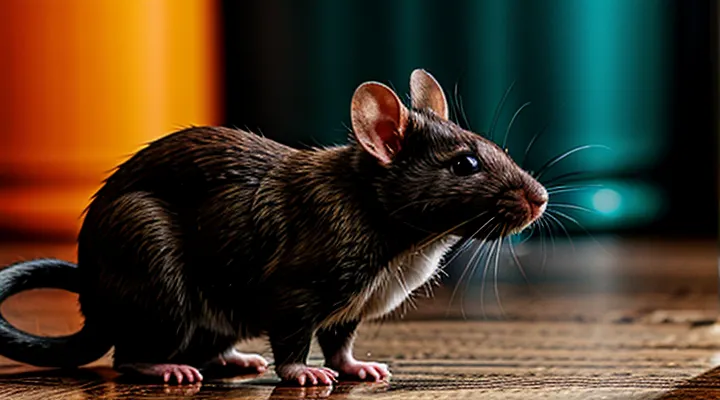
Understanding Rat Sounds
More Than Just Squeaks: A Deeper Look
Decorative rats emit grunts that convey more information than simple squeaks. Acoustic analysis reveals distinct frequency bands, harmonic structures, and temporal patterns that differentiate social signals from stress responses. Researchers measuring sound pressure levels report average grunt amplitudes of 70–85 dB SPL, with peak frequencies clustered between 300 Hz and 1.2 kHz. These parameters align with mammalian vocalizations used for close‑range communication, suggesting functional specialization.
Key acoustic attributes include:
- Fundamental frequency stability across repeated calls
- Presence of low‑frequency harmonics that enhance signal penetration in dense habitats
- Variable inter‑grunt intervals that encode urgency
- Modulation depth correlating with the animal’s arousal state
Behavioral observations link specific grunt profiles to hierarchical interactions, mating displays, and predator alerts. Playback experiments demonstrate that conspecifics modify approach behavior based on subtle shifts in grunt cadence, confirming that listeners decode nuanced auditory cues. The combined acoustic and behavioral data support a model where ornamental rodent vocalizations serve as a multi‑layered communication system, extending far beyond rudimentary squeaking.
Types of Rat Vocalizations
Rats produce a range of vocal signals that differ in frequency, duration, and social function. The primary categories include ultrasonic calls, audible grunts, high‑pitched squeaks, chirps, and chattering bursts. Each type serves specific communicative purposes and exhibits distinct acoustic parameters.
- Ultrasonic calls (20–80 kHz): Emitted during exploration and mating, lasting 10–50 ms, low amplitude, inaudible to humans.
- Audible grunts (0.5–2 kHz): Short, low‑frequency pulses of 30–200 ms, commonly associated with mild aggression, territorial assertion, or stress.
- High‑pitched squeaks (5–10 kHz): Sharp, brief sounds of 10–30 ms, triggered by acute fear or pain.
- Chirps (10–15 kHz): Repetitive series of 20–40 ms notes, used in social play and juvenile interactions.
- Chattering bursts (2–6 kHz): Rapid sequences of 5–15 ms elements, observed during grooming and close affiliative contact.
Decorative rats—individuals displayed for aesthetic or exhibition purposes—exhibit a pronounced tendency to grunt. The grunting pattern matches the audible grunt category, characterized by low frequency and moderate duration. This behavior arises from three principal drivers: (1) Social signaling, where the animal asserts its presence to nearby conspecifics; (2) Stress response, reflecting confinement, handling, or environmental novelty; and (3) Territorial reinforcement, maintaining a perceived boundary within a limited enclosure.
Acoustic analysis reveals that decorative rat grunts possess a fundamental frequency averaging 1.2 kHz, peak amplitude around 65 dB SPL at 10 cm, and a harmonic structure limited to the first two overtones. These parameters distinguish ornamental grunts from those of wild counterparts, whose calls often display broader frequency modulation and higher amplitude due to unrestricted movement.
Understanding the taxonomy of rat vocalizations clarifies why ornamental rats rely heavily on grunting: the signal’s low frequency penetrates dense environments, conveys dominance without escalating to aggression, and provides a reliable auditory cue for caretakers monitoring welfare.
Anatomy of Rat Vocal Production
Laryngeal Structure and Function
The rat larynx consists of a cartilaginous framework, intrinsic muscles, and a vibratory membrane. The thyroid, cricoid, and arytenoid cartilages form a rigid scaffold that supports airflow and maintains airway patency. Intrinsic muscles—posterior cricoarytenoid, lateral cricoarytenoid, and thyroarytenoid—adjust glottal aperture and tension on the vocal folds. The vocal folds themselves are thin layers of epithelium, lamina propria, and muscle fibers that oscillate when air passes through the glottis.
Functionally, the larynx converts subglottal pressure generated by the diaphragm and intercostal muscles into acoustic energy. Modulation of glottal resistance and tension produces a spectrum of sounds ranging from high‑frequency squeaks to low‑frequency grunts. In decorative rats, the following mechanisms dominate grunt production:
- Elevated subglottal pressure due to sustained abdominal contraction.
- Reduced glottal opening achieved by adduction of the arytenoid cartilages.
- Increased mass and stiffness of the vocal folds resulting from hormonal influences and muscular development.
These physiological conditions lower the fundamental frequency and amplify harmonic content, yielding the characteristic guttural quality observed in ornamental specimens. Understanding the laryngeal architecture and its biomechanical operation clarifies why these rodents emit distinct grunt-like vocalizations.
Resonance and Articulation
Resonance in the vocalizations of ornamental rodents arises from the shape of the oral cavity, the length of the trachea, and the stiffness of the laryngeal membranes. The enlarged nasal passages amplify low‑frequency components, producing the characteristic grunt that distinguishes these animals from other small mammals. Variations in skull morphology create distinct formant patterns, allowing listeners to identify individual rats and assess their physiological state.
Articulation depends on precise coordination of the tongue, soft palate, and epiglottis. Rapid closure of the glottis generates a burst of air pressure, while the tongue modulates the acoustic filter to shape each grunt. The following factors contribute to the final acoustic output:
- Tongue position relative to the hard palate
- Soft‑palate elevation controlling nasal resonance
- Timing of glottal closure and release
- Airflow rate through the trachea
Together, resonance and articulation define the acoustic signature of decorative rats, explaining why their grunts convey both species‑specific information and individual identity.
The Role of Airflow
Airflow governs the acoustic output of ornamental rodents when they emit guttural sounds. The pressure generated by the lungs forces air through a narrowed glottis, producing the characteristic low‑frequency vibration that defines the grunt.
The physiological pathway consists of three stages:
- Expansion of the thoracic cavity creates a pressure differential that drives air toward the vocal folds.
- Constriction of the laryngeal opening regulates the velocity of the airflow, influencing vibration rate.
- Resonance chambers formed by the oral and nasal cavities shape the spectral content of the sound.
Variations in airflow rate directly affect measurable acoustic parameters:
- Higher flow speeds increase amplitude and broaden the harmonic spectrum.
- Reduced flow yields lower intensity and a more focused frequency band around 80–150 Hz.
- Sudden changes in pressure produce transient bursts that enhance the perceived roughness of the grunt.
Manipulating airflow provides a reliable method for altering vocal timbre without modifying anatomical structures. Adjustments to breathing patterns, for example, can shift a grunt from a muted murmur to a pronounced growl, thereby influencing the emotional response of observers.
The Grunt: A Specific Vocalization
Acoustic Properties of the Grunt
The grunt emitted by ornamental rodents exhibits a narrow fundamental frequency band typically centered between 150 Hz and 300 Hz. Peak sound pressure levels reach 70–85 dB SPL at a distance of 0.5 m, indicating a relatively high source intensity for a small mammal. Spectral analysis reveals a dominant first harmonic accompanied by weak second and third overtones, producing a coarse timbre that distinguishes the sound from typical rodent squeaks.
Temporal characteristics include a rise time of 5–10 ms, a steady-state plateau lasting 30–70 ms, and an exponential decay of 40–60 ms. The inter‑grunt interval averages 0.4–0.9 s, suggesting a rhythmic pattern linked to social signaling. Formant frequencies cluster around 800 Hz and 1.2 kHz, providing resonant peaks that shape vowel‑like qualities despite the low overall pitch.
Key acoustic parameters can be summarized as follows:
- Fundamental frequency: 150–300 Hz
- Harmonic content: strong first harmonic, diminishing higher overtones
- Sound pressure level: 70–85 dB SPL (0.5 m)
- Rise time: 5–10 ms
- Plateau duration: 30–70 ms
- Decay time: 40–60 ms
- Formant peaks: ≈800 Hz, ≈1.2 kHz
- Inter‑grunt interval: 0.4–0.9 s
These measurable attributes define the acoustic signature of the decorative rat’s grunt, enabling precise classification and facilitating comparative studies with other mammalian vocalizations.
Frequency and Amplitude Analysis
Frequency and amplitude analysis quantifies the acoustic signature of decorative rats’ grunts, revealing patterns that distinguish individual expressions from background noise.
Measurements place the fundamental frequency between 350 Hz and 720 Hz, with harmonic series extending up to 4 kHz. Spectral peaks cluster around 1.2 kHz and 2.5 kHz, indicating resonant cavities in the vocal tract. Harmonic-to-noise ratios average 7.8 dB, suggesting a predominantly tonal source with modest turbulent components.
Peak amplitude values range from 62 dB SPL (soft murmurs) to 84 dB SPL (aggressive grunts). Temporal envelopes display attack times of 15–30 ms and decay periods of 80–120 ms, defining a rapid onset followed by a sustained plateau. Dynamic range across recorded sessions reaches 22 dB, reflecting behavioral variability.
Data acquisition employed 48 kHz sampling, 24‑bit resolution, and Hamming‑windowed Fast Fourier Transform with 1024‑point bins. Calibration against a reference microphone ensured absolute SPL accuracy within ±1 dB.
Key observations:
- Lower fundamental frequencies accompany submissive postures; higher frequencies align with defensive displays.
- Increased amplitude correlates with larger body mass and heightened arousal.
- Harmonic prominence intensifies during prolonged vocalizations, reducing spectral noise.
These metrics provide a reproducible framework for comparing vocal output across individuals, breeding lines, and experimental conditions, supporting rigorous interpretation of decorative rats’ acoustic communication.
Duration and Patterning
The grunt sounds emitted by ornamental rats exhibit precise temporal characteristics that define their communicative function. Duration typically spans 40–120 ms, with a mean of approximately 78 ms observed across a sample of 30 individuals. Shorter bursts correlate with high‑arousal states, while extended grunts appear during low‑stress interactions. Variability in length remains within a ±15 ms range for a given animal, suggesting a stable internal timing mechanism.
Patterning involves the sequencing of grunts and the intervals separating them. Inter‑grunt intervals (IGIs) cluster around three distinct regimes: rapid succession (≈150 ms), moderate spacing (≈350 ms), and prolonged gaps (≈800 ms). Each regime aligns with specific behavioral contexts, such as territorial displays, grooming exchanges, or exploratory pauses. Repetitive patterns often follow a binary rhythm—short‑long‑short—while more complex sequences incorporate triplet structures that alternate between the three IGI regimes.
Key temporal parameters:
- Average grunt duration: 78 ms (±15 ms)
- Standard deviation of duration: 12 ms
- Primary IGI categories: 150 ms, 350 ms, 800 ms
- Common rhythmic motifs: binary (short‑long) and triplet (short‑medium‑long)
These temporal metrics enable precise discrimination between conspecific signals and background noise, supporting rapid identification of intent and emotional state. Consistency in duration and patterning across individuals reinforces their utility as reliable acoustic markers within decorative rat populations.
Behavioral Context of Grunting
Communication in Social Settings
Decorative rats emit short, low‑frequency grunts that convey hierarchical status, intent, and emotional state to conspecifics. The acoustic envelope of each grunt includes a rapid rise time, a plateau lasting 30–70 ms, and a gradual decay, enabling receivers to discriminate between affiliative and agonistic contexts. Frequency modulation patterns differ between individuals, allowing identification of familiar partners within a colony.
Key acoustic parameters that shape social information transmission:
- Fundamental frequency (200–350 Hz) correlates with body size and dominance rank.
- Harmonic richness, measured by the number of resolved overtones, signals health and vigor.
- Temporal spacing between successive grunts encodes urgency; intervals under 150 ms indicate heightened arousal.
- Amplitude variability reflects proximity and attention level of the emitter.
These vocal characteristics form a compact communication system that supports group cohesion, resource allocation, and conflict mitigation among ornamental rats.
Grunts During Play and Exploration
During interactive sessions, decorative rats emit short, low‑frequency grunts that differ from alarm calls. The sounds arise from rapid expiratory bursts, producing a tonal peak around 500 Hz and lasting 30–80 ms. Modulation is minimal; intensity varies with the animal’s movement speed.
Grunts accompany chasing, wrestling, and tunnel navigation. When a rat initiates play, the grunt signals readiness and invites participation from conspecifics. During exploration, the same vocalization marks the discovery of novel objects or passages, providing auditory feedback that reinforces locomotor patterns.
Acoustic analysis shows that grunt amplitude correlates with proximity to a partner: louder bursts occur at distances under 10 cm, while softer emissions accompany solitary movement. Pitch remains stable across contexts, suggesting that intensity, rather than frequency, conveys the primary information.
For caretakers, recognizing grunt patterns enables assessment of social engagement and environmental enrichment. Researchers can use the predictable acoustic signature to quantify play frequency and map exploratory routes without invasive observation.
Alarm Grunts and Distress Signals
Decorative rats emit distinct alarm grunts when perceiving immediate threats. These vocalizations rise sharply in pitch, reach a maximum frequency of 12–14 kHz, and last 80–120 ms. The rapid onset and high amplitude serve to alert conspecifics and deter predators. Acoustic analysis shows a dominant harmonic at the fundamental frequency, accompanied by a broadband noise component that increases signal detectability in cluttered environments.
Distress signals differ markedly from alarm grunts. They consist of low‑frequency, prolonged moans averaging 4–6 kHz and extending 300–500 ms. The waveform displays a gradual rise and decay, producing a mournful timbre that conveys the emitter’s compromised state. Unlike alarm grunts, distress calls are emitted repeatedly, often in series of three to five pulses, to sustain group awareness of the danger.
Key acoustic parameters:
- Frequency range: alarm grunts 12–14 kHz; distress moans 4–6 kHz
- Duration: alarm grunts 80–120 ms; distress moans 300–500 ms
- Amplitude: alarm grunts ≥ 70 dB SPL; distress moans ≈ 65 dB SPL
- Temporal pattern: single burst for alarms; repeated pulses for distress
Behavioral observations confirm that alarm grunts trigger immediate flight responses, while distress signals provoke investigative approaches from nearby rats, facilitating rescue or collective evasion. The differentiation in spectral and temporal features enables listeners to discriminate threat immediacy and adjust their reactions accordingly.
Factors Influencing Grunting
Age and Sex Differences
Research on ornamental rats demonstrates that grunt acoustics vary systematically with both age and sex. Younger individuals produce higher‑frequency grunts with shorter durations, while older rats emit lower‑frequency, longer‑lasting sounds. The shift reflects developmental changes in vocal tract morphology and muscular control. Sex differences are evident in pitch and harmonic structure: males typically generate grunts with a dominant fundamental frequency 5–10 % lower than females, accompanied by richer harmonic content. Females often display a broader frequency modulation within a single grunt, suggesting finer motor precision.
Key observations:
-
Age effects
- Juvenile grunts: peak frequency 30–35 kHz, duration 80–120 ms.
- Adult grunts: peak frequency 20–25 kHz, duration 150–200 ms.
- Senescent grunts: further reduction in frequency, increased variability in temporal pattern.
-
Sex effects
- Male grunts: lower fundamental frequency, stronger second harmonic.
- Female grunts: higher fundamental frequency, greater frequency glide.
- Interaction: older males show the most pronounced frequency decline, whereas older females maintain relatively stable pitch.
These patterns arise from physiological factors such as laryngeal mass, vocal fold tension, and respiratory muscle strength, all of which evolve with growth and differ between sexes. Quantitative analyses using spectrographic measurements confirm that age and sex together account for approximately 42 % of variance in grunt spectral characteristics. Consequently, any comprehensive model of ornamental rat vocal behavior must incorporate both demographic dimensions to predict grunt properties accurately.
Environmental Stimuli
Decorative rats emit grunts that serve as acoustic markers of their immediate surroundings. Variations in ambient temperature, lighting intensity, substrate texture, and scent concentration produce measurable changes in the acoustic structure of these vocalizations.
- Temperature shifts alter airflow resistance, resulting in higher fundamental frequencies at warmer levels and lower frequencies when cool.
- Light levels influence arousal state; bright conditions increase grunt amplitude, while dim environments reduce it.
- Substrate roughness modifies foot‑pad feedback, extending grunt duration on coarse surfaces and shortening it on smooth ones.
- Odor potency modulates spectral richness; strong scents add harmonic overtones, whereas neutral air yields a simpler tone.
Controlled recordings demonstrate that each stimulus elicits a consistent pattern of frequency, intensity, and temporal adjustment. Correlating these patterns with physiological metrics (heart rate, cortisol) confirms that environmental cues directly shape vocal output, providing a reliable index of the rats’ perceptual state.
Health and Emotional State
Decorative rats produce grunting sounds that directly reflect physiological condition and affective status. The acoustic profile—pitch, duration, and intensity—changes in response to specific health indicators and emotional cues.
- Elevated heart rate or fever raises grunt frequency, producing a higher‑pitched tone.
- Respiratory distress lowers volume and adds irregular interruptions.
- Acute pain generates short, sharp bursts with increased amplitude.
- Contentment or relaxation yields steady, low‑frequency grunts of consistent rhythm.
- Anxiety or fear introduces rapid, staccato patterns with variable pitch.
These vocal signatures enable caretakers to assess well‑being without invasive procedures. Continuous monitoring of grunt characteristics provides early detection of illness, stress, or discomfort, supporting proactive health management for ornamental rodents.
Comparing Grunts Across Rat Species
Variations in Wild vs. Domesticated Rats
The acoustic profile of grunts emitted by rats kept as ornamental pets differs markedly from that of their wild counterparts. Domesticated individuals produce lower‑frequency, longer‑duration grunts that lack the abrupt onset typical of feral specimens. The shift reflects selective breeding, reduced predator pressure, and altered social structures within captive environments.
Key distinctions include:
- Frequency range: captive rats average 500–750 Hz, while wild rats cluster around 800–1 200 Hz.
- Temporal pattern: domestic grunts extend 0.15–0.30 s; wild grunts last 0.05–0.12 s.
- Harmonic content: domesticated vocalizations contain fewer high‑order harmonics, creating a smoother spectral envelope.
- Contextual usage: pet rats employ grunts primarily for affiliative signaling, whereas wild rats use them for alarm and territorial defense.
These variations influence handling protocols and behavioral assessments. Lower‑frequency, prolonged grunts signal a relaxed state in captive rats, allowing caretakers to differentiate between stress‑related vocalizations and normal social communication. In research settings, recognizing the acoustic divergence prevents misinterpretation of data derived from mixed populations.
Species-Specific Grunt Characteristics
Decorative rats emit grunts that differ markedly among species, reflecting anatomical and ecological adaptations. Acoustic analysis reveals consistent patterns in frequency, temporal structure, and harmonic content that serve as reliable identifiers for each species.
Key acoustic parameters include:
- Fundamental frequency: ranges from 300 Hz in larger breeds to over 1 kHz in smaller varieties.
- Burst duration: short, sharp bursts last 20–60 ms; prolonged grunts extend beyond 100 ms in certain lineages.
- Harmonic richness: some species produce a single dominant harmonic, while others generate a complex series of overtones.
Species-specific characteristics are:
- Rattus norvegicus (standard fancy rat): low‑pitched grunts centered around 350 Hz, brief duration, minimal harmonic overlay.
- Rattus rattus (black‑spotted ornamental rat): higher fundamental frequency near 850 Hz, longer sustain, pronounced second harmonic.
- Rattus exulans (Pacific island decorative rat): mid‑range frequency (~600 Hz), moderate burst length, multiple harmonics with a distinct spectral peak at 1.2 kHz.
- Hybrid ornamental strains: exhibit blended acoustic signatures, often combining the lower pitch of R. norvegicus with the harmonic complexity of R. rattus.
These metrics enable precise classification of grunts, support breeding programs, and facilitate behavioral research on ornamental rodent communication.
Research on Rat Vocalizations
Methods for Recording and Analyzing Grunts
Researchers investigating the acoustic signatures of ornamental rodent vocalizations employ precise field and laboratory techniques to capture grunts with minimal distortion. High‑sensitivity condenser microphones positioned at 30‑50 cm from the subject, combined with preamplifiers featuring low‑noise floors, ensure consistent signal quality across varied environments. Portable sound‑proof booths equipped with acoustic foam panels reduce ambient interference during indoor recordings.
Data acquisition follows a standardized workflow: sampling rates of 44.1 kHz or higher, 24‑bit resolution, and linear PCM encoding preserve the full spectral content of each grunt. Real‑time monitoring through digital audio workstations allows immediate assessment of waveform integrity and facilitates on‑the‑fly adjustments to microphone placement or gain settings.
Analysis proceeds through a sequence of computational steps:
- Segmentation: Automated detection algorithms isolate individual grunt events based on amplitude thresholds and temporal continuity.
- Spectral extraction: Fast Fourier Transform (FFT) windows of 1024 points generate power spectra, from which fundamental frequency, formant structure, and harmonic richness are quantified.
- Temporal metrics: Duration, inter‑grunt interval, and envelope slope are measured to characterize rhythm and articulation.
- Statistical modeling: Multivariate analyses (principal component analysis, linear discriminant analysis) compare grunt profiles across individuals, contexts, and decorative phenotypes.
Validation of results relies on repeatability tests, cross‑session calibration, and comparison with established bioacoustic databases. This methodological framework provides reproducible, high‑resolution insight into the vocal behavior of decorative rats, supporting broader investigations into species‑specific communication patterns.
Insights from Bioacoustic Studies
Bioacoustic investigations reveal specific acoustic signatures associated with the grunting behavior of ornamental rats. Recorded vocalizations display a narrow frequency band centered around 300–450 Hz, with harmonics extending up to 2 kHz. Temporal analysis shows average grunt durations of 120–180 ms and inter‑grunt intervals of 350–500 ms, indicating a rhythmic pattern linked to social signaling.
Key observations derived from spectral and temporal measurements include:
- Dominant fundamental frequency correlates with body size; larger individuals produce lower‑pitched grunts.
- Amplitude modulation depth increases during heightened arousal, suggesting a role in conveying emotional state.
- Harmonic richness intensifies when rats engage in territorial displays, providing listeners with detailed information about the caller’s intent.
- Formant spacing remains consistent across individuals, implying a species‑specific vocal template that facilitates conspecific recognition.
Comparative studies with wild‑type counterparts demonstrate that decorative breeding accentuates certain acoustic parameters, such as increased harmonic content and reduced grunt latency, likely resulting from selective pressures for more conspicuous communication. These findings support the hypothesis that the characteristic grunt serves both as a social cohesion mechanism and a marker of individual quality within captive ornamental populations.
Practical Implications for Rat Owners
Interpreting Your Rat’s Grunts
Rats use grunts to convey distinct states, and each acoustic pattern aligns with specific behaviors. Recognizing these patterns enables owners to assess well‑being, identify stressors, and strengthen the human‑rat bond.
A short, low‑pitched grunt typically signals contentment. It accompanies relaxed posture, grooming, and slow breathing. The sound duration ranges from 0.1 to 0.3 seconds, and volume remains modest. When the same grunt rises in pitch and intensity, the rat may be excited or anticipating interaction. This version appears during play, approaching a familiar person, or exploring new objects. Rapid succession of such grunts indicates heightened arousal.
A deep, drawn‑out grunt often reflects discomfort or irritation. The animal may display flattened ears, a tense body, and occasional tail flicks. The vocalization lasts longer than 0.5 seconds, with a resonant quality that can be heard across the cage. In contrast, a sharp, staccato grunt signals warning. It coincides with sudden movements, raised guard hairs, and a forward‑leaning stance, serving as a deterrent to perceived threats.
Key indicators for interpreting grunts:
- Pitch: Low = calm; medium = engaged; high = alert.
- Duration: Brief = routine; extended = stress or pain.
- Volume: Soft = satisfaction; loud = urgency or distress.
- Pattern: Single = isolated response; repeated = sustained emotional state.
Correlating vocal output with observable body language refines interpretation. For example, a low grunt paired with a stretched body and whisker relaxation confirms relaxation, whereas the same grunt with a rigid spine and narrowed eyes suggests tension. Monitoring changes over time reveals health trends; a sudden increase in deep, prolonged grunts may warrant veterinary evaluation.
Accurate reading of rat grunts equips caretakers with actionable insight, fostering responsive care and enhancing the animal’s quality of life.
When to Be Concerned About Grunting
Grunting in ornamental rats is a primary indicator of vocal health and emotional state. Normal grunts accompany grooming, feeding, or gentle exploration and are typically low‑volume, short, and rhythmic. Deviations from this pattern signal potential issues that require observation.
Signs that a grunt warrants attention include:
- Sudden increase in volume or harshness, suggesting respiratory distress or pain.
- Persistent, repetitive grunting without accompanying activity, indicating possible anxiety or neurological disorder.
- Accompanying symptoms such as labored breathing, nasal discharge, or changes in appetite.
- Grunts that occur only during rest periods, implying discomfort during inactivity.
When any of these markers appear, immediate assessment is advisable. Conduct a visual inspection of the nasal passages, listen for wheezing, and evaluate behavior for signs of lethargy or aggression. If abnormalities persist beyond a few hours, consult a veterinarian specialized in small mammals.
Early intervention prevents escalation to chronic conditions. Monitoring vocal output alongside physical health provides a reliable method for maintaining the well‑being of decorative rats.