
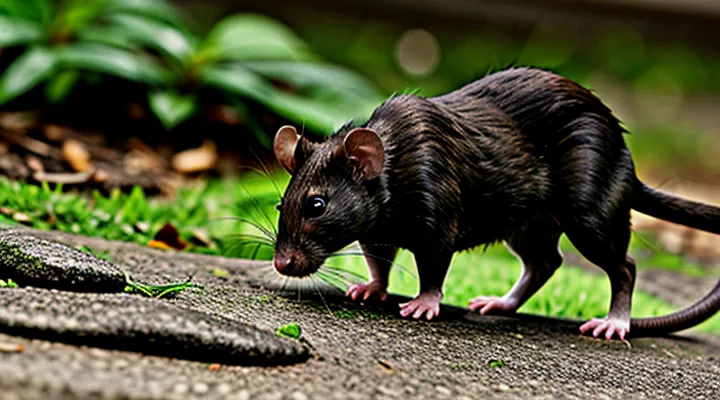
The Ecological Niche of Rats
Primary Scavengers and Decomposers
Waste Management and Nutrient Cycling
Rats consume a broad spectrum of organic refuse, including carrion, discarded food, and plant debris. By ingesting this material, they reduce the volume of waste that would otherwise accumulate in urban and rural habitats.
Through digestion, rats break down complex organic compounds into simpler substances. The excreted matter, rich in nitrogen, phosphorus, and other minerals, returns to the soil where it becomes available to plants and microorganisms. This process accelerates nutrient turnover and supports primary productivity.
Key contributions of rats to waste management and nutrient cycling include:
- Rapid removal of decomposing matter that could harbor pathogens.
- Conversion of solid waste into bioavailable nutrients via feces and urine.
- Distribution of nutrients across varied microhabitats through foraging movements.
- Stimulation of microbial activity by providing substrate for decomposition.
Collectively, these actions help maintain ecological balance by limiting waste buildup and enhancing soil fertility.
Prey for Predators
Supporting Higher Trophic Levels
Rats convert plant material, insects, and organic waste into protein-rich biomass that is readily consumed by carnivorous and omnivorous species. Their rapid reproduction ensures a steady supply of prey, stabilizing predator populations that rely on small mammals for sustenance.
Predators that depend on rats include:
- Barn owls and other raptorial birds
- Red foxes and coyotes
- Snakes such as rattlesnakes and rat snakes
- Mustelids, including weasels and martens
- Larger mammals like bobcats and raccoons
By sustaining these higher trophic levels, rats facilitate energy flow from primary producers and detritus to apex consumers. Their presence influences predator breeding success, territorial range, and seasonal migration patterns, thereby shaping community dynamics across diverse habitats.
In ecosystems where rat populations decline, the reduction in prey availability can trigger cascading effects: predator numbers fall, competition for alternative prey intensifies, and the balance of species interactions shifts. Consequently, maintaining robust rat communities supports the overall health and resilience of food webs.
Impact on Predator Populations
Rats are prolific across urban, agricultural, and natural habitats, offering a reliable food source for a broad spectrum of predators, including owls, hawks, foxes, snakes, and feral cats. Their high reproductive rate and widespread distribution create a stable prey base that directly supports predator population density.
When rat populations increase, predator numbers often rise in response to enhanced food availability. This relationship manifests in higher breeding success, larger litter sizes, and improved juvenile survival for many carnivores. Conversely, declines in rat abundance can precipitate reduced predator reproductive output and heightened competition for alternative prey.
- Sustains predator biomass by contributing a significant portion of daily caloric intake.
- Elevates predator fecundity through consistent access to nutrient‑rich prey.
- Modulates predator territorial ranges, concentrating individuals in areas of high rat density.
- Influences predator community composition, favoring species that specialize in small‑mammal hunting.
- Affects predator health, lowering incidence of starvation‑related stress and disease.
The dynamic between rats and their predators helps maintain trophic balance; fluctuations in rat numbers ripple through higher trophic levels, shaping predator population trends and ecosystem stability.
Rats as Ecosystem Engineers
Burrowing and Soil Aeration
Influencing Plant Growth and Water Infiltration
Rats affect plant communities through direct and indirect actions that modify both vegetation dynamics and soil water movement. Their foraging behavior removes seeds and seedlings, which can suppress opportunistic species and allow slower‑growing plants to establish. Simultaneously, rats transport viable seeds in fur or digestive tracts, dispersing them across heterogeneous microhabitats and enhancing spatial diversity.
Burrowing activity creates a network of tunnels that reshapes soil structure. These passages increase macroporosity, allowing rainwater to penetrate deeper layers and reducing surface runoff. The altered pore space also improves aeration, promoting root respiration and microbial processes that release nutrients essential for plant growth.
Key mechanisms by which rats influence vegetation and hydrology include:
- Seed predation that regulates population density of competitive weeds.
- Endozoochorous seed dispersal, extending colonization range of native flora.
- Construction of shallow and deep burrows that raise soil porosity and hydraulic conductivity.
- Deposition of fecal material rich in nitrogen, phosphorus, and organic carbon, enriching the rhizosphere.
- Disturbance of leaf litter layers, accelerating decomposition and nutrient turnover.
Collectively, these interactions shape plant composition, productivity, and the capacity of ecosystems to absorb and retain water.
Seed Dispersal
Facilitating Plant Reproduction and Range Expansion
Rats increase plant reproductive success by moving viable seeds away from the parent organism. After consuming fruits, they excrete seeds in nutrient‑rich droppings, often at distances that reduce competition and improve seedling establishment. Their habit of storing surplus food creates caches that are frequently abandoned, providing protected sites for germination.
- Ingestion of fleshy fruits followed by defecation disperses seeds across varied microhabitats.
- Hoarding behavior generates hidden seed banks; forgotten caches become germination points.
- Transport of mycorrhizal spores on fur and whiskers introduces beneficial fungi to new soil patches.
- Trampling of ground vegetation opens soil, exposing seedbeds and enhancing light availability for seedlings.
These activities enable plants to colonize disturbed areas, expand their geographic range, and maintain genetic diversity. By linking fragmented habitats, rats support ecosystem resilience and promote the persistence of plant communities that depend on animal‑mediated dispersal.
Unexpected Contributions
Role in Pollination (Rare Cases)
Rats are primarily recognized as opportunistic omnivores, yet field observations reveal occasional participation in pollen transfer. Their nocturnal activity brings them into contact with night‑blooming flowers, where fur and whiskers collect pollen grains that are later deposited on subsequent blossoms. This incidental behavior results in successful fertilization of several plant species, especially in habitats where traditional pollinators are scarce.
Documented instances include:
- Mongolian gerbil (Meriones unguiculatus) visiting desert poppies in Central Asia; pollen grains adhering to its hindquarters were identified on neighboring flowers.
- Black rat (Rattus rattus) foraging on island figs in the Caribbean; genetic analysis linked rat‑carried pollen to increased seed set in isolated fig trees.
- Rice field rat (Rattus argentiventer) interacting with nocturnal orchids in Southeast Asian wetlands; observed pollen deposition matched orchid reproductive cycles.
These cases demonstrate that rats can augment pollination networks, particularly in ecosystems with limited insect activity or disrupted pollinator communities. Their contribution enhances plant genetic diversity, supports seed production, and sustains food resources for other wildlife.
Acknowledging rat‑mediated pollination refines ecological assessments and informs management strategies that protect both rodent populations and the plant species they inadvertently service.
Disease Vectors and Population Control
Natural Selection and Biodiversity
Rats, as highly adaptable mammals, illustrate natural selection in action. Their rapid reproductive cycles and broad diet enable survival across urban, agricultural, and wild habitats, generating extensive genetic variation that fuels evolutionary change.
Through predation and being prey, rats influence population balances. They limit insect numbers, control small vertebrate populations, and provide food for birds of prey, foxes, and larger mammals, thereby shaping trophic structures.
Specific ecological contributions include:
- Consumption of carrion, accelerating nutrient recycling and reducing disease vectors.
- Seed transport and occasional dispersal, affecting plant community composition.
- Hosting parasites that, when transferred to predators, can regulate host density.
Genetic diversity within rat populations reflects selective pressures such as habitat fragmentation, climate fluctuations, and human activity. This diversity sustains adaptive potential, allowing rats to occupy new niches and maintain ecological functions despite environmental shifts.
Collectively, rat-mediated processes enhance ecosystem resilience, promote species richness, and drive evolutionary dynamics that sustain biodiversity.