
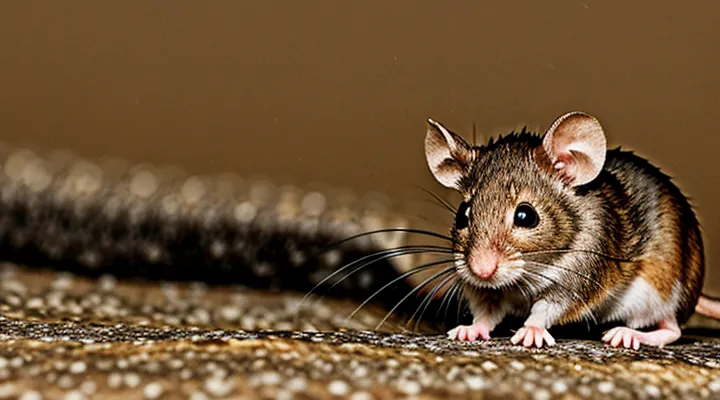
The Anatomy of Whiskers
Morphology and Structure
Follicle and Sensory Receptors
The vibrissal follicle in mice is a specialized anatomical structure anchored deep within the dermis, extending to the underlying muscle and connective tissue. Its architecture includes a dense capsule of collagen fibers, a blood sinus, and a rich supply of mechanoreceptive nerve endings. This configuration creates a highly sensitive transduction site that converts mechanical deflection of the whisker into neural signals.
Sensory receptors associated with the follicle comprise several distinct types:
- Merkel cell complexes: detect sustained pressure and low‑frequency vibrations.
- Ruffini endings: respond to skin stretch and lateral movement.
- Pacinian corpuscles: sensitive to rapid, high‑frequency oscillations.
- Free nerve endings: convey nociceptive and thermal information.
Each receptor type innervates the follicle via separate afferent fibers, preserving modality‑specific pathways that converge in the brainstem trigeminal nuclei. The spatial arrangement of receptors around the follicle shaft ensures that minute angular changes are encoded with high temporal precision.
The integration of follicular biomechanics and receptor diversity enables mice to construct detailed tactile maps of their environment. This system supports rapid object localization, texture discrimination, and navigation through confined spaces, providing an essential sensory advantage for foraging and predator avoidance.
Vibrissae Types and Distribution
Mice possess a specialized set of facial hairs known as vibrissae, which serve as highly sensitive tactile sensors. Each vibrissa consists of a stiff shaft anchored in a follicle richly supplied with mechanoreceptors, enabling detection of minute air currents and surface contacts.
The vibrissal system comprises distinct categories:
- Macrovibrissae – long, prominent whiskers arranged in well‑defined rows on the mystacial pad; primary elements for spatial exploration.
- Microvibrissae – short, densely packed hairs located on the cheeks, rostral face, and lower jaw; supplement macrovibrissae by providing fine‑scale texture information.
- Supraorbital vibrissae – positioned above the eyes, contributing to detection of overhead obstacles.
- Genal vibrissae – situated on the flanks of the head, extending the sensory field laterally.
Distribution follows a precise topography. The mystacial pad hosts four bilateral rows (A‑D) of macrovibrissae, each row containing 5–12 whiskers that increase in length from caudal to rostral positions. Microvibrissae populate the whisker pad, the upper lip, and the region surrounding the ears, forming a continuous sensory carpet. Supraorbital and genal vibrissae occupy discrete locations, completing a three‑dimensional coverage around the mouse’s head.
This arrangement creates overlapping receptive fields, allowing the animal to construct a detailed representation of its environment through coordinated activation of distinct vibrissal groups.
Sensory Function of Whiskers
Tactile Exploration and Navigation
Detection of Objects and Textures
Mouse vibrissae serve as high‑resolution tactile sensors that convert surface contacts into neural signals. Each whisker is anchored in a follicle rich in mechanoreceptors, chiefly Merkel cells and lanceolate endings, which transduce deflection into patterned firing of primary afferents.
The generated spikes travel via the trigeminal ganglion to brainstem nuclei, then to thalamic relay stations and the somatosensory cortex. In the cortical map, individual whiskers correspond to distinct columns, allowing precise spatial discrimination of objects and textures.
Key functional attributes include:
- Spatial resolution: Whisker spacing and length gradient provide a mosaic of receptive fields covering the mouse’s periphery.
- Texture encoding: Rapid whisker vibrations produce frequency‑dependent responses; high‑frequency components correlate with fine textures, while low‑frequency components signal coarse surfaces.
- Active exploration: Motor control of whisker position modulates contact timing, enhancing signal‑to‑noise ratio during object search.
Behavioral experiments demonstrate that whisker trimming impairs performance in maze navigation, gap crossing, and surface discrimination tasks, confirming the system’s necessity for object detection and texture perception.
Spatial Orientation and Mapping
Mouse vibrissae generate high‑resolution tactile signals that feed directly into neural circuits responsible for constructing an internal representation of the surrounding space. Deflection of each whisker activates mechanoreceptive follicles, which transmit spike trains through the trigeminal ganglion to brainstem nuclei and onward to somatosensory cortex. Within cortical columns, precise topographic maps preserve the spatial layout of the whisker array, allowing the animal to infer the position of objects relative to its head.
Behavioral assays demonstrate that rodents can locate food, avoid barriers, and follow narrow corridors without visual cues. Performance deteriorates markedly after whisker trimming or selective silencing of barrel cortex, confirming that whisker‑derived input supplies the primary metric for spatial navigation in low‑light conditions.
Experimental techniques that have clarified these processes include:
- Multi‑unit recordings in trigeminal and barrel cortex during active whisking, revealing phase‑locked firing patterns aligned with whisker position.
- Two‑photon calcium imaging of neuronal ensembles, showing coordinated activity that encodes distance and texture simultaneously.
- Optogenetic inhibition of specific cortical layers, which disrupts the animal’s ability to update its internal map during rapid head turns.
Integration of whisker‑based tactile maps with hippocampal place cells produces a multimodal spatial framework. Neurons in the posterior parietal cortex receive convergent inputs from barrel fields and entorhinal grid cells, enabling the mouse to translate whisker‑derived coordinates into a broader navigational plan. This circuitry supports path selection, error correction, and the formation of lasting spatial memories.
In summary, the mouse whisker system provides a dedicated sensory channel for spatial orientation. Precise peripheral encoding, layered cortical topography, and cross‑regional integration collectively generate a dynamic map that guides movement and supports memory of the environment.
Whiskers in Communication and Social Behavior
Non-Verbal Cues
Whisking Patterns in Social Interaction
Mice rely on their facial vibrissae to convey and receive information during group encounters. Rapid back‑and‑forth movements, termed whisking, generate temporal patterns that encode the identity, distance, and movement of conspecifics. When two individuals approach, their whisking cycles synchronize, producing mutual tactile feedback that guides approach speed and orientation.
Experimental recordings reveal several consistent patterns:
- Reciprocal phase locking: whisker oscillations align in phase after a few hundred milliseconds of contact, reducing collision risk.
- Amplitude modulation: dominant individuals display larger sweep amplitudes, while subordinate mice adopt reduced amplitudes, signaling hierarchical status.
- Frequency shift: increased whisking frequency accompanies aggressive or exploratory encounters, whereas lower frequencies accompany affiliative grooming.
Neural circuits in the barrel cortex translate these mechanical signals into spike trains that influence downstream decision‑making areas. Disruption of whisker input, via trimming or genetic silencing, impairs social recognition, alters group cohesion, and increases latency in initiating cooperative behaviors. Consequently, the structure of whisking patterns constitutes a primary channel for tactile communication among mice.
Role in Dominance and Submission
Facial vibrissae provide mice with high‑resolution tactile feedback that directly shapes social hierarchies. When two individuals encounter each other, the rapid deflection of whiskers against the opponent’s body conveys body size, posture, and movement speed. These sensory cues are processed by the barrel cortex and the amygdala, triggering motor programs that bias the animal toward either aggressive or submissive actions.
- Whisker‑mediated detection of opponent proximity initiates pre‑emptive lunges or retreats, reducing latency of dominance displays.
- Asymmetrical whisker use—such as unilateral whisker trimming—creates a perceptual imbalance, leading the altered mouse to adopt lower rank in group assays.
- Neural activity patterns linked to whisker stimulation correlate with elevated dopamine release in the nucleus accumbens for dominant individuals, while submissive mice show increased corticosterone levels.
Experimental manipulation of vibrissal input demonstrates causality: temporary anesthesia of whisker follicles abolishes established dominance hierarchies, allowing previously subordinate mice to ascend. Conversely, restoring normal whisker function reinstates prior rank structures within hours. These findings indicate that tactile hair systems function as real‑time status indicators, integrating sensory, hormonal, and neural pathways to regulate dominance and submission among rodents.
Developmental Aspects
Growth and Maturation
Critical Periods for Sensory Development
Critical periods define windows during which somatosensory input from facial vibrissae shapes the cortical map of the mouse barrel system. In the first postnatal week, thalamocortical afferents arrive in layer 4 and establish columnar structures that correspond to individual whiskers. Sensory deprivation—by trimming or removing whiskers—within this interval reduces barrel size, blunts synaptic strength, and alters dendritic spine density. After the third postnatal week, the same manipulations produce only minor changes, indicating that the period of heightened plasticity has closed.
Molecular cues that regulate the onset and closure of these windows include NMDA‑receptor subunit composition, BDNF signaling, and activity‑dependent transcription factors such as c‑Fos. Elevated intracellular calcium during the early phase enhances long‑term potentiation, while a shift toward inhibitory interneuron maturation coincides with the decline in plastic potential.
Experimental paradigms illustrate the functional importance of this timing:
- Whisker trimming (P0‑P10): leads to loss of barrel definition and reduced tactile discrimination.
- Environmental enrichment (P5‑P15): expands barrel size and increases receptive field precision.
- Pharmacological blockade of NMDA receptors (P3‑P12): prevents normal barrel formation even with intact whiskers.
These findings demonstrate that the sensory map of mouse vibrissae is sculpted primarily during a brief, early developmental stage. Interventions applied outside this window have limited impact on cortical organization, emphasizing the necessity of timely sensory experience for normal somatosensory circuitry.
Plasticity of the Somatosensory Cortex
The somatosensory cortex of rodents exhibits remarkable adaptability in response to sensory input from facial vibrissae. When whisker afferents are altered—through trimming, deprivation, or enhanced stimulation—the cortical representation reorganizes rapidly, reflecting the system’s capacity for experience‑driven modification.
Neuronal circuits underlying this plasticity involve synaptic strengthening, dendritic spine turnover, and changes in inhibitory interneuron activity. Long‑term potentiation and depression at thalamocortical synapses adjust receptive field boundaries, while astrocytic signaling contributes to extracellular matrix remodeling that supports structural rearrangements.
Key mechanisms identified in experimental models include:
- Activity‑dependent gene expression (e.g., BDNF, c‑Fos) that drives synaptic growth.
- Recruitment of adult‑born cortical neurons that integrate into existing networks.
- Modulation of GABAergic tone, which sharpens spatial acuity of whisker‑related maps.
These processes ensure that the cortical map of vibrissal input remains flexible, enabling mice to maintain tactile discrimination under varying environmental conditions and to recover functional performance after sensory loss.
Neurological Basis of Whiskers
Brain Regions Involved in Processing
Trigeminal Pathway
The trigeminal pathway conveys tactile information from the facial vibrissae of rodents to the central nervous system. Primary afferents originate in mechanoreceptors at the base of each whisker follicle, travel within the infraorbital branch of the trigeminal nerve, and terminate in the principal sensory nucleus (PrV) and the spinal trigeminal nucleus (SpV). From these nuclei, second‑order neurons project to the thalamic ventral posterior medial nucleus (VPM) and subsequently to the barrel cortex, where whisker‑specific columns (barrels) encode spatial and temporal patterns of touch.
Key anatomical elements of the pathway include:
- Infraorbital nerve fibers (myelinated Aβ and Aδ types)
- Principal sensory nucleus (PrV) – primary processing hub for high‑frequency whisker signals
- Spinal trigeminal nucleus – integrates multimodal inputs and mediates reflexive responses
- Thalamic VPM – relay station preserving whisker identity
- Barrel cortex – cortical representation of individual vibrissae
Physiological properties of the pathway support rapid, high‑resolution detection of object location, texture, and movement. Conduction velocities of infraorbital fibers reach 30–40 m/s, enabling millisecond‑scale timing critical for active whisking behavior. Synaptic organization in PrV and VPM maintains one‑to‑one correspondence between whisker follicles and cortical barrels, preserving spatial fidelity throughout the circuit.
Disruption of any segment—through lesion, genetic mutation, or sensory deprivation—produces measurable deficits in whisker‑guided navigation, object discrimination, and sensorimotor integration. Experimental manipulations that silence the infraorbital nerve abolish cortical barrel activity, confirming the pathway’s essential function in transmitting vibrissal signals to higher‑order processing centers.
Somatosensory Cortex Organization
The somatosensory cortex of the mouse is structured to process tactile information from the facial whisker array with high spatial precision. Primary representations form discrete barrel structures in layer 4, each barrel corresponding to a single whisker. This topographic arrangement preserves the mechanical layout of the vibrissae, enabling rapid discrimination of stimulus location and direction.
Neuronal populations within each barrel exhibit a layered hierarchy.
- Layer 4: thalamocortical afferents terminate, generating the core barrel field.
- Layers 2/3: intracortical connections integrate signals across neighboring barrels, supporting pattern detection.
- Layer 5: pyramidal cells project to subcortical motor and sensory nuclei, linking perception to whisking behavior.
- Layer 6: corticothalamic feedback modulates thalamic relay activity, refining sensory gain.
The cortical map extends beyond the barrel field into adjacent regions that encode whisker movement dynamics. Posterior medial (PM) and secondary somatosensory areas receive convergent input from multiple barrels, allowing the integration of texture, velocity, and force cues. Synaptic plasticity within these circuits underlies experience‑dependent adaptation, such as enhanced discrimination after whisker trimming or enriched tactile training.
Temporal coding is achieved through precise timing of spikes across layers. Early thalamic bursts arrive in layer 4 within 5–10 ms of whisker contact, followed by rapid propagation to supragranular layers. This sequence creates a feed‑forward cascade that preserves stimulus onset information while allowing feedback modulation from deeper layers.
Overall, the organization of the mouse somatosensory cortex provides a dedicated, multilayered platform for converting whisker‑generated mechanical signals into neural representations that guide exploratory behavior and sensorimotor coordination.
Behavioral Studies and Research Applications
Experimental Paradigms
whisker Trimming Experiments
Whisker trimming experiments involve the selective removal of macrovibrissae in laboratory mice to assess the contribution of tactile input to behavior and neural processing. The procedure typically uses brief isoflurane anesthesia, followed by cutting all mystacial whiskers to a standardized length (e.g., 2 mm) or complete removal; the manipulation is performed bilaterally to ensure symmetry. Animals recover within minutes, allowing immediate or delayed testing depending on the experimental question.
Behavioral assays after trimming commonly include:
- Open‑field exploration: reduced perimeter hugging, increased thigmotaxis.
- Texture discrimination tasks: failure to distinguish sandpaper grades that control mice discriminate.
- Gap‑crossing tests: increased latency and lower success rates when navigating narrow gaps.
- Social interaction chambers: diminished approach toward conspecifics, indicating impaired tactile communication.
Neurophysiological recordings reveal that whisker deprivation suppresses firing rates in the barrel cortex, diminishes stimulus‑evoked gamma oscillations, and accelerates the shift of receptive fields toward neighboring columns. These changes persist for days but partially recover after whisker regrowth, demonstrating experience‑dependent plasticity.
Control conditions include sham‑handled mice (anesthesia without trimming) and animals with trimmed non‑vibrissal hairs to isolate the effect of vibrissal loss. Limitations involve potential stress from anesthesia, variability in regrowth rates, and the inability to distinguish effects of mechanosensory loss from altered motor feedback.
Future studies aim to combine reversible trimming with optogenetic silencing of whisker‑related pathways, apply high‑resolution calcium imaging during naturalistic tasks, and translate findings to models of sensory deficits in neurodevelopmental disorders.
Optogenetic and Electrophysiological Studies
Optogenetic manipulation of vibrissal pathways provides precise control of neuronal activity during tactile processing. Cre‑dependent viral vectors deliver channelrhodopsin‑2 or halorhodopsin to specific cortical layers, thalamic nuclei, or brainstem nuclei that receive whisker input. Light‑induced activation or silencing of these populations produces measurable changes in spike timing and firing rates, allowing direct assessment of causal contributions to sensory encoding.
Electrophysiological recordings capture the rapid dynamics generated by whisker stimulation. Whole‑cell patch clamp in barrel cortex pyramidal cells reveals sub‑millisecond postsynaptic potentials linked to single‑deflection events. Multi‑channel silicon probes record local field potentials across cortical columns, documenting the spread of activity from the thalamocortical hub to higher‑order areas. Juxtacellular labeling after recording permits reconstruction of the recorded neuron’s morphology and connectivity.
Integration of optogenetics and electrophysiology yields several robust observations:
- Light‑driven inhibition of somatosensory thalamus attenuates cortical response amplitude without altering latency, indicating thalamic drive primarily modulates gain.
- Activation of layer‑5 corticofugal neurons enhances downstream motor cortex activity, linking whisker perception to whisking behavior.
- Paired optogenetic stimulation and in‑vivo recording reveal synaptic plasticity rules: high‑frequency light bursts induce long‑term potentiation of whisker‑evoked responses, whereas low‑frequency illumination produces depression.
These approaches also expose constraints. Viral expression may vary across animals, requiring calibration of light intensity for each preparation. Electrode placement influences signal quality, and tissue heating from prolonged illumination can confound measurements. Careful experimental design, including control light pulses and sham injections, mitigates these issues and strengthens the validity of conclusions about vibrissal circuitry.
Evolutionary Significance
Adaptation for Nocturnal Life
Ecological Advantages
Vibrissae function as highly sensitive mechanoreceptors that convert physical contact into neural signals, enabling mice to acquire spatial information in low‑light or cluttered environments. This tactile capacity directly enhances ecological performance.
- Detect obstacles and surface textures, allowing rapid navigation through burrows and dense vegetation without reliance on vision.
- Locate prey and seeds by sensing minute vibrations and airflow disturbances, increasing foraging efficiency.
- Identify approaching predators through subtle air currents, providing early warning and facilitating escape responses.
- Communicate social cues such as dominance or reproductive status by transmitting whisker‑mediated tactile signals during close contact.
- Contribute to thermoregulation by promoting airflow across the facial region, aiding heat dissipation during high‑metabolic activity.
Collectively, these functions improve resource acquisition, predator avoidance, and social interaction, thereby raising individual fitness and influencing population dynamics within diverse habitats.
Comparative Anatomy Across Rodents
Rodent vibrissae exhibit a conserved follicular architecture while displaying species‑specific variations that reflect ecological demands. Each whisker emerges from a sinus hair follicle equipped with a dense capsule of mechanoreceptors, a richly vascularized pulp, and a deep dermal sheath that anchors the shaft. The trigeminal nerve supplies a bifurcated innervation pattern: a fast‑conducting Aβ‑fiber bundle mediates tactile discrimination, and a slower C‑fiber component conveys affective signals. Comparative histology shows that mice possess a higher proportion of lanceolate endings relative to gerbils, whose follicles contain more Merkel cell complexes, indicating divergent emphasis on motion detection versus static pressure sensing.
Morphometric differences across rodent taxa are pronounced:
- Length: laboratory mice average 7–9 mm per macrovibrissa; Norway rats exceed 12 mm; beavers reach 30 mm.
- Density: ground‑dwelling species (e.g., hamsters) display tightly packed mystacial rows (≈15 whiskers cm⁻¹), whereas arboreal squirrels have sparser arrangements (≈8 whiskers cm⁻¹).
- Orientation: nocturnal rodents orient whiskers in a forward‑tilted plane to maximize forward sweep, while diurnal species align them more laterally for peripheral scanning.
These anatomical parameters correlate with functional performance. Longer, sparsely spaced whiskers enhance range detection for foraging in open habitats, whereas short, dense arrays improve texture discrimination during burrow excavation. The relative abundance of specific mechanoreceptor types predicts sensitivity thresholds: species with predominating lanceolate endings detect minute air currents, while those enriched in Merkel cells resolve fine surface contours.
Understanding these interspecific patterns refines the interpretation of mouse vibrissal studies. Morphological benchmarks derived from broader rodent comparisons allow researchers to distinguish universal sensory mechanisms from mouse‑specific adaptations, thereby improving the translational relevance of neurobehavioral experiments.