
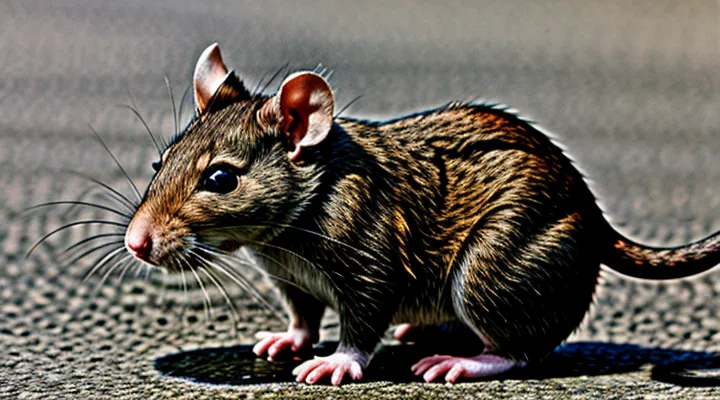
Understanding Rat Birth Weight
Average Rat Birth Weight
The common laboratory rat (Rattus norvegicus) typically weighs 5–7 g at birth; the mean value is approximately 6 g. This figure serves as a benchmark for comparing neonatal mass across small mammals.
Species whose newborns fall below the rat’s average birth weight include:
- House mouse (Mus musculus): 1–2 g
- Common shrew (Sorex araneus): 1–3 g
- Syrian hamster (Mesocricetus auratus): 2–3 g
- Mongolian gerbil (Meriones unguiculatus): 3–4 g
- Little brown bat (Myotis lucifugus): 1–2 g
- North American opossum (Didelphis virginiana) – pouch young: 0.5–1 g
These data illustrate that several mammals produce offspring lighter than the average newborn rat.
Factors Influencing Rat Pup Weight
The weight of newborn rats results from a combination of genetic, physiological, and environmental variables that together determine the baseline size of each pup. Genetic lineage establishes the potential size range; inbred strains with selected alleles for rapid growth produce heavier neonates, whereas wild‑type populations often yield lighter offspring. Maternal nutrition directly modulates fetal development; diets deficient in protein, essential fatty acids, or micronutrients reduce placental efficiency and limit fetal mass. Conversely, calorically dense diets increase litter average weight.
Litter size imposes a resource allocation constraint. Larger litters distribute maternal nutrients among more embryos, resulting in lower individual pup weights. In contrast, small litters allow each fetus to access a greater share of the maternal supply, producing heavier neonates. Maternal stress hormones, particularly elevated corticosterone, suppress growth hormone pathways and diminish fetal growth rates, leading to lighter pups. Environmental temperature during gestation influences metabolic demand; cooler conditions raise maternal basal metabolism, diverting energy away from fetal tissue accretion.
Birth order within the same litter also affects weight. Early‑born pups typically receive more uterine space and blood flow, achieving higher birth masses, while later‑born pups experience reduced placental perfusion and tend to be lighter. Post‑natal factors such as the quality of colostrum and early nursing behavior further modify initial weight measurements, although these variables primarily affect weight gain rather than the birth weight itself.
Understanding these determinants clarifies why certain mammalian species produce neonates that weigh less than a standard laboratory rat. Species with shorter gestation periods, lower maternal body mass, or high litter numbers often give birth to offspring whose initial mass falls below that of a rat pup. The interplay of genetics, maternal condition, and reproductive strategy explains the comparative differences in newborn size across taxa.
Mammals Lighter at Birth
Marsupials: Born Underveloped
Kangaroo Pouch Life
Kangaroos give birth to extremely small neonates that weigh only 0.5–1 gram, far below the average laboratory rat weight of about 250 grams. The embryo develops for roughly 30 days inside the uterus before entering the pouch, where it attaches to a teat and continues growth for several months. During pouch residency, the joey’s body temperature, hydration, and nutrition are regulated by the mother’s secretions and milk composition, which changes in protein and lipid content as the joey matures.
The pouch environment provides protection from predators and environmental extremes, allowing the joey to remain immobile while its limbs and sensory organs develop. Muscular coordination, locomotion, and dentition emerge in a staged sequence: forelimbs become functional first, followed by hind legs, then the ability to exit the pouch and graze.
Key aspects of pouch life:
- Weight progression: newborn ~0.8 g → 1 month ~20 g → 6 months ~5 kg.
- Nutritional shift: early milk rich in carbohydrates → later milk high in fats and antibodies.
- Developmental milestones: attachment to teat, emergence of whiskers, opening of eyes (~2 weeks), hopping ability (~6 months).
Compared with other species that produce neonates lighter than a rat, kangaroos rank among the lightest. Marsupials such as the opossum (birth weight ~0.2 g) and some small rodents (e.g., the African pygmy mouse, birth weight ~0.5 g) also fall into this category, but kangaroo joeys uniquely experience prolonged external gestation within a protective pouch. This combination of minimal initial mass and extended post‑natal development distinguishes kangaroo pouch life as a specialized reproductive strategy among mammals with exceptionally light newborns.
Opossum Development
Newborn rats typically weigh between 20 and 30 grams, establishing a baseline for comparison with other species whose offspring are smaller at birth. Opossums, members of the order Didelphimorphia, produce some of the lightest neonatal mammals, with newborn weights ranging from 0.2 to 0.5 grams—far below the rat benchmark.
Opossum development proceeds through a highly altricial phase. After a brief gestation of 12‑13 days, the young emerge as hairless, blind, and virtually undeveloped embryos that attach to the mother’s nipples for nourishment. Rapid growth follows, driven by frequent nursing and a high metabolic rate.
Key developmental milestones:
- Attachment to teat: Immediate after birth; weight ≈ 0.3 g.
- Eyes open: 3‑4 weeks; weight ≈ 5 g.
- Fur development: 4‑5 weeks; weight ≈ 8 g.
- Weaning: 6‑8 weeks; weight ≈ 15‑20 g.
- Independence: 10‑12 weeks; weight ≈ 30‑40 g, approaching adult size.
The extreme low birth weight reflects the reproductive strategy of marsupials, which favor short gestation and extensive postnatal care. Consequently, opossum neonates rank among the lightest mammals at birth, illustrating a clear example of species whose offspring are lighter than a typical newborn rat.
Monotremes: Egg-laying Mammals
Platypus Hatchlings
The common brown rat typically weighs 250–300 g at birth. A newly hatched platypus measures about 3 cm in length and weighs 10–12 g, placing it well below the rat’s newborn mass. This size places platypus hatchlings among the lightest vertebrate neonates recorded.
Key characteristics of platypus hatchlings:
- Covered in soft, downy fur that provides insulation.
- Possess a functional bill and webbed feet, though limbs are not yet fully developed.
- Depend entirely on maternal care; the mother transports them in a waterproof pouch for up to three months.
- Exhibit rapid growth, increasing body mass tenfold within the first month.
Because of their minimal birth weight, platypus infants illustrate an extreme example of low‑mass offspring among mammals, contrasting sharply with the relatively heavier newborn rats.
Echidna Puggles
Echidna puggles, the newborn stage of the short-beaked echidna (Tachyglossus aculeatus), weigh between 2 and 4 grams at birth. A typical laboratory rat (Rattus norvegicus) averages 20–30 grams, making the puggle roughly one‑tenth the mass of a newborn rat.
- Length at birth: 2–3 cm, compared with a rat pup of 4–5 cm.
- Development: Puggles are altricial; they lack spines, are hairless, and rely on maternal milk for the first six weeks.
- Growth rate: Weight triples within the first month, reaching 10–12 grams before spine emergence.
- Habitat: Native to Australia, puggles are born in underground burrows where temperature and humidity are regulated by the mother.
- Survival: High mortality in the first two weeks, primarily due to predation and exposure, underscores the vulnerability of such low‑mass neonates.
These metrics confirm that echidna newborns are among the lightest mammalian offspring, considerably lighter than any rat species at birth.
Smallest Placental Mammals
Shrews: Tiny Newborns
Shrews give birth to some of the smallest mammalian neonates. A typical adult rat weighs between 200 g and 300 g; shrew newborns are measured in fractions of a gram.
The Eurasian pygmy shrew (Sorex minutus) produces offspring averaging 0.15 g at birth. The American short-tailed shrew (Blarina brevicauda) delivers neonates weighing about 0.20 g. The common shrew (Sorex araneus) releases young that range from 0.12 g to 0.18 g. These weights are consistently below the mass of a newborn rat.
Key characteristics of shrew neonates:
- Body length: 10–12 mm, far shorter than rat pups.
- Eyes: closed, ears hidden, relying on maternal care.
- Development: rapid growth; weight triples within the first week.
- Survival: high mortality, mitigated by large litters (4–10 individuals).
The combination of minute size, altricial condition, and swift postnatal growth distinguishes shrew newborns as the lightest among mammals that are commonly compared to rats in size‑based studies.
Mice: Compared to Rats
Mice are born with a neonatal mass that typically ranges from 0.8 to 1.5 grams, depending on species and strain. Laboratory strains such as the common house mouse (Mus musculus) average about 1 gram at birth, while wild‑type populations may reach slightly higher values.
Rats, represented primarily by the Norway rat (Rattus norvegicus), emerge from gestation weighing between 5 and 6 grams. This weight exceeds that of any mouse species by a factor of four to six, establishing mice as the smaller neonatal mammals among commonly studied rodent models.
The weight disparity originates from differences in gestational length, litter size, and maternal investment. Mice gestate for approximately 19–21 days, produce litters of 5–12 offspring, and allocate limited resources per embryo. Rats gestate for 21–23 days, bear fewer offspring (typically 6–12), and allocate more nutrients to each fetus, resulting in higher birth weights.
Key comparative points:
- Average birth weight: mouse ≈ 1 g; rat ≈ 5.5 g.
- Gestation period: mouse ≈ 20 days; rat ≈ 22 days.
- Litter size: mouse 5–12; rat 6–12.
- Neonatal development: mice reach developmental milestones slightly later due to lower initial mass.
Consequently, mice consistently represent the rodent category with lower neonatal mass than rats, making them the primary example of species born lighter than their larger counterparts.
Hamsters: Litter Size and Weight
Hamsters rank among the smallest mammals whose offspring weigh less than a typical newborn rat, which averages 20‑30 g.
The most widely kept species—Syrian (Mesocricetus auratus), Russian dwarf (Phodopus sungorus), and Chinese dwarf (Cricetulus griseus)—exhibit distinct reproductive parameters.
- Syrian hamster: litter size 6‑12 pups; newborn weight 1.5‑2.0 g.
- Russian dwarf hamster: litter size 4‑8 pups; newborn weight 0.9‑1.2 g.
- Chinese dwarf hamster: litter size 4‑6 pups; newborn weight 1.0‑1.3 g.
Across these species, the average newborn mass ranges from roughly 1 g to 2 g, substantially below the weight of a rat neonate. The reduced size correlates with the limited uterine capacity of hamsters, which constrains litter size and results in consistently lightweight pups.
Birds and Reptiles: Different Reproductive Strategies
Avian Hatchlings
Passerine Nestlings
Passerine hatchlings emerge from eggs with masses far below those of a common laboratory rat, which averages 250–300 g at birth. Newborn songbirds typically weigh between 0.5 g and 5 g, placing them among the lightest vertebrate newborns.
The weight of a nestling is determined by egg size, developmental strategy, and parental provisioning. Passerines allocate most of their embryonic resources to rapid growth after hatching, resulting in extremely low initial body mass.
- Zebra finch (Taeniopygia guttata) chick: ≈ 1.5 g
- House sparrow (Passer domesticus) nestling: 1.8–2.2 g
- European robin (Erithacus rubecula) hatchling: ≈ 2.5 g
- American goldfinch (Spinus tristis) chick: 2.0–3.0 g
- Common nightingale (Luscinia megarhynchos) fledgling: ≈ 4 g
These figures illustrate that passerine nestlings consistently fall beneath the weight threshold of a newborn rat. Their diminutive size reflects evolutionary pressures for efficient egg production and rapid post‑hatching development, establishing them as a distinct group of exceptionally lightweight newborn animals.
Hummingbird Chicks
Hummingbird chicks are among the smallest newborn vertebrates. A typical hatchling of the ruby‑throated hummingbird (Archilochus colubris) weighs approximately 0.5 g, which is roughly one‑fiftieth the mass of an average laboratory rat (≈ 250 g). The extreme lightness results from the species’ evolutionary adaptation to a high‑metabolism, hovering lifestyle that demands minimal body weight at emergence.
Key factors influencing the low birth weight of hummingbird chicks include:
- Rapid embryonic development; incubation lasts 14–19 days, producing a fully formed but lightweight hatchling.
- Limited yolk reserves; the egg contains only about 1 g of nutrients, sufficient for a chick that weighs less than half the egg’s mass.
- Parental feeding behavior; adults deliver high‑energy nectar and insects directly to the nest, allowing the chick to remain small while receiving abundant calories.
Because of their minute size, hummingbird hatchlings are vulnerable to temperature fluctuations and predation. Parents maintain nest temperatures near 35 °C and protect the brood continuously until fledging, typically 18–22 days after hatching. The combination of minimal birth mass and intensive parental care distinguishes hummingbird chicks as prime examples of animals born lighter than a rat.
Reptilian Hatchlings
Snakelets
Snake newborns, often called snakelets, typically weigh far less than an average laboratory rat, which ranges from 200 g to 300 g at birth. Most species hatch with a mass measured in single‑digit grams; this size advantage reflects their reproductive strategy of laying numerous small eggs or birthing many live young.
Common snake species with newborn weights below a rat’s:
- Garter snake (Thamnophis spp.) – hatchlings 3–5 g.
- Corn snake (Pantherophis guttatus) – hatchlings 4–6 g.
- Ball python (Python regius) – neonates 10–15 g.
- Common garter (Thamnophis sirtalis) – hatchlings 2–4 g.
- Western terrestrial garter (Thamnophis elegans) – hatchlings 3–5 g.
Even larger species such as the boa constrictor produce neonates weighing 20–30 g, still markedly lighter than a newborn rat. The low birth mass enables snakes to exploit small prey items immediately after hatching, reducing competition with mammals that require larger initial meals. Consequently, snakelets represent a distinct group of vertebrates whose initial body weight consistently falls below that of a rat at birth.
Lizard Hatchlings
Rats typically weigh 300–500 g at birth. Many reptile newborns fall well below this range, making them among the lightest vertebrate neonates.
Lizard hatchlings emerge from eggs with body masses that often measure only a few grams. Species with the smallest hatchlings include:
- Gecko (Hemidactylus spp.) – hatchling weight 0.2–0.5 g.
- Anole (Anolis carolinensis) – hatchling weight 0.3–0.6 g.
- Skink (Eumeces spp.) – hatchling weight 0.5–1.0 g.
- Horned lizard (Phrynosoma spp.) – hatchling weight 0.8–1.2 g.
- House lizard (Sceloporus spp.) – hatchling weight 1.0–1.5 g.
These values consistently fall beneath the minimum neonatal rat mass. The low weight results from the limited yolk provision in small eggs and the rapid development strategy that favors early mobility over body mass. Consequently, lizard hatchlings represent a clear example of animals born lighter than a rat.
Amphibians and Fish: Early Life Stages
Tadpoles and Larvae
Frog Tadpoles
A common laboratory rat weighs approximately 250–300 g at birth. Many vertebrate newborns are considerably lighter, and frog tadpoles exemplify this disparity.
Frog tadpoles emerge from eggs weighing between 0.1 g and 0.5 g, depending on species. The initial body length ranges from 2 mm to 10 mm, and the mass is roughly one thousandth of a newborn rat’s weight. Their development proceeds through a larval stage lasting weeks to months, during which they feed on algae and detritus before metamorphosing into adult frogs.
Key points for frog tadpoles:
- Egg mass: 0.1–0.5 g (species‑specific)
- Hatchling weight: ≤0.5 g
- Length at hatching: 2–10 mm
- Growth rate: rapid increase in size during larval phase, yet still lighter than a rat until late metamorphosis
These metrics place frog tadpoles among the lightest vertebrate offspring, clearly below the birth weight of a typical rat.
Salamander Larvae
Salamander larvae are among the lightest vertebrate newborns. A common laboratory rat weighs 5–7 g at birth; most salamander larvae weigh considerably less.
Typical larval masses:
- Fire salamander (Salamandra salamandra): 0.12–0.35 g
- Iberian ribbed newt (Pleurodeles waltl): 0.20–0.45 g
- Axolotl (Ambystoma mexicanum): 0.5–1.0 g, still below the average newborn rat
- Eastern newt (Notophthalmus viridescens): 0.15–0.30 g
These figures demonstrate that salamander offspring consistently fall under the weight threshold set by newborn rats. Their low mass results from aquatic development, minimal yolk reserves, and rapid metamorphic growth. Consequently, salamander larvae represent a clear example of vertebrate hatchlings lighter than a rat pup.
Fish Fry
Guppy Fry
Guppy fry are newborn fish measuring only a few millimeters in length. Their mass typically ranges from 0.5 to 1.0 milligram (0.0005–0.001 gram). In comparison, a newborn laboratory rat weighs approximately 5–7 grams, which is several thousand times heavier than a single guppy fry.
Key points:
- Guppy fry length: 3–5 mm; weight: ≤1 mg.
- Newborn rat length: 10–15 mm; weight: 5–7 g.
- Ratio of rat to fry mass: roughly 5,000 – 14,000 times greater.
The extreme difference in birth weight places guppy fry among the lightest vertebrate neonates. Their diminutive size enables rapid development in aquatic environments, where low mass facilitates dispersal and reduces predation risk during the earliest life stage.
Goldfish Fry
Goldfish fry (Carassius auratus) hatch at an average mass of 0.08–0.12 g. A typical adult laboratory rat (Rattus norvegicus) weighs 250–300 g, making the newborn goldfish roughly 2,000–3,500 times lighter. The disparity is evident from the moment of emergence from the egg membrane, when the fry rely on yolk reserves before external feeding begins.
At hatching, goldfish fry possess a simple digestive tract and a set of 20–30 fin rays. Their metabolic rate is high; within 24 hours they commence exogenous feeding on microscopic zooplankton or finely ground commercial starter feed. Growth proceeds rapidly: by the end of the first week, mass typically reaches 0.5 g, still far below the weight of a newborn rat.
Key characteristics that contribute to the low birth mass:
- Small egg diameter (≈ 1 mm) limits nutrient allocation.
- Absence of maternal provisioning beyond yolk sac.
- Aquatic environment permits buoyancy, reducing structural demands.
Consequently, goldfish fry exemplify a vertebrate species whose newborn individuals are markedly lighter than a typical rat at birth.
Invertebrates: A Vast World of Tiny Beginnings
Insect Larvae and Nymphs
Ant Larvae
Ant larvae are among the smallest newborn organisms when compared with the typical newborn rat, which weighs roughly 300–500 g. The larval stage of ants begins after the egg hatches, and the body mass remains in the milligram range throughout development.
The weight of ant larvae varies among species but stays well below one gram:
- Common black garden ant (Lasius niger) – early‑instar larvae weigh about 0.2 mg; late‑instar larvae reach approximately 2 mg.
- Carpenter ant (Camponotus spp.) – larvae range from 0.5 mg to 5 mg, depending on caste and developmental stage.
- Fire ant (Solenopsis invicta) – larvae typically measure 0.3–1 mg.
Even the largest recorded ant larvae do not exceed 10 mg, which is three orders of magnitude lighter than a newborn rat. This stark contrast highlights the extreme size disparity between insect offspring and mammalian neonates.
Butterfly Caterpillars
Butterfly caterpillars emerge from eggs weighing only a few milligrams, far below the average newborn rat mass of 150–300 g. Their initial size reflects the limited nutrient reserves stored in the egg and the need for rapid growth after hatching.
- Monarch (Danaus plexippus) – hatch weight ≈ 0.5 mg.
- Painted lady (Vanessa cardui) – hatch weight ≈ 0.6 mg.
- Giant swallowtail (Papilio cresphontes) – hatch weight ≈ 0.8 mg.
- Cabbage white (Pieris rapae) – hatch weight ≈ 0.4 mg.
These figures demonstrate that, despite adult butterflies reaching several grams, their larval stage begins at a mass that is several orders of magnitude lighter than a newborn rodent. The disparity stems from the evolutionary strategy of allocating most body mass to later developmental stages, allowing caterpillars to devote early energy to rapid tissue accumulation rather than initial size. Consequently, butterfly caterpillars belong to the group of animals whose newborn weight is considerably less than that of a typical rat.
Arachnid Spiderlings
Jumping Spider Babies
Jumping spider hatchlings are among the lightest vertebrate‑adjacent organisms at birth. A typical adult rat weighs 250–300 g, while a newborn rat weighs approximately 5–6 g. In contrast, a newly emerged jumping spider (family Salticidae) measures 2–3 mm in body length and has an estimated mass of 0.02–0.03 mg, which is three orders of magnitude lighter than a rat pup.
Key weight data:
- Average newborn rat: 5–6 g
- Jumping spider hatchling: 0.02–0.03 mg
- Relative difference: roughly 1 : 200,000
The extreme disparity results from the spider’s miniature anatomy. Jumping spider embryos develop inside a compact egg sac; each egg contains a limited supply of yolk, sufficient only for the formation of a minute, fully functional arachnid. Upon hatching, the spiderling possesses all necessary sensory organs, eight eyes, and powerful forelegs for predation, yet its body mass remains minuscule.
Because of their low birth weight, jumping spider babies rely on rapid growth and frequent molting. Within weeks, they increase body mass by a factor of 10–15, still remaining far lighter than a newborn rat. Their lightweight state enables efficient dispersal through silk threads and access to microhabitats inaccessible to larger newborn mammals.
Black Widow Spiderlings
Black widow spiderlings emerge from egg sacs weighing approximately 0.2–0.4 mg each. A standard laboratory rat (Rattus norvegicus) weighs between 250 g and 500 g, making the newborn spiderlings several orders of magnitude lighter. Their minute mass enables rapid dispersal and reduces energetic demands during the first days of life.
Key facts about black‑widow spiderlings:
- Initial size: body length 1.5–2 mm; weight under 0.5 mg.
- Development: undergo several molts before reaching adult size (≈1 cm, 0.5 g).
- Survival strategy: low weight allows them to be carried by air currents (ballooning) to locate prey‑rich habitats.
- Predation risk: small size makes them vulnerable to insects, ants, and other arthropods; rapid growth mitigates this risk.
Because their birth mass is dramatically less than that of a rat, black‑widow spiderlings exemplify the extreme lower end of vertebrate and invertebrate newborn weight ranges. Their physiology, behavior, and ecological role are directly linked to this minimal mass, influencing dispersal, feeding, and survival during the critical first instar.
Ecological and Evolutionary Implications
Survival Strategies for Small Offspring
Species that deliver neonates weighing less than a typical laboratory rat employ distinct survival mechanisms. Examples include the Eurasian pygmy shrew, whose newborns measure about 1 g; the common pipistrelle bat, with pups around 2 g; marsupial joeys of the sugar glider, emerging at 0.5 g; and many marine fish larvae that are under 1 g at hatching.
- Immediate attachment to a mother’s body surface or teat provides warmth and protection.
- Accelerated organ maturation reduces the period of vulnerability.
- High‑frequency nursing or milk secretion supplies concentrated nutrients.
- Synchronous litter emergence overwhelms predators and maximizes cohort survival.
- Cryptic coloration or transparent bodies render newborns difficult to detect.
Physiological traits complement behavioral tactics. Elevated basal metabolic rates compensate for rapid heat loss caused by a high surface‑to‑volume ratio. Specialized skin pigments or mucous layers limit desiccation. Nest architecture maintains stable microclimates, allowing embryos to conserve energy while external temperatures fluctuate.
Understanding these strategies informs captive breeding programs and ecological risk assessments. Targeted management of maternal nutrition, nest conditions, and predator exposure enhances survival prospects for taxa whose offspring begin life at a fraction of a rat’s weight.
Parental Investment and Development
Animals whose neonates weigh less than a common laboratory rat (approximately 150 g) exhibit distinct patterns of parental investment and developmental timing. In many cases, reduced birth mass correlates with extended postnatal care, accelerated growth rates, or specialized nesting environments.
Species with exceptionally lightweight offspring include:
- Bats (e.g., Myotis spp.). Newborns often weigh 1–2 g. Mothers provide prolonged lactation, high‑frequency feeding, and roost protection until juveniles achieve flight capability.
- Small marsupials (e.g., Antechinus). Pouch‑borne young emerge at 0.5–1 g. The mother supplies milk of varying composition throughout a brief but intensive lactation phase.
- Shrews (e.g., Sorex araneus). Neonates weigh 0.2–0.5 g. Females rear litters in concealed nests, delivering frequent, nutrient‑dense milk to compensate for rapid metabolic demands.
- Certain rodents (e.g., African pygmy mouse, Mus minutoides). Birth weight around 1 g. Females construct insulated burrows, maintain high grooming rates, and provide constant thermoregulation.
Key aspects of parental investment across these taxa:
- Extended lactation – longer feeding periods relative to gestation compensate for low prenatal nutrient allocation.
- Thermal regulation – mothers or communal nests maintain stable temperatures, critical for survival of under‑developed neonates.
- Nutrient enrichment – milk composition shifts dynamically, increasing protein and fat content as offspring mature.
- Protective enclosure – nests, pouches, or roosts reduce predation risk and environmental stress during early growth.
Developmental trajectories reflect a trade‑off between minimal gestational investment and intensive postnatal support. Species that give birth to sub‑rat‑weight young allocate resources primarily after birth, ensuring rapid weight gain and functional competence before independence. This strategy contrasts with larger‑born mammals that invest heavily during gestation and exhibit shorter weaning periods.