
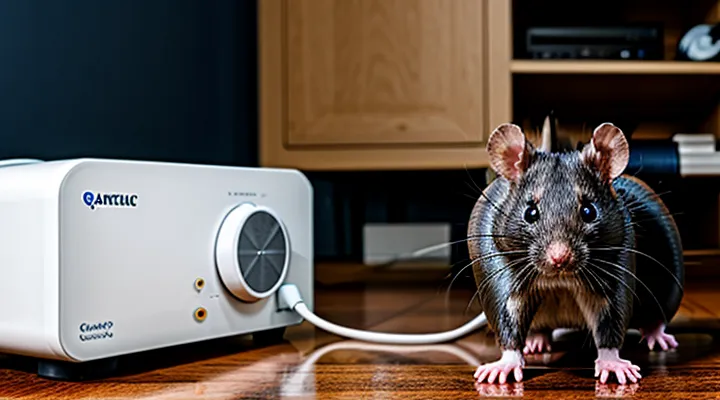
Understanding Ultrasonic Repellers
How They Work
The Science Behind Ultrasonic Pest Control
Ultrasonic pest control relies on high‑frequency sound waves that exceed the audible range of humans but fall within the hearing sensitivity of rodents. Laboratory studies have identified peak sensitivity for rats and mice between 20 kHz and 50 kHz, with the most pronounced aversive response occurring near 30 kHz. When a device emits a continuous or pulsed tone within this band, the animals experience discomfort, leading to avoidance of the treated area.
The effectiveness of an ultrasonic repeller depends on several physical parameters:
- Frequency selection: Must match the species‑specific hearing range; frequencies below 20 kHz lose efficacy, while those above 50 kHz are less perceptible.
- Intensity (sound pressure level): Sufficient amplitude (typically 80–100 dB SPL at the source) is required to overcome ambient noise and reach the target distance.
- Modulation pattern: Pulsed or varying frequencies reduce the likelihood of habituation, a process where rodents become desensitized to a constant tone.
- Coverage area: Speaker placement and directional output determine the radius of effective treatment, usually 10–20 feet for household models.
Safety considerations are grounded in the fact that ultrasonic waves do not affect human tissue or most domestic pets, whose hearing thresholds differ. However, prolonged exposure may cause stress in certain animal species; manufacturers therefore design devices with automatic shut‑off timers or adaptive duty cycles to limit continuous operation.
Field trials in residential settings have demonstrated a measurable decline in rodent activity when devices are installed near entry points, food storage areas, and nesting sites. Success rates improve when ultrasonic units are combined with physical exclusion methods, such as sealing gaps and maintaining sanitation, because the acoustic stimulus alone cannot eliminate established colonies.
Understanding these scientific principles guides consumers in selecting reliable ultrasonic repellents and informs retailers about product specifications that meet efficacy standards.
Types of Ultrasonic Waves and Frequencies
Ultrasonic pest deterrents rely on waveforms that disrupt rodent auditory perception. Manufacturers design devices with three principal wave types: continuous waves that emit a steady tone, pulsed waves that deliver short bursts separated by silent intervals, and frequency‑modulated waves that sweep across a range of pitches. Each type targets different aspects of rodent hearing and can affect habituation rates.
The effectiveness of a device depends on the frequency band it covers. Rodents hear between 20 kHz and 80 kHz, with peak sensitivity around 30 kHz to 50 kHz. Devices typically operate in one or more of the following bands:
- 20 kHz – 30 kHz: low‑frequency range, audible to some larger rodents, useful for broader coverage.
- 30 kHz – 50 kHz: optimal sensitivity zone for rats and mice, most common in commercial models.
- 50 kHz – 70 kHz: higher range, reduces the chance of habituation but may require more power.
Choosing a repeller involves matching the wave type and frequency band to the target species and the environment where the device will be installed. Continuous low‑frequency emitters suit open spaces, while pulsed or frequency‑modulated units with higher frequencies are preferable for confined areas where rodents may adapt to a single tone.
Effectiveness and Limitations
What to Expect from Ultrasonic Repellers
Ultrasonic repellers emit high‑frequency sound waves that rodents cannot hear but find uncomfortable. The devices typically operate between 20 kHz and 65 kHz, a range that interferes with the auditory system of rats and mice, causing them to avoid the area.
Effectiveness depends on several factors:
- Coverage radius – manufacturers specify a nominal area (often 500–1,200 sq ft). Real‑world performance declines near walls, furniture, and open doors.
- Frequency cycling – models that vary frequencies reduce the chance that rodents habituate to a single tone.
- Power source – plug‑in units provide continuous operation; battery‑powered devices may lose intensity as the charge depletes.
- Placement – optimal results occur when the unit is positioned centrally, away from direct obstructions, and at a height of 4–6 ft.
Ultrasonic repellers do not kill pests; they create a deterrent zone. Success rates reported by independent studies range from 30 % to 70 % when the device is installed correctly and combined with sanitation measures. The sound is inaudible to humans and most pets, though some small mammals (e.g., hamsters) may be affected.
Maintenance requirements are minimal: periodic cleaning of the speaker grille and replacement of batteries (if applicable) restore full output. Devices generally have a warranty of one to two years, covering defects in the emitter circuitry.
In summary, users can expect a non‑chemical, low‑maintenance solution that reduces rodent activity within the specified coverage area, provided the unit is placed properly and the environment is kept free of food sources that might override the ultrasonic deterrent.
Factors Affecting Performance
When selecting an ultrasonic device to deter rats and mice, performance hinges on several technical and environmental parameters. Understanding these variables helps buyers identify models that deliver reliable results.
- Frequency spectrum – Effective devices emit frequencies between 20 kHz and 65 kHz. Lower ranges target larger rodents; higher ranges affect smaller species. A broad spectrum increases the likelihood of reaching all target pests.
- Power output – Measured in milliwatts, higher output extends the audible field and improves penetration through obstacles. Insufficient power limits coverage to a narrow zone.
- Coverage radius – Manufacturers specify a maximum radius, but real‑world reach depends on wall material, furniture, and ceiling height. Devices rated for larger spaces usually incorporate stronger transducers.
- Power source – Plug‑in units provide constant energy, while battery‑operated models may suffer reduced output as voltage drops. Continuous operation favors mains‑powered devices for long‑term infestations.
- Placement flexibility – Adjustable angles and mounting options enable optimal positioning near entry points, nesting areas, and travel corridors. Fixed‑direction units can leave blind spots.
- Ambient noise interference – Background sounds above 20 kHz, such as certain electronic equipment, can mask ultrasonic emissions. Quiet environments enhance device effectiveness.
- Species‑specific sensitivity – Rats and mice respond differently to frequency bands. Devices calibrated for both species offer broader protection than those tuned to a single frequency.
- Build quality – Durable housings resist moisture, dust, and physical impact, maintaining consistent output over time. Low‑cost plastic casings may crack, reducing performance.
- Warranty and support – Extended warranties and accessible customer service indicate manufacturer confidence and provide recourse if performance declines.
Evaluating each factor against the intended setting—whether a residential kitchen, a warehouse, or a farm building—allows purchasers to match a product’s specifications with real‑world demands, ensuring the ultrasonic repeller functions as intended.
Common Misconceptions
Purchasers often assume that any ultrasonic device sold online will effectively eliminate rodent activity. In reality, efficacy varies with frequency range, coverage area, and species‑specific hearing thresholds. Selecting a model without verifying these specifications leads to disappointment.
A second myth claims that higher price guarantees superior performance. Market analysis shows that many premium‑priced units rely on marketing rather than engineering. Independent reviews reveal mid‑range products that meet or exceed the output of expensive alternatives.
Some buyers believe that a single unit can protect an entire property. Ultrasonic waves dissipate quickly through walls and furniture; comprehensive coverage typically requires multiple devices placed strategically. Overlooking this limitation results in untreated zones where rodents can thrive.
Another misconception is that ultrasonic repellers work instantly. Rodents may need several days of continuous exposure before avoidance behavior appears, and some individuals may never respond. Expecting immediate results can cause premature replacement of the equipment.
Finally, users frequently think that all retailers offer the same warranty and support. Specialized distributors often provide technical assistance, return policies, and replacement parts that general marketplaces lack. Comparing service terms before purchase prevents future logistical issues.
Where to Purchase Ultrasonic Repellers
Online Retailers
Major E-commerce Platforms
Major online marketplaces supply ultrasonic rodent repellers with extensive product selections, competitive pricing, and reliable delivery options.
- Amazon – broad catalog, customer ratings, Prime shipping, 30‑day return window.
- eBay – new and refurbished units, auction and fixed‑price formats, buyer protection program.
- Walmart.com – store‑pickup availability, free two‑day shipping on qualifying orders, in‑store return policy.
- Target.com – curated assortment, same‑day delivery in select regions, 90‑day return period.
- Home Depot – focus on home‑improvement brands, curbside pickup, 30‑day return with receipt.
- Chewy – pet‑oriented inventory, auto‑ship discounts, 30‑day return for unopened items.
- Wayfair – design‑focused listings, free shipping on orders over a set amount, 30‑day return.
Each platform offers searchable filters for device frequency range, coverage area, and power source, enabling efficient comparison and purchase.
Specialty Pest Control Websites
Specialty pest‑control websites aggregate products designed specifically for rodent management, making them a reliable channel for acquiring ultrasonic deterrents. These platforms typically list devices with detailed specifications, such as frequency range, coverage area, and power source, allowing precise matching to the size of the infestation zone. Vendor credibility is supported by customer reviews, certification badges, and clear return policies, which reduce purchase risk.
Key advantages of using dedicated pest‑control portals include:
- Access to professional‑grade models not found on general marketplaces.
- Comparison tools that display side‑by‑side technical data.
- Direct communication with manufacturers or certified distributors for technical advice.
- Frequently updated inventory reflecting the latest regulatory approvals.
When evaluating a site, verify the presence of:
- Verified contact information and physical address.
- Transparent warranty terms and service agreements.
- Secure payment processing and encrypted checkout.
- Documentation of compliance with local pest‑control regulations.
By selecting a reputable specialty website, buyers obtain devices that meet industry standards, benefit from expert support, and enjoy streamlined delivery options tailored to residential or commercial settings.
Manufacturer Direct Sales
Purchasing an ultrasonic rodent deterrent directly from the producer eliminates middle‑man markup and provides access to the latest model specifications. Manufacturers typically host dedicated e‑commerce portals where customers can browse product families, compare output frequencies, and read technical datasheets.
When evaluating a direct‑sale source, consider the following criteria:
- Authenticity certification confirming factory origin.
- Comprehensive warranty terms, often extending beyond standard retail coverage.
- Availability of technical support channels, such as live chat or dedicated account managers.
- Transparent pricing that includes bulk‑order discounts and freight calculations.
The ordering workflow usually follows these steps:
- Register on the manufacturer’s website to create a client profile.
- Select the desired ultrasonic repeller model, specifying coverage area and power rating.
- Enter shipping details and choose a delivery option; many producers offer expedited courier services for domestic orders.
- Complete payment through secure gateways (credit card, bank transfer, or approved digital wallets).
- Receive an order confirmation containing a tracking number and estimated arrival date.
Direct acquisition also simplifies after‑sales service. Returns and repairs are processed through the factory’s service center, reducing turnaround time compared with third‑party retailers. Some producers provide downloadable firmware updates, ensuring the device remains effective against evolving rodent behavior patterns.
To locate reputable manufacturers, search industry directories, verify ISO certifications, and review customer testimonials on the vendor’s official site. Engaging with the producer directly yields precise product information, competitive pricing, and streamlined support for maintaining a rodent‑free environment.
Brick-and-Mortar Stores
Home Improvement Stores
Home improvement retailers are a practical option for acquiring ultrasonic devices that deter rats and mice. Large chains such as Lowe’s, The Home Depot, and Menards stock multiple models, typically positioned in the pest‑control or electrical‑tools aisles. These stores often display product specifications on the shelf, allowing direct comparison of frequency range, coverage area, and power source.
Purchasing from a home‑improvement outlet provides several advantages. Trained staff can answer questions about installation requirements, safety clearances, and compatibility with existing wiring. In‑store inventory enables immediate acquisition, eliminating shipping delays. Return policies are usually straightforward, with a standard 30‑day window for defective units.
When evaluating selections, consider the following criteria:
- Frequency band (20‑65 kHz covers most rodent species)
- Effective radius (larger spaces need higher‑output units)
- Power type (plug‑in versus battery‑operated)
- Warranty length (minimum one year recommended)
Most retailers also offer online ordering with curbside pickup, which combines the convenience of e‑commerce with the certainty of in‑stock availability. Price points at these stores range from roughly $30 for basic models to $120 for premium units with extended coverage and smart‑phone connectivity.
For customers seeking professional guidance, many locations host seasonal workshops on pest‑prevention, during which experts demonstrate proper placement of ultrasonic emitters. Selecting a home‑improvement store thus ensures access to a broad product line, knowledgeable assistance, and reliable after‑sale support.
Hardware Stores
Hardware stores frequently stock ultrasonic devices designed to deter rats and mice. These retailers usually keep a limited but reliable selection, making them a practical option for immediate purchase.
When visiting a hardware outlet, consider the following factors:
- Device specifications – Verify frequency range (typically 20–65 kHz) and coverage area, ensuring it matches the size of the targeted space.
- Power source – Choose between plug‑in models and battery‑operated units based on accessibility to outlets.
- Warranty and return policy – Confirm the length of manufacturer warranty and store’s procedure for returns or exchanges.
- In‑store assistance – Staff can provide guidance on installation height, optimal placement, and safety precautions.
Pricing at hardware chains varies from budget models around $25 to premium units exceeding $80. Larger chains often run seasonal promotions, while independent stores may offer personalized advice and local inventory checks.
If the desired model is not on the shelf, most hardware retailers can order it through their distribution network, typically delivering within a few business days. Providing the product’s SKU or manufacturer name streamlines this process.
Overall, hardware stores combine convenience, immediate availability, and knowledgeable staff, making them a reliable venue for acquiring ultrasonic rodent deterrents.
Electronic Retailers
Electronic retailers provide the most accessible channels for acquiring ultrasonic rodent deterrents. Large brick‑and‑mortar chains such as Best Buy, Walmart, and Target stock a range of models, often featuring in‑store displays that allow inspection of device specifications. Their online storefronts extend inventory, enable price comparison, and support expedited shipping.
Online marketplaces expand options beyond physical stores. Amazon offers a comprehensive catalog, including brand‑specific filters for frequency range, coverage area, and power source. Newegg specializes in consumer electronics, frequently listing models with detailed technical data sheets. B&H Photo Video curates professional‑grade units, accompanied by expert reviews and warranty information.
When selecting a retailer, consider the following criteria:
- Availability of manufacturer warranty and return policy.
- Shipping speed and cost, especially for bulk purchases.
- Customer service responsiveness for troubleshooting.
- Presence of verified user reviews that address device efficacy.
Specialized electronics outlets, such as Micro Center and Fry’s Electronics (where operational), provide knowledgeable staff capable of advising on installation requirements and compatibility with home power systems. Their inventory often includes accessories such as mounting brackets and extended power adapters.
For price‑sensitive buyers, warehouse clubs like Costco and Sam’s Club list ultrasonic deterrents at discounted rates, though stock may be limited to select models. Corporate procurement programs at these clubs can secure bulk pricing for property‑management firms.
In summary, electronic retailers—both physical and digital—deliver the broadest selection, reliable after‑sales support, and flexible delivery options for consumers seeking ultrasonic solutions to rodent infestations.
Other Avenues
Local Pest Control Suppliers
Local pest‑control distributors provide a practical avenue for obtaining ultrasonic devices that deter rats and mice. These businesses typically stock a range of models, from compact units suitable for apartments to larger systems designed for warehouses or farms.
When selecting a supplier, consider the following criteria:
- Licensing and certification – Verify that the company holds the appropriate pest‑management credentials required by state or municipal regulations.
- Product warranty – Choose vendors that offer a minimum one‑year warranty and clear return‑policy terms.
- Technical support – Ensure access to qualified technicians who can assist with installation, calibration, and troubleshooting.
- Inventory transparency – Prefer suppliers that list model specifications, frequency ranges, and coverage areas on their websites or catalogs.
- Customer reviews – Review recent feedback from homeowners or commercial clients to gauge reliability and after‑sale service quality.
Contact methods vary by region. Many providers list a local office phone number and email address; some also operate a storefront where devices can be examined before purchase. In addition, regional trade associations often maintain directories of vetted pest‑control firms, allowing quick identification of nearby options.
To acquire an ultrasonic rodent deterrent, follow this streamlined process:
- Identify certified local pest‑control firms through online directories or industry association listings.
- Compare the listed models against the coverage requirements of the target area.
- Request a quotation that includes unit price, warranty details, and installation fees.
- Confirm the supplier’s service agreement, focusing on response time for maintenance visits.
- Arrange purchase and schedule professional installation, if required, to ensure optimal device placement and effectiveness.
Agricultural Supply Stores
Agricultural supply stores frequently stock ultrasonic devices designed to deter rats and mice, making them a practical option for acquiring this type of equipment. These retailers often carry multiple brands, ranging from basic models to advanced units with adjustable frequencies and extended coverage areas, allowing buyers to match a product to the size of the field, barn, or storage facility.
Inventory typically includes:
- Devices with power ratings suitable for small sheds or large grain silos.
- Models featuring solar panels or battery backup for off‑grid locations.
- Accessories such as mounting brackets, protective housings, and spare transducers.
When choosing a store, consider the following factors:
- Proximity to the farm or property to reduce shipping time and cost.
- Staff knowledge of rodent control technology, enabling informed recommendations.
- Clear return and warranty policies that protect the investment.
- Availability of after‑sale support, such as installation guidance or troubleshooting assistance.
Many agricultural supply outlets also provide supplemental services, including on‑site assessment of infestation levels and advice on optimal device placement. Purchasing through these channels often yields immediate access to the product, local expertise, and the possibility of bundled discounts for multiple units.
Choosing the Right Ultrasonic Repeller
Key Features to Consider
Coverage Area
Ultrasonic rodent deterrents are rated by the area they can protect, expressed in square feet or meters. The rating indicates the distance at which the emitted sound remains strong enough to discourage rats and mice without causing discomfort to humans or pets.
Coverage depends on several variables. Solid walls, furniture, and ceiling height absorb or reflect ultrasonic waves, reducing effective range. Higher‑frequency models lose power faster than lower‑frequency units, while battery‑operated devices often have shorter reach than plug‑in models.
Typical consumer products list coverage from 500 sq ft (≈46 m²) for single‑room units up to 1,500 sq ft (≈140 m²) for whole‑house solutions. Devices claiming more than 2,000 sq ft usually combine multiple emitters or employ higher output power.
When selecting a purchase source, verify the coverage specification on the product page. Compare the listed area with the floor plan of the intended space; choose a model whose rating exceeds the total square footage by at least 10‑15 % to accommodate obstacles. Read user reviews for real‑world performance, as laboratory figures may differ from household conditions.
Common channels for acquiring these devices include:
- Major e‑commerce platforms (Amazon, eBay) – detailed specifications and customer feedback are readily available.
- Specialty pest‑control retailers (DoMyOwn, Pest‑Free) – curated selections with expert advice on matching coverage to environment.
- Home‑improvement chains (Home Depot, Lowe’s) – in‑store displays often allow inspection of packaging that lists coverage area.
By confirming that the advertised protection zone aligns with the size of the area to be treated, buyers can ensure effective rodent control while avoiding under‑performance.
Power Source and Portability
When selecting an ultrasonic device to deter rodents, the power source directly influences where the product can be placed and how easily it can be moved. Most models rely on one of three options:
- Standard AC adapters – provide continuous operation, ideal for indoor use near outlets; require a permanent power connection.
- Disposable alkaline batteries – enable placement in locations without electricity, such as attics or sheds; limited runtime typically ranges from 30 to 60 days.
- Rechargeable lithium‑ion packs – combine the convenience of battery operation with longer life cycles; often include USB charging ports for quick replenishment.
Portability considerations include weight, form factor, and mounting flexibility. Lightweight units (under 200 g) can be handheld for temporary deployment or attached to portable scaffolding. Compact designs fit into tight spaces, while models with built‑in clips or magnetic bases simplify installation on metal surfaces. Devices that offer both AC and battery operation provide the greatest adaptability, allowing users to relocate the repeller without sacrificing performance.
Additional Technologies (e.g., Electromagnetic)
When selecting a rodent deterrent, consider devices that combine ultrasonic output with electromagnetic fields. Electromagnetic models emit low‑frequency waves that disrupt the nervous system of rats and mice, complementing the acoustic deterrence. Some products integrate both technologies, offering broader coverage and reduced habituation.
Key points for acquiring such devices:
- Major e‑commerce sites (Amazon, eBay, Walmart) list combined ultrasonic‑electromagnetic units; filter results by “rodent repeller” and review specifications for dual‑mode operation.
- Home‑improvement chains (Home Depot, Lowe’s) carry branded models; staff can verify the presence of electromagnetic circuitry.
- Specialized pest‑control suppliers (Orkin, Terminix, Pest‑Control‑Products.com) provide professional‑grade units, often with warranty and technical support.
- Direct manufacturer portals (e.g., PestAway, Victor) allow purchase of the latest dual‑technology designs, sometimes offering bulk discounts for commercial use.
When evaluating options, verify the following:
- Frequency range of the ultrasonic component (typically 20–65 kHz).
- Magnetic field strength and safety certifications for the electromagnetic element.
- Coverage area, power source (battery or mains), and durability rating.
Purchasing from reputable vendors ensures compliance with safety standards and access to customer service for installation assistance.
Durability and Weather Resistance
When selecting an ultrasonic device for rodent control, durability determines long‑term effectiveness. Look for models built with high‑impact plastics or reinforced housings that resist cracking under repeated handling. Devices featuring sealed electronics and corrosion‑resistant connectors survive exposure to moisture, chemicals, and dust without degradation.
Weather resistance is critical for outdoor installations. Choose units with an IP rating of at least IP44, indicating protection against splashing water and solid particles. Confirm that the manufacturer specifies operating temperature limits that encompass local climate extremes, typically –20 °C to +50 °C. UV‑stabilized casings prevent fading and brittleness caused by prolonged sunlight.
Key durability and weather‑proof criteria:
- Impact‑resistant enclosure material (e.g., polycarbonate, ABS)
- IP44 or higher waterproof rating
- Temperature operating range covering local seasonal variations
- UV‑protected exterior surface
- Warranty period of 2 years or more, indicating confidence in build quality
These specifications ensure the repeller remains functional throughout the year, reducing the need for replacement and maintaining consistent rodent deterrence.
Reading Reviews and Ratings
Identifying Reputable Brands
When selecting an ultrasonic device to deter rodents, the credibility of the manufacturer determines performance, durability, and safety. Reliable brands typically demonstrate a combination of regulatory compliance, transparent specifications, and positive consumer feedback.
Key indicators of a trustworthy producer include:
- Certification from agencies such as UL, CE, or FCC, confirming that the unit meets electromagnetic emission standards.
- Detailed technical data sheets that list frequency range (usually 20‑65 kHz), power output, and coverage area, allowing precise matching to the intended environment.
- Independent laboratory testing results, often posted on the company’s website or referenced in third‑party reviews.
- A clear warranty policy, commonly ranging from one to three years, indicating confidence in product longevity.
- Active customer support channels, including phone, email, and live chat, that respond promptly to technical inquiries.
Prominent manufacturers recognized for meeting these criteria are:
- Pest Repeller Pro – offers models with adjustable frequency settings and documented field trials showing up to 85 % reduction in rodent activity.
- RodentGuard – provides devices with integrated safety sensors that deactivate the emitter when pets approach, certified by the FCC.
- EcoWave – emphasizes eco‑friendly production, supplies comprehensive usage manuals, and maintains a five‑year warranty.
- Ultrasonix – features a multi‑zone system capable of covering up to 3,000 sq ft, backed by UL certification and extensive user reviews.
Before purchasing, verify that the seller lists the brand’s certification numbers, includes the original packaging, and offers a return policy. Purchasing directly from the manufacturer’s official website or authorized distributors reduces the risk of counterfeit products and ensures access to post‑sale assistance.
Common Customer Feedback
Customers frequently comment on three aspects when selecting purchasing channels for ultrasonic rodent deterrents: product reliability, purchasing experience, and after‑sale support.
Reliability feedback often highlights that devices bought from large e‑commerce platforms deliver consistent performance, while items sourced from obscure vendors sometimes exhibit reduced range or intermittent operation. Users also note that products listed with detailed specifications and verified reviews tend to meet expectations more reliably than those with minimal information.
Purchasing experience feedback includes delivery speed, packaging integrity, and price transparency. Orders placed through major online retailers typically arrive within 2‑5 business days, with sturdy packaging that protects the unit. Discounted listings on third‑party marketplaces occasionally result in delayed shipments or missing accessories, prompting buyers to verify seller ratings before purchase.
After‑sale support feedback emphasizes warranty clarity and responsiveness. Brands that provide a clearly stated warranty period and an accessible customer‑service channel receive positive remarks, whereas sellers offering limited or ambiguous return policies generate complaints. Many customers appreciate the option to obtain replacement parts directly from the manufacturer rather than through intermediaries.
Common feedback summary:
- Consistent performance: high‑rating listings on reputable sites.
- Fast, secure delivery: standard shipping from well‑known platforms.
- Transparent pricing: detailed cost breakdown, no hidden fees.
- Robust warranty: explicit terms, easy claim process.
- Responsive support: accessible contact methods, prompt resolution.
Price Comparison and Value
When evaluating ultrasonic rodent deterrents, price alone does not determine overall worth. A systematic comparison of cost structures across common purchase channels clarifies which options deliver the most effective protection for the investment.
-
Online marketplaces (e.g., Amazon, eBay) – Prices range from $25 to $70. Models in the lower bracket typically cover 400‑600 sq ft, lack adjustable frequencies, and offer a 90‑day warranty. Mid‑range units ($45‑$60) extend coverage to 1,000 sq ft, include dual‑frequency settings, and provide a 1‑year warranty. Premium listings exceed $70, often feature 2,000‑sq‑ft coverage, smart‑phone integration, and a 2‑year warranty.
-
Big‑box home improvement stores (Home Depot, Lowe’s) – Prices cluster between $40 and $80. Most products match the mid‑range online specifications, but store‑exclusive brands may add a 5‑year limited warranty for an additional $10‑$15.
-
Specialized pest‑control retailers (DoMyOwn, Pest‑Free Solutions) – Prices start around $55 and can reach $120. These offerings frequently include professional installation, a lifetime guarantee on the ultrasonic component, and access to technical support. The higher upfront cost is offset by reduced maintenance expenses.
-
Manufacturer direct websites (e.g., PestAway, RatGuard) – Prices mirror the premium tier ($80‑$120). Direct purchase often bundles accessories such as mounting hardware and extended warranty extensions, and provides access to firmware updates that improve efficacy over time.
Value assessment depends on three measurable criteria:
- Coverage efficiency – Cost per square foot declines as coverage area expands; a $70 unit covering 2,000 sq ft yields $0.035 per sq ft, markedly lower than a $30 unit covering 400 sq ft ($0.075 per sq ft).
- Feature set – Adjustable frequencies, dual‑mode operation (ultrasonic + electromagnetic), and integration with smart home platforms increase functional utility and justify higher prices.
- Support longevity – Warranty length and availability of technical assistance reduce long‑term ownership costs; a 2‑year warranty typically adds $5‑$10 in value compared with a 90‑day guarantee.
Based on the data, the most cost‑effective choice for residential use is a mid‑range model priced around $50‑$60, offering 1,000 sq ft coverage, dual‑frequency control, and a 1‑year warranty. For commercial or large‑area applications, premium units priced $80‑$100 deliver superior coverage per dollar and include extended support, resulting in a lower overall cost of protection.
Installation and Placement Tips
Optimal Location for Maximum Efficacy
Understanding Sound Propagation
Sound propagation determines how ultrasonic devices affect rodents. Ultrasonic waves travel as compressions and rarefactions through air, with frequency, wavelength, and amplitude shaping their reach. Frequencies above 20 kHz exceed human hearing, yet rodents perceive sounds up to 80–100 kHz; devices must emit within this band to trigger avoidance behavior.
Propagation efficiency depends on medium density, temperature, and humidity. Warmer, drier air reduces attenuation, allowing signals to cover larger zones. Obstacles such as walls, furniture, and insulation scatter or absorb energy, creating dead zones where the repeller’s output drops below the detection threshold of rats and mice.
When selecting a purchase source, evaluate the following technical specifications:
- Emission frequency range (e.g., 30–50 kHz) matched to rodent hearing limits.
- Output power measured in milliwatts; higher power extends coverage but may increase battery consumption.
- Beam pattern (omnidirectional vs. directional) to suit the layout of the target area.
- Warranty and return policy to mitigate risk of defective units.
Understanding these propagation principles guides buyers toward products that deliver consistent ultrasonic fields, ensuring the device functions as intended in typical residential or commercial environments.
Avoiding Obstructions
When purchasing an ultrasonic rodent repeller, the device’s effectiveness depends largely on unobstructed transmission of sound waves. Solid surfaces—walls, cabinets, large appliances—reflect or absorb ultrasonic frequencies, creating dead zones where rodents remain unaffected. Open pathways between the unit and the target area preserve the acoustic field and maintain the intended coverage radius.
To prevent interference, follow these guidelines:
- Position the unit at least 12 inches away from any solid object.
- Mount the device on a wall or ceiling where the line of sight to the floor is clear.
- Avoid placing the repeller behind metal furniture, stacked books, or dense insulation.
- Ensure the surrounding area is free of curtains, rugs, or acoustic panels that could dampen the signal.
- Verify that the chosen model lists a clear, obstruction‑free coverage map in its specifications.
Select a retailer that provides detailed placement instructions and offers a return policy for units that fail to meet advertised coverage. Confirm that the product’s frequency range (typically 20–65 kHz) matches the manufacturer’s claim for open‑space operation before finalizing the purchase.
Number of Units Required
Multi-Room and Multi-Level Considerations
When selecting an ultrasonic rodent deterrent for a property that spans several rooms or multiple floors, evaluate the device’s effective coverage area. Manufacturers typically specify a radius in meters; multiply that radius by two to obtain the diameter and compare it with the dimensions of each space. If a single unit cannot encompass an entire floor, plan for additional units that can operate together without frequency overlap.
Key factors for multi‑room and multi‑level applications:
- Coverage radius – ensure the advertised range exceeds the longest linear distance in the target area.
- Signal penetration – solid walls, metal studs, and dense insulation diminish ultrasonic propagation; choose models rated for high‑density construction.
- Unit interconnectivity – some devices allow linking via wireless or wired networks to synchronize emission patterns and avoid dead zones.
- Mounting flexibility – ceiling, wall, or shelf mounting options enable placement at optimal heights (generally 2–2.5 m) where rodent activity is greatest.
- Power source – consider plug‑in versus battery‑operated units; battery models simplify placement in hard‑to‑reach locations.
- Adjustable frequency – models with selectable frequencies reduce habituation risk across different zones.
Purchase channels include major e‑commerce platforms, dedicated pest‑control suppliers, and local hardware retailers. Prioritize vendors that provide:
- Comprehensive warranty covering at least two years.
- Clear return policy for defective or mismatched units.
- Access to technical support for installation guidance.
Implementation steps:
- Sketch a floor plan and mark obstacles that could block sound.
- Calculate the number of units required by dividing total floor area by the effective coverage area of a single device, adding one extra unit for overlap.
- Install units according to manufacturer‑recommended heights and orientations.
- Verify performance by observing rodent activity for 48 hours; adjust placement or add units if hotspots persist.
Maintenance and Care
After acquiring an ultrasonic rodent deterrent, regular upkeep ensures consistent performance and prolongs device lifespan.
First, position the unit according to manufacturer guidelines: mount it high on a wall or place it on a stable surface, keeping it at least 12 inches away from metal objects, large furniture, or water sources that could interfere with ultrasonic transmission.
Second, schedule cleaning every 30 days. Unplug the device, wipe the exterior with a soft, dry cloth, and remove dust from vents using a compressed‑air canister or a small brush. Do not apply liquids or abrasive cleaners, as moisture can damage internal components.
Third, verify battery health or power‑supply integrity. For battery‑operated models, replace cells with fresh alkaline or lithium batteries when the indicator flashes or the device emits a weaker tone. For plug‑in units, inspect the cord for fraying and confirm that the outlet provides stable voltage.
Fourth, monitor effectiveness. After two weeks, assess rodent activity; if sightings persist, relocate the unit to a different corner or adjust the frequency setting if the model offers multiple modes.
Maintenance checklist:
- Install according to clearance specifications.
- Clean exterior and vents monthly.
- Replace batteries or check cord condition regularly.
- Re‑evaluate placement and settings bi‑weekly.
Adhering to these steps maintains ultrasonic output, prevents premature failure, and maximizes the deterrent’s impact on rats and mice.
Alternatives and Complementary Solutions
Other Pest Control Methods
Traps and Baits
Purchasers seeking a comprehensive rodent‑control strategy often complement ultrasonic devices with mechanical traps and chemical baits.
Snap traps provide immediate termination, feature steel jaws calibrated for 100 g‑250 g rodents, and require periodic resetting. Live‑capture traps employ spring‑loaded doors, allow relocation of captured animals, and demand humane handling procedures. Electronic traps deliver a high‑voltage shock, eliminate the need for disposal of carcasses, and include indicator LEDs for activity monitoring.
Poison baits consist of anticoagulant or bromethalin formulations, packaged in tamper‑resistant containers to reduce accidental exposure. Food‑based attractants, such as grain or peanut butter mixtures, increase bait acceptance and can be placed in sealed stations. Both bait types require compliance with local pest‑control regulations and proper placement away from non‑target species.
Reliable acquisition channels include:
- Large‑scale e‑commerce platforms (e.g., Amazon, eBay) that list certified products, customer reviews, and warranty information.
- Home‑improvement chains (e.g., Home Depot, Lowe’s) offering in‑store inventory checks and immediate pickup.
- Specialty pest‑control suppliers (e.g., Pest‑Solutions, Orkin) that provide expert guidance and bulk pricing.
- Manufacturer websites that sell directly, often with detailed specifications and support resources.
When selecting a vendor, verify product certifications (UL, EPA), confirm return policies, and compare unit costs against anticipated usage rates. Combining ultrasonic repellents with appropriately chosen traps and baits enhances overall efficacy and reduces infestation recurrence.
Professional Extermination Services
Professional pest control firms specialize in eliminating rodent infestations that ultrasonic devices cannot fully resolve. Certified technicians assess structural vulnerabilities, identify entry points, and apply integrated methods—traps, baits, and sealing techniques—to achieve lasting results.
When evaluating a service provider, consider the following criteria:
- Licensing and accreditation from recognized pest‑management authorities.
- Documented experience with rat and mouse control in residential or commercial settings.
- Transparent pricing that separates inspection fees, treatment costs, and follow‑up visits.
- Guarantees or warranties covering re‑infestation within a defined period.
- Availability of post‑treatment monitoring and client support.
Combining a reliable ultrasonic deterrent with professional extermination enhances overall efficacy. The device disrupts rodent activity, while experts address hidden nests and prevent re‑entry, reducing the likelihood of recurrence.
Engaging a qualified extermination service also ensures compliance with local health regulations and proper disposal of captured rodents, safeguarding occupants and property.
Integrated Pest Management
Sealing Entry Points
Sealing entry points is a prerequisite for effective rodent control before acquiring an ultrasonic repeller. Identify gaps larger than ¼ inch in foundations, walls, doors, windows, and utility penetrations. Use steel wool, copper mesh, or silicone caulk to fill cracks; install door sweeps and weather stripping on exterior doors. Repair damaged screens and cover vent openings with fine mesh. Apply expanding foam to larger voids around pipes and cables, then trim excess material. Secure foundation cracks with hydraulic cement to prevent burrowing.
A concise checklist for preparation:
- Inspect exterior and interior perimeters for openings.
- Prioritize sealing around plumbing, electrical conduits, and HVAC ducts.
- Choose durable, rodent‑resistant materials (steel wool, metal flashing, heavy‑duty caulk).
- Apply sealants after cleaning debris and drying surfaces.
- Verify that all closures are tight before installing the ultrasonic device.
Completing these steps reduces the likelihood that rats and mice will bypass the repeller, maximizes the device’s coverage, and extends its operational lifespan.
Sanitation Practices
Effective rodent control depends on more than the placement of an ultrasonic device; it requires strict sanitation to eliminate attractants and reduce population pressure. Clean environments limit food sources, water, and shelter, ensuring the repeller operates under optimal conditions.
Key sanitation measures include:
- Remove all accessible food waste, store dry goods in sealed containers, and clean spills immediately.
- Eliminate standing water by fixing leaks, draining puddles, and regularly emptying pet water dishes.
- Dispose of rodent droppings and nests using gloves and a disinfectant solution; avoid sweeping dry debris, which can aerosolize pathogens.
- Seal cracks, gaps, and openings around doors, windows, and utility penetrations to prevent entry.
- Maintain regular cleaning schedules for kitchens, storage areas, and waste disposal zones, focusing on corners and hidden spaces.
Consistent application of these practices reduces the likelihood of infestation, enhances the ultrasonic repeller’s reach, and supports long‑term pest management. When evaluating suppliers, prioritize vendors that provide clear guidance on sanitation protocols alongside the device specifications.