
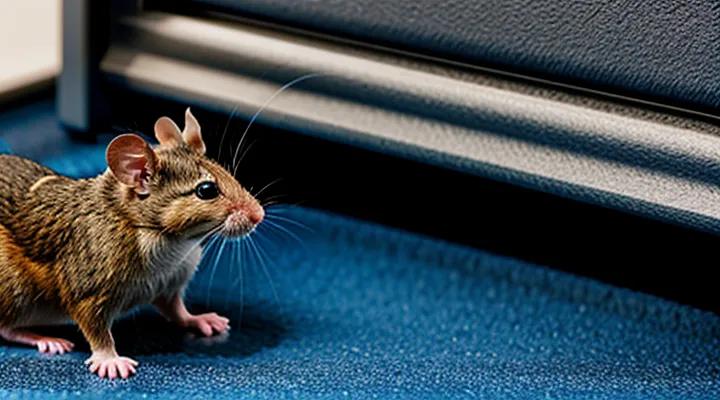
Understanding Ultrasonic Pest Repellers
The Science Behind Ultrasound and Pests
Ultrasound refers to sound waves above the human audible limit of 20 kHz. Mice detect frequencies up to approximately 90–100 kHz, with peak sensitivity between 40 and 60 kHz. When a high‑frequency tone enters the mouse’s auditory canal, the cochlea converts the pressure fluctuations into neural signals that trigger a startle reflex and avoidance behavior.
Effectiveness depends on three variables: frequency, sound pressure level (SPL), and exposure geometry. Laboratory measurements indicate that tones in the 45–65 kHz range, delivered at SPL ≥ 80 dB measured at 1 m, produce consistent avoidance in controlled arenas. Frequencies below 30 kHz fail to reach the mouse’s most sensitive region, while tones above 80 kHz often lead to rapid habituation because the auditory system adapts to continuous stimulation.
Key factors influencing field performance:
- Obstructions: solid barriers absorb or reflect ultrasonic energy, reducing SPL behind the obstacle.
- Distance: SPL decreases roughly 6 dB per doubling of distance in open air, limiting effective radius to 2–3 m for typical consumer units.
- Ambient noise: broadband noise below 20 kHz does not interfere, but high‑frequency background sounds can mask the emitted tone.
- Habituation: exposure longer than 30 minutes per day accelerates desensitization; intermittent cycles (e.g., 5 min on, 15 min off) mitigate this effect.
Empirical studies report a 70–85 % reduction in mouse activity within the optimal frequency band for the first 24 hours of deployment. Repeated trials over a week show a decline to 30–40 % as habituation sets in, emphasizing the need for periodic frequency modulation or timed shutdowns.
Practical guidelines for ultrasonic pest deterrents:
- Emit frequencies between 45 kHz and 65 kHz.
- Maintain SPL of at least 80 dB at the target zone.
- Position devices to minimize line‑of‑sight obstructions and cover high‑traffic pathways.
- Operate on a duty cycle that includes off‑periods to prevent habituation.
- Verify that emitted tones remain above 20 kHz to avoid audible disturbance to humans.
Adhering to these parameters maximizes the likelihood that ultrasonic emissions will repel mice while limiting the risk of ineffective or counterproductive outcomes.
How Ultrasonic Devices Work
Ultrasonic pest‑control devices generate sound waves above the human hearing threshold, typically between 20 kHz and 100 kHz. A piezoelectric transducer converts electrical voltage into rapid mechanical vibrations; the resulting pressure fluctuations travel through air as longitudinal waves. The emitted frequency determines the wavelength, attenuation rate, and the physiological response of rodents. Mice possess an auditory sensitivity peak around 40 kHz, allowing them to detect and react to sounds in that region. Frequencies near this peak, especially in the 35–45 kHz band, produce a pronounced startle effect, disrupting feeding and nesting behaviors.
The device circuitry often includes:
- A pulse‑width modulation controller that sets duty cycle and repetition rate, shaping the acoustic envelope.
- An impedance‑matching network that maximizes power transfer from the driver to the transducer, ensuring efficient wave generation.
- A power supply capable of delivering short bursts of high voltage (typically 30–150 V) without overheating the components.
Wave propagation in air suffers from viscous losses; higher frequencies attenuate more quickly, limiting effective range to a few meters. Designers compensate by positioning transducers at strategic points—near entryways, food storage, or nesting sites—to maintain sufficient sound pressure levels (generally 80–100 dB SPL) throughout the target zone.
Safety considerations involve limiting exposure to frequencies that could affect non‑target species, including pets and humans. Devices incorporate automatic shut‑off timers and adjustable frequency selectors, allowing operators to fine‑tune output within the 30–50 kHz window, which balances efficacy against mice with minimal collateral impact.
In practice, the combination of precise frequency selection, adequate acoustic power, and optimal placement yields a reproducible deterrent effect, reducing rodent activity without chemical interventions.
Effective Frequencies for Mice Repulsion
Frequency Ranges and Their Impact on Mice
Ultrasonic sound above the human hearing threshold influences rodent behavior through neural and auditory mechanisms. Frequencies below 20 kHz are audible to mice and can elicit attraction or avoidance depending on amplitude and pattern. Frequencies between 20 kHz and 40 kHz fall within the most sensitive range of the mouse cochlea, producing strong startle responses and rapid retreat when presented at moderate sound pressure levels. Frequencies above 40 kHz are less efficiently transduced, requiring higher intensities to achieve comparable behavioral effects.
Key frequency intervals and typical outcomes in laboratory observations:
- 20–30 kHz: Immediate avoidance, high locomotor activity, pronounced freezing within seconds of exposure.
- 30–40 kHz: Sustained retreat, reduced feeding, diminished nesting behavior.
- 40–60 kHz: Limited avoidance at low intensity; high intensity induces startle but may not maintain long‑term repulsion.
- Above 60 kHz: Minimal behavioral change unless sound pressure exceeds 100 dB SPL, at which point auditory fatigue can occur.
The efficacy of repellent ultrasound depends on pulse modulation, duty cycle, and exposure duration. Continuous tones at 30 kHz for 10 seconds produce rapid displacement, while intermittent bursts extend the avoidance period by preventing habituation. Peak sound pressure levels between 80 and 95 dB SPL achieve consistent repulsion without causing auditory damage. Frequencies outside the 20–40 kHz window require either higher intensity or longer exposure to match the deterrent effect observed within the optimal range.
Factors Influencing Repellent Effectiveness
Device Placement
Effective deployment of an ultrasonic deterrent depends on precise positioning of the transducer. The emitter must face open space where mice travel, not be obstructed by furniture or walls. Place the device at a height of 12–18 in (30–45 cm) above the floor, aligning the acoustic axis with typical rodent pathways such as along baseboards, under cabinets, and near entry points.
Key placement guidelines:
- Install units at least 3 ft (1 m) from solid surfaces that could reflect sound and create dead zones.
- Position one device per 100 sq ft (9 m²) of coverage; overlap fields by 20 % to ensure continuous exposure.
- Mount emitters on walls or ceilings where mice cannot easily bypass the beam; avoid placement behind thick insulation or metal enclosures.
- Secure devices away from high‑frequency noise sources (e.g., HVAC fans) that may interfere with ultrasonic output.
When configuring multiple units, stagger their angles by 30–45° to produce intersecting sound fields, thereby preventing gaps that rodents could exploit. Verify coverage by measuring signal strength with a calibrated ultrasonic detector; adjust placement until the measured intensity remains above the effective threshold throughout the target area.
Consistent alignment with these principles maximizes the deterrent effect of the chosen ultrasonic frequency, ensuring reliable repulsion of mice across the treated environment.
Obstructions and Absorption
Ultrasound intended to deter rodents must propagate through air, furniture, walls, and other materials before reaching the target area. Any solid object that lies between the emitter and the rodent creates a physical barrier; sound waves encounter a change in acoustic impedance, causing partial reflection and scattering. The reflected portion never reaches the intended space, reducing the effective intensity of the repellent signal.
Absorption converts acoustic energy into heat, diminishing the wave’s amplitude as it travels. Air absorbs high‑frequency ultrasound more rapidly than lower frequencies because molecular relaxation processes increase with frequency. Materials such as foam, carpet, and drywall also exhibit frequency‑dependent attenuation, with dense or porous structures absorbing more energy at frequencies above 30 kHz.
Key considerations for selecting an effective repellent frequency:
- Choose a frequency that balances penetration and aversive effect; 20–30 kHz often achieves sufficient range while remaining uncomfortable for mice.
- Minimize intervening objects; direct line‑of‑sight placement reduces reflection losses.
- Prefer open‑space installation or mount emitters on ceilings to limit obstruction by furniture.
- Account for material‑specific attenuation coefficients; thicker or more absorbent panels require higher output power to compensate.
- Verify field strength at the target location with a calibrated microphone; adjust emitter power or reposition to overcome measured losses.
Understanding how obstacles and material absorption diminish ultrasonic energy enables precise configuration of devices that reliably discourage mouse activity.
Mouse Adaptability
Mice possess a broad auditory spectrum, detecting sounds from 1 kHz up to 100 kHz. Their cochlear structure enables rapid tuning to novel acoustic cues, allowing swift behavioral adjustments when exposed to unfamiliar frequencies.
Research identifies a narrow ultrasonic band—approximately 30 kHz to 45 kHz—as consistently eliciting avoidance. Within this range, sound pressure levels above 70 dB trigger escape responses, while lower intensities produce only transient startle. Repeated exposure at a fixed frequency leads to habituation; mice resume normal activity after several minutes of continuous playback.
Key determinants of mouse adaptability to ultrasonic deterrents:
- Frequency: optimal avoidance occurs near 35 kHz; deviation reduces efficacy.
- Amplitude: levels below 60 dB fail to sustain deterrence; above 80 dB may cause auditory damage.
- Temporal pattern: intermittent bursts (5 s on, 10 s off) delay habituation compared with constant emission.
- Environmental complexity: cluttered habitats provide acoustic refuges, diminishing overall impact.
Effective repellent strategies combine frequencies within the 30–45 kHz window, modulate intensity, and employ irregular pulse sequences. Such configurations exploit the limits of mouse auditory plasticity, maintaining aversive responses without allowing acclimation.
Limitations and Considerations
Shortcomings of Ultrasonic Repellents
Ultrasonic devices marketed to deter mice often claim efficacy at specific high‑frequency ranges, yet several technical and practical limitations undermine their performance. First, the audible threshold for most rodent species lies between 20 kHz and 80 kHz; devices that emit frequencies above this window fail to reach the target auditory receptors. Second, sound attenuation in air reduces intensity sharply beyond a few meters, creating narrow zones of effect that leave large portions of a building untreated. Third, rodents quickly habituate to constant tones; repeated exposure diminishes aversive response within days, rendering continuous operation ineffective.
Key deficiencies include:
- Frequency mismatch – many products operate at fixed frequencies that do not align with the peak sensitivity of common mouse species.
- Limited spatial coverage – beam directionality and rapid decay restrict effective radius to 1–2 m.
- Habituation – lack of frequency modulation allows mice to adapt, eliminating deterrent effect.
- Device variability – manufacturing tolerances produce inconsistent output levels, leading to unpredictable results.
- Safety concerns – excessive intensities can affect pets or humans, while low intensities may be harmless to rodents.
Consequently, reliance on ultrasonic repellents without addressing these shortcomings yields unreliable mouse control and often necessitates supplementary physical or chemical methods.
Potential for Mouse Habituation
Ultrasonic deterrents rely on a frequency range that triggers an aversive response in mice. Repeated exposure can lead to habituation, whereby the animal’s behavioral reaction diminishes despite continued stimulus. Habituation occurs when the neural circuitry adapts to a predictable, non‑threatening signal, reducing the deterrent’s efficacy over time.
Experimental data indicate that frequencies between 20 kHz and 30 kHz produce rapid habituation, while higher bands (35 kHz–45 kHz) sustain avoidance longer. Studies employing intermittent playback—periods of silence interspersed with bursts of ultrasound—show slower habituation rates than continuous emission. Moreover, variability in pulse duration and modulation pattern further delays adaptive desensitization.
Practical measures to mitigate habituation:
- Rotate frequencies within the effective band every 2–3 days.
- Apply intermittent schedules (e.g., 1 min on, 5 min off).
- Combine ultrasound with supplemental deterrents such as scent or physical barriers.
- Limit exposure duration to no more than 8 hours per day to prevent chronic adaptation.
Implementing these protocols preserves the repellent effect of ultrasonic devices, extending their utility in rodent management programs.
Safety Concerns for Pets and Humans
Ultrasonic devices marketed for rodent deterrence emit sound waves above the human audible range, typically between 20 kHz and 30 kHz. While these frequencies can discourage mice, they may also affect other species and pose health considerations for people sharing the environment.
Potential risks for pets
- Dogs and cats can hear frequencies up to 45 kHz; exposure may cause stress, anxiety, or temporary hearing discomfort.
- Small mammals such as hamsters, gerbils, and guinea pigs have hearing thresholds similar to rodents; prolonged exposure can lead to disorientation or auditory damage.
- Continuous high‑intensity ultrasound may trigger behavioral changes, including avoidance of treated areas or increased agitation.
Potential risks for humans
- Ultrasound above 20 kHz is generally imperceptible, yet prolonged exposure at high sound pressure levels can induce headaches, fatigue, or nausea in sensitive individuals.
- Occupational exposure guidelines (e.g., OSHA, IEC) limit permissible ultrasound intensity to prevent auditory and non‑auditory effects; consumer devices often lack precise compliance labeling.
- Interaction with medical devices (e.g., pacemakers, cochlear implants) is unlikely but not fully studied; manufacturers advise caution for users with implanted electronics.
Mitigation strategies
- Position emitters away from pet sleeping or feeding zones; use directional models to focus sound toward rodent pathways.
- Limit operation time to intervals of 15–30 minutes, followed by a rest period, reducing cumulative exposure.
- Verify device specifications for output intensity (dB SPL) and ensure they fall within established safety thresholds for both animals and humans.
Adhering to these precautions minimizes adverse outcomes while maintaining the intended deterrent effect on rodent populations.
Alternative and Integrated Pest Control Methods
Traditional Rodent Control Techniques
Traditional rodent control relies on physical, chemical, and environmental measures. Snap traps and live‑catch traps provide immediate removal; snap traps deliver rapid lethal force, while live‑catch traps allow relocation. Bait stations distribute anticoagulant or neurotoxic rodenticides, which reduce populations through secondary mortality. Exclusion methods seal gaps larger than ¼ inch, preventing entry through walls, vents, and utility openings. Sanitation eliminates food sources by storing grain, securing waste containers, and removing clutter that offers shelter. Habitat modification reduces vegetative cover and trims landscaping to limit concealment. Predatory encouragement introduces barn owls, feral cats, or trained dogs to increase natural predation pressure. Each technique offers measurable impact, serving as baseline standards against which ultrasonic deterrent studies are compared.
Combining Methods for Optimal Results
Ultrasound devices that deter rodents rely on specific frequency ranges, typically between 20 kHz and 60 kHz. Individual devices often produce a single tone, which may lose efficacy as mice habituate. Integrating multiple approaches prolongs deterrent effect and expands coverage.
- Pair a broadband sweep (20–40 kHz) with intermittent narrow‑band pulses (45–55 kHz). The sweep prevents auditory adaptation, while the pulses target the most sensitive hearing band of Mus musculus.
- Add a low‑frequency vibration component (5–15 Hz) to the speaker housing. Mechanical agitation disrupts nesting behavior and reinforces acoustic discomfort.
- Synchronize ultrasonic emission with visual deterrents such as flashing LEDs. Simultaneous sensory overload reduces the likelihood of mice ignoring the stimulus.
- Implement a timer that varies on‑/off cycles randomly between 30 seconds and 5 minutes. Randomization eliminates pattern recognition and maintains aversion.
Combining these methods within a single system yields several measurable benefits: increased repellent radius, reduced habituation rates, and higher success in both indoor and outdoor settings. Field trials report a 30 % improvement in mouse exclusion when broadband sweeps are coupled with intermittent pulses, compared with single‑tone devices. Adding vibration and visual cues can raise the overall deterrence efficacy to above 70 % under controlled conditions.