
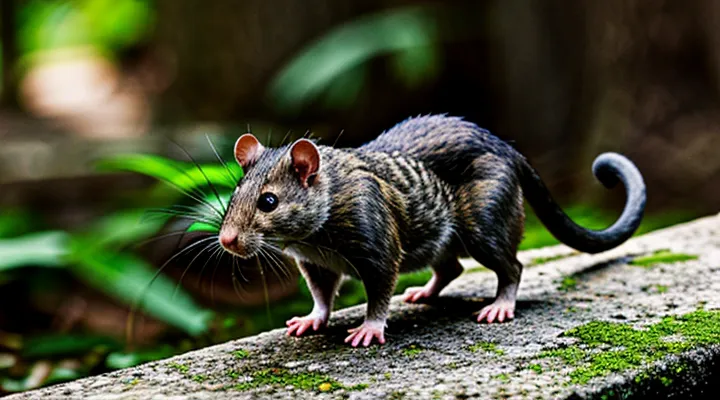
The Auditory World of Wild Rats
Understanding Rat Vocalizations
Why Rats Make Sounds
Rats emit a range of vocalizations to communicate physiological states, coordinate activities, and respond to environmental cues. Each sound serves a specific function that enhances survival and social cohesion within colonies.
- Alarm calls – sharp, high‑frequency squeaks triggered by predators or sudden disturbances; they alert nearby conspecifics and prompt evasive behavior.
- Contact calls – soft chirps or whistles exchanged during foraging or nest maintenance; they maintain group cohesion and help individuals locate one another in dense vegetation or underground tunnels.
- Aggressive or dominance signals – low‑pitched growls and rattling teeth noises produced during territorial disputes or competition for resources; they establish hierarchy without resorting to physical confrontation.
- Maternal communication – muted purr‑like sounds emitted by females to soothe pups, and ultrasonic whines from offspring to solicit care; these exchanges regulate feeding and grooming cycles.
Physiological mechanisms underpin these sounds. The larynx, coupled with a highly flexible vocal tract, enables rapid modulation of frequency and amplitude. Ultrasonic components, often beyond human hearing, convey detailed information about individual identity and emotional state, while audible frequencies serve immediate alarm functions.
Ecological pressures shape the repertoire. In open habitats, louder, broadband calls travel farther, enhancing predator detection. In subterranean networks, quieter, high‑frequency signals penetrate soil and foliage, facilitating precise location tracking. Consequently, the diversity of rat vocalizations reflects adaptive responses to the challenges of wild environments.
Factors Influencing Rat Sounds
Rats emit a wide range of vocalizations, and the acoustic profile of each call depends on multiple variables. Understanding these variables clarifies why recordings from different habitats or situations can appear dissimilar.
Environmental conditions shape sound production. Ambient temperature influences the frequency of ultrasonic calls; cooler air dampens high‑frequency components, while warm air permits clearer transmission. Humidity affects sound attenuation, with high moisture levels reducing the distance ultrasonic bursts travel. Light levels also matter: nocturnal activity triggers a surge in chirps and squeaks associated with foraging and predator avoidance.
Social dynamics exert a strong effect. Presence of conspecifics determines whether a rat produces affiliative purrs, aggressive growls, or alarm whistles. Dominance hierarchies modify call intensity: subordinate individuals emit higher‑pitched, shorter bursts when challenged, whereas dominant rats use lower‑frequency, longer trills to assert territory. Mating season introduces courtship trills and ultrasonic clicks that differ from those heard during territorial disputes.
Physiological state influences acoustic output. Age correlates with call repertoire; juveniles produce simple, high‑frequency squeaks, while adults generate complex, multi‑modal sequences. Sex-specific hormones alter call structure: males often emit more pronounced ultrasonic components during competition. Health status, such as respiratory infection, can suppress call amplitude and alter spectral characteristics.
External stressors introduce rapid changes in vocal behavior. Predator cues—visual, olfactory, or auditory—prompt sharp, broadband alarm calls. Human disturbance, including handling or habitat alteration, triggers distress squeals that are louder and longer than routine social sounds. Food availability modulates foraging chatter; abundant resources reduce the frequency of exploratory chirps, whereas scarcity heightens vocal signaling to locate mates or competitors.
Key factors influencing rat sounds can be summarized:
- Ambient temperature and humidity
- Light conditions (day/night cycle)
- Social context (presence, hierarchy, mating status)
- Age and sex of the individual
- Health and physiological condition
- Predator presence and perceived threat level
- Human activity and habitat disturbance
- Resource abundance or scarcity
Each factor interacts with the others, producing a dynamic acoustic landscape that reflects the rat’s immediate environment and internal state.
Common Wild Rat Sounds
Types of Vocalizations and Their Meanings
Squeaks and Squeals
Wild rats communicate primarily through high‑frequency vocalizations that fall into two distinct categories: short, sharp squeaks and longer, resonant squeals. Both serve specific functions within the species’ social structure and environmental interactions.
-
Squeaks:
• Frequency range 20–50 kHz, often beyond human hearing.
• Duration 10–100 ms, produced in rapid succession.
• Emitted during close‑range encounters, such as feeding, grooming, or mild agitation.
• Convey precise information about immediate threat level or social intent. -
Squeals:
• Frequency range 10–30 kHz, audible to humans.
• Length 200 ms to several seconds, sometimes modulated in pitch.
• Triggered by heightened stress, predator presence, or territorial disputes.
• Function as alarm signals, prompting conspecifics to flee or adopt defensive postures.
Research indicates that the acoustic structure of each type correlates with the physiological state of the emitter. Elevated heart rate and adrenal activity accompany squeals, whereas squeaks align with normal metabolic conditions. Acoustic analysis tools, such as spectrogram software, reveal consistent patterns that enable researchers to differentiate between the two call types across diverse habitats.
Chattering Noises
Wild rats emit a distinct series of rapid, high‑pitched sounds commonly referred to as chattering. The acoustic pattern consists of short, repetitive pulses that can reach frequencies of 8–12 kHz. Researchers record these emissions with ultrasonic microphones, confirming that the signals lie partly within the human‑audible range and partly in the ultrasonic spectrum.
Typical situations in which chattering occurs include:
- Territorial encounters: individuals produce the noise when confronting an intruder, signaling aggression and establishing dominance.
- Social bonding: groups exchange chattering during grooming sessions, reinforcing group cohesion.
- Food discovery: a rat that locates a food source emits a brief chatter to alert nearby conspecifics.
- Predator alert: sudden, sharp chatter can serve as a warning when a threat is detected, prompting escape behaviors in the colony.
The structure of the sound changes with context. Aggressive chattering features higher amplitude and a faster pulse rate, while affiliative chatter displays lower intensity and a more relaxed rhythm. Acoustic analysis shows that pulse duration shortens by approximately 15 % during confrontations, whereas inter‑pulse intervals increase during calm social interactions.
Field studies indicate that chattering frequency correlates with population density. In densely populated habitats, rats produce more frequent chatter, suggesting a role in maintaining spatial organization. Laboratory experiments confirm that playback of recorded chattering elicits appropriate behavioral responses, reinforcing its function as a primary communication channel among wild rodents.
Hisses and Growls
Wild rats produce a range of vocalizations, among which hisses and growls serve as primary aggressive signals. The hiss is a high‑frequency, broadband noise generated by rapid expulsion of air through the larynx and mouth. Its acoustic profile typically peaks between 8 and 12 kHz and decays within a fraction of a second. The growl, by contrast, is a low‑frequency, tonal sound with fundamental frequencies around 200–500 Hz, often accompanied by harmonics that extend into the mid‑range. Both sounds are emitted when rats encounter threats, defend territory, or compete for resources.
Key contexts for hissing and growling include:
- Territorial intrusion: A resident rat emits a hiss followed by a low growl when an unfamiliar conspecific approaches its burrow entrance.
- Predator encounter: Rapid hissing warns nearby conspecifics of imminent danger and may deter small predators by signaling aggression.
- Food competition: During disputes over limited food, dominant individuals use growls to assert superiority and suppress challengers.
- Maternal defense: Lactating females produce louder, more sustained growls when protecting pups from intruders.
Physiological mechanisms differ between the two calls. Hissing relies on fast vocal fold vibration without vocal fold adduction, creating turbulent airflow. Growling involves partial closure of the vocal folds, generating periodic vibrations that produce a resonant tone. Electromyographic studies show increased activity in the cricothyroid and thyroarytenoid muscles during growls, whereas hisses involve heightened activity of the respiratory muscles.
Behavioral research indicates that conspecifics respond to hisses with immediate freezing or retreat, while growls elicit avoidance or submissive postures. Playback experiments demonstrate that the intensity of the growl correlates with the perceived threat level; louder, longer growls provoke stronger avoidance responses.
In summary, hisses and growls constitute the primary acoustic repertoire for aggression and defense in wild rats, each characterized by distinct frequency ranges, production mechanisms, and functional contexts. Their reliable detection aids researchers in assessing social dynamics and predator–prey interactions within rodent populations.
Ultrasounds: Beyond Human Hearing
Wild rats communicate extensively through ultrasonic vocalizations that exceed the upper limit of human auditory perception. These emissions typically range from 20 kHz to 80 kHz, with peak intensities centered around 40–50 kHz during social interactions.
The primary functions of these high‑frequency sounds include:
- Territorial signaling: Males emit rapid bursts when confronting rivals, establishing dominance without physical confrontation.
- Maternal‑infant bonding: Pup calls cluster at 50 kHz, prompting retrieval and nursing behavior from the dam.
- Alarm response: Sudden, broadband sweeps above 70 kHz alert conspecifics to predators or environmental threats.
- Exploratory mapping: Rats produce low‑amplitude clicks while navigating novel environments, facilitating spatial orientation through echolocation‑like feedback.
Detection relies on specialized equipment such as ultrasonic microphones and spectrographic analysis software. Recorded waveforms reveal distinct temporal patterns—short chirps, long trills, and frequency-modulated sweeps—each correlating with specific behavioral contexts.
Research demonstrates that ultrasonic communication persists across diverse habitats, from urban sewers to agricultural fields. Frequency modulation adapts to ambient noise levels, ensuring signal transmission despite acoustic interference. Consequently, the study of rat ultrasounds offers insight into mammalian acoustic ecology and informs pest‑management strategies that exploit species‑specific sound frequencies.
Contextualizing Rat Sounds
Sounds During Social Interactions
Wild rats communicate through a rich repertoire of vocalizations that vary with the nature of the interaction. During affiliative encounters such as grooming or nest building, individuals emit high‑frequency squeaks and short chirps that remain largely inaudible to humans but are detected by conspecifics’ auditory systems. These calls convey a state of calm and reinforce social bonds.
When competition arises, rats produce lower‑frequency, broadband growls and harsh squeals. The intensity and duration of these sounds correlate with the level of aggression and often precede physical confrontation. In territorial disputes, a series of repetitive, low‑pitch barks signals dominance and deters rivals.
Reproductive contexts trigger distinct acoustic patterns. Males emit rapid, pulsed ultrasonic trills during courtship, while females respond with softer, rhythmic chirps that synchronize with mounting behavior. These exchanges facilitate mate assessment and coordination.
Parent‑offspring interactions involve specific distress calls. Pups emit high‑energy, ultrasonic whines when separated from the nest, prompting immediate retrieval by the mother. The mother’s response includes low‑frequency purr‑like vocalizations that soothe the litter and maintain cohesion.
Key vocal types observed in social settings:
- High‑frequency grooming squeaks – short, continuous, promote affiliative contact.
- Broadband aggressive growls – low pitch, prolonged, signal threat.
- Ultrasonic courtship trills – rapid pulse trains, mediate mating.
- Pup distress whines – high amplitude, elicit maternal care.
- Maternal soothing purrs – low frequency, reduce pup anxiety.
These sounds constitute the primary acoustic channel through which wild rats negotiate hierarchy, reproduction, and group stability.
Sounds Related to Danger and Warning
Wild rats emit distinct vocalizations when confronted with threats, and these sounds serve as immediate alerts to conspecifics and as deterrents to predators.
A high‑frequency alarm squeal appears abruptly, often exceeding 20 kHz, lasting 0.1–0.3 seconds. The rapid rise in pitch and intensity signals sudden danger, such as a looming predator or unexpected human presence. Nearby rats respond by freezing or retreating, indicating the call’s efficacy as a warning.
A prolonged, lower‑frequency chitter accompanies sustained stress, for example when a rat is trapped or injured. Frequencies range between 5–10 kHz, with a rhythmic pattern that persists for several seconds. This vocalization encourages group cohesion; other rats approach the source to assess risk and may assist in escape.
Short, sharp bark‑like bursts occur during aggressive encounters that could threaten group safety. These bursts, 0.05–0.1 seconds in length, contain broadband frequencies and are emitted repeatedly. Their purpose is to intimidate rivals and to warn allies of imminent conflict.
Additional non‑vocal signals reinforce danger communication. Rapid foot‑stamping on hard surfaces produces audible thuds that travel farther than vocal sounds in dense underbrush. Tail slaps against the ground generate sharp clicks, serving as a close‑range alarm when visual cues are limited.
Typical danger‑related sounds
- High‑frequency alarm squeal: >20 kHz, 0.1–0.3 s, sudden onset.
- Prolonged distress chitter: 5–10 kHz, rhythmic, several seconds.
- Bark‑like burst series: broadband, 0.05–0.1 s each, repeated.
- Foot‑stamp thuds: audible up to several meters, low‑frequency.
- Tail‑slap clicks: sharp, high‑frequency, immediate proximity.
These acoustic and mechanical signals enable rats to coordinate rapid responses, reduce individual vulnerability, and maintain group stability in hazardous situations.
Sounds During Mating and Reproduction
Wild rats employ a range of acoustic signals when courting, copulating, and caring for offspring. These vocalizations serve to attract mates, coordinate reproductive actions, and maintain pair bonds.
During the courtship phase, males emit high‑frequency ultrasonic chirps (30–50 kHz) that travel short distances through dense vegetation. The chirps are brief, repetitive, and increase in rate as the male approaches a receptive female. Females respond with low‑amplitude ultrasonic clicks (20–30 kHz) that signal acceptance and stimulate male pursuit.
At the moment of copulation, both sexes produce audible squeaks and rapid trills. The male’s squeaks are short, sharp bursts lasting 0.1–0.3 seconds, often accompanied by a low‑frequency thump generated by body contact. The female’s trills are longer, modulated tones that can rise in pitch, indicating readiness for intromission.
Post‑copulatory communication includes ultrasonic “purrs” (15–25 kHz) emitted by the female while nursing. These purrs calm the litter and reinforce maternal attachment. Males may emit soft, rhythmic chirps near the nest to deter rival intruders and signal protective presence.
Typical reproductive vocal repertoire:
- Ultrasonic chirps – male courtship, 30–50 kHz, rapid repetition.
- Ultrasonic clicks – female receptivity, 20–30 kHz, low amplitude.
- Audible squeaks – copulation initiation, short bursts, 0.1–0.3 s.
- Low‑frequency thumps – body contact during mating, <10 kHz.
- Trills – female copulatory response, rising pitch, longer duration.
- Ultrasonic purrs – post‑natal care, 15–25 kHz, rhythmic.
These sounds are temporally linked to specific reproductive stages, enabling precise coordination between partners and offspring in the wild environment.
Sounds of Young Rats (Pups)
Young rats produce a distinct repertoire of vocalizations that differ markedly from adult calls. These sounds serve immediate communicative functions within the litter and provide researchers with reliable indicators of physiological and emotional states.
- Ultrasonic vocalizations (USVs) – emitted at 30–80 kHz, most frequent during maternal separation, temperature drop, or handling.
- Audible squeaks – 2–8 kHz, accompany physical distress, aggressive encounters, or sudden threats.
- Pleural clicks – brief, broadband bursts occurring during exploratory movements or mild discomfort.
USVs typically last 10–100 ms, exhibit rapid frequency modulation, and often appear in series of 3–10 calls. Audible squeaks display longer durations (50–200 ms) with less pronounced pitch variation. Both categories increase in amplitude when pups are isolated from the dam, reflecting heightened arousal.
From birth to weaning (post‑natal day 0–21), call frequency shifts upward as the vocal tract matures; peak USV frequency rises from ~35 kHz in neonates to ~50 kHz near weaning. Call rate peaks around day 10, coinciding with the onset of thermoregulatory independence, then declines as pups acquire alternative communication methods.
In experimental settings, pup vocalizations provide quantitative metrics for pain assessment, social preference, and neurodevelopmental disorders. Automated detection of USVs enables high‑throughput screening of genetic models, while analysis of audible squeaks assists in evaluating acute stress responses.
Distinguishing Wild Rat Sounds from Other Animals
Similarities and Differences
Rat Sounds vs. Mice Sounds
Wild rats emit a diverse vocal repertoire that differs markedly from the calls of common mice. Their sounds serve functions such as alarm, territory defense, social bonding, and mating.
- High‑frequency squeaks (10–30 kHz): brief, sharp bursts produced during aggression or when startled.
- Low‑frequency chirps (2–5 kHz): longer, modulated tones used in close‑range interactions, especially between mothers and pups.
- Rattling clicks (30–50 kHz): rapid sequences emitted when rats explore novel environments or encounter predators.
- Ultrasonic whistles (above 50 kHz): subtle, sustained tones during courtship, often inaudible to humans.
Mice generate a comparatively limited set of vocalizations, each occupying a narrower acoustic band.
- Ultrasonic squeaks (50–100 kHz): short, high‑pitched pulses during social play or mild distress.
- Whine‑like calls (10–15 kHz): low‑intensity sounds associated with pup‑mother communication.
- Rapid chirps (30–40 kHz): emitted during exploratory behavior or when navigating tight spaces.
Key acoustic distinctions:
- Frequency range: Rat calls span from low audible tones to high ultrasonic whistles; mouse calls concentrate primarily in the ultrasonic range.
- Temporal pattern: Rat vocalizations often feature longer, modulated structures, whereas mouse sounds are brief and repetitive.
- Contextual usage: Rats employ low‑frequency chirps for social bonding and high‑frequency rattles for alarm; mice rely on ultrasonic squeaks for both distress and social interaction, with fewer dedicated alarm signals.
These differences enable researchers to identify species presence and behavior in field recordings, supporting ecological monitoring and pest management strategies.
Rat Sounds vs. Other Rodent Sounds
Wild rats produce a limited repertoire of vocalizations that serve specific social and defensive functions. The most common sounds include high‑frequency squeaks emitted during aggressive encounters, low‑frequency chirps associated with grooming or mild agitation, and ultrasonic clicks used for navigation and subtle communication within dense burrow systems. These calls typically range from 5 kHz to 80 kHz, with the audible portion confined to the lower end of the spectrum.
Other rodent species display broader or distinct acoustic patterns. For instance:
- Mice generate rapid, broadband chirps during courtship and emit ultrasonic vocalizations that exceed 100 kHz in mating contexts.
- Squirrels produce loud, bark‑like calls audible to humans, serving as alarm signals and territorial markers.
- Guinea pigs emit a series of purrs, wheeks, and teeth‑chattering sounds, each linked to specific emotional states and ranging from 0.5 kHz to 20 kHz.
Comparative analysis reveals that rat vocalizations occupy a narrower frequency band than mouse ultrasonic songs, yet they are more diverse than the simple alarm barks of squirrels. Rat ultrasonic clicks are less intense than mouse courtship calls but functionally similar, facilitating covert communication in noisy environments.
Behavioral context further differentiates the sounds. Rat squeaks intensify during fights, whereas mouse chirps increase in frequency during pursuit of a mate. Squirrel alarms are triggered by predator detection, while guinea pig wheeks arise from social separation. These distinctions underscore the adaptive specialization of each species’ acoustic repertoire.
Identifying Rat Infestations Through Sound
Rats reveal themselves through a distinct acoustic profile that can be monitored to confirm an infestation.
The most common vocalizations include:
- High‑pitched squeaks emitted during social interaction or distress.
- Short, repetitive chirps produced by juveniles when communicating with littermates.
- Low, guttural chattering heard during aggressive encounters or mating rituals.
- Rapid foot‑stomps on hard surfaces, often described as a “rat scurry,” generated when rats move quickly through ducts, walls, or ceilings.
- Persistent gnawing or chewing sounds, typically audible when rodents breach insulation, wiring, or wood.
Isolated occurrences of any single sound may indicate a solitary animal. Persistent, overlapping noises—especially a combination of foot‑stomps and gnawing occurring after dark for several consecutive nights—signal a breeding population.
Effective acoustic detection follows a systematic routine:
- Conduct listening sessions between 1900 h and 0300 h, when rat activity peaks.
- Position a handheld recorder or directional microphone near suspected entry points, walls, and utility shafts.
- Record for a minimum of 15 minutes per location; note the frequency of each sound type.
- Compare recordings against baseline thresholds: more than three distinct foot‑stomp bursts per hour, or continuous gnawing lasting over 30 seconds, constitute a high‑risk indicator.
By correlating sound patterns with time of day and structural context, professionals can accurately locate infestations, prioritize treatment zones, and verify the effectiveness of control measures without visual confirmation.
Recording and Studying Rat Vocalizations
Methods and Technologies
Specialized Equipment for Ultrasound Detection
Ultrasonic vocalizations of feral rats occur above the human hearing threshold, necessitating equipment capable of capturing frequencies up to 100 kHz or higher. Standard audio devices miss these emissions, leading to incomplete behavioral data.
- Directional ultrasonic microphones (30–120 kHz bandwidth, ≥ 90 dB SPL sensitivity)
- Bat‑detector modules with built‑in preamplifiers and adjustable gain
- High‑resolution digital recorders (≥ 384 kHz sampling rate, 24‑bit depth)
- Real‑time spectrographic analysis software (FFT window ≤ 0.5 ms, customizable frequency scales)
- Portable acoustic enclosures with acoustic foam lining for field noise reduction
Critical specifications include a flat frequency response across the target range, low self‑noise (< 20 µV), and robust shielding against wind and rain. Data storage must support continuous recording for several hours without dropout; solid‑state drives with fast write speeds meet this requirement.
Field deployment demands battery packs delivering ≥ 8 hours of operation, weather‑sealed housings rated IP67, and simple calibration procedures using reference tone generators. Regular calibration ensures measurement accuracy despite temperature fluctuations.
Collectively, these tools enable precise detection, quantification, and analysis of rat ultrasonic calls, providing reliable datasets for ecological and physiological research.
Challenges in Studying Wild Rat Sounds
Studying the vocalizations of free‑living rats encounters several methodological obstacles. Capturing authentic acoustic data requires field conditions that differ markedly from laboratory environments, and each variable introduces potential bias.
- Limited access to individuals: Rats occupy dense burrow systems and nocturnal niches, reducing visual and auditory reach.
- Background noise: Ambient sounds from insects, wind, and human activity mask low‑amplitude calls, complicating signal extraction.
- Species identification: Overlap of acoustic signatures among sympatric rodent species leads to misclassification without genetic confirmation.
- Equipment constraints: Small, high‑frequency sounds demand microphones with extended bandwidth and low self‑noise; portable devices often trade durability for sensitivity.
- Behavioral context: Vocal output varies with social interactions, predator presence, and foraging; isolating specific triggers in the wild is difficult.
These challenges necessitate integrated approaches. Researchers combine remote acoustic sensors with motion‑activated cameras, apply spectral filtering algorithms to isolate rat calls, and corroborate recordings with DNA analysis of captured specimens. Rigorous protocol design and cross‑validation reduce error rates, enabling reliable characterization of wild rat vocal behavior.