
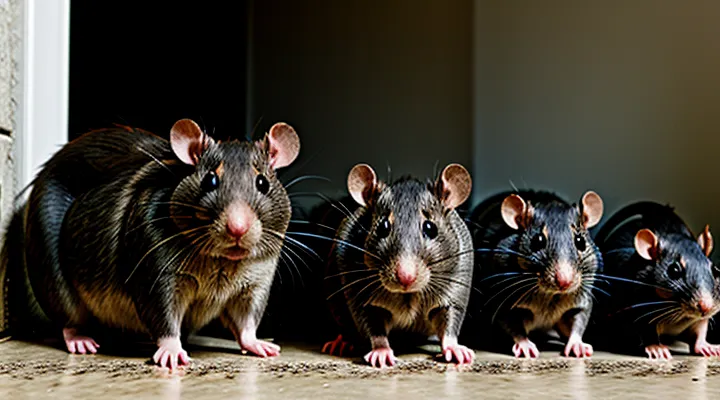
Factors Influencing Rat Size
Species Variation
Common Rat Species
Rats exhibit a wide range of body dimensions, and the most frequently encountered species illustrate this diversity clearly.
The brown rat (Rattus norvegicus), also known as the Norway rat, typically measures 20–25 cm in head‑body length, with a tail of similar length. Adults weigh between 250 and 500 g, though individuals in urban settings may exceed 600 g.
The black rat (Rattus rattus), or roof rat, is smaller overall. Its head‑body length averages 16–20 cm, and its tail is slightly longer than the body, reaching 18–22 cm. Weight ranges from 150 to 300 g.
The Polynesian rat (Rattus exulans), sometimes called the Pacific rat, represents the smallest of the three. Head‑body length is generally 10–13 cm, with a tail of comparable size. Adults weigh 30–80 g.
The Asian house rat (Rattus tanezumi) resembles the brown rat in size but is often marginally lighter, with a head‑body length of 18–22 cm and a tail of 18–23 cm. Weight typically falls between 200 and 350 g.
These species provide a practical reference for the size spectrum observed among common rats, from the diminutive Pacific rat to the larger Norway rat.
Genetic Predisposition
Genetic predisposition determines the range of body dimensions observed in rats. Specific alleles influence growth hormone production, skeletal development, and adipose tissue accumulation, producing measurable differences among individuals.
Key genetic contributors include:
- Growth hormone receptor (GHR) variants – certain polymorphisms increase receptor sensitivity, resulting in longer limbs and larger overall mass.
- Insulin-like growth factor 1 (IGF‑1) gene – elevated expression correlates with accelerated somatic growth, especially during juvenile stages.
- Myostatin (MSTN) mutations – reduced myostatin activity removes inhibition of muscle development, yielding bulkier musculature and greater body weight.
- Leptin (LEP) and leptin receptor (LEPR) alleles – alterations affect appetite regulation and fat deposition, influencing body circumference and tail thickness.
Selective breeding experiments confirm that these loci act cumulatively. Crosses between small‑sized laboratory strains and larger wild‑type populations produce offspring whose size distribution aligns with the proportion of growth‑promoting alleles inherited.
Environmental factors such as diet and housing conditions modulate the expression of these genes, but the underlying genetic framework establishes the baseline size potential for each rat. Consequently, size variation among rats can be traced to the interaction of multiple hereditary elements that regulate growth pathways.
Environmental Impact
Diet and Nutrition
Rats exhibit a wide range of body lengths, from small laboratory strains measuring approximately 6 cm without the tail to large wild specimens exceeding 30 cm. Size differences stem from genetics, environment, and, critically, nutritional intake.
Adequate nutrition supplies the energy and building blocks required for growth. Protein levels directly influence muscle development and overall mass. A diet containing 18–22 % high‑quality protein—such as soy, casein, or animal meat—supports optimal size increase in juvenile rats. Insufficient protein results in stunted growth and reduced body length.
Fat provides a dense energy source. Inclusion of 5–10 % dietary fat, sourced from vegetable oils or animal fats, contributes to weight gain and body condition. Excessive fat, however, leads to obesity without proportionate length growth, distorting size assessments.
Carbohydrates furnish readily available glucose. Balanced carbohydrate content (45–55 % of the diet) maintains steady blood sugar, promoting efficient metabolism and supporting normal skeletal elongation. Simple sugars should be limited to prevent metabolic disorders that can impair growth.
Vitamins and minerals are essential for bone formation and tissue health. Calcium (1–2 % of dry matter) and phosphorus (0.8–1 %) maintain skeletal integrity, enabling longer limbs and vertebrae. Vitamin D facilitates calcium absorption; deficiency results in weakened bones and reduced stature.
Water intake influences overall health and growth rate. Rats consume 5–10 ml of water per 100 g body weight daily. Dehydration diminishes feed efficiency, slowing weight gain and length increase.
Typical rat diet composition:
- Protein: 18–22 %
- Fat: 5–10 %
- Carbohydrate: 45–55 %
- Calcium: 1–2 %
- Phosphorus: 0.8–1 %
- Vitamin D: adequate levels per NRC guidelines
- Fresh water: unlimited access
Monitoring these nutritional parameters allows precise control of rat size outcomes, whether the goal is to maintain compact laboratory strains or to achieve the larger dimensions observed in certain wild populations.
Habitat and Living Conditions
Rats occupy a wide range of environments, each imposing specific constraints on body dimensions. Urban sewers and alleyways provide limited space and abundant food waste, favoring smaller individuals that can navigate narrow passages. Rural barns and grain stores offer more open areas and plentiful nourishment, supporting larger specimens that benefit from increased muscle mass for foraging and territorial defense.
Living conditions affect growth rates and final size. High ambient temperatures accelerate metabolism, leading to faster weight gain but may also limit maximum length due to heat stress. Conversely, cooler climates slow development, resulting in leaner bodies with reduced overall length. Access to protein‑rich diets, such as stored grains or pet food, correlates with increased body mass and longer tails, while diets dominated by low‑quality scraps produce smaller, less robust rats.
Typical habitats and associated size trends include:
- Sewer systems: average body length 8–10 cm, weight 40–70 g.
- Residential kitchens: body length 10–12 cm, weight 70–120 g.
- Agricultural storage: body length 12–15 cm, weight 120–200 g.
- Outdoor fields and forests: body length 13–16 cm, weight 150–250 g.
Environmental pressures such as predator presence, competition, and resource scarcity further shape morphological outcomes. Dense predator zones select for compact bodies that enable rapid escape, while resource‑rich zones allow growth toward the upper limits of species size.
Availability of Resources
Rats exhibit a wide range of body lengths, from 5 cm in dwarf laboratory strains to over 30 cm in wild brown rats. Growth trajectories are tightly linked to the quantity and quality of food, water, shelter, and nesting material available in their environment.
Adequate nutrition accelerates somatic development, allowing individuals to reach the upper limits of their genetic potential. Protein‑rich diets increase muscle mass, while high‑calorie grain supplies promote rapid weight gain. Conversely, nutrient‑deficient or sporadic feeding results in stunted growth and lower adult body mass.
Water scarcity limits metabolic processes, reducing cell proliferation and hindering skeletal elongation. Consistent access to clean water supports optimal organ function and maintains normal growth rates.
Shelter and nesting resources affect thermal regulation. Dense bedding and secure burrows reduce energy expenditure on heat production, allocating more calories toward tissue growth. Inadequate nesting material forces rats to allocate energy to maintain body temperature, diminishing size development.
Key resource factors influencing rat size:
- Food quality: protein, fat, carbohydrate balance
- Food quantity: regularity and abundance of meals
- Water availability: constant, uncontaminated supply
- Shelter: insulated, stable nesting sites
- Social environment: competition for resources can limit individual intake
Experimental and field observations confirm that populations with abundant, balanced resources consistently produce larger, heavier rats than those constrained by limited or poor‑quality supplies.
Typical Size Ranges of Common Rats
Brown Rat («Rattus norvegicus»)
Average Body Length
Rats exhibit a predictable range of body lengths that distinguishes them from other rodents. Adult brown rats (Rattus norvegicus) typically measure 20–25 cm from the nose to the base of the tail, while the tail adds an additional 18–20 cm. Black rats (Rattus rattus) are slightly smaller, with a head‑body length of 16–20 cm and a tail length of 15–19 cm. Laboratory strains, such as the Sprague‑Dawley, fall within the same intervals as their wild counterparts, averaging 22 cm in head‑body dimension.
Key factors influencing these measurements include:
- Age: juveniles reach half the adult length by three weeks.
- Sex: males generally exceed females by 1–2 cm.
- Nutrition: well‑fed individuals attain the upper limits of the species range.
- Environment: urban populations tend to be larger than rural ones, reflecting resource availability.
Measurements are obtained with calipers or flexible measuring tapes, recorded from the tip of the snout to the cloacal opening to ensure consistency across studies. Reporting standards require the exclusion of tail length unless specifically addressed, as tail proportion varies with habitat and genetics.
Average Tail Length
Rats possess tails that typically measure between 6 and 9 inches (15–23 cm) in length, proportionate to their body size. The average tail length varies among species and environments:
- Norway (brown) rat (Rattus norvegicus): 7–8 inches (18–20 cm)
- Roof (black) rat (Rattus rattus): 8–9 inches (20–23 cm)
- Pet laboratory strains: 6.5–7.5 inches (16–19 cm)
Tail length correlates with overall body length, providing balance and thermoregulation. In laboratory settings, precise measurement follows standard protocols: the animal is anesthetized, the tail is gently extended, and a calibrated ruler records the distance from the base to the tip. Wild specimens exhibit slightly longer tails, reflecting adaptations to arboreal habitats.
Typical Weight Range
Rats exhibit a relatively narrow weight spectrum that distinguishes adult individuals from juveniles and reflects species, sex, and nutrition.
- Brown rat (Rattus norvegicus) – adult males: 300–500 g; adult females: 250–350 g.
- Black rat (Rattus rattus) – adult males: 150–250 g; adult females: 120–200 g.
- Domesticated fancy rat – adult males: 350–500 g; adult females: 300–450 g.
- Juvenile rats – newborns: 5–8 g; weanlings (3 weeks): 30–50 g.
Weight variation correlates with diet quality, health status, and genetic line. Males consistently outweigh females within the same species. Underfeeding can reduce adult weights by up to 20 %, while overfeeding may raise them beyond typical upper limits.
Black Rat («Rattus rattus»)
Average Body Length
Rats exhibit a relatively narrow range of body lengths, measured from the tip of the nose to the base of the tail. Adult common laboratory rats (Rattus norvegicus) typically reach 20–25 cm (8–10 in). Wild brown rats (Rattus norvegicus) average 18–22 cm (7–9 in), with occasional individuals extending to 30 cm (12 in). Roof rats (Rattus rattus) are smaller, averaging 15–20 cm (6–8 in). Juvenile rats attain roughly half the adult length at weaning, around 9–12 cm (3.5–4.5 in). These measurements reflect mature, healthy specimens under standard conditions.
Average Tail Length
Rats possess tails that typically match or exceed their body length, making tail measurement a key component of overall size assessment.
- Brown rat (Rattus norvegicus): tail averages 20–25 cm (7.9–9.8 in).
- Black rat (Rattus rattus): tail averages 18–22 cm (7.1–8.7 in).
- Asian house rat (Rattus tanezumi): tail averages 15–19 cm (5.9–7.5 in).
The tail length generally represents 70–100 % of the head‑body length, creating a length ratio that distinguishes species and influences locomotion. Juvenile rats exhibit shorter tails relative to adult proportions; growth continues until sexual maturity, after which tail length stabilizes.
Sexual dimorphism affects tail size modestly, with males often displaying tails up to 5 % longer than females of the same species. Environmental conditions, such as nutrition and habitat constraints, can cause deviations of ±2 cm from species averages.
Typical Weight Range
Rats exhibit a broad spectrum of body mass, reflecting species, age, sex, and nutritional status. Adult brown rats (Rattus norvegicus) typically weigh between 250 g and 500 g, with males often approaching the upper limit. Black rats (Rattus rattus) are lighter, ranging from 150 g to 250 g; females usually fall near the lower end of this interval. Laboratory strains such as the Sprague‑Dawley or Wistar rat commonly fall within 300 g to 400 g when fully mature. Juvenile individuals progress rapidly: newborns weigh 5 g–7 g, and by four weeks reach approximately 50 g–80 g, depending on species.
- Brown rat (R. norvegicus): 250 g – 500 g (adult)
- Black rat (R. rattus): 150 g – 250 g (adult)
- Laboratory strains: 300 g – 400 g (adult)
- Juvenile rats: 5 g – 7 g (newborn) → 50 g – 80 g (four weeks)
Weight variations correlate with diet quality, housing conditions, and genetic background, allowing precise assessment of health and growth trajectories.
Size Differences Between Sexes and Ages
Male vs. Female Rats
Male and female rats differ noticeably in body dimensions, a factor that influences housing, nutrition, and experimental design. Adult males typically exceed females in both length and mass, although the gap varies by strain and age.
-
Body length (nose‑to‑base of tail):
• Males: 20–25 cm (8–10 in)
• Females: 18–22 cm (7–9 in) -
Tail length:
• Males: 15–20 cm (6–8 in)
• Females: 13–18 cm (5–7 in) -
Body weight:
• Males: 300–500 g (10.5–17.5 oz)
• Females: 250–350 g (8.8–12.3 oz)
These figures represent mature, healthy laboratory rats of the common brown (Rattus norvegicus) species. Fancy‑rat varieties may show reduced size ranges, but the male‑female disparity remains consistent. Growth curves indicate that sexual dimorphism emerges around sexual maturity (6–8 weeks) and stabilizes by 12 weeks. When planning cage space or dosing regimens, account for the larger mass and length of males to avoid overcrowding and ensure accurate dosage calculations.
Adult vs. Juvenile Rats
Rats exhibit distinct size parameters that correlate directly with developmental stage. Adult specimens reach their maximum dimensions, while juveniles remain proportionally smaller throughout growth phases.
-
Adult rats
Body length (head‑to‑base of tail): 20–30 cm (Norway rat), 15–20 cm (black rat)
Tail length: 15–25 cm, typically 70–80 % of body length
Weight: 250–500 g (Norway rat), 80–200 g (black rat) -
Juvenile rats
Newborn (0–5 days): body length 5–6 cm, weight 5–7 g
Weanling (21 days): body length 10–12 cm, weight 30–50 g
Adolescent (30–45 days): body length 15–18 cm, weight 100–150 g
Adult rats exceed juvenile measurements by roughly threefold in length and several times in mass. Growth follows a predictable curve: rapid weight gain during the first month, followed by steadier increases until sexual maturity. Consequently, size assessments must account for age class to avoid misidentification.
Comparing Rat Size to Other Rodents
Mouse vs. Rat Size
Rats are considerably larger than house mice in both body length and weight. An adult Norway rat typically measures 20–25 cm (8–10 in) from nose to the base of the tail, with a tail adding another 15–20 cm (6–8 in). Average body mass ranges from 250 g to 500 g, with some individuals exceeding 600 g.
A common house mouse measures 7–10 cm (2.8–4 in) in body length, plus a tail of similar length. Adult weight generally falls between 15 g and 30 g, rarely surpassing 35 g.
Key size distinctions:
- Body length: Rat 20–25 cm; Mouse 7–10 cm
- Tail length: Rat 15–20 cm; Mouse 6–10 cm
- Weight: Rat 250–500 g; Mouse 15–30 g
These measurements illustrate the pronounced size gap between the two rodent species, influencing their habitat preferences, predator avoidance strategies, and suitability for various research applications.
Guinea Pig vs. Rat Size
Rats typically measure 7–10 cm in body length, with tails adding another 7–10 cm. Adult males weigh 300–500 g; females average 250–350 g. Breed variations exist: the larger “Giant” strain can reach 15 cm body length and 800 g weight.
Guinea pigs range from 20–25 cm in body length, lacking a tail. Adult weights fall between 700 g and 1.2 kg, with “American” varieties at the lower end and “Peruvian” breeds toward the upper limit.
Key differences:
- Length: Rats are roughly half the body length of guinea pigs; guinea pigs have no tail.
- Weight: Guinea pigs are 1.5–3 times heavier than typical rats.
- Body proportion: Rats possess a longer tail relative to body size; guinea pigs have a compact, stocky build.
Understanding these dimensions assists in habitat planning, cage sizing, and health monitoring for both species.
Hamster vs. Rat Size
Rats typically reach a body length of 7–10 cm, with a tail adding another 12–20 cm. Adult brown rats weigh 250–500 g, while larger specimens can exceed 600 g. Hamsters, by contrast, are considerably smaller. The common Syrian hamster measures 15–18 cm in total length, including a short tail, and weighs 100–150 g. Dwarf varieties, such as the Campbell’s and Russian hamsters, range from 6–9 cm in length and 30–45 g in weight.
Key size differences:
- Body length: rats 7–10 cm vs. hamsters 6–18 cm (species dependent)
- Tail length: rats 12–20 cm (prominent) vs. hamsters ≤ 2 cm (vestigial)
- Weight: rats 250–600 g vs. hamsters 30–150 g
These metrics establish a clear disparity: rats are longer, heavier, and possess a significantly longer tail than any domestic hamster breed.