
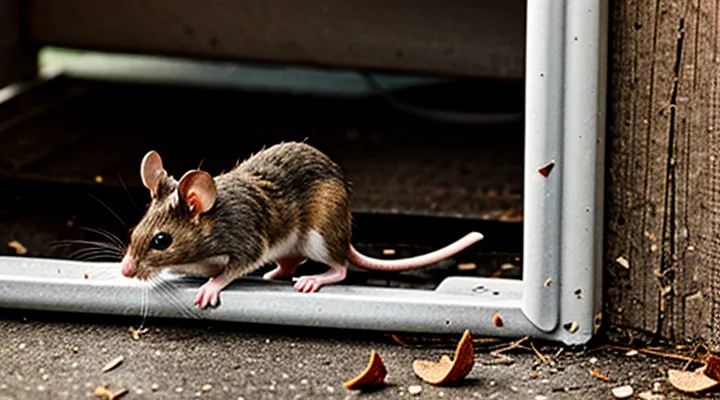
The Remarkable Gnawing Habits of Mice
The Necessity of Gnawing for Rodents
Dental Structure and Growth
Mice possess a pair of continuously erupting incisors whose crowns are covered by enamel on the labial surface and dentin on the lingual side. The enamel–dentin junction creates a self‑sharpening edge, allowing the animal to reduce material that is softer than enamel. Growth of the incisors proceeds at approximately 0.1 mm per day, requiring regular abrasion to prevent over‑elongation.
Materials whose hardness exceeds that of enamel (approximately 5 GPa) resist the gnawing action of mouse incisors. Consequently, substances such as:
- stainless steel and other high‑strength alloys,
- tempered glass,
- ceramic tiles,
- hardened polymers (e.g., polycarbonate with reinforced fillers),
- mineral composites (e.g., quartz, granite),
remain unpenetrated despite prolonged exposure. Soft substrates—including wood, cardboard, soft plastics, and many plant fibers—are readily chewed, leading to continual wear of the incisors and maintaining optimal length.
The limitation imposed by dental hardness defines the boundary between consumable and impenetrable materials for rodents. Understanding this boundary informs the design of pest‑resistant packaging and construction materials.
Behavioral Instincts
Mice possess innate behavioral instincts that limit their ability to penetrate certain barriers. These instincts arise from sensory evaluation, risk assessment, and learned avoidance, directing chewing activity toward viable targets while rejecting unsuitable substrates.
- Sensory discrimination of hardness; tactile receptors signal resistance beyond a threshold, discouraging further gnawing.
- Detection of unpleasant odors; chemical cues from treated metals or synthetic polymers trigger aversion.
- Risk assessment of exposure; open or unstable surfaces increase perceived danger, prompting withdrawal.
- Learned avoidance; repeated failure to breach a material reinforces reluctance to attempt again.
When confronted with materials such as stainless steel, tempered glass, reinforced concrete, or polymer composites, the combination of these instincts prevents effective gnawing. Hardness exceeds the tactile threshold, chemical composition lacks attractive scent, and structural integrity signals heightened risk. Consequently, mice avoid expending energy on attempts that offer negligible reward, preserving resources for more accessible food sources.
Materials Impervious to Mouse Gnawing
Metals
Steel
Steel presents a combination of hardness, tensile strength, and low ductility that exceeds the mechanical capabilities of murine incisors. The enamel coating of mouse teeth can generate bite forces of roughly 0.1 N, while typical steel grades require forces measured in kilonewtons to initiate a cut. Consequently, steel structures remain intact when exposed to rodent activity.
Key material characteristics preventing gnawing:
- Hardness above 150 HB (Brinell) limits enamel penetration.
- Tensile strength exceeding 400 MPa resists deformation under bite pressure.
- Low plasticity prevents the formation of bite‑induced cracks.
Applications exploiting this resistance include conduit pipes for electrical wiring, protective cages for laboratory equipment, and structural frames in facilities where rodent infestation poses a risk. Selecting steel with appropriate alloy composition and surface treatment ensures long‑term durability against gnawing damage.
Aluminum
Aluminum presents a reliable barrier against rodent damage. Its combination of hardness and low ductility prevents incisors from penetrating even thin sheets.
Key characteristics that inhibit gnawing include:
- Tensile strength exceeding 200 MPa in common alloys;
- Yield strength that resists deformation under bite forces;
- Surface oxide layer that adds abrasive resistance.
Common implementations exploit these traits. Electrical conduit made of 0.5 mm aluminum foil blocks access to wiring. Wall panels of 1 mm thickness deny entry to nesting rodents. Storage containers with sealed aluminum lids protect food supplies from contamination.
When selecting a material to thwart rodent activity, aluminum’s durability, corrosion resistance, and ease of fabrication make it a preferred choice.
Copper
Copper’s density and tensile strength make it resistant to rodent incisors. The metal’s hardness exceeds the biting force of common house mice, preventing penetration even when the animals gnaw continuously.
Key characteristics that deter gnawing:
- High tensile strength (≈210 MPa for pure copper) resists deformation.
- Low ductility limits the ability of incisors to create a clean cut.
- Surface oxidation forms a hard patina that further impedes chewing.
Typical applications exploit this resistance. Electrical conduit, plumbing fixtures, and protective housings rely on copper to safeguard wiring and fluid lines from rodent damage. Thicknesses of 1 mm or greater generally stop mice, while thinner sheets may be compromised under prolonged exposure.
Laboratory tests confirm that mice abandon attempts to gnaw copper after a few minutes, preferring softer materials such as wood, plastic, or insulation. Consequently, copper serves as an effective barrier in environments where rodent activity poses a risk to infrastructure. «Copper resists rodent damage».
Hardened Plastics
Polycarbonate
Polycarbonate is a thermoplastic polymer renowned for exceptional impact resistance and structural rigidity. Its molecular composition yields a high modulus of elasticity, allowing the material to withstand repeated stress without deformation. The surface hardness, typically measured between 75 and 85 Shore D, exceeds the biting force of common rodent species, preventing incisors from penetrating even thin sheets.
Key characteristics that deter gnawing:
- Tensile strength of 60–70 MPa, providing resistance to cracking under bite pressure.
- Low coefficient of friction, reducing grip for incisors.
- Chemical stability, preventing degradation from saliva or environmental factors.
- Availability in thicknesses from 0.5 mm upward, where each additional millimeter substantially increases resistance.
Applications exploiting these properties include security windows, laboratory equipment housings, and barrier panels in storage facilities where rodent intrusion is a concern. When installed with proper sealing, polycarbonate forms an effective physical barrier that rodents cannot chew through.
ABS Plastic
ABS plastic, a thermoplastic polymer composed of acrylonitrile, butadiene, and styrene, exhibits a combination of hardness, impact resistance, and structural integrity that deters rodent gnawing. The material’s molecular composition provides a dense matrix that resists penetration by rodent incisors. Key attributes include:
- Shore hardness ranging from 100 to 150 D, surpassing the biting force of common house mice.
- Tensile strength between 40 MPa and 70 MPa, limiting deformation under sustained pressure.
- High impact resistance, absorbing kinetic energy without fracturing.
- Low moisture absorption, preventing softening in humid environments.
These characteristics render ABS an effective barrier in applications where rodent intrusion poses a risk. Typical uses exploit this resistance:
- Electrical enclosures protecting circuitry from chewing damage.
- Automotive interior components, such as dashboard panels, where durability against pests is required.
- Consumer‑grade housings for appliances and devices, offering both aesthetic appeal and structural protection.
Testing protocols confirm that mice cannot create perforations in ABS sheets of thickness 2 mm or greater within standard observation periods. The material’s resilience, combined with its manufacturability, makes it a preferred choice for safeguarding equipment against rodent damage.
Glass and Ceramics
Tempered Glass
Tempered glass resists rodent gnawing due to its high compressive surface stress and reinforced structure. The manufacturing process subjects ordinary glass to rapid heating followed by an abrupt cooling phase, creating a layer of compression that counteracts tensile forces generated by chewing.
Key characteristics that prevent mice from penetrating tempered glass include:
- Compressive surface layer that exceeds the bite force of typical rodents.
- Tensile strength several times greater than that of annealed glass.
- Fracture pattern that yields small, blunt shards rather than sharp edges, reducing the likelihood of a rodent creating a passage.
Applications that rely on this resistance span laboratory animal facilities, food‑processing plants, and residential security installations. In each case, tempered glass provides a barrier that maintains integrity under attempted gnawing, ensuring containment without compromising visibility or structural stability.
Porcelain
Porcelain presents a combination of hardness and brittleness that exceeds the chewing capacity of common house mice. The material’s compressive strength, often above 30 MPa, resists the relatively weak incisors of rodents, which generate forces typically under 5 MPa. Its glazed surface creates a smooth, low‑friction barrier, preventing the animals from gaining purchase for effective gnawing.
Key physical attributes that deter mouse damage:
- High Mohs hardness (≈ 6–7) limits tooth penetration.
- Low porosity eliminates grip points for incisors.
- Brittle fracture behavior causes breakage before progressive gnawing can occur.
- Glazed coating reduces abrasive wear and masks micro‑cracks.
Common applications exploit these properties:
- Laboratory equipment where contamination control demands rodent‑proof containers.
- Kitchenware and serving dishes in environments prone to pest activity.
- Electrical insulators where durability against gnawing protects circuitry.
Overall, porcelain’s structural resilience and surface finish create an effective barrier against mouse gnawing, making it a reliable choice for settings requiring pest‑resistant materials.
Glazed Tile
Mice cannot gnaw through «glazed tile». The material’s hardness, dense ceramic body, and smooth, non‑porous surface resist the incisors of rodents. The glaze creates a vitrified layer that prevents teeth from gaining purchase, while the underlying tile maintains structural integrity under repeated pressure.
Key characteristics that inhibit gnawing:
- High compressive strength, typically exceeding 300 MPa.
- Low tensile fracture toughness, limiting crack propagation from bite forces.
- Surface smoothness measured at a roughness average below 0.5 µm, eliminating grip points.
- Chemical stability that resists erosion from saliva and moisture.
In environments where rodent intrusion poses a risk to food safety or infrastructure, installing «glazed tile» on walls, floors, and countertops provides a durable barrier. Maintenance requirements remain minimal because the glaze does not absorb contaminants and is easy to clean with standard detergents.
Concrete and Stone
Poured Concrete
Poured concrete forms a dense, homogenous mass that rodents cannot penetrate with their incisors. The material’s compressive strength exceeds the bite force of common mice, while its lack of fissures eliminates leverage points for chewing. Once set, the surface becomes a smooth, hard slab that resists abrasion and does not yield to repeated gnawing attempts.
Key characteristics that render poured concrete impenetrable:
- High compressive strength (typically 3,000–4,500 psi) surpasses the maximum bite pressure of mice.
- Minimal porosity eliminates weak zones where teeth could gain purchase.
- Uniform curing creates a continuous surface without joints or cracks.
- Chemical composition (cement, aggregate, water) produces a chemically inert barrier that does not degrade under rodent activity.
Installation practices further enhance effectiveness. Proper mixing ratios ensure optimal strength, while thorough vibration during placement removes air pockets. Curing periods of at least 28 days guarantee full development of mechanical properties before exposure to potential rodent intrusion.
In applications where rodent exclusion is critical—such as foundations, walls, and floor slabs—poured concrete provides a reliable, long‑lasting defense. Its durability eliminates the need for additional mechanical barriers, reducing maintenance requirements and ensuring structural integrity against mouse damage.
Granite
Granite is an igneous rock composed mainly of quartz, feldspar and mica. Its crystalline structure yields a Mohs hardness of 6–7, far exceeding the dental strength of rodents.
The hardness, combined with high compressive strength and low porosity, prevents incisors from making any meaningful incision. Mice lack the ability to generate sufficient force to fracture or abrade such a dense material.
Key factors that render granite impenetrable to mouse gnawing:
- Mohs hardness rating well above the cutting capability of rodent teeth.
- Compressive strength measured in hundreds of megapascals, far surpassing bite force.
- Absence of fibrous or soft layers that could be chewed away.
- Surface texture that offers no grip for sustained gnawing.
Consequently, granite remains an effective barrier against rodent intrusion.
Marble
Marble resists rodent gnawing due to its inherent hardness and crystalline structure. The mineral composition—primarily calcium carbonate—creates a dense, non‑fibrous matrix that teeth cannot easily penetrate. Surface polish further reduces friction, limiting the ability of incisors to gain purchase.
Key characteristics that prevent gnawing:
- Mohs hardness rating of 3–4, exceeding the biting force of common house mice.
- Lack of porous micro‑fractures where teeth could embed.
- High compressive strength, dispersing applied pressure across a broad area.
These properties make marble a reliable barrier in settings where rodent intrusion must be prevented, such as laboratory benches, storage shelves, and structural elements in buildings.
Why Certain Materials Resist Gnawing
Hardness and Density
Mohs Scale of Hardness
Rodents can gnaw through many building and packaging materials, but resistance increases sharply once the material’s hardness exceeds the cutting ability of their incisors. The commonly referenced metric for mineral hardness is «Mohs Scale of Hardness», which ranks substances from 1 (softest) to 10 (hardest). Materials positioned at the upper end of this scale present a physical barrier that mouse teeth cannot penetrate.
The scale assigns the following values to minerals relevant for rodent resistance:
- Quartz – 7
- Topaz – 8
- Corundum (including sapphire) – 9
- Diamond – 10
Metals and engineered composites typically fall between 4 and 5 on the Mohs scale. While steel can deter gnawing, prolonged exposure may still result in wear. Substances with hardness of 6 or higher, such as many ceramics and glass types, reliably prevent bite marks because mouse incisors are limited to approximately 2.5–3 on the same scale.
Consequently, any barrier composed of minerals or engineered materials rated 6 or above on the «Mohs Scale of Hardness» effectively blocks rodent chewing, ensuring structural integrity where pest resistance is required.
Material Composition
Mice cannot penetrate substances that possess a composition specifically resistant to gnawing. The effectiveness of such materials derives from inherent hardness, fiber density, and chemical stability, which together exceed the bite force and dental wear capacity of rodents.
- Hardened steel alloys – high tensile strength, minimal deformation under pressure.
- Concrete reinforced with steel rebar – composite matrix resists fracture and crushing.
- Ceramic tiles – crystalline structure provides extreme rigidity.
- High‑density polyurethane foam – closed‑cell architecture prevents tooth penetration.
- Thick glass panels – amorphous silica network offers superior hardness.
- Composite plastics infused with carbon fiber – fiber reinforcement distributes load, limiting bite impact.
Material resilience originates from factors such as Mohs hardness rating above 5, low compressibility, and resistance to abrasion. Hardness reduces tooth indentation; low compressibility limits material displacement; abrasion resistance prevents material loss from repeated gnawing. Consequently, structures built from these compositions effectively deter rodent damage.
Smoothness and Lack of Purchase
Surface Friction
Surface friction significantly limits a rodent’s ability to penetrate solid barriers. High‑friction coatings create resistance that exceeds the bite force generated by a mouse’s incisors, causing the teeth to slip rather than bite through the material. When the coefficient of friction approaches or exceeds the threshold of 0.5 for common polymers, the energy required for a successful gnawing action rises sharply, often beyond the animal’s physiological capacity.
Key characteristics that enhance frictional resistance include:
- Rough micro‑textures that increase surface area contact.
- Hard, abrasive particles embedded in the matrix (e.g., silica, alumina).
- Thermoplastic polymers formulated with high‑friction additives.
Materials engineered with these properties—such as reinforced PVC panels, composite laminates, and certain ceramic tiles—remain intact despite repeated gnawing attempts. The combination of elevated friction and material hardness forms an effective barrier, preventing mice from creating openings through the surface.
Edge Accessibility
Mice possess strong incisors capable of penetrating many soft and semi‑hard substances, yet they cannot breach certain edge configurations. Proper edge design eliminates gaps that could serve as entry points, ensuring that the barrier’s perimeter remains impermeable.
Key characteristics of mouse‑proof edges:
- Material hardness exceeding the bite force of rodents, such as steel, reinforced concrete, or high‑density polymers.
- Seamless joints created by welding, soldering, or adhesive bonding, removing any discontinuities.
- Rounded or beveled profiles that prevent the formation of sharp corners where teeth can gain leverage.
- Integrated sealing strips composed of metal‑clad mesh or silicone‑filled channels, providing a continuous barrier along the entire length.
Testing protocols confirm effectiveness:
- Apply a standardized gnawing test using captive mice for a fixed duration.
- Inspect edges for any penetration, deformation, or material fatigue.
- Record results and adjust edge geometry or material composition as needed.
Implementation guidelines:
- Select edge materials with a Shore hardness rating well above the typical rodent bite pressure.
- Employ joining techniques that produce a monolithic surface without exposed fasteners.
- Incorporate redundancy by layering a secondary barrier behind the primary edge, such as a metal mesh within a concrete slab.
By adhering to these specifications, structures achieve a level of edge accessibility that resists rodent intrusion, reinforcing overall containment integrity.
Toxicity and Unpalatability
Chemical Deterrents
Chemical deterrents represent a class of substances designed to prevent rodents from penetrating materials through gnawing. These agents function by creating an aversive environment, delivering toxic effects, or forming a physical barrier that discourages chewing activity.
Key categories include:
- «Repellents» that emit odors or tastes unattractive to mice, such as peppermint oil, ammonia, or capsaicin extracts.
- «Toxic baits» containing anticoagulants, bromethalin, or zinc phosphide, which cause mortality after ingestion and reduce population pressure.
- «Barrier coatings» formulated with bittering agents or polymeric films that adhere to surfaces, making them unpalatable and difficult to bite through.
Effectiveness depends on proper placement, concentration, and rotation of active ingredients to avoid habituation. Application methods range from spray treatments on potential entry points to incorporation into sealants applied during construction. Safety protocols require separation of food preparation areas, ventilation to limit inhalation exposure, and compliance with regulatory limits for hazardous chemicals. Regular inspection confirms integrity of treated zones and identifies any breakthrough attempts.
Natural Repellents
Natural repellents rely on volatile compounds, strong odors, or taste aversion to deter mice without requiring physical barriers. Essential oils such as peppermint, eucalyptus, and clove release aromatic molecules that irritate rodent sensory receptors, prompting avoidance of treated areas. Plant-derived powders, including cayenne pepper and powdered garlic, create an unpalatable surface that discourages foraging. Predatory scent markers, derived from fox urine or synthetic ferret scent, exploit innate fear responses, reducing intrusion rates. All these agents act without forming a solid obstacle, yet they complement structural solutions that mice cannot gnaw through.
Effective natural deterrents include:
- «peppermint oil» applied to cotton balls or diluted spray, refreshed weekly;
- «eucalyptus oil» diffused near entry points, maintaining a persistent scent;
- «clove oil» blended with water for surface misting on shelves and pantry edges;
- «cayenne pepper» or «garlic powder» sprinkled along baseboards and cracks;
- «predatory scent» products containing fox urine or synthetic analogues, positioned in concealed containers.
Implementation requires regular reapplication, as volatile compounds dissipate over time. Combining multiple repellents enhances efficacy by targeting different sensory pathways, while robust materials such as steel mesh or concrete remain impervious to rodent gnawing.
Protecting Your Home and Property
Identifying Vulnerable Areas
Entry Points
Entry points represent the primary routes through which rodents gain access to structures. Effective barrier design focuses on eliminating openings that can be compromised by gnawing activity.
Materials resistant to rodent incisors include:
- Stainless‑steel mesh with apertures no larger than ¼ inch.
- Solid steel plates, thickness ≥ ¼ inch.
- Reinforced concrete walls, cured to compressive strength ≥ 3,000 psi.
- High‑density polyethylene (HDPE) sheets, thickness ≥ 1 mm.
- Fiberglass‑reinforced panels, thickness ≥ 3 mm.
Sealing techniques that enhance protection:
- Apply silicone‑based caulking to gaps around pipes and cables.
- Install metal flashing over roof penetrations.
- Use pressure‑treated lumber for framing joints, combined with steel brackets.
- Fit door sweeps with reinforced rubber cores, backed by steel strips.
Regular inspection protocols involve:
- Visual assessment of exterior walls for cracks or holes.
- Measurement of gap dimensions to verify compliance with material specifications.
- Replacement of compromised components with approved resistant materials.
By prioritizing these entry points and employing the listed materials and methods, structures achieve a high level of resistance against rodent infiltration.
Storage Containers
Mice are unable to penetrate storage containers that combine robust material composition with airtight sealing. Metal drums, especially those forged from steel or aluminum, resist gnawing due to high tensile strength and lack of chewable fibers. Reinforced polymer barrels, engineered with thick walls and embedded UV‑stabilized resins, also deter rodent damage. Containers equipped with interlocking lid mechanisms, silicone gaskets, and lockable clamps create a continuous barrier that prevents access to interior contents.
Key characteristics of rodent‑proof storage solutions include:
- Material density exceeding 7 g/cm³, eliminating weak points susceptible to incisors.
- Seamless construction; welded or molded joints remove gaps where teeth could gain leverage.
- Over‑pressure release valves that maintain internal pressure without compromising closure integrity.
- Surface treatments such as powder coating or anodization, providing additional hardness and corrosion resistance.
Implementation guidelines recommend regular inspection of seals for wear, periodic testing of lid lock engagement, and placement of containers on elevated platforms to reduce direct contact with flooring that may harbor chewing activity. Selecting containers that meet these criteria ensures long‑term protection of stored goods from rodent intrusion.
Implementing Rodent-Proofing Strategies
Sealing Gaps and Cracks
Sealing gaps and cracks creates physical barriers that mice cannot penetrate. Properly applied sealants fill openings as small as a millimetre, eliminating routes that rodents exploit to enter structures. Materials such as silicone, polyurethane caulk, and expanding foam adhere to wood, concrete, and metal, hardening into surfaces resistant to gnawing.
Effective sealing involves several steps:
- Inspect foundations, walls, and utility penetrations for visible openings.
- Clean debris and moisture from each gap to ensure adhesion.
- Apply a continuous bead of flexible sealant, smoothing it to eliminate voids.
- For larger cavities, insert expanding foam, then trim excess and cover with caulk.
- Reinforce high‑traffic areas with metal mesh or steel wool before sealing, adding a layer that rodents cannot chew through.
Regular maintenance checks detect new fissures caused by settlement or weathering. Prompt repair restores the integrity of the barrier, maintaining protection against rodent intrusion.
Using Appropriate Materials for Repairs
Rodents cause frequent damage to structures, especially where repair work uses weak or easily chewed components. Selecting materials that resist gnawing prevents recurring repairs and extends the lifespan of the installation.
Materials that rodents cannot penetrate include:
- «steel» or stainless‑steel mesh, thickness of at least 0.5 mm
- «concrete» with a minimum compressive strength of 30 MPa
- «hard‑board» or high‑density particleboard, density above 800 kg/m³
- «copper» or brass fittings, especially for wiring protection
- «ceramic» tiles, glazed surfaces, and porcelain blocks
When choosing repair materials, follow these guidelines:
- Verify that the material’s hardness exceeds the typical bite force of common house mice, approximately 0.2 N.
- Ensure seamless installation; gaps larger than 2 mm provide entry points for gnawing.
- Apply metal or concrete barriers at points of known rodent activity, such as openings around pipes and vents.
- Combine resistant materials with sealants that harden into a brittle‑free layer, eliminating soft joints.
- Conduct periodic inspections to detect early signs of chewing, allowing prompt reinforcement before structural compromise.
Regular Inspections and Maintenance
Early Detection of Damage
Rodents are capable of compromising many structures, yet certain barriers remain impervious to their incisors. When such defenses begin to deteriorate, subtle signs often precede visible breaches. Detecting these signs promptly prevents extensive loss and maintains the integrity of the protected enclosure.
Early identification relies on measurable changes rather than speculation. Continuous monitoring of pressure differentials, acoustic emissions, and surface temperature variations reveals deviations from baseline performance. Automated sensors record data at regular intervals, enabling trend analysis without manual inspection.
Key techniques include:
- Installation of vibration transducers that capture micro‑movement indicative of material fatigue;
- Deployment of infrared cameras to spot localized heat loss caused by minute perforations;
- Integration of ultrasonic scanners that map internal density shifts before surface exposure;
- Use of moisture sensors to detect condensation patterns associated with compromised seals.
Each method generates quantifiable alerts, allowing maintenance crews to intervene before rodents can exploit emerging weaknesses. The combination of real‑time data acquisition and predictive algorithms forms a robust framework for preserving structures that resist gnawing.
Proactive Prevention Measures
Mice possess strong incisors that enable them to penetrate many building materials, yet certain substances remain impervious to their chewing. Proactive prevention focuses on eliminating access points, reinforcing vulnerable structures, and employing deterrents before infestation occurs.
Key measures include:
- Installing steel‑mesh screens (minimum ¼‑inch gauge) over ventilation openings and utility penetrations.
- Sealing gaps with cement‑based caulk or expanding foam that hardens into a rodent‑resistant barrier.
- Replacing PVC or thin plastic piping with rigid copper or reinforced steel alternatives in areas prone to gnawing.
- Applying rodent‑repellent coatings—such as bittering agents or ultrasonic deterrent mats—to exposed surfaces.
- Conducting regular inspections of foundation cracks, roof eaves, and crawl‑space entries, repairing any breach within 24 hours of detection.
These actions create an environment where structural components that rodents cannot chew through remain intact, reducing the likelihood of damage and the need for reactive pest control.