
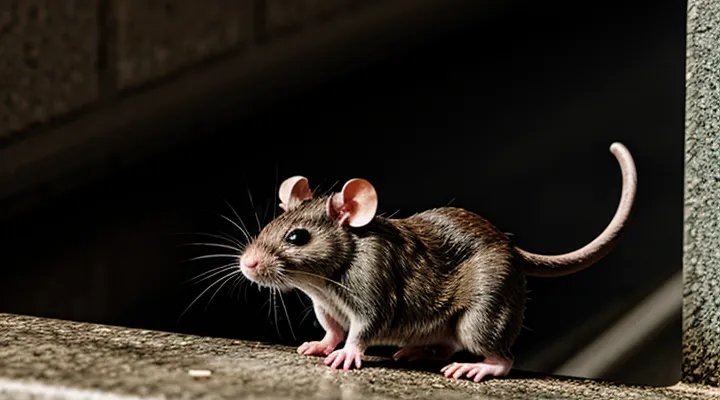
The Auditory World of Rodents
The Science of Rodent Vocalizations
Types of Rat Sounds
Rats employ a diverse repertoire of vocalizations that vary by frequency range, intensity, and behavioral context. Each sound conveys specific information to conspecifics and, in some cases, to predators or researchers.
- High‑frequency squeaks (10–50 kHz): Brief, sharp bursts emitted during startled or fearful reactions. Audible to humans when the frequency falls below 20 kHz; otherwise remain ultrasonic.
- Low‑frequency chirps (2–8 kHz): Soft, repetitive notes used during social grooming or mild agitation. Often heard in laboratory colonies when animals are grouped.
- Chattering (5–15 kHz): Rapid series of clicks produced while exploring novel objects or during exploratory play. Signals curiosity and territorial assessment.
- Teeth‑grinding (10–30 kHz): Continuous rasping sound associated with contentment or relaxation, frequently observed during sleep or after feeding.
- Ultrasonic vocalizations (USVs, 30–100 kHz): Complex, modulated calls emitted by pups when separated from the dam and by adults during mating rituals. Serve as distress signals for offspring and courtship cues for adults.
- Alarm calls (15–30 kHz): Short, high‑pitched bursts triggered by predator presence or sudden threats. Prompt immediate evasive behavior in nearby rats.
- Mating calls (20–50 kHz): Sustained, patterned sequences emitted by males during courtship. Include frequency jumps and pauses that attract receptive females.
Understanding these categories enables precise interpretation of rat behavior in both field observations and controlled experiments.
Frequency Ranges and Human Perception
Rats emit high‑frequency vocalizations that extend well beyond the range of most mammalian calls. Their cries consist of a rapid series of ultrasonic squeaks interspersed with lower‑frequency components that can be heard without equipment.
Typical acoustic characteristics include:
- Fundamental frequencies between 20 kHz and 50 kHz for ultrasonic squeaks.
- Harmonic overtones reaching 80 kHz–100 kHz in intense distress calls.
- Occasional broadband bursts in the 5 kHz–15 kHz range, audible to humans during close proximity.
Human auditory perception covers roughly 20 Hz to 20 kHz. Frequencies above 20 kHz are inaudible, rendering the dominant ultrasonic portion of a rat’s cry invisible to most listeners. The lower‑frequency components fall within the audible spectrum, allowing detection of a faint, high‑pitched squeal when the animal is within a meter. Perceived loudness follows the equal‑loudness contour: sounds at 5 kHz–10 kHz require lower sound‑pressure levels to be heard than those near 15 kHz, explaining why the audible segment of a rat’s cry can be noticeable despite its overall low amplitude.
Deciphering Rat Distress Calls
Ultrasonic Squeals and Their Meaning
Alarm Calls and Predator Evasion
Rats emit high‑frequency squeaks when threatened, typically ranging from 4 to 12 kHz with rapid onset and short duration. The sound’s amplitude rises sharply, followed by a brief plateau and a rapid decay, creating a distinctive acoustic signature that distinguishes it from routine social chatter.
These vocalizations serve as alarm signals, instantly alerting nearby conspecifics to danger. Playback experiments show that naïve rats cease foraging and adopt a crouched posture within seconds of hearing the call, indicating a hardwired avoidance response.
Predators encounter the alarm call as a cue of prey vigilance. Studies on feral cats and owls demonstrate reduced pursuit intensity after the call, suggesting that the sound conveys the rat’s awareness of the predator, thereby lowering the attacker’s success probability. In some cases, the abrupt acoustic burst startles the predator, causing a brief pause that can enable escape.
- Frequency band: 4–12 kHz, peak around 8 kHz
- Duration: 30–150 ms, with rapid rise time
- Modulation: minimal frequency sweep, flat spectral contour
- Amplitude: >70 dB SPL at source, quickly attenuating with distance
The precise acoustic structure of the distress squeak provides reliable information to both fellow rodents and potential hunters, influencing collective evasion tactics and predator decision‑making. Understanding these dynamics enhances pest‑control strategies and informs neuroethological models of alarm communication.
Pain and Fear Indicators
A rat in distress emits a high‑frequency, sharply rising vocalization that differs markedly from its routine ultrasonic chatter. The sound exhibits a sudden onset, a peak frequency between 12 kHz and 22 kHz, and a rapid decay within 0.1–0.3 seconds. Amplitude often exceeds baseline levels by 10–15 dB, creating a piercing quality audible to humans.
Key acoustic markers of pain or fear:
- Frequency surge: abrupt jump to the upper range of the rat’s vocal spectrum.
- Amplitude spike: noticeable increase in loudness relative to normal calls.
- Temporal compression: shortened duration, typically under 0.3 seconds.
- Irregular pattern: lack of the rhythmic repetition seen in social communication.
- Harmonic distortion: presence of broadband noise and reduced tonal purity.
These parameters allow researchers and handlers to differentiate emergency cries from routine ultrasonic exchanges, facilitating timely intervention.
Audible Cries and Social Communication
Infanticide Prevention Calls
The high‑frequency squeal emitted by neonatal rats functions as a deterrent against adult‑initiated infanticide. Researchers have identified a specific acoustic pattern—rapid rise time, peak frequency around 50 kHz, and a duration of 0.2–0.5 seconds—that triggers maternal and sibling protective responses while suppressing aggressive tendencies in unrelated adults.
Key characteristics of the protective vocalization include:
- Frequency range: 45–55 kHz, distinct from adult distress calls.
- Temporal structure: brief bursts repeated at intervals of 1–3 seconds.
- Contextual activation: produced when pups are separated from the nest or exposed to unfamiliar adult scents.
Behavioral experiments demonstrate that exposure to these calls reduces the incidence of cannibalistic attacks by up to 70 percent. The mechanism relies on auditory processing centers in adult rats that associate the cry with the presence of vulnerable offspring, thereby activating nurturing circuits and inhibiting predatory impulses.
In laboratory settings, playback of the recorded pup cry reliably suppresses aggressive behavior in male and female adults, confirming the call’s efficacy as a natural infanticide prevention signal. This evidence supports the view that the acoustic signature serves as an evolved communication tool, ensuring offspring survival through immediate behavioral modulation of conspecific adults.
Submission and Dominance Vocalizations
Rats produce distinct vocalizations that signal social status and intent. When an individual concedes to a more powerful conspecific, the emission is a low‑frequency, broadband squeak lasting 100–300 ms. The sound’s amplitude is modest, and the spectral peak centers around 5–8 kHz. This pattern accompanies submissive posture, reduced locomotion, and tail‑raising, reinforcing the hierarchy without physical conflict.
Conversely, dominant rats emit high‑intensity, sharp chirps that rise rapidly to a peak frequency of 12–15 kHz before falling. These calls last 30–80 ms and are often accompanied by aggressive gestures such as lunging, upright stance, and teeth baring. The acoustic signature includes a steep rise time and a pronounced harmonic structure, which other rats recognize as a threat cue.
Key acoustic differences:
- Frequency range: submissive (5–8 kHz) vs. dominant (12–15 kHz)
- Duration: submissive (100–300 ms) vs. dominant (30–80 ms)
- Amplitude: submissive (low) vs. dominant (high)
- Temporal envelope: gradual onset vs. rapid onset
Research using spectrographic analysis confirms that listeners discriminate these calls within milliseconds, adjusting their behavior accordingly. The vocal system thus serves as an efficient mechanism for establishing and maintaining social order among rats.
Factors Influencing Rat Cries
Age and Developmental Stage
Pup Isolation Calls
Pup isolation calls are high‑pitched vocalizations emitted by young canids when separated from the litter or mother. The sounds serve as an immediate distress signal that prompts maternal retrieval and reinforces sibling cohesion.
Acoustically, these calls exhibit a narrow frequency band centered around 4–8 kHz, short syllable duration (30–80 ms), and rapid repetition rates of 2–5 calls per second. Harmonic structure is minimal, and amplitude peaks sharply at onset before decaying within each syllable.
- Fundamental frequency: 4–8 kHz
- Syllable length: 30–80 ms
- Repetition interval: 200–500 ms
- Amplitude envelope: abrupt rise, exponential decay
Functionally, the calls achieve three objectives: (1) attract the mother’s attention, (2) synchronize sibling begging behavior, and (3) deter predators by signaling the presence of a vigilant adult. The vocal pattern adapts to the distance from the mother; longer, lower‑frequency calls appear when pups are farther away.
When contrasted with the vocalizations of rats, pup isolation calls share the high‑frequency emphasis but differ in temporal organization. Rat cries often display broader frequency ranges (2–10 kHz) and irregular intervals, reflecting a more variable emotional state. In contrast, canine pups maintain a consistent rhythm that maximizes detection by the mother’s auditory system.
Adult Distress Signals
Adult rats emit a distinct distress call when confronted with threats, pain, or confinement. The vocalization occupies the ultrasonic range, typically between 20 kHz and 50 kHz, and can include lower‑frequency components audible to humans (approximately 4 kHz–8 kHz). The sound is brief, lasting 30–100 ms, and repeats in rapid bursts when the animal perceives imminent danger.
Key acoustic features include:
- Frequency modulation: a sharp rise to a peak frequency followed by a gradual decline.
- Amplitude envelope: high initial intensity that quickly attenuates.
- Temporal pattern: series of 3–6 calls spaced 200–500 ms apart.
Physiological triggers involve activation of the periaqueductal gray and amygdala, resulting in heightened respiratory effort and laryngeal tension. Environmental cues such as predator odor, sudden light exposure, or physical restraint reliably provoke the signal.
Behavioral consequences for conspecifics consist of immediate freezing, retreat, or aggressive counter‑action. Laboratory recordings show that playback of the distress call elicits elevated corticosterone levels in naïve adult rats, confirming its role as an alarm cue.
Environmental Context
Laboratory vs. Wild Environments
Rats produce high‑frequency vocalizations that vary markedly between controlled facilities and natural habitats. In laboratory settings, recordings typically capture squeaks ranging from 20 to 80 kHz, with peak amplitudes constrained by cage acoustics and limited social interaction. The uniform lighting, temperature, and handling procedures reduce stress‑induced variability, yielding a relatively narrow spectral profile.
In contrast, wild rats emit cries across a broader frequency spectrum, often exceeding 90 kHz during predator evasion or territorial disputes. Ambient noise, vegetation density, and the presence of conspecifics modulate both amplitude and duration. Field recordings reveal irregular timing patterns, reflecting spontaneous encounters and environmental challenges absent in laboratory colonies.
Key differences can be summarized:
- Frequency range: laboratory ≈ 20–80 kHz; wild ≈ 20–120 kHz
- Amplitude variability: low in cages, high in open terrain
- Temporal structure: regular bouts in experimental trials, irregular bursts in natural confrontations
- Contextual triggers: handling or stimulus devices in labs; predators, food competition, and mating in the wild
Understanding these disparities informs the interpretation of behavioral assays. Data derived solely from captive specimens may underestimate the acoustic complexity that rats employ for communication and threat signaling in their native ecosystems.
Presence of Other Rats
Rats modify their vocalizations when other conspecifics are nearby. The presence of additional rats triggers a shift in frequency, amplitude, and temporal pattern of the cry, creating a more complex acoustic signal that can convey social information such as hierarchy, alarm, or invitation to interact.
Key acoustic adjustments observed under group conditions:
- Higher fundamental frequency to enhance detectability among multiple individuals.
- Increased peak amplitude, allowing the cry to penetrate a crowded acoustic environment.
- Shortened inter‑call intervals, producing rapid sequences that facilitate group cohesion.
- Added harmonic components that encode individual identity and emotional state.
These modifications improve communication efficiency within densely populated rat colonies, ensuring that each cry remains distinguishable despite overlapping sounds from surrounding members.
Research and Ethical Considerations
Methods for Studying Rat Vocalizations
Microphone Technologies
Microphone selection determines how accurately the high‑pitched squeal of a rodent can be recorded. A squeal typically contains frequencies between 5 kHz and 30 kHz, with rapid amplitude fluctuations. Capturing this signal requires a transducer with extended high‑frequency response, low self‑noise, and sufficient sensitivity to subtle pressure changes.
- Condenser microphones – diaphragm size 1 in. or smaller, frequency response up to 40 kHz, low noise floor, require phantom power.
- Dynamic microphones – robust construction, limited high‑frequency reach (≈20 kHz), suitable for loud environments.
- Shotgun microphones – highly directional pickup pattern, reduces ambient interference, useful when the animal is in a controlled enclosure.
- Contact (piezo) microphones – attach to cage walls or the animal’s habitat, capture vibrations directly, bypassing air‑borne noise.
- Lavalier microphones – miniature capsules, can be positioned near the animal’s mouth for close‑range recording.
Choosing a preamplifier with a flat gain curve across the target band preserves the natural timbre of the squeal. Adjustable high‑pass filters prevent low‑frequency rumble from contaminating the signal. Recording at a sampling rate of at least 96 kHz ensures that the full harmonic content remains intact after digital conversion.
Placement strategy influences data quality. Position the microphone 2–5 cm from the source, align the capsule axis with the animal’s mouth, and employ acoustic dampening around the enclosure to lower reverberation. When multiple microphones are used, maintain consistent polarity and phase to enable later combination in post‑processing.
Finally, calibrate the system with a reference tone at 20 kHz to verify frequency response and sensitivity. Document gain settings, distance, and environmental conditions for reproducibility. This systematic approach yields recordings that faithfully represent the rat’s cry, supporting precise acoustic analysis.
Acoustic Analysis Software
Acoustic analysis software enables precise measurement of the auditory characteristics of a rat’s distress call. High‑resolution recordings are imported, then visualized as waveforms and spectrograms to reveal temporal and spectral patterns.
Key processing capabilities include:
- Frequency extraction across the audible and ultrasonic range
- Amplitude envelope calculation for peak intensity assessment
- Duration measurement of individual syllables and complete calls
- Harmonic and formant identification to differentiate vocal types
- Automated batch analysis for large datasets
Typical workflow follows a defined sequence: capture the vocalization with a calibrated microphone, load the file into the analysis program, apply noise‑reduction filters, segment the signal into discrete events, extract quantitative parameters, and export results to statistical software for further interpretation.
Commonly used platforms that meet these requirements are:
- Praat – scriptable environment, extensive spectral tools, open‑source licensing
- MATLAB with Signal Processing Toolbox – customizable algorithms, integration with machine‑learning frameworks
- Raven Pro – user‑friendly interface, batch processing, built‑in annotation features
- Audacity (with plug‑ins) – free solution, basic spectrographic analysis, suitable for preliminary studies
These tools provide reproducible, objective data that support detailed investigations into the acoustic structure of rodent vocalizations, facilitating comparisons across experimental conditions and contributing to a robust understanding of mammalian communication.
Implications for Animal Welfare
Recognizing Suffering
The distress vocalization of a laboratory rodent exhibits a sharp, high‑frequency squeal that differs markedly from normal communication calls. This sound arises when the animal experiences pain, fear, or extreme discomfort, and its acoustic structure provides a reliable indicator of suffering.
Physiological stress triggers rapid activation of the laryngeal muscles, producing a burst of energy concentrated between 10 and 30 kHz. The call lasts 0.2–0.5 seconds, often accompanied by a series of repeated pulses with decreasing amplitude. These parameters contrast with the softer, lower‑frequency chirps used for social interaction.
Identifying suffering through auditory monitoring involves:
- Measuring peak frequency; values above 18 kHz correlate with heightened nociception.
- Assessing call duration; prolonged bursts suggest sustained distress.
- Counting pulse repetitions; clusters of three or more pulses indicate acute pain.
- Analyzing amplitude modulation; irregular fluctuations reflect physiological turmoil.
Accurate detection of these features enables real‑time welfare assessment, reduces reliance on invasive procedures, and improves the validity of experimental outcomes. Automated sound‑analysis systems can flag abnormal vocal patterns, prompting immediate intervention to alleviate the animal’s condition.
Improving Care Practices
Understanding the acoustic characteristics of a rat’s distress call provides a reliable indicator of health status, stress level, and environmental comfort. By integrating acoustic monitoring into routine husbandry, caretakers can detect problems earlier and adjust conditions promptly.
Key practices for enhancing rat welfare based on vocal analysis:
- Install low‑frequency microphones in cages or enclosures to capture audible sighs, squeaks, and high‑pitched cries.
- Use software that isolates frequency bands associated with pain or anxiety; set thresholds that trigger alerts when calls exceed normal ranges.
- Correlate recorded calls with observable factors such as temperature, humidity, cage density, and diet to identify stressors.
- Adjust environmental parameters (e.g., provide additional nesting material, regulate lighting cycles, ensure adequate ventilation) when abnormal vocal patterns emerge.
- Conduct regular health checks on individuals that generate frequent distress calls; examine for injury, infection, or dental issues.
Implementing these steps creates a feedback loop: acoustic data reveal welfare concerns, targeted interventions reduce stress, and subsequent recordings confirm improvement. Continuous refinement of monitoring protocols sustains optimal care standards for laboratory and pet rats alike.