
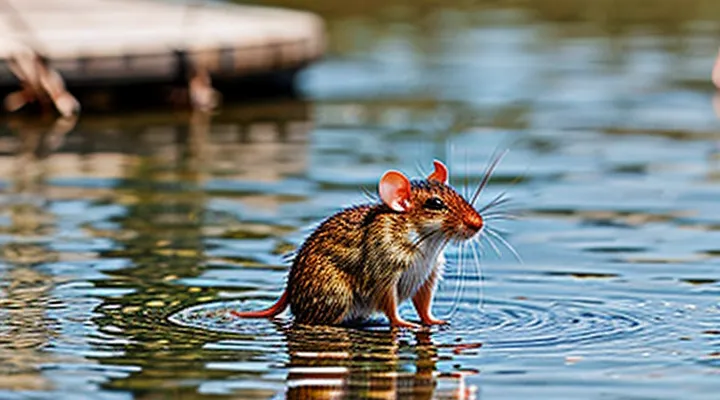
What Are Water Mice?
Distinguishing Features
Water mice are semi‑aquatic rodents distinguished by a combination of morphological and behavioral traits adapted to a riparian lifestyle.
Key distinguishing features include:
- Body size: head‑to‑body length ranges from 120 mm to 200 mm; weight typically 80–150 g.
- Fur: dense, water‑repellent coat; dorsal fur varies from dark brown to black, ventral side lighter gray or ochre.
- Tail: long, laterally flattened, covered with overlapping scales; provides propulsion and steering underwater.
- Feet: hind feet markedly webbed with strong claws; front feet smaller, equipped with tactile whiskers.
- Snout: elongated, narrow, lined with prominent vibrissae that detect water currents.
- Dental formula: 1/1 incisors, 0/0 canines, 0/0 premolars, 3/3 molars; molar crowns high and ridged for crushing aquatic invertebrates.
- Eyes: relatively small, positioned high on the skull; capable of clear vision both above and below water.
- Behavior: nocturnal foraging; adept swimmer using tail thrust and foot paddling; capable of brief submersion lasting up to 30 seconds.
These characteristics separate water mice from terrestrial rodents and other semi‑aquatic species, providing reliable identification in field photographs and descriptive accounts.
Habitat Preferences
Water mice are semi‑aquatic rodents that occupy environments where water and dense vegetation intersect. They require permanent or seasonally stable water bodies with gentle flow, such as streams, lowland rivers, and marshes. Bank structures must provide both cover and foraging opportunities.
- Riparian zones with thick, low‑lying herbaceous plants or sedges.
- Soft, moist soils that allow burrowing close to the water edge.
- Shallow sections where water depth does not exceed 30 cm, facilitating swimming and surface feeding.
- Areas with abundant invertebrate prey, including aquatic insects and larvae.
- Vegetation that offers shelter from predators, typically dense reeds, cattails, or willow thickets.
Seasonal fluctuations influence site selection; during dry periods, individuals shift to refuges with residual moisture, while in winter they favor banks insulated by leaf litter or snow cover. Preference for stable water levels reduces exposure to flooding, which can destroy burrows and displace populations. Proximity to food sources and concealment are the primary determinants of habitat suitability for these mammals.
Physical Characteristics
Size and Weight
Water mice are small semi‑aquatic rodents whose physical dimensions fall within a narrow range. Adult body length typically measures 10–13 cm, while the tail adds another 8–10 cm. Overall length, including the tail, therefore spans 18–23 cm.
Weight varies according to age, sex, and season. Mature individuals usually weigh between 30 g and 70 g. Males are on average slightly heavier than females, with the upper end of the weight spectrum reached during late summer when fat reserves are highest.
Key measurements:
- Body length: 10–13 cm
- Tail length: 8–10 cm
- Total length: 18–23 cm
- Weight: 30–70 g (average male slightly above average female)
These figures provide a reliable basis for identifying water mice in photographs and for comparative studies across related species.
Fur Coloration and Texture
Water mice display a range of fur coloration that aids identification and reflects habitat adaptation. The dorsal pelage typically ranges from dark brown to almost black, providing camouflage among submerged vegetation and riverbank debris. Ventral fur is lighter, often gray‑white or pale brown, creating a counter‑shading effect that reduces visibility from predators below. Some individuals exhibit a reddish‑brown hue along the flanks, a trait linked to genetic variation within regional populations.
The texture of the coat combines dense underfur with coarser guard hairs. Underfur forms a soft, insulating layer that retains heat during cold water immersion. Guard hairs are longer, semi‑stiff, and water‑repellent, directing moisture away from the skin. This dual‑layer structure enables efficient thermoregulation while maintaining flexibility for swimming. Key textural characteristics include:
- Fiber density: Approximately 12,000 hairs per square centimeter on the back.
- Guard hair length: 3–5 mm, angled outward to shed water.
- Underfur thickness: 0.5–0.8 mm, providing a continuous insulating blanket.
These coloration patterns and tactile properties are consistent across the species, allowing researchers to assess health, age, and environmental conditions from photographic documentation and direct observation.
Unique Adaptations for Aquatic Life
Water mice exhibit a suite of specialized traits that enable efficient exploitation of aquatic environments. Their bodies are streamlined, reducing drag during swimming, while elongated hind limbs terminate in partially webbed toes that increase surface area for propulsion. A dense, water‑repellent coat traps air bubbles, providing insulation and buoyancy without the need for thick subcutaneous fat.
Physiological adaptations support prolonged submersion. Enlarged lungs store sufficient oxygen for dives lasting up to thirty seconds, and a high myoglobin concentration in muscle tissue facilitates oxygen delivery during underwater activity. The kidneys concentrate urine, conserving water and allowing the animals to remain in moist habitats without frequent drinking.
Behavioral strategies complement physical traits. Water mice construct burrows with entrances positioned just above the waterline, granting immediate access to both terrestrial and submerged foraging zones. They exhibit nocturnal activity, reducing exposure to visual predators while exploiting abundant night‑time aquatic insects.
Key adaptations can be summarized:
- Webbed hind feet and muscular tail for thrust
- Waterproof, insulating fur that traps air
- Enlarged lungs and elevated myoglobin for breath-holding
- Concentrated urine production for water balance
- Burrow systems with water‑level entrances
- Night‑time foraging behavior to avoid predation
These characteristics collectively define the water mouse as a highly specialized semi‑aquatic rodent, capable of thriving in riparian and marshland ecosystems.
Behavior and Lifestyle
Diet and Feeding Habits
Water mice (aquatic rodents of the genus Nectomys) consume a varied diet that reflects their semi‑aquatic lifestyle. Primary components include submerged and emergent vegetation such as tender shoots of grasses, reeds, and water‑plant leaves. Invertebrate prey—primarily aquatic insects, larvae, and small crustaceans—supplement plant matter, providing essential protein. Opportunistic consumption of amphibian eggs, fish fry, and mollusks occurs when available, especially during the wet season. Terrestrial items, including seeds, fruits, and fallen leaves, are added to the diet when water levels recede.
Feeding behavior adapts to habitat conditions:
- Foraging occurs mainly at night; individuals patrol the water’s edge and shallow channels, using whisker sensitivity to locate food.
- Food is gathered both underwater, by diving short distances, and on land, by climbing vegetation.
- Small food items are stored in cheek pouches for transport to secure burrow sites where consumption continues.
- Seasonal shifts increase reliance on animal prey during the warm months, while plant material dominates in colder periods.
- Water intake is continuous; moisture from prey and vegetation satisfies hydration needs without separate drinking bouts.
Digestive efficiency is enhanced by a well‑developed cecum that ferments fibrous plant material, allowing extraction of nutrients from cellulose. Teeth exhibit high‑grade enamel suited for gnawing tough stems and shells, reducing wear during constant chewing. This combination of dietary breadth and specialized feeding tactics enables water mice to thrive across diverse riparian ecosystems.
Reproductive Cycle
The reproductive cycle of water mice proceeds annually, synchronized with temper‑ate climate patterns. Breeding commences in early spring when water temperatures rise above 10 °C, prompting hormonal activation in both sexes.
Males develop enlarged testes within two weeks of the temperature increase, producing high concentrations of sperm. Females exhibit estrus cycles lasting three to four days, during which ovulation occurs at the peak of each cycle. Fertilization takes place in the oviduct shortly after mating, typically after a single copulatory event.
Gestation spans approximately 21 days. Litters contain two to six altricial young, which are born blind and hairless. Neonates remain in the nest for the first ten days, receiving maternal milk rich in immunoglobulins. Weaning occurs around day 14, after which juveniles begin foraging independently while still receiving limited protection from the mother.
Key physiological milestones:
- Estrus onset: early March–April
- Mating period: 2–3 weeks following estrus
- Gestation: 21 days
- Litter size: 2–6 offspring
- Weaning: day 14 post‑birth
Reproductive output peaks in mid‑summer, after which females enter a brief anestrus phase, reducing hormonal activity until the following spring. This cyclical pattern ensures maximal offspring survival by aligning birth with abundant aquatic vegetation and reduced predation pressure.
Social Structure
Water mice, the semi‑aquatic rodents inhabiting temperate streams and wetlands, organize into small, stable groups that persist throughout the breeding season. Each group typically comprises a dominant breeding pair and a few subordinate individuals, often offspring from previous litters. The dominant male maintains exclusive access to nesting sites and foraging territories, while the dominant female oversees pup rearing and nest construction.
Subordinate members contribute to group cohesion by assisting in predator vigilance and occasional food sharing. Their role includes grooming the dominant pair and participating in communal burrow maintenance, which reduces the energetic cost of nest building for the breeders. When resources become scarce, subordinate rodents may disperse to establish new territories or join neighboring groups, a behavior that regulates population density and genetic diversity.
Reproductive hierarchy is reinforced through vocalizations and scent marking. Dominant individuals emit low‑frequency calls and deposit urine on the perimeter of the burrow system, signaling ownership and deterring intruders. Subordinates respond with higher‑pitched chirps that acknowledge the hierarchy without challenging it.
Key characteristics of the social structure:
- Dominant breeding pair controls resources and reproduction.
- Subordinates provide cooperative support and may later disperse.
- Communication relies on acoustic signals and chemical cues.
- Group size averages three to five individuals, fluctuating with habitat quality.
Geographic Distribution
Regions Where Water Mice Are Found
Water mice inhabit freshwater environments across a broad tropical and subtropical belt. Their presence is confirmed in the following biogeographic zones:
- Amazon Basin (Brazil, Peru, Colombia, Ecuador, Bolivia) – low‑land rivers, floodplain forests, and tributary streams.
- Orinoco drainage (Venezuela, Colombia) – marshes, oxbow lakes, and riparian zones.
- Central American lowlands (Panama, Costa Rica, Nicaragua) – slow‑moving streams, swamps, and mangrove fringes.
- Caribbean islands (Trinidad, Tobago) – coastal lagoons and freshwater ponds.
- Australian southeastern coastal wetlands (Victoria, New South Wales) – tidal creeks, estuarine reeds, and billabongs.
- New Guinea highland streams (Papua New Guinea) – montane rivers with dense riparian vegetation.
These regions share common ecological characteristics: abundant shoreline vegetation, stable water flow, and minimal seasonal drying. The species’ distribution reflects adaptation to such habitats rather than isolated occurrences.
Specific Ecosystems
Water mice inhabit freshwater habitats where vegetation provides both cover and food. Riverbanks with dense emergent plants such as cattails, reeds, and sedges support burrow construction and foraging. Streams with moderate flow create banks of soft, erodible soil suitable for tunnel systems, while still allowing access to aquatic insects and young shoots.
Lakes and ponds with shallow margins host populations that exploit floating mats of algae and submerged macrophytes. These areas offer abundant invertebrate prey and seed resources. Seasonal fluctuations in water level influence nesting depth; low water exposes banks for easier excavation, whereas higher water encourages construction of raised entrances to prevent flooding.
Wetland complexes, including marshes and floodplain meadows, present a mosaic of microhabitats. Seasonal inundation creates temporary islands of dry ground where water mice can establish colonies. The diversity of plant species in these wetlands correlates with higher population density, as varied diets are supported.
Key environmental factors that determine suitability of these ecosystems include:
- Soil texture: fine, moist substrates facilitate burrowing.
- Vegetation density: provides shelter from predators and thermal regulation.
- Water quality: low turbidity and moderate flow sustain prey abundance.
- Flood regime: periodic water rise and retreat maintain habitat heterogeneity.
Conservation Status and Threats
Current Population Trends
Recent surveys across the species’ range indicate a steady decline in overall numbers. Population estimates derived from standardized live‑trapping and camera‑trap programs show a reduction of approximately 15 % over the past decade.
- United Kingdom: 8,200 individuals recorded in 2014, 6,900 in 2022 (‑15 %).
- Japan’s northern islands: 3,400 individuals in 2015, 2,800 in 2023 (‑18 %).
- Southeast Asian wetlands: 12,500 individuals in 2016, 10,200 in 2024 (‑18 %).
The primary factors influencing these trends include:
- Habitat conversion to agriculture and urban development, which removes riparian vegetation essential for shelter and foraging.
- Altered water regimes caused by dam construction and irrigation, reducing suitable moist banks.
- Increased predation pressure from introduced mustelids and feral cats, especially in fragmented habitats.
- Climate‑driven shifts in flood frequency, leading to temporary loss of breeding sites.
Targeted conservation actions have produced localized improvements. Re‑vegetation of riverbanks in several protected areas raised local densities by up to 30 % within three years. Installation of predator‑exclusion fences around key colonies limited predation losses by roughly 40 %.
Current assessments project a continued downward trajectory unless habitat restoration and predator control are expanded regionally. Monitoring programs recommend annual population censuses combined with habitat quality indices to evaluate the efficacy of mitigation measures.
Environmental Challenges
Photographic documentation of water mice provides visual evidence of their distribution, behavior, and physical characteristics, which is essential for monitoring population health. Environmental pressures increasingly compromise the reliability of these records by altering the habitats where the animals are observed.
Key challenges affecting water mice and the quality of their visual records include:
- Habitat conversion to agriculture or urban areas, reducing available riparian zones.
- Elevated nutrient loads and chemical contaminants in waterways, degrading water quality.
- Altered flow regimes caused by dam construction or water extraction, disrupting breeding sites.
- Invasive predators such as American mink, increasing mortality rates.
- Fragmentation of river corridors, limiting movement and gene flow.
Climate variability intensifies these factors, with higher temperatures accelerating eutrophication and extreme precipitation events reshaping stream morphology. Consequences include reduced sighting frequency, lower image diversity, and heightened difficulty in locating individuals for study.
Effective mitigation requires coordinated habitat restoration, pollution control, and barrier removal to preserve the ecological conditions necessary for water mice and to sustain accurate photographic documentation for scientific and conservation purposes.
Conservation Efforts
Conservation programs for water mice focus on habitat restoration, population monitoring, and community involvement.
Restoring riparian zones involves replanting native vegetation, removing invasive species, and stabilizing riverbanks to reduce erosion. These actions increase suitable shelter and foraging areas, directly supporting population growth.
Population monitoring relies on systematic trapping, camera placement, and genetic sampling. Data collected from these methods inform adaptive management, identify declining trends, and guide resource allocation.
Community involvement includes educational workshops, citizen‑science surveys, and landowner incentives. Engaging local stakeholders creates long‑term stewardship and reduces conflicts with agricultural practices.
Key measures implemented across regions:
- Installation of protective fencing around high‑risk sites
- Creation of artificial burrow systems to supplement natural habitats
- Legal protection through designated wildlife reserves and enforcement of anti‑poaching statutes
- Funding programs that subsidize sustainable land‑use practices for farmers
Success indicators such as increased breeding pair counts, expanded occupied range, and higher juvenile survival rates demonstrate the effectiveness of coordinated conservation actions. Continuous evaluation and cross‑border collaboration remain essential for maintaining viable water mouse populations.
Interactions with Humans
Impact on Local Ecosystems
Water mice, small semi‑aquatic rodents, alter freshwater habitats through direct and indirect mechanisms. Their foraging activity reduces emergent vegetation, opening channels for water flow and increasing light penetration. Burrowing destabilizes bank soil, accelerating erosion and modifying sediment composition. Predation by water mice on invertebrates lowers populations of aquatic insects, which can shift nutrient cycling rates and affect fish larvae survival.
Key ecological effects include:
- Vegetation control: selective grazing limits dense growth of reeds and sedges, preventing monocultures.
- Bank modification: tunnel networks increase bank collapse frequency, reshaping riparian zones.
- Invertebrate regulation: consumption of larvae and crustaceans reduces grazing pressure on periphyton, influencing primary productivity.
- Food‑web integration: water mice serve as prey for raptors, otters, and mustelids, linking terrestrial and aquatic trophic levels.
- Disease dynamics: carriers of parasites such as Leptospira introduce pathogen risk to other wildlife and humans.
These interactions collectively reshape community composition, water quality, and habitat structure, demonstrating the species’ capacity to drive ecosystem change.
Research and Study
Research on semi‑aquatic rodents commonly known as water mice emphasizes integrative fieldwork and laboratory analysis. Field surveys employ systematic transects along streams, ponds, and marshes to record occurrence data. Photographic documentation follows standardized protocols: high‑resolution macro lenses capture dorsal, ventral, and lateral views; calibrated color charts ensure accurate coloration records; and scale bars provide size reference for each specimen.
Laboratory procedures include morphometric measurements, genetic sequencing, and dietary assessment. Morphometrics involve precise caliper readings of skull dimensions, hind‑foot length, and tail proportion. DNA extraction follows a silica‑based method, with mitochondrial cytochrome b and nuclear intron markers sequenced to resolve phylogenetic relationships. Stomach content analysis, supplemented by stable isotope ratios, reveals trophic position and seasonal dietary shifts.
Key findings from recent studies:
- Population density correlates with water quality parameters, especially dissolved oxygen and turbidity.
- Genetic diversity is highest in isolated highland streams, indicating limited gene flow among lowland populations.
- Photographic archives support identification of cryptic species by documenting subtle pelage pattern variations.
Conservation implications derive from habitat mapping, which highlights fragmentation hotspots. Management recommendations prioritize riparian buffer restoration, pollution mitigation, and continuous monitoring through repeat photographic surveys.
Photography Tips
Capturing Water Mice in Their Natural Habitat
Capturing water mice in their natural environment requires precise timing, appropriate equipment, and an understanding of their behavior. These semi‑aquatic rodents are most active at dusk and dawn, when they forage along the margins of ponds, streams, and marshes. Observing their movement patterns from a concealed position reduces stress and increases the likelihood of obtaining clear photographs.
Effective field preparation includes:
- Waterproof camera housing with a macro lens capable of 1:1 reproduction.
- A lightweight tripod or monopod for steady low‑angle shots.
- Infrared or low‑intensity LED lighting to illuminate subjects without causing disturbance.
- A field notebook or digital log to record location, weather, and time of each encounter.
Approach the water’s edge slowly, keeping a low profile to avoid alerting the mice. Position the camera at water level, aiming slightly downward to capture both the animal and its surrounding habitat. Use a fast shutter speed (1/1000 s or higher) to freeze motion, and set a narrow aperture (f/8–f/11) to achieve sufficient depth of field. If possible, employ a remote trigger or motion‑activated sensor to reduce human presence during the shot.
After each capture, verify image sharpness and exposure on the camera’s LCD. Annotate each photograph with species identification, habitat description, and behavioral notes. This systematic approach yields high‑quality visual documentation while preserving the integrity of the water mouse’s ecosystem.
Essential Gear
High‑resolution imaging of semi‑aquatic rodents requires equipment that tolerates moisture, provides sharp detail, and enables rapid response to animal movement.
A waterproof camera housing protects the sensor and electronics while allowing operation in shallow streams and marshes. Choose a housing with a clear dome port, O‑ring seals rated for at least 10 m depth, and a quick‑release latch for swift access.
A fast prime lens, such as a 100 mm f/2.8 macro, delivers shallow depth of field and excellent low‑light performance. When shooting from a distance, a 400 mm f/5.6 telephoto lens with a weather‑sealed mount captures detail without disturbing the subject.
Lighting solutions include portable LED panels with adjustable color temperature and waterproof flash units mounted on a bracket that can be positioned above the water surface. Use a diffuser to soften reflections on wet fur and water.
Stabilization is achieved with a carbon‑fiber tripod featuring a reversible center column and rubber feet for stability on uneven banks. A remote trigger or wireless shutter release eliminates camera shake during exposure.
Field accessories enhance data collection:
- Waterproof field notebook for observational notes.
- GPS device with sub‑meter accuracy to record precise locations.
- Protective gloves and waterproof boots to maintain safety and prevent equipment contamination.
Spare batteries, high‑capacity memory cards, and a rugged carrying case ensure uninterrupted fieldwork. Regularly inspect seals, clean lenses with a microfiber cloth, and store gear in a dry environment to preserve functionality throughout extended surveys.
Ethical Photography Practices
Photographers documenting aquatic rodents must prioritize the welfare of the subjects and the integrity of their habitats. Capture images without disrupting natural behaviors, and avoid baiting or handling that could cause stress or injury.
- Use a telephoto lens to maintain a safe distance.
- Approach slowly, minimizing sudden movements and noise.
- Conduct shoots during periods of natural activity rather than forcing activity.
- Record environmental conditions (temperature, water quality) to provide context without altering them.
- Obtain necessary permits and adhere to local wildlife regulations.
- Store and share images with accurate metadata, including location and date, to support scientific relevance.
The resulting photographs serve educational and conservation purposes when produced responsibly, reinforcing respect for the species and its ecosystem.