
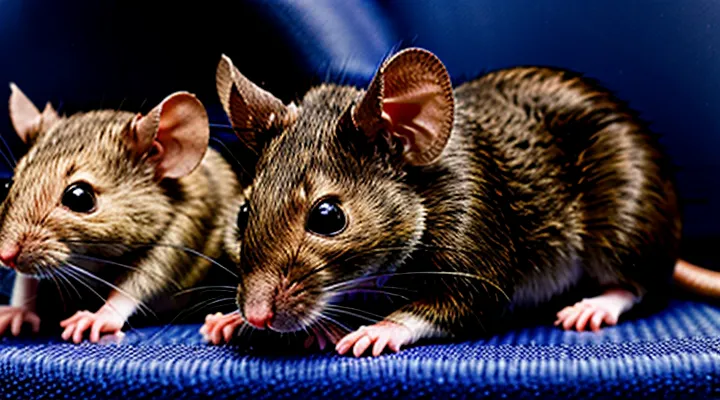
The Science of Rodent Ultrasound
What is Ultrasonic Vocalization (USV)?
Frequency and Range
Mice and rats emit ultrasonic vocalizations that exceed the upper limit of human hearing, serving as primary channels for social signaling.
-
Mice
• Peak frequencies cluster between 40 kHz and 80 kHz.
• Isolated calls may reach 100 kHz under stress or during mating. -
Rats
• Dominant frequencies range from 20 kHz to 50 kHz.
• High‑intensity emissions can extend to 70 kHz, especially in aggressive encounters.
The audible bandwidth of these calls is narrow, typically spanning 5–10 kHz around the peak, which enhances species‑specific identification.
Propagation distance depends on frequency, ambient temperature, and humidity. Lower frequencies (≈20 kHz) travel farther, maintaining detectable levels up to 1 m in standard laboratory conditions. Higher frequencies (≥70 kHz) attenuate rapidly, limiting effective range to 10–20 cm. Absorption by air increases with frequency, reducing signal strength exponentially beyond the immediate vicinity of the emitter.
Production Mechanisms
Mice and rats generate ultrasonic vocalizations (USVs) through rapid oscillations of the laryngeal glottis driven by specialized neuromuscular control. The primary mechanism involves subglottal air pressure modulated by the respiratory muscles, which forces the vocal folds to vibrate at frequencies above 20 kHz. Precise timing of inspiratory and expiratory phases, regulated by brainstem nuclei, determines the onset and duration of each ultrasonic bout.
Key physiological components contributing to USV production include:
- Laryngeal muscles (e.g., cricothyroid and thyroarytenoid) that adjust tension and length of the vocal folds to achieve high‑frequency vibration.
- Respiratory circuitry that supplies the necessary airflow and pressure gradient for phonation.
- Neural pathways originating in the periaqueductal gray and extending to the nucleus ambiguus, orchestrating coordinated muscle activation.
- Vocal tract geometry that shapes resonant properties, influencing spectral characteristics of the emitted sound.
Experimental evidence shows that pharmacological inhibition of the cricothyroid muscle reduces USV frequency, confirming its role in tension regulation. Similarly, lesions in the periaqueductal gray abolish ultrasonic calling, indicating the central origin of the motor command.
Overall, ultrasonic emission in these rodents results from an integrated system where respiratory dynamics, laryngeal biomechanics, and central neural control converge to produce high‑frequency acoustic signals used in social communication and environmental monitoring.
Why Do Rodents Emit Ultrasound?
Social Communication
Ultrasonic vocalizations (USVs) serve as a primary channel for social interaction among laboratory mice and wild rats. Emitted frequencies typically range from 20 kHz to 100 kHz, a spectrum beyond human auditory perception but well within the sensitivity of rodent auditory systems. Production originates in the laryngeal and nasal structures, and the acoustic signal is transmitted through the environment to conspecific receivers.
In social contexts, USVs convey distinct information:
- Courtship: Males generate complex, frequency‑modulated calls that attract females and synchronize mating behavior. Playback of these calls increases female approach and receptivity.
- Maternal care: Pup distress calls, characterized by high‑pitch, short‑duration bursts, trigger rapid retrieval by the dam. The acoustic pattern encodes the pup’s physiological state and urgency.
- Territorial and aggressive encounters: Resident males emit low‑frequency, broadband calls that signal dominance and deter intruders. Intruders respond with counter‑calls, establishing a vocal duel that modulates escalation.
- Alarm signaling: Sudden, broadband chirps produced during predator exposure alert nearby conspecifics, prompting escape or freezing responses.
Detection relies on specialized cochlear hair cells tuned to ultrasonic ranges and neural pathways that project to the auditory cortex and limbic structures. Functional imaging confirms rapid processing of USVs, linking acoustic perception to immediate behavioral output.
Experimental approaches combine high‑frequency microphones, spectrographic analysis, and controlled playback to quantify call structure and behavioral impact. Manipulation of gene expression affecting vocal apparatus (e.g., Foxp2) demonstrates causal links between USV characteristics and social competence.
Overall, ultrasonic communication constitutes a sophisticated, species‑specific signaling system that orchestrates reproductive, parental, and defensive behaviors in mice and rats.
Reproductive Signaling
Ultrasound emissions in rodents reach frequencies between 30 kHz and 100 kHz, exceeding the human auditory range. Both male and female mice and rats generate these signals during social interactions, and the acoustic patterns vary with hormonal status.
Reproductive signaling relies on specific ultrasonic features:
- Frequency modulation correlates with estrous phase; females emit higher‑frequency calls during proestrus.
- Call duration and inter‑call interval shorten as ovulation approaches, providing males with temporal cues for mating readiness.
- Male ultrasonic vocalizations intensify after exposure to female scent, indicating heightened sexual motivation.
Neuroendocrine mechanisms link ultrasonic production to gonadal hormones. Estrogen up‑regulates vocal‑motor circuits in the brainstem, while testosterone enhances call amplitude in males. Experimental suppression of these hormones reduces call rate and alters spectral characteristics, confirming hormonal dependence.
Pregnancy monitoring utilizes ultrasonic communication as well. Pregnant females emit distinct low‑frequency bursts that decrease in intensity after parturition, suggesting a role in maternal‑offspring coordination. Recording these patterns offers a non‑invasive method for assessing reproductive status in laboratory colonies.
Alarm and Distress Calls
Rodent alarm and distress calls are ultrasonic vocalizations (USVs) emitted primarily in the 20–100 kHz range. These signals arise when mice or rats encounter predators, experience pain, or face social threats, and they serve to alert conspecifics and solicit aid.
Key acoustic features differentiate alarm from distress calls:
- Frequency: Alarm calls often cluster around 30–45 kHz, whereas distress calls may extend to higher frequencies, up to 80 kHz.
- Duration: Alarm bouts are brief, typically 10–50 ms per syllable; distress sequences can last several seconds with repetitive syllables.
- Modulation: Alarm USVs display rapid frequency sweeps; distress USVs show less modulation and more steady tones.
Behavioral outcomes linked to these vocalizations include:
- Immediate freezing or fleeing by nearby rodents upon detection of alarm USVs.
- Increased grooming, vocal reciprocity, and approach behavior in response to distress calls, reflecting social support mechanisms.
- Activation of specific brain regions—periaqueductal gray, amygdala, and auditory cortex—demonstrated by electrophysiological recordings during call emission and reception.
Experimental detection relies on high‑sensitivity microphones and spectrographic analysis. Researchers quantify call rate, peak frequency, and bandwidth to distinguish alarm from distress contexts, enabling precise assessment of stress levels and social dynamics in laboratory and field studies.
Pup-Parent Communication
Rodents emit high‑frequency sounds that serve as the primary channel for communication between newborns and their caregivers. Pup vocalizations appear within the first hours after birth, typically ranging from 40 to 80 kHz, and are triggered by isolation, temperature fluctuations, or tactile stimulation. These calls convey urgency, prompting maternal attention.
Mothers possess auditory receptors tuned to the same ultrasonic band. Upon detecting a pup’s call, they exhibit rapid approach, nest‑building, and nursing behaviors. The latency between call onset and maternal response is often less than a second, indicating a tightly coupled sensorimotor loop.
Key physiological components include:
- Cochlear hair cells specialized for ultrasonic frequencies.
- Auditory cortex regions that discriminate call structure.
- Motor circuits that translate acoustic detection into locomotor activation.
Experimental approaches rely on:
- Miniature microphones placed in nesting environments to capture spontaneous calls.
- Playback of recorded pup calls to assess maternal approach speed.
- Lesion or pharmacological manipulation of auditory pathways to determine functional necessity.
Collectively, ultrasonic vocalizations constitute an efficient, low‑visibility signaling system that ensures offspring survival through immediate caregiver recruitment.
Detecting and Studying Rodent Ultrasound
Equipment and Methods
Ultrasonic Microphones
Ultrasonic microphones are the primary instruments for capturing the high‑frequency vocalizations produced by rodents. These devices typically operate above 20 kHz, with many models extending to 100 kHz or higher, matching the spectral range of mouse and rat calls. Sensitivity curves should be examined to ensure adequate response at the specific frequencies of interest, while low‑noise preamplifiers preserve signal integrity during recording.
Key performance parameters include:
- Frequency response: flatness within the target band (e.g., 20–80 kHz) minimizes distortion.
- Signal‑to‑noise ratio (SNR): values above 60 dB are advisable for detecting faint emissions.
- Directionality: omnidirectional capsules capture sounds from any angle, whereas cardioid or hyper‑cardioid designs reduce ambient interference.
- Output impedance: compatibility with acquisition hardware prevents loading effects.
Proper placement of the microphone influences data quality. Position the sensor at a distance that balances acoustic pressure and spatial resolution, typically 5–15 cm from the animal’s enclosure. Mounting the device on a vibration‑isolated platform eliminates mechanical artifacts that could masquerade as ultrasonic events. When recording multiple subjects, array configurations enable triangulation and source localization, provided that each element is synchronized to a common clock.
Calibration procedures assure quantitative comparisons across experiments. Use a reference ultrasonic generator to produce tones of known amplitude and frequency; adjust gain settings until recorded levels match the standard. Periodic verification compensates for drift in transducer sensitivity due to temperature or aging. Document all settings—including sampling rate, bit depth, and filter parameters—to facilitate reproducibility and data sharing.
Recording Software
Recording software is the essential interface between ultrasonic transducers and data analysis pipelines when studying rodent vocalizations. Reliable acquisition demands sampling rates of at least 250 kHz to capture frequencies up to 120 kHz, the upper limit of mouse and rat calls. Software must support continuous streaming, real‑time visualization, and precise time stamps to enable synchronization with behavioral events.
Key functional requirements include:
- Configurable gain and filter settings to optimize signal‑to‑noise ratio without distorting spectral content.
- Automatic detection algorithms that flag ultrasonic events based on amplitude thresholds and spectral criteria.
- Export options for lossless formats such as WAV (48 kHz or higher) or proprietary high‑resolution files compatible with MATLAB, Python, and R.
- Batch processing capabilities for large datasets, allowing parallel analysis of multiple recordings.
- Integration with hardware triggers, enabling alignment with video tracking or electrophysiological recordings.
Common solutions span open‑source and commercial offerings:
- Avisoft SASLab Pro – commercial suite with built‑in spectrogram analysis, batch export, and extensive device driver library.
- Praat – free, scriptable environment supporting ultrasonic frequencies when paired with appropriate hardware drivers.
- MATLAB toolboxes – custom scripts for high‑precision control, often used in research labs that require bespoke signal processing pipelines.
- DeepSqueak – open‑source platform built on MATLAB, featuring automated detection and classification of mouse and rat ultrasonic vocalizations.
- Ultrasonic Recording Interface (URI) by Avisoft – lightweight utility focused on raw data capture, suitable for integration with external analysis scripts.
Validation of recording software involves comparing captured spectra against calibrated ultrasonic sources. Consistency checks should verify that peak frequencies and amplitudes remain stable across repeated recordings and that latency between trigger input and data capture stays below 1 ms. Documentation of software version, settings, and hardware configuration is mandatory for reproducibility.
Choosing a solution depends on experimental scale, required automation, and budget constraints. Open‑source packages provide flexibility and transparency, while commercial systems deliver vendor support and streamlined workflows. Regardless of selection, adherence to the outlined technical specifications ensures accurate capture of rodent ultrasonic emissions for downstream behavioral and neurophysiological interpretation.
Spectrographic Analysis
Spectrographic analysis provides a quantitative framework for characterizing ultrasonic signals produced by laboratory rodents. The technique converts time‑domain recordings into frequency‑time representations, allowing precise measurement of peak frequencies, bandwidth, and temporal patterns.
Typical recordings employ condenser microphones or piezoelectric transducers with sensitivity up to 120 kHz. Signals are sampled at rates exceeding twice the highest expected frequency to satisfy the Nyquist criterion. Fast Fourier Transform (FFT) algorithms generate spectrograms with adjustable window lengths; shorter windows increase temporal resolution, while longer windows improve frequency discrimination.
Key metrics derived from spectrograms include:
- Fundamental frequency – dominant pitch of vocalizations, often ranging from 40 kHz to 100 kHz in mice and from 20 kHz to 80 kHz in rats.
- Harmonic structure – presence and relative intensity of integer multiples of the fundamental frequency, indicating vocal tract configuration.
- Frequency modulation – slope and curvature of frequency contours, reflecting emotional state or social context.
- Duration and inter‑call interval – temporal parameters useful for distinguishing call types.
Data interpretation relies on comparison with established acoustic libraries. Automated classification systems apply machine‑learning models trained on labeled spectrograms to differentiate pup distress calls, adult courtship songs, and aggression‑related vocalizations. Statistical analysis of extracted features—such as mean frequency, bandwidth, and call rate—supports hypothesis testing in behavioral genetics and neurophysiology.
Limitations of the method include susceptibility to background noise, which can mask low‑amplitude components, and the need for careful calibration of microphone placement to avoid spectral distortion. Advanced noise‑reduction algorithms and high‑resolution time‑frequency analysis (e.g., wavelet transforms) mitigate these issues.
Overall, spectrographic analysis translates rodent ultrasonic emissions into objective, reproducible datasets, enabling rigorous investigation of communication, disease phenotypes, and the effects of pharmacological interventions.
Challenges in Research
Environmental Noise
Rodent ultrasound operates above 20 kHz, a range typically inaudible to humans but susceptible to interference from ambient acoustic energy. Environmental noise sources—including ventilation systems, equipment fans, and external construction—produce broadband sounds that can mask ultrasonic emissions, reducing detection sensitivity in laboratory recordings.
Effective mitigation requires:
- Locating recording chambers in acoustically isolated rooms or enclosures.
- Employing sound‑absorbing materials (e.g., acoustic foam, dense curtains) on walls, ceilings, and equipment housings.
- Scheduling experiments during periods of minimal building activity to avoid transient disturbances.
- Using high‑gain, narrow‑band microphones calibrated for frequencies between 20 kHz and 100 kHz, paired with analog filters that reject lower‑frequency components.
Ambient ultrasonic contamination may arise from electronic devices (e.g., switching power supplies) that emit harmonic frequencies overlapping rodent vocalizations. Regular spectral surveys of the experimental space help identify such hidden sources. When identified, replace offending equipment with low‑emission alternatives or shield them with metal enclosures.
Data integrity depends on maintaining a signal‑to‑noise ratio (SNR) above 10 dB for reliable call classification. Continuous monitoring of background levels, combined with the strategies above, ensures that ultrasonic recordings reflect genuine rodent activity rather than artifacts introduced by the surrounding environment.
Data Interpretation
Ultrasonic vocalizations produced by laboratory rodents are captured with high‑frequency microphones, sampled at rates exceeding 200 kHz to preserve spectral detail. Raw recordings are filtered to remove ambient noise, then segmented into individual syllables using amplitude thresholds and temporal criteria. Each syllable is characterized by fundamental frequency, peak frequency, duration, and harmonic structure, generating a multidimensional dataset for every animal and experimental condition.
Statistical interpretation hinges on selecting appropriate models for the hierarchical nature of the data. Within‑subject variability is addressed by mixed‑effects models, which treat each mouse or rat as a random factor while fixed effects represent experimental manipulations such as pharmacological treatment or social context. Non‑parametric tests are employed when distributional assumptions are violated, particularly for frequency measures that often exhibit skewed tails. Effect sizes and confidence intervals accompany p‑values to convey the magnitude and precision of observed differences.
Biological relevance is inferred by linking acoustic parameters to known behavioral states. Elevated peak frequencies, for example, correlate with distress calls, whereas prolonged syllable durations may indicate mating displays. Cross‑species comparisons require normalization of frequency bands to account for size‑related scaling, ensuring that conclusions about communication patterns are not confounded by inherent anatomical differences.
Ethical Considerations in Research
Research involving ultrasonic signals produced by laboratory mice and rats requires strict adherence to ethical standards that protect animal welfare and ensure scientific validity. Institutional review boards must approve protocols before any acoustic measurements commence. Justification for using live subjects should be based on clear scientific objectives that cannot be achieved through alternative methods such as computational modeling or in‑vitro systems.
Procedures that expose animals to ultrasonic recordings must minimize stress. Continuous monitoring of behavioral indicators—such as grooming, locomotion, and vocalization changes—allows immediate intervention if distress is observed. Anesthesia, when required, should follow established dosing guidelines to avoid undue physiological impact.
Data collection protocols should incorporate the following practices:
- Use the smallest number of animals necessary to achieve statistically robust results.
- Apply refined acoustic equipment that reduces background noise and prevents excessive sound pressure levels.
- Record baseline ultrasonic activity before experimental manipulation to distinguish treatment effects from natural variability.
- Store raw recordings securely and maintain detailed metadata to support reproducibility and auditability.
Ethical oversight extends to post‑experimental responsibilities. Animals must receive appropriate post‑procedure care, including analgesia and humane endpoints defined in advance. Disposal or adoption plans should comply with institutional and legal requirements.
Reporting standards demand transparent disclosure of all methodological details, including equipment specifications, calibration procedures, and any deviations from the approved protocol. Peer‑reviewed publications must include statements confirming compliance with relevant animal welfare regulations.
By integrating these considerations, researchers ensure that investigations of rodent ultrasonic emissions advance knowledge while respecting the moral obligations owed to animal subjects.
Practical Applications and Implications
Pest Control Strategies
Ultrasonic Repellents: Efficacy and Limitations
Ultrasonic repellents are devices that emit high‑frequency sound waves intended to deter mice and rats by exploiting the frequencies these rodents naturally produce during communication and territorial displays.
Laboratory experiments consistently show that exposure to frequencies between 20 kHz and 50 kHz can provoke avoidance behavior in captive rodents. Field studies report reduced activity in treated zones for periods ranging from a few days to several weeks, particularly when the emitted signal matches the species‑specific peak frequencies (≈28 kHz for house mice, ≈30 kHz for Norway rats).
- Immediate aversion observed in 70‑85 % of test subjects during the first 48 hours.
- Effectiveness declines after 5‑7 days as individuals habituate to the constant stimulus.
- Outdoor deployment suffers from rapid attenuation; sound pressure drops by more than 50 % at distances greater than 2 m in foliage or cluttered environments.
Limitations arise from physiological adaptation, acoustic absorption, and environmental variability. Rodents quickly learn to ignore non‑threatening, continuous tones, diminishing the deterrent impact. Low‑frequency background noise (e.g., HVAC systems) masks the ultrasonic signal, especially in insulated structures. Device placement errors—such as positioning near reflective surfaces or in corners—create dead zones where the sound fails to reach target animals. Regulatory constraints in some jurisdictions restrict the maximum output intensity, further limiting coverage area.
Effective implementation requires rotating frequency patterns, intermittent emission schedules, and strategic placement to ensure overlapping coverage. Combining ultrasonic devices with physical barriers, sanitation measures, and baited traps yields more reliable population control than reliance on acoustic deterrence alone.
Animal Welfare in Research
Monitoring Stress Levels
Ultrasonic vocalizations (USVs) provide a reliable, non‑invasive metric for assessing stress in laboratory mice and rats. Distinct frequency bands correspond to emotional states: 22‑kHz calls typically signal aversive conditions, whereas 50‑kHz calls are associated with positive affect. Monitoring these signals yields quantitative data on the physiological impact of experimental manipulations.
Key components for effective stress monitoring:
- High‑sensitivity microphones (≥100 kHz bandwidth) positioned above the cage to capture the full spectrum of USVs.
- Digital acquisition systems with sampling rates ≥250 kHz to preserve signal integrity.
- Automated detection software (e.g., DeepSqueak, Avisoft SASLab Pro) configured to discriminate between distress and affiliative call patterns.
- Baseline recordings collected over multiple sessions to establish individual variability.
- Controlled exposure to stressors (restraint, predator odor, social isolation) with precise timing to correlate USV changes to specific events.
Data analysis focuses on call count, duration, peak frequency, and amplitude. Increases in 22‑kHz call frequency and total duration reliably indicate heightened anxiety or pain, while a reduction in 50‑kHz emissions reflects diminished reward processing. Normalizing these metrics against baseline values permits comparison across subjects and experimental groups.
Potential confounds include ambient noise, cage material acoustics, and the animal’s age or sex, which can alter USV production. Regular calibration of recording equipment and inclusion of sham‑treated controls mitigate these issues. Proper interpretation of ultrasonic data, combined with complementary physiological measures (corticosterone levels, heart rate), strengthens conclusions about stress dynamics in rodent models.
Assessing Social Behavior
Ultrasonic vocalizations (USVs) serve as primary communication channels during mouse and rat social encounters. Researchers capture these high‑frequency sounds to quantify interaction quality, hierarchy formation, and mating readiness without relying on visual cues.
Assessment protocols typically include:
- Recording environment: Sound‑attenuated chambers equipped with calibrated microphones covering 20–100 kHz.
- Behavioral paradigms: Resident‑intruder test, social preference assay, and pair‑housing observation.
- Signal extraction: Automated software isolates call bouts, measures duration, peak frequency, and amplitude.
- Quantitative metrics: Call rate (calls · min⁻¹), call type distribution (e.g., flat, frequency‑modulated), and temporal patterns relative to specific social events.
Data interpretation requires alignment of USV metrics with observable actions. Elevated call rates during initial contact often indicate heightened arousal, whereas sustained flat calls correlate with established affiliative bonds. Frequency modulation patterns differentiate aggressive from submissive exchanges, enabling precise mapping of social hierarchy.
Experimental design must control for strain‑specific vocal repertoires, age, and hormonal status. Cross‑validation with video tracking ensures that acoustic markers reflect genuine social dynamics rather than isolated locomotor activity.
Applied outcomes include phenotypic screening of genetic models for neuropsychiatric disorders, evaluation of pharmacological agents targeting social deficits, and refinement of enrichment strategies to promote naturalistic interactions.
Potential for Bioacoustics
Species Identification
Ultrasonic vocalizations provide a reliable metric for distinguishing between mouse and rat species. Frequency range, temporal pattern, and harmonic structure differ consistently across taxa, enabling precise identification without visual confirmation.
- Mice: peak frequencies 40–100 kHz, short syllable duration (5–30 ms), simple harmonic series.
- Rats: peak frequencies 20–80 kHz, longer syllables (30–150 ms), complex harmonics and frequency modulation.
High‑sensitivity microphones coupled with spectrographic analysis capture these signatures. Automated software extracts parameters such as peak frequency, bandwidth, and inter‑call interval, then applies machine‑learning classifiers trained on validated reference recordings.
Practical considerations for accurate species identification include:
- Calibration of recording equipment before each session.
- Ambient noise reduction to prevent spectral contamination.
- Consistent placement of microphones relative to the animal’s vocal source.
- Validation of classifier outputs against known specimens periodically.
When these protocols are followed, ultrasonic profiling serves as a non‑invasive, reproducible tool for differentiating mouse and rat species in laboratory and field settings.
Population Monitoring
Ultrasonic vocalizations produced by mice and rats provide a non‑invasive marker for estimating local population density. Continuous acoustic recording captures call occurrences, which can be converted into quantitative indices of activity.
- Deploy autonomous recorders near burrow entrances or along established runways; devices should sample at frequencies above 20 kHz to encompass the full spectral range of rodent calls.
- Apply automated detection algorithms that isolate characteristic pulse patterns, duration, and peak frequency; machine‑learning classifiers improve discrimination between species and reduce false positives.
- Translate call counts into density estimates using calibrated relationships derived from controlled enclosure studies, where known numbers of individuals generate measurable call rates.
Environmental variables influence detection probability. Ambient temperature alters call amplitude, while vegetation density attenuates signal propagation. Calibration trials in the target habitat must account for these factors to adjust raw counts.
Temporal analysis reveals population trends. Seasonal peaks in ultrasonic activity correspond to breeding cycles, while longitudinal monitoring detects declines or expansions following habitat modification or pest‑control interventions.
Data integration with GIS layers permits spatial mapping of activity hotspots, supporting targeted management actions. Limitations include overlapping vocalizations during high‑density periods and potential acoustic masking by insect or bat calls; supplementary trapping data can validate acoustic estimates.
Overall, systematic ultrasonic monitoring delivers real‑time, scalable insight into rodent community dynamics without the labor and bias inherent in conventional capture methods.