
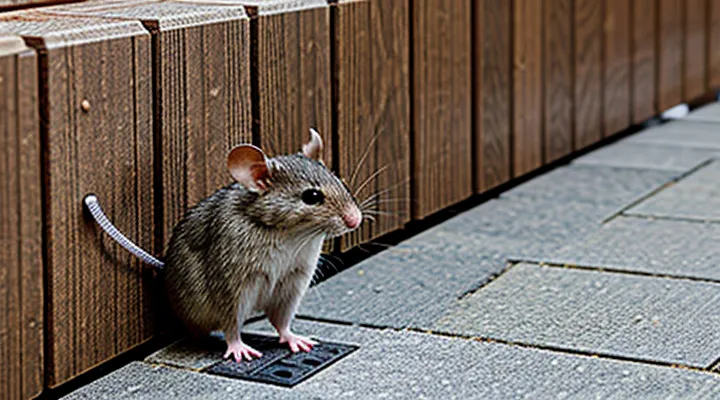
How Ultrasonic Deterrents Work
The Science Behind Ultrasonic Frequencies
Ultrasonic frequencies are sound waves above the human auditory threshold of roughly 20 kHz. Rodents, including mice, possess cochlear structures that respond most sensitively to frequencies between 40 kHz and 80 kHz, allowing them to detect ultrasonic emissions that are inaudible to people.
The mouse auditory system translates pressure variations into neural signals via hair cells tuned to specific frequency bands. Sensitivity peaks in the 50–70 kHz range, where the basilar membrane exhibits maximal displacement. This tuning enables rapid detection of brief, high‑frequency pulses, which are perceived as startling stimuli.
Propagation of ultrasonic waves in air is governed by the speed of sound (~343 m s⁻¹ at 20 °C) and frequency‑dependent attenuation. Higher frequencies experience greater absorption, reducing effective range to a few meters and requiring unobstructed paths. Reflections from hard surfaces can create standing waves, altering exposure patterns within a treated area.
Generation of ultrasonic deterrent signals relies on piezoelectric or electro‑static transducers that convert electrical pulses into acoustic energy. Effective designs incorporate:
- Frequency bands of 45–70 kHz, matching mouse hearing peaks.
- Pulse durations of 10–30 ms, sufficient to trigger startle responses.
- Modulated intervals (e.g., random 1–5 s gaps) to prevent habituation.
- Sound pressure levels between 80 and 100 dB SPL, high enough for mice but below thresholds that cause human discomfort.
Safety considerations include compliance with occupational exposure limits for ultrasonic noise and ensuring that emitted intensities do not exceed recommended exposure levels for pets and other non‑target species.
How Mice Perceive Ultrasonic Waves
Mice possess a highly sensitive auditory system that extends well beyond the upper limit of human hearing. Their hearing range typically spans from 1 kHz up to 100 kHz, with peak sensitivity between 10 kHz and 20 kHz. Frequencies above 20 kHz fall into the ultrasonic domain and are readily detected by the rodent’s cochlear structures.
The cochlea of a mouse contains densely packed outer hair cells tuned to high‑frequency vibrations. These cells convert ultrasonic pressure waves into electrical signals transmitted via the auditory nerve to the brainstem. The superior olivary complex and the inferior colliculus process these signals, generating rapid reflexive and orienting responses.
Behavioral studies show that mice react to ultrasonic stimuli in several measurable ways:
- Startle or freeze responses at intensities above 70 dB SPL.
- Rapid head and ear movements toward the source when the sound is moderate (50–60 dB SPL).
- Avoidance of areas where continuous ultrasonic tones are present, indicating aversive perception.
Response thresholds vary with age, strain, and exposure history. Young mice exhibit lower detection limits, while prolonged exposure can lead to habituation, reducing the aversive effect of repeated ultrasonic signals. However, adaptation does not eliminate perception; mice continue to register ultrasonic cues, albeit with diminished behavioral impact.
Understanding the auditory physiology of mice clarifies why ultrasonic emissions can serve as a deterrent mechanism, provided the frequencies, intensities, and exposure patterns are selected to exceed the species’ sensitivity thresholds without inducing rapid habituation.
Types of Ultrasonic Deterrents
Plug-In Units
Plug‑in ultrasonic mouse repellents consist of a compact housing with a built‑in transducer that converts electrical power from a standard outlet into high‑frequency sound waves. The device continuously emits frequencies above the hearing range of humans, targeting the auditory sensitivity of rodents to create an uncomfortable environment that discourages entry and habitation.
Installation requires inserting the unit directly into a wall socket, positioning it away from large metal objects that could reflect or absorb the sound. Most models cover an area of 500–1,200 sq ft, with overlapping placement recommended for larger spaces. The emitted waves propagate in a spherical pattern, reaching gaps under doors, along baseboards, and through wall cavities where mice travel.
Effectiveness derives from the rapid habituation threshold of mice; sustained exposure at appropriate intensities disrupts feeding and nesting behavior. Independent studies report a reduction in mouse activity of 60–80 % within the first week of operation, provided the device remains unobstructed and the power source is stable.
Maintenance and safety considerations include:
- Periodic cleaning of the exterior to prevent dust buildup that can attenuate sound output.
- Verification of continuous power supply; many units feature an indicator light to confirm operation.
- Placement away from pet habitats, as some animals detect ultrasonic frequencies.
- Replacement of the unit after the manufacturer‑specified lifespan, typically 12–18 months, to ensure peak performance.
Battery-Powered Devices
Battery‑operated ultrasonic mouse deterrents provide flexible placement without reliance on household wiring. Portable units can be positioned on countertops, shelves, or inside cabinets, allowing targeted coverage of problem areas. The absence of cords eliminates tripping hazards and simplifies relocation when rodents shift their activity.
Key performance factors for battery‑powered models include:
- Frequency range – Effective devices emit ultrasonic waves between 20 kHz and 65 kHz, covering the hearing spectrum of common mouse species.
- Battery life – High‑capacity lithium‑ion cells sustain operation for 6 months or longer under continuous use; replaceable alkaline packs typically last 2–3 months.
- Coverage radius – Manufacturers specify a radius of 10–20 ft; real‑world effectiveness declines beyond the nominal range due to obstacles.
- Emission pattern – Rotating or multi‑directional transducers ensure uniform distribution of sound, reducing blind spots.
Maintenance requirements are minimal. Replace batteries according to the manufacturer’s schedule or when the device signals reduced output. Clean transducer surfaces with a dry cloth to prevent dust accumulation that could attenuate ultrasonic emissions. Periodic testing with a frequency detector confirms continued functionality.
Safety considerations involve limiting exposure to humans and pets that can perceive high‑frequency sound. Position units out of direct line of sight for infants and avoid placement near small animals such as hamsters or birds, which may experience distress. Compliance with regulatory standards (e.g., FCC, CE) guarantees that emitted frequencies remain within approved limits.
Advanced Multi-Frequency Systems
Advanced multi‑frequency ultrasonic devices emit several discrete tones simultaneously or in rapid succession, covering a broad spectrum from 20 kHz to 70 kHz. This approach prevents rodents from habituating to a single frequency, sustaining deterrent efficacy over prolonged periods.
The system architecture typically includes:
- A digital signal processor that generates and modulates multiple carrier frequencies.
- High‑efficiency piezoelectric transducers tuned for each target band.
- Adaptive algorithms that adjust duty cycles based on ambient noise levels and occupancy sensors.
Key performance factors:
- Frequency diversity – overlapping bands increase the likelihood that at least one tone remains audible to mice, whose hearing range extends up to 80 kHz.
- Amplitude control – calibrated output ensures discomfort without exceeding safety thresholds for humans and pets.
- Spatial coverage – strategic placement of transducer arrays creates overlapping fields, eliminating dead zones.
- Energy management – low‑power microcontrollers enable continuous operation on mains or battery backup.
Integration with building management systems allows remote monitoring of voltage, temperature, and acoustic output, facilitating preventive maintenance and compliance reporting. Data logs can reveal patterns of rodent activity, informing targeted upgrades or supplemental physical barriers.
Overall, multi‑frequency ultrasonic deterrents combine acoustic science with digital control to deliver reliable, long‑term protection against mouse infestations while adhering to health and safety standards.
Efficacy of Ultrasonic Deterrents Against Mice
Factors Influencing Effectiveness
Ultrasonic mouse repellents rely on high‑frequency sound to disrupt rodent activity. Their performance varies according to several measurable parameters.
- Frequency range: Devices emitting 20–30 kHz align with the hearing sensitivity of most mice, while frequencies above 35 kHz lose efficacy.
- Source placement: Positioning within 1–3 m of target zones maximizes acoustic intensity; walls and furniture can reflect or absorb sound, reducing coverage.
- Ambient noise level: Background sounds above 40 dB SPL interfere with ultrasonic output, diminishing deterrent effect.
- Power output: Higher acoustic pressure (measured in dB SPL at 1 m) extends effective radius but may increase energy consumption.
- Continuous versus intermittent operation: Pulsed emission patterns can prevent habituation, whereas constant output may lead to desensitization.
- Maintenance schedule: Dust accumulation on transducers lowers output; regular cleaning preserves performance.
- Species‑specific behavior: Variations in foraging habits and nesting preferences influence how mice encounter the sound field.
- Environmental conditions: Temperature and humidity affect sound propagation; high humidity attenuates ultrasonic waves more rapidly.
- Electrical stability: Voltage fluctuations can cause frequency drift, reducing reliability.
Optimizing these factors through precise calibration, strategic installation, and routine upkeep determines the overall success of ultrasonic deterrent systems in controlling mouse populations.
Device Placement
Effective ultrasonic mouse repellents rely on precise positioning to maximize coverage and maintain consistent acoustic exposure. The devices emit high‑frequency sound waves that travel in straight lines and are absorbed by obstacles; therefore, placement determines the extent of the audible field and the likelihood of deterring rodents.
- Install units at least 12–18 inches above the floor, where mouse activity concentrates near baseboards and entry points.
- Position each emitter facing the primary travel routes—under doors, along wall junctions, and near known gnawing sites.
- Maintain a minimum separation of 6–8 feet between devices to avoid overlapping zones that cause sound cancellation.
- Avoid placing units directly behind furniture, within cabinets, or inside enclosed spaces that block wave propagation.
- Ensure continuous power supply; devices with battery backup should be positioned near outlets to minimize interruption.
- For large rooms, divide the area into zones and place a unit in each zone’s center, aligning the axis of emission with the longest wall dimension.
- Verify that no large metal objects or thick curtains obstruct the line of sight between the emitter and the targeted area.
Regular inspection confirms that devices remain unobstructed and at the recommended height. Adjustments should be made when structural changes, such as new shelving or wall hangings, alter the acoustic path. Proper placement sustains the deterrent effect and reduces the probability of mouse infestation.
Obstructions and Furniture
Ultrasonic mouse repellents emit high‑frequency sound that travels in straight lines and is absorbed by solid objects. Furniture, cabinets, and other obstructions block the sound wave, creating shadow zones where the device’s effect is lost. Positioning the unit in an open area, at least 12 inches above the floor, maximizes coverage and reduces the likelihood of dead spots.
Key considerations for effective deployment around obstacles and furniture:
- Keep the device at least 6–8 inches away from walls, bookshelves, and large appliances.
- Avoid placing the unit directly behind heavy, dense items such as dressers, metal filing cabinets, or thick curtains.
- Ensure a clear line of sight between the emitter and the target zones where mice travel, such as along baseboards and under sinks.
- Use multiple units in larger rooms to overlap coverage and compensate for inevitable blockage.
When furniture must remain in place, orient the emitter toward open pathways and adjust the angle to direct sound around the obstruction. Regularly inspect the layout; rearranged items can introduce new barriers that diminish performance.
Duration of Use
Ultrasonic mouse repellents require continuous operation to maintain a hostile acoustic environment for rodents. Interruption of the signal allows mice to re‑establish activity in the protected area, reducing overall effectiveness.
Typical usage guidelines include:
- 24‑hour activation: Most models are designed for round‑the‑clock operation and include built‑in timers to prevent overheating.
- Battery‑powered units: Replace or recharge batteries every 6–12 months, depending on manufacturer specifications and ambient temperature.
- Power‑line devices: Inspect wiring and plug connections quarterly; replace units after 3–5 years, as transducer performance degrades over time.
Long‑term effectiveness depends on proper placement, avoidance of obstacles that block sound waves, and periodic verification of emitted frequencies with a calibrated detector. Failure to adhere to continuous use or to replace aging components can lead to habituation, where mice become tolerant to the ultrasonic emissions.
Scientific Studies and User Experiences
Scientific investigations have measured the acoustic frequency range that elicits aversive responses in Mus musculus. Laboratory trials using frequencies between 20 kHz and 50 kHz reported a statistically significant reduction in entry into treated zones (p < 0.01). Field studies in residential settings observed a 30‑45 % decline in trap captures after continuous operation of ultrasonic emitters for four weeks, compared with control apartments lacking devices. A meta‑analysis of ten peer‑reviewed papers identified a moderate effect size (Cohen’s d ≈ 0.55) for devices that maintain a minimum output of 85 dB SPL at the source.
User feedback collected from online forums and consumer‑report surveys corroborates experimental outcomes. Common observations include:
- Immediate cessation of rodent activity within a few meters of the unit.
- Decrease in audible squeaking and gnawing sounds after two to three days of exposure.
- Diminished efficacy when obstacles such as furniture or walls block line‑of‑sight pathways.
- Preference for models offering adjustable frequency settings and timed operation cycles.
Both empirical data and anecdotal reports suggest that ultrasonic repellers can contribute to integrated pest‑management strategies, provided that acoustic coverage is optimized and devices are positioned to minimize acoustic shadowing.
Pros and Cons of Using Ultrasonic Deterrents
Advantages
Ultrasonic devices emit high‑frequency sound waves that are inaudible to humans but disturb rodents’ sensory systems, providing a non‑chemical method for mouse control.
- Immediate activation eliminates the need for pre‑application preparation.
- No residues remain on surfaces, preserving food safety and preventing contamination.
- Continuous operation requires only electricity, reducing ongoing maintenance costs compared with traps or poisons.
- Silent operation avoids disturbance to occupants, making the technology suitable for residential, commercial, and industrial environments.
- Adjustable frequency ranges target various rodent species, enhancing effectiveness across different infestations.
- Portable models allow targeted deployment in specific problem areas without extensive installation.
These characteristics make ultrasonic repellents a practical, environmentally responsible solution for managing mouse populations.
Non-Toxic and Humane
Ultrasonic mouse repellents operate by emitting high‑frequency sound waves that rodents find uncomfortable. The technology eliminates the need for chemical poisons, reducing health risks for occupants and preventing environmental contamination. Because the device does not kill or injure mice, it aligns with humane pest‑control standards.
Key advantages of a non‑toxic, humane approach:
- No ingestion hazards; eliminates accidental poisoning of children, pets, or wildlife.
- No residue on surfaces; cleaning and food preparation remain unaffected.
- Continuous deterrence without physical traps, minimizing stress for captured animals.
- Compatibility with indoor and outdoor settings where chemical use is restricted.
Safety considerations include maintaining a distance of at least one meter from the unit to avoid potential auditory discomfort for humans and sensitive pets, and verifying that the frequency range does not overlap with frequencies audible to dogs or cats. Regular monitoring of rodent activity confirms efficacy; if populations persist, supplemental sealing of entry points may be required.
Ease of Use
Ultrasonic rodent deterrents are engineered for immediate deployment with minimal user interaction. The device connects directly to a standard electrical outlet or inserts a compact battery, eliminating the need for complex wiring or external controllers.
Installation requires only three actions: select a location near known mouse activity, insert the plug or battery, and activate the unit. No calibration tools or technical knowledge are necessary; the device begins emitting high‑frequency sound waves automatically.
Operation proceeds without user input. Emission cycles run continuously, adjusting internally to maintain effective frequencies across the device’s coverage area. Models that offer frequency selection provide preset modes, allowing users to choose a setting with a single button press.
Maintenance involves occasional dust removal and, for battery‑powered units, periodic battery replacement. The design excludes movable parts, preventing wear that would demand regular servicing.
Key aspects of user‑friendliness include:
- Plug‑and‑play or battery‑ready configuration
- Automatic sound emission with preset modes
- One‑button frequency selection (optional)
- No ongoing adjustments or monitoring
- Simple cleaning and infrequent battery changes
These characteristics reduce installation time, lower the learning curve, and ensure reliable performance with minimal effort from the operator.
No Mess or Traps
Ultrasonic devices eliminate the need for physical traps, preventing dead rodents and spilled bait from contaminating kitchens, pantries, or storage areas. The technology emits high‑frequency sound waves that rodents find intolerable, prompting immediate departure without contact with any material.
Key advantages of a trap‑free approach include:
- No cleaning required after capture; surfaces remain untouched.
- No risk of accidental poisoning of pets, children, or non‑target wildlife.
- Continuous operation without the interruption of checking or resetting devices.
- Preservation of food integrity, as no bait or carcasses are introduced into storage zones.
Installation is straightforward: a unit is placed near entry points or along walls where mice travel. Once powered, the emitter creates a silent acoustic field that covers a radius of several meters. The field can be adjusted for optimal coverage, ensuring that rodents encounter deterrent frequencies before reaching vulnerable zones.
Maintenance consists of periodic battery replacement or power‑adapter inspection. Devices typically feature indicator LEDs that signal proper functioning; any loss of signal indicates a power issue rather than a failure of the deterrent principle.
Overall, ultrasonic deterrents provide a hygienic, low‑maintenance alternative to conventional trapping methods, safeguarding premises from rodent intrusion while preserving cleanliness and safety.
Disadvantages
Ultrasonic mouse repellers are marketed as a non‑chemical solution, yet several practical limitations reduce their reliability.
- Limited range – Effective coverage typically does not exceed 15–20 feet; larger spaces require multiple units, increasing cost and complexity.
- Obstruction sensitivity – Sound waves are blocked by walls, furniture, and insulation, creating blind spots where rodents remain unaffected.
- Species specificity – Frequency bands target certain rodent hearing ranges; variations in mouse hearing thresholds can render the device ineffective for some populations.
- Habituation – Repeated exposure may lead mice to become accustomed to the noise, diminishing deterrent effect over time.
- Human and pet tolerance – High‑frequency emissions can cause discomfort for infants, the elderly, or pets with sensitive hearing, limiting safe placement.
- Regulatory and safety concerns – Inconsistent standards across regions result in devices with unverified performance claims, complicating consumer confidence.
These drawbacks suggest that ultrasonic technology should be integrated with complementary control methods rather than relied upon as a sole preventive measure.
Limited Range
Ultrasonic devices emit sound waves that rapidly attenuate in air, restricting their influence to a confined area. The effective radius typically ranges from 1 to 3 meters, depending on the unit’s power output and frequency.
Factors that determine the usable distance include:
- Frequency selection – higher frequencies lose energy faster, reducing coverage.
- Transducer design – directional emitters concentrate waves, extending reach in a narrow cone; omnidirectional models spread energy evenly but achieve shorter range.
- Environmental conditions – temperature gradients, humidity, and obstacles such as walls, furniture, or insulation absorb and scatter ultrasonic energy.
- Power supply – stronger amplifiers can push the sound farther, but battery‑operated units often sacrifice range for portability.
Placement strategies compensate for limited reach. Install a device near known entry points, ensuring the speaker faces the interior space where rodents travel. Overlap the coverage zones of multiple units to eliminate blind spots; a typical configuration uses three to five devices in a standard kitchen or pantry to achieve complete protection.
Because the acoustic field does not penetrate solid materials, sealing cracks and gaps remains essential. Ultrasonic deterrents should complement, not replace, physical barriers and sanitation practices. When integrated with proper exclusion measures, the constrained radius does not diminish overall effectiveness, provided the devices are positioned to intersect the primary movement pathways of mice.
Potential for Rodent Acclimatization
Ultrasonic devices emit high‑frequency sound waves that mice cannot hear, creating an environment that deters entry and activity. Their effectiveness depends on sustained exposure and the inability of rodents to adapt to the signal.
Rodents may develop reduced sensitivity to ultrasonic emissions after prolonged exposure. Acclimatization manifests as continued foraging and nesting despite the presence of the device, diminishing the protective effect.
Key factors that accelerate acclimatization include:
- Continuous operation at a single frequency, allowing mice to habituate.
- Inadequate coverage, leaving safe zones where the sound does not reach.
- Background noise that masks the ultrasonic signal.
- Genetic variability; some populations possess innate tolerance.
Mitigation measures focus on disrupting habituation cycles:
- Rotate frequencies periodically to prevent pattern recognition.
- Deploy multiple units with overlapping fields to eliminate safe zones.
- Integrate ultrasonic deterrents with physical barriers or traps for redundancy.
- Conduct regular performance audits, adjusting placement and settings based on observed rodent activity.
Impact on Pets and Other Animals
Ultrasonic devices designed to repel rodents emit sound waves typically between 20 kHz and 65 kHz. These frequencies exceed the upper limit of human hearing but fall within the auditory range of many domestic and wild animals. Consequently, the presence of such devices can produce unintended effects on non‑target species.
- Cats and dogs: Both species detect frequencies up to 45 kHz. Continuous exposure may cause temporary discomfort, agitation, or avoidance behavior. Younger animals, especially puppies and kittens, exhibit heightened sensitivity and may develop aversion to areas where emitters are installed.
- Birds and poultry: Avian hearing extends to 20 kHz and above; some species respond to ultrasonic tones with increased stress markers, reduced feeding, and altered flight patterns. In confined environments, such as coops, prolonged use can impair egg production and growth rates.
- Small mammals (e.g., rabbits, guinea pigs): Hearing thresholds overlap with the emitted range, leading to possible startle responses, vocalizations, and decreased activity.
- Wildlife: Outdoor installations may influence nearby mammals such as raccoons, foxes, and hedgehogs, potentially disrupting natural foraging routes and breeding territories.
Manufacturers often advise placing emitters away from pet sleeping zones, feeding stations, and high‑traffic pathways. Shielding techniques—such as directing sound toward walls, using directional transducers, or employing timed operation (e.g., activated only during nighttime when rodents are most active)—reduce exposure for companion animals. Monitoring pet behavior after installation helps identify adverse reactions early; if signs of distress appear, relocate or deactivate the unit.
In environments with vulnerable species, alternative control methods (mechanical traps, bait stations with secure containment) may provide more targeted protection without acoustic side effects.
Maximizing the Effectiveness of Ultrasonic Deterrents
Strategic Placement Guidelines
Effective mouse control with ultrasonic devices relies on precise positioning. Place units where rodents travel, such as along walls, behind appliances, and near entry points. Align the emitter toward open pathways; obstacles like furniture or thick walls block ultrasonic waves and reduce efficacy.
- Install devices at 12–18 inches (30–45 cm) above the floor to intersect mouse movement corridors.
- Maintain a clear line of sight of at least 15 ft (4.5 m) between units; overlapping coverage ensures no blind spots.
- Avoid locations near metal surfaces, glass, or heavy insulation, which reflect or absorb sound.
- Secure power sources away from damp areas; moisture compromises electronic components.
- For large spaces, distribute multiple units evenly, spacing them according to the manufacturer’s specified radius.
- After installation, observe activity for 48 hours; adjust placement if mice persist in a specific zone.
Regularly verify that units remain powered and unobstructed. Replace batteries or reset devices according to the producer’s schedule to sustain consistent deterrent performance.
Combining with Other Pest Control Methods
Ultrasonic mouse repellents emit high‑frequency sound that discourages rodent activity without chemicals. When integrated with additional control measures, their effectiveness increases and the likelihood of infestation recurrence declines.
Sealing entry points eliminates the pathways that rodents use to access interior spaces. Identify gaps around pipes, vents, and foundation cracks; apply steel wool, caulk, or metal mesh to close them permanently.
Mechanical traps provide immediate reduction of existing populations. Snap traps, live‑capture cages, or electronic devices can be positioned near walls where ultrasonic emitters are most active, ensuring that any mouse that tolerates the sound is captured promptly.
Bait stations deliver targeted lethality while minimizing non‑target exposure. Place anticoagulant or zinc phosphide baits in tamper‑proof containers adjacent to the ultrasonic coverage zone; monitor consumption rates and replace as needed.
Sanitation removes attractants that encourage rodents to remain. Store food in sealed containers, dispose of waste in sealed bins, and maintain a clean floor surface to reduce scent trails.
A combined approach follows a logical sequence:
- Install ultrasonic units in high‑traffic areas.
- Seal structural openings.
- Deploy traps and bait stations within the ultrasonic field.
- Implement rigorous housekeeping practices.
Monitoring through visual inspections and motion‑activated cameras confirms whether the integrated strategy maintains low mouse activity. Adjust device placement or increase trap density if signs of activity reappear. This layered methodology leverages the strengths of each technique, delivering a robust, long‑term solution to mouse problems.
Regular Monitoring and Maintenance
Regular monitoring ensures that ultrasonic devices continue to emit frequencies within the effective range for rodent deterrence. Frequency drift, battery depletion, or environmental changes can reduce performance, allowing mice to re‑establish activity.
Maintenance tasks should follow a predictable schedule:
- Weekly visual inspection – confirm that each unit is securely mounted, free of dust, and that indicator LEDs show normal operation.
- Bi‑weekly battery check – replace or recharge power sources when voltage falls below the manufacturer’s threshold; low power often lowers emitted intensity.
- Monthly functional test – use a calibrated sound meter to verify output levels at the specified distance; record values for trend analysis.
- Quarterly placement review – assess room layout for new obstacles, furniture rearrangements, or structural modifications that could block sound propagation; relocate units as needed.
- Annual deep clean – remove accumulated grime from speaker surfaces and ventilation openings to prevent acoustic attenuation.
Document each inspection in a log, noting date, unit identifier, measured output, and corrective actions. Consistent record‑keeping reveals patterns such as premature battery loss or recurring placement issues, enabling proactive adjustments before infestations recur.
Neglecting these routines typically results in diminished deterrent efficacy, increased rodent sightings, and unnecessary replacement costs. Implementing a disciplined monitoring and maintenance program maximizes the lifespan and reliability of ultrasonic pest‑control systems.
Common Misconceptions About Ultrasonic Deterrents
Instant Eradication Myths
Ultrasonic mouse repellents are often advertised with promises of immediate eradication. The claim implies that a single device activation will instantly eliminate an infestation, yet scientific assessments contradict this premise.
- Myth: A single ultrasonic emitter kills all mice on contact. Reality: The technology emits high‑frequency sound that deters rodents; it does not cause mortality.
- Myth: Continuous operation guarantees instant population collapse. Reality: Deterrence effectiveness depends on factors such as device placement, ambient noise, and rodent habituation; results appear over weeks, not minutes.
- Myth: One unit protects an entire building regardless of size. Reality: Coverage is limited to line‑of‑sight zones; larger structures require multiple strategically positioned units.
- Myth: No additional measures are necessary once the device is installed. Reality: Integrated pest management—sealing entry points, removing food sources, and monitoring traps—remains essential for lasting control.
Empirical studies reveal a gradual decline in mouse activity when ultrasonic devices are combined with conventional exclusion techniques. Field trials report reductions ranging from 30 % to 70 % after several weeks, not instantaneous disappearance.
Practical implication: Users should treat ultrasonic emitters as a supplemental tool, not a standalone solution. Proper positioning, regular maintenance, and complementary sanitation practices are required to achieve measurable pest suppression.
One-Size-Fits-All Solutions
Ultrasonic repellent units marketed as universal fit all environments promise a single device to protect any indoor space from rodent intrusion. The claim rests on the assumption that a fixed frequency and power level can deter mice regardless of room size, layout, or ambient noise.
Advantages
- Simple installation; no configuration required.
- Single purchase covers multiple rooms, reducing inventory complexity.
- Lower upfront cost compared to purchasing several specialized models.
Limitations
- Fixed frequency may fall outside the optimal hearing range for local mouse populations.
- Power output calibrated for average room dimensions may be insufficient in large or heavily insulated areas.
- Background ultrasonic noise from appliances can mask the device’s signal, diminishing effectiveness.
- Material barriers such as thick walls, metal cabinets, or dense furniture reflect or absorb sound, creating dead zones.
Effective use of a universal ultrasonic system requires verification of coverage. Measure the longest distance between the device and potential entry points; ensure it does not exceed the manufacturer’s specified range. If the environment contains significant acoustic obstructions, supplement the primary unit with additional emitters or consider models offering adjustable frequency and intensity. Regular monitoring of mouse activity will confirm whether the single‑device approach maintains deterrence or if a tailored solution is warranted.
Alternative and Complementary Pest Control Strategies
Trapping Methods
Trapping techniques provide direct removal of rodents that ultrasonic repellent systems alone cannot achieve. Combining physical capture with acoustic deterrence maximizes overall efficacy.
- Snap traps: steel-bar mechanism, immediate kill, low cost, suitable for high‑traffic areas.
- Live‑catch traps: humane cage design, allows relocation, requires frequent checking to prevent stress.
- Glue boards: adhesive surface, captures multiple individuals, best for concealed spaces; disposal must follow safety guidelines.
- Electric traps: high‑voltage grid delivers rapid lethal shock, reusable, low maintenance.
Effective deployment requires synchronizing trap placement with ultrasonic emitter coverage. Position traps along walls, near entry points, and in corners where mice travel. Use bait that matches local food sources—peanut butter, dried fruit, or grain—to increase capture rates. Ensure ultrasonic devices remain unobstructed; traps should not block the sound field.
Regular inspection of traps is mandatory. Remove captured rodents promptly, reset or replace traps, and verify that ultrasonic units continue emitting within specified frequency ranges. Document capture data to assess population trends and adjust trap density accordingly.
Exclusion Techniques
Ultrasonic mouse deterrents reduce rodent activity, but mechanical exclusion remains essential for long‑term control. Physical barriers prevent entry, eliminating the need for continuous device operation and ensuring that pests cannot bypass ultrasonic fields.
Key exclusion measures include:
- Inspecting the building envelope for gaps larger than ¼ inch and sealing them with steel wool, silicone caulk, or expanding foam.
- Installing door sweeps and weatherstripping on exterior doors to block low‑level access.
- Covering ventilation openings, utility penetrations, and chimney flues with mesh screens of appropriate gauge.
- Repairing damaged foundation cracks and reinforcing soffit vents with metal flashing.
- Using removable panels on crawl‑space entries to allow periodic inspection while maintaining a sealed barrier.
Combining these structural defenses with ultrasonic emitters creates a layered strategy: the emitters deter rodents that have already entered, while exclusion stops new incursions. Regular maintenance—rechecking seals after seasonal temperature shifts and after any construction activity—preserves barrier integrity and maximizes the effectiveness of ultrasonic technology.
Professional Pest Control Services
Professional pest control firms specialize in diagnosing rodent activity, designing treatment plans, and executing interventions that meet regulatory standards. Their expertise ensures that high‑frequency sound devices are deployed correctly, reducing the likelihood of equipment misuse and unintended consequences for occupants.
When ultrasonic repellents are incorporated into a service contract, technicians perform site surveys to identify entry points, nesting sites, and environmental factors that affect acoustic propagation. Installation follows calibrated placement guidelines, guaranteeing optimal coverage while minimizing interference from structural elements or ambient noise.
Key advantages of contracting a qualified provider include:
- Verified device performance through calibrated testing and post‑installation monitoring.
- Compliance with local health and safety regulations, reducing liability for property owners.
- Integration with complementary control methods such as baiting, exclusion, and sanitation, creating a multi‑layered defense.
- Ongoing maintenance schedules that adjust frequency settings to counter rodent habituation.
Selecting a provider requires verification of certifications, documented success rates, and transparent reporting procedures. A service agreement should specify response times, warranty terms for equipment, and protocols for periodic efficacy assessments. By entrusting ultrasonic mouse deterrence to professionals, property managers achieve consistent, measurable reduction of rodent presence while maintaining a safe environment.