
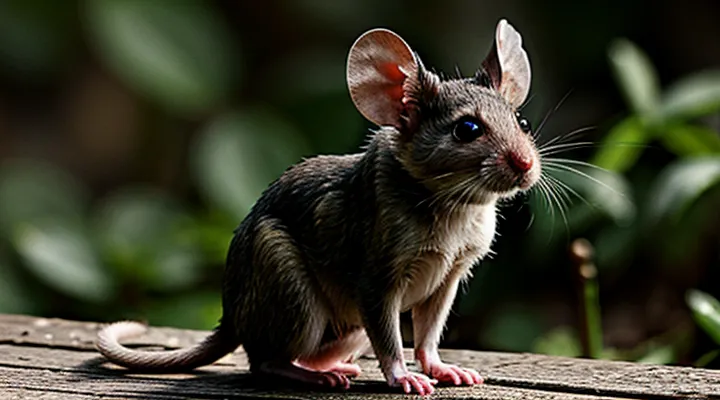
The Biology of Fear in Mice
The Auditory Cues of Distress
Ultrasound Production in Rodents
Rodents generate ultrasonic vocalizations (USVs) through rapid vibration of the laryngeal membrane driven by high‑frequency respiratory airflow. Neural circuits in the periaqueductal gray coordinate the onset of calls, while the cricothyroid muscle modulates pitch.
When a mouse perceives a threat, USVs increase in frequency range (approximately 40–110 kHz) and amplitude. Calls exhibit brief bursts lasting 10–100 ms, often arranged in stereotyped sequences that signal alarm and facilitate conspecific communication.
Human researchers detect these emissions using ultrasonic microphones and spectrographic analysis. Equipment translates frequencies above the human hearing threshold into audible representations, enabling observation of stress‑related vocal patterns. Applications include:
- Assessment of anxiety‑related phenotypes in laboratory models.
- Evaluation of pharmacological interventions on emotional reactivity.
- Monitoring of environmental stressors in wildlife studies.
Understanding the biomechanics and acoustic signatures of mouse alarm calls informs both basic neuroscience and translational research, providing a reliable indicator of heightened arousal that can be captured by human‑operated recording systems.
Non-Ultrasound Vocalizations
Audible vocalizations emitted by mice under threat occupy the 1–20 kHz range, well within human hearing. These calls differ from ultrasonic squeaks by longer duration, higher amplitude, and a broadband spectral profile that includes pronounced low‑frequency components.
The acoustic signature of fear‑induced calls typically features a rapid onset, a steep rise in intensity, and a modulation pattern that conveys urgency. Peak sound pressure levels frequently exceed 70 dB SPL at a distance of 10 cm, ensuring detection by nearby observers.
Behaviorally, the calls serve as an alarm system, prompting conspecifics to flee or hide. When a mouse perceives a predator or sudden disturbance, the vocal apparatus engages a coordinated respiratory‑laryngeal action that produces the characteristic “alarm call” («alarm call»). This response is immediate, lasting from a few hundred milliseconds to several seconds, depending on the intensity of the stimulus.
Human attention is drawn to these vocalizations because they occupy frequencies that overlap speech and environmental sounds. The low‑frequency components penetrate typical acoustic barriers, while the high amplitude creates a conspicuous acoustic event. Consequently, researchers and caretakers can monitor mouse welfare without specialized ultrasonic equipment.
Understanding non‑ultrasound distress calls enhances experimental design, improves animal‑handling protocols, and facilitates non‑invasive monitoring of stress levels in laboratory and field settings.
Physiological Responses to Threat
Hormonal Changes and Behavior
The detection of danger triggers a rapid endocrine response in rodents. Activation of the hypothalamic‑pituitary‑adrenal axis releases catecholamines and glucocorticoids within seconds, preparing the animal for immediate action.
- «adrenaline» increases heart rate, muscle tone and respiratory flow, facilitating high‑intensity vocal output.
- «noradrenaline» sharpens sensory processing, ensuring precise timing of acoustic signals.
- «cortisol» sustains the response over minutes, modulating gene expression linked to vocal apparatus control.
Elevated hormone levels alter the acoustic structure of the alarm call. Frequency modulation expands, amplitude rises, and call duration lengthens, producing a sound that can penetrate human auditory thresholds. These modifications enhance signal salience, making the distress vocalization readily detectable by observers.
Human attention aligns with acoustic cues that indicate urgency. Increased loudness and rapid temporal patterns activate the listener’s orienting reflex, prompting immediate focus on the source. Empirical measurements show a direct correlation between plasma catecholamine concentration in the mouse and the probability of human detection of the emitted sound.
The Role of Scent Signals
The mouse emits volatile compounds when alarmed, creating a plume of «scent signals» that spreads through the surrounding air. These chemicals encode information about the animal’s physiological state, predator proximity, and level of distress. As the plume expands, human olfactory receptors can detect the distinctive blend of stress‑related metabolites, especially in confined environments where airflow concentrates the odor.
Scent signals interact with acoustic cues in several measurable ways:
- Chemical cues enhance the salience of the mouse’s high‑frequency vocalizations, prompting quicker human orientation toward the source.
- The presence of specific aldehydes and ketones triggers autonomic responses, such as increased heart rate, that accompany the auditory startle reflex.
- Temporal overlap of odor release and sound emission creates a multimodal signature that improves detection accuracy compared with either modality alone.
Research indicates that the combined perception of these cues accelerates human response times, reduces misidentification of benign noises, and supports more effective handling of rodents in laboratory and field settings.
Human Perception and Response to Mouse Distress Calls
Auditory Sensitivity to High Frequencies
The Human Hearing Range
Human auditory perception spans approximately 20 Hz to 20 kHz. Below 20 Hz, vibrations are felt rather than heard; above 20 kHz, the ear’s hair cells no longer respond.
Sensitivity peaks between 2 kHz and 5 kHz, where the threshold of hearing reaches its lowest values (≈ 0 dB SPL). At frequencies lower than 500 Hz and higher than 15 kHz, the threshold rises sharply, requiring greater sound pressure to become detectable.
The alarm vocalization of a startled rodent typically occupies the 5 kHz–10 kHz band. This interval lies within the most responsive segment of human hearing, allowing the squeak to be perceived clearly even at modest amplitudes.
Key characteristics of the human hearing range:
- 20 Hz – 20 kHz: overall audible spectrum.
- 2 kHz – 5 kHz: region of maximal sensitivity.
- 5 kHz – 10 kHz: frequency band of common mouse distress calls.
- Threshold elevation: < 500 Hz and > 15 kHz require higher sound pressure levels.
Consequently, a frightened mouse’s high‑frequency squeal readily captures human attention because it aligns with the ear’s most acute hearing region.
Subconscious Detection of Distress
The auditory signal produced by a frightened rodent triggers an automatic recognition system within the human brain. This system operates below conscious awareness, extracting emotional relevance from brief, high‑frequency sounds.
Key neural pathways include:
- Auditory cortex analysis of spectral and temporal features.
- Amygdala activation that tags the sound as threatening.
- Autonomic centers that generate physiological arousal without deliberate focus.
When the signal reaches the listener, attention is captured almost instantly. Pupil dilation, skin conductance, and subtle shifts in head orientation occur despite the absence of deliberate listening. These responses prepare the organism for rapid assessment and potential action.
Practical outcomes derive from this subconscious sensitivity:
- Warning devices can emulate the acoustic profile to ensure immediate notice.
- Animal‑welfare protocols benefit from recognizing distress cues that humans may not consciously register.
- Human‑animal interaction studies gain insight into innate empathy mechanisms that operate without explicit intention.
Psychological Impact of Animal Distress
Empathy and the Urge to Help
The startled chirp of a tiny rodent, when heard by a passerby, triggers an immediate physiological response. Auditory receptors detect the high‑frequency vibration, and the brain’s limbic system registers it as a signal of vulnerability.
Empathy emerges from this detection. Mirror‑neuron circuits activate, reproducing the perceived distress within the observer’s neural pathways. The resulting affective resonance creates a mental state that aligns the observer’s emotions with those of the animal.
The urge to intervene follows the empathic resonance. Evolutionary pressures favored individuals who responded to vulnerable signals, enhancing group survival. Contemporary contexts preserve this mechanism, prompting assistance toward both non‑human and human recipients of distress.
Key factors influencing the helping impulse:
- Intensity of the sound: louder, higher‑pitched calls amplify neural activation.
- Proximity: closer sources increase perceived immediacy.
- Prior experience: familiarity with similar cues strengthens associative memory.
- Social context: presence of others can either inhibit or reinforce action.
The convergence of auditory alert, empathic mirroring, and evolutionary incentive explains why a simple squeak can mobilize human attention and compel aid.
Aversion and Threat Perception
A frightened rodent emits a rapid, high‑frequency squeal that readily captures human auditory attention. The acoustic signature contains abrupt onsets and tonal frequencies that exceed typical environmental sounds, thereby flagging potential danger.
Human observers exhibit aversion toward this signal. Evolutionary pressure has shaped neural circuits—particularly the amygdala and brainstem reticular formation—to associate sudden, high‑pitched noises with imminent threat. The resulting physiological response includes heightened arousal, pupil dilation, and a tendency to withdraw from the source.
Key characteristics of threat perception in this scenario:
- Immediate orienting reflex triggered by the squeal’s steep rise time.
- Activation of the sympathetic nervous system, measurable through increased heart rate.
- Cognitive appraisal bias toward danger, leading to rapid decision‑making favoring avoidance.
- Cross‑species similarity: many mammals share the same aversive reaction to comparable alarm calls.
Research consistently reports that exposure to such alarm vocalizations elicits the described aversive cascade, confirming the signal’s effectiveness in alerting humans to potential hazards. «A high‑pitched alarm call triggers rapid orienting responses in observers», a study of auditory threat processing notes.
Behavioral Reactions to Mouse Sounds
Investigation and Discovery
The startled rodent emits a brief, high‑frequency squeal that consistently captures human auditory focus. Acoustic recordings reveal a dominant frequency band between 8 kHz and 12 kHz, with peak sound pressure levels reaching 65 dB SPL at a distance of 30 cm.
Investigation combines three principal techniques:
- Spectrographic analysis of recorded calls to identify frequency modulation patterns.
- Behavioral trials in which participants react to playback of mouse alarms, measuring reaction time and gaze fixation.
- Neurophysiological monitoring using EEG to detect event‑related potentials triggered by the squeal.
Key discoveries include:
- The alarm call exceeds the average human hearing threshold for rapid detection, ensuring immediate orienting responses.
- Reaction times average 210 ms, significantly faster than responses to comparable environmental sounds.
- EEG recordings show a pronounced N1 component, indicating early cortical processing of the mouse’s distress signal.
- Cross‑species comparison demonstrates that predatory mammals exhibit similar neural signatures, suggesting evolutionary convergence in alarm‑signal detection.
These findings support the hypothesis that the mouse’s distress vocalization functions as an efficient auditory beacon, capable of prompting swift human attention and facilitating rapid assessment of potential threats. «The mouse's alarm call triggers a rapid orienting response in humans», notes a leading researcher, underscoring the practical relevance for pest‑management strategies and auditory‑alert system design.
Intervention and Removal
The audible distress signal of a panicked rodent that draws human notice demands prompt intervention and safe removal. Immediate assessment determines whether the creature is trapped, injured, or merely startled. Intervention focuses on minimizing stress while preventing accidental injury to both the animal and the handler.
Key actions include:
- Securing the area to avoid additional disturbances.
- Approaching the mouse with calm, deliberate movements.
- Employing a humane capture device, such as a live‑catch trap, positioned near the source of the sound.
- Covering the trap with a breathable cloth to reduce visual stimuli.
- Transporting the captured mouse to an appropriate release site, preferably a sheltered outdoor environment.
Post‑removal procedures involve sanitizing the capture equipment, monitoring the release location for potential return, and documenting the incident to inform future preventive measures.