
Understanding Dream Symbolism
General Principles of Dream Interpretation
Dream analysis treats nightly imagery as coded messages. Symbols function as condensed representations of inner states; their meaning emerges from a blend of collective motifs and personal experience. Color, species, and behavior each add a layer of significance that must be examined in relation to the dreamer’s life.
Key guidelines for interpreting any nocturnal scene include:
- Identify the dreamer’s emotional reaction at the moment of the image. Feelings provide the primary clue to the symbol’s intent.
- Compare the symbol with universal archetypes found across cultures. Animals, for example, often embody traits such as survival, danger, or curiosity.
- Consider the color attached to the symbol. Dark hues typically convey concealment, mystery, or suppressed material.
- Examine the surrounding context: location, actions, and interacting figures shape the symbol’s direction.
- Track recurrence. Repeated appearances signal an unresolved issue that the psyche continues to process.
- Relate the symbol to waking‑life circumstances. Practical concerns, relationships, or recent events frequently surface in dream content.
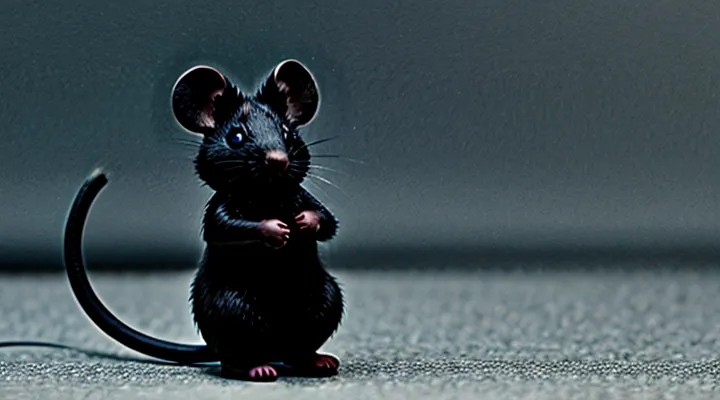
When the subconscious presents a black mouse, the above principles clarify its message. The creature’s small size and stealth suggest hidden anxieties or unnoticed details demanding attention. The dark coloration amplifies themes of secrecy, potential loss, or latent resources. If the dreamer feels fear, the image may warn of overlooked threats; if curiosity dominates, it might encourage exploration of concealed opportunities. Personal history with rodents, cultural myths about mice, and current life stressors all modulate the interpretation, ensuring the analysis remains specific to the individual.
The Significance of Animals in Dreams
Common Animal Archetypes
The black mouse that appears in a dream functions as a specific animal symbol, drawing upon broader patterns established by common animal archetypes. These archetypes provide a framework for interpreting the mouse’s presence, linking personal experience to universal motifs.
Typical animal archetypes include:
- Predator figures such as the lion, representing dominance and courage.
- Reptilian symbols like the snake, indicating transformation and hidden threats.
- Avian representations such as the owl, associated with insight and nocturnal awareness.
- Canine images, exemplified by the dog, denoting loyalty and instinctual guidance.
- Rodent motifs, chiefly the mouse, embodying subtlety, survival, and unnoticed influence.
When a black mouse emerges in a dream, its meaning aligns with the rodent archetype’s core attributes—stealth, adaptability, and the capacity to operate unseen. The color black adds layers of mystery, potential concealment, and the unknown, intensifying the mouse’s role as a messenger about hidden aspects of the dreamer’s psyche.
Comparative analysis with other archetypes clarifies the mouse’s distinct function. While a lion confronts overt obstacles, the black mouse signals covert pressures; a snake suggests overt transformation, whereas the mouse hints at gradual, discreet change. Recognizing these distinctions enables precise interpretation of the dream’s narrative and its implications for personal development.
Cultural Variations in Animal Symbolism
Dream narratives frequently employ animals as carriers of meaning, and the black mouse appears as a distinct emblem across diverse cultural landscapes. Its nocturnal nature, diminutive size, and association with darkness generate a spectrum of interpretations that reflect local belief systems, social values, and mythic histories.
In Western folklore, the black mouse often conveys secrecy, hidden threats, or suppressed anxieties. Medieval bestiaries linked the creature to witchcraft, suggesting that an appearance in sleep may signal covert manipulation or the need for vigilance. In contrast, East Asian traditions assign a more nuanced role: Chinese symbolism connects the black mouse with resourcefulness and the ability to navigate shadowed environments, while Japanese folklore sometimes regards it as a messenger of the underworld, urging the dreamer to confront unresolved issues.
African and Indigenous cultures present additional layers. Among several West African societies, the black mouse represents cunning survival in hostile surroundings, implying that the dreamer must adapt strategically to current challenges. Certain Native American narratives view the mouse as a humble guide, teaching humility and the importance of modest actions in achieving broader goals.
- European contexts: hidden danger, betrayal, need for alertness.
- Chinese perspective: adaptability, hidden knowledge, strategic planning.
- Japanese view: underworld communication, invitation to resolve suppressed emotions.
- West African interpretation: survival through wit, navigating adversity.
- Native American outlook: humility, guidance toward collective well‑being.
These cultural lenses illustrate that the black mouse functions as a versatile symbol, capable of reflecting personal fears, strategic strengths, or moral lessons depending on the dreamer’s cultural background. Accurate interpretation therefore requires awareness of the dreamer’s cultural framework, rather than reliance on a single universal meaning.
The Mouse in Dream Symbolism
Traditional Meanings of Mice in Dreams
Themes of Insignificance
Dreams featuring a black mouse often convey a sense of marginality. The animal’s diminutive size and dark hue amplify perceptions of being overlooked, unnoticed, or undervalued. This image acts as a mirror for the dreamer’s internal assessment of personal relevance.
Psychological mechanisms underlying the motif include:
- Projection of low self‑esteem onto a creature associated with quiet survival.
- Reinforcement of feelings that one’s contributions are minor within larger systems.
- Activation of subconscious warnings about neglect or dismissal.
Cultural narratives reinforce the motif. Folklore frequently depicts mice as stealthy, peripheral beings, while the color black adds layers of secrecy and obscurity. Together, these elements shape a composite symbol that signals the dreamer’s experience of insignificance.
Interpretive strategies focus on empowerment:
- Identify real‑world situations that echo the dream’s theme.
- Assess whether the perceived marginality stems from external judgments or internal beliefs.
- Develop concrete actions that increase visibility and influence, such as taking leadership in small projects or articulating personal achievements.
By dissecting the black mouse image, the dreamer can transform a fleeting feeling of irrelevance into an actionable insight about self‑valuation.
Themes of Annoyance or Intrusion
The appearance of a black mouse in a dream often signals a sense of irritation or unwanted intrusion. The creature’s small size and stealthy movement embody minor yet persistent disturbances that the sleeper perceives as bothersome.
When the dream scenario includes the mouse scurrying through personal space, it reflects an unconscious awareness of boundaries being crossed. Typical manifestations include:
- The mouse nibbling at food or belongings, suggesting loss of control over resources.
- The animal entering a bedroom or workspace, indicating an invasion of privacy.
- Repeated encounters with the mouse despite attempts to dismiss it, highlighting unresolved annoyance.
Psychologically, the black mouse functions as a metaphor for irritants that the mind tolerates reluctantly. Its darkness reinforces themes of hidden threats, implying that the source of disturbance may be concealed or denied. The dream’s emotional tone—frustration, anxiety, or helplessness—offers clues about the dreamer’s tolerance for minor stressors and the need to reinforce personal limits.
Interpreting this symbol involves recognizing the specific context in which the mouse appears and tracing the associated feeling of intrusion back to waking life. Addressing the underlying cause—whether a persistent minor conflict, an overlooked responsibility, or a subtle form of pressure—can transform the dream’s warning into a directive for assertive boundary setting.
The Color Black in Dream Symbolism
Psychological Associations of Black
The color black in dream imagery evokes strong psychological responses. It signals the presence of the unknown, the hidden, and the subconscious. When a black mouse appears, the hue intensifies the animal’s symbolic weight, directing attention toward deeper emotional currents.
Typical psychological associations of black include:
- Fear of loss or failure
- Feelings of grief or mourning
- Desire for privacy or secrecy
- Perception of authority or powerlessness
- Representation of the unconscious mind
A mouse, by nature, represents modesty, vulnerability, and instinctual survival. The black coloration transforms these traits, suggesting that the dreamer may be confronting concealed anxieties or suppressed instincts. The animal’s small size emphasizes the subtlety of the issue, while the darkness highlights its potential impact on the psyche.
Interpretation depends on personal context. If the dreamer feels threatened, the black mouse may mirror concealed dangers. If the dreamer experiences sorrow, the animal could embody unacknowledged grief. Recognizing the emotional tone accompanying the vision helps clarify the underlying message.
Cultural Interpretations of Black
Dream imagery featuring a black mouse carries distinct meanings across cultural traditions, each reflecting local attitudes toward the color black and the animal’s perceived traits. In Western folklore, black is frequently linked to mystery and hidden forces; a dark mouse may therefore signal concealed anxieties or undisclosed information emerging from the subconscious. Asian mythologies often associate black with the north, winter, and the element water; a black rodent in a dream can denote a period of introspection, the need for emotional resilience, or an omen of forthcoming change. African oral narratives sometimes portray blackness as a protective veil, while rodents are seen as messengers; together they suggest that the dreamer is receiving guidance from ancestral spirits or that a protective secret is being offered. Indigenous North American stories frequently treat black animals as symbols of transformation, implying that the dream encourages the sleeper to adapt to new circumstances.
Key cultural interpretations of the color black relevant to dream analysis include:
- Western occultism: embodiment of the unknown, warning of hidden threats.
- Chinese philosophy: representation of the water element, indicating fluidity and emotional depth.
- Japanese tradition: connection to the yin principle, suggesting balance through absorption of negative energy.
- West African spirituality: association with protective darkness, implying safety in concealment.
- Native American symbolism: marker of transition, urging personal evolution.
When the black mouse appears, the dream integrates these cultural connotations, prompting the individual to examine concealed aspects of life, embrace emotional transformation, or recognize protective forces operating beneath the surface. The combined symbolism directs attention to inner dynamics that may otherwise remain unnoticed.
The Black Mouse: A Combined Symbol
Unpacking the Dual Symbolism
The black mouse that appears in nocturnal visions carries a two‑fold symbolic charge. On one side, its darkness and diminutive size evoke hidden anxieties. Dreamers often associate the creature with suppressed fears that linger beneath conscious awareness, prompting an internal audit of unresolved tensions. This aspect of the symbol functions as a psychological alarm, signaling that unnoticed stressors require attention.
Conversely, the same creature can represent resourcefulness and adaptability. In folklore, mice survive through stealth and quick problem‑solving; when the animal surfaces in sleep, it can indicate the dreamer’s capacity to navigate obstacles with subtlety. This positive reading encourages the development of strategic thinking and the cultivation of discreet influence.
Key distinctions between the two interpretations include:
- Emotional tone: fear‑based versus empowerment‑based.
- Actionable insight: identify and confront hidden worries versus leverage cunning to achieve goals.
- Contextual triggers: recurring nightmares often align with the negative facet; spontaneous, brief sightings tend to accompany moments of personal initiative.
Common Interpretations of the Black Mouse in Dreams
Fear and Anxiety
The appearance of a dark rodent in nocturnal visions frequently signals underlying fear and anxiety. The animal’s color and size amplify the sense of threat, prompting the sleeper’s mind to project personal insecurities onto a concrete image. When the creature moves stealthily or appears suddenly, it mirrors the sudden onset of panic, while its hidden presence suggests suppressed worries that surface during sleep.
Interpretive cues commonly associated with this symbol include:
- Sudden movement of the mouse → abrupt spikes of anxiety in waking life.
- Inability to catch or control the mouse → feelings of helplessness when confronting fear.
- Presence of the mouse in confined spaces → anxiety related to confinement or lack of personal freedom.
- Repeated encounters with the same mouse → persistent fear patterns that require conscious attention.
Recognizing these patterns enables the individual to address the emotional charge behind the dream, reducing the intensity of fear responses and fostering clearer insight into personal anxiety triggers.
Hidden Threats or Secrets
The image of a black mouse that appears while dreaming signals concealed dangers or undisclosed information. Its dark coloration emphasizes the hidden nature of the threat, while the small, furtive creature suggests that the issue may be overlooked or dismissed.
Psychological interpretation links the black mouse to repressed anxiety. When the subconscious presents this animal, it often points to:
- An unresolved conflict that has been ignored.
- Information withheld by the dreamer or by others in the waking environment.
- A subtle, yet persistent, source of stress that could evolve into a larger problem if left unchecked.
Cultural references reinforce the same meaning. In folklore, black rodents are frequently associated with secretive theft or sabotage, indicating that something valuable may be compromised without the dreamer’s awareness.
Practical implications for the dreamer include:
- Conduct a systematic review of recent situations where information feels incomplete.
- Identify relationships or projects where trust has been compromised.
- Monitor subtle signs of disturbance—unusual noises, unexplained losses, or recurring doubts.
By treating the black mouse as a warning symbol, the dreamer can convert an ambiguous nocturnal image into a concrete investigative cue, thereby exposing hidden threats before they manifest overtly.
Feelings of Powerlessness
Dreams featuring a black mouse frequently surface when the dreamer experiences a profound sense of powerlessness. The creature’s diminutive size and nocturnal nature embody feelings of invisibility and inability to influence one’s environment. The image signals a subconscious awareness that personal agency is constrained, often by external pressures or internal self‑doubt.
Psychological mechanisms behind this motif include:
- Perceived marginalization: the mouse’s modest presence mirrors a belief that one’s contributions are overlooked.
- Fear of paralysis: darkness associated with the mouse suggests uncertainty about how to act in ambiguous situations.
- Loss of control: the animal’s instinct to scurry away reflects an urge to escape rather than confront challenges.
Typical emotional responses linked to the black mouse symbol are:
- Helplessness when faced with decisions.
- Anxiety about being unnoticed or dismissed.
- Resignation toward recurring obstacles.
Interpretive guidance advises the dreamer to examine current circumstances for sources of restriction, then to adopt incremental strategies that restore a sense of influence. Re‑establishing boundaries, prioritizing personal goals, and confronting avoidance patterns can transform the mouse’s representation from a warning of impotence to a catalyst for reclaiming agency.
Intuition and the Unconscious
The black mouse that appears in dream narratives functions as a compact symbol of the dreamer’s inner guidance system. Its small, elusive nature mirrors the way intuition operates: subtle, often unnoticed, yet capable of directing attention toward concealed emotional material.
- The mouse’s dark coloration aligns with the unconscious layer of the psyche, where repressed memories and instinctual drives reside.
- Its nocturnal behavior reflects the timing of intuitive insights, which surface when conscious reasoning is dormant.
- The creature’s habit of navigating tight spaces parallels the mind’s ability to explore hidden mental corridors, revealing information that rational analysis cannot reach.
When the dreamer encounters a black mouse, the subconscious may be signaling a need to trust instinctual impressions. The image encourages the activation of sensory perception that bypasses logical filters, allowing suppressed feelings to surface. Recognizing this cue helps integrate unconscious content into conscious awareness, fostering a more balanced decision‑making process.
Contextual Factors Affecting Interpretation
The Mouse's Actions in the Dream
Dream narratives often feature a black mouse performing specific behaviors that convey distinct symbolic messages. Observing the creature’s movements, interactions, and outcomes provides insight into subconscious concerns and emotional states.
When the mouse scurries quickly across a dimly lit room, the rapid motion suggests urgency and a need to address hidden anxieties. The stealthy traversal through shadows reflects attempts to navigate concealed fears without attracting attention.
If the mouse gnaws on objects such as fabric, paper, or food, the act symbolizes gradual erosion of personal boundaries or resources. The destructive chewing indicates stressors that silently diminish stability, prompting the dreamer to recognize and repair vulnerable areas.
A mouse that hides in a small, cramped space—under a piece of furniture or within a wall—signifies suppressed thoughts or repressed impulses. The confinement mirrors the dreamer’s tendency to contain uncomfortable emotions, urging acknowledgment of what remains unseen.
Encountering a mouse that is captured, injured, or killed introduces themes of control and resolution. The capture denotes an attempt to dominate troubling aspects, while injury or death may represent the culmination of unresolved tension, potentially signaling a release of lingering distress.
- Rapid scurrying → urgency, hidden anxiety
- Chewing objects → gradual loss, resource depletion
- Concealed hiding → suppressed feelings, repressed impulses
- Capture or injury → effort to control, possible resolution
Collectively, these actions illustrate how the dark rodent functions as a conduit for the dreamer’s inner dynamics, translating subtle psychological currents into vivid, observable scenes. Recognizing each behavior enables a more precise interpretation of the underlying emotional landscape.
Your Emotions During the Dream
Encountering a dark mouse while asleep often provokes a distinct emotional pattern that shapes the dream’s interpretive framework. The animal’s shadowy hue and furtive movement generate a sense of immediacy, prompting the dreamer to register feelings that mirror underlying psychological currents.
- Fear – reaction to perceived threat, indicating unresolved anxieties.
- Curiosity – desire to explore hidden aspects of the self, suggesting openness to concealed information.
- Disgust – aversion toward the creature, reflecting repulsion toward certain thoughts or habits.
- Amusement – light‑hearted response, pointing to a playful reassessment of personal limitations.
- Anxiety – lingering tension, signaling stress about control or vulnerability.
- Empowerment – unexpected confidence, implying mastery over minor obstacles.
Identifying these affective cues allows the sleeper to translate the vision of a black rodent into a coherent message about internal conflicts, suppressed desires, and adaptive strategies. Recognizing the emotional texture of the dream therefore becomes essential for extracting its symbolic significance.
Personal Associations with Mice and the Color Black
Personal memories of mice often involve quiet observation, sudden movement, and a sense of vulnerability. Childhood encounters with small rodents may trigger feelings of curiosity, anxiety, or protection, depending on the circumstances of the encounter. These experiential layers become part of the mental inventory that the mind draws upon when processing nocturnal imagery.
The color black commonly carries connotations of concealment, depth, and the unknown. Individual reactions to black can range from comfort in its uniformity to unease about its opacity. Psychological research links dark hues with introspection, loss, and the activation of primal alert systems.
When a black mouse appears in a dream, the interpreter blends the two personal reservoirs—rodent‑related sentiment and chromatic perception. The resulting image functions as a composite symbol reflecting the dreamer’s inner state.
Typical personal associations include:
- Childhood fear of mice combined with the darkness of a closed room, suggesting hidden worries.
- Nostalgic memory of a pet mouse, paired with black clothing, indicating protective instincts toward concealed aspects of self.
- Experience of a black‑themed storybook featuring a mouse, evoking a narrative of resilience in obscurity.
- Observation of a black mouse in a laboratory, prompting thoughts of control, experimentation, or secrecy.
These associations illustrate how individual history shapes the meaning assigned to a dark‑colored rodent in dream narratives.
Practical Applications and Self-Reflection
Journaling Your Dreams
Recording nightly visions creates a reliable source for analyzing the meaning of a dark rodent that appears in sleep imagery. Written accounts preserve details that fade quickly, such as setting, emotions, and surrounding symbols, all of which influence interpretation.
A systematic journal entry should include:
- Date and time of awakening
- Exact description of the mouse and its actions
- Emotional response at the moment of recall
- Relevant background elements (e.g., other animals, locations, colors)
- Personal associations or recent life events that may relate
Consistent documentation allows pattern recognition. When the same creature recurs, trends in behavior, context, or mood become evident, guiding a deeper understanding of its archetypal significance. Cross‑referencing these patterns with established symbolic frameworks refines the analysis.
Reflective commentary after each entry strengthens insight. Summarize possible connections between the nocturnal rodent and current concerns, noting whether the symbol appears as a warning, a reminder, or a catalyst for change. Over time, the journal evolves into a personal reference guide for interpreting this recurring motif.
Exploring Personal Meanings
Dream encounters with a black mouse often serve as a mirror for the dreamer’s inner landscape. The creature’s color, size, and behavior convey nuanced messages that differ according to individual experience. Recognizing these signals requires attention to personal context rather than reliance on generic symbolism.
Key elements that shape personal interpretation include:
- Recent life events – stressful projects, relationship changes, or health concerns can trigger mouse imagery as a sign of hidden anxiety.
- Emotional response – fear, curiosity, or indifference toward the mouse reflects the dreamer’s attitude toward the underlying issue.
- Cultural background – traditions that associate rodents with thrift, secrecy, or pestilence influence the perceived tone of the vision.
- Personal history with mice – childhood memories, pet ownership, or aversions provide a reference point for the dream’s emotional weight.
When analyzing a specific dream, follow a structured approach:
- Record the setting, actions, and sensations experienced during the encounter.
- Identify the dominant feeling elicited by the mouse (e.g., alarm, fascination, calm).
- Relate the identified feeling to current concerns or unresolved conflicts.
- Consider any recent symbols or motifs that echo the mouse’s presence in waking life.
By aligning the dream’s details with the individual’s lived reality, the black mouse transforms from a vague emblem into a precise indicator of personal growth, hidden stressors, or emerging opportunities. This method yields a tailored understanding that respects the unique psychological makeup of each dreamer.
Seeking Further Interpretation
Dreams featuring a black mouse invite layered analysis beyond a single symbolic reading. The animal’s color, size, behavior, and the dreamer’s emotional response each contribute distinct cues that shape meaning.
- Personal history: memories of mice, encounters with darkness, or recent exposure to rodents influence interpretation.
- Cultural archetype: black rodents often appear in folklore as messengers of hidden threats or guardians of secret knowledge.
- Psychological model: within Jungian theory, a small dark creature may represent an unacknowledged aspect of the shadow, urging integration.
- Situational context: the setting of the dream—home, wilderness, or confinement—modifies the symbol’s relevance to daily life.
Effective deeper exploration requires systematic recording and cross‑referencing. Maintain a dream journal that logs date, duration, emotions, and surrounding events. Compare entries across weeks to detect recurring patterns. Consult reputable dream‑symbol compendia that differentiate between universal motifs and culturally specific meanings. When ambiguity persists, seek guidance from a trained analyst who can apply psychodynamic techniques to uncover latent content.
By integrating personal, cultural, and theoretical perspectives, the black mouse transforms from a solitary emblem into a multifaceted indicator of subconscious processes.