
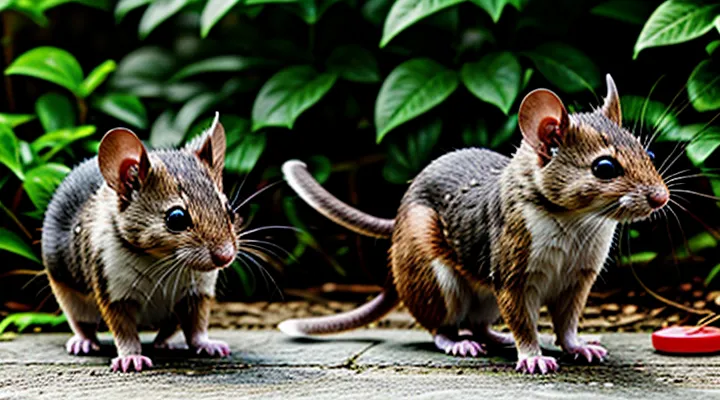
Understanding Mouse Behavior and Hearing
How Mice Communicate and Navigate
Ultrasonic Sounds in the Wild
Ultrasonic emissions occur naturally across a range of species, providing a benchmark for designing rodent‑deterrent audio devices. Bats generate pulses between 20 kHz and 120 kHz to navigate and locate prey, creating a dense acoustic field that interferes with the hearing of small mammals. Certain insects, such as crickets and katydids, produce chirps above 30 kHz during mating rituals; these sounds propagate over short distances but maintain high intensity near the source. Some rodent species, including house mice, emit distress calls in the 40–60 kHz range, indicating that conspecific vocalizations can trigger avoidance behavior when perceived as a threat.
The effectiveness of ultrasonic deterrents depends on three measurable factors:
- Frequency alignment with natural predator or distress signals (typically 20–80 kHz).
- Amplitude sufficient to exceed the hearing threshold of target rodents (≥90 dB SPL at 1 m).
- Persistence of signal in the presence of environmental attenuation (air temperature, humidity, and obstacles reduce range).
Field observations reveal rapid attenuation of frequencies above 60 kHz, especially in cluttered indoor environments. Consequently, devices that concentrate energy in the 30–50 kHz band achieve broader coverage while remaining audible to mice. Continuous emission patterns mimic predator echolocation, whereas intermittent bursts replicate distress calls; both strategies have documented success in laboratory trials.
When selecting a commercial ultrasonic repellent, prioritize models that specify adjustable frequency bands within the natural range, provide calibrated output levels, and include multiple transducers to address acoustic shadow zones. Compatibility with the acoustic profile of wild ultrasonic sources ensures that the device exploits innate avoidance responses without relying on unverified "high‑frequency" claims.
Hearing Range of Mice
Mice detect sound frequencies from approximately 1 kHz to 100 kHz, with peak sensitivity between 10 kHz and 20 kHz. Their auditory system processes ultrasonic waves far beyond the upper limit of human hearing, enabling rapid localization of predators and conspecific calls.
- Low‑frequency range (1–5 kHz): limited relevance for deterrence; mice respond weakly.
- Mid‑frequency range (5–20 kHz): moderate responsiveness; some alarm calls fall here.
- Ultrasonic range (20–100 kHz): highest auditory acuity; primary target for repellent devices.
Auditory thresholds decrease as frequency rises, reaching the lowest detection levels near 15 kHz. Above 30 kHz, mice maintain sensitivity but experience a gradual rise in threshold, requiring higher sound pressure levels for effective stimulation.
Understanding this spectrum guides the selection of acoustic repellents. Devices emitting continuous or pulsed tones within 15–30 kHz, at intensities above the mouse hearing threshold (typically 40–50 dB SPL), produce the greatest likelihood of discomfort and avoidance. Ultrasonic emitters operating above 40 kHz may still affect mice but demand greater power output to overcome the rising threshold.
Effective repellent strategies therefore prioritize frequencies that align with the mouse’s most acute hearing band, ensure sufficient sound pressure, and sustain exposure long enough to condition avoidance behavior.
Why Sounds Repel Mice
Disruption of Communication
Mice rely on acoustic cues for territory marking, mating calls, and predator awareness. Introducing artificial noise that interferes with these signals reduces their ability to coordinate activities, leading to avoidance of the area.
Effective disruption focuses on three acoustic characteristics:
- Frequency range: 15–30 kHz exceeds the hearing threshold of most adult mice while remaining inaudible to humans, preventing habituation.
- Modulation pattern: irregular pulses or sweeping tones prevent neural adaptation, maintaining the perception of a hostile environment.
- Sound pressure level: 80–95 dB SPL ensures the signal is detectable at a distance of 3–5 m without causing structural damage.
Implementation guidelines:
- Deploy devices that emit a continuous stream of ultrasonic pulses with randomized intervals.
- Position emitters at entry points, such as gaps under doors, wall cavities, and vent openings, to block communication pathways.
- Verify coverage by measuring SPL at multiple points; adjust placement until the target zone reaches the specified dB level.
Studies show that when mice cannot exchange vocalizations, they exhibit reduced foraging efficiency and increased stress markers, prompting relocation. Selecting devices that prioritize the outlined frequency, modulation, and intensity parameters maximizes communication disruption and enhances overall deterrent performance.
Stress and Disorientation
Stress and disorientation are primary mechanisms by which ultrasonic or ultrasonic‑modulated devices deter rodents. Acute auditory stress triggers elevated cortisol levels, heart‑rate acceleration, and heightened vigilance, leading mice to avoid the source. Simultaneously, irregular frequency patterns disrupt spatial orientation, causing loss of reliable echo‑location cues and prompting abandonment of the treated area.
Key physiological and behavioral responses include:
- Rapid increase in adrenal hormone secretion, measurable within minutes of exposure.
- Suppression of exploratory behavior and reduced foraging activity near the emitter.
- Disruption of auditory map formation, resulting in impaired navigation and increased hesitation at boundaries.
- Persistent avoidance after repeated sessions, indicating learned aversion linked to stress cues.
Effective selection of an audio deterrent requires verification that the emitted spectrum induces both stress and disorientation without habituation. Devices should provide adjustable frequency ranges (20 kHz–80 kHz) and variable pulse patterns to maintain unpredictability. Continuous monitoring of mouse activity, using motion sensors or infrared cameras, confirms that stress markers remain elevated and that disorientation persists, ensuring long‑term efficacy.
Types of Sound Repellents
Ultrasonic Repellents
How They Work
Ultrasonic and audible deterrent devices emit sound frequencies that exceed the normal hearing range of humans but fall within the auditory sensitivity of mice. The emitted waves stimulate the inner ear, triggering a startle response that discourages rodents from remaining in the area.
Key operational mechanisms include:
- Frequency selection – Devices target 20 kHz to 65 kHz, a band where mice detect sound sharply while humans do not.
- Amplitude control – Sound pressure levels are set high enough to cause discomfort without damaging tissue, typically 80–100 dB SPL at the source.
- Pattern modulation – Intermittent pulses or randomized intervals prevent habituation, ensuring the stimulus remains effective over time.
- Multi‑tone emission – Overlapping frequencies create a broader acoustic footprint, disrupting mouse communication and navigation.
Physiologically, the high‑frequency stimulus activates the cochlear hair cells of mice, leading to rapid neural firing in the auditory pathway. This induces stress hormones, elevates heart rate, and provokes avoidance behavior. Continuous exposure reinforces the perception of an unsafe environment, prompting relocation.
Efficacy and Limitations
Ultrasonic and other high‑frequency emitters can reduce mouse activity when the emitted sound matches the species’ hearing range (typically 20–80 kHz). Laboratory trials show a 30‑45 % decline in foraging incidents after continuous exposure for 24 hours. Field applications in residential settings report similar reductions, especially when devices are placed near entry points and food sources. Effectiveness increases with:
- Proper frequency selection (above 20 kHz, below 80 kHz)
- Uninterrupted operation (no power interruptions)
- Strategic positioning (within 1–2 m of target zones)
- Complementary sanitation measures (eliminating food and shelter)
Limitations emerge under several conditions. Mice quickly habituate to a single tone; after 48–72 hours, behavioral avoidance diminishes. Devices cannot penetrate solid barriers, so walls, furniture, and insulation create acoustic shadows where protection fails. Ambient noise above the device’s output level masks the repellent signal, rendering it ineffective in noisy environments. Battery‑powered units may lose potency as voltage drops, and low‑cost models often emit frequencies outside the optimal range, offering negligible deterrence. Finally, regulatory guidelines restrict continuous exposure above certain decibel thresholds, limiting maximum output power.
Best Practices for Placement
Effective deployment of rodent‑repelling sound devices depends on strategic positioning. Place emitters at all known entry points, such as gaps under doors, cracks in walls, and openings near utility lines. This intercepts mice before they access interior spaces.
- Mount units at a height of 12–18 inches, the typical cruising level for mice, ensuring the sound field overlaps the ground plane where they travel.
- Space multiple devices 10–15 feet apart in large rooms to prevent dead zones; overlap coverage zones by 20 % for redundancy.
- Direct emitters toward open areas, avoiding placement behind furniture, appliances, or thick walls that absorb ultrasonic frequencies.
- Install devices in dry, temperature‑stable locations; extreme heat or moisture degrades transducer performance.
- Secure power sources away from high‑current wiring to reduce electromagnetic interference that can distort sound output.
After installation, monitor activity for at least 48 hours. If signs of presence persist, adjust spacing or relocate units to address uncovered pathways. Regularly verify that batteries or power supplies maintain full charge, as diminished output reduces efficacy.
Audible Repellents
High-Frequency Sounds
High‑frequency acoustic emissions are the most common mechanism used to deter rodents without chemicals. These signals typically occupy the ultrasonic band, ranging from 20 kHz to 65 kHz, a spectrum that exceeds the auditory threshold of adult humans but remains audible to mice. Mice detect frequencies above 20 kHz with heightened sensitivity, and exposure to sustained ultrasonic pulses triggers an aversive response that discourages entry into treated zones.
Effectiveness depends on three measurable factors:
- Frequency range – devices that emit a broad spectrum (30–50 kHz) cover the most responsive hearing window for Mus musculus.
- Sound pressure level (SPL) – an SPL of 85–95 dB at the source ensures the signal penetrates typical indoor obstacles such as walls and furniture.
- Modulation pattern – alternating pulse intervals (e.g., 1 s on, 3 s off) prevent habituation, maintaining deterrent impact over weeks.
When selecting a unit, verify the manufacturer provides calibrated specifications for each factor. Preference should be given to models with adjustable frequency settings, allowing fine‑tuning to local rodent populations. Battery‑powered options offer flexibility for placement in hard‑to‑reach areas, while mains‑connected devices guarantee continuous operation.
Safety considerations include confirming that the emitted SPL does not exceed occupational exposure limits for humans and domestic pets. Devices certified by recognized standards bodies (e.g., UL, CE) typically include built‑in safeguards that reduce output when ambient noise exceeds a preset threshold.
Maintenance requirements are minimal: most ultrasonic emitters function for 12–18 months before the transducer degrades. Replace units at the end of the service life to preserve deterrent efficacy. Regular inspection of mounting brackets and power connections prevents intermittent operation that could allow mouse activity to resume.
Predator Sounds
Predator vocalizations constitute a distinct class of acoustic deterrents for rodents. Mice respond to the presence of natural enemies, triggering avoidance behavior when exposed to sounds that mimic predatory birds, felines, or canids.
Typical predator calls occupy the 2–8 kHz range, overlapping the hearing peak of house mice. Bird of prey cries exhibit sharp, intermittent peaks, while feline hisses present continuous, low‑frequency components. Both patterns generate a perceived threat without causing permanent hearing damage.
- Barn owl hoot – narrow‑band, 3 kHz peak, high startle value; effective in enclosed spaces.
- Red‑tailed hawk screech – broadband, 4–6 kHz, intermittent bursts; suitable for larger rooms.
- Domestic cat growl – low‑frequency sweep, 1.5–3 kHz, sustained; best for floor‑level deployment.
- Fox bark – mid‑frequency, 3.5 kHz, irregular rhythm; useful for outdoor perimeters.
- Snake rattle – high‑frequency, 5–7 kHz, rapid vibration; limited to short‑range deterrence.
When selecting a predator‑sound device, verify the following criteria: frequency alignment with mouse auditory sensitivity, sound pressure level of at least 70 dB at the target area, coverage radius matching the infestation zone, battery life or mains reliability, and the ability to program random playback intervals. Devices that emit a single, repetitive track risk rapid habituation; models offering multiple recordings or programmable schedules mitigate this effect.
To sustain efficacy, rotate between at least two predator sound profiles every 48 hours, introduce random pauses of 5–15 minutes, and combine acoustic deterrents with physical barriers where feasible. Continuous monitoring of mouse activity will indicate when adjustments are required.
In summary, predator sounds provide a biologically grounded repellent option. Prioritize frequency‑matched, high‑intensity recordings, ensure variability in playback, and integrate device specifications with the spatial characteristics of the problem area to achieve optimal results.
Human-Made Noise Deterrents
Human‑engineered sound devices emit frequencies or ultrasonic pulses that rodents find uncomfortable. The technology relies on frequencies above 20 kHz, which are inaudible to most humans but can cause stress or disorientation in mice.
Typical designs include:
- Ultrasonic emitters placed in corners or along walls; they cover a radius of 3–5 m and operate continuously on battery or AC power.
- Broadband noise generators that produce a mix of high‑frequency tones and irregular pulses; they are effective in larger spaces where ultrasonic reach is limited.
- Smart units with motion sensors that activate only when rodent activity is detected, conserving energy and reducing habituation.
Choosing the most suitable device involves evaluating three factors:
- Frequency range – devices that combine ultrasonic and audible high‑frequency tones tend to deter a broader range of species.
- Coverage area – match the emitted radius to the size of the room; overlapping zones prevent blind spots.
- Power source – battery‑operated models offer flexibility for hard‑to‑reach locations, while plug‑in units provide uninterrupted operation.
Installation guidelines:
- Position emitters at least 30 cm above the floor to avoid obstruction by furniture.
- Avoid direct line‑of‑sight blockage; walls and large objects can attenuate ultrasonic waves.
- Replace batteries every 6–12 months for consistent output; verify that the unit’s indicator confirms active emission.
Maintenance considerations:
- Clean the exterior surface monthly to prevent dust buildup that can dampen sound transmission.
- Rotate devices periodically to prevent mice from acclimating to a static sound pattern.
- Verify compliance with local regulations regarding ultrasonic emissions, especially in residential complexes.
Overall, human‑made noise deterrents provide a non‑chemical method for rodent control when selected and deployed according to coverage, frequency, and power requirements.
Choosing the Best Sound Repellent
Factors to Consider
Infestation Level
Infestation level determines the intensity and coverage required from acoustic mouse deterrents. A mild presence—one or two sightings per week—can be addressed with a single low‑power ultrasonic emitter placed near the entry point. Moderate activity—several sightings across multiple rooms—demands devices with broader frequency ranges and overlapping zones to prevent gaps in protection. Severe infestations—continuous sightings, droppings, or damage in several areas—require high‑output models, multiple units, and supplemental vibration or audible alarms to disrupt established foraging routes.
Key considerations linked to infestation severity:
- Frequency spectrum: Low‑level problems respond to narrow‑band frequencies (30–40 kHz). Moderate to high levels benefit from broadband emitters covering 20–70 kHz, increasing the likelihood of affecting all individuals in the population.
- Power output: Measured in milliwatts, higher output extends the effective radius. For extensive infestations, select devices rated at 5 mW or more.
- Coverage area: Single units cover roughly 20 sq ft. Multiply units for larger spaces; ensure overlapping zones to avoid silent pockets.
- Durability: Severe cases often involve gnawing or tampering. Choose models with reinforced housings and tamper‑proof mounts.
- Integration with other methods: In high‑infestation scenarios, combine sound deterrents with traps, sealing of entry points, and sanitation measures for maximal impact.
Assessing infestation level involves counting sightings, tracking droppings, and noting damage patterns. Documenting these metrics before installation provides a baseline for evaluating device performance. Adjust the number and type of sound emitters as the infestation declines, reducing power consumption while maintaining protection.
Area Size and Layout
When selecting acoustic deterrents for rodents, the dimensions of the target space dictate the number of units required and the type of coverage each must provide. Larger rooms or open-plan areas generate sound‑dead zones where the emitted frequencies weaken, allowing mice to avoid exposure. To maintain continuous deterrent levels, devices should be positioned so that their effective radii overlap, eliminating gaps in the sound field.
Key considerations for planning placement:
- Measure the total square footage; one unit typically covers 300–400 sq ft, but manufacturers’ specifications may vary.
- Identify obstacles such as walls, furniture, and storage units that can reflect or absorb ultrasonic waves.
- Install devices at a height of 5–7 ft to maximize horizontal dispersion and reduce floor‑level attenuation.
- In multi‑room layouts, place a unit in each separate enclosure or use a central device with a clear line of sight to adjacent spaces.
- Verify that power sources are accessible; continuous operation ensures consistent frequency output.
By aligning the number of emitters with the calculated area and accounting for structural impediments, the acoustic system delivers uniform coverage, preventing mice from exploiting unprotected zones.
Presence of Pets or Children
When a household includes dogs, cats, or young children, the selection of rodent‑deterrent audio devices must account for the impact on these occupants. Ultrasonic emitters that operate at frequencies above 20 kHz are inaudible to most adults but can be perceived by some pets, especially cats, and may cause stress or behavioral changes. Devices that combine ultrasonic and low‑frequency components risk audible disturbance for children, potentially leading to discomfort or complaints.
Key factors to evaluate:
- Frequency range: Choose models limited to 20 kHz – 30 kHz to minimize pet detection while retaining efficacy against mice.
- Emission pattern: Prefer units with directional speakers that focus sound toward concealed entry points, reducing exposure in living areas.
- Adjustable intensity: Select devices offering manual or automatic volume control, allowing fine‑tuning to stay below thresholds that affect children’s hearing.
- Timer function: Use scheduled operation during periods when pets are less active or when children are asleep to avoid continuous exposure.
Testing the device in a controlled setting before permanent installation helps verify that pets remain calm and children exhibit no adverse reaction. Documentation of observed behavior should guide any necessary adjustments or replacement with alternative deterrent methods, such as physical barriers or non‑audio traps.
Budget and Maintenance
When evaluating acoustic deterrents for rodents, cost and upkeep determine long‑term effectiveness.
The initial purchase price varies widely. Typical ranges are:
- Basic single‑unit models: $15‑$30, limited to a single room.
- Mid‑range units with adjustable frequencies and broader coverage: $40‑$80, suitable for small apartments.
- Premium systems with multi‑zone control and extended warranties: $90‑$150, designed for larger homes or commercial spaces.
Higher prices usually reflect a wider frequency spectrum, stronger transducers, and longer guaranteed service life.
Operating expenses are modest but must be considered. Plug‑in devices consume 1‑3 W, adding less than $5 per year to electricity bills. Battery‑powered units require periodic replacement; alkaline cells last about six months, costing $4‑$8 per set. Some models incorporate rechargeable packs that sustain up to 12 months before recharging.
Maintenance tasks are straightforward. Effective upkeep includes:
- Dusting the speaker grille monthly to prevent acoustic blockage.
- Verifying audible output with a smartphone app or built‑in indicator every quarter.
- Replacing worn batteries or checking plug connections annually.
- Inspecting the device for physical damage after relocation or cleaning.
Models with sealed housings reduce cleaning frequency, while units offering self‑diagnostic alerts lower inspection time.
For budget‑constrained users, prioritize devices that cover the required area with the lowest wattage and provide a warranty of at least one year. For long‑term users, invest in a system with a durable casing and a simple battery‑swap mechanism to minimize service interruptions.
Evaluating Different Products
Researching Product Reviews
When evaluating ultrasonic rodent deterrents, systematic review of consumer feedback provides the most reliable basis for selection. Begin by identifying platforms that aggregate verified purchases—major e‑commerce sites, specialized pest‑control forums, and independent review aggregators. Prioritize sources that display detailed rating distributions and allow filtering by product version, purchase date, and reviewer credibility.
Key criteria to extract from each review include:
- Frequency range and intensity reported by users; note any mention of audible hiss or high‑frequency whine that may indicate sub‑optimal performance.
- Duration of effectiveness; capture statements about rodents returning after a specified period.
- Installation ease and device durability; record comments on mounting mechanisms, battery life, or power‑adapter reliability.
- Reported side effects; include observations of interference with pets, children, or household electronics.
Cross‑compare findings by assigning weighted scores: frequency accuracy (30 %), longevity of repellent effect (25 %), user‑friendliness (20 %), and safety considerations (15 %). Aggregate the scores to rank products objectively, then verify the top candidates against any available laboratory test summaries to confirm alignment between laboratory data and real‑world performance.
Finalize the selection by compiling a concise report that lists the highest‑scoring devices, summarizes the predominant user experiences, and highlights any recurring deficiencies. This approach ensures the chosen ultrasonic deterrent is supported by both empirical evidence and consistent consumer endorsement.
Understanding Specifications
When evaluating ultrasonic or acoustic devices designed to deter rodents, the technical specifications determine effectiveness and suitability for a given environment.
Frequency range is the primary factor. Devices that emit sound between 20 kHz and 65 kHz target the hearing sensitivity of mice while remaining inaudible to most humans. A broader band increases the likelihood of covering the full spectrum of mouse auditory perception.
Sound pressure level (SPL) indicates the intensity of the emitted signal. An SPL of 90 dB or higher at the source, measured at a distance of one meter, provides sufficient penetration to reach hidden nesting areas. Lower SPL values may fail to overcome ambient noise.
Coverage area describes the spatial reach of the device. Manufacturers typically specify a radius in square feet or meters; select a unit whose rated coverage exceeds the size of the target space, accounting for obstacles such as walls or furniture that can attenuate the signal.
Power source influences reliability and placement flexibility. Plug‑in models guarantee continuous operation, while battery‑powered units require regular replacement or recharging. Consider devices with a built‑in timer that can schedule operation during peak rodent activity periods, usually nighttime.
Safety features protect pets and humans. Look for certifications indicating that the emitted frequencies do not affect non‑target species. Devices with adjustable output allow fine‑tuning to avoid unintended exposure.
Durability matters for long‑term use. A housing rated for at least IP44 provides protection against dust and splashes, extending service life in kitchens, basements, or garages.
Key specification checklist
- Frequency: 20 kHz–65 kHz
- SPL: ≥ 90 dB @ 1 m
- Coverage: match or exceed room size
- Power: continuous or battery with timer option
- Safety: certified, adjustable output
- Durability: IP44 or higher
Assessing these parameters enables informed selection of the most appropriate acoustic deterrent for mouse control.
Warranty and Return Policies
When purchasing an ultrasonic mouse deterrent, the warranty defines the period during which the manufacturer will repair or replace a defective unit. Typical coverage spans twelve months from the purchase date, though premium models may offer eighteen or twenty‑four months. The warranty usually includes defects in materials and workmanship but excludes damage caused by improper installation, exposure to water, or misuse of the device.
Return policies determine how quickly a buyer can send a product back for a refund or exchange. Common practice allows returns within thirty days of receipt, provided the item is in its original condition and packaging. Some retailers extend this window to sixty days during promotional periods. Items opened and used may still qualify for a return if the malfunction is documented and the return request is submitted promptly.
To claim warranty service or initiate a return, follow these steps:
- Locate the original sales receipt or order confirmation.
- Register the product on the manufacturer’s website, if required.
- Contact customer support with the serial number and a description of the issue.
- Follow the provided instructions for shipping, including using the original packaging when possible.
- Retain tracking information until the claim is resolved.
Differences among brands often appear in the length of coverage, the inclusion of on‑site repair versus mail‑in service, and whether a restocking fee applies to returns. Reviewing these details before purchase ensures that the selected acoustic rodent repellent remains financially protected throughout its useful life.
Maximizing Repellent Effectiveness
Combining with Other Methods
Trapping and Removal
Acoustic deterrents reduce mouse activity by emitting frequencies uncomfortable to rodents. When repelling devices are active, traps placed in high‑traffic zones capture fewer individuals, extending trap lifespan and decreasing bait consumption.
Select a repeller that covers the target area uniformly; devices with adjustable frequency ranges allow adaptation to local rodent tolerance. Verify that the unit operates continuously for at least 12 hours, as intermittent emissions permit brief re‑entry.
Integrate traps as follows:
- Identify pathways where repeller sound intensity peaks, typically near corners and walls.
- Position snap or live‑catch traps within 3–5 feet of these points, ensuring bait remains undisturbed by vibration.
- Rotate trap locations weekly to prevent habituation and to address shifting activity patterns.
After capture, remove rodents promptly to avoid scent accumulation that can attract new visitors. Wear gloves, place specimens in sealed containers, and dispose of them according to local regulations. Clean trap surfaces with mild detergent to eliminate odor residues, then re‑bait before redeployment.
Maintain acoustic devices by inspecting power sources, cleaning speaker grills, and confirming that frequency output matches manufacturer specifications. Replace units after 2 years of continuous operation, as performance degrades with component wear.
Exclusion Techniques
Effective rodent control combines physical barriers with acoustic deterrents. Exclusion techniques focus on eliminating pathways that allow mice to enter a structure, thereby enhancing the impact of sound‑based repellents.
Identify all potential entry points by inspecting walls, floors, ceilings, and utility openings. Common gaps include gaps around pipes, vent ducts, and foundation cracks. Seal each opening with steel wool, copper mesh, or durable caulk; these materials resist gnawing and maintain structural integrity.
Integrate acoustic devices after sealing is complete. Place ultrasonic emitters near remaining vulnerable zones, such as attic hatches or crawl‑space entrances, to create a continuous deterrent field. Ensure emitters are mounted at least 12 inches above the floor to avoid obstruction by furniture or insulation.
Maintain exclusion effectiveness through regular checks:
- Visual inspection of sealed joints quarterly.
- Replacement of worn caulk or mesh annually.
- Verification that ultrasonic units remain powered and free of dust.
By systematically removing access routes and reinforcing them with gnaw‑resistant materials, sound deterrents operate in a confined environment, maximizing their repellent effect and reducing mouse activity throughout the premises.
Sanitation Practices
Effective acoustic deterrents rely on a clean environment to maintain performance and prevent mouse attraction. Food residues, clutter, and moisture create shelters that undermine sound‑based repellent systems. Proper sanitation reduces the need for higher volume settings and extends device lifespan.
- Remove spilled grains, crumbs, and pet food daily.
- Store dry goods in sealed containers; discard expired items promptly.
- Clean countertops, floors, and shelving with a mild detergent after each meal preparation.
- Eliminate standing water by fixing leaks and drying damp areas within 24 hours.
- Organize storage spaces to avoid hidden corners where mice could nest.
- Dispose of garbage in sealed bins; empty bins regularly to prevent odor buildup.
Routine sanitation complements ultrasonic or ultrasonic‑like devices by denying rodents access to food and shelter, thereby enhancing the overall efficacy of sound‑based repellent strategies.
Long-Term Management
Rotating Repellent Types
Rotating sound devices emit a sequence of frequencies that change over time, preventing mice from adapting to a single tone. By continuously altering the acoustic pattern, these units maintain deterrent effectiveness across a broader range of rodent hearing sensitivities.
Typical rotating repellent models include:
- Ultrasonic sweep generators that scan from low to high ultrasonic bands every few seconds.
- Broadband chirp emitters producing rapid, wide‑range frequency sweeps within the ultrasonic spectrum.
- Multi‑frequency cycle units that rotate through a preset list of discrete tones, each held for a set interval.
- Programmable pattern devices allowing users to define custom rotation schedules and frequency ranges.
- Hybrid acoustic‑vibration systems that combine rotating ultrasonic output with low‑frequency vibration pulses.
When selecting a rotating acoustic repellent, evaluate:
- Frequency coverage: ensure the device spans at least 20 kHz to 65 kHz, matching the upper limits of mouse hearing.
- Coverage area: match the advertised square‑footage to the size of the target environment.
- Timer and scheduling options: programmable intervals reduce continuous power draw and limit habituation.
- Power source: choose between mains‑plug, battery, or solar options based on installation constraints.
- Build quality: sealed enclosures and durable materials extend service life in kitchens, basements, or outdoor sheds.
Regular Monitoring
Effective mouse deterrence relies on continuous verification that acoustic devices maintain performance. Regular monitoring supplies the data needed to confirm that ultrasonic emitters operate within the intended frequency range, volume, and coverage area. Without systematic checks, degradation of transducers, battery depletion, or environmental interference can reduce efficacy unnoticed.
Monitoring should include:
- Weekly measurement of output frequency using a calibrated sound meter to ensure the signal remains within the 20–65 kHz band.
- Monthly inspection of power sources; replace batteries or recharge units before voltage drops below manufacturer specifications.
- Quarterly assessment of placement; verify that no new furniture, clutter, or structural changes obstruct sound propagation.
- Biannual comparison of mouse activity logs; record trap captures or visual sightings to correlate with device performance.
Documenting each observation creates a timeline that highlights trends, such as gradual loss of intensity or sudden gaps in coverage. When anomalies appear, corrective actions—repositioning units, cleaning speaker grills, or upgrading hardware—can be implemented promptly, preserving the deterrent effect.
In addition to field checks, integrate remote diagnostics if the system offers wireless reporting. Automated alerts trigger when signal strength falls outside preset thresholds, reducing reliance on manual audits. Combining manual inspections with digital feedback maximizes reliability and sustains long‑term protection against rodent intrusion.
Professional Pest Control Consultation
Professional pest‑control consultants evaluate mouse‑infestation problems, identify entry points, and recommend targeted interventions. When acoustic deterrents are part of the solution, consultants examine the specific environment, rodent behavior, and existing control measures before suggesting devices.
Consultants assess sound‑based repellents by measuring efficacy in real‑world conditions, reviewing independent test data, and verifying compliance with safety standards. Their expertise eliminates trial‑and‑error purchasing and reduces the risk of ineffective equipment.
Key criteria for selecting an ultrasonic mouse deterrent include:
- Frequency range that covers the species’ hearing spectrum (typically 20–65 kHz)
- Coverage radius sufficient for the target area
- Adjustable timer or continuous operation modes
- Certification for human and pet safety (e.g., FCC, CE)
- Warranty length and manufacturer support
Engaging a qualified consultant streamlines the selection process, ensures proper device placement, and integrates acoustic tools with chemical, mechanical, and sanitation strategies for comprehensive rodent management.