
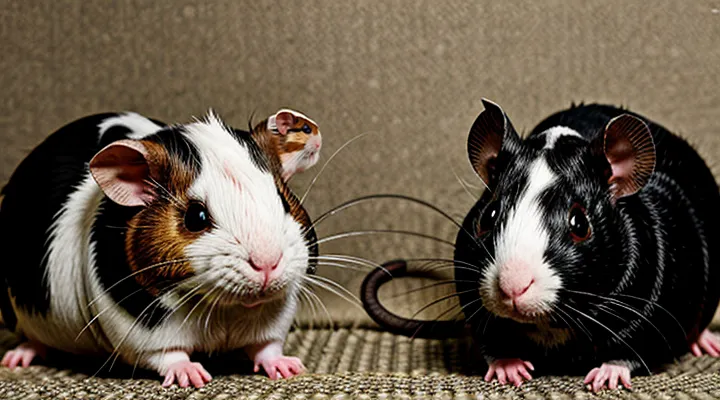
Understanding Rodent Vocalizations
The Science of Animal Sounds
Rats produce a wide spectrum of ultrasonic vocalizations (USVs) that serve social, distress, and mating functions. Frequencies typically range from 20 to 80 kHz, with distinct patterns such as 22‑kHz calls for alarm and 50‑kHz chirps for positive interactions. These sounds are generated by the larynx and modulated by airflow through the vocal cords, allowing rapid frequency shifts that convey emotional state.
Guinea pigs emit audible vocalizations spanning 0.5 to 10 kHz, including purrs, wheeks, and alarm cries. Their calls are produced by a combination of laryngeal activity and oral cavity resonance, resulting in longer-duration sounds with rich harmonic structure. Unlike the predominantly ultrasonic rat repertoire, guinea pig vocalizations are readily detectable by human hearing and are used for mother‑infant bonding, territorial defense, and social cohesion.
Key comparative points:
- Frequency range: rats – ultrasonic (20–80 kHz); guinea pigs – audible (0.5–10 kHz).
- Purpose: rats use USVs for covert signaling in dense habitats; guinea pigs rely on audible calls for overt communication within colonies.
- Production mechanism: both species employ laryngeal vibration, but rats achieve higher rates of frequency modulation, while guinea pigs emphasize harmonic richness.
- Acoustic analysis: rat USVs require specialized equipment (e.g., ultrasonic microphones, spectrographic software); guinea pig calls can be recorded with standard audio devices.
Research indicates that the divergence in vocal bandwidth reflects ecological pressures: rats, as nocturnal foragers, benefit from ultrasonic channels that reduce predator detection, whereas guinea pigs, as diurnal grazers, favor audible signals that facilitate group coordination. Understanding these acoustic adaptations informs broader studies of mammalian communication, neurophysiological control of sound production, and the evolution of species‑specific signaling strategies.
Methods of Studying Rodent Acoustics
Rodent acoustic research relies on precise capture and analysis of vocal emissions to reveal species‑specific patterns. Accurate comparison of rat and guinea pig sounds requires methods that address the ultrasonic and audible ranges typical for each animal.
- High‑sensitivity microphones (e.g., condenser or electret) calibrated for frequencies up to 100 kHz capture both audible and ultrasonic components.
- Ultrasonic detectors paired with heterodyne or frequency‑modulation receivers translate high‑frequency signals into the audible spectrum for real‑time monitoring.
- Digital audio interfaces record at sampling rates of 250 kHz or higher, preserving waveform integrity for subsequent processing.
- Spectrographic software (e.g., Raven, Avisoft SASLab) generates time‑frequency plots, enabling measurement of duration, pitch, modulation, and harmonic structure.
- Automated call detection algorithms apply amplitude thresholds and spectral templates to isolate relevant events from background noise.
- Simultaneous video tracking links vocalizations to specific behaviors, facilitating functional interpretation.
- Electrophysiological recordings (e.g., auditory brainstem responses) assess neural correlates of emitted sounds, providing a physiological benchmark.
Experimental design must control ambient noise, temperature, and lighting to prevent confounding influences on vocal output. Calibration tones verify system linearity across the full frequency spectrum. Species‑specific microphone placement—near the nasal cavity for rats, near the throat region for guinea pigs—optimizes signal capture. Ethical protocols mandate minimal restraint and habituation periods to reduce stress‑induced vocal alterations.
Integrating these techniques produces reproducible datasets that support rigorous comparison of rat and guinea pig acoustic signatures, advancing understanding of rodent communication and its underlying neurobiology.
Rat Vocalizations
Types of Rat Sounds
Ultrasonic Vocalizations
Rats emit ultrasonic vocalizations (USVs) that occupy the 20–100 kHz range. These calls are generated by rapid vocal fold vibrations and are audible only with specialized equipment. USVs serve specific communicative functions: distress calls appear around 22 kHz, while social and mating interactions produce higher‑frequency bursts near 50 kHz. Recordings reveal structured patterns of frequency modulation, duration, and pulse repetition that correlate with behavioral context.
Guinea pigs produce ultrasonic sounds as well, but their acoustic profile differs markedly. Their vocalizations extend from 30 kHz up to 80 kHz and are typically longer in duration than rat USVs. Unlike rats, guinea pigs employ a broader repertoire that includes broadband squeaks during social play and narrowband tones during maternal separation. The acoustic structure shows less pronounced frequency modulation, reflecting divergent neural control mechanisms.
Key comparative points:
- Frequency range: rats 20–100 kHz; guinea pigs 30–80 kHz.
- Call duration: rats 10–200 ms; guinea pigs 50–500 ms.
- Modulation: rats exhibit rapid frequency jumps; guinea pigs display smoother tonal shifts.
- Behavioral triggers: rats predominantly distress and mating; guinea pigs social interaction and maternal contexts.
Experimental detection relies on high‑sampling‑rate microphones (≥250 kHz) and spectral analysis software. Calibration against known frequency standards ensures cross‑species comparability. The distinct acoustic signatures of rats and guinea pigs provide reliable markers for assessing emotional states, social hierarchy, and neurophysiological responses in laboratory settings.
Audible Vocalizations
Rats produce a limited set of vocalizations that fall within the human audible spectrum, typically ranging from 1 kHz to 10 kHz. These sounds include short, high‑pitch squeaks emitted during social interaction, low‑frequency grunts associated with feeding, and longer, tonal calls that accompany distress or territorial displays. Acoustic recordings reveal that audible rat calls are often accompanied by ultrasonic components, but the audible portion conveys information about emotional state and immediate environment.
Guinea pigs generate a broader repertoire of audible vocalizations, spanning 0.5 kHz to 15 kHz. Their vocal output comprises chirps, whistles, purrs, and alarm cries, each with distinct temporal and spectral characteristics. Chirps and whistles serve as contact calls in group settings, while purrs indicate contentment. Alarm cries exhibit rapid frequency modulation and increased amplitude, signaling predator presence or sudden threats.
Key acoustic distinctions between the two species are:
- Frequency range: rats concentrate vocal energy below 10 kHz; guinea pigs extend above 12 kHz.
- Call duration: rat audible calls average 30–150 ms; guinea pig calls can exceed 200 ms.
- Modulation patterns: rat calls display minimal frequency sweeps; guinea pig calls frequently incorporate steep rises and falls.
- Social function: rat audible vocalizations primarily convey distress or aggression; guinea pig vocalizations cover a wider spectrum of social states, including affiliative and alarm contexts.
These differences reflect divergent evolutionary pressures on communication strategies, influencing how each species utilizes audible sound to coordinate behavior within their respective ecological niches.
Contexts of Rat Sounds
Social Interactions
Rats emit ultrasonic chirps, squeaks, and low‑frequency grunts during encounters with conspecifics. These vocalizations convey dominance, submission, and affiliation, allowing individuals to negotiate hierarchy without physical aggression. Acoustic patterns shift rapidly as rats engage in grooming, play, or territorial disputes, providing a real‑time feedback loop that stabilizes group structure.
Guinea pigs produce audible purrs, whistles, and teeth‑chattering sounds in social settings. High‑pitched whistles signal excitement or distress, while soft purrs accompany gentle contact and reinforce bonding. The frequency range remains within human hearing, facilitating inter‑species observation of social cues.
Key differences in communicative function:
- Rats rely on ultrasonic components to encode subtle status changes; guinea pigs depend on audible tones for overt emotional states.
- Rat vocal sequences are often brief and context‑specific, whereas guinea pig calls persist longer, supporting sustained interaction.
- Acoustic intensity in rats correlates with aggression levels; in guinea pigs, intensity aligns with affiliative behaviors such as nesting or nursing.
Both species demonstrate that sound production is integral to maintaining social cohesion, yet the spectral characteristics and contextual meanings diverge, reflecting distinct evolutionary pressures on communication strategies.
Emotional States
Rats emit ultrasonic vocalizations (USVs) that correlate with distinct emotional conditions. In aversive situations, such as exposure to predators or painful stimuli, they produce short‑duration, high‑frequency calls (approximately 22 kHz) that signal fear or distress. Positive contexts, including mating or social play, trigger longer, broadband USVs around 50 kHz, reflecting excitement or reward. These acoustic patterns are modulated by the animal’s internal state and can be quantified by call frequency, duration, and amplitude.
Guinea pigs generate audible vocalizations within the human hearing range, providing a direct acoustic window into their affective landscape. Alarm calls are characterized by sharp, high‑pitched squeaks lasting less than 0.5 seconds, associated with sudden threats. Contentment is expressed through low‑frequency purring sounds of sustained duration, often accompanied by relaxed posture. Maternal communication involves rhythmic chirps that promote offspring attachment and indicate nurturing behavior.
Key comparative observations:
- Frequency range: rats – ultrasonic (20–80 kHz); guinea pigs – audible (0.5–10 kHz).
- Call type specificity: rats use two principal USV categories (22 kHz fear, 50 kHz reward); guinea pigs display a broader repertoire linked to alarm, contentment, and maternal interaction.
- Contextual clarity: rat USVs require specialized equipment for detection, limiting direct observation; guinea pig calls are readily audible, facilitating real‑time behavioral assessment.
- Physiological linkage: both species show heightened autonomic responses (elevated heart rate, corticosterone release) concurrent with distress calls, confirming the emotional relevance of the sounds.
Research employing spectrographic analysis and concurrent physiological monitoring demonstrates that vocal output in both rodents reliably indexes emotional states. The divergence in acoustic modality reflects species‑specific evolutionary adaptations, yet the underlying principle—that vocalizations serve as measurable indicators of affect—remains consistent across the two taxa.
Guinea Pig Vocalizations
Types of Guinea Pig Sounds
Wheeking
Wheeking is a brief, high‑frequency vocalization produced by laboratory rats when they anticipate food delivery. Recordings place its fundamental frequency between 8 and 12 kHz, with a duration of 30–80 ms and a rapid rise‑time envelope. The sound is typically emitted from the larynx and propagates efficiently through the cage environment.
The call occurs immediately after a conditioned cue, such as a light or tone, and ceases once the food is obtained. Experiments show that wheeking intensity correlates with the animal’s hunger level and with the probability of reward, indicating a function in motivating caretaker attention and signaling food expectancy.
Guinea pigs generate a broader repertoire that includes squeaks (4–6 kHz), chirps (6–9 kHz) and purrs (2–4 kHz). Their squeaks are longer (150–300 ms) and lack the sharp onset characteristic of rat wheeks. While guinea pig vocalizations often accompany social interactions or distress, wheeking is tightly linked to feeding contexts. Frequency overlap is minimal; guinea pig sounds occupy lower bands, reducing acoustic interference when both species are housed together.
Comparative data suggest that wheeking provides a rapid, high‑frequency alarm for caregivers, whereas guinea pig vocalizations serve broader social functions. Frequency separation, duration, and behavioral triggers differentiate the two species’ acoustic communication strategies.
Purring
Purring in rodents is a low‑frequency, continuous vibration generated by rapid contraction of the laryngeal muscles. In rats, purring occurs during relaxed states, grooming, and mild social interactions; the sound typically ranges from 20 to 40 Hz and can be detected with specialized acoustic equipment. The mechanism differs from the classic feline purr, relying on a distinct neural pattern that coordinates inspiratory and expiratory phases.
Guinea pigs produce a comparable murmur during contentment, yet their purr‑like vocalization exhibits higher frequency components (approximately 40–80 Hz) and a more pronounced harmonic structure. Key differences include:
- Frequency range: rats ≈ 20–40 Hz; guinea pigs ≈ 40–80 Hz
- Harmonic content: rats generate a smoother spectral profile; guinea pigs display stronger overtones
- Behavioral context: rats purr primarily during grooming; guinea pigs emit the sound while chewing or resting
These distinctions illustrate that while both species employ continuous vocalizations to signal calm, the acoustic parameters and underlying muscular control vary markedly.
Chirping
Rats emit short, high‑frequency chirps that peak between 20 and 30 kHz. The sounds are produced by rapid vibration of the laryngeal muscles and are typically associated with social interaction, such as greeting or mild aggression. Chirps have a duration of 10–30 ms and are repeated at intervals of 100–300 ms during bouts of activity.
Guinea pigs generate chirp‑like vocalizations, but their acoustic profile differs markedly. Their chirps occupy a lower frequency range, generally 5–10 kHz, and last longer, about 50–100 ms. Production involves the nasal cavity rather than the larynx, reflecting distinct anatomical adaptations.
Key distinctions:
- Frequency: rat chirps ≈ 20–30 kHz; guinea pig chirps ≈ 5–10 kHz.
- Duration: rat chirps ≈ 10–30 ms; guinea pig chirps ≈ 50–100 ms.
- Production site: rat larynx; guinea pig nasal passages.
- Behavioral context: rat chirps signal social contact; guinea pig chirps often accompany alarm or distress signals.
These parameters enable precise identification of chirping events in mixed‑species recordings and support comparative analyses of rodent communication mechanisms.
Other Vocalizations
Rats emit a variety of sounds that differ from the high‑frequency ultrasonic calls commonly studied. In addition to ultrasonic vocalizations, they produce audible squeaks, chirps, and low‑frequency growls during social interactions, territorial disputes, and predator avoidance. These audible calls often convey aggression, submission, or distress and can be distinguished by duration, amplitude, and harmonic structure.
Guinea pigs, while also capable of ultrasonic emissions, rely heavily on a repertoire of audible vocalizations. Their repertoire includes purring, wheeking, chirping, and alarm screams. Each call serves a specific function: purring signals contentment, wheeking requests food, chirping indicates excitement, and alarm screams warn conspecifics of danger.
Key differences between the two species’ non‑ultrasonic vocalizations are:
- Frequency range: rat audible calls occupy 1–5 kHz, whereas guinea pig calls extend from 0.5 kHz to 8 kHz.
- Temporal pattern: rat growls are brief (≈100 ms) and irregular; guinea pig alarm screams are prolonged (up to 1 s) with a consistent rhythm.
- Social context: rats use low‑frequency growls primarily in male‑male competition; guinea pigs employ chirps and wheeks during group foraging and maternal care.
Both rodents adjust call intensity according to distance and environmental noise, but guinea pigs demonstrate a broader dynamic range, enabling communication over larger enclosures. Comparative acoustic analyses reveal that rat audible calls contain fewer harmonic overtones than guinea pig vocalizations, which often display rich harmonic series facilitating individual identification.
Overall, the non‑ultrasonic vocal repertoires of rats and guinea pigs reflect divergent evolutionary pressures: rats prioritize brief, low‑frequency signals for rapid aggression assessment, while guinea pigs favor a diverse set of longer, harmonically complex calls for nuanced social coordination.
Contexts of Guinea Pig Sounds
Social Dynamics
Rat vocalizations serve as primary signals for establishing dominance, coordinating foraging, and maintaining group cohesion. High‑frequency ultrasonic calls are emitted during aggressive encounters, prompting submissive responses from lower‑ranking individuals. These calls are tightly linked to the rat’s hierarchical structure, with dominant members producing more frequent and louder ultrasonic bursts that suppress rival activity. In contrast, guinea pig vocalizations are predominantly audible, ranging from short chirps to sustained purrs, and function chiefly in parental care and predator alertness rather than in overt hierarchy enforcement.
Social interaction patterns diverge sharply between the two species. Rats rely on rapid, transient ultrasonic exchanges to negotiate territory and mating opportunities, enabling swift adjustments in group composition. Guinea pigs employ longer, melodic sounds that reinforce pair bonds and signal group stability, with less emphasis on immediate dominance shifts. Consequently, rat groups exhibit fluid rank changes mediated by acoustic cues, whereas guinea pig colonies display more static social structures reinforced by persistent vocal displays.
Key comparative points:
- Frequency range: Rats—ultrasonic (20–80 kHz); guinea pigs—audible (0.5–10 kHz).
- Function in hierarchy: Rats—dominance regulation; guinea pigs—bond reinforcement.
- Temporal pattern: Rats—brief, high‑rate bursts; guinea pigs—extended, melodic sequences.
- Behavioral outcome: Rats—rapid rank reconfiguration; guinea pigs—stable group cohesion.
These distinctions illustrate how acoustic communication shapes social dynamics differently in each species, reflecting evolutionary adaptations to their respective ecological niches.
Environmental Factors
Environmental conditions shape the acoustic output of both rats and guinea pigs, altering their call structure, intensity, and timing.
Temperature directly affects vocal tract dynamics. Higher ambient temperatures increase muscle activity, resulting in higher‑frequency calls in rats and slightly elevated pitch in guinea pig squeaks. Conversely, cooler environments lower vocal frequency and reduce call amplitude.
Humidity modulates sound transmission through the medium. Elevated moisture levels enhance low‑frequency components, making calls more resonant, while low humidity attenuates these frequencies, leading to sharper, higher‑frequency sounds.
Lighting influences behavioral states that drive vocalization. Bright cycles stimulate activity in rats, prompting more frequent ultrasonic chirps, whereas dim conditions encourage longer, low‑frequency squeals in guinea pigs.
Cage enrichment and substrate type affect acoustic feedback. Soft bedding absorbs sound, reducing call intensity, while hard surfaces amplify echoes, encouraging higher call rates in both species.
Social density determines call purpose. High population density raises the frequency of alarm calls in rats and increases contact squeaks in guinea pigs, whereas isolated individuals produce fewer, more subdued vocalizations.
Key environmental factors
- Ambient temperature
- Relative humidity
- Light intensity and photoperiod
- Substrate hardness and acoustic reflectivity
- Social grouping density
Each factor interacts with the species‑specific vocal apparatus, producing measurable differences in the sound profiles of rats compared with guinea pigs.
Comparative Analysis of Rat and Guinea Pig Sounds
Similarities in Vocal Behavior
Research on rodent communication demonstrates that rats and guinea pigs share several vocal characteristics despite belonging to different families. Both species emit ultrasonic calls that exceed the human hearing threshold, typically ranging from 20 to 80 kHz. These high‑frequency emissions are employed during social interaction, mating, and predator avoidance.
Key parallels in vocal behavior include:
- Ultrasonic distress signals – emitted when individuals encounter threats or experience pain; acoustic parameters such as peak frequency and duration are comparable across species.
- Contact calls – low‑intensity sounds used to maintain group cohesion; spectral profiles show overlapping harmonic structures.
- Maternal‑infant communication – mothers and offspring exchange graded vocalizations that modulate with age and physiological state; temporal patterns align closely.
Neurophysiological studies reveal that both rodents activate analogous brainstem nuclei during call production, suggesting a conserved motor circuitry. Acoustic analyses indicate similar modulation of call amplitude in response to emotional valence, supporting the notion of shared affective signaling mechanisms.
Comparative recordings show that while species‑specific syllable repertoires differ in complexity, the fundamental acoustic strategies—frequency modulation, harmonic stacking, and temporal sequencing—are conserved. This convergence implies evolutionary pressure to maintain efficient, high‑bandwidth communication channels in small mammals.
Differences in Acoustic Characteristics
Frequency Ranges
Rats emit a wide spectrum of sounds that can be divided into two primary bands. Ultrasonic vocalizations (USVs) occupy roughly 20 kHz to 80 kHz, with the most frequent peaks around 40–50 kHz during social interactions and distress. Audible calls range from 1 kHz to 10 kHz, encompassing chirps, squeaks, and low‑frequency alarm tones.
Guinea pigs produce primarily audible vocalizations, spanning approximately 0.5 kHz to 10 kHz. Their repertoire includes whistles, purrs, and teeth‑chattering sounds, with dominant energy often centered near 2–4 kHz. Some individuals generate weak ultrasonic components up to 50 kHz, but these are less pronounced than in rats.
Key comparative points:
- Upper limit: Rats reach 80 kHz; guinea pigs rarely exceed 50 kHz.
- Dominant band: Rats’ most intense energy lies in the ultrasonic range; guinea pigs concentrate energy in the audible spectrum.
- Bandwidth: Rats cover a broader frequency span (≈ 1–80 kHz) versus guinea pigs (≈ 0.5–10 kHz).
- Behavioral context: Rat USVs correlate with mating, pup separation, and aggression; guinea pig whistles and chirps serve as contact calls and alarm signals.
Measurement techniques typically involve condenser microphones for audible frequencies and specialized ultrasonic detectors (e.g., piezoelectric sensors) for high‑frequency recordings. Calibration against known tone generators ensures accuracy across the full range.
Overall, rat vocal output extends farther into the ultrasonic domain, whereas guinea pig communication remains largely within the human‑audible spectrum, reflecting divergent evolutionary adaptations in acoustic signaling.
Sound Structures
Rats produce vocalizations that consist of broadband ultrasonic pulses, narrowband whistles, and low‑frequency chirps. Each element exhibits a distinct frequency band, duration, and harmonic composition. Spectrographic analysis reveals that ultrasonic pulses typically occupy 40–80 kHz, last 5–30 ms, and contain minimal harmonic structure. Whistles fall within 10–30 kHz, persist for 30–150 ms, and display prominent fundamental frequencies with weak overtones. Low‑frequency chirps range from 2–8 kHz, extend up to 200 ms, and present clear harmonic series.
Guinea pigs emit a repertoire that includes high‑pitch squeaks, mid‑frequency chirps, and complex vocal bursts. Squeaks center around 15–25 kHz, last 10–50 ms, and exhibit strong harmonic ladders. Mid‑frequency chirps occupy 5–12 kHz, endure 30–120 ms, and possess moderate harmonic content. Vocal bursts contain rapid sequences of pulses spanning 30–70 kHz, each pulse 3–10 ms, with limited harmonics.
- Frequency range: rats – 2 kHz to 80 kHz; guinea pigs – 5 kHz to 70 kHz.
- Dominant harmonic structure: rats – sparse; guinea pigs – pronounced.
- Temporal pattern: rats – brief, isolated pulses; guinea pigs – longer, modulated sequences.
The contrasting sound structures reflect divergent communication strategies. Rats rely on ultrasonic components for covert signaling, whereas guinea pigs employ richer harmonic spectra for social interaction. Understanding these differences informs acoustic monitoring and species‑specific behavioral research.
Behavioral Correlates of Vocalizations
Communication Strategies
Rats and guinea pigs produce distinct vocalizations that serve specific communicative functions within their social structures. Rat sounds, ranging from ultrasonic squeaks to low‑frequency chirps, are primarily employed to signal danger, territorial boundaries, and reproductive status. Guinea pig vocal repertoire includes high‑pitched purrs, whistles, and rumbling calls, each associated with grooming invitations, alarm, and hierarchical negotiations.
Key communication strategies observed in these rodents include:
- Frequency modulation – Rats shift ultrasonic frequencies to convey urgency, while guinea pigs adjust pitch to differentiate between friendly and threatening contexts.
- Temporal patterning – Short, repetitive bursts in rats indicate immediate threat; prolonged, melodic sequences in guinea pigs accompany social bonding activities.
- Contextual pairing – Both species combine vocal output with body language, such as tail flicks in rats or ear positioning in guinea pigs, enhancing signal clarity.
- Audience targeting – Rats direct ultrasonic calls toward conspecifics within a limited radius, whereas guinea pigs emit audible whistles that can be detected across larger enclosures, facilitating group coordination.
Neurophysiological studies reveal that each species processes these acoustic cues through specialized auditory pathways, enabling rapid discrimination between call types. Behavioral experiments confirm that disruption of specific sound patterns impairs social cohesion, underscoring the integral role of vocal strategies in maintaining colony stability.
Emotional Expression
Rats emit a repertoire of sounds that correlate with distinct affective states. Ultrasonic vocalizations (USVs) above 20 kHz appear during positive encounters such as mating or play, while broadband squeaks in the audible range accompany aversive conditions like pain or threat. Frequency modulation, call duration, and harmonic structure vary systematically with the animal’s internal state, providing a reliable index of emotional valence.
Guinea pigs produce a wider audible spectrum, ranging from low‑frequency purrs to high‑frequency squeals. Purrs accompany relaxed or content conditions, whereas short, sharp squeaks signal acute distress. Wheeks, characterized by rapid frequency sweeps, function as contact calls that increase when individuals experience separation anxiety. The acoustic diversity reflects nuanced emotional signaling within the species’ social groups.
Both rodents use vocal output to convey internal feelings, yet their communication systems differ markedly. Key contrasts include:
- Frequency range: rats rely heavily on ultrasonic bands; guinea pigs remain primarily in the audible spectrum.
- Call types: rats exhibit two principal categories (USVs and squeaks); guinea pigs display at least four distinct forms (purrs, squeaks, wheeks, chirps).
- Social context: rat USVs often emerge in solitary or dyadic interactions; guinea pig calls frequently serve group cohesion and offspring‑parent bonding.
- Acoustic structure: rat USVs show rapid frequency jumps and harmonic stacks; guinea pig vocalizations feature smoother sweeps and longer sustain periods.
These distinctions illustrate how each species tailors acoustic output to its specific emotional and ecological demands.
Factors Influencing Rodent Sounds
Environmental Impact
The acoustic output of rats and guinea pigs differs markedly, producing distinct patterns of environmental interaction. Rat vocalizations concentrate in the ultrasonic range (20–80 kHz) with peak amplitudes that exceed those of guinea pigs, whose calls occupy the audible spectrum (0.5–5 kHz) and are generally softer. These physical characteristics determine how each species’ sounds propagate through urban and rural habitats.
Ultrasonic emissions from rats penetrate vegetative cover and building insulation with limited attenuation, creating a persistent acoustic background that can interfere with the communication of insectivorous birds and bats. In contrast, the lower‑frequency calls of guinea pigs dissipate more rapidly, reducing their reach beyond immediate surroundings. Both species generate noise that may affect human occupants, but rat ultrasonic activity is less perceptible to humans while still measurable by specialized equipment, leading to potential underestimation of its ecological footprint.
In densely populated areas, rat soundscapes contribute to chronic noise exposure for wildlife, potentially altering foraging behavior and stress physiology. The presence of audible guinea pig vocalizations in agricultural settings can attract predators such as owls, indirectly influencing rodent population dynamics. However, excessive noise from large rat colonies may deter beneficial species, disrupting ecosystem services such as pollination and pest control.
Effective management of these acoustic impacts relies on targeted interventions:
- Deploy ultrasonic detectors to monitor rat activity levels and identify hotspots.
- Implement structural modifications (e.g., acoustic dampening materials) in buildings prone to infestation.
- Encourage habitat diversification that reduces rat nesting sites while supporting predator populations.
- Apply humane population control measures to lower overall sound production.
- Conduct regular noise assessments to quantify both ultrasonic and audible components across habitats.
By quantifying and addressing the distinct sound profiles of rats and guinea pigs, stakeholders can mitigate adverse environmental consequences while preserving ecosystem functionality.
Genetic Predisposition
Genetic predisposition determines the acoustic characteristics of rodent vocalizations. In rats, several quantitative trait loci have been linked to the frequency, duration, and call rate of ultrasonic emissions. Genome‑wide association studies identified loci on chromosomes 4, 7, and 12 that correlate with heightened call amplitude and reduced inter‑call intervals. Mutations in the Foxp2 gene modify syllable structure, while variations in the Usp9x region affect call timing.
In guinea pigs, vocal output occurs in the audible range and is governed by a distinct set of genetic regulators. Comparative analyses reveal that the Gabra2 and Slc6a4 genes influence call pitch and harmonic richness, whereas the Nr3c1 locus modulates stress‑induced vocal bursts. Unlike rats, guinea pigs lack the ultrasonically tuned Foxp2 variants, resulting in broader frequency spectra.
Key genetic differences between the species include:
- Presence of ultrasonically tuned loci in rats (e.g., Foxp2, Usp9x) versus audible‑range loci in guinea pigs (e.g., Gabra2, Nr3c1).
- Divergent allelic variants on chromosomes 4 and 7 that affect call timing in rats but have no homologous effect in guinea pigs.
- Species‑specific expression patterns of neurotransmitter transporters that shape call intensity.
Understanding these genetic foundations clarifies why rats emit high‑frequency, rapid sequences while guinea pigs produce lower‑frequency, longer calls. The contrast underscores the necessity of species‑targeted genetic models when interpreting acoustic data across rodent taxa.
Developmental Aspects
Rats and guinea pigs exhibit distinct developmental trajectories in their vocal repertoires, reflecting species‑specific maturation of auditory and motor systems. In early postnatal days, rat pups emit high‑frequency ultrasonic calls that peak around postnatal day 10, then gradually shift toward lower frequencies as the laryngeal musculature and respiratory control mature. This transition coincides with the onset of weaning and increased locomotor activity, suggesting a functional link between vocal output and social independence.
Guinea pig neonates produce audible squeaks and whines from birth, with acoustic parameters—duration, fundamental frequency, and harmonic structure—changing systematically over the first three weeks. By the end of the pre‑weaning period, calls become shorter, higher in pitch, and more complex, mirroring the development of auditory feedback loops and cortical representation of conspecific sounds.
Key comparative points:
- Frequency range: Rat ultrasonic emissions dominate early life; guinea pig vocalizations remain within the audible spectrum throughout development.
- Temporal pattern: Rat pup calls are clustered in brief bursts; guinea pig calls show a progressive increase in call rate and inter‑call intervals.
- Acoustic complexity: Guinea pig vocal strings acquire additional harmonics as the animal ages; rat calls retain a relatively simple spectral profile despite frequency modulation.
- Neural correlates: Both species demonstrate age‑dependent refinement of brainstem nuclei, yet guinea pigs exhibit earlier cortical involvement, aligning with their more elaborate early vocal behavior.
Understanding these ontogenetic patterns informs experimental design in neurobehavioral studies, provides a baseline for interpreting pathological vocal alterations, and highlights the evolutionary pressures shaping communication strategies in small rodents.