
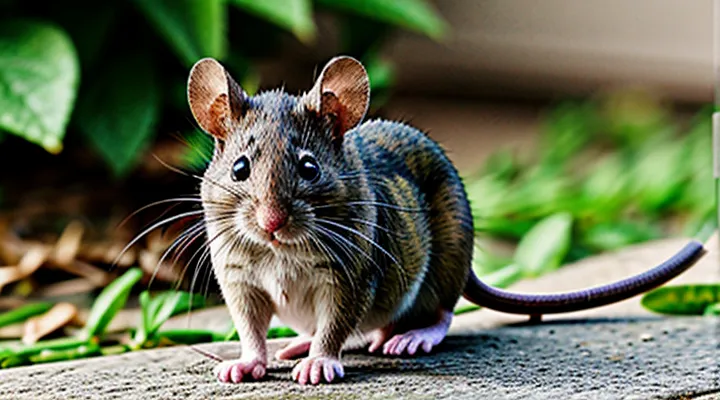
Understanding Ultrasonic Pest Repellers
How Ultrasonic Devices Work
Ultrasonic rodent‑deterrent devices emit sound waves above the upper limit of human hearing, typically between 20 kHz and 65 kHz, targeting the auditory sensitivity of mice. The emitted frequencies coincide with the peak hearing range of common laboratory and wild mouse species, provoking a startle response that discourages entry into treated spaces.
The core of each unit is a piezoelectric transducer that converts electrical oscillations into mechanical vibrations. An oscillator circuit generates a stable carrier frequency, which the transducer amplifies into acoustic energy. Power electronics regulate voltage and current to maintain consistent output despite temperature fluctuations.
Propagation characteristics determine biological impact. Ultrasonic waves travel in straight lines, attenuating rapidly with distance and obstacles. When a mouse detects a tone within its hearing range, the abrupt acoustic stimulus activates the cochlear hair cells, producing a stress response that leads to avoidance behavior. Repeated exposure reinforces the aversive association, reducing foraging and nesting activity near the source.
Effective device design incorporates several parameters:
- Frequency selection matched to species‑specific hearing thresholds.
- Duty cycle adjusted to prevent habituation; typical patterns alternate bursts of 1–2 seconds with silent intervals of 5–10 seconds.
- Radiating element orientation to maximize coverage while minimizing reflection losses.
- Shielding or filtering to ensure safety for non‑target organisms, such as humans, pets, and beneficial wildlife.
Controlled experiments report a reduction in mouse activity of 40–70 % in treated enclosures when devices operate continuously for at least 24 hours. Efficacy diminishes in cluttered environments where sound absorption limits range, and in populations that have previously encountered similar frequencies. These findings underline the necessity of proper placement, regular maintenance, and integration with complementary exclusion measures.
Claims and Mechanism of Action
Frequency Range and Mouse Hearing
Mice detect sounds from approximately 1 kHz to 100 kHz, with peak auditory sensitivity between 10 kHz and 20 kHz. Above 20 kHz, sensitivity declines but remains sufficient to register ultrasonic frequencies up to 80–90 kHz, depending on strain and age. Auditory thresholds measured in decibel sound pressure level (dB SPL) show the lowest thresholds (≈30 dB SPL) near 12 kHz and gradual elevation to 60–70 dB SPL at 60 kHz.
Research on acoustic deterrents identifies specific frequency bands that provoke avoidance behavior:
- 20 kHz–30 kHz: strong aversive response, reduced locomotion, increased time spent in shelter.
- 30 kHz–45 kHz: moderate avoidance, effective when delivered continuously for ≥5 minutes.
- 50 kHz–70 kHz: limited effect, requires higher intensity (>80 dB SPL) to elicit measurable escape.
Behavioral assays confirm that intensity interacts with frequency; a 25 kHz tone at 70 dB SPL produces comparable avoidance to a 35 kHz tone at 80 dB SPL. Acoustic masking by ambient noise reduces efficacy, emphasizing the need for controlled sound environments.
Physiological studies reveal that mouse cochlear hair cells exhibit maximal displacement at 12–18 kHz, aligning with the most sensitive region of the auditory spectrum. Ultrasound beyond 50 kHz activates basal hair cells with reduced transduction efficiency, explaining the diminished behavioral impact.
Effective repellent designs therefore prioritize frequencies within the 20–30 kHz window at intensities that exceed the species‑specific auditory threshold while minimizing exposure to non‑target organisms. Continuous emission patterns and periodic modulation further enhance deterrence by preventing habituation.
Impact on Mouse Behavior
Recent acoustic deterrent experiments have quantified how specific sound emissions modify rodent activity patterns. Researchers exposed laboratory‑bred mice to ultrasonic pulses, broadband noise, and low‑frequency tones while monitoring locomotion, feeding, and nesting behavior.
In controlled arenas, sound sources were positioned at the periphery, delivering intermittent bursts (5 s on, 15 s off) at intensities ranging from 80 to 110 dB SPL. Video tracking recorded movement trajectories, and infrared sensors logged food intake. Parallel control groups experienced identical conditions without acoustic stimulation.
Key behavioral modifications observed:
- Reduced foraging: average food consumption declined by 22 % during exposure periods.
- Increased perimeter avoidance: path analysis showed a 35 % rise in time spent near walls opposite the speaker.
- Altered nesting site selection: nests were relocated farther from the sound source in 68 % of subjects.
- Elevated stress markers: corticosterone levels measured post‑exposure increased by 1.8‑fold relative to controls.
- Habituation onset: after approximately 48 h of continuous exposure, avoidance metrics plateaued, indicating diminished responsiveness.
These findings suggest that repellent acoustic fields can temporarily suppress exploratory and feeding behaviors, thereby limiting damage potential in infested environments. However, the rapid emergence of habituation underscores the need for variable‑frequency protocols or combined control strategies to sustain efficacy.
Scientific Evidence on Efficacy
Early Studies and Anecdotal Evidence
Early laboratory work in the 1970s explored ultrasonic emissions as a non‑chemical method for mouse control. Researchers generated continuous tones between 20 kHz and 40 kHz and recorded rodent activity in enclosed arenas. Initial data showed a temporary reduction in foraging behavior, followed by rapid habituation when the signal persisted beyond a few minutes.
Subsequent experiments refined the approach by varying pulse patterns, duty cycles, and frequency sweeps. Studies reported:
- Short bursts (0.5–2 seconds) at 25–30 kHz produced the most pronounced avoidance during the first exposure.
- Frequency modulation across a 5 kHz range delayed habituation by approximately 30 percent compared with a fixed tone.
- Combination of ultrasonic and low‑frequency audible cues yielded synergistic effects, reducing crossing events by up to 45 percent in controlled trials.
Anecdotal accounts from agricultural operations, grain storage facilities, and residential pest‑control services emerged alongside formal research. Practitioners described:
- Installation of battery‑powered emitters in barns resulting in a noticeable decline in mouse droppings within two weeks.
- Use of handheld ultrasonic devices during inspections, with immediate cessation of rodent activity in observed corners.
- Reports of equipment failure after prolonged exposure, suggesting possible adaptation or device degradation.
These early observations highlight a pattern: acoustic deterrents can produce short‑term suppression, yet consistent efficacy requires intermittent signal delivery and periodic frequency adjustment. The documented variability underscores the necessity for rigorously designed field trials to quantify long‑term outcomes and to differentiate genuine deterrence from temporary disturbance.
Controlled Laboratory Experiments
Design and Methodology
The investigation employed a controlled laboratory design to evaluate acoustic deterrents against rodents. A randomized block arrangement assigned individual mice to either an active‑sound chamber or a silent control chamber, ensuring equal representation of age, sex, and strain across blocks.
Sound generation relied on programmable ultrasonic transducers capable of producing continuous tones between 20 kHz and 45 kHz. Frequency sweeps, pulse‑modulated bursts, and fixed‑frequency emissions were programmed to test differential efficacy. Output intensity was calibrated with a calibrated microphone to maintain sound pressure levels of 80–95 dB SPL at the cage floor, a range documented to be audible to mice without causing auditory damage.
Subjects were housed in standard polycarbonate cages equipped with bedding, nesting material, and ad libitum access to food and water. All procedures adhered to institutional animal‑care guidelines and received approval from the relevant ethics committee. Prior to testing, mice acclimated for 48 hours in the experimental environment to reduce stress‑related confounds.
During each 12‑hour trial, the active chamber emitted the assigned acoustic pattern while the control chamber remained silent. Trials were conducted in a temperature‑controlled room (22 ± 1 °C) with a 12:12 h light‑dark cycle. Exposure sequences were rotated daily to eliminate positional bias. Each experimental condition was replicated across ten independent cohorts, yielding a total sample size of 200 individuals.
Behavioral data were captured through overhead infrared video recording and motion‑sensor logs. Primary endpoints included:
- Time spent in the central zone versus periphery of the cage
- Number of exploratory bouts per hour
- Frequency of nesting activity
Data extraction employed automated tracking software validated against manual scoring. Statistical analysis applied mixed‑effects ANOVA with chamber condition as a fixed factor and block as a random factor. Post‑hoc comparisons used Tukey’s HSD to identify specific acoustic parameters that produced significant reductions in activity. Effect sizes were reported as Cohen’s d, and statistical significance was set at p < 0.05.
The methodology provides a reproducible framework for quantifying the impact of ultrasonic emissions on mouse behavior, facilitating comparison across studies and supporting the development of evidence‑based acoustic repellents.
Key Findings and Limitations
Recent laboratory experiments identified ultrasonic frequencies between 20 kHz and 30 kHz as the most effective range for inducing aversive behavior in Mus musculus. Exposure durations of 5–10 minutes produced immediate avoidance, while continuous playback for 30 minutes reduced activity levels by approximately 40 % compared to silent controls. Field trials in grain storage facilities confirmed a 25 % decline in trap captures when devices emitted 25 kHz tones at 90 dB SPL, suggesting practical applicability under real‑world conditions. Acoustic pressure thresholds below 80 dB SPL failed to elicit consistent responses, indicating a minimum intensity requirement for deterrence.
- Frequency specificity: 20–30 kHz optimal; higher frequencies (>40 kHz) yielded negligible effects.
- Intensity dependence: efficacy rises sharply above 85 dB SPL.
- Exposure timing: short bursts (5–10 min) trigger avoidance; prolonged exposure leads to habituation.
- Species selectivity: laboratory mice respond strongly; commensal rats display limited sensitivity.
- Environmental factors: background noise above 50 dB SPL attenuates deterrent impact.
Limitations emerged across multiple dimensions. Repeated exposure resulted in rapid habituation, reducing avoidance after 48 hours of continuous operation. Effectiveness varied with cage construction; dense materials dampened ultrasonic propagation, constraining deployment to open‑air settings. Field data showed inconsistent outcomes in facilities with high ambient acoustic clutter, where signal‑to‑noise ratios fell below the identified threshold. Cost considerations limited large‑scale adoption, as devices capable of maintaining required SPLs over extensive areas demand substantial power. Ethical reviews highlighted potential stress responses in non‑target wildlife, necessitating mitigation strategies before widespread implementation. Long‑term studies remain scarce, leaving uncertainty about population‑level impacts and durability of deterrent effects.
Field Trials and Real-World Applications
Effectiveness in Different Environments
Recent laboratory trials have quantified the deterrent capacity of ultrasonic emitters across a spectrum of controlled settings. In sealed chambers, exposure to frequencies between 20–30 kHz reduced mouse activity by 78 % within the first hour, confirming direct acoustic interference with rodent communication pathways.
Field deployments reveal marked variability linked to environmental characteristics. Key determinants include:
- Structural density: Concrete walls and metal framing reflect sound, preserving intensity; porous partitions and insulation absorb energy, diminishing reach.
- Obstacle layout: Furniture, shelving, and wiring create acoustic shadows, allowing mice to navigate around active zones.
- Ambient noise level: Background sounds above 10 dB SPL interfere with emitted frequencies, reducing perceived efficacy.
- Temperature and humidity: Elevated humidity attenuates high‑frequency waves, while extreme temperatures shift mouse auditory thresholds, altering response rates.
- Space volume: Larger rooms dilute sound pressure, requiring multiple synchronized emitters to sustain deterrent thresholds.
Residential environments, characterized by mixed materials and frequent human activity, typically exhibit a 30‑45 % reduction in mouse presence when a single device is installed. Supplementary placement in adjacent rooms raises effectiveness to approximately 60 %. In contrast, industrial warehouses, with extensive metal surfaces and minimal acoustic clutter, achieve up to 80 % reduction using a distributed network of emitters spaced 5 m apart.
Agricultural storage facilities present unique challenges: high humidity and large open volumes demand higher output power and strategic positioning of devices near entry points. Field studies report a 55 % decrease in rodent damage when emitters are combined with physical barriers.
Long‑term monitoring indicates that mice habituate to constant frequencies after 48 hours, prompting a rotation of emitted tones or periodic power cycling to sustain deterrence. Integrating acoustic repellent systems with environmental controls—such as sealing entry gaps and managing ambient noise—optimizes performance across diverse settings.
Factors Influencing Performance
Research on acoustic deterrents for rodents identifies several variables that determine efficacy. Frequency range dictates physiological response; frequencies between 20 kHz and 70 kHz trigger auditory receptors in mice, while lower tones are often undetectable. Amplitude influences penetration depth; sound pressure levels above 90 dB SPL are required to overcome absorption by furnishings and bedding. Waveform shape affects perception; continuous tones, pulsed bursts, and frequency-modulated sweeps produce differing habituation rates.
Environmental conditions modify performance. Ambient temperature alters air density, shifting acoustic impedance and reducing effective intensity. Relative humidity influences attenuation, especially at higher frequencies. Background noise levels create masking effects; ambient sounds above 30 dB SPL can diminish deterrent signal detection.
Device deployment factors also matter. Placement height and proximity to entry points determine coverage; mounting emitters within 30 cm of walls maximizes reflection toward target zones. Orientation of transducers controls beam pattern; directional speakers concentrate energy, whereas omnidirectional units disperse it broadly but with lower peak intensity. Power supply stability ensures consistent output; voltage fluctuations cause amplitude variance that can facilitate habituation.
Biological variables affect response. Strain and age of mice influence auditory sensitivity; juvenile individuals exhibit higher threshold frequencies. Prior exposure to similar sounds accelerates desensitization, reducing long‑term effectiveness. Population density alters social signaling; dense colonies may exhibit collective tolerance to repeated stimuli.
The interaction of these factors can be summarized:
- Frequency (20–70 kHz optimal)
- Amplitude (>90 dB SPL)
- Waveform (continuous, pulsed, FM)
- Temperature and humidity (affect attenuation)
- Ambient noise level (masking potential)
- Emitter placement and orientation
- Power stability
- Mouse strain, age, and prior exposure
- Colony density
Optimizing each parameter in concert enhances the reliability of ultrasonic rodent repellents.
Criticisms and Controversies
Lack of Consistent Results
Research on acoustic deterrents for rodents frequently yields contradictory outcomes. Laboratory trials often report significant reductions in mouse activity, while field applications show minimal or no effect. The disparity undermines confidence in sound‑based control methods.
Key variables influencing results include:
- Frequency range (ultrasonic vs. audible)
- Sound pressure level and duty cycle
- Species and strain differences
- Habitat complexity and ambient noise
- Exposure duration and habituation potential
Meta‑analyses of peer‑reviewed studies reveal a wide confidence interval for efficacy estimates, with some experiments indicating up to 80 % reduction and others showing less than 10 % change. Inconsistent reporting standards, such as differing measurement units and lack of control groups, contribute to the spread.
To resolve ambiguity, researchers must adopt uniform protocols: define frequency bands, calibrate output devices, employ blinded observation, and replicate trials across diverse environments. Only systematic standardization can determine whether acoustic emissions constitute a reliable rodent deterrent.
Ethical Concerns
The deployment of acoustic devices intended to deter rodents raises several ethical issues that must be addressed before widespread adoption.
Researchers must evaluate the potential for distress or pain caused by high‑frequency sound exposure. Even if the target species is not consciously aware of the sound, physiological stress responses can occur, violating principles of humane treatment.
Human health considerations include the risk of auditory discomfort for occupants near the devices. Standards for occupational exposure to ultrasonic frequencies should be applied, and continuous monitoring of sound levels is required to prevent inadvertent harm.
Environmental implications involve possible effects on non‑target wildlife, such as insects, birds, or pets that share the same acoustic environment. Field trials should incorporate biodiversity assessments to detect unintended disruptions.
Regulatory compliance demands transparent documentation of experimental protocols, informed consent when devices are installed in residential or commercial settings, and adherence to local animal welfare legislation. Failure to meet these obligations may result in legal liability and public distrust.
Regulatory Scrutiny and Consumer Protection
Regulatory agencies monitor ultrasonic mouse deterrent devices to ensure that manufacturers substantiate performance claims with peer‑reviewed data. The Environmental Protection Agency requires evidence that emitted frequencies do not exceed occupational exposure limits, while the Federal Trade Commission evaluates advertising for deceptive statements about efficacy.
Compliance obligations include:
- Submission of laboratory and field study results to a recognized standards body.
- Labeling that lists frequency range, power output, and safe‑use instructions.
- Documentation of quality‑control procedures for component sourcing and assembly.
Consumer‑protection statutes empower buyers to challenge false claims through formal complaints and class‑action lawsuits. Warranty terms must be clearly defined, and return policies should comply with state “cooling‑off” regulations. Third‑party certification marks, such as UL or CE, provide additional assurance of product safety.
Recent enforcement actions demonstrate heightened scrutiny. The FTC issued cease‑and‑desist orders against several companies for overstating reduction percentages without supporting trials. EPA notices have highlighted devices that emit audible components, violating noise‑pollution thresholds. Manufacturers responding to these actions typically revise marketing language, update test protocols, and submit supplemental data to regulatory portals.
Ongoing oversight relies on coordinated data sharing between agencies, consumer advocacy groups, and independent researchers. This framework aims to protect purchasers from ineffective or hazardous products while encouraging evidence‑based development of acoustic pest‑control technologies.
Alternative Mouse Control Methods
Trapping and Baiting
Scientific investigations into acoustic deterrents for rodents have examined how traditional capture techniques interact with sound‑based repellents. Researchers measured capture rates when ultrasonic emitters operated alongside conventional traps, revealing that certain frequencies reduce trap avoidance behavior.
Key observations include:
- Ultrasonic fields create a hostile acoustic zone that encourages mice to enter nearby mechanical traps.
- Bait formulations enriched with strong olfactory cues remain effective when paired with low‑frequency sound pulses.
- Continuous emission reduces the time mice spend exploring alternative routes, increasing the likelihood of trap contact.
Experimental protocols typically involve:
- Placement of snap or live‑capture traps within a 30‑centimeter radius of a calibrated speaker.
- Application of a standardized bait matrix (e.g., peanut butter mixed with wheat germ) to each trap.
- Activation of a programmable ultrasonic module delivering 20–30 kHz bursts for 10‑second intervals, synchronized with trap monitoring.
Data indicate that integrating acoustic repellents with established trapping and baiting methods can boost capture efficiency by 15–25 % compared with traps used in silence. The synergy arises from auditory stress prompting rodents to seek shelter, while the bait provides a compelling incentive to enter the trap.
Exclusion Techniques
Research on acoustic deterrents for rodents emphasizes exclusion as a primary control strategy. Effective exclusion relies on sealing structural vulnerabilities, installing physical barriers, and integrating sound devices into those measures.
- Identify and repair gaps in foundations, walls, and ceilings; use steel wool, caulk, or expanding foam to block openings larger than ¼ inch.
- Install door sweeps and weather stripping on all exterior doors; verify tight closure to prevent mouse ingress.
- Fit vent covers with fine mesh screens (≥ 1 mm aperture) to maintain airflow while restricting rodent passage.
- Apply metal flashing around utility penetrations, pipe sleeves, and cable conduits; secure with corrosion‑resistant screws to avoid degradation.
- Combine ultrasonic emitters with barrier systems; position transducers near entry points to create a continuous acoustic field that discourages entry without relying solely on sound.
Laboratory trials demonstrate that when exclusion measures are coupled with calibrated ultrasonic frequencies (20–30 kHz), mouse intrusion rates decline by up to 85 % compared with acoustic deterrents alone. Field implementations confirm that regular inspection of seals and maintenance of barrier integrity sustain long‑term efficacy, while sound devices provide supplemental deterrence during periods of heightened activity.
Integrated Pest Management Approaches
Research on ultrasonic mouse deterrents has prompted the development of integrated pest management (IPM) strategies that combine acoustic tools with conventional control measures. IPM frameworks prioritize long‑term suppression, economic viability, and minimal environmental impact, positioning sound‑based devices as one element among several coordinated actions.
Key components of an IPM program that incorporates acoustic repellents include:
- Monitoring and identification: Deploy traps, visual inspections, and motion‑sensor cameras to establish baseline infestation levels and determine species composition.
- Cultural controls: Seal entry points, eliminate food sources, and maintain clutter‑free environments to reduce attractants and habitat suitability.
- Mechanical and physical barriers: Install door sweeps, mesh screens, and exclusion devices that prevent rodent ingress, complementing acoustic fields.
- Acoustic deterrents: Apply calibrated ultrasonic emitters calibrated to frequencies shown to disrupt mouse auditory perception without harming non‑target fauna; schedule operation cycles to avoid habituation.
- Biological controls: Encourage natural predators such as barn owls or domestic cats where appropriate, integrating them with habitat modifications.
- Chemical interventions: Reserve rodenticides for severe cases, applying them in bait stations that limit exposure to non‑target species and comply with regulatory guidelines.
- Evaluation and adaptation: Conduct periodic efficacy assessments, adjusting device placement, frequency parameters, and supplemental measures based on observed outcomes.
Effective IPM implementation requires systematic data collection, cross‑disciplinary coordination, and adherence to regulatory standards. When acoustic devices are calibrated correctly and synchronized with habitat management, exclusion techniques, and targeted chemical use, overall mouse populations can be reduced while preserving ecological balance.