
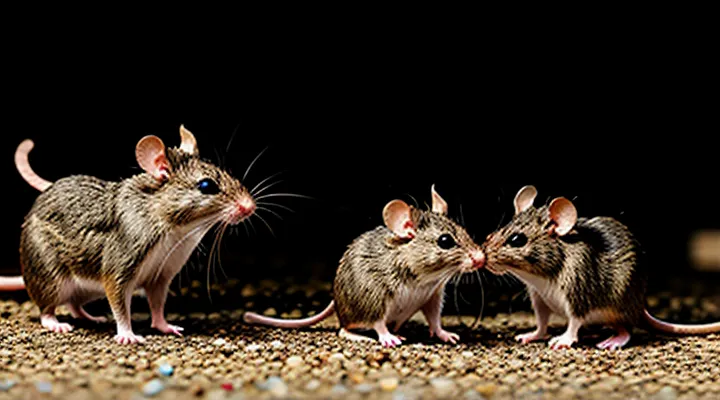
The Reproductive Cycle of Mice
Estrous Cycle Phases
The estrous cycle in laboratory mice consists of four sequential phases—proestrus, estrus, metestrus, and diestrus—each lasting approximately 12–24 hours. Hormonal fluctuations define these stages: rising estradiol during proestrus prepares the ovary for ovulation, which occurs at the onset of estrus when luteinizing hormone peaks. Following ovulation, progesterone rises in metestrus and remains elevated through diestrus, supporting uterine receptivity.
Successful mating is most likely during estrus, when females exhibit maximal sexual receptivity and the probability of fertilization peaks. Breeding programs that schedule pairings to coincide with this narrow window typically achieve higher conception rates, which directly influences average litter size. Studies show that matings performed outside estrus result in delayed conception or reduced embryo implantation, leading to smaller litters.
Key physiological markers for each phase assist researchers in timing breeding:
- Proestrus: Vaginal cytology shows predominance of nucleated epithelial cells; estradiol levels increase.
- Estrus: Predominance of cornified epithelial cells; LH surge triggers ovulation.
- Metestrus: Mix of cornified and leukocyte cells; progesterone begins to rise.
- Diestrus: Predominance of leukocytes; progesterone peaks, maintaining the uterine environment.
Accurate identification of these stages enables precise control of mating schedules, optimizing reproductive output and contributing to consistent litter size metrics in mouse colonies.
Optimal Mating Conditions
Optimal mating conditions directly influence the number of pups produced per litter in laboratory mice. Precise control of environmental and physiological variables maximizes reproductive efficiency and reduces variability among experimental groups.
Key parameters include:
- Female age: 8–12 weeks yields the highest fertility; younger or older females show reduced ovulation rates.
- Male age: 10–14 weeks ensures peak sperm quality; older males exhibit decreased motility.
- Estrous synchronization: Exposure to male pheromones (Whitten effect) for 48 hours aligns female cycles, increasing the probability of successful copulation on the intended day.
- Housing density: Pairing one male with two–three females in a cage of at least 400 cm² prevents stress and aggression while allowing sufficient mating opportunities.
- Dietary composition: Standard rodent chow with 18–20 % protein and adequate vitamin E and selenium supports embryonic development; protein restriction lowers litter size.
- Light cycle: 12 h light/12 h dark with lights on at 07:00 h stabilizes circadian rhythms that regulate hormone release.
- Ambient temperature: 22 ± 2 °C reduces thermoregulatory stress; temperatures above 26 °C suppress estrous activity.
- Handling: Minimal disturbance during the mating window (typically 24 h after pairing) prevents cortisol spikes that can impair implantation.
Implementing these conditions consistently produces average litter sizes of 6–8 pups for common strains such as C57BL/6J and BALB/c, aligning with expected reproductive outcomes for well‑maintained colonies.
Factors Influencing Litter Size
Genetic Predisposition
Genetic predisposition determines the range of offspring numbers produced by laboratory mouse strains. Studies comparing inbred lines reveal consistent differences in average litter size, indicating heritable components that can be quantified through breeding experiments.
Quantitative trait locus (QTL) mapping identifies several chromosomal regions linked to increased or decreased pup counts. Major loci have been localized on chromosomes 2, 7, and 11, each accounting for a measurable proportion of phenotypic variance. Crosses between high‑ and low‑litter‑size strains confirm additive effects of these regions.
Key genes implicated include:
- Prl (prolactin): variants correlate with altered mammary gland development and subsequent pup survival.
- Igf1 (insulin‑like growth factor 1): expression levels influence embryonic growth rates, affecting gestational capacity.
- Gnrh1 (gonadotropin‑releasing hormone 1): polymorphisms modify ovulation frequency and thus the number of embryos implanted.
Environmental factors such as diet, housing density, and maternal age interact with genetic background. Controlled breeding programs that select for favorable alleles can shift the distribution of litter sizes across generations, supporting targeted manipulation of reproductive output.
Overall, genetic architecture provides a predictable framework for estimating typical pup numbers in mouse populations, facilitating experimental design and resource planning.
Maternal Age and Parity
Maternal age exerts a measurable influence on the number of offspring produced per breeding event in laboratory mice. Females younger than eight weeks commonly yield litters of 6 – 8 pups, whereas individuals older than six months frequently produce 4 – 5 pups, reflecting a gradual decline in reproductive output with advancing age. This pattern persists across commonly used strains, such as C57BL/6 and BALB/c, indicating a robust biological effect rather than a strain‑specific anomaly.
Parity also modulates litter size. First‑time (nulliparous) breeders typically generate 5 – 7 pups, while second and third pregnancies often increase the count to 7 – 9. Subsequent litters beyond the third parity show a plateau or slight reduction, suggesting that maximal reproductive efficiency is achieved after one or two successful pregnancies. The enhancement observed in early parities is attributed to physiological adaptation of the reproductive tract and hormonal regulation.
When maternal age and parity intersect, the highest litter sizes are recorded in young, multiparous females (8 – 10 pups). In contrast, older, nulliparous females produce the smallest litters (3 – 4 pups). These interactions underscore the necessity of controlling both variables in experimental designs that rely on consistent pup numbers, such as pharmacological or genetic studies.
Accurate reporting of the dam’s age in weeks and number of previous litters is essential for reproducibility. Adjusting breeding schedules to favor young, experienced females can improve colony productivity and reduce variability in downstream experiments.
Nutritional Status
Nutritional condition of female mice directly influences the number of offspring produced per gestation. Adequate protein intake (≥18 % of diet) correlates with average litters of 7–9 pups, while reduced protein (≈10 %) lowers averages to 4–5 pups. Energy density also affects outcomes; diets providing 3.5 kcal g⁻¹ support optimal litter sizes, whereas lower caloric levels decrease pup numbers by up to 30 %.
Key dietary factors:
- Protein level: High‑quality casein or soy protein improves embryonic survival and fetal growth.
- Caloric content: Sufficient energy prevents maternal weight loss, maintaining ovulation rates.
- Micronutrients: Adequate folic acid, vitamin E, and zinc reduce embryonic resorption, contributing to larger litters.
- Timing of supplementation: Initiating balanced nutrition at least two weeks before mating maximizes litter size.
Maternal undernutrition during the peri‑conception period leads to fewer ovulations, increased embryonic loss, and reduced pup viability, resulting in consistently smaller litters across multiple breeding cycles. Conversely, refeeding after a period of restriction restores litter size to baseline within one gestation, indicating rapid physiological adaptation to improved nutrient availability.
Environmental Stressors
Environmental stressors exert measurable influence on mouse reproductive output, specifically on the number of offspring per gestation. Empirical studies demonstrate that exposure to adverse conditions reduces average litter size relative to control groups maintained under optimal housing, temperature, and nutrition.
Key stressors and documented effects:
- Temperature extremes – Cold stress (≤ 5 °C) or heat stress (≥ 30 °C) lowers pup count by 15‑30 % due to disrupted estrous cycles and increased embryonic loss.
- Nutritional limitation – Caloric restriction of 30 % or protein deficiency below 10 % of dietary requirement decreases litter size by 20‑40 % and prolongs inter‑litter intervals.
- Social overcrowding – Housing density exceeding 5 mice per cage elevates cortisol levels, leading to a 10‑25 % reduction in offspring number.
- Chemical contaminants – Chronic exposure to endocrine‑disrupting compounds (e.g., bisphenol A, phthalates) produces a 12‑35 % decline in litter size through altered hormone signaling.
- Light cycle disruption – Constant illumination or irregular dark‑light cycles impair melatonin secretion, resulting in a 5‑15 % decrease in pup count.
Mechanistic pathways involve heightened glucocorticoid production, suppression of gonadotropin‑releasing hormone, and increased embryonic apoptosis. These physiological responses translate into fewer viable embryos and diminished post‑natal survival, thereby shifting population dynamics in laboratory and wild mouse colonies.
Strain Differences in Mice
Mouse litter size varies markedly among inbred and outbred strains, influencing experimental design and statistical power. Average litter numbers range from three pups in C57BL/6J to eight or more in CD‑1 and Swiss Webster colonies. The differences reflect genetic background, maternal physiology, and breeding conditions.
Key strain characteristics:
- C57BL/6J: median litter size 3–4; high reproducibility, low variability.
- BALB/c: median litter size 5–6; moderate variability, sensitive to environmental stress.
- DBA/2J: median litter size 4–5; prone to reduced fertility under suboptimal nutrition.
- CD‑1 (outbred): median litter size 7–8; broad genetic diversity, higher variability.
- Swiss Webster (outbred): median litter size 8–9; robust reproductive performance.
Factors modulating these values include:
- Maternal age – younger females (<8 weeks) produce smaller litters; peak output occurs at 12–16 weeks.
- Housing density – overcrowding reduces litter size; standard cage density (3–5 females) optimizes outcomes.
- Dietary composition – protein‑rich diets increase pup numbers, whereas calorie restriction lowers them.
- Environmental temperature – ambient temperatures of 22–24 °C support maximal litter size; colder conditions suppress reproductive output.
When selecting a strain for studies requiring specific litter sizes, researchers should prioritize strains whose baseline reproductive metrics align with experimental needs. Reporting strain, age, housing, and diet details ensures reproducibility across laboratories.
Typical Litter Size Statistics
Average Litter Size Ranges
Mouse breeding programs rely on predictable litter size intervals to plan colony expansion and experimental cohorts. Empirical surveys of laboratory strains indicate that most litters fall within a narrow numeric band, while outbred stocks display broader variability.
Key determinants of the observed range include genetic background, maternal age, parity, and housing conditions. Inbred lines exhibit reduced variance because of homozygosity, whereas genetically heterogeneous populations produce larger and more fluctuating litters.
Typical average litter size ranges:
- C57BL/6J: 5 – 7 pups per litter
- BALB/cJ: 5 – 8 pups per litter
- DBA/2J: 4 – 6 pups per litter
- CD‑1 (outbred): 7 – 12 pups per litter
- Swiss Webster (outbred): 6 – 11 pups per litter
These figures represent mean values across multiple breeding cycles; individual litters may fall outside the stated limits, especially under extreme environmental stress or nutritional deficiency.
Accurate knowledge of these intervals enables precise scheduling of breeding pairs, calculation of required housing capacity, and estimation of animal numbers for statistical power in studies. Adjustments to diet, cage density, and lighting can shift averages within the documented bounds, providing a controllable lever for colony management.
Variations by Mouse Strain
Litter size in laboratory mice differs markedly among genetic backgrounds. Inbred strains typically produce fewer pups per litter than outbred stocks, reflecting distinct reproductive phenotypes encoded by strain‑specific alleles.
- C57BL/6 J: 5–7 pups
- BALB/c J: 4–6 pups
- DBA/2 J: 5–8 pups
- 129/Sv Ev: 6–9 pups
- CD‑1 (outbred): 8–12 pups
- Swiss Webster (outbred): 9–13 pups
These values represent median litter counts observed under standard housing, nutrition, and breeding conditions. Variation originates from genetic determinants of ovulation rate, embryo implantation efficiency, and uterine capacity. Maternal age exerts a secondary effect; first‑parity females often yield smaller litters, while second and third litters approach strain‑specific maxima. Parity beyond the third gestation shows diminishing returns, with litter size stabilizing or declining.
Genetic selection for high fecundity has produced outbred strains with consistently larger litters, whereas inbred lines maintain reproducibility at the cost of reduced pup numbers. Researchers must account for these differences when planning breeding schedules, calculating animal numbers, and interpreting phenotypic outcomes that may be confounded by litter size. Adjusting experimental designs to match the reproductive profile of the chosen strain ensures adequate statistical power and ethical use of animals.
Factors for High and Low Litter Numbers
Mouse litter size varies widely, reflecting genetic, environmental, and physiological influences. High pup numbers arise when multiple determinants converge toward optimal reproductive conditions, while low numbers result from constraints in the same domains.
Genetic background determines baseline fecundity. Inbred strains such as C57BL/6 typically produce 5–7 pups per litter, whereas outbred stocks like CD‑1 often reach 8–12. Gene variants affecting ovarian reserve, hormone synthesis, and uterine capacity modulate this potential.
Maternal health directly shapes outcomes. Adequate protein intake (≥20 % of diet), balanced micronutrients, and stable body condition support larger litters. Conversely, malnutrition, severe weight loss, or chronic disease reduce ovulation rates and embryonic survival.
Reproductive timing influences litter size. Estrous cycles synchronized with optimal photoperiods (12 h light/12 h dark) and temperature (22–24 °C) enhance ovulation efficiency. Disruption of circadian cues or exposure to extreme temperatures depress fetal development.
Stressors exert measurable effects. Elevated corticosterone, frequent handling, or social crowding increase embryonic resorption, leading to smaller litters. Minimal disturbance and appropriate cage density mitigate these impacts.
Parity and age affect reproductive output. First‑parity females often produce fewer pups than seasoned breeders; litter size typically peaks between 4 and 12 months of age and declines thereafter due to ovarian aging.
Pathogen status influences viability. Colonies free of viral, bacterial, or parasitic agents maintain higher implantation rates. Subclinical infections can impair placental function, reducing pup numbers.
In summary, high litter numbers result from favorable genetics, optimal nutrition, stable environmental conditions, low stress, appropriate reproductive age, and pathogen‑free status. Low litter numbers emerge when any of these factors are compromised.
Reproductive Management in Laboratory Settings
Breeding Colony Optimization
Effective management of a mouse breeding program hinges on aligning genetic, environmental, and husbandry variables to achieve the expected pup count per delivery. Average litter size for laboratory strains ranges from five to eight offspring, with deviations reflecting maternal health, nutrition, and housing conditions. Precise monitoring of these parameters enables predictive adjustments that maintain productivity within the target range.
Key components of colony refinement include:
- Genetic selection – prioritize lines with documented high fecundity while avoiding excessive inbreeding coefficients.
- Nutritional regimen – provide balanced diets rich in protein, essential fatty acids, and micronutrients; adjust feed composition during gestation and lactation phases.
- Environmental control – maintain temperature (20‑26 °C), humidity (45‑55 %), and low light‑dark cycle disruption; ensure adequate nesting material to reduce stress.
- Breeding schedule – stagger pairings to prevent overcrowding; limit the number of simultaneous litters per cage to avoid maternal neglect.
- Health surveillance – implement regular pathogen screening and veterinary assessments to preempt disease‑related fertility loss.
Data collection should be systematic: record dam age, parity, weight, and litter outcomes for each breeding event. Statistical analysis of these records reveals trends, allowing iterative refinement of protocols. When deviations from the expected pup count exceed 15 % of the mean, corrective actions—such as modifying diet formulation or adjusting cage density—must be applied promptly.
Long‑term optimization relies on integrating automated monitoring tools (e.g., RFID‑based tracking, digital weight scales) with a centralized database. This infrastructure supports real‑time decision‑making, reduces labor overhead, and sustains a stable output that meets experimental demand while preserving animal welfare.
Monitoring and Record Keeping
Accurate monitoring of litter size is fundamental for evaluating reproductive performance in mouse colonies. Consistent records enable comparison of breeding strategies, detection of health issues, and maintenance of genetic quality.
Key information to capture for each litter includes:
- Date of birth
- Identification numbers of dam and sire
- Total number of pups
- Sex distribution
- Individual pup weights at birth and at weaning
- Survival status at defined checkpoints (e.g., day 1, day 7, weaning)
Data collection should employ standardized forms or electronic systems that enforce mandatory fields and time stamps. Laboratory information management software (LIMS) or dedicated breeding databases provide searchable archives, automatic calculations, and backup capabilities. Paper records remain acceptable when paired with regular transcription to digital files.
Observations are performed daily during the first week, then every other day until weaning (typically day 21). At each check, assess pup viability, note any mortalities, and update weight measurements. Post‑weaning, record the date of separation and any subsequent health observations.
Analysis of compiled data involves calculating mean litter size per dam, assessing sex ratios, and applying statistical tests (e.g., ANOVA) to compare experimental groups. Trend charts illustrate temporal changes and identify outliers that may indicate environmental stress or genetic drift.
Implementing these practices ensures reliable documentation of reproductive output, supports reproducible research, and facilitates informed management decisions.
Impact on Research Outcomes
Typical litter size in laboratory mice directly influences experimental design, statistical power, and data interpretation. Small litters reduce the number of available subjects, limiting the ability to detect modest effect sizes and increasing the risk of type II errors. Large litters expand the pool of genetically similar individuals, enabling more robust group comparisons and facilitating longitudinal studies.
- Sample allocation: litter size determines the number of siblings that can be assigned to control and treatment groups without sacrificing genetic uniformity.
- Variability control: offspring from the same dam share prenatal environment; larger litters provide a broader range of phenotypic variation while maintaining maternal consistency.
- Resource planning: breeding strategies must account for expected litter output to ensure adequate animal numbers for planned assays, avoiding bottlenecks that delay projects.
- Ethical compliance: appropriate litter management minimizes excess births, aligning with the 3R principles by reducing unnecessary animal use.
Consequences for research outcomes include altered reproducibility, potential bias in genotype‑phenotype correlations, and fluctuations in assay sensitivity. Accurate estimation of average litter size allows investigators to forecast cohort sizes, schedule experiments efficiently, and maintain methodological rigor throughout the study lifecycle.