
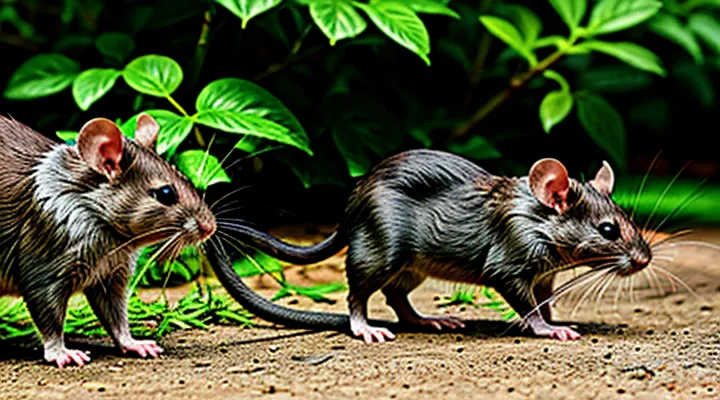
Ecosystem Engineers and Soil Health
Aeration and Nutrient Cycling
Rats disturb soil while constructing burrows, tunnels, and nesting chambers. Their movements break compacted layers, creating channels that increase oxygen penetration and water infiltration. This physical disruption improves root access to resources and supports the activity of aerobic microorganisms.
Through consumption and excretion, rats transfer organic material from surface environments to deeper soil strata. Their feces and urine contain nitrogen, phosphorus, and potassium in forms readily assimilated by plants and microbes. The resulting redistribution accelerates decomposition and mineralization processes, enhancing nutrient availability across the soil profile.
Key effects of rat activity on aeration and nutrient cycling:
- Creation of micro‑habitats that promote gas exchange and moisture movement.
- Redistribution of organic matter that enriches subsurface nutrient pools.
- Stimulation of microbial communities that drive decomposition and nutrient turnover.
Collectively, these mechanisms reinforce soil health, sustain plant productivity, and maintain the functional integrity of terrestrial ecosystems.
Seed Dispersal and Plant Propagation
Rats consume a wide range of fruits, nuts, and seeds, often transporting them away from the parent plant before ingestion. Their foraging behavior results in seeds being dropped in new locations, where conditions may be more favorable for germination. This movement expands plant distribution patterns and increases genetic diversity across habitats.
The digestive process of rats partially scarifies seed coats, weakening physical barriers that impede water absorption. After passage through the gut, many seeds exhibit higher germination rates due to enhanced permeability and reduced pathogen load. Consequently, rat-mediated dispersal not only relocates seeds but also improves their viability.
Key mechanisms of rat-facilitated seed dispersal and propagation include:
- Caching: Rats store food items in underground burrows or surface caches, some of which remain unretrieved and later germinate.
- Gut passage: Ingested seeds undergo mechanical and enzymatic treatment, leading to scarification and reduced seed-borne disease.
- Transport distance: Daily movement patterns enable seeds to be deposited meters to kilometers from the source, creating new colonization sites.
- Habitat modification: Burrowing activity aerates soil and creates microhabitats that support seedling establishment.
Food Web Dynamics
Prey for Predators
Rats serve as a significant food source for a wide range of carnivorous species, directly influencing predator population dynamics. Their abundance and reproductive capacity provide a reliable, year‑round supply of biomass, enabling predators to maintain stable numbers even when alternative prey fluctuate.
Key predator groups that depend on rats include:
- Mammalian carnivores such as foxes, coyotes, and martens
- Avian raptors, notably owls, hawks, and eagles
- Reptilian hunters, including snakes and monitor lizards
- Small carnivorous mammals like weasels and feral cats
The predation pressure exerted on rat populations helps regulate their density, preventing excessive damage to crops and ecosystems. Simultaneously, the energy transferred from rats to higher trophic levels sustains the reproductive success and territorial expansion of these predators, reinforcing overall biodiversity and ecosystem resilience.
Scavengers and Decomposers
Rats function as efficient scavengers, rapidly locating and consuming carrion, organic waste, and discarded food. Their foraging behavior reduces the accumulation of decomposing matter, limiting the spread of pathogens and decreasing the load on human waste management systems. By removing dead tissue, rats accelerate the transition of nutrients from the dead organic pool to the living ecosystem.
As decomposers, rats ingest a wide range of plant and animal material, including fungi, bacteria, and detritus. Their digestive processes break down complex compounds, converting them into simpler substances that enrich the soil. The resulting excreta provide a steady supply of nitrogen, phosphorus, and organic carbon, supporting plant growth and microbial activity.
Key ecological contributions include:
- Rapid removal of carcasses and refuse, curbing disease vectors.
- Transformation of organic waste into bioavailable nutrients.
- Support of soil fertility through nutrient-rich droppings.
- Enhancement of microbial diversity by dispersing symbiotic organisms.
Disease Ecology
Indicators of Environmental Health
Rats serve as practical indicators of ecosystem condition because their presence, behavior, and physiological traits reflect multiple environmental parameters.
- Population density – rapid changes in rat numbers signal alterations in food availability, habitat fragmentation, or pollution levels.
- Disease prevalence – shifts in pathogen loads carried by rats reveal emerging health threats for wildlife and humans, indicating microbial ecosystem balance.
- Bioaccumulation – concentrations of heavy metals and persistent organic pollutants in rat tissue provide measurable data on contaminant circulation through food webs.
- Seed dispersal and vegetation impact – variations in rat foraging patterns affect plant regeneration rates, offering insight into plant‑community dynamics.
- Soil turnover – burrowing activity modifies soil structure and aeration; reduced activity points to compacted or degraded soils.
- Predator‑prey interactions – fluctuations in rat populations influence predator abundance, reflecting trophic stability.
Monitoring these metrics yields quantifiable evidence of habitat quality, resource distribution, and trophic integrity, allowing managers to assess and respond to ecological stressors efficiently.
Hosts for Pathogens: A Complex Relationship
Rats serve as natural reservoirs for a wide range of microorganisms, including bacteria, viruses, and parasites. Their high reproductive rate, omnivorous diet, and close proximity to human settlements create conditions that sustain pathogen persistence and facilitate spill‑over events.
Pathogen carriage in rats influences ecosystem processes in several ways:
- Host density regulates pathogen prevalence, preventing unchecked amplification in wildlife communities.
- Predators that specialize on rats, such as owls and snakes, indirectly reduce pathogen loads by removing infected individuals.
- Scavengers feeding on rat carcasses accelerate decomposition, recycling nutrients while limiting pathogen survival in the environment.
The relationship between rats and pathogens is dynamic. While rats amplify certain agents, they also contribute to the stability of disease cycles by acting as a buffer that absorbs fluctuations in pathogen numbers. This buffering effect can mitigate abrupt outbreaks among more vulnerable species, including humans.
Understanding the dual function of rats—as both carriers and modulators of disease—provides insight into their broader ecological contributions. Their presence shapes pathogen distribution, predator–prey interactions, and nutrient flow, illustrating a complex, interdependent network within natural habitats.
Habitat Modification
Burrowing and Shelter Creation
Rats excavate extensive tunnel networks that modify soil structure, increase aeration, and facilitate water infiltration. Their digging displaces organic matter, accelerating decomposition and redistributing nutrients across microhabitats.
The burrows serve as refuges for a variety of organisms, including:
- Invertebrates such as beetles, spiders, and earthworms
- Small mammals like shrews and voles
- Reptiles and amphibians seeking moist, protected microclimates
These shelters provide stable temperature and humidity conditions, reducing exposure to predators and climatic extremes.
By creating and maintaining underground spaces, rats influence predator‑prey interactions. Predators that hunt within burrow systems, such as snakes and owls, gain access to concealed prey, while prey species benefit from the availability of hidden refuges.
Overall, rat burrowing activity functions as ecosystem engineering, reshaping physical environments and supporting biodiversity through the provision of structural habitat.
Impact on Vegetation Structure
Rats contribute to the formation and maintenance of vegetation patterns through multiple direct and indirect mechanisms. Their foraging activities modify plant community composition by selectively consuming seeds, seedlings, and tender shoots. This selective pressure reduces the abundance of fast‑growing, competitive species, allowing slower‑establishing plants to persist and increasing overall species diversity.
Burrowing behavior alters soil structure, enhancing aeration and water infiltration. The resulting microhabitats favor root development of certain herbs and shrubs, which in turn changes canopy density and light penetration. Soil turnover also redistributes organic matter, creating nutrient hotspots that support localized growth spurts of opportunistic vegetation.
Rats serve as vectors for seed dispersal. By transporting seeds in fur or digestive tracts, they deposit propagules away from parent plants, often in disturbed sites where germination chances are higher. This process expands the spatial distribution of plant populations and contributes to patchy vegetation mosaics.
Key impacts on vegetation structure include:
- Reduction of dominant grasses through seed predation, leading to increased heterogeneity.
- Creation of bare soil patches via burrow excavation, providing niches for pioneer species.
- Enhancement of soil moisture dynamics, influencing root depth and plant vigor.
- Distribution of seeds across varied microenvironments, fostering diversified plant assemblages.
Human-Wildlife Interface
Synanthropic Species in Urban Ecosystems
Synanthropic species are organisms that thrive in human‑dominated habitats, relying on the resources and structures created by urban environments. Rats exemplify this group, adapting to the diversity of waste streams, shelter options, and microclimates found in cities. Their presence reflects a dynamic interaction between wildlife and anthropogenic landscapes.
Ecological services provided by synanthropic rodents include:
- Decomposition of organic refuse, accelerating nutrient return to soils and reducing accumulation of waste.
- Dispersal of plant propagules, especially opportunistic species that colonize disturbed sites.
- Support of higher trophic levels, supplying prey for urban raptors, foxes, and domestic cats.
- Regulation of invertebrate populations, as rats consume insects and other arthropods that proliferate in garbage and sewage.
These functions contribute to the stability of urban ecosystems by maintaining energy flow and facilitating material recycling. By converting discarded matter into biomass, rats help mitigate the buildup of refuse that would otherwise require municipal removal. Their predation on pests can lower the incidence of disease vectors, indirectly influencing public health outcomes.
Effective management of synanthropic rodents requires balancing their ecological contributions with potential conflicts such as property damage and disease transmission. Strategies that preserve beneficial functions—such as habitat modification, controlled waste handling, and predator encouragement—can integrate these species into sustainable urban planning while minimizing adverse impacts.
Pest Control as a Management Challenge
Rats contribute to ecosystem processes such as seed dispersal, soil aeration, and carrion decomposition. Their activities sustain nutrient cycles and support predator populations, creating a dynamic balance within many habitats.
Human efforts to limit rat populations encounter several management obstacles:
- High reproductive capacity enables rapid population rebounds after control measures.
- Urban environments provide abundant shelter and food sources, reducing the effectiveness of conventional traps and poisons.
- Non‑target species risk exposure to rodenticides, complicating chemical interventions.
- Behavioral plasticity leads to bait aversion and trap avoidance, demanding continual adaptation of control strategies.
- Legal and ethical restrictions on lethal methods limit options in protected areas and residential settings.
Effective pest management therefore requires integrated approaches that combine habitat modification, exclusion techniques, and targeted biocontrol while preserving the ecological functions rats perform in natural ecosystems.