
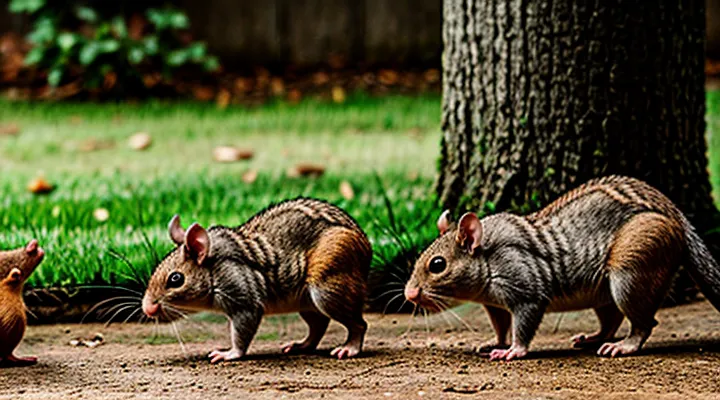
Rodentia: An Overview
Shared Ancestry and Classification
Rats and squirrels belong to the order Rodentia, the most diverse mammalian clade. Molecular phylogenies place their lineages within two distinct families—Muridae for rats and Sciuridae for squirrels—yet both trace back to a common rodent ancestor that existed approximately 40–50 million years ago. Fossil records from the Eocene epoch document early rodent forms possessing the dental pattern that later diversified into the murid and sciurid branches.
Classification of the two groups follows a hierarchical scheme:
- Class: Mammalia
- Order: Rodentia
- Family (rats): Muridae
- Family (squirrels): Sciuridae
- Genus examples: Rattus (rats), Sciurus (tree squirrels)
Genomic analyses reveal conserved sequences in the Hox gene cluster and mitochondrial DNA that corroborate the shared ancestry. Divergence in cranial morphology, tail structure, and locomotor adaptations reflects ecological specialization after the split, while the retention of ever‑growing incisors and a single pair of continuously erupting cheek teeth underscores their common rodent heritage.
Evolutionary Divergence within the Order
Rats and squirrels belong to the order Rodentia, yet they occupy distinct evolutionary branches that diverged approximately 40 million years ago. Molecular phylogenies trace their split to separate adaptive radiations: one lineage gave rise to the Muridae family, which includes rats, while the other produced the Sciuridae family, encompassing squirrels. This temporal separation underlies the pronounced differences observed in their cranial morphology, dentition patterns, and locomotor strategies.
Key aspects of the divergence include:
- Skull architecture – rats exhibit a compact, robust cranium suited for gnawing hard seeds; squirrels possess an elongated skull that accommodates strong forelimb muscles for arboreal locomotion.
- Incisor enamel microstructure – murid incisors display a multilayered enamel with high hardness, whereas sciurid incisors feature a thinner, more flexible enamel layer adapted to bark stripping.
- Sensory adaptation – the auditory bullae of rats are enlarged for low‑frequency detection in subterranean habitats; squirrels have reduced bullae, reflecting reliance on visual cues in canopy environments.
- Reproductive timing – rats reproduce continuously throughout the year, while squirrels exhibit seasonal breeding cycles aligned with resource availability.
These divergences reflect selective pressures imposed by ecological niches: ground‑dwelling, omnivorous rats exploit dense underbrush and human‑altered environments, whereas arboreal squirrels specialize in forest canopies, relying on agility and visual acuity. Genetic analyses reveal that despite shared rodent ancestry, the two groups retain only a fraction of conserved genes, with divergent regulatory networks governing limb development, metabolic pathways, and sensory organ specialization. Consequently, the evolutionary split has produced taxa that, while retaining the fundamental rodent dentition, manifest distinct anatomical, physiological, and behavioral adaptations.
Physical Similarities and Adaptations
Dental Characteristics
Incisor Growth and Function
Incisors in rats and squirrels exhibit continuous growth, a defining adaptation for gnawing. The enamel covers only the front surface, while dentin forms the interior, creating a self‑sharpening edge as the softer dentin wears faster than enamel. This differential wear maintains a chisel‑like profile essential for processing hard plant material, seeds, and bark.
- Growth mechanism: Stem cells in the apical end of the tooth root generate new dentin and enamel at a rate that matches wear from daily gnawing.
- Root morphology: Open apical foramina allow vascular and neural supply to persist, supporting perpetual tissue deposition.
- Wear regulation: Muscular forces generated by the masseter and temporalis muscles produce consistent abrasion, preventing over‑lengthening of the teeth.
Functionally, ever‑growing incisors enable these rodents to:
- Access nutrient‑rich inner kernels by penetrating tough shells.
- Construct nests and burrows through efficient cutting of wood and vegetation.
- Defend territory and compete for resources by delivering rapid, forceful bites.
Dental health depends on a balance between growth and wear; insufficient gnawing leads to overgrowth, which can impair feeding and cause facial deformities, while excessive wear may expose dentin, increasing sensitivity and risk of fracture. The coordinated physiological processes governing incisor development and usage are therefore central to the ecological success of both species.
Body Plan and Locomotion
Tail Morphology and Usage
Rats and squirrels possess tails that serve multiple functional categories, reflecting convergent adaptations among these rodents.
The caudal structure in both groups exhibits a high degree of flexibility, supported by a vertebral column of numerous, loosely articulated vertebrae. Muscular attachments along the dorsal and ventral surfaces enable precise positioning for balance, climbing, and rapid directional changes.
Key morphological features include:
- Length proportion: Tail length typically matches or exceeds body length, providing a counterbalancing lever during arboreal locomotion.
- Surface texture: Dense, fine hair covers the tail, reducing aerodynamic drag and enhancing tactile feedback.
- Scale arrangement: Overlapping keratinized scales protect the underlying musculature while permitting smooth gliding motions.
Functional applications are consistent across species:
- Stabilization: While navigating branches or executing swift terrestrial turns, the tail acts as a dynamic stabilizer, adjusting its orientation to maintain the center of mass.
- Communication: Tail positions and movements convey alarm, territorial claims, or social intent, supplementing vocal and olfactory signals.
- Thermoregulation: Vascular networks within the tail dissipate excess heat in warm environments and conserve warmth when constricted.
Comparative studies reveal that despite habitat differences, the underlying structural blueprint remains similar, underscoring a shared evolutionary solution for locomotor efficiency, sensory input, and environmental interaction.
Limb Structure for Varied Environments
Rats and squirrels exhibit limb morphologies that enable efficient locomotion across diverse habitats. Both groups possess a pentadactyl forelimb, yet subtle variations reflect ecological specializations.
The forelimb skeleton consists of a scapula, humerus, radius, ulna, and five metacarpals. In rats, the humerus is relatively robust, supporting powerful digging and climbing motions. Squirrels display a slightly elongated humerus, facilitating rapid swings during arboreal leaps. The radius and ulna retain pronation–supination capability, essential for manipulating food and navigating narrow branches.
The hindlimb shares a similar structure—pelvis, femur, tibia, fibula, and five metatarsals—adapted for different substrates:
- Terrestrial rats: stout femur, enlarged calcaneus, and strong plantar flexors generate thrust for sprinting and burrowing.
- Arboreal squirrels: elongated tibia, flexible ankle joint, and enlarged caudal vertebrae provide balance and extend stride length during tree-to-tree jumps.
Digit morphology further distinguishes the groups. Rats possess blunt, calloused pads and moderate claw curvature, suitable for digging and gnawing on hard surfaces. Squirrels feature sharply curved claws and reduced pads, enhancing grip on bark and facilitating vertical ascent.
Muscular composition aligns with functional demands. The brachialis and triceps brachii dominate in rats for forceful forelimb extension, whereas squirrels show hypertrophied extensor digitorum longus to support rapid digit extension during leaping. In the hindlimb, the gastrocnemius is proportionally larger in rats, delivering powerful push-off for ground locomotion; squirrels exhibit a more developed soleus, allowing sustained, controlled propulsion on inclined branches.
Overall, limb architecture in these rodents balances a common skeletal plan with targeted modifications that optimize performance in ground, subterranean, and arboreal environments.
Behavioral Patterns and Ecology
Dietary Habits
Omnivory and Herbivory
Rats and squirrels exhibit a flexible feeding strategy that combines omnivory with a strong herbivorous component. Both groups possess dentition capable of processing plant material and animal matter, allowing them to exploit a wide range of resources.
Omnivorous behavior in rats includes consumption of insects, carrion, and anthropogenic waste. Their gastrointestinal tract tolerates protein-rich diets, and enzymatic activity adapts to variable nutrient sources. Squirrels, while primarily herbivorous, supplement their diet with eggs, nestlings, and occasional arthropods, especially during breeding seasons when protein demand increases.
Key dietary traits shared by the two families:
- Dental morphology: Continuously growing incisors and molars with enamel on the front edge enable efficient gnawing of seeds, nuts, and tough animal tissue.
- Digestive flexibility: Ceca and fermentative chambers support microbial breakdown of cellulose, while pancreatic enzymes process proteins and fats.
- Seasonal adjustment: Resource scarcity triggers increased reliance on animal protein for rats; squirrels shift to higher‑energy seeds and stored nuts, reducing herbivorous intake during winter.
Ecologically, omnivory and herbivory confer resilience. Access to diverse food sources stabilizes populations across urban, forest, and agricultural landscapes. The overlap in diet reduces interspecific competition, as each species can pivot between plant and animal items depending on availability.
Foraging Strategies
Rats and squirrels share a suite of foraging tactics that maximize nutrient intake while minimizing exposure to predators. Both species rely on tactile and olfactory cues to locate edible items, exploiting a broad spectrum of food sources ranging from seeds and fruits to insects and human refuse. Their incisors enable rapid processing of hard‑shelled items, allowing immediate consumption or transport to safer locations.
Key foraging behaviors include:
- Opportunistic sampling of abundant resources, such as discarded food in urban environments or seasonal fruiting trees in forests.
- Caching of surplus items, often in concealed underground chambers or tree crevices, to buffer against periods of scarcity.
- Use of spatial memory to retrieve cached stores, reinforced by repeated visits and environmental landmarks.
- Social learning, where juveniles observe experienced conspecifics to acquire knowledge of profitable foraging sites and handling techniques.
Energetic efficiency drives the selection of these strategies. Rats tend toward nocturnal activity, reducing competition with diurnal squirrels, while squirrels capitalize on daylight to assess visual cues and aerial predators. Both groups adjust foraging routes based on risk assessments, employing zigzag patterns or short, concealed bursts of movement when predator presence is detected. The convergence of these tactics underscores the adaptive flexibility inherent in the rodent lineage.
Social Structures
Solitary vs. Colonial Living
Rats and squirrels exhibit contrasting social structures that influence foraging, predator avoidance, and reproductive strategies. Solitary individuals, typical of many squirrel species, maintain exclusive territories, defend food caches, and limit direct competition. This arrangement reduces resource overlap and enables precise control over stored supplies, but increases exposure to predators due to reduced vigilance.
Colonial living characterizes several rat species, especially those inhabiting dense urban or agricultural environments. Group cohesion facilitates collective detection of threats, shared burrow maintenance, and cooperative breeding in some cases. High population density accelerates disease transmission and intensifies competition for limited food, yet the shared vigilance often offsets individual risk.
Key comparative points:
- Territory size: solitary squirrels occupy larger, well‑defined home ranges; colonial rats occupy overlapping, compact areas.
- Resource management: solitary cache owners protect food individually; colonial groups exploit abundant, shared resources.
- Predator defense: solitary individuals rely on personal alertness; colonial groups benefit from multiple eyes and alarm calls.
- Reproductive output: solitary females typically raise single litters with minimal assistance; colonial females may experience higher breeding frequency due to stable microhabitats.
Understanding these divergent strategies clarifies how closely related rodents adapt social behavior to ecological pressures, shaping population dynamics and habitat utilization.
Habitat Preferences
Arboreal vs. Terrestrial Adaptations
Rodents such as rats and squirrels exhibit two principal ecological strategies: tree‑living and ground‑living, each supported by specialized morphology, locomotion and sensory systems.
- Prehensile or semi‑prehensile tails that act as counterbalances and grasping aids.
- Long, slender forelimbs with flexible joints, facilitating reach and grip on branches.
- Curved, sharp claws that penetrate bark and provide traction on vertical surfaces.
- Enhanced vestibular apparatus for rapid head stabilization during arboreal leaps.
- Dense, insulating fur that reduces heat loss in exposed canopy environments.
Ground‑oriented forms display a contrasting suite of traits:
- Compact, muscular bodies that lower the center of gravity for stability on uneven terrain.
- Strong, straight claws optimized for digging and traction on soil.
- Robust hindlimbs that generate powerful thrust for sprinting and burrowing.
- Enlarged incisors and reinforced jaw musculature for processing a wide range of hard seeds and detritus.
- Reduced tail length, minimizing drag and vulnerability while navigating tunnels.
Some species blend these adaptations, retaining moderate tail flexibility and limb proportions that permit opportunistic climbing while maintaining efficient terrestrial locomotion. The divergent anatomical features reflect selective pressures imposed by vertical versus horizontal habitats, underscoring the evolutionary plasticity within the rodent lineage.
Reproductive Strategies
Litter Size and Parental Care
Rats and squirrels exhibit comparable reproductive output and post‑natal investment, reflecting shared adaptive pressures in temperate habitats.
Typical litter size for laboratory and wild rats ranges from four to twelve offspring, with most populations clustering around six. Squirrels, including tree and ground species, produce litters of two to eight young, most often three to five. Both groups demonstrate a seasonal peak in breeding during spring and early summer, aligning offspring emergence with maximal food availability.
Maternal care in both taxa involves nest construction, thermoregulation, and progressive provisioning. Rat dams construct burrow or nest chambers, provide continuous nursing, and begin solid food introduction around day ten. Squirrel mothers line tree cavities or ground nests with leaves and moss, maintain a high frequency of nursing bouts, and introduce solid food after approximately two weeks. In both cases, fathers contribute minimally to direct offspring care, though male presence can influence territory stability and resource defense.
Key comparative points:
- Litter size: rats 4‑12, squirrels 2‑8; median values overlap at 5‑6 young.
- Nest type: subterranean burrows (rats) vs. arboreal or ground cavities (squirrels).
- Nursing duration: rats ≈ 21 days, squirrels ≈ 30 days; weaning coincides with increased foraging independence.
- Parental investment: exclusive maternal provisioning, limited paternal involvement.
These parallel patterns underscore a common reproductive strategy: producing multiple altricial young followed by intensive, short‑term maternal care to accelerate juvenile development before seasonal resource decline.
Sensory Capabilities
Olfactory Acuity
Rats and squirrels possess exceptionally sensitive olfactory systems that enable detection of volatile compounds at concentrations far below human thresholds. Their nasal cavities contain a dense olfactory epithelium populated by millions of receptor neurons, each expressing a distinct odorant receptor gene. This anatomical arrangement provides a broad repertoire for discriminating a wide array of chemical signals.
Both groups rely on olfaction for essential behaviors. Rapid identification of food sources, assessment of predator presence, and recognition of conspecific scent marks are mediated by odor cues processed in the olfactory bulb and higher cortical areas. In laboratory studies, rats demonstrate detection limits for certain aldehydes at parts‑per‑trillion levels; squirrels exhibit comparable performance when locating buried nuts or assessing territorial markings.
Key comparative points:
- Receptor diversity: Rats express over 1,200 functional odorant receptor genes; squirrels show a slightly reduced but still extensive set, exceeding 1,000.
- Sensitivity: Thresholds for common food odors (e.g., hexanal) are similar, ranging from 10⁻¹² to 10⁻¹³ M in both taxa.
- Behavioral reliance: Rats use olfactory cues for navigation in complex mazes; squirrels depend on scent trails for cache recovery and predator avoidance.
- Neural processing: Both exhibit large olfactory bulb-to-cortex ratios, reflecting heavy investment in odor discrimination.
The convergence of anatomical specialization, receptor gene richness, and behavioral dependence underscores olfactory acuity as a defining shared trait of these rodent and sciurid species.
Auditory Perception
Rats and squirrels share sophisticated auditory systems that enable detection of high‑frequency sounds, rapid sound localization, and communication within complex environments.
- Cochlear morphology in both groups includes elongated basilar membranes, allowing sensitivity up to 80 kHz, which is essential for perceiving ultrasonic vocalizations and predator cues.
- Middle‑ear ossicles are proportionally large, providing efficient transmission of acoustic energy and enhancing detection of faint sounds.
- Neural pathways feature well‑developed auditory brainstem nuclei, supporting precise timing cues for sound‑source localization.
- Behavioral studies show rapid startle responses to sudden noises, indicating a low auditory threshold and fast reflex arcs.
These characteristics contribute to navigation through cluttered habitats, predator avoidance, and social interactions, demonstrating convergent evolution of auditory perception within this rodent family.
Vision in Different Species
Rats and squirrels exhibit distinct visual adaptations that reflect their ecological niches. Rats, primarily nocturnal, possess a high proportion of rod cells, enabling sensitivity to low‑light environments but limiting color discrimination. Their eyes are positioned laterally, granting a wide peripheral field of approximately 300°, which supports predator detection while navigating tunnels and burrows.
Squirrels, active during daylight, rely on a dense cone population that provides sharp visual acuity and color perception. Forward‑facing eyes create overlapping fields, delivering binocular vision with depth perception essential for judging distances during arboreal leaps. The typical field of view for a squirrel ranges from 200° to 220°, balancing peripheral awareness with stereoscopic focus.
Key comparative traits:
- Light sensitivity: rats excel in dim conditions; squirrels perform best under bright illumination.
- Color vision: limited in rats; well‑developed in squirrels.
- Depth perception: minimal in rats due to narrow binocular overlap; pronounced in squirrels because of forward eye placement.
- Visual acuity: low in rats (≈1 cycle/degree); high in squirrels (≈5 cycles/degree).
These visual differences underline how each species has evolved ocular structures that support its specific foraging strategies and habitat use, while both retain the rodent family’s general reliance on rapid visual processing for survival.
Ecological Roles and Impact
Seed Dispersal
Rodents such as rats and squirrels contribute significantly to seed dispersal through deliberate transport and temporary storage of plant propagules. Their foraging activities move seeds away from parent plants, reducing competition and enhancing colonization opportunities.
Key mechanisms include:
- Caching: individuals bury seeds in shallow pits, often retrieving some but leaving others to germinate.
- Carrying: seeds are carried in the mouth or paws to distant locations before being deposited.
- Selective consumption: larger seeds are more likely to be cached, while smaller ones may be eaten on site.
These behaviors affect forest dynamics by increasing seedling establishment rates and promoting genetic diversity across landscapes. Species differ in cache size, transport distance, and preferred seed types, creating a mosaic of dispersal patterns that reflect ecological niches.
Understanding rodent-mediated seed movement informs habitat restoration and pest management strategies, allowing practitioners to anticipate regeneration outcomes and mitigate undesired spread of invasive plant species.
Predation and Prey Dynamics
Rats and squirrels, as members of the order Rodentia, experience intense predation pressure across diverse habitats. Their small size, high metabolic rate, and frequent foraging expose them to a wide array of hunters.
Predators commonly encountered include:
- Raptors such as hawks and owls, which exploit aerial advantage.
- Serpents, particularly pit vipers and colubrids, that ambush ground-dwelling individuals.
- Carnivorous mammals, including foxes, mustelids, and domestic cats, which rely on stealth and speed.
Both taxa share anti‑predator adaptations that enhance survival:
- Acute sensory systems detect movement and sound at short distances.
- Rapid, erratic locomotion reduces capture probability during escape.
- Reproductive strategies favor multiple litters per year, offsetting high mortality.
- Preference for concealed nesting sites minimizes exposure during vulnerable periods.
Predation exerts a regulatory effect on population dynamics. Increased predator density typically depresses rodent numbers, leading to cyclical fluctuations that cascade through food webs. Conversely, periods of reduced predation allow rapid population growth, intensifying competition for resources and potentially altering vegetation patterns.
Understanding these dynamics informs wildlife management and disease control. Monitoring predator–prey interactions provides baseline data for predicting rodent population outbreaks, which can affect agricultural productivity and zoonotic disease transmission.
Human Interaction and Coexistence
Humans encounter rats and squirrels across urban, suburban, and rural landscapes, influencing public health, property maintenance, and ecological balance.
Key interaction domains include:
- Urban cohabitation – both species exploit waste streams, occupy building cavities, and compete for nesting sites, prompting municipal rodent‑control programs and squirrel‑deterrent designs.
- Agricultural impact – rodents consume stored grains, while squirrels damage fruit trees; integrated pest‑management strategies combine habitat modification, trapping, and targeted baiting.
- Scientific research – rats serve as model organisms in biomedical studies; squirrels contribute data on gliding locomotion and cache‑retrieval behavior, supporting comparative physiology and neuroscience.
- Cultural perception – public attitudes range from pest classification to wildlife appreciation, shaping policy decisions on feeding bans, conservation ordinances, and educational outreach.
Effective coexistence relies on evidence‑based practices: regular sanitation to limit food sources, structural modifications that deter nesting, humane population‑control measures, and community education that differentiates nuisance management from wildlife preservation.