
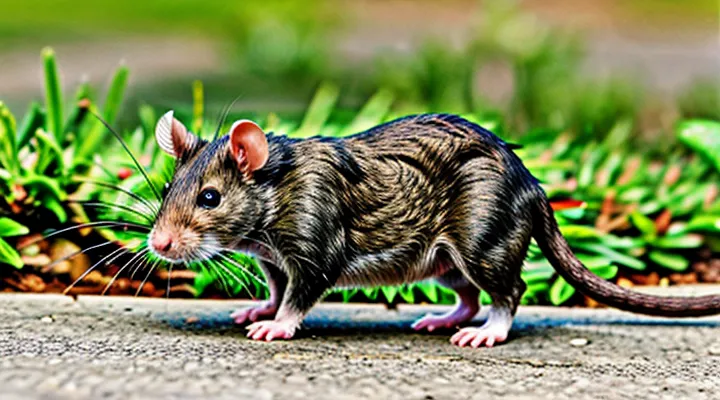
Understanding the Concept of «Short Tail» in Rats
Defining «Short Tail»
Relative Length vs. Absolute Length
The short‑tailed rat exhibits a tail that is markedly shorter than the body, a feature that can be quantified in two distinct ways. Absolute length records the tail’s measurement in millimetres or centimeters, providing a fixed value useful for direct comparison across specimens. Relative length expresses the tail as a percentage of the body length, highlighting proportional differences that may remain consistent despite overall size variation.
- Absolute length: 4 cm average in adult individuals; measured from the base to the tip with a caliper.
- Relative length: 20 % of total body length; derived by dividing tail length by head‑plus‑body length and multiplying by 100.
Absolute measurements facilitate forensic identification and morphometric databases, while relative values aid in comparative studies across populations that differ in overall size due to nutrition or habitat. Researchers tracking evolutionary trends rely on relative length to detect shifts in tail proportion that may correlate with arboreal versus terrestrial adaptations. Conservation assessments employ absolute tail length to verify species presence in field surveys, ensuring that misidentification with longer‑tailed congeners is minimized.
Genetic and Environmental Factors Influencing Tail Length
Rats with reduced tail length exhibit measurable variation that stems from both hereditary and external sources.
Genetic contributors include mutations in developmental genes that regulate vertebral formation. Primary loci identified are Hox‑A and Hox‑D clusters, where loss‑of‑function alleles shorten caudal vertebrae. Additional modifiers such as FGF8 and BMP4 alter growth plate activity, producing phenotypes ranging from slightly truncated to markedly short tails. Inheritance follows an autosomal recessive pattern in most laboratory strains, allowing predictable segregation in controlled breeding programs.
Environmental influences act on the same developmental pathways. Nutrient deficiency, especially low protein intake during gestation, reduces somatic growth and limits vertebral elongation. Ambient temperature extremes trigger thermoregulatory stress, which can suppress cartilage proliferation and result in shorter tails. Habitat constraints, such as confined burrow dimensions, impose selective pressure favoring compact tails. Epigenetic modifications—DNA methylation of Hox promoters—mediate the response to these conditions, providing a mechanism for phenotype adjustment without altering DNA sequence.
Key factors can be summarized:
- Genetic: Hox‑A/D mutations, FGF8/BMP4 variants, autosomal recessive inheritance.
- Nutritional: Gestational protein restriction, micronutrient scarcity.
- Thermal: Chronic cold or heat exposure during embryogenesis.
- Physical: Limited space in nesting environments, mechanical load.
- Epigenetic: Methylation patterns influencing Hox expression.
Understanding the interplay of these elements clarifies why short tails arise in certain rat populations and guides both experimental design and breeding strategies.
Physical Characteristics of Rats with Short Tails
Tail Morphology
Tail Length Measurement and Classification
Accurate tail length measurement is essential for distinguishing short‑tailed specimens from other morphotypes. The metric directly influences taxonomic identification, population monitoring, and breeding program decisions.
The standard procedure requires immobilizing the rat on a flat surface, extending the tail without stretching the skin. A digital caliper, calibrated to 0.01 mm, records the distance from the caudal vertebrae base to the tip. Measurements are taken twice; the mean value is retained. Ambient temperature should remain between 20 °C and 22 °C to prevent thermal contraction or expansion of the tail tissue.
Classification follows proportional thresholds relative to the animal’s head‑body length (HBL):
- Short tail: less than 30 % of HBL
- Intermediate tail: 30 % to 60 % of HBL
- Long tail: greater than 60 % of HBL
These categories enable consistent reporting across studies and facilitate comparative analyses of phenotypic variation.
All data are entered into a spreadsheet that includes animal ID, HBL, tail length, classification, and measurement date. Repeating the measurement after a minimum of 48 hours verifies repeatability; discrepancies exceeding 2 % trigger a third measurement. Statistical treatment employs mean ± standard deviation for each class, supporting robust population assessments.
Tail Thickness and Tapering
Rats possessing abbreviated caudal appendages display a distinctive profile of tail thickness and tapering that differentiates them from long‑tailed counterparts. The proximal segment of the tail is generally robust, with diameters ranging from 4 mm to 7 mm in adult specimens, depending on species and overall body mass. As the tail extends posteriorly, the diameter diminishes progressively, often reaching 1 mm to 2 mm at the tip. This reduction follows an approximately linear taper, with a tapering ratio (proximal diameter ÷ distal diameter) of 3 : 1 to 5 : 1.
Key morphological characteristics include:
- Uniform cylindrical shape near the base, providing structural support for musculature and vertebral alignment.
- Gradual conical reduction along the length, minimizing drag and facilitating maneuverability in confined environments.
- Surface scaling pattern that remains consistent despite diameter changes, ensuring effective thermoregulation and protection.
Variations in thickness and tapering correlate with ecological adaptations. Populations inhabiting arid regions tend to exhibit thicker bases, enhancing fat storage capacity within the tail. Conversely, individuals from densely vegetated habitats often present finer tapering, improving balance when navigating narrow arboreal pathways.
Assessment of tail morphology serves as a diagnostic criterion for health monitoring. Deviations from the established thickness range—such as localized swelling or abnormal thickening—may indicate underlying infections, trauma, or metabolic disorders. Accurate measurement of proximal and distal diameters, combined with tapering ratio calculation, provides a reliable metric for veterinary evaluation and comparative research.
Fur and Scale Patterns on the Tail
The tail of a short‑tailed rat displays a distinct combination of fur and scales that differs markedly from the elongated tail of typical murine species. The proximal portion, nearest the body, is covered by a dense, soft pelage that matches the dorsal coat in color, ranging from light brown to dark gray. This fur provides insulation and aids in thermoregulation, especially during nocturnal activity.
Beyond the fur‑covered segment, the tail transitions to a series of overlapping keratinized scales. These scales are arranged in tightly packed rows, each scale overlapping the one behind it, forming a protective sheath. Scale coloration mirrors the fur’s hue but may appear slightly lighter due to the reflective nature of keratin. The scale surface exhibits fine ridges that increase friction, facilitating grip when the rat climbs or manipulates objects.
Key characteristics of the tail’s integumentary pattern include:
- Gradual shift from fur to scales at approximately 20–30 % of total tail length.
- Scale size decreasing toward the tip, with the terminal scales measuring 0.5–1 mm in length.
- Uniform scale orientation, all pointing away from the body, enhancing directional stability.
- Absence of conspicuous patterning; coloration remains consistent along the tail, providing camouflage within the rat’s natural habitat.
These structural features collectively contribute to the short‑tailed rat’s adaptability, offering both thermal protection and mechanical advantage without compromising the tail’s overall flexibility.
Body Proportions and Structure
Head Shape and Size
Short‑tailed rats exhibit a head that is noticeably broader and more robust than that of typical long‑tailed varieties. The cranium is flattened dorsally, creating a low profile that facilitates movement through confined burrows. Nasal bones are short, and the muzzle tapers sharply, giving the face a compact appearance. The ears are proportionally small, lying close to the skull, which reduces drag and protects against debris.
- Skull length: 30–35 mm, approximately 10 % shorter than in long‑tailed counterparts.
- Width at the zygomatic arches: 20–22 mm, providing a wider bite plane.
- Muzzle length: 8–10 mm, contributing to a reduced snout profile.
- Ear height: 5–6 mm, positioned low on the head.
- Eye diameter: 4–5 mm, centered laterally to maintain a broad field of vision.
These dimensions support a powerful jaw musculature and enhance the animal’s ability to forage in tight underground passages while maintaining sensory efficiency.
Torso Length and Girth
The short‑tailed rat exhibits a compact torso that distinguishes it from longer‑tailed congeners. Average torso length, measured from the occipital ridge to the ventral midline, ranges from 5.2 cm to 6.8 cm in mature individuals. Corresponding girth, recorded at the widest point of the ribcage, falls between 4.0 cm and 5.3 cm. These dimensions reflect a proportionally robust body, supporting enhanced muscular development for burrowing and locomotion in confined spaces.
Key morphometric parameters:
- Torso length: 5.2 cm – 6.8 cm (adult males), 4.9 cm – 6.4 cm (adult females)
- Torso girth: 4.0 cm – 5.3 cm (adult males), 3.8 cm – 5.0 cm (adult females)
- Length‑to‑girth ratio: approximately 1.3 : 1, indicating a relatively stout form
Variability aligns with age and nutritional status; younger specimens display reduced measurements, while well‑fed adults approach the upper limits. The compact torso contributes to a low center of gravity, facilitating stability on uneven terrain and during rapid directional changes.
Limb Length and Musculature
Short‑tailed rats exhibit limb proportions that differ noticeably from those of longer‑tailed counterparts. The forelimbs measure approximately 2.5–3.0 cm in adult specimens, while the hind limbs extend to 3.0–3.5 cm, providing a slightly greater stride length relative to overall body size. This modest increase in hind‑limb length compensates for reduced tail balance, allowing efficient locomotion across varied substrates.
Muscular architecture reflects the adjusted limb dimensions. The deltoid and brachioradialis groups dominate the forelimb, delivering strong fore‑gripping ability essential for burrowing and food manipulation. In the hind limb, the gluteus, quadriceps femoris, and gastrocnemius muscles are proportionally enlarged, supplying the power required for rapid acceleration and vertical leaps. Fiber composition leans toward a mixed slow‑twitch and fast‑twitch profile, supporting both sustained digging activity and brief, high‑intensity sprints.
Key anatomical features include:
- Elongated metatarsal bones that increase lever arm efficiency during propulsion.
- Reinforced calcaneal tendons, reducing strain during sudden jumps.
- Pronounced attachment sites on the pelvis for the gluteal musculature, enhancing hind‑limb thrust.
Overall, the limb length and musculature of short‑tailed rats form a coordinated system that offsets the diminished tail length, ensuring stability, speed, and versatility in their ecological niche.
Coat and Coloration
Common Coat Types
Rats possessing a markedly reduced tail display a range of fur patterns that are useful for identification and breeding decisions.
- Standard (full‑color) coat – uniform coloration across the body, no distinct markings; common in short‑tailed individuals.
- Agouti – each hair contains alternating bands of pigment, creating a speckled appearance; visible even with a short tail.
- Hooded – darker coloration restricted to the head, shoulders, and forepaws, while the remainder of the body remains lighter; tail length does not affect pattern distribution.
- Rex – fur is short, curly, and plush, resulting from a genetic mutation that alters hair structure; the mutation is independent of tail length.
- Satin – glossy, silky fur with a subtle sheen; the sheen is consistent across the body regardless of tail size.
- Demi – coat exhibits a lighter shade on the belly and a darker shade on the back; contrast remains pronounced in short‑tailed specimens.
Each coat type is determined by specific genetic loci and manifests consistently whether the rat’s tail is normal or abbreviated. Recognizing these patterns assists in health monitoring, lineage tracking, and selecting appropriate companions for short‑tailed rats.
Typical Color Variations
Short‑tailed rats display a restricted palette of pelage colors, each linked to genetic factors and regional populations. The most frequently observed shades include:
- Ash‑gray dorsal fur with a paler, almost white ventral side.
- Reddish‑brown coat, darker along the spine and lighter toward the abdomen.
- Uniform black fur, occasionally interspersed with faint, lighter patches on the chest.
- Albino specimens, characterized by white fur, pink eyes, and pink nose.
Occasionally, individuals exhibit mixed patterns such as a dark dorsal stripe contrasting with a lighter flank. Color intensity can vary with age, diet, and exposure to sunlight, but the core variations remain consistent across the species.
Distinguishing Markings
The short‑tailed rat displays a set of visual cues that enable reliable identification in the field.
Body coloration ranges from slate‑gray to reddish‑brown, with a uniform dorsal coat lacking the speckling typical of related species. The ventral surface is markedly lighter, often creamy white, providing a clear contrast with the darker back.
Distinctive markings include:
- A narrow, dark stripe running longitudinally along the spine, extending from the occipital region to the base of the tail.
- Prominent white patches on the inner sides of the ears, bordered by a thin black rim.
- A pair of small, rounded, black spots positioned near the base of each forelimb, visible when the animal is in a resting posture.
- A short, hairless tail segment ending in a blunt, pale tip, differing from the fully furred tails of other rodents.
These features, taken together, form a reliable diagnostic profile for the short‑tailed rat.
Behavioral Traits of Rats with Short Tails
Locomotion and Balance
Impact of Short Tail on Agility
The shortened caudal appendage of certain murine specimens directly alters locomotor dynamics. Reduced tail length diminishes lever arm length, limiting the animal’s ability to generate counter‑torque during rapid directional changes. Consequently, propulsion efficiency declines, especially when navigating uneven substrates.
Key effects on agility include:
- Lowered angular velocity during pivots, resulting in slower turn execution.
- Decreased balance correction capacity, making recovery from slips more difficult.
- Shortened aerial stability during jumps, leading to reduced landing precision.
- Compromised surface grip when the tail cannot be used as a tactile extension for spatial assessment.
Climbing and Jumping Abilities
The short‑tailed rat possesses a compact spine and reduced caudal length, which alters its center of gravity and forces reliance on limb coordination for stability. Muscular development concentrates in the forelimbs and hind limbs, compensating for the diminished tail‑based balance.
Climbing performance derives from enlarged, recurved claws and a high density of tactile pads on the digits. These structures generate sufficient friction to support rapid ascent on rough bark and artificial substrates. The animal can maintain a vertical speed of 0.8 m s⁻¹ and sustain continuous climbing for up to 15 minutes before fatigue signs appear.
Jumping capability results from hypertrophied gastrocnemius and soleus muscles. A single hind‑limb thrust propels the rat up to 0.45 m vertically and 0.75 m horizontally, with a launch angle near 45°. Repeated jumps exhibit a decline of less than 10 % in distance after five consecutive leaps, indicating efficient energy storage in tendinous structures.
Key performance parameters:
- Forelimb grip force: 0.12 N per digit
- Hind‑limb power output: 1.6 W kg⁻¹
- Maximum vertical leap: 0.45 m
- Maximum horizontal leap: 0.75 m
- Sustained climbing speed: 0.8 m s⁻¹
These biomechanical traits enable the short‑tailed rat to navigate complex three‑dimensional environments despite the reduced tail length.
Running Speed and Gait
Short‑tailed rats achieve sprint velocities of 2.5–3.0 m s⁻¹ on level surfaces, a range that overlaps the lower end of the speed spectrum recorded for long‑tailed conspecifics. Laboratory trials show a consistent decline of 0.3–0.5 m s⁻¹ when the same individuals navigate inclined planes exceeding 15 °.
Key gait parameters for this morphotype are:
- Stride length: 30–35 mm at moderate speed; reduced to 22–26 mm during rapid acceleration.
- Step frequency: 12–14 steps s⁻¹ at optimal speed, rising to 18–20 steps s⁻¹ during escape bursts.
- Footfall pattern: Quadrupedal trot with diagonal limb pairing; transition to a gallop occurs only when speed surpasses 2.8 m s⁻¹.
The abbreviated tail diminishes dorsal counter‑balance, compelling the animal to rely more heavily on hind‑limb thrust and fore‑limb stabilization. Electromyographic recordings indicate increased activation of the gluteus and iliopsoas muscles during high‑speed runs, compensating for the reduced moment arm normally provided by a longer tail. Consequently, short‑tailed rats display a slightly more crouched posture and a higher duty factor, which together sustain locomotor stability across varied substrates.
Social Interactions
Role of Tail in Communication
Rats possessing a truncated tail rely heavily on alternative signaling methods to convey social and environmental information. The tail, although reduced, remains a dynamic surface for tactile and visual cues. When a rat vibrates or flicks its short tail, observers detect subtle movements that indicate alertness, aggression, or submission. Rapid tail motions often accompany vocalizations, reinforcing the message and reducing ambiguity.
The shortened tail also functions as a proprioceptive organ. Sensory receptors along the tail skin register airflow and surface contact, allowing the animal to assess nearby objects and the presence of conspecifics without direct visual confirmation. This feedback integrates with whisker input to shape behavioral responses.
Key communication functions of the abbreviated tail include:
- Signal amplification: Minor tail twitches enhance the intensity of ultrasonic calls.
- Status display: Persistent low‑amplitude tail wagging signals a non‑threatening posture.
- Territorial marking: Tail brushing against substrates disperses scent glands located at the tail base.
Overall, the diminished tail contributes to a multimodal communication system, compensating for its limited length through precise, coordinated movements and sensory feedback.
Grooming Behaviors
Short‑tailed rats devote a substantial portion of their daily activity to grooming, a behavior essential for maintaining coat integrity, sensory function, and parasite control. Observations indicate a structured sequence of movements that repeats several times each hour, especially after feeding or exposure to dusty substrates.
Self‑grooming begins with nasal cleaning, proceeds to whisker brushing, and culminates in fur smoothing. The animal uses its forepaws to grasp and pull loose hair, then rubs the paws against the body to distribute natural oils. Tail grooming, despite the reduced length, involves careful nibbling and rubbing against the hind limbs to remove debris and prevent skin irritation.
Social grooming occurs when individuals engage in mutual fur licking and paw‑to‑paw contact. This exchange strengthens hierarchical bonds, reduces stress hormones, and distributes scent markers throughout the group. Interaction frequency rises during group formation and declines when dominance hierarchies stabilize.
Key grooming actions include:
- Nasal and ocular cleaning with forepaws
- Whisker alignment through gentle brushing
- Fur brushing and oil distribution
- Tail nibbling and rubbing against hind limbs
- Mutual fur licking during social interactions
Environmental factors such as humidity, substrate composition, and temperature modulate grooming intensity. Elevated humidity reduces the need for frequent fur drying, while coarse bedding increases the duration of paw‑to‑fur cleaning. Consistent grooming correlates with lower ectoparasite loads and improved thermoregulation, underscoring its role in overall health.
Dominance Displays
Short‑tailed rats exhibit a distinct set of dominance displays that communicate social rank and territorial control. These behaviors are consistent across individuals and are crucial for maintaining hierarchical stability within groups.
- Postural elevation – The dominant individual arches its back, raises its head, and holds the tail stiffly upward, creating a visual cue of superiority.
- Scent marking – Urine and glandular secretions are deposited on prominent objects; the frequency and concentration of marks increase with rank.
- Auditory signals – High‑frequency squeaks and rapid chattering are emitted during confrontations, with dominant rats producing longer, more complex sequences.
- Tail flicking – A rapid, side‑to‑side motion of the abbreviated tail serves as a threat display, especially when combined with aggressive lunges.
- Mouth gaping – The dominant rat opens its mouth wide, exposing teeth, which signals readiness to engage in physical contest if challenged.
Observational studies indicate that these displays are synchronized: a rat that initiates a postural elevation often follows with tail flicking and scent marking, reinforcing the message through multiple sensory channels. Subordinate individuals typically respond with avoidance, reduced vocalizations, and lowered body posture, confirming the effectiveness of the dominant rat's signals.
Understanding the repertoire of dominance displays in short‑tailed rats aids in interpreting social dynamics, predicting aggression levels, and designing environments that minimize stress by allowing natural hierarchical interactions.
Thermoregulation
Tail as a Heat Dissipation Organ
Rats with reduced tails rely on the remaining tail tissue for thermal regulation. The short tail retains a dense vascular network that transports blood to the surface, where heat exchanges with the environment. Vasodilation expands peripheral vessels, increasing blood flow and facilitating heat loss; vasoconstriction reduces flow to conserve warmth.
Key mechanisms of heat dissipation through the tail include:
- Thin epidermal layer minimizes insulation, allowing rapid heat transfer.
- High capillary density provides efficient conduit for thermal exchange.
- Presence of arteriovenous shunts enables swift redirection of blood between core and tail.
- Muscular tone adjustments alter surface area exposure, modulating heat release.
The adaptation supports activity in warm climates and reduces reliance on evaporative cooling. Short-tailed individuals demonstrate comparable thermal performance to longer-tailed counterparts by optimizing vascular and structural features of the residual tail.
Adaptations to Shortened Tail
The short‑tailed rat exhibits several physiological and behavioral modifications that compensate for reduced caudal length. Muscular development in the lumbar region is heightened, allowing greater spinal flexion during rapid maneuvers. Enhanced forelimb coordination offsets the loss of tail‑based balance, evident in precise grip and climbing ability.
Key adaptations include:
- Tail‑derived sensory reduction – enlarged vibrissae on the cheeks and forepaws provide alternative tactile feedback.
- Modified locomotion – increased hind‑limb stride length and stronger gastrocnemius muscles generate propulsion comparable to longer‑tailed counterparts.
- Thermoregulatory shift – thicker fur around the posterior compensates for diminished heat dissipation normally facilitated by a longer tail.
- Social signaling – enlarged anal scent glands produce stronger olfactory cues, substituting visual tail movements in intra‑species communication.
- Predator evasion – a more compact body profile decreases drag in dense vegetation, while rapid, erratic bursts of speed reduce capture likelihood.
These traits collectively maintain ecological fitness despite the morphological constraint of a shortened tail.
Preferred Environmental Conditions
Short‑tailed rats thrive in temperate zones where average daily temperatures range from 20 °C to 30 °C. They tolerate moderate humidity (50–70 %) but avoid prolonged saturation that promotes mold growth.
Preferred habitats include:
- Open grasslands and savanna margins where low vegetation provides cover.
- Shrub‑dominated edges of forests offering both foraging grounds and protection.
- Low‑altitude valleys (under 1,000 m) with well‑drained, loamy soils suitable for burrowing.
Burrow systems are constructed in soils that retain moisture without becoming waterlogged. Soil composition should contain a balanced mix of sand, silt, and organic matter to facilitate excavation and maintain structural stability.
Lighting conditions favor dim to moderate illumination. The species is primarily nocturnal; dense ground cover reduces exposure to predators and excessive daylight.
Food resources must be abundant year‑round. Areas rich in seeds, grains, and occasional insects satisfy nutritional requirements.
Overall, the optimal environment combines moderate warmth, balanced humidity, accessible burrowing substrates, sufficient ground cover, and reliable food supply.
Health Considerations for Rats with Short Tails
Genetic Predispositions
Inherited Conditions Related to Tail Length
Short‑tailed rats often inherit genetic alterations that directly influence caudal development. Mutations in Hox‑related loci, the T (Brachyury) gene, and associated regulatory elements disrupt normal vertebral segmentation, producing a truncated tail phenotype.
- Vertebral fusion: adjacent caudal vertebrae fuse, limiting flexibility and increasing risk of spinal injury.
- Hypoplastic musculature: reduced tail muscle mass impairs balance and grip strength.
- Dermal anomalies: thin skin over the tail predisposes to ulceration and secondary infection.
- Neural tube defects: incomplete closure may cause sensory deficits in the distal tail region.
Breeding programs that select for short tails must monitor carrier status. Heterozygous individuals can appear phenotypically normal while transmitting the mutation to offspring; homozygous progeny display the full spectrum of abnormalities. Genetic screening of breeding stock reduces the incidence of severe malformations.
Phenotypic expression varies with allele dosage and modifier genes. Some rats exhibit only modest tail shortening, while others develop pronounced skeletal defects that affect locomotion and overall health. Early detection of structural abnormalities enables timely veterinary intervention and improves animal welfare.
Associated Congenital Abnormalities
Short‑tailed rats exhibit a distinct morphological trait that often co‑occurs with several developmental defects. The reduced tail length results from disruptions in axial skeletal patterning during embryogenesis, and the same genetic pathways frequently affect other organ systems.
Common congenital abnormalities observed in these rodents include:
- Vertebral malformations such as hemivertebrae or fused vertebrae;
- Craniofacial anomalies, notably cleft palate and midline facial asymmetry;
- Cardiac defects, including ventricular septal defects and persistent truncus arteriosus;
- Renal dysplasia characterized by reduced nephron count and abnormal glomerular architecture;
- Limb deformities, especially brachydactyly and abnormal digit alignment;
- Auditory system defects, often presenting as malformed middle ear ossicles and conductive hearing loss.
The concurrence of these conditions suggests a shared etiological basis, typically involving mutations in genes that regulate mesodermal differentiation and signaling gradients. Recognizing the pattern of associated defects aids in diagnostic screening and informs breeding strategies aimed at reducing the prevalence of these hereditary disorders.
Injury and Disease Susceptibility
Tail Trauma Risks
Short‑tailed rats are prone to specific tail injuries because the reduced length offers limited protection against external forces. The compact tail lacks the flexibility of longer counterparts, making it more vulnerable to compression, fractures, and soft‑tissue damage.
Common sources of trauma include:
- Confinement in cages with narrow openings that can pinch the tail.
- Contact with sharp edges of enclosure accessories such as metal bars or plastic lids.
- Accidental crushing during handling, especially when the animal is restrained without support for the tail.
- Exposure to high‑impact surfaces, for example, falling onto hard flooring or being stepped on inadvertently.
Potential consequences of untreated tail trauma encompass:
- Disruption of the vertebral column, leading to loss of motor function or chronic pain.
- Hemorrhage and swelling that can progress to infection if the skin barrier is breached.
- Necrosis of tail tissue, which may necessitate surgical amputation and affect the animal’s balance and thermoregulation.
Preventive measures focus on environmental design and handling techniques. Select cages with smooth interior surfaces, provide ample space to avoid crowding, and use padded grips when restraining the animal. Regular inspection of the tail for bruising, swelling, or abnormal coloration enables early detection and veterinary intervention before injuries become severe.
Skin Conditions and Infections
The short‑tailed rat exhibits a range of dermatological issues that can compromise health and affect research outcomes. Common conditions include:
- Mange – caused by Sarcoptes or Demodex mites; lesions appear as alopecia, crusting, and erythema. Prompt topical acaricide treatment reduces spread.
- Dermatophytosis – fungal infection (e.g., Trichophyton spp.) presents with circular, scaly patches. Diagnosis relies on Wood’s lamp examination and culture; systemic antifungal therapy is required.
- Bacterial pyoderma – Staphylococcus aureus or Pseudomonas spp. produce purulent skin lesions. Effective management combines wound cleaning, appropriate antibiotics, and hygiene control.
- Ectoparasite infestations – lice (Polyplax spp.) and fleas cause itching and secondary dermatitis. Integrated pest management, including environmental treatment, prevents recurrence.
- Allergic dermatitis – hypersensitivity to bedding, feed, or environmental allergens leads to pruritus and erythema. Identification of the allergen and elimination from the cage environment are essential.
Preventive measures focus on maintaining dry, clean bedding, regular health monitoring, and quarantine of new arrivals. Early detection through routine visual inspection and microbiological testing minimizes the risk of severe infection and supports the welfare of the short‑tailed rat population.
Spinal Column Issues
The rat species characterized by a reduced caudal length exhibits a spinal column adapted to a compact body plan. Vertebral dimensions are proportionally shorter, and the lumbar region often shows a slight reduction in segmental count. These anatomical adjustments influence load distribution and mobility, creating a distinctive set of spinal health concerns.
Common spinal column problems in this phenotype include:
- Vertebral fusion between adjacent lumbar vertebrae, limiting flexion.
- Premature degeneration of intervertebral discs, leading to reduced cushioning.
- Abnormal curvature such as kyphosis, frequently associated with the shortened tail support.
- Increased susceptibility to stress fractures in the thoracic vertebrae due to altered gait mechanics.
Diagnostic protocols rely on radiographic imaging to assess vertebral alignment and disc integrity. Magnetic resonance tomography provides detailed visualization of soft‑tissue structures when disc degeneration is suspected. Clinical evaluation should measure range of motion and identify pain responses during palpation of the dorsal midline.
Management strategies emphasize supportive care and preventive measures. Nutritional supplementation with glucosamine and chondroitin supports cartilage health. Physical therapy, including gentle stretching and low‑impact treadmill exercise, maintains flexibility without overloading the compromised vertebrae. In severe cases, surgical intervention to correct fusion or stabilize fracture sites may be required, followed by postoperative rehabilitation to restore functional mobility.