
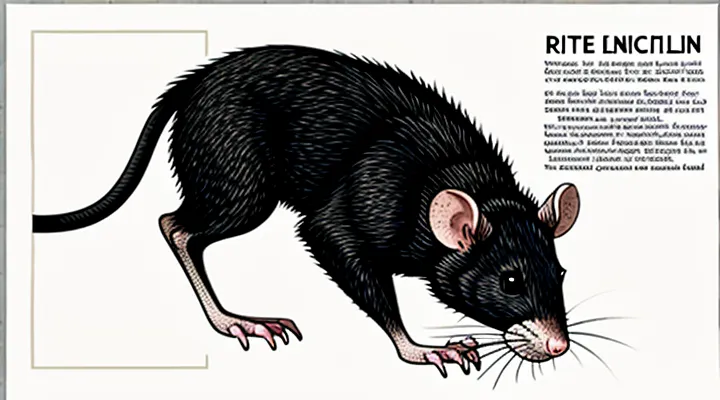
Introduction to Rat Anatomy
Overview of Rat Skeletal System
Why Study Rat Skeletons?
Studying the «rat skeleton» yields data essential for biomedical research, morphological comparison, and evolutionary analysis. Rodent skeletal anatomy shares many traits with human bone structure, allowing direct extrapolation of findings to clinical contexts.
- Comparative anatomy clarifies homologous features between rodents and mammals, supporting identification of conserved skeletal mechanisms.
- Disease modeling benefits from precise knowledge of rat bone morphology, facilitating assessment of osteoporosis, arthritis, and genetic disorders.
- Developmental biology gains insight into ossification patterns, growth plate dynamics, and gene‑expression timing through detailed skeletal observation.
- Toxicological screening relies on skeletal endpoints to detect mineral loss, deformities, or altered remodeling caused by environmental agents.
- Evolutionary research uses rat skeletal variations to trace adaptive responses, niche specialization, and phylogenetic relationships across vertebrates.
These applications justify systematic investigation of rat skeletal structure and its distinctive characteristics.
Axial Skeleton of the Rat
Skull
Cranium Bones
The rat cranium forms the anterior portion of the axial skeleton, enclosing the brain and supporting the facial region. Its architecture consists of tightly fused bones that create a rigid protective case while allowing passage of nerves and vessels.
Key components of the rat cranium include:
- Frontal bone – forms the forehead and contributes to the orbital rim.
- Parietal bones (pair) – constitute the dorsal roof of the skull.
- Nasal bones (pair) – shape the bridge of the nose.
- Maxillae (pair) – comprise the upper jaw and host the incisor sockets.
- Zygomatic arches – provide attachment for masticatory muscles.
- Temporal bones (pair) – contain the auditory bullae and house the inner ear structures.
- Occipital bone – articulates with the vertebral column and contains the foramen magnum.
- Sphenoid and ethmoid bones – form the central base and contribute to the nasal cavity.
Distinctive rat features involve an enlarged auditory bulla within the temporal bone, facilitating acute hearing. The frontal bone exhibits a pronounced sagittal crest that serves as an enlarged attachment site for temporalis muscles. Sutures between the parietal and frontal bones are relatively short, reflecting rapid ossification during early development. Multiple foramina, such as the infraorbital foramen, permit passage of the maxillary nerve and associated vessels.
Collectively, the cranial bones provide mechanical protection for neural tissue, anchor the musculature responsible for gnawing, and accommodate sensory organ openings essential for the rodent’s ecological niche.
Facial Bones
The facial region of the rat skeletal system comprises a compact assembly of bones that support the snout, mastication apparatus, and sensory structures. This portion integrates the premaxilla, maxilla, nasal, lacrimal, zygomatic, and mandible, each contributing to the overall morphology of the head.
- Premaxilla: forms the anterior tip of the rostrum, bears incisor roots, and fuses with the maxilla in adult specimens.
- Maxilla: provides the bulk of the upper jaw, houses the molar series, and includes the infraorbital foramen for the facial nerve.
- Nasal bones: thin, paired elements that articulate with the premaxilla and support the nasal cavity.
- Lacrimal: small, positioned between the nasal and maxilla, contributes to the orbital rim.
- Zygomatic: extends laterally, forms part of the cheek region and serves as attachment for masticatory muscles.
- Mandible: single, robust bone with a coronoid process, condylar head, and mental foramen for neurovascular bundles.
Unique adaptations include the elongated rostrum, which enhances olfactory capability, and the partial fusion of premaxillary and maxillary bones that stabilizes the incisor complex. The mandible’s asymmetric expansion accommodates continuous incisor growth, while the enlarged infraorbital foramen facilitates a highly developed whisker sensory system. These characteristics distinguish the rat facial skeleton from that of other rodents and reflect specialized ecological niches.
Mandible
The mandible of the rat is a robust, curved bone forming the lower jaw and supporting the incisors and molars. Its dorsal surface presents a pronounced coronoid process for attachment of the temporalis muscle, while the ventral edge bears the alveolar ridge that houses the dental sockets. The bone exhibits a thin, lamellar cortex reinforced by a medullary cavity that reduces weight without compromising structural integrity.
Key anatomical characteristics include:
- A short, deep symphysis that fuses the left and right halves early in development, providing bilateral stability.
- A well‑developed angular notch that accommodates the masseter muscle, enhancing chewing efficiency.
- An elongated, ventrally directed ramus ending in a distinct condylar head, articulating with the temporal bone at the temporomandibular joint.
- Dense, mineralized bone tissue at the tooth‑bearing region, reflecting the high mechanical load generated during gnawing.
These features collectively enable the rat to perform rapid gnawing motions and sustain the forces required for processing tough plant material and hard objects. The mandible’s morphology therefore reflects both functional adaptation and evolutionary specialization within the rodent skeletal framework.
Vertebral Column
Cervical Vertebrae
The cervical region of the rat consists of seven vertebrae that form a compact, highly mobile segment supporting the skull and enabling a wide range of head movements.
The first cervical vertebra, the atlas, lacks a vertebral body and is composed of paired lateral masses that bear the occipital condyles. This design permits dorsoventral flexion while maintaining stability.
The second vertebra, the axis, features a prominent odontoid process (dens) that articulates with the atlas, allowing rotation of the head around a vertical axis.
Vertebrae three through seven display progressively reduced transverse processes and diminutive neural spines, reflecting the need for a streamlined neck that accommodates the animal’s burrowing behavior.
Key morphological characteristics:
- Seven cervical vertebrae, consistent with most mammals.
- Atlas without a body; lateral masses support the skull.
- Axis with a well‑developed dens for rotational movement.
- Absence of true cervical ribs; only small tubercular projections persist.
- Neural arches with foramina that transmit cervical spinal nerves.
- Dorsal tubercles on vertebrae three to seven provide attachment sites for musculature involved in neck flexion and extension.
These structural adaptations afford the rat a balance of strength and flexibility, essential for activities such as gnawing, rapid head turning, and navigating confined spaces.
Thoracic Vertebrae
The thoracic vertebrae of the rat form a central segment of the axial skeleton, positioned between the cervical and lumbar regions. Twelve vertebrae constitute this series, each exhibiting a relatively short, robust body and well‑developed neural arches.
The vertebral bodies are compact, providing a sturdy platform for rib articulation. Each vertebra presents costal facets on the lateral aspects of the transverse processes, allowing direct attachment of the corresponding ribs. The dorsal laminae are pronounced, forming a protective canal for the spinal cord that is proportionally wider than in the lumbar region.
Key characteristics of the rat thoracic vertebrae include:
- Presence of superior and inferior costal facets on each transverse process.
- Prominent dorsal spinous processes that project dorsally and laterally, facilitating muscle attachment.
- Deep vertebral foramen that accommodates the thoracic segment of the spinal cord and associated vasculature.
- Subtle variation in vertebral body height, decreasing gradually from T1 to T12, reflecting the tapering shape of the thoracic cage.
These structural adaptations support the rib cage, maintain thoracic rigidity, and protect neural elements, contributing to the overall stability of the rodent’s skeletal framework.
Lumbar Vertebrae
The lumbar region of the rat axial skeleton comprises six vertebrae that bridge the thoracic cage and the sacrum. Each lumbar vertebra presents a compact centrum, modest neural spine, and well‑developed transverse processes that extend laterally to accommodate muscular attachments.
Key morphological traits include:
- Broad, flattened vertebral bodies that resist compressive forces;
- Reduced neural arches compared with thoracic counterparts;
- Prominent, laterally oriented transverse processes serving as levers for lumbar musculature;
- Facets on the superior and inferior articular surfaces that articulate precisely with adjacent vertebrae and the sacral vertebrae;
- Absence of ribs, allowing unrestricted spinal flexion.
Functionally, the lumbar vertebrae sustain the weight of the trunk, transmit locomotor forces to the pelvis, and permit a wide range of motion in flexion, extension, and lateral bending. Their robust construction reflects adaptation to the rat’s agile, ground‑dwelling lifestyle, providing stability while facilitating rapid directional changes.
Compared with other rodents, the rat exhibits a relatively short lumbar segment and enlarged transverse processes, features that enhance leverage for the lumbar musculature and contribute to the animal’s characteristic combination of strength and flexibility.
Sacral Vertebrae
The rat’s sacral region consists of three fused vertebrae that form a rigid sacrum. This structure links the lumbar spine to the pelvis, providing a stable platform for hind‑limb musculature. The sacrum’s dorsal surface presents a shallow keel, while the ventral surface bears a broad, flattened surface that supports the pelvic girdle. Articular facets on each vertebra allow limited movement, ensuring flexibility of the pelvic outlet without compromising overall stability.
Key anatomical characteristics of the rat «sacral vertebrae» include:
- Fusion of three vertebrae into a single bone, reducing the number of intervertebral joints.
- Presence of robust transverse processes that serve as attachment sites for the gluteal and caudal muscles.
- Development of sacral foramina through which sacral nerves exit, facilitating innervation of the hind limbs.
- Expansion of the sacral canal, accommodating the caudal end of the spinal cord and associated meninges.
The sacrum’s morphology differs markedly from that of larger mammals. In rats, the sacral vertebrae are proportionally shorter and more compact, reflecting the animal’s need for agility and rapid locomotion. The fused configuration contributes to a lightweight yet sturdy pelvic framework, optimizing energy efficiency during sprinting and climbing.
Caudal Vertebrae
The caudal vertebral column in the rat consists of a series of small, cylindrical bones that extend from the sacrum to the tip of the tail. Each vertebra is composed of a centrum, neural arch, and transverse processes, but the dimensions and articulation patterns differ markedly from those of the thoracic and lumbar regions.
Key structural characteristics include:
- Reduced size of the centrum, facilitating flexibility and rapid tail movements.
- Prominent hemal arches that protect the caudal vasculature and support muscular attachment.
- Absence of ribs, allowing unrestricted lateral bending.
- Well‑developed spinous processes that serve as leverage points for tail‑flexor muscles.
- Gradual fusion of the distal vertebrae in mature individuals, forming a caudal sacrum that enhances tail rigidity during locomotion.
The vertebral articulation is governed by intervertebral discs composed of fibrocartilage, providing both shock absorption and a degree of elasticity. Adjacent vertebrae are linked by robust ligaments—particularly the interspinous and supraspinous ligaments—that maintain alignment while permitting the high degree of motion required for balance, communication, and thermoregulation.
Morphologically, the caudal vertebrae display species‑specific adaptations: the distal vertebrae become increasingly slender, and the neural canal narrows, reflecting reduced spinal cord diameter toward the tail tip. These modifications support the rat’s reliance on a highly mobile tail for precise navigation in confined environments.
Rib Cage
Ribs
The ribs of a rat constitute a series of paired, curved bones extending laterally from the thoracic vertebrae. Each side typically contains twelve ribs, with the first nine classified as true ribs because they attach directly to the vertebral bodies via costal cartilage. Ribs ten and eleven are considered false ribs, connecting to the sternum indirectly through shared cartilage, while the twelfth rib is a floating rib lacking anterior attachment.
Key characteristics include:
- Thin, lightweight construction that reduces overall body mass while maintaining structural integrity.
- Broad, flat surfaces providing attachment sites for intercostal muscles responsible for respiration.
- Curved profile that permits expansion of the thoracic cavity during inhalation.
- Articulation with the vertebral column at the costovertebral joints, allowing limited rotational movement essential for maneuverability.
The rib cage encloses vital organs such as the heart and lungs, offering protection without compromising the animal’s agility. Cartilaginous connections afford flexibility, enabling the thorax to accommodate rapid changes in respiratory volume. Comparative studies reveal that rat ribs are proportionally shorter and more gracile than those of larger rodents, reflecting adaptations to a high metabolic rate and the need for swift locomotion.
Sternum
The sternum of the rat occupies the midline of the thoracic cavity, forming the anterior anchor for the rib cage. It consists of three distinct regions: the manubrium at the cranial end, the elongated body, and the xiphoid process at the caudal terminus. Each region exhibits a thin, flattened bone plate that merges with adjacent ribs through costal cartilages.
Key structural characteristics include:
- A pronounced keel on the ventral surface of the body, providing attachment for the pectoralis major and minor muscles.
- Fusion of the manubrium and body by a robust intersegmental suture, enhancing rigidity.
- A cartilaginous xiphoid in juvenile specimens that ossifies progressively with age.
Development proceeds from a primarily cartilaginous scaffold in neonates to complete ossification by early adulthood. The transition follows endochondral pathways, with mineral deposition beginning at the manubrium and extending caudally.
Functionally, the sternum supports respiratory mechanics by stabilizing the thoracic wall during ventilation. Muscular attachments facilitate forelimb movement and contribute to the generation of force during mastication and locomotion. The ventral keel also serves as a site for the attachment of intercostal muscles, influencing thoracic expansion.
Compared with other rodent species, the rat sternum displays an unusually robust keel and a relatively elongated body, features that accommodate the animal’s high metabolic rate and the demands of rapid, vigorous movements.
Appendicular Skeleton of the Rat
Pectoral Girdle
Scapula
The scapula of the rat is a flat, triangular bone situated dorsally on each side of the thoracic cage. It forms the posterior boundary of the shoulder girdle and connects the forelimb to the axial skeleton.
Key anatomical elements include:
- A shallow glenoid cavity that receives the head of the humerus, allowing a wide range of motion.
- An acromial process that projects laterally, providing attachment for the trapezius muscle.
- A coracoid notch on the ventral surface, serving as the origin for the pectoralis minor.
- A dorsal spine that runs from the medial border toward the acromion, relatively short compared with larger mammals.
Distinctive characteristics of the rat scapula are:
- Reduced thickness, reflecting the animal’s lightweight build.
- A pronounced curvature of the dorsal spine, contributing to the flexibility required for climbing and burrowing.
- A comparatively enlarged supraspinous fossa, accommodating the supraspinatus muscle despite the overall small size of the bone.
Muscle attachments on the scapula facilitate forelimb movement:
- Trapezius and levator scapulae originate on the dorsal surface.
- Deltoid originates from the acromial process and inserts on the humerus.
- Pectoralis major and minor arise from the coracoid notch and ventral surface.
In forensic and comparative anatomy, the rat scapula serves as a reliable marker for species identification and for assessing skeletal health, as its morphology readily reveals signs of trauma, disease, or developmental abnormalities.
Clavicle
The clavicle in rats is a slender, rod‑like bone situated between the sternum and the scapula. It connects the forelimb girdle to the thoracic cage, allowing limited movement while maintaining structural integrity. Unlike many mammals where the clavicle is well developed, the rat clavicle is reduced in size and partially fused with the manubrium of the sternum, reflecting adaptation to a quadrupedal posture.
Key characteristics include:
- Length approximately 4–5 mm, representing less than 5 % of the total forelimb bone length.
- Flattened cross‑section with a central ridge that provides attachment sites for the pectoralis major and subclavius muscles.
- Partial ossification; the lateral end remains cartilaginous in juvenile specimens, ossifying fully by adulthood.
- Articulation with the first rib via a fibrocartilaginous joint, contributing to the rigidity of the thoracic inlet.
Functionally, the clavicle stabilizes the shoulder complex during locomotion, transmitting forces from the forelimb to the axial skeleton. Its reduced form limits lateral displacement of the scapula, enhancing the efficiency of rapid, repetitive movements typical of rodent locomotor patterns. The unique fusion with the sternum distinguishes the rat clavicle from that of larger mammals, illustrating evolutionary modification aligned with body size and gait.
Forelimbs
Humerus
The rat humerus forms the proximal element of the forelimb, linking the scapular articulation to the elbow joint and contributing to the overall skeletal architecture that supports locomotion and manipulation.
Anatomically, the bone presents a cylindrical shaft that tapers distally. The proximal end consists of a spherical head articulating with the glenoid cavity, accompanied by a prominent greater tubercle and a smaller lesser tubercle that serve as attachment sites for rotator‑cuff muscles. A well‑developed deltoid crest runs along the lateral surface, providing leverage for the deltoid and pectoralis muscles. Distally, two condyles—medial and lateral—form the articulation with the radius and ulna, while the trochlear groove accommodates the ulna’s olecranon process.
Muscle attachments include:
- Biceps brachii (origin on the supraglenoid tubercle, insertion on the radial tuberosity)
- Triceps brachii (origin on the lateral and medial supracondylar ridges)
- Deltoid and pectoralis muscles (insert on the deltoid crest and tubercles)
- Pronator teres and supinator (origin on the medial supracondylar ridge)
Unique characteristics of the rat humerus relative to larger rodents are:
- A slender cortical shaft with increased porosity, reducing weight while maintaining structural integrity
- An elongated deltoid crest, enhancing muscle leverage for rapid forelimb movements
- Limited metaphyseal expansion, reflecting a compact distal joint morphology
- Adaptations for climbing and gnawing, such as reinforced articular surfaces that resist repetitive stress
These features collectively enable the rat’s forelimb to execute swift, precise motions required for exploration, foraging, and escape behaviors.
Radius and Ulna
The radius and ulna form the forearm segment of the rat’s skeletal framework, extending from the elbow joint to the wrist articulation. Both bones are slender, exhibiting a pronounced curvature that accommodates the animal’s burrowing and climbing activities. The radius lies laterally, while the ulna occupies the medial position; together they create a functional lever system for forelimb movement.
Key structural attributes include:
- A distal expansion of the radius forming the carpometacarpal articulation, enabling precise manipulation of objects.
- An elongated olecranon process on the ulna that provides attachment for powerful extensor muscles.
- A reduced interosseous membrane, allowing limited rotational freedom between the two bones, which is advantageous for rapid digging motions.
- Thin cortical walls reinforced by trabecular lattices, optimizing strength-to-weight ratio essential for agile locomotion.
These characteristics distinguish the rat’s forearm bones from those of larger mammals, reflecting adaptations to a high‑energy, subterranean lifestyle.
Carpals, Metacarpals, and Phalanges
The forelimb of a rat consists of three distinct bone series that enable precise manipulation and locomotion. The carpal region comprises eight irregularly shaped bones arranged in two rows; these provide a flexible articulation between the radius and ulna and the metacarpals. The proximal row includes the scaphoid, lunate, and triquetral, while the distal row consists of the trapezium, trapezoid, capitate, hamate, and pisiform. Their compact configuration permits limited rotational movement, essential for the animal’s exploratory behavior.
Metacarpals form a linear series of five elongated bones extending from the distal carpal row to the proximal phalanges. Each metacarpal exhibits a cylindrical shaft and a broadened distal end that supports the base of the corresponding digit. The first metacarpal is comparatively shorter, reflecting the reduced size of the rat’s thumb-like digit.
Phalanges constitute the terminal elements of each digit. Digits two through five possess three phalanges—proximal, intermediate, and distal—whereas the first digit contains a single phalanx. The distal phalanges terminate in claw-like ungual extensions, reinforced by a keratinous sheath. This arrangement facilitates grip, climbing, and substrate penetration.
Key characteristics of these skeletal components include:
- High degree of ossification relative to body size, providing structural strength.
- Compact articulation surfaces that reduce joint laxity.
- Adaptations for rapid, repetitive movements required in foraging and escape responses.
Pelvic Girdle
Os Coxae
The os coxae of the laboratory rat comprises three fused elements – the ilium, ischium and pubis – forming a robust pelvic plate that supports hind‑limb locomotion. Its morphology reflects both the general mammalian pattern and adaptations specific to the rodent’s compact body plan.
The bone presents a shallow, laterally expanded ilium that terminates in a modest iliac crest. This crest provides attachment for the gluteal musculature, yet its reduced height distinguishes rats from larger mammals. The ischial ramus projects caudally, forming a pronounced obturator notch that accommodates the obturator nerve and vessels. The pubic segment contributes a short, ventrally directed ramus that meets the ischium at the acetabular region.
Key anatomical features include:
- Acetabulum: deep, cup‑shaped socket articulating with the femoral head; its rim is reinforced by a distinct lunate ridge.
- Obturator foramen: relatively small, partially closed by an osseous bridge, reducing the passage size for neurovascular structures.
- Sacroiliac joint: limited mobility, characterized by a tight synchondrosis that stabilizes the pelvis during rapid, agile movements.
- Pubic symphysis: a narrow cartilaginous articulation that permits subtle expansion during reproductive cycles.
Comparative observations reveal that the rat os coxae lacks the extensive iliac crest and enlarged sacroiliac surface seen in larger rodents, reflecting a trade‑off between muscular leverage and skeletal lightness. The fusion of the three pelvic bones occurs early in ontogeny, resulting in a single, solid structure that minimizes joint vulnerability.
Understanding these characteristics aids in interpreting radiographic images, planning surgical interventions, and assessing musculoskeletal pathology within the rat model.
Hindlimbs
Femur
The rat femur is the longest bone of the hindlimb, extending from the acetabulum to the tibio‑fibular joint. Its length approximates 30 % of the animal’s total body length, providing a lever arm for powerful propulsion.
Structurally, the femur consists of a dense cortical shell surrounding a narrow medullary cavity. Cortical bone thickness varies proximally, reaching up to 0.8 mm, and thins distally to about 0.4 mm. The interior is filled with trabecular bone that forms a lattice supporting compressive loads. Growth plates are present at both epiphyses during post‑natal development, composed of hyaline cartilage that ossifies with age.
Key anatomical features include:
- «greater trochanter» – a prominent lateral projection serving as the attachment site for the gluteal and tensor fasciae latae muscles.
- «femoral head» – articulates with the acetabulum, covered by articular cartilage that reduces friction.
- «medial and lateral condyles» – form the distal articulation with the tibia and fibula, each bearing distinct fossae for ligament attachment.
- «intertrochanteric line» – a ridge connecting the greater and lesser trochanters, providing additional muscle attachment area.
Functionally, the femur bears the majority of the hindlimb’s axial load during locomotion. Muscle insertions on the proximal and distal regions generate flexion and extension moments, enabling rapid acceleration and jumping. The bone’s geometry, combined with the arrangement of trabecular struts, optimizes resistance to bending and torsional stresses typical of the rat’s agile movements.
Tibia and Fibula
The tibia and fibula constitute the primary osseous elements of the rat hind‑limb, providing structural support and serving as attachment sites for major musculature. Their morphology reflects adaptations for rapid locomotion and burrowing behavior.
The tibia presents a robust, cylindrical shaft with pronounced cortical bone. The proximal epiphysis bears a well‑defined head that articulates with the femoral condyles, while the distal end forms a smooth articular surface for the talus. A distinct growth plate persists into adulthood, indicating prolonged longitudinal growth. Trabecular architecture within the proximal metaphysis exhibits a high degree of anisotropy, optimizing resistance to compressive forces generated during sprinting.
The fibula is markedly slender and elongated, extending parallel to the tibia for most of its length. Distally, the fibula fuses with the tibial periosteum, creating a unified distal column that enhances stability. The bone’s lateral surface hosts attachment points for the peroneal muscles, which contribute to eversion and plantarflexion of the foot. Compared with other rodents, the rat fibula displays an increased length‑to‑width ratio, a trait linked to greater leverage during rapid hind‑limb extension.
Key comparative features:
- Tibia: thick cortical wall, extensive trabecular network, persistent growth plate.
- Fibula: high slenderness, distal fusion with tibia, predominant muscle‑attachment surface.
- Functional outcome: combined structure enables high‑frequency strides and efficient substrate penetration.
These characteristics underscore the specialized nature of the rat’s lower‑limb bones, distinguishing them from the skeletal elements of larger mammals and highlighting evolutionary refinements for agile, ground‑level movement.
Tarsals, Metatarsals, and Phalanges
The distal portion of the rat hind limb consists of a compact arrangement of tarsal, metatarsal, and phalangeal elements that support locomotion and substrate interaction.
The tarsal region comprises seven bones: the calcaneus, talus, navicular, cuboid, and three cuneiforms (medial, intermediate, lateral). The calcaneus forms a robust heel surface for muscle attachment, while the talus articulates with the tibia and fibula, transmitting forces to the foot. The navicular and cuneiforms create a flexible arch that accommodates uneven terrain. The cuboid contributes to lateral stability.
Metatarsals are five elongated bones numbered from medial (metatarsal I) to lateral (metatarsal V). Each metatarsal presents a proximal head for articulation with the corresponding tarsal bone and a distal shaft that supports the phalanges. The shafts are slender yet resist bending stresses generated during rapid sprints.
Phalanges are organized into three series per digit, except the fifth digit, which contains only two. The proximal, middle, and distal phalanges enable precise grip and claw formation. The distal phalanges terminate in keratinized ungual pads that enhance traction on smooth surfaces.
Key anatomical traits:
- High degree of fusion between the calcaneus and adjacent tarsals reduces joint laxity.
- Metatarsal shafts exhibit a pronounced curvature, optimizing stride length.
- Distal phalanges possess a recessed groove for the attachment of claw sheath tissue, contributing to self‑sharpening mechanisms.
Unique Features of the Rat Skeleton
Adaptations for Locomotion
Flexible Spine
The rat’s spine is a highly adaptable segment of the axial skeleton, enabling rapid directional changes and tight navigation through confined spaces.
Vertebral design combines short, robust thoracic vertebrae with elongated cervical and lumbar elements. Intervertebral discs contain a gelatinous nucleus pulposus surrounded by fibrous annulus, providing both shock absorption and a range of motion. Articular facets are oriented to permit flexion, extension, lateral bending, and axial rotation while maintaining stability.
Key structural adaptations that contribute to spinal flexibility include:
- Cervical vertebrae with enlarged transverse processes, allowing pronounced head rotation.
- Thoracic vertebrae possessing relatively flat spinous processes, reducing resistance to dorsal flexion.
- Lumbar vertebrae featuring reduced laminae and expansive intervertebral spaces, facilitating extensive lateral curvature.
- Highly elastic ligamentous complexes, especially the supraspinous and interspinous ligaments, which stretch during extreme bends without compromising joint integrity.
These features collectively support the rat’s agility, enabling swift escape responses, efficient burrowing, and complex climbing behaviors.
Specialized Limb Bones
The rat’s limb skeleton exhibits adaptations that support rapid locomotion, climbing, and burrowing. Each bone displays morphological specializations distinct from those of larger mammals.
- The humerus possesses a pronounced deltoid tuberosity, providing attachment for powerful forelimb muscles required for digging.
- The radius and ulna are fused at the proximal end, enhancing stability while allowing limited pronation‑supination essential for manipulating objects.
- Metacarpal bones are elongated and slender, forming a flexible forepaw capable of precise grasping. The terminal phalanges terminate in sharp, retractile claws, facilitating substrate penetration.
- The pelvis features an expanded iliac crest, increasing surface area for gluteal musculature that drives powerful hind‑limb propulsion.
- The femur displays a robust trochanteric ridge, serving as a lever for rapid acceleration during sprinting.
- The tibia and fibula are partially fused, reducing rotational freedom but increasing resistance to lateral stress encountered during tunnel excavation.
- The calcaneus is enlarged, forming a lever arm for the gastrocnemius muscle, which contributes to powerful jumps and sudden directional changes.
These structural modifications collectively enable the rat to navigate diverse environments efficiently, combining speed, agility, and strength within a compact skeletal framework.
Dental Structure and Jaw Mechanics
Incisors and Molars
The rat dentition forms a specialized segment of the skeletal framework, comprising two distinct tooth types that fulfill separate mechanical functions.
Incisors exhibit continuous eruption, lacking true roots. Enamel coats the labial surface exclusively, while the lingual side consists of dentin. This asymmetrical composition creates a self‑sharpening edge as softer dentin wears faster than enamel. The incisors’ curvature aligns with the mandible, facilitating gnawing motions.
Molars develop a finite growth pattern, terminating after eruption. Crown morphology presents multiple cusps arranged in a transverse ridge system, optimizing occlusal grinding. Enamel uniformly covers the occlusal surface, providing resistance to abrasion during mastication. Roots embed within the maxillary and mandibular bone, anchoring the teeth against vertical forces.
Key adaptations include:
- Labial enamel thickness exceeding lingual dentin, generating a self‑sharpening mechanism.
- Continuous incisor eruption balanced by wear, maintaining functional length.
- Multi‑cusp molar design that creates a complex occlusal surface for efficient food processing.
- Rooted molars offering stable support within the jaw, contrasting with rootless incisors.
These characteristics differentiate the rat’s incisors and molars, reflecting evolutionary solutions to the demands of gnawing and chewing within the species’ skeletal architecture.
Jaw Joint
The jaw joint of the rat is a temporomandibular articulation that connects the mandibular condyle to the temporal bone. Its architecture enables the powerful gnawing motions required for processing hard food items.
Key structural components include:
- Condylar process of the mandible, rounded and covered with fibrocartilage.
- Glenoid fossa of the squamous part of the temporal bone, forming a shallow socket.
- A fibroelastic articular disc positioned between the condyle and fossa, providing a smooth, low‑friction surface.
- Lateral and medial collateral ligaments that stabilize the joint during lateral excursions.
Unique adaptations of the rat jaw joint:
- Dual‑axis movement combining hinge and rolling actions, allowing incisors to close with high bite force while maintaining occlusal alignment.
- Thickened fibrocartilage on the condylar surface, resistant to compressive stress generated during repetitive gnawing.
- An enlarged articular disc that distributes load across a broader area, reducing wear on the underlying bone.
Compared with larger mammals, the rat joint exhibits a proportionally larger condylar head relative to mandibular length, and a more pronounced disc‑to‑bone ratio. These morphological traits support rapid, repetitive chewing cycles and contribute to the rodent’s ability to incise and grind simultaneously.
Tail Anatomy
Caudal Vertebrae Flexibility
The caudal vertebrae of the rat form a distinct segment of the axial skeleton, comprising typically twelve to fourteen articulated elements that extend posteriorly from the sacrum. Each vertebra possesses a relatively short centrum, a reduced neural arch, and a well‑developed transverse process, creating a compact yet mobile series.
Flexibility of this region results from several anatomical adaptations:
- elongated intervertebral discs with a high proportion of fibrocartilaginous tissue, permitting extensive shear displacement;
- loosely arranged interspinous ligaments that allow dorsoventral bending without compromising stability;
- reduced facet joint surface area, which minimizes restriction of rotational movements;
- muscular insertions of the caudofemoralis and longissimus groups that facilitate controlled tail swings.
These structural characteristics enable the rat to execute rapid lateral undulations, adjust tail posture during balance recovery, and modulate tail positioning while navigating narrow passages. The combination of disc elasticity, ligament laxity, and specialized musculature provides a functional range of motion that exceeds that of many other rodent species.
Role in Balance and Thermoregulation
The rat skeletal framework provides structural support that directly influences postural stability. Long bones of the fore‑ and hind‑limbs, together with the pelvis and vertebral column, form a rigid yet flexible axis that distributes gravitational forces. Joint articulations, particularly the hip and ankle, enable precise adjustments during locomotion, while mechanoreceptors embedded in bone and surrounding connective tissue deliver continuous proprioceptive signals to the central nervous system, facilitating rapid corrective movements.
Thermal homeostasis also depends on skeletal characteristics. Highly vascularized marrow cavities allow blood flow to exchange heat efficiently, acting as internal radiators during periods of elevated ambient temperature. The thin cortical layers of the ribs and vertebrae permit conductive heat loss, complementing skin‑based mechanisms. Additionally, the attachment sites for major thermogenic muscles, such as the pectoralis and quadriceps, are positioned to optimize force transmission, thereby supporting shivering thermogenesis when external temperatures drop.
Key skeletal contributions to balance and temperature regulation include:
- Proprioceptive feedback from bone‑embedded mechanoreceptors
- Rigid yet adaptable limb and axial structures for load distribution
- Vascularized marrow facilitating internal heat exchange
- Thin cortical bone enabling conductive cooling
- Strategic muscle attachment sites enhancing shivering response