
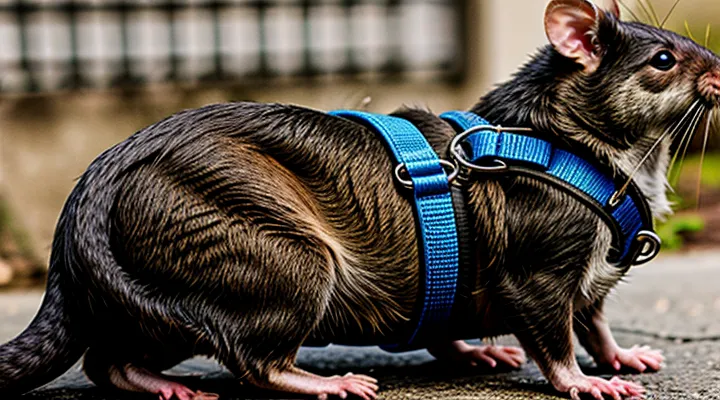
Why a Rat Harness?
Understanding Rat Behavior and Needs
Natural Curiosity and Exploration
Rats possess an innate drive to investigate their surroundings, a behavior that directly influences the effectiveness of any restraint system. A well‑designed harness must accommodate this exploratory instinct while preventing injury and reducing stress.
The harness structure should:
- Allow unrestricted head and whisker movement, preserving tactile feedback essential for navigation.
- Provide adjustable straps that secure the body without constricting the spine or limiting limb articulation.
- Incorporate soft, breathable materials that reduce friction during rapid movement across varied surfaces.
- Feature quick‑release mechanisms to enable immediate removal if the animal exhibits signs of distress.
Material selection contributes to safety by minimizing skin irritation and preventing overheating during prolonged activity. Reinforced stitching at load‑bearing points distributes forces evenly, protecting delicate vertebral regions when the rat climbs or squeezes through tight spaces.
Testing protocols must include observation of natural foraging and climbing behaviors within a controlled arena. Data on gait patterns, escape attempts, and time spent exploring indicate whether the harness respects the animal’s curiosity without compromising stability.
By aligning design parameters with the rat’s exploratory drive, manufacturers create restraint solutions that uphold both comfort and protective standards, ensuring reliable performance in research and handling environments.
Socialization and Bonding Benefits
A well‑fitted harness provides a secure point of contact that encourages gentle handling, allowing the animal to experience controlled exploration outside its cage. The physical connection reduces the likelihood of sudden escapes, which in turn creates a predictable environment for both pet and owner.
Consistent use of the harness strengthens the relationship through repeated positive interactions. Benefits include:
- Increased willingness of the rat to approach the caretaker during training sessions.
- Development of trust as the animal learns that the equipment does not cause pain.
- Enhanced ability to observe the rat’s behavior in varied settings, facilitating early detection of health issues.
Research on small‑animal bonding indicates that tactile engagement, such as the pressure from a properly adjusted harness, triggers release of oxytocin‑like hormones in rodents. This physiological response reinforces social attachment, leading to calmer demeanor and greater receptivity to handling.
Choosing the Right Harness
Types of Harnesses
H-Style Harnesses
H‑Style harnesses are engineered to distribute pressure across the rat’s torso, minimizing strain on the neck and spine. The wide, padded straps contour to the animal’s body, reducing chafing during prolonged walks. Adjustable buckles allow precise sizing, ensuring a snug yet non‑restrictive fit for individuals ranging from 150 g to 300 g.
Safety features include a reinforced central loop that prevents the harness from slipping off if the rat attempts to back out. Quick‑release clips detach the leash without exposing the animal to sudden jerks, while metallic D‑rings provide reliable attachment points for tethering devices.
Key attributes:
- Material durability: high‑tenacity nylon with water‑resistant coating resists tearing and mold growth.
- Ventilation: mesh panels promote airflow, decreasing heat buildup.
- Ease of cleaning: detachable components can be machine‑washed at low temperature without degrading structural integrity.
Proper fitting procedure:
- Position the harness so the padded chest plate rests just behind the forelimbs.
- Slide the strap through the side loops, aligning the central ring with the rat’s sternum.
- Tighten the buckles until the harness is firm but allows two fingers of clearance.
- Observe the animal’s gait for any signs of restriction; adjust as needed.
When used correctly, H‑Style harnesses provide a balanced combination of comfort and protection, enabling safe outdoor exploration while preserving the rat’s natural movement.
Vest Harnesses
Vest harnesses are the preferred restraint system for small rodents when owners need to secure a pet rat during outdoor activities or transport. The design encloses the animal’s torso, distributing forces across the shoulders and chest rather than the delicate spine.
The construction typically involves lightweight, breathable fabrics such as ripstop nylon or high‑density mesh, reinforced with polymer buckles and stainless‑steel D‑rings. Stitching follows a double‑stitch pattern to prevent seam failure under load. Reflective piping may be integrated for visibility in low‑light conditions.
Proper fit requires measuring the rat’s chest circumference and adjusting the straps to achieve a snug yet non‑restrictive closure. The harness should sit just behind the forelimbs, allowing free movement of the legs and tail. Excess slack can lead to escape, while overtightening may impede breathing.
Safety features include:
- Quick‑release buckles that disengage under sudden tension to prevent choking.
- Load‑distribution panels that spread pressure evenly across the torso.
- Secure attachment points rated for at least twice the animal’s body weight.
Comfort considerations focus on minimizing skin irritation and heat buildup. Mesh panels promote airflow, and the total weight of the harness typically remains under 5 g, a negligible fraction of a rat’s body mass. Soft padding at contact zones reduces friction during prolonged wear.
Routine maintenance involves hand‑washing the fabric in lukewarm water with a mild detergent, rinsing thoroughly, and air‑drying to preserve material integrity. Inspect buckles and stitching before each use; replace any component showing signs of wear.
By adhering to these specifications, a vest harness delivers reliable restraint while preserving the animal’s natural movement and wellbeing.
Key Features for Comfort
Material Considerations
When selecting fabrics for a rat safety harness, prioritize non‑abrasive fibers that reduce skin irritation. Natural options such as soft cotton blends offer gentle contact, while engineered synthetics like nylon‑spandex provide stretch without constriction. Verify that any material is free of harmful chemicals; low‑odor, hypoallergenic treatments are preferable to avoid respiratory or dermal reactions.
Durability influences both longevity and protection. Reinforced stitching with polyester thread resists fraying under repeated movement. High‑tenacity ripstop fabrics mitigate tearing if the animal claws or squeezes the harness, preserving structural integrity and preventing sudden release.
Weight directly affects the animal’s comfort. Light‑weight mesh panels enhance airflow, reducing heat buildup and moisture retention. Mesh sections should be constructed from fine‑gauge polyester or polypropylene to maintain breathability while supporting load distribution.
Cleaning considerations are essential for hygiene. Materials that tolerate machine washing at moderate temperatures simplify maintenance and eliminate odor accumulation. Quick‑dry fabrics minimize downtime between cleaning cycles and lower the risk of mold growth.
A concise material checklist:
- Soft, skin‑friendly outer layer (cotton blend or fleece)
- Stretchable backing (nylon‑spandex or elastane)
- Reinforced seams (polyester thread, double‑stitched)
- Tear‑resistant panels (ripstop nylon)
- Breathable mesh inserts (fine‑gauge polyester)
- Wash‑safe composition (machine‑compatible, quick‑dry)
By aligning these material attributes, a rat harness can deliver reliable protection while preserving the animal’s comfort during daily wear.
Adjustable Straps and Fit
Adjustable straps are the primary mechanism that determines how a rat harness conforms to the animal’s body, directly affecting both comfort and security. The strap system typically includes a series of buckles or Velcro closures that can be tightened or loosened independently. This configuration allows owners to accommodate variations in torso length, neck circumference, and overall body shape, preventing pressure points that could cause irritation or impede movement.
Key functional aspects of an adjustable strap system:
- Independent tension control – each strap can be set to a specific tightness, ensuring the harness stays in place without restricting breathing or limb motion.
- Gradual adjustment range – increments of 1‑2 mm provide fine‑tuning, essential for small rodents whose measurements change rapidly as they grow.
- Secure locking mechanisms – quick‑release buckles prevent accidental opening while allowing swift removal for cleaning or medical inspection.
A proper fit is achieved when the harness rests snugly against the chest without sliding forward or backward. The strap should be tight enough to hold the harness during activity yet loose enough to permit a finger to slide comfortably between the strap and the skin. Regular verification of fit is advised after each weight gain or loss, as even minor changes can alter tension distribution.
When straps are correctly adjusted, the harness distributes load evenly across the shoulders and chest, reducing stress on the spine and joints. This balanced support minimizes the risk of chafing and enhances the animal’s willingness to wear the device, ultimately improving overall safety during supervised outings.
Lightweight Design
A lightweight rat harness reduces strain on the animal while maintaining structural integrity. The design employs high‑tensile synthetic fibers such as nylon ripstop and ultra‑lightweight polyester mesh, each offering strength‑to‑weight ratios exceeding 30 : 1. These materials allow the harness to support up to 200 g of load without deformation, ensuring secure attachment during handling or transport.
Key advantages of reduced mass include:
- Lower pressure on the rat’s shoulders and neck, decreasing the risk of tissue irritation.
- Enhanced agility, as the animal can move freely without feeling encumbered.
- Simplified cleaning, because thin fabrics dry quickly and resist moisture retention.
Engineering tolerances focus on distributing forces evenly across the harness. Reinforced stitching at stress points, combined with adjustable, low‑profile buckles, prevents localized pressure peaks. The overall weight of a fully assembled harness typically ranges from 3 g to 5 g, a figure verified through calibrated scale measurements across multiple production batches.
Safety is reinforced by integrating reflective micro‑filaments into the fabric weave. Visibility improves under low‑light conditions without adding bulk, and the reflective component accounts for less than 0.2 g of the total weight. Consequently, the lightweight design fulfills both comfort and protective requirements for small‑rodent handling.
Safety Aspects to Look For
Secure Fastenings
Secure fastenings are the backbone of any rodent harness intended to protect both the animal and the handler. They prevent accidental release while allowing quick removal in emergencies. High‑quality hardware, such as stainless‑steel buckles and reinforced D‑rings, resists corrosion and deformation under stress.
Key characteristics of reliable fastenings include:
- Positive lock mechanism – eliminates the possibility of unintentional opening.
- Adjustable tension – accommodates growth and varying body shapes without compromising grip.
- Load‑bearing capacity – rated to exceed the maximum pulling force a rat can generate.
- Ease of inspection – smooth surfaces and clear markings facilitate regular safety checks.
Installation guidelines:
- Position the fastening components symmetrically on the harness to distribute load evenly.
- Verify that the buckle snaps fully into place; a tactile click confirms engagement.
- Test the release by applying gentle pressure; the mechanism should open smoothly without excessive force.
- Conduct a pull test before each use, ensuring the harness holds at least double the expected load.
Maintaining secure fastenings involves routine cleaning to remove debris, lubrication of moving parts with pet‑safe oil, and replacement of any worn or cracked components. Adhering to these practices preserves the harness’s integrity, supporting the overall goal of comfort and safety for the animal.
Chew-Resistant Materials
Chew‑resistant materials are essential for a rat harness that must remain intact during typical gnawing behavior. These polymers and composites combine durability with flexibility, allowing the harness to stay securely in place without causing discomfort.
Commonly used chew‑resistant options include:
- Thermoplastic polyurethane (TPU): Provides high tensile strength, resists puncture, and maintains elasticity for a snug fit.
- Nylon‑coated silicone: Offers a smooth surface that discourages chewing while delivering a gentle feel against the animal’s skin.
- Aramid‑reinforced fabric: Delivers exceptional abrasion resistance; the woven structure prevents bite penetration while remaining lightweight.
- Polyethylene terephthalate (PET) mesh: Features a tight weave that limits access for teeth, yet allows breathability to avoid overheating.
Material selection must balance two factors: resistance to gnawing and the ability to conform to the rat’s body shape. Overly rigid components can create pressure points, leading to skin irritation or restricted movement. Conversely, overly soft substances may be quickly chewed through, compromising safety.
Manufacturers typically treat surfaces with anti‑chew coatings, such as silicone‑based sealants, to further deter biting. These coatings also simplify cleaning and reduce the risk of bacterial buildup.
When evaluating a harness, verify that the listed materials have been tested for both mechanical wear and animal tolerance. Certification from veterinary or pet‑product standards organizations provides additional assurance of safety and durability.
Visibility Features
A rat harness intended for comfort and safety must incorporate elements that make the animal visible to owners and observers. Visibility reduces the risk of accidental loss, especially in low‑light environments, and assists in quick location during handling.
Key visibility components include:
- High‑contrast colors such as neon orange, lime green, or bright yellow applied to the strap surface.
- Reflective tape or stitched strips positioned on the front, back, and side panels to bounce light from headlights or flashlights.
- Optional low‑profile LED modules that attach to the harness loop, powered by a small, replaceable button cell and offering steady or flashing modes.
Material selection affects durability and reflectivity. Polyester or nylon fabrics retain color vibrancy after repeated washing, while woven reflective fibers maintain brightness without peeling. Seam placement should avoid covering the animal’s fur, ensuring the reflective surface remains unobstructed.
Compliance with pet‑equipment standards often mandates a minimum percentage of reflective area. Manufacturers typically test harnesses under standardized illumination levels, confirming that the reflected light meets or exceeds the required luminance threshold.
Proper adjustment of the harness ensures that visibility features stay aligned with the rat’s body. Tightening straps too much can compress reflective patches, diminishing their effectiveness; loosening them may cause the harness to shift, exposing the reflective material to wear. Regular inspection for fraying or loss of reflectivity helps maintain the intended safety benefits throughout the product’s lifespan.
Proper Harness Application
Training Your Rat to Wear a Harness
Positive Reinforcement Techniques
Positive reinforcement builds a reliable association between the harness and a rewarding experience, reducing stress and preventing injury. Begin with short, low‑intensity sessions in a quiet area. Offer a preferred treat immediately after the rat touches the harness, then gradually increase contact duration. Consistency in timing and reward type reinforces the desired behavior.
Key techniques include:
- Target training – teach the rat to touch a cue (e.g., a fingertip) with its nose; replace the cue with the harness strap and reward the same action.
- Shaping – reward successive approximations, such as sniffing the harness, allowing it to rest on the back, and finally tolerating gentle adjustment.
- Clicker conditioning – use a distinct sound to mark the exact moment of correct behavior, followed by a treat, to create a clear cause‑effect link.
- Variable‑ratio reward schedule – after the behavior is established, provide treats intermittently to maintain high response rates without overfeeding.
Conclude each session with a calm release and additional treats, then gradually extend the wearing time. Monitoring the rat’s posture and gait ensures the harness remains snug without restricting movement, preserving both comfort and safety.
Gradual Introduction
Introducing a rat harness should follow a structured, low‑stress progression. Begin with short, supervised sessions in a familiar enclosure. Allow the animal to sniff and investigate the harness without fastening it, reducing fear response.
- First contact – Place the harness near the cage floor; observe the rat’s reaction for signs of curiosity or avoidance.
- Partial fitting – Gently slip one strap over the rat’s back, leaving the harness unsecured. Monitor for tension, grooming, or attempts to escape.
- Full attachment – Secure all straps snugly but not tightly; the harness must permit natural movement without pinching.
- Leash introduction – Attach a lightweight leash for a few seconds, then release. Gradually extend the duration over several days.
During each stage record behavior: normal locomotion, grooming, feeding, and vocalizations. If stress indicators appear—excessive freezing, rapid breathing, or attempts to remove the harness—pause and revert to the previous step. Adjust strap length to maintain a comfortable fit; the harness should sit just above the shoulders, leaving the chest and abdomen free.
Consistent, brief exposure builds confidence and habituates the rat to the equipment. After a week of successful sessions, increase leash length and outdoor time while maintaining observation. This method minimizes anxiety and ensures the harness serves its intended protective and ergonomic purpose.
Step-by-Step Application Guide
Checking for a Snug Fit
When fitting a rat harness, the primary objective is a secure yet comfortable encirclement of the animal’s torso. The strap should lie flat against the skin without creating pressure points, and the harness must stay in place when the rat moves or attempts to slip out.
Key indicators of an appropriate fit include:
- Two‑finger clearance between the harness and the rat’s body at the chest and neck regions.
- No visible gaps where the harness can twist or fold.
- Freedom of movement for the limbs; the rat should be able to walk, climb, and groom without restriction.
- Stability under gentle pulling; the harness should not shift or loosen when a light tension is applied.
If any of these criteria fail, adjust the strap length incrementally, re‑position the buckles, and re‑evaluate. Re‑checking after each adjustment ensures the harness remains both safe and comfortable for ongoing use.
Avoiding Chafing and Discomfort
A well‑fitted harness eliminates pressure points that cause skin irritation. Measure the rat’s chest and neck accurately; the strap should rest snugly without compressing tissue. Adjustable buckles allow fine‑tuning after the animal moves, preventing the harness from sliding into sensitive areas.
Materials that breathe and wick moisture reduce friction. Synthetic blends such as nylon‑spandex or lightweight polyester maintain shape while allowing air flow. Avoid fabrics that retain sweat, as damp skin increases the likelihood of chafing.
Maintenance practices reinforce comfort:
- Inspect seams and stitching before each use; replace frayed sections promptly.
- Wash the harness with mild detergent after every session; dry completely to prevent mildew.
- Apply a thin layer of pet‑safe lubricant to high‑contact zones if the animal shows signs of rubbing.
Proper adjustment and regular care keep the harness secure, minimize abrasion, and support the animal’s well‑being during walks or training.
Harness Use and Safety Precautions
Supervised Outings and Environments
Safe Outdoor Spaces
Providing rats with a well‑fitted harness expands the range of environments they can explore safely. The outdoor area must meet several criteria to protect the animal and maintain the harness’s function.
A secure perimeter prevents escape. Fencing should be at least 12 inches high, with mesh small enough to stop a rat from squeezing through. All gaps, hinges, and gates require locks that cannot be opened by the animal’s teeth or paws.
The ground surface should be even and free of sharp objects. Ideal materials include compacted soil, fine sand, or rubber matting. Rough terrain, broken glass, and loose gravel increase the risk of harness abrasion or foot injury.
Weather protection is essential. Shade structures shield rats from direct sunlight, reducing heat stress that can loosen harness straps. A waterproof cover or shelter offers refuge during rain, preventing the harness from becoming saturated and heavy.
Supervision remains a core safety component. An adult should observe the rat at all times, ready to intervene if the harness loosens, the animal becomes entangled, or aggressive wildlife approaches.
Key safety elements can be summarized:
- Sturdy, appropriately sized enclosure with lockable access points
- Smooth, non‑abrasive flooring
- Shade and shelter to mitigate temperature extremes and precipitation
- Continuous adult monitoring
By adhering to these standards, owners create an outdoor setting that preserves the comfort and protective qualities of the rat harness while allowing the pet to experience a broader, stimulating environment.
Indoor Exploration
A rat harness designed for indoor exploration must balance secure fit with unrestricted movement. The harness should contour to the animal’s body, distributing pressure evenly across the chest and back to prevent bruising while allowing the rat to navigate furniture, tunnels, and tight spaces.
Key comfort considerations include:
- Adjustable straps that accommodate growth and variations in body shape.
- Soft, breathable padding to reduce skin irritation during prolonged wear.
- Lightweight construction to avoid adding noticeable weight.
Safety features essential for indoor use are:
- A quick‑release clasp that enables rapid removal in emergencies.
- Reflective stitching or trim for visibility in low‑light areas.
- Reinforced stitching at stress points to withstand pulling and climbing.
When these elements are integrated, the harness supports confident indoor adventures while maintaining the animal’s well‑being.
Preventing Escapes
Leash Training and Control
Leash training with a rat harness requires a stable fit that prevents chafing while allowing precise control. Choose a harness sized to the animal’s torso, adjusting straps until the device rests snugly without restricting breathing. Verify that the material is soft, breathable, and free of sharp edges; a poorly fitted harness can cause stress and injury during walks.
Effective control hinges on gradual exposure and consistent handling. Follow these steps:
- Attach a lightweight leash and let the rat explore the harness indoors for several minutes.
- Reward calm behavior with a small treat, reinforcing the association between the harness and positive experiences.
- Increase leash length incrementally, guiding the rat with gentle tension rather than pulling.
- Conduct short outdoor sessions in a secure area, monitoring for signs of discomfort or escape attempts.
- After each session, inspect the harness for wear, adjust straps as needed, and replace any damaged components.
Consistent practice builds confidence, maintains the rat’s comfort, and ensures safe navigation in varied environments.
Monitoring for Discomfort
Monitoring for discomfort is a core component of maintaining a rat’s harness in a condition that protects both well‑being and functionality. Continuous observation identifies issues before they compromise mobility or cause injury.
Observable indicators include:
- Persistent scratching or biting at the harness.
- Redness, swelling, or abrasions at contact points.
- Altered gait, limping, or reluctance to move.
- Excessive grooming of the harness area.
- Changes in appetite or activity level linked to harness wear.
Effective monitoring relies on regular checks. A brief visual inspection should occur each time the harness is placed on or removed. Detailed examinations, involving gentle palpation of the skin underneath, are advisable at least once daily for new harnesses and weekly thereafter for established setups.
When signs of discomfort appear, immediate corrective steps are required. Adjustments may involve loosening straps, repositioning padding, or selecting a different size. If skin damage is evident, replace the harness with a clean, properly fitted model and treat the affected area according to veterinary guidance.
Documenting observations, adjustments, and outcomes creates a data set that informs future harness selection and helps refine handling protocols, ensuring consistent comfort and safety for the animal.
Health and Hygiene
Cleaning and Maintenance of Harnesses
Proper care of a small‑animal harness directly affects both the animal’s comfort and the owner’s safety. Regular cleaning removes debris, urine, and odor that can cause skin irritation or attract pests. Maintenance prevents strap wear, buckles failure, and loss of adjustability.
Cleaning procedure
- Disassemble the harness: detach buckles and remove any detachable padding.
- Rinse under lukewarm water to eliminate loose dirt.
- Submerge the components in a basin with mild, fragrance‑free detergent; agitate gently for 2–3 minutes.
- Scrub seams and stitching with a soft brush, focusing on areas that contact the animal’s body.
- Rinse thoroughly until no soap residue remains.
- Pat dry with a clean towel, then lay flat in a well‑ventilated area until completely dry. Avoid direct sunlight or heat sources that could degrade material.
Maintenance checklist
- Inspect every strap for fraying, cuts, or thinning; replace damaged sections immediately.
- Verify that buckles snap securely and that adjustment holes align without tearing.
- Lubricate moving parts with a silicone‑based spray if the manufacturer recommends it.
- Check for loose threads; trim excess yarn to prevent snagging.
- Perform a fit test after each cleaning cycle to ensure the harness remains snug but not restrictive.
Storage guidelines
- Fold the harness loosely to avoid creasing the material.
- Store in a breathable fabric bag or a dry drawer; moisture‑absorbing packets help control humidity.
- Keep away from chemicals, sharp objects, and extreme temperatures.
Adhering to these steps extends the life of the harness, maintains a hygienic environment for the rodent, and reduces the risk of accidents during walks or handling.
Observing for Skin Irritation
When a rat wears a harness, the first line of defense against discomfort is regular visual checks of the skin beneath and around the strap. Inspect the area at least once daily, focusing on the neck, chest, and limbs where the material contacts the animal.
Key indicators of irritation include:
- Redness or discoloration of the fur and underlying skin
- Swelling or raised bumps
- Excessive scratching, biting, or attempts to remove the harness
- Hair loss or thinning in the contact zones
- Discharge, crust, or foul odor from the skin surface
If any of these signs appear, remove the harness immediately, clean the affected area with a mild saline solution, and allow the skin to dry completely before re‑fitting. Adjust the strap length so that two fingers can slide comfortably between the harness and the rat’s body; excessive tightness increases friction and pressure, while excessive looseness allows movement that can chafe. Replace worn or frayed material promptly to maintain a smooth surface and prevent micro‑abrasions.