
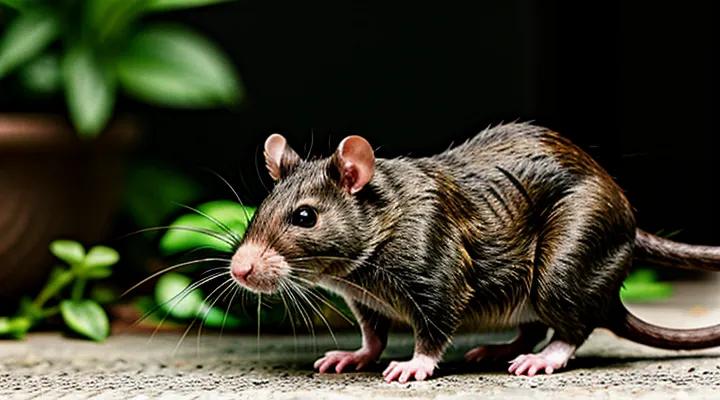
General Physical Characteristics
Size and Weight
Body Length
Rats exhibit a body length ranging from 15 cm to 30 cm, measured from the tip of the nose to the base of the tail. This dimension varies among species, with the common brown rat (Rattus norvegicus) typically reaching 20–25 cm, while the smaller black rat (Rattus rattus) averages 15–20 cm. Body length influences locomotion efficiency, habitat preference, and predator avoidance, making it a key metric for species identification and ecological studies.
Key measurement points:
- Nose to base of tail (excluding tail length)
- Recorded in millimeters for laboratory precision
- Averaged across a representative sample to account for sexual dimorphism
Factors affecting body length include genetics, nutrition, and environmental conditions. Consistent measurement protocols ensure reliable comparisons across populations and research settings.
Tail Length
Tail length constitutes a primary metric in the description of rat morphology. It provides a direct reference for species identification and health evaluation.
Typical measurements place the tail at 15–20 cm in laboratory rats, representing roughly 75–80 % of the head‑body length. In wild species, lengths range from 12 cm in smaller field rats to over 25 cm in larger water rats. The proportional relationship remains consistent: tail length closely matches overall body size across individuals of the same age and sex.
Functionally, the tail contributes to:
- Balance during climbing and rapid directional changes;
- Thermoregulation through vasodilation and vasoconstriction of peripheral vessels;
- Communication of emotional state via twitching or flattening.
Variation among breeds reflects genetic selection. Short‑tailed strains, such as the “tailless” laboratory line, exhibit altered locomotor dynamics and heightened susceptibility to spinal issues. Conversely, long‑tailed varieties retain superior agility and more efficient heat dissipation.
Regular measurement of tail length, alongside girth and weight, supports early detection of developmental abnormalities, nutritional deficiencies, and disease processes that manifest as tail atrophy or abnormal growth.
Weight Range
Rats exhibit a predictable weight spectrum that directly influences their overall silhouette. Adult laboratory or pet rats typically fall between 200 g and 500 g, with males averaging toward the upper limit and females toward the lower. Juvenile specimens progress from approximately 50 g at weaning to 150 g by the onset of sexual maturity. Breed-specific variations expand the range: the larger “Giant” variety may exceed 600 g, while miniature strains often remain under 250 g throughout adulthood.
Key factors affecting individual weight include:
- Genetic lineage: selective breeding determines maximum body mass.
- Nutrition: caloric intake and diet composition correlate with growth rate.
- Health status: disease or parasitic load can cause weight loss or gain.
- Environment: temperature and cage density influence metabolic demands.
Weight measurements serve as a practical metric for assessing development, health, and suitability for specific research or husbandry contexts. Consistent monitoring ensures that rats remain within the expected parameters for their classification, supporting reliable morphological evaluation.
Fur
Color Variations
Rats exhibit a wide spectrum of coat colors, each determined by specific genetic loci that control pigment production, distribution, and dilution. The most prevalent hues include:
- Black – dense eumelanin, often with a glossy sheen.
- Brown – moderate eumelanin, ranging from light chocolate to deep mahogany.
- Agouti – alternating bands of dark and light pigment on each hair, producing a speckled appearance.
- White – lack of pigment, resulting in an albino phenotype when combined with red eyes, or a pure white coat in pigmented eyes.
- Red (Sable) – high pheomelanin concentration, yielding a rich, reddish-brown tone.
- Blue – diluted black, giving a slate-gray coloration.
- Cream – diluted red, producing a pale, buttery shade.
- Himalayan – dark points on ears, nose, tail, and paws with a lighter body, caused by temperature-sensitive pigment expression.
Color patterns extend beyond solid coats. Dalmatians display a white base with distinct black or brown spots; roan mixes white and colored hairs evenly; tortoiseshell blends black and red pigments in a mottled pattern; piebald combines large white patches with colored areas. These patterns arise from epistatic interactions among multiple genes, often requiring selective breeding to stabilize.
Genetic modifiers influence intensity and shade. The dilution gene reduces pigment saturation, turning black to blue or red to cream. The spotting gene creates white patches, while the agouti gene governs banded hair structure. Breeders manipulate these alleles to achieve desired aesthetics, but heterozygosity can produce unexpected variations in offspring.
Understanding the genetic architecture of rat coat color enables precise selection for research models, exhibition standards, and pet preferences, ensuring consistent phenotypic outcomes across generations.
Texture
The texture of a rat’s exterior defines its tactile and visual profile. Coarse, dense fur covers most of the body, providing insulation and a protective barrier. Color variations range from light gray to brown, yet the individual hair strands remain uniformly short and stiff, contributing to a rough surface when touched.
- Fur: Short, wiry, and densely packed; minimal undercoat, resulting in a firm feel.
- Skin: Thin and supple, visible chiefly on the ears, nose, and underbelly; appears smooth and slightly moist.
- Whiskers (vibrissae): Long, stiff, and highly sensitive; surface texture is smooth with a subtle taper.
- Tail: Bare, scaly, and cylindrical; skin exhibits a leathery texture with fine, overlapping scales that enhance grip.
These textural elements combine to create a distinctive, resilient outer layer that supports the animal’s adaptability and sensory functions.
Body Shape
Torso
The rat’s torso forms the central portion of its body, linking the head and forelimbs with the hindquarters. Its structure balances flexibility for rapid movement with sufficient support for the animal’s muscular activity.
- Length: roughly 6–10 cm in adult specimens, proportionate to overall body size.
- Shape: cylindrical, slightly tapering toward the posterior, facilitating streamlined locomotion.
- Fur: dense, short hair covering the surface; coloration ranges from gray‑brown to black, often matching dorsal hue.
- Skin: thin, elastic, allowing expansion during ingestion and respiration.
- Musculature: well‑developed axial muscles (erector spinae, intercostals) that control posture and breathing.
- Skeletal framework: vertebral column comprising cervical, thoracic, lumbar, sacral, and caudal regions; ribs attach to thoracic vertebrae, providing a protective cage for internal organs.
- Internal organs: positioned within the thoracic and abdominal cavities, including heart, lungs, liver, stomach, and intestines, each protected by the ribcage and abdominal wall.
The torso’s compact design and muscular arrangement enable the rat to navigate confined spaces, maintain balance, and sustain high activity levels.
Limbs
Rats possess four well‑developed limbs that support locomotion, manipulation of objects, and environmental interaction. Each forelimb ends in five dexterous digits equipped with sharp, curved claws, enabling precise grasping and digging. Hind limbs feature elongated metatarsals and a robust musculature that facilitates powerful jumps and rapid sprints.
Key limb characteristics include:
- Proportionality: Forelimbs are shorter than hind limbs, creating a balanced stance that aids in agility.
- Joint articulation: Shoulder, elbow, wrist, hip, knee, and ankle joints provide a wide range of motion, essential for climbing and burrowing.
- Muscle composition: Fast‑twitch fibers dominate the hind limbs, delivering quick bursts of speed, while forelimbs contain a higher proportion of slow‑twitch fibers for sustained grip.
- Skin and fur: Thin skin on the paws reduces friction, and sparse fur minimizes debris accumulation during excavation.
These anatomical features collectively enable rats to navigate complex terrains, exploit diverse food sources, and maintain high reproductive success.
Distinctive Features
Head
Snout
The rat’s snout is a prominent element of its external morphology, immediately recognizable by its elongated, triangular profile. Its length typically ranges from 1.5 to 2.5 cm, proportionate to the animal’s body size, and tapers toward the tip where the nostrils are positioned.
Key anatomical features of the snout include:
- Muzzle shape: flat dorsal surface, slightly convex ventrally, forming a streamlined outline.
- Sensory organs: dense array of vibrissae (whiskers) surrounding the nasal region, providing tactile feedback; olfactory epithelium covering the nasal cavity, enabling acute smell detection.
- Dental structure: incisors emerge from the anterior part of the snout, continuously growing and reinforced by enamel, adapted for gnawing.
- Skin texture: thin, hairless skin over the tip, facilitating direct contact with objects and enhancing sensory input.
Functionally, the snout integrates tactile and olfactory systems to locate food, navigate confined spaces, and assess environmental cues. Its design supports efficient feeding behavior, allowing precise bite placement and rapid extraction of nutrients. The combination of shape, sensory specialization, and dental adaptation makes the snout a critical determinant of the rat’s ecological success.
Eyes
Rats possess relatively large, rounded eyes positioned laterally on the skull, granting a broad field of view essential for predator detection. The ocular structure includes a well‑developed retina with a high density of rod cells, enabling superior low‑light sensitivity. Pupil shape remains circular, allowing rapid adjustment to varying illumination levels.
Key visual characteristics include:
- Eye size: Approximately 5–7 mm in length for common laboratory rats, proportionate to head dimensions.
- Color: Typically dark brown to black; albino strains exhibit pinkish, vascularized tissue due to lack of pigment.
- Lens and cornea: Adapted for near‑focus vision; rats see clearly at distances of 10–30 cm, with reduced acuity beyond 1 m.
- Field of vision: Approximately 300°, with a small binocular overlap of 30–40°, supporting depth perception at close range.
- Visual acuity: Estimated at 1/10 to 1/20 of human acuity; sufficient for motion detection and navigation in cluttered environments.
Variations among species reflect ecological demands. For example, nocturnal rats display enlarged pupils and increased rod density, whereas diurnal relatives possess relatively smaller eyes and higher cone proportions, enhancing color discrimination.
Health assessment often relies on ocular inspection. Cloudy corneas, abnormal pupil dilation, or discharge indicate potential infections, trauma, or systemic disease. Regular monitoring of eye clarity and responsiveness provides early detection of pathological conditions.
Ears
Rat ears are a prominent external feature that contributes to the overall morphology of the species. Their structure combines sensory efficiency with species‑specific visual cues.
- Shape: oval to slightly triangular, tapering toward the base.
- Size: proportionate to head length, typically 1.5–2 cm in adult laboratory rats.
- Fur coverage: sparse, short pelage on the outer surface; denser whisker (vibrissae) clusters along the rim.
- Color: matches the coat palette, ranging from pinkish‑white in albinos to brown, black, or agouti tones in pigmented individuals.
- Cartilage: flexible framework of hyaline cartilage provides mobility while maintaining structural integrity.
- Blood supply: extensive capillary network gives the ears a reddish hue, facilitating thermoregulation.
Variations occur among wild and domesticated strains; larger, more robust ears appear in species adapted to cooler climates, whereas smaller, less conspicuous ears are common in arid‑adapted populations. Muscular control enables subtle positioning for directional hearing, enhancing detection of high‑frequency sounds crucial for predator avoidance and social communication.
Tail
Scaly Texture
The scaly texture of a rat’s integument constitutes a distinct element of its overall morphology. This surface feature appears primarily on the ventral abdomen, the inner surfaces of the forepaws, and the hind foot pads. The scales consist of tightly packed keratinized cells forming a rough, sandpaper‑like finish that differs markedly from the smoother fur covering the dorsal body.
Key aspects of the scaly texture include:
- Composition: Layers of dead keratin cells create a durable barrier resistant to abrasion.
- Distribution: Concentrated on areas subjected to frequent contact with substrates, providing traction and protection.
- Variability: Scale size and density can differ among species and between juvenile and adult specimens, reflecting developmental and ecological adaptations.
- Function: Enhances grip on uneven terrain, reduces slippage when climbing, and contributes to moisture regulation by limiting water loss from exposed skin.
Recognition of these characteristics aids in accurate identification of rat species and informs assessments of their locomotor capabilities and habitat preferences.
Role in Thermoregulation and Balance
Rats possess several anatomical features that directly influence heat regulation and postural stability. Dense dorsal fur traps a layer of air, reducing heat loss in cool environments while permitting airflow across ventral hair to dissipate excess warmth. The tail, largely vascularized and sparsely furred, functions as a thermal radiator; blood flow can be redirected to increase heat emission during hyperthermia or conserved to retain warmth when temperatures drop.
The vestibular system, located within the inner ear, provides precise spatial orientation. Paired semicircular ducts detect angular acceleration, enabling rapid corrective movements. Complementary proprioceptive input from footpads and the highly sensitive vibrissae supplies continuous feedback on surface texture and pressure, allowing the animal to adjust limb placement on uneven terrain.
Key physiological mechanisms include:
- Peripheral vasoconstriction/dilation in tail vessels, modulating heat exchange without altering core temperature.
- Shivering thermogenesis triggered by cutaneous receptors when fur insulation is insufficient.
- Dynamic balance adjustments driven by vestibular cues and whisker-mediated tactile mapping, maintaining equilibrium on narrow ledges or during rapid locomotion.
Collectively, these traits ensure rats can sustain optimal body temperature across diverse habitats while preserving agility and balance.
Paws
Forepaws
Forepaws are a distinct element of rat morphology, positioned anterior to the body and directly involved in locomotion, manipulation of objects, and environmental exploration.
The overall size of the forepaws corresponds to the animal’s body mass; typical adult rats exhibit forepaws measuring 1.5–2 cm in length from the wrist joint to the tip of the longest digit. Each paw contains five digits, with the first digit (the thumb) reduced to a small, opposable pad that aids in grasping.
Fur coverage on the forepaws is sparse, allowing for direct contact of the skin with substrates. The skin is pigmented in shades ranging from pink to dark brown, reflecting underlying vascularization and melanin distribution. Hair follicles are concentrated around the edges of the paw, providing insulation without impeding tactile sensitivity.
The plantar surface features dense, thickened pads that distribute pressure and protect the skeletal structure during weight-bearing activities. Embedded within the pads are sharp, curved claws on each digit, facilitating digging, climbing, and clinging to textured surfaces. The claws are composed of keratin, grow continuously, and are worn down by regular use.
Key characteristics of rat forepaws:
- Five digits per paw, with a reduced opposable thumb.
- Length of 1.5–2 cm in adult specimens.
- Sparse fur, pigmented skin, and peripheral hair follicles.
- Thick plantar pads for pressure distribution.
- Curved keratin claws for digging and climbing.
Hindpaws
The hindpaws of a rat constitute a distinct component of its external morphology. They are positioned posterior to the pelvic girdle and serve as the primary contact points during locomotion, climbing, and grooming.
Key anatomical features include:
- Size and proportion – typically 1.5–2.0 cm in length, proportionally shorter than the forepaws but broader relative to body width.
- Digit arrangement – five digits; the first digit (hallux) is reduced and often hidden beneath the paw pad, while the remaining four are well‑developed and articulated.
- Pads – dense, keratinized foot pads provide traction; the central pad is the largest, flanked by smaller lateral pads.
- Claws – sharp, curved unguis on each visible digit, enabling precise grip on rough surfaces.
- Fur coverage – sparse, short hair covers the dorsal surface of the paw, leaving the pads largely exposed.
Variations among species reflect ecological adaptations: arboreal rats exhibit elongated digits and more pronounced pads for enhanced grip, whereas terrestrial varieties possess sturdier claws and thicker pads to support burrowing activities. Health assessments frequently reference hindpaw condition; abnormalities such as swelling, ulceration, or loss of pad integrity can indicate trauma, infection, or systemic disease.
Teeth
Incisors
Rats possess a pair of continuously growing incisors in each jaw, forming the most distinctive element of their dentition. These teeth are chisel‑shaped, with a sharp, self‑sharpening edge that results from differential enamel thickness: the outer surface bears thick enamel, while the inner surface consists of softer dentin. This structure ensures that the incisors maintain a functional edge as they wear down during gnawing.
Key features of rat incisors include:
- Size and proportion: Upper incisors are slightly longer than lower ones, extending beyond the lips when the mouth is closed.
- Coloration: Enamel appears orange‑brown due to iron pigments, providing additional hardness; dentin is white, creating a visible color contrast at the tooth tip.
- Dental formula: 1/1 for both maxillary and mandibular incisors, yielding a total of four incisors.
- Growth rate: Approximately 0.2 mm per day, requiring constant gnawing to prevent overgrowth.
- Alignment: Roots are positioned at a 90‑degree angle to the crown, facilitating the characteristic forward‑leaning bite.
The incisors enable rats to gnaw through a wide range of materials, from soft vegetation to hard wood, supporting foraging, nest construction, and predator avoidance. Their relentless growth and self‑sharpening mechanism represent a specialized adaptation that underlies the animal’s ability to modify its environment.
Molars
Molars are the largest teeth in a rat’s dentition and dominate the posterior portion of the jaw. They are situated behind the incisors and form a flat grinding surface essential for processing solid foods.
- Four molars per side, totaling eight in the upper and eight in the lower jaw.
- Broad, multi‑cusped crowns with a diamond‑shaped occlusal pattern.
- Enamel thickness exceeds that of the incisors, providing resistance to abrasion.
- Continuous growth is absent; molars erupt fully during early development and remain static thereafter.
The occlusal surface exhibits a series of transverse ridges (lophs) that interlock during mastication, creating efficient shearing and crushing actions. Wear facets develop progressively, reflecting diet composition and age. Dental health in rats depends on the integrity of these grinding surfaces; excessive wear or malocclusion can impair food intake and lead to systemic issues.
Molars contribute to the overall facial profile of a rat, extending the jawline posteriorly and influencing the shape of the cheek region. Their size and arrangement are consistent across common laboratory and wild species, offering a reliable morphological marker for species identification and comparative studies.