
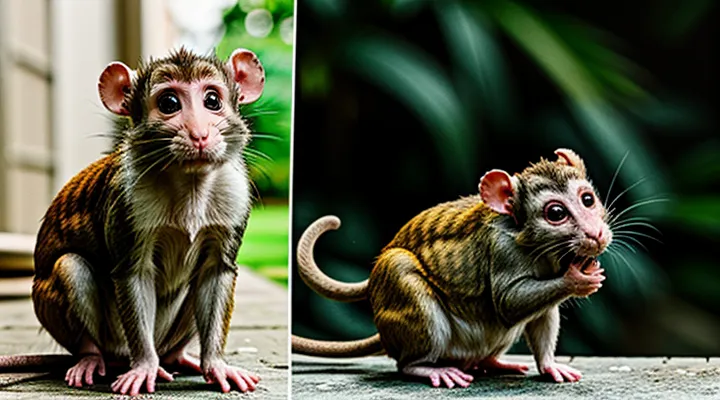
Introduction to Animal Behavior Studies
Methodological Approaches
Observational Studies
Observational research on the behavioral patterns of rats and monkeys yields direct insight into species‑specific strategies for foraging, social interaction, and risk assessment. Field and laboratory recordings capture spontaneous actions without experimental manipulation, allowing researchers to quantify natural frequencies, durations, and sequences of behaviors.
Key elements of such studies include:
- Continuous video monitoring to document locomotion, grooming, and play.
- Ethograms defining observable units for each species, ensuring consistent coding across observers.
- Inter‑observer reliability checks that maintain data integrity.
- Statistical models (e.g., mixed‑effects logistic regression) that accommodate individual variability and repeated measures.
Comparative analysis reveals distinct temporal patterns: rats typically exhibit rapid, repetitive exploration bouts, whereas monkeys display flexible, context‑dependent foraging sequences. Social structures also differ; rats form hierarchical clusters with limited affiliative exchange, while monkeys engage in complex grooming networks that reinforce group cohesion.
Environmental variables—light intensity, enclosure complexity, and predator cues—modulate behavior consistently across both taxa, highlighting shared adaptive responses despite divergent evolutionary histories. The accumulation of detailed observational records thus provides a robust foundation for interpreting ecological and neurological mechanisms underlying mammalian behavior.
Experimental Designs
Experimental investigations that contrast rodent and primate behavior require designs capable of isolating homologous processes while accommodating species‑specific constraints. Researchers select paradigms that can be implemented with minimal procedural variation, ensuring that observed differences reflect intrinsic behavioral traits rather than methodological artifacts.
Typical designs include:
- Cross‑species task adaptation – identical stimulus–response contingencies presented in species‑appropriate formats (e.g., touchscreen for primates, operant chamber for rats).
- Parallel testing – simultaneous execution of comparable tasks in separate cohorts, allowing direct statistical comparison.
- Within‑subject longitudinal assessment – repeated measures across developmental stages within the same individuals, revealing ontogenetic trajectories.
- Factorial manipulation of environmental variables – systematic variation of reinforcement schedules, social context, or stressors to evaluate interaction effects.
Key methodological considerations focus on ethical compliance, sample size justification, and the selection of behavioral endpoints that are quantifiable across taxa. Motor capabilities, sensory modalities, and motivational systems differ markedly; therefore, calibration of task difficulty and reward magnitude must be species‑specific yet conceptually parallel. Recording technologies (e.g., video tracking, electrophysiology) should be synchronized to enable temporal alignment of behavioral events.
Statistical analysis generally employs mixed‑effects models that accommodate nested data structures (individuals within species) and repeated observations. Post‑hoc contrasts test hypotheses about interspecies differences while controlling for multiple comparisons. Effect‑size metrics provide a common scale for interpreting the magnitude of behavioral divergence.
Overall, rigorous experimental design integrates comparable task architecture, controlled environmental manipulation, and robust statistical frameworks to produce valid conclusions about behavioral parallels and distinctions between rats and monkeys.
Behavioral Traits of Rats
Social Dynamics
Group Structure
Rats typically form fluid, loosely organized colonies that fluctuate in size according to resource availability. Individuals maintain a dominance hierarchy, but the structure lacks permanent subgroups; affiliative grooming occurs primarily among neighbors rather than within stable cliques. In contrast, monkeys exhibit more rigidly defined social units. Species such as macaques or baboons organize into multi‑male, multi‑female troops with clear kinship bonds, stable alliances, and rank hierarchies that persist across seasons.
Key distinctions in group architecture:
- Stability – Rat colonies display rapid turnover; monkey troops retain members for years.
- Hierarchy – Rat dominance is linear but can be contested frequently; monkey hierarchies are often nepotistic, with rank inherited or reinforced through coalition support.
- Cohesion mechanisms – Rats rely on spatial proximity and scent marking; monkeys employ grooming, vocalizations, and coordinated movement to reinforce bonds.
- Territoriality – Rat groups defend limited foraging patches; monkey troops patrol extensive home ranges, defending boundaries against rival groups.
Both taxa employ social structures to optimize access to food, mates, and safety, yet the rat model reflects a flexible, opportunistic aggregation, whereas the monkey model embodies a complex, enduring network of relationships.
Communication Patterns
Rats and monkeys employ distinct communication systems that reflect their ecological niches and social structures. Both species rely on vocalizations, olfactory cues, and tactile signals, yet the complexity and context of each modality differ markedly.
Rats primarily use ultrasonic vocalizations (USVs) to convey emotional states. USVs peak at 50 kHz during positive interactions such as mating, while 22 kHz calls signal distress or predator presence. Olfactory communication dominates rat social life; scent marks deposited on bedding or objects transmit information about individual identity, reproductive status, and territorial boundaries. Tactile contact, especially whisker-to-whisker touching, reinforces hierarchy and facilitates grooming exchanges.
Monkeys display a broader vocal repertoire, ranging from short alarm calls to elaborate contact calls that maintain group cohesion across dense forest canopies. Vocal signals often encode predator type, food location, or social intent. Visual gestures—facial expressions, hand signals, and body postures—supplement vocal output, enabling nuanced interactions such as reconciliation or dominance assertion. Chemical signaling persists but plays a secondary role compared to primate species that rely heavily on visual and auditory channels.
Key comparative points:
- Frequency range: Rats operate in ultrasonic bands invisible to human hearing; monkeys produce audible frequencies within the human range.
- Signal function: Rat USVs are tightly linked to affective states; monkey calls embed detailed information about external events and social relationships.
- Modality hierarchy: Olfactory cues dominate rat communication; visual and auditory cues predominate in monkeys.
- Social context: Rat tactile exchanges reinforce short‑term hierarchies; monkey gestures support long‑term alliances and complex group dynamics.
These differences illustrate how each species has optimized communication for its specific environmental pressures and social demands.
Cognitive Abilities
Learning and Memory
Rats and monkeys serve as principal models for investigating learning and memory, allowing direct comparison of behavioral performance across a rodent and a primate. Both species acquire conditioned responses, yet the complexity of tasks they can master differs markedly.
Rats typically master spatial navigation in mazes, operant lever pressing, and trace conditioning with rapid acquisition curves. Monkeys extend these capabilities to visual discrimination, delayed match‑to‑sample, and tool‑use tasks that require integration of multiple sensory modalities and longer retention intervals.
Memory systems show species‑specific strengths. In rodents, hippocampal‑dependent spatial memory dominates, reflected in robust performance on radial‑arm and Morris water mazes. Primates exhibit pronounced working memory capacity, supported by dorsolateral prefrontal cortex activity during tasks that demand maintenance of information over several seconds. Additionally, monkeys display episodic‑like memory, demonstrated by recollection of specific events and temporal order.
Neurophysiological recordings reveal parallel mechanisms and divergences. Both species rely on long‑term potentiation (LTP) in hippocampal circuits for consolidation. Monkeys, however, show greater synaptic plasticity in prefrontal networks, correlating with their superior executive control. Pharmacological manipulations of NMDA receptors impair acquisition similarly in rats and monkeys, confirming conserved molecular pathways.
Key comparative observations:
- Spatial learning: rapid in rats, moderate in monkeys.
- Working memory: limited in rats, extensive in monkeys.
- Task complexity: simple conditioning in rats; multi‑modal discrimination and tool use in monkeys.
- Neural substrates: hippocampal LTP common; prefrontal plasticity more pronounced in monkeys.
- Pharmacological sensitivity: comparable NMDA‑mediated effects across species.
Problem-Solving Skills
Rats demonstrate rapid acquisition of spatial tasks, often solving mazes within a few trials by integrating tactile and olfactory information. Their problem‑solving repertoire includes navigating variable corridors, adjusting routes after obstacles, and exploiting simple lever mechanisms to obtain food. Performance improves markedly after repeated exposure, indicating efficient procedural learning.
Monkeys exhibit advanced manipulation of objects, employing multiple tools to retrieve hidden rewards and solving multi‑step puzzles that require planning. They can infer relationships between detached elements, apply abstract rules, and adapt strategies after observing conspecifics. Social transmission accelerates skill acquisition, allowing individuals to replicate solutions demonstrated by peers.
Key contrasts:
- Learning speed: rats achieve stable performance after fewer repetitions; monkeys refine solutions over longer sequences.
- Tool use: rats rely on basic lever presses; monkeys manipulate complex implements, combine tools, and modify them.
- Cognitive flexibility: rats adjust routes when barriers appear; monkeys restructure problem representations to address novel constraints.
- Social learning: rats show limited observational learning; monkeys frequently imitate and improve upon demonstrated techniques.
These comparative findings suggest divergent evolutionary pressures on problem‑solving mechanisms, with rodents optimizing rapid procedural adaptation and primates developing sophisticated, socially mediated reasoning.
Foraging Strategies
Food Acquisition
Rats and monkeys exhibit distinct strategies for obtaining food, reflecting differences in sensory emphasis, foraging range, and social dynamics. Rats rely heavily on olfactory cues, navigating complex mazes and burrow systems to locate scattered seeds, insects, and refuse. Their nocturnal activity pattern reduces competition with diurnal species and allows exploitation of waste substrates. Energetic efficiency is maximized through rapid, opportunistic scavenging and the ability to store small quantities in cheek pouches.
Monkeys, in contrast, integrate visual assessment with spatial memory to identify fruiting trees, insects, and anthropogenic sources across large home ranges. Diurnal foraging involves group coordination, with dominant individuals often leading movements toward high‑yield sites while subordinate members exploit peripheral resources. Tool use—such as using stones to crack nuts—extends dietary breadth and enhances extraction of protected nutrients. Social sharing mechanisms, including food offering and reciprocal grooming, reinforce group cohesion and increase overall intake.
Key comparative points:
- Sensory priority: olfaction (rats) vs. vision and memory (monkeys)
- Temporal niche: nocturnal (rats) vs. diurnal (monkeys)
- Spatial scale: confined burrows and urban alleys (rats) vs. extensive arboreal territories (monkeys)
- Social structure: solitary or small groups with limited sharing (rats) vs. larger troops with cooperative feeding (monkeys)
These differences underscore how each species adapts its food acquisition methods to ecological constraints and evolutionary pressures.
Cache Management
Cache management in animal behavior refers to the selective retention, organization, and retrieval of food items or information. The principle mirrors computer systems that store frequently accessed data to reduce latency and conserve resources.
Rats exhibit a rapid‑turnover cache system.
- Small quantities stored near foraging routes.
- Spatial memory updated after each retrieval.
- Frequent replenishment compensates for high predation risk.
Monkeys demonstrate a durable cache strategy.
- Larger stores hidden in arboreal niches.
- Long‑term memory supports retrieval after weeks.
- Social observation influences cache placement and sharing.
Comparison reveals distinct optimization goals. Rats prioritize speed and turnover, aligning with volatile memory buffers. Monkeys favor stability and capacity, resembling persistent storage layers. Understanding these natural models informs adaptive cache algorithms that balance latency, durability, and collaborative access.
Behavioral Traits of Monkeys
Social Dynamics
Hierarchy and Dominance
Rats and monkeys exhibit distinct social structures that reflect their evolutionary histories and ecological pressures. In rodent colonies, dominance is typically established through aggressive encounters, scent marking, and spatial control of nesting sites. High‑ranking individuals gain priority access to food and shelter, while subordinate members display avoidance behaviors and reduced grooming. This hierarchy is fluid; frequent challenges can shift rank within a few days, especially in dense populations where resource competition intensifies.
Primates, by contrast, maintain more complex dominance systems that integrate physical aggression with coalition building, grooming reciprocity, and vocal signaling. Senior individuals secure preferential feeding spots and mating opportunities, yet they also invest in social bonds that stabilize group cohesion. Subordinates often engage in appeasement gestures and strategic alliances to mitigate aggression and improve future rank prospects. Dominance hierarchies in monkeys tend to be more stable over longer periods, with clear rank gradients that influence reproductive success and stress hormone levels.
Key comparative points:
- Basis of dominance: Physical contests dominate rat interactions; primate dominance blends force with social negotiation.
- Stability: Rat hierarchies are volatile; monkey hierarchies persist across seasons.
- Communication: Rats rely on olfactory cues; monkeys employ visual, auditory, and tactile signals.
- Impact on health: Both species show rank‑related variations in cortisol, but monkeys exhibit stronger correlations with immune function due to prolonged social stress.
Understanding these divergent mechanisms clarifies how species adapt hierarchical organization to their ecological niches and informs laboratory models that use rodents and primates to study social behavior.
Grooming and Affiliation
Rats and monkeys exhibit distinct grooming patterns that reflect their social structures. In rats, self‑grooming follows a stereotyped sequence of fur cleaning, face washing, and genital inspection, typically performed in isolation or brief bouts with conspecifics during close contact. Monkeys engage in reciprocal grooming, using hands and teeth to remove parasites and debris from each other’s fur, skin, and facial regions. This mutual activity often lasts several minutes and occurs within stable social groups.
Affiliative behavior in both species is expressed through grooming but differs in function and frequency. Rats use allogrooming primarily to reinforce dominance hierarchies and reduce tension after aggressive encounters. Monkeys employ grooming to establish and maintain alliances, strengthen bonds, and negotiate access to resources such as food or mating opportunities.
Key comparative points:
- Initiation: Rats initiate grooming spontaneously or in response to stress; monkeys initiate grooming strategically to gain social capital.
- Duration: Rat grooming bouts are brief (seconds to a few minutes); monkey grooming sessions extend over several minutes and may involve multiple partners.
- Reciprocity: Rat allogrooming is often unilateral, with dominant individuals grooming subordinates; monkey grooming is typically reciprocal, with partners alternating roles.
- Physiological impact: Both species show reduced cortisol levels after grooming, yet monkeys display concurrent increases in oxytocin linked to pair‑bond formation, a response not documented in rats.
Overall, grooming serves as a primary mechanism for affiliation in both taxa, but the complexity, social intent, and interaction patterns diverge markedly between rodents and primates.
Cognitive Abilities
Tool Use
Rats demonstrate limited tool use, primarily involving manipulation of objects to obtain food. Laboratory experiments show that Norway rats can pull levers or push buttons when trained, but spontaneous tool-related behaviors are rare. Wild rodents occasionally use stones to crack seeds, yet such actions are context‑dependent and not generalized across individuals.
Monkeys exhibit a broader repertoire of tool-related activities. Capuchin and macaque species regularly select sticks to extract insects, use rocks to break hard‑shelled fruits, and combine multiple objects to solve complex tasks. Field observations confirm that tool use occurs without extensive training, indicating intrinsic problem‑solving capabilities.
Key comparative points:
- Frequency: Monkey tool use appears regularly in natural settings; rat tool use is sporadic and often experimentally induced.
- Complexity: Monkeys combine objects and modify tools; rats typically employ single, unmodified items.
- Learning: Monkeys display social transmission of techniques; rat tool behavior relies on individual conditioning.
- Ecological drivers: Arboreal foraging and dietary diversity in monkeys promote innovative tool use; ground‑dwelling rats face fewer selective pressures for such adaptations.
Neurobiological studies reveal that primate motor cortex and prefrontal regions expand with tool‑related tasks, whereas rodent neural circuits show modest activation during object manipulation. These differences suggest divergent evolutionary pathways influencing the development of tool‑using proficiency.
Cultural Transmission
Rats and monkeys exhibit distinct patterns of cultural transmission, reflecting differences in social structure and cognitive capacity. In rats, transmission occurs primarily through local enhancement and simple observational learning. Juveniles follow adult movements toward food sources, and repeated exposure leads to the adoption of foraging routes without explicit instruction. Evidence from laboratory maze experiments shows that rats can acquire efficient navigation strategies after observing a single conspecific, yet the learned behavior seldom persists beyond immediate contexts.
Monkeys demonstrate more complex cultural processes. Troop members engage in high‑fidelity imitation, teaching, and cumulative modification of behaviors. Studies of capuchin and macaque groups reveal that tool‑use techniques, grooming rituals, and vocalizations spread through vertical (parent‑offspring) and horizontal (peer‑to‑peer) pathways. These traditions can endure for generations, indicating the presence of social learning mechanisms that support behavioral accumulation.
Key contrasts include:
- Transmission fidelity: Rats rely on low‑precision copying; monkeys achieve high‑precision replication of motor patterns.
- Social learning routes: Rats favor opportunistic observation; monkeys employ deliberate teaching and role modeling.
- Behavioral persistence: Rat-acquired habits typically dissipate without reinforcement; monkey traditions often become entrenched cultural traits.
Understanding these divergences clarifies how species‑specific social environments shape the evolution of cultural transmission, informing comparative analyses of animal cognition and the origins of complex social learning.
Foraging Strategies
Diet Specialization
Rats and monkeys exhibit distinct dietary specializations that reflect divergent ecological niches and physiological adaptations. Rats are opportunistic omnivores; their diet includes grains, seeds, nuts, fruits, insects, and occasional carrion. Their incisors continuously grow, enabling efficient processing of hard kernels and fibrous material, while a short, simple gastrointestinal tract supports rapid digestion of varied food sources.
Monkeys display a broader spectrum of dietary strategies across species. Many tropical primates are primarily frugivorous, relying on ripe fruit for carbohydrates and sugars. Folivorous monkeys consume leaves rich in cellulose, necessitating an enlarged caecum and specialized microbial fermentation. Some species supplement with insects or small vertebrates, employing dexterous hands and complex foraging techniques.
Key comparative points:
- Food type preference: rats favor seeds and grains; monkeys range from fruit to leaves.
- Dental morphology: rodents possess continuously erupting incisors; primates have a full complement of cheek teeth for grinding.
- Digestive specialization: rats have a short gut suited for rapid turnover; folivorous monkeys possess enlarged fermentation chambers.
- Foraging behavior: rats exploit ground-level resources and human refuse; monkeys employ arboreal locomotion and tool use to access dispersed resources.
These differences illustrate how diet specialization drives morphological and behavioral divergence between the two mammalian groups.
Cooperative Hunting
Rats and monkeys exhibit distinct strategies when engaging in cooperative hunting, reflecting divergent social structures and ecological pressures. In rodents, coordinated predation typically involves brief, opportunistic alliances formed around abundant, short‑lived prey such as insects. These alliances are transient, dissolve after the capture, and rely on simple vocalizations and tactile cues to synchronize movements.
Monkeys, particularly species inhabiting forested environments, display more elaborate teamwork. Groups organize into roles—drivers, flankers, and interceptors—based on age, rank, and experience. Communication includes complex vocal sequences and visual signals that maintain cohesion over extended pursuits. The resulting hunts often target larger, more elusive prey, demanding sustained cooperation and strategic planning.
Key comparative points:
- Duration of cooperation: seconds to minutes in rats; minutes to hours in monkeys.
- Role differentiation: absent in rats; pronounced in monkeys.
- Communication complexity: limited acoustic/tactile signals in rats; multimodal vocal and gestural repertoire in monkeys.
- Prey size spectrum: small arthropods for rats; vertebrates and sizable insects for monkeys.
These differences underscore how social hierarchy, cognitive capacity, and habitat shape cooperative hunting across the two taxa.
Comparative Analysis of Rat and Monkey Behavior
Similarities in Cognitive Processes
Adaptability to Environment
Rats and monkeys exhibit distinct strategies for coping with environmental variability. Rodents rely on rapid reproductive cycles, short generation times, and flexible foraging habits to exploit transient resources. Primates, by contrast, depend on complex social structures, extended parental care, and cognitive mapping to adjust to habitat changes.
Both taxa demonstrate physiological plasticity, yet the mechanisms differ. Rats adjust metabolic rates and stress hormone levels within hours of altered temperature or food availability. Monkeys modulate hormonal profiles more slowly, aligning changes with seasonal shifts and social hierarchy dynamics.
Key comparative aspects of adaptability include:
- Reproductive timing: rats reproduce year‑round; monkeys synchronize breeding with favorable seasons.
- Cognitive flexibility: rats solve novel mazes using trial‑and‑error; monkeys employ abstract reasoning and tool use.
- Social organization: rats form loose colonies with fluid membership; monkeys maintain stable groups with defined roles.
- Habitat range: rats occupy urban, agricultural, and wild settings; monkeys are confined to forested or savanna environments with limited human encroachment.
These differences underscore divergent evolutionary solutions to environmental challenges, informing research on resilience and species‑specific conservation strategies.
Learning Mechanisms
Rats and monkeys exhibit distinct learning strategies that reflect their ecological niches and neural architectures. Comparative research isolates mechanisms such as stimulus‑response pairing, reward‑based modification, and social transmission, revealing species‑specific efficiencies.
Associative learning in rats relies on rapid formation of cue‑reward links within the dorsal striatum. Classical conditioning paradigms demonstrate robust acquisition after a few trials, with extinction occurring swiftly when contingencies change. Monkeys display slower acquisition but maintain stronger retention, mediated by the hippocampal‑prefrontal network that integrates contextual information.
Operant conditioning highlights divergent reinforcement processing. Rats adjust lever‑press rates in response to variable‑ratio schedules, showing high sensitivity to immediate reward magnitude. Monkeys modulate complex action sequences, incorporating delayed outcomes and hierarchical planning, a capability supported by extensive prefrontal circuitry.
Observational learning diverges sharply. Rats acquire simple motor patterns by direct imitation only under constrained conditions, whereas monkeys routinely extract task rules from conspecifics, applying them to novel contexts. This proficiency correlates with mirror‑neuron system activation in the inferior frontal gyrus and inferior parietal lobule.
Neurochemical substrates reinforce these patterns. Dopaminergic bursts in the ventral tegmental area drive reward prediction errors in both species, yet the magnitude and temporal dynamics differ. Rats exhibit phasic spikes tightly coupled to immediate reinforcement; monkeys display prolonged dopamine release that supports abstract goal representation.
Key comparative points:
- Acquisition speed: rats > monkeys for simple cue‑reward associations.
- Retention duration: monkeys > rats for contextual memories.
- Behavioral flexibility: monkeys excel in delayed, hierarchical tasks; rats excel in rapid, repetitive actions.
- Social learning capacity: monkeys demonstrate sophisticated rule extraction; rats show limited imitation.
Understanding these mechanisms informs translational models of cognition, guiding experimental design and therapeutic targeting across mammalian research.
Differences in Social Structures
Group Complexity
Rats and monkeys exhibit distinct patterns of group organization, influencing the complexity of their social systems. Rats typically form colonies of modest size, often ranging from a few individuals to several dozen. Their hierarchy is fluid, with dominance established through brief aggressive encounters and scent marking. Communication relies heavily on ultrasonic vocalizations and pheromonal cues, which coordinate foraging and predator avoidance. The limited group size reduces the need for sophisticated role differentiation, allowing rapid adjustments to environmental changes.
Monkeys, by contrast, develop larger, more stable troops that can encompass dozens to hundreds of members. Hierarchical structures are multi‑layered, featuring alpha individuals, sub‑alphas, and subordinate ranks. Social bonds are reinforced through grooming, vocal exchanges, and visual signals, creating intricate networks of alliances and reciprocity. The expanded group size demands advanced cognitive abilities for individual recognition, memory of past interactions, and strategic coalition building. Consequently, monkey societies display higher levels of coordination, task specialization, and conflict resolution mechanisms.
Key dimensions of group complexity include:
- Size: Rat colonies remain small; monkey troops can be extensive.
- Hierarchy: Rat dominance is transient; monkey hierarchies are persistent and multi‑tiered.
- Communication channels: Rats depend on ultrasonic and chemical signals; monkeys employ vocal, visual, and tactile modalities.
- Cognitive demands: Rat groups require limited memory; monkey groups necessitate long‑term social memory and strategic planning.
These differences illustrate how group composition shapes behavioral strategies in each species, with rat societies favoring rapid, flexible responses and monkey societies supporting elaborate social coordination.
Communication Modalities
Rats and monkeys exhibit distinct communication repertoires that reflect their ecological niches and social structures. Understanding these repertoires clarifies how each species transmits information essential for survival and group cohesion.
Rats rely primarily on acoustic, chemical, and tactile channels.
- Ultrasonic vocalizations (USVs) convey emotional states, alarm signals, and mating readiness; frequencies exceed human hearing range.
- Pheromonal deposits provide territorial markers and reproductive cues; detection occurs through the vomeronasal organ.
- Whisker‑mediated tactile contact supports nest building, grooming, and hierarchy reinforcement.
Monkeys employ a broader multimodal system that integrates vocal, visual, and gestural signals.
- Species‑specific vocalizations range from alarm cries to contact calls, each with defined frequency patterns and temporal structures.
- Facial expressions encode aggression, submission, and affiliation; rapid muscle movements generate recognizable configurations.
- Hand‑based gestures, body postures, and locomotor displays supplement vocal output, enabling nuanced social negotiations.
Comparative assessment reveals complementary strengths. Rats emphasize high‑frequency acoustic signals and olfactory cues, suitable for dense burrow environments and limited visual range. Monkeys prioritize visual and gestural channels, aligning with arboreal habitats where line‑of‑sight communication is advantageous. Both taxa use vocalizations to coordinate group activities, yet monkeys display greater combinatorial complexity, allowing simultaneous transmission of multiple informational layers. The divergence in modality emphasis illustrates adaptive specialization shaped by differing ecological pressures and social demands.
Ecological Niche and Behavioral Adaptations
Impact of Habitat on Behavior
Rats and monkeys occupy markedly different environments, and these habitats shape distinct behavioral patterns. In urban and agricultural settings, rats encounter high population density, limited shelter, and constant human activity. This pressure drives nocturnal foraging, rapid territorial shifts, and heightened neophobia toward novel objects. Conversely, monkeys typically inhabit forested or semi‑forested regions where arboreal space provides abundant refuge and complex three‑dimensional pathways. Such conditions promote diurnal activity, social grooming networks, and sophisticated problem‑solving in foraging tasks.
Key habitat influences on behavior include:
- Resource distribution – Scattered, unpredictable food sources in rat habitats favor opportunistic feeding and extensive home‑range exploration, while clustered fruiting trees in monkey territories support group foraging and coordinated movement.
- Predation risk – Open ground exposure forces rats to rely on speed and burrow use, resulting in heightened vigilance and quick escape responses; arboreal habitats afford monkeys visual cover and escape routes, encouraging social alarm calls and collective vigilance.
- Social structure – Dense, transient rat colonies lead to loose hierarchies and frequent aggression over nesting sites; stable monkey troops develop complex dominance hierarchies, coalition formation, and long‑term affiliative bonds.
These contrasts illustrate that habitat characteristics—spatial complexity, resource predictability, and predator presence—directly modulate activity cycles, social organization, and risk‑assessment strategies in both species.
Evolutionary Pressures
Rats and Old World monkeys have adapted to distinct ecological niches, and the selective forces shaping their behavior differ markedly. In rodents, rapid reproductive cycles and high predation risk favor short‑term foraging efficiency, boldness, and flexible diet selection. In contrast, primates experience longer juvenile periods, complex social hierarchies, and reliance on cognitive problem‑solving, which promote cooperation, delayed gratification, and extensive learning.
Key evolutionary pressures influencing each lineage include:
- Predation intensity: rodents encounter numerous aerial and terrestrial hunters, selecting for vigilance bursts and rapid escape; primates face fewer predators but must navigate intra‑group aggression.
- Reproductive strategy: high litter sizes in rats drive competition for immediate resources; monkeys’ low offspring numbers favor parental investment and social bonding.
- Resource distribution: scattered, unpredictable food sources for rats encourage opportunistic sampling; monkeys exploit seasonal fruiting trees, encouraging memory and spatial mapping.
- Social complexity: limited group cohesion in rats leads to solitary foraging; extensive grooming networks and dominance hierarchies in monkeys demand sophisticated communication and alliance formation.
These pressures generate divergent behavioral repertoires: rats exhibit heightened neophobia, rapid habituation, and exploratory bursts, whereas monkeys display prolonged learning curves, strategic planning, and nuanced social signaling. The contrast illustrates how divergent ecological demands sculpt distinct adaptive responses within mammalian lineages.
Implications for Behavioral Science
Contributions to Understanding Intelligence
Research on rats and monkeys has yielded measurable advances in the field of comparative cognition. Controlled maze experiments with rats reveal spatial learning curves that can be quantified across trials, providing baseline data on associative memory. Parallel studies with macaques demonstrate problem‑solving capacities in tool use, allowing direct assessment of abstract reasoning beyond simple conditioning.
Key contributions include:
- Identification of neural substrates linked to working memory through lesion studies in both species, confirming the involvement of prefrontal regions in task retention.
- Development of cross‑species paradigms for assessing decision‑making under uncertainty, establishing comparable metrics for risk evaluation.
- Validation of genetic manipulation techniques in rodents that inform the role of specific genes in intelligence, with findings subsequently tested in primates for translational relevance.
These outcomes collectively refine theoretical models of intelligence by integrating data from a small mammal and a higher primate, highlighting both conserved mechanisms and species‑specific adaptations. The comparative approach thus grounds abstract concepts of cognition in observable behavioral evidence.
Insights into Social Evolution
Comparative analysis of murine and primate social systems provides concrete evidence of evolutionary pathways that shape group organization. Rats exhibit flexible, fluid hierarchies that adjust rapidly to changes in resource availability, while monkeys maintain more stable dominance structures supported by long‑term alliances and vocal signaling. These divergent strategies illustrate how ecological pressures drive distinct solutions to collective living.
- Group size: rats form colonies of dozens; monkeys sustain troops of hundreds.
- Hierarchy: rat dominance fluctuates; monkey rank remains relatively fixed.
- Communication: rats rely on ultrasonic calls and scent marks; monkeys employ facial expressions, vocalizations, and gestural repertoires.
- Cooperation: rats display opportunistic sharing of food; monkeys engage in coordinated foraging and infant care.
The observed patterns align with selective forces such as predation risk, habitat complexity, and reproductive competition. High predation environments favor rapid hierarchy turnover, as seen in rats, whereas stable arboreal habitats support enduring social bonds, characteristic of monkeys. Resource dispersion influences cooperative behavior; dispersed food sources encourage individual foraging in rats, while clustered resources enable coordinated exploitation among monkeys.
These insights refine models of social evolution by linking specific behavioral traits to adaptive contexts. Understanding the contrast between murine flexibility and primate stability informs predictions about the emergence of complex social cognition across mammalian lineages.