
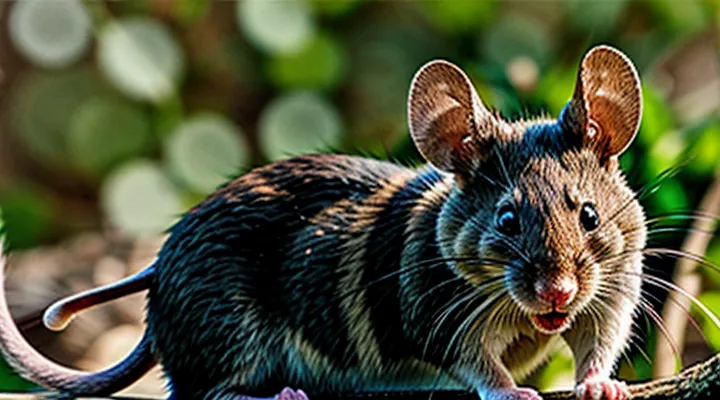
Understanding Rabies
What is Rabies?
Viral Agent
Rabies is caused by a single‑stranded, negative‑sense RNA virus belonging to the genus Lyssavirus. The virion measures approximately 180 nm in diameter, encapsidates its genome in a helical nucleocapsid, and is surrounded by a lipid envelope studded with glycoprotein spikes that mediate neuronal entry. Replication occurs exclusively in neuronal tissue, where the virus travels retrograde along axons to the central nervous system.
Mice are susceptible to experimental infection, yet natural transmission is rare. The virus requires saliva from a biting host to enter peripheral nerve endings; direct contact without a bite does not result in infection. In laboratory settings, intracerebral inoculation can produce disease, but such routes do not reflect typical exposure scenarios in wild or domestic mouse populations.
Key characteristics of the rabies virus relevant to murine hosts include:
- High neurotropism: replication confined to nervous tissue, leading to rapid clinical progression.
- Limited peripheral replication: minimal replication in muscle or other non‑neural tissues.
- Species‑specific shedding: virus detected in saliva of infected carnivores, but not reliably in mouse oral secretions.
Evidence from field studies indicates that mice do not serve as reservoirs for the virus. Outbreak investigations consistently identify carnivorous mammals—especially canids and felids—as primary sources of transmission to humans and other animals. Consequently, the notion that mice commonly transmit rabies lacks empirical support.
Transmission Routes
Rabies virus reaches mice primarily through direct exposure to infectious saliva. Bites from rabid carnivores or other infected rodents introduce the virus into the subcutaneous tissue, where it travels retrograde along peripheral nerves to the central nervous system. Aerosolized virus particles can infect mice housed in confined, poorly ventilated environments where large quantities of virus are present, such as laboratory settings with infected tissue homogenates. Contact with contaminated neural tissue, brain homogenate, or neural debris during handling or necropsy provides another viable pathway, especially when protective barriers are inadequate. Evidence for vertical transmission—passage from dam to offspring via placenta or milk—is lacking; experimental studies have not demonstrated consistent maternal‑fetal spread.
- Bite from a rabid animal (subcutaneous inoculation)
- Inhalation of aerosolized virus in high‑density, poorly ventilated areas
- Direct contact with infected neural tissue or brain homogenate
- Iatrogenic introduction during experimental inoculation (intracerebral or intramuscular)
These routes represent the only documented mechanisms by which mice acquire rabies under natural or laboratory conditions.
Symptoms in Animals
Behavioral Changes
Rabies infection in mice produces distinct alterations in behavior that have been documented in laboratory studies. Experimental inoculation with the virus leads to a predictable progression of neurological signs, beginning with subtle changes and culminating in severe dysfunction.
Early manifestations often include reduced locomotor activity and diminished exploratory behavior. Affected mice display decreased rearing and fewer entries into novel arenas when compared with uninfected controls. These observations suggest that the virus interferes with the neural circuits governing motivation and anxiety.
As the disease advances, aggression becomes more pronounced. Infected individuals may bite handlers, exhibit heightened territoriality, and show an increased propensity to attack conspecifics. This shift from passivity to hostility aligns with the virus’s targeting of the limbic system and brainstem nuclei that regulate fear and defensive responses.
Later stages are characterized by motor impairment. Paralysis, typically beginning in the hind limbs, progresses to generalized atonia. Concurrently, respiratory distress emerges due to involvement of the medullary respiratory centers. The transition from hyperactive aggression to flaccid paralysis reflects the widespread neuronal damage caused by viral replication.
A concise summary of observed behavioral changes:
- Decreased exploratory activity and reduced movement
- Onset of hyperaggressive tendencies, including biting
- Loss of normal social interactions and increased territoriality
- Progressive motor weakness leading to paralysis
- Respiratory dysfunction in terminal phases
These patterns are reproducible across multiple strains of the virus and are supported by histopathological evidence of encephalitic inflammation. The documented sequence of behavioral alterations contradicts anecdotal claims that mice remain unaffected or exhibit only minor symptoms during rabies infection.
Physical Manifestations
Mice can develop rabies after experimental inoculation, and the disease produces distinct physical changes that differ from those seen in larger mammals. Observable signs appear within 5–10 days post‑infection and progress rapidly.
- Aggressive biting or unprovoked attacks
- Excessive salivation, often accompanied by foamy oral discharge
- Tremors or convulsive movements of limbs and facial muscles
- Uncoordinated gait, frequent stumbling, and loss of balance
- Abnormally bright or glazed eyes, sometimes with dilated pupils
- Elevated body temperature and rapid breathing
These manifestations reflect central nervous system involvement and peripheral autonomic disturbance. The intensity of each symptom varies with viral strain, inoculation route, and individual susceptibility. Early detection relies on recognizing the combination of hyperactivity, excessive drooling, and motor dysfunction, which together distinguish rabies from other neurological conditions in mice.
Rabies in Mice: The Scientific Perspective
Susceptibility of Rodents to Rabies
Experimental Studies
Experimental investigations have repeatedly addressed whether laboratory mice can sustain natural rabies virus replication. Early intracerebral inoculations demonstrated that mice develop fatal encephalitis when the virus bypasses peripheral barriers, confirming that the central nervous system of Mus musculus is permissive to rabies replication under artificial conditions. However, peripheral routes such as subcutaneous or intramuscular exposure yield low infection rates, suggesting that natural transmission through bites is inefficient in this species.
Controlled studies have identified several variables that influence experimental outcomes.
- Virus strain: Fixed laboratory strains produce consistent mortality, whereas street isolates often fail to cause disease in mice after peripheral inoculation.
- Dose: High viral loads (≥10⁶ LD₅₀) increase the likelihood of peripheral infection, yet the required dose exceeds typical exposure levels in wild settings.
- Age and genetic background: Young adult mice of inbred strains (e.g., BALB/c, C57BL/6) show higher susceptibility than outbred or senescent cohorts.
- Route of administration: Direct intracerebral injection circumvents immune defenses, producing uniform lethality; intramuscular injection results in variable latency and occasional subclinical seroconversion.
The consensus from these experiments is that mice can serve as a reliable model for studying rabies pathogenesis when the virus is delivered directly to the brain, but they do not represent a natural reservoir or efficient transmission vector. Consequently, the notion that mice are common carriers of rabies in the wild lacks empirical support, while their utility in laboratory research remains well established.
Natural Infections
Natural rabies infection in wild‑caught mice has been documented only sporadically. Surveillance reports from North America and Europe list a few instances where rodent specimens tested positive for lyssavirus antigen by fluorescent antibody testing. These cases typically involve mice found dead in proximity to confirmed rabid carnivores, suggesting incidental exposure rather than sustained transmission within rodent populations.
Experimental inoculation studies provide additional insight. When laboratory mice receive intramuscular inoculation of fixed rabies strains, most develop clinical disease, indicating susceptibility under artificial conditions. However, peripheral inoculation with low‑dose field isolates often fails to produce infection, reflecting a high species barrier under natural exposure routes.
Key observations from field and laboratory data:
- Wild mice rarely serve as primary reservoirs; detection frequency remains below 0.1 % of examined specimens.
- Virus isolation from mouse brain tissue is successful only when the animal is found near a confirmed rabid predator.
- Serologic surveys show low prevalence of neutralizing antibodies, implying limited natural exposure.
- Transmission experiments demonstrate that infected mice can shed virus in saliva, yet documented mouse‑to‑mouse spread is absent.
The consensus among virologists and wildlife disease experts is that natural rabies infection in mice occurs, but at a negligible level that does not contribute to the epidemiology of the disease. Consequently, public health policies do not consider mice a significant rabies vector, focusing control measures on carnivores and bats.
Factors Influencing Transmission to Mice
Viral Load
Viral load quantifies the amount of rabies virus present in mouse tissues and fluids at a given time. Accurate measurement relies on reverse‑transcription quantitative PCR, virus isolation in cell culture, or immunofluorescence assays. In experimentally infected mice, peak titers typically appear 3–5 days post‑inoculation in the brain, reaching 10⁶–10⁸ RNA copies per milligram of tissue, while peripheral sites such as salivary glands show lower concentrations until late stages of disease.
Key observations regarding murine viral burden:
- Early peripheral replication is detectable in the inoculation site within 24 hours, but systemic spread remains limited until the virus traverses peripheral nerves.
- Central nervous system invasion coincides with a rapid increase in viral RNA, correlating with the onset of clinical signs.
- Viral shedding in saliva becomes measurable only after the central load surpasses a threshold of approximately 10⁵ copies per milliliter, indicating that high brain titers are a prerequisite for transmission potential.
Interpretation of viral load data informs the distinction between genuine infection dynamics and anecdotal claims of asymptomatic carriers. Consistently, experimental evidence demonstrates that mice sustain high cerebral viral concentrations before any external transmission risk emerges, thereby refuting the notion that low‑level, non‑lethal infection in mice contributes to rabies spread.
Route of Exposure
Mice can acquire rabies virus through several distinct pathways, each influencing the likelihood of infection and disease progression.
Natural exposure primarily occurs via direct contact with infected saliva. This includes:
- Bite wounds inflicted by rabid carnivores or other rodents.
- Scratches contaminated with saliva, though transmission efficiency is lower than through bites.
- Mucosal contact when saliva contacts the eyes, nose, or mouth, providing a portal for viral entry.
Aerosolized virus represents a less common but documented route, especially in laboratory settings where high viral loads are present in the air. Inhalation of infectious particles can lead to respiratory tract infection, bypassing the usual dermal or mucosal barriers.
Experimental inoculation expands the range of possible routes, allowing researchers to assess pathogenicity under controlled conditions. Common laboratory methods include:
- Intramuscular injection, delivering virus directly into muscle tissue and mimicking a bite.
- Subcutaneous injection, simulating superficial wound exposure.
- Intracerebral injection, used to investigate neuroinvasion but not reflective of natural infection.
- Oral administration, testing the capacity of the virus to survive gastric passage and infect via the gastrointestinal tract.
Each route imposes different barriers to viral replication. Dermal and mucosal breaches provide immediate access to peripheral nerves, facilitating rapid transport to the central nervous system. Aerosol exposure requires the virus to cross respiratory epithelium and may result in a delayed onset of neurological signs. Experimental routes, while valuable for mechanistic studies, do not represent typical exposure scenarios for wild or domestic mice.
Immune Response
Mice infected with rabies virus mount a rapid innate response dominated by type‑I interferon production and activation of natural killer cells. Interferon‑α/β signaling induces transcription of antiviral genes that limit viral replication within peripheral nerves. NK cells recognize infected cells through reduced MHC‑I expression and release perforin and granzyme, contributing to early viral clearance.
The adaptive arm engages within 5–7 days post‑exposure. CD8⁺ cytotoxic T lymphocytes identify viral peptides presented by MHC‑I on neurons and eliminate infected cells. Concurrently, CD4⁺ helper T cells provide cytokine support that enhances B‑cell maturation. Antibody production targets the viral glycoprotein G, neutralizing extracellular virions and preventing spread to the central nervous system.
Key immunological features observed in experimental mouse models:
- Early surge of IFN‑α/β and ISG (interferon‑stimulated gene) expression.
- NK‑cell cytotoxic activity detectable within 48 hours.
- Expansion of virus‑specific CD8⁺ T‑cell clones by day 6.
- Appearance of high‑affinity IgG antibodies against glycoprotein G after day 8.
- Clearance of virus from peripheral tissues in >80 % of inoculated animals lacking neuroinvasion.
These data demonstrate that the murine immune system can effectively control rabies virus replication in peripheral sites, reducing the likelihood of fatal encephalitis when infection does not reach the brain.
The Myth of Rabid Mice
Common Misconceptions
Aggression in Rodents
Rabies is often cited as a cause of heightened aggression in small rodents, yet laboratory studies provide limited support for this claim. Experimental infection of mice with the rabies virus typically results in neurological signs such as paralysis, ataxia, and weight loss rather than overt aggression. When aggressive behavior does appear, it aligns with species‑specific social hierarchies rather than viral influence.
Key observations:
- Infected mice frequently exhibit reduced activity and social withdrawal.
- Aggressive encounters increase in uninfected populations during territorial disputes, especially in overcrowded cages.
- Neuropathological analyses show viral replication in brain regions governing motor function, not in limbic structures associated with aggression.
The misconception stems from extrapolating observations in larger mammals, where rabies commonly induces biting and hostile actions. Rodents lack the same behavioral repertoire, and the virus does not reliably trigger the same pathways. Consequently, aggression in rodents should be evaluated based on environmental stressors, genetic predisposition, and social dynamics rather than assumed rabies effects.
Urban Legends
Urban folklore frequently portrays mice as carriers of rabies, suggesting that a single bite can transmit the virus to humans or pets. Stories circulate in online forums, horror movies, and anecdotal reports, often depicting mice as stealthy vectors that spread the disease silently through urban environments.
Scientific literature indicates that mice have a low susceptibility to rabies virus. Laboratory studies show limited viral replication in murine neural tissue, and natural infections in wild mouse populations are exceedingly rare. Surveillance data from public health agencies report no confirmed cases of rabies transmission from mice to humans or domestic animals.
Typical elements of the myth include:
- A mouse bite leading to immediate onset of rabies symptoms.
- Infected mice roaming city sewers and contaminating food supplies.
- The belief that mouse saliva contains higher viral loads than that of larger mammals.
These claims persist because they tap into common fears of hidden disease threats in densely populated areas. Empirical evidence, however, demonstrates that the risk of rabies transmission from mice is negligible compared to established reservoirs such as raccoons, bats, and foxes.
Why Rabies in Mice is Rare
Short Lifespan
Mice typically live 12–24 months in the wild and 18–30 months under laboratory conditions. Their rapid turnover means most individuals die before reaching the age at which chronic infections could become established.
The incubation period for rabies virus ranges from weeks to several months, depending on the inoculation site and viral strain. Because a mouse’s life expectancy often falls below the lower bound of this interval, the probability that a mouse will survive long enough to develop clinical rabies is extremely low.
Consequences for disease ecology:
- Short-lived hosts provide limited windows for viral replication and shedding.
- Transmission cycles that rely on prolonged host survival, such as those seen in carnivores, are unlikely to involve mice.
- Surveillance data rarely detect rabies-positive mice, reinforcing the view that murine rabies cases are exceptional rather than typical.
Predatory Behavior
Rabies infection in mice raises the specific claim that the disease induces predatory actions. The virus targets the central nervous system, producing hyperactivity, excessive salivation, and heightened aggression in many carnivorous hosts. These symptoms facilitate transmission when infected animals bite or scratch potential victims.
Experimental inoculation of laboratory mice with rabies strains consistently yields a pattern of erratic movement, loss of coordination, and indiscriminate biting of conspecifics. Observations do not include pursuit or killing of other species, which defines predatory behavior. Field surveys of wild rodent populations reporting rabies cases similarly note increased agitation but no shift toward hunting.
Documented behavioral alterations in rabid mice:
- Uncoordinated locomotion and frequent stumbling.
- Frequent oral secretions leading to self‑grooming and drooling.
- Aggressive biting directed at any encountered animal, regardless of size.
- Absence of stalking, pouncing, or prey capture techniques.
The lack of hunting sequences indicates that rabies does not convert mice into predators. The myth linking the disease to predatory conduct stems from misinterpretation of generalized aggression. Evidence supports the conclusion that rabies‑induced aggression in mice remains non‑predatory.
Viral Dynamics
Rabies virus (RABV) circulates primarily among carnivores and bats; rodents are rarely identified as natural carriers. Experimental inoculation of Mus musculus demonstrates that the virus can enter peripheral nerves, travel retrogradely to the central nervous system, and achieve detectable titers within 48 hours post‑exposure. Peak viral load in brain tissue typically occurs between days 5 and 7, followed by a rapid decline coincident with neuronal degeneration and host mortality.
In controlled studies, subcutaneous administration of 10^3 TCID₅₀ results in infection rates exceeding 80 % in laboratory strains, whereas intranasal exposure yields infection in less than 5 % of subjects. Intracerebral inoculation bypasses peripheral barriers, producing uniform lethality within 72 hours. Viral replication follows a stereotyped pattern: peripheral replication → axonal transport → widespread CNS dissemination → peripheral shedding, primarily in salivary glands during the terminal phase.
Key observations supporting the experimental model:
- Viral RNA detectable in brain homogenates by quantitative PCR as early as 24 hours post‑inoculation.
- Immunohistochemistry reveals antigen accumulation in hippocampus, cerebellum, and brainstem, correlating with clinical signs of agitation and paralysis.
- Seroconversion occurs in a minority of survivors, indicating limited adaptive immune response before fatal encephalitis.
These data confirm that mice can sustain productive rabies infection under laboratory conditions, yet the species does not maintain the virus in natural ecosystems. The high susceptibility observed in experimental settings does not translate to a reservoir status, dispelling the notion that rodents serve as a significant source of transmission to humans or other animals.
Public Health Implications
Risk Assessment
Bites from Rodents
Rodents are rarely carriers of the rabies virus. Surveillance data from North America and Europe show less than 0.1 % of tested mice and rats test positive for rabies, whereas bats, raccoons, foxes and skunks account for the majority of wildlife cases.
Mice that are infected usually die quickly, limiting the period during which the virus can be transmitted through saliva. Laboratory experiments confirm that the virus does not persist in mouse salivary glands long enough to pose a realistic threat to humans.
Key facts about rodent bites and rabies risk:
- The probability of acquiring rabies from a mouse bite is exceedingly low (estimated < 1 in 10 000 exposures).
- Most documented human rabies cases involve carnivorous mammals, not small rodents.
- Proper wound cleaning (irrigation with soap and water for at least 15 seconds) significantly reduces infection risk from any animal bite.
- Post‑exposure prophylaxis is recommended only when the biting animal is suspected or confirmed to be rabid, or when local epidemiology indicates a high prevalence of rabies in the species.
Health authorities advise that routine rabies vaccination is unnecessary after a bite from a healthy mouse. Medical evaluation should focus on wound management and assessment of tetanus status rather than rabies concern.
Monitoring Wild Populations
Monitoring wild mouse populations for rabies requires systematic field sampling, laboratory confirmation, and data integration. Researchers capture rodents using Sherman traps or live‑capture cages placed along transects that reflect habitat heterogeneity. Each specimen undergoes necropsy, with brain tissue tested by direct fluorescent antibody assay or RT‑PCR to detect viral antigen or nucleic acid. Positive results are recorded with GPS coordinates, age class, and species identification to enable spatial analysis.
Data collection follows a standardized schedule, typically monthly or seasonally, to capture temporal fluctuations. Sampling intensity is adjusted according to population density estimates derived from mark‑recapture studies. When capture rates fall below predetermined thresholds, supplemental effort—such as baited stations or increased trap density—is deployed to maintain statistical power.
Interpretation of surveillance outcomes hinges on prevalence calculation, confidence interval estimation, and trend assessment. Researchers apply logistic regression or Bayesian hierarchical models to evaluate associations between rabies occurrence and environmental variables, including land‑use type, climate patterns, and predator abundance. Results inform risk maps that guide public health interventions and wildlife management policies.
Key components of an effective monitoring program include:
- Consistent trap placement and effort documentation
- Rapid transport of samples to accredited virology laboratories
- Use of validated diagnostic assays with appropriate controls
- Integration of ecological metadata for multivariate analysis
- Regular reporting to health authorities and scientific forums
Prevention and Control
Vaccination of Pets
Rabies is a universally fatal viral infection transmitted through the saliva of infected mammals. The belief that rodents, specifically mice, serve as a common source of rabies for pets lacks scientific support; laboratory data and field surveillance demonstrate that mice rarely develop clinical rabies and seldom act as vectors.
Vaccinating companion animals remains the primary defense against rabies exposure, regardless of myths about rodent involvement. Benefits of immunization include:
- Direct protection of the individual animal from infection.
- Elimination of potential transmission chains to humans and other animals.
- Compliance with legal mandates that enforce community health standards.
- Reduction of veterinary treatment costs associated with post‑exposure management.
Standard protocols recommend an initial rabies vaccine at three months of age, followed by a booster one year later, and subsequent boosters according to the product’s licensed duration, typically every one to three years. Maintaining up‑to‑date records ensures rapid response in the event of a confirmed case in wildlife or stray animals. Consistent vaccination of pets therefore upholds public safety and dispels misconceptions about unconventional rabies reservoirs.
Wildlife Management
Rabies virus infection in mice is exceptionally rare. Laboratory experiments have shown that most murine species resist viral replication, and field surveys rarely detect rabies antigen or RNA in wild mouse populations. Consequently, mice are not considered significant vectors for the disease.
Wildlife management programs address the low‑risk status of mice by focusing resources on primary reservoirs such as raccoons, foxes, and skunks. Surveillance protocols prioritize species with documented transmission cycles, while mouse sampling is limited to incidental collection during broader rodent monitoring.
Epidemiological data indicate that when mice are experimentally inoculated, viral titers remain low and mortality rates are high, limiting the potential for onward transmission. Molecular analyses of rabies isolates from wildlife rarely include murine-derived sequences, reinforcing the conclusion that mice do not sustain endemic infection.
Management actions include:
- Targeted vaccination of high‑risk carnivore populations.
- Habitat management to reduce contact between primary reservoirs and human dwellings.
- Routine diagnostic testing of carcasses from known reservoir species; mouse testing reserved for outbreak investigations.
- Public education emphasizing that rodent bites are unlikely to transmit rabies, while bites from recognized vectors require immediate medical evaluation.