
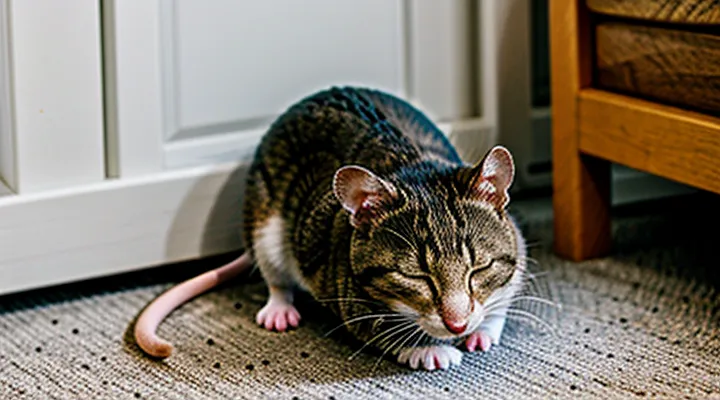
Understanding Feline Sleep Habits
Why Cats Sleep So Much
Cats devote a large portion of each day to sleep, typically 12–16 hours for adults and up to 20 hours for kittens. This pattern reflects their evolutionary heritage as ambush predators. Rest conserves the energy required for short, intense bursts of hunting, during which a cat may expend up to three times its resting metabolic rate. By sleeping extensively, felines minimize the need for frequent feeding, an advantage inherited from wild ancestors that faced unpredictable prey availability.
Sleep also supports physiological processes unique to felids. During slow‑wave sleep, growth hormone secretion peaks, facilitating tissue repair and development. Rapid‑eye‑movement (REM) sleep, which occupies a substantial fraction of a cat’s sleep cycle, is linked to neural plasticity, helping kittens refine motor skills and adult cats maintain sensory acuity. The high proportion of REM sleep distinguishes cats from many other mammals and underscores the importance of sleep for brain function.
External factors modulate sleep duration. Domestic cats living in safe, temperature‑controlled environments experience fewer disturbances, allowing longer uninterrupted periods. Age influences patterns: senior cats often increase total sleep time as metabolic efficiency declines and chronic conditions emerge. Light exposure and feeding schedules can also shift circadian rhythms, prompting adjustments in sleep‑wake cycles.
Key reasons for extensive feline sleep:
- Energy conservation for high‑intensity predation
- Hormonal regulation of growth and tissue repair
- Maintenance of neural pathways through REM activity
- Environmental stability reducing the need for vigilance
- Age‑related metabolic changes
Understanding these mechanisms clarifies why a cat may appear perpetually dormant, reinforcing the need for quiet surroundings when navigating near a sleeping feline.
Stages of Cat Sleep
Cats alternate between brief periods of light dozing and deeper, restorative sleep. The cycle begins with a drowsy phase in which the animal’s eyes flutter and muscles relax only slightly. During this stage, any sudden movement or noise can provoke a rapid awakening.
The next interval is a more stable sleep, characterized by slower breathing and reduced responsiveness to external stimuli. At this point, the cat’s body temperature drops slightly, and the animal remains largely unaware of its surroundings.
Following the stable phase, cats enter slow‑wave sleep. Brain activity shows high‑amplitude, low‑frequency waves, and the cat becomes immobile, with ears and whiskers still capable of subtle adjustments. Disturbances are less likely to cause arousal, but strong vibrations can still be detected.
The final stage is rapid eye movement (REM) sleep. Muscles are virtually paralyzed, while the brain exhibits activity similar to wakefulness. Eyes move behind closed lids, and occasional twitches of paws occur. Although the cat appears deeply asleep, auditory thresholds remain relatively low, making sudden sounds a potential trigger for awakening.
Typical feline sleep cycles last 15–30 minutes and repeat throughout the day, accumulating 12–16 hours of rest. Understanding these stages enables small rodents to adjust their behavior—moving slowly during light dozing, remaining still throughout stable and slow‑wave phases, and avoiding any abrupt noise during REM periods—to keep the sleeping cat undisturbed.
- Light dozing: eyes flutter, high sensitivity
- Stable sleep: slower breathing, reduced responsiveness
- Slow‑wave sleep: low‑frequency brain waves, minimal movement detection
- REM sleep: muscle atonia, low auditory threshold
By aligning activity with these intervals, mice can navigate the environment without triggering a cat’s awakening.
Stealth Strategies for Navigating a Sleeping Cat's Domain
The «Tip-Toe» Technique
The tip‑toe technique is a systematic approach for navigating a sleeping cat without causing a disturbance. It relies on three core principles: minimal contact, controlled breathing, and deliberate foot placement.
- Position yourself at a distance that allows a clear line of sight to the cat’s head, the most sensitive area.
- Lower your center of gravity by bending the knees slightly; this reduces the impact of each step.
- Place the heel of the foot first, then roll onto the ball, keeping the foot flat and avoiding sudden shifts.
- Synchronize each movement with a slow exhalation; the breath acts as a natural stabilizer for the torso.
- Use the pads of the toes for the final contact, distributing weight evenly across the foot.
Execution demands consistent practice. Begin with short distances, gradually extending the path as muscle memory develops. Over time, the method enables quiet passage around a dormant feline, preserving both the animal’s rest and the mover’s safety.
Mastering the «Silent Shuffle»
Moving past a dormant cat without triggering a reaction demands precise footwork, controlled breathing, and deliberate body positioning. The technique known as the “Silent Shuffle” eliminates sudden pressure changes that alert the animal’s whiskers and ears. Mastery begins with grounding: distribute weight evenly across the balls of the feet, keeping knees slightly flexed to absorb impact.
Key elements of the shuffle:
- Flat-foot contact – keep soles fully pressed to the floor; avoid heel lifts that produce audible thuds.
- Micro‑steps – advance no more than two inches per stride, allowing the body to adjust gradually.
- Controlled torso – maintain a straight spine, shoulders relaxed, and avoid torso sway that creates peripheral noise.
- Breath synchronization – inhale during the preparatory phase, exhale softly as the foot contacts the ground, minimizing internal sounds.
Practice sequence: start at a distance of three feet, perform ten cycles of the shuffle while observing the cat’s response. Incrementally reduce the gap by half after each successful set, ensuring the animal remains undisturbed. Record timing and footfall volume with a simple sound meter; aim for decibel levels below 30 dB.
Consistent repetition refines muscle memory, resulting in a fluid motion that passes unnoticed by even the most alert feline. The final indicator of proficiency is the ability to cross the cat’s line of sight without eliciting a twitch of its tail.
Minimizing Noise in a Cat-Populated Home
Soundproofing Solutions
Effective soundproofing for small rodents requires materials that absorb high‑frequency noises while maintaining structural integrity. Dense foams, acoustic panels, and rubberized underlays reduce vibrations transmitted through floors and walls, preventing audible disturbances that could rouse a resting feline.
- Closed‑cell polyurethane foam: blocks airborne sound, resists moisture, conforms to irregular surfaces.
- Mass‑loaded vinyl barrier: adds weight to partitions, lowers transmission of low‑frequency thuds.
- Fiberglass insulation with acoustic fabric: captures mid‑range frequencies, provides thermal regulation.
- Silicone‑based sealant: fills gaps around pipes and conduit, eliminates acoustic leaks.
Installation should prioritize sealed joints and continuous coverage. Overlapping seams and applying acoustic caulk around edges create an airtight envelope, further diminishing sound leakage. When constructing tunnels or hideouts, incorporate internal lining of the selected materials to ensure that the rodents’ movements remain inaudible.
Regular assessment of the acoustic environment, using a decibel meter, confirms that noise levels stay below the threshold that would disturb a sleeping cat. Adjustments—additional paneling or supplemental sealing—can be made promptly to maintain optimal quietness.
Choosing Quiet Household Items
Choosing household items that emit minimal noise is essential for maintaining a tranquil environment that prevents a sleeping cat from being startled.
Solid flooring such as cork, rubber, or dense carpet reduces footfall sounds compared to hardwood or tile. When replacing flooring, prioritize materials with high impact‑absorption ratings.
Appliances should be evaluated for vibration and motor noise. Opt for models labeled “quiet” or “low‑decibel,” and place them on anti‑vibration pads. Common choices include:
- Refrigerators with compressor insulation
- Dishwashers with sound‑proofing insulation
- Washing machines featuring inverter motors
Soft furnishings contribute significantly to acoustic dampening. Select curtains made from heavy fabrics, and use plush cushions and bean‑bag chairs instead of hard‑backed seating.
Cleaning tools can generate sudden spikes of sound. Use microfiber mops, silent vacuum cleaners, and rubber‑handled brooms. When possible, schedule noisy tasks for periods when the cat is active rather than asleep.
Pet accessories themselves should be silent. Choose:
- Silicone or fabric litter boxes with sealed lids
- Low‑profile scratching posts wrapped in carpeted material
- Toys constructed from soft rubber or plush fabric
Finally, arrange the layout to keep high‑traffic zones away from the cat’s preferred resting spots. Position noisy devices—such as the washing machine or entertainment system—on opposite sides of the room, and use room dividers or furniture to create a buffer zone.
Implementing these selections creates a consistently quiet household, allowing a cat to remain asleep without interruption.
Preventing Accidental Disturbances
Identifying Cat-Free Zones
When a cat is asleep, any area where the animal’s presence is unlikely becomes a safe path for small rodents. Recognizing these zones requires observation of spatial and sensory cues that deter feline activity.
Key indicators of cat‑free zones include:
- Elevated surfaces: Cats prefer ground‑level or low‑lying perches; shelves or ledges above the cat’s reach reduce the chance of accidental contact.
- Closed compartments: Boxes, drawers, or cages with secure lids create physical barriers that cats rarely attempt to breach.
- Quiet corners: Areas far from high‑traffic pathways, such as the back of a pantry or a rarely used storage room, experience fewer disturbances that could awaken the cat.
- Unfamiliar scents: Surfaces treated with mild, non‑toxic repellents (e.g., citrus or eucalyptus) discourage feline exploration.
- Soft flooring: Rugs or carpeted sections absorb sound, preventing the faint rustle of a mouse from alerting a nearby cat.
Mapping these characteristics on a floor plan clarifies safe routes. Mark each identified zone, verify that entry points are sealed, and ensure that the mouse’s movement stays within the designated boundaries. Continuous monitoring confirms that the cat remains undisturbed, allowing the mouse to navigate without triggering a wake‑up response.
Communicating with Housemates
Effective communication with housemates is essential when a cat is sleeping and any noise could cause distress. Clearly state the need for quiet, specify the times when the cat is most vulnerable, and outline the expected behavior.
- Inform all residents of the cat’s typical sleep schedule.
- Agree on a “quiet window” during which loud activities, such as vacuuming or music, are prohibited.
- Designate a specific area for noisy tasks that is far from the cat’s resting place.
- Establish a simple signal, such as a door sign, to indicate when the cat is asleep.
When discussing the arrangement, use direct language: “The cat sleeps from 10 p.m. to 6 a.m.; please keep noise below a conversational level during this period.” Confirm understanding by asking each housemate to repeat the key points. Document the agreement in a shared living‑room notice or digital group chat to provide a reference.
Regularly review the arrangement, especially after changes in the cat’s routine or household composition. Adjust the quiet periods or signal method as needed, and ensure all parties acknowledge the updates. Consistent, precise communication prevents accidental disturbances and maintains a harmonious living environment for both people and the cat.
The Benefits of a Well-Rested Feline
A Happier Cat
A content cat exhibits relaxed posture, steady breathing, and a soft purr. These signs indicate that the animal feels secure and unthreatened by nearby activity. When rodents move silently, the cat remains undisturbed, preserving its calm state.
Practical measures to promote feline happiness while maintaining mouse quietude:
- Provide a comfortable resting spot away from high‑traffic areas; a cushioned perch near a warm window works well.
- Ensure the cat’s diet includes regular, balanced meals; consistent feeding reduces hunger‑driven alertness.
- Offer interactive toys that satisfy hunting instincts during designated play sessions, preventing the cat from focusing on stray noises.
- Keep the environment free of sudden loud sounds; use soft flooring and low‑noise appliances.
- Schedule brief grooming sessions to reinforce bonding and lower stress hormones.
Implementing these actions creates a harmonious setting where the cat stays pleased and the mice remain unnoticed, preventing any accidental awakening of the sleeping feline.
A Calmer Household
A tranquil home environment reduces the likelihood of startling a resting cat and promotes overall peace for residents. Soft flooring, low‑noise appliances, and gentle lighting create a backdrop in which both humans and feline companions can move without sudden disturbances. Maintaining consistent routines for cleaning, cooking, and pet care ensures predictable sound levels and minimizes unexpected spikes that could rouse the cat.
Practical measures to achieve this calm include:
- Installing rubber‑capped furniture legs to dampen footfall vibrations.
- Using silent‑mode settings on vacuum cleaners, dishwashers, and washing machines.
- Placing a plush runner in high‑traffic corridors to absorb impact.
- Scheduling noisy chores during the cat’s active periods rather than its sleep cycle.
- Providing the cat with a dedicated, secluded sleeping area away from main traffic routes.
Regular assessment of noise sources—such as closing doors gently, lowering TV volume, and avoiding abrupt movements—maintains the quiet atmosphere. Consistency in these habits sustains a calmer household and protects the cat’s rest without compromising daily functionality.