
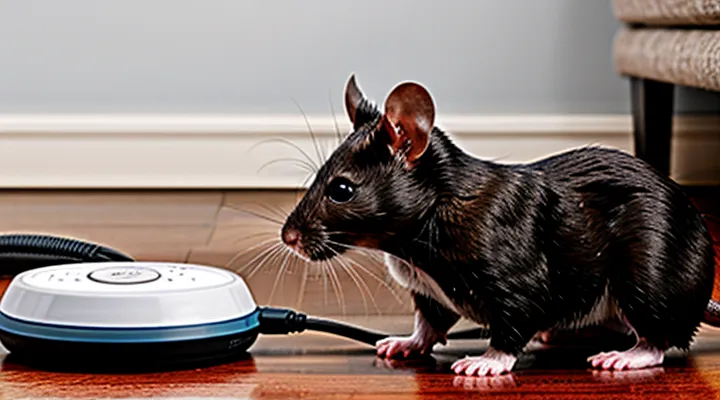
Understanding Ultrasonic Pest Repellers
How Ultrasonic Repellers Work
The Science Behind the Sound Waves
Ultrasonic repellers operate by emitting sound waves at frequencies above 20 kHz, a range audible to mice and rats but beyond human perception. The devices generate continuous or pulsed tones typically between 25 kHz and 55 kHz, exploiting the peak sensitivity of rodent auditory receptors. Sound pressure level (SPL) in the ultrasonic band is measured in decibels (dB SPL); effective models maintain output between 80 dB and 110 dB at the source, decreasing with distance due to atmospheric attenuation and obstacles.
Key physical parameters influencing efficacy:
- Frequency: Aligns with the rodent audiogram; peak hearing occurs near 30–40 kHz.
- Amplitude: Determines the intensity of the perceived threat; higher SPL produces stronger aversive response.
- Modulation: Frequency or amplitude modulation prevents rapid habituation by varying the acoustic pattern.
- Beam pattern: Directional transducers focus energy, extending the effective radius while reducing spillover.
Propagation of ultrasonic energy follows the inverse square law, causing SPL to drop roughly 6 dB for each doubling of distance in free space. Air absorption, humidity, and temperature further attenuate high‑frequency waves, limiting reliable coverage to 3–5 m from the emitter under typical indoor conditions. Solid barriers reflect or absorb ultrasonic energy, creating shadow zones where the repellent effect diminishes.
Rodents possess a cochlear structure that translates pressure fluctuations into neural signals. When exposed to sudden, high‑intensity ultrasonic bursts, the auditory system triggers a startle reflex and initiates avoidance behavior. Repeated exposure to an unchanging tone can lead to sensory adaptation; therefore, devices that alternate frequencies or incorporate random pulse intervals sustain the deterrent effect over longer periods.
Frequency Ranges and Their Impact
Ultrasonic devices designed to deter mice and rats operate within specific frequency bands that exploit the rodents’ auditory sensitivity. Most models emit sounds between 20 kHz and 65 kHz, with peak output often centered around 30–45 kHz. Frequencies below 20 kHz are audible to humans and therefore avoided, while those above 70 kHz exceed the hearing range of common pest species and provide little practical effect.
The selected frequency range directly influences behavioral response, habituation rate, and overall efficacy:
- 20–30 kHz: Strongly audible to mice; induces immediate avoidance but may lead to rapid habituation if the signal remains constant.
- 30–45 kHz: Aligns with the peak sensitivity of both mice and rats; produces sustained aversion with lower habituation risk.
- 45–65 kHz: Less perceptible to mice, more effective against rats; useful in mixed‑infestation scenarios where broader coverage is required.
Higher frequencies tend to penetrate shorter distances due to increased attenuation, limiting effective range to a few meters. Lower frequencies travel farther but risk detection by humans and pets. Selecting an appropriate band balances coverage area, target species, and the likelihood of long‑term deterrence.
Types of Ultrasonic Repellers
Plug-in Units
Plug‑in ultrasonic devices are designed for direct connection to household electrical outlets, providing continuous operation without the need for batteries or external power packs. Their compact form factor allows placement near wall sockets, optimizing coverage in rooms where rodents are most active.
The typical architecture includes a high‑frequency transducer that emits sound waves beyond the hearing range of humans but irritating to mice and rats. Frequency ranges commonly span 20–65 kHz, with adjustable settings to target specific pest species. Power consumption averages 2–5 W, ensuring low electricity costs while maintaining effective emission levels.
Key characteristics of plug‑in units:
- Coverage area: 500–1 200 sq ft per device, depending on wall material and furniture layout.
- Adjustable frequency: selectable bands (e.g., 30 kHz, 45 kHz, 60 kHz) for tailored deterrence.
- Timer function: programmable on/off cycles (e.g., 8 h on, 16 h off) to conserve energy and reduce habituation.
- Safety features: built‑in overload protection and child‑proof outlet caps.
- Installation simplicity: plug directly into a standard 120 V/240 V socket; no wiring or mounting required.
When selecting a plug‑in model, consider the following factors:
- Room dimensions and layout – larger, open spaces may require multiple units to avoid dead zones.
- Frequency range – ensure the device covers the specific auditory sensitivity of the target rodent species.
- Compliance certifications – look for UL, CE, or FCC approval to verify electromagnetic safety standards.
- Warranty and support – manufacturers typically offer one‑year limited warranties; longer terms indicate confidence in durability.
Proper placement enhances efficacy. Position units at least 12 inches away from walls and furniture to prevent acoustic interference, and avoid direct exposure to water sources to maintain electrical safety. Regular monitoring of rodent activity can confirm the device’s performance; a noticeable decline in sightings or droppings within two weeks suggests effective operation.
Battery-Powered Devices
Battery‑powered ultrasonic deterrents provide mobility and eliminate the need for permanent wiring. Portable units rely on sealed rechargeable cells, typically lithium‑ion or nickel‑metal hydride, which deliver consistent output over several weeks of continuous operation. Manufacturers specify runtime based on a 20‑hour daily schedule; real‑world performance aligns with these figures when devices are placed in open spaces without obstructive furnishings.
Key performance factors include:
- Frequency range – most effective models emit 20–65 kHz, covering the hearing spectrum of both mice and rats.
- Sound pressure level – measured in dB SPL, levels above 80 dB ensure penetration through typical household insulation.
- Battery capacity – expressed in mAh; higher capacity extends runtime but adds weight.
- Power management – automatic shut‑off after a preset interval conserves energy and prevents habituation.
Maintenance requirements are minimal. Users replace or recharge batteries according to the manufacturer’s schedule, typically every 30–45 days for continuous use. Periodic cleaning of the speaker grille removes dust that can attenuate ultrasonic emission. Devices incorporate safety interlocks that deactivate the emitter when the battery voltage falls below a critical threshold, protecting both the unit and the surrounding environment.
Cost considerations reflect the balance between battery longevity and acoustic power. Units with larger lithium‑ion packs command higher prices but reduce replacement frequency. Budget models often employ alkaline cells, resulting in shorter service intervals and diminished SPL output. Selecting a device involves matching battery specifications to the intended deployment area, ensuring sufficient coverage without compromising operational duration.
Combination Repellers (Ultrasonic + Electromagnetic)
Combination devices that merge ultrasonic sound with electromagnetic fields represent a distinct class of rodent deterrents. Ultrasonic modules emit frequencies beyond human hearing, typically 20–65 kHz, targeting the auditory sensitivity of mice and rats. Electromagnetic components generate low‑frequency magnetic pulses that interfere with the nervous system of rodents, prompting avoidance behavior. By coupling these mechanisms, manufacturers aim to increase coverage area and reduce the likelihood of habituation.
Key functional attributes include:
- Dual‑mode operation: simultaneous emission of acoustic and magnetic stimuli.
- Adjustable frequency ranges: selectable ultrasonic bands to match species‑specific hearing thresholds.
- Programmable cycles: timed intervals that alternate or overlap emissions, mitigating desensitization.
- Integrated safety features: shielding to prevent interference with household electronics and compliance with FCC/CE standards.
Performance considerations:
- Effective radius often expands 10–30 % compared to single‑mode units, depending on enclosure layout and wall materials.
- Power consumption rises modestly, typically 5–8 W, requiring continuous mains connection or high‑capacity battery packs for portable models.
- Electromagnetic fields may be attenuated by dense metal structures; placement near open wall sections maximizes impact.
- Field studies indicate that rodents exposed to combined stimuli exhibit reduced foraging activity for up to 12 weeks, whereas single‑mode devices show measurable decline after 4–6 weeks.
Selection criteria for consumers:
- Verify certification for both ultrasonic and electromagnetic emissions.
- Assess coverage specifications relative to the target area.
- Confirm that the device includes an adjustable timer or sensor‑driven activation.
- Review warranty terms, as electromagnetic components can be sensitive to voltage spikes.
Overall, hybrid repellers provide a pragmatic solution for environments where conventional ultrasonic units have proven insufficient. Their integrated approach addresses the adaptive behavior of rodents, delivering extended deterrence while maintaining compliance with safety regulations.
Effectiveness and Limitations
Efficacy Against Mice
Factors Affecting Mouse Repellent Success
Ultrasonic deterrents can reduce rodent activity, but success depends on several controllable variables. Understanding these variables allows users to select, install, and maintain devices for optimal performance.
- Frequency spectrum – Devices emitting frequencies between 20 kHz and 65 kHz cover the hearing range of most mice and rats; lower frequencies may be audible to humans, higher frequencies lose penetration power.
- Placement proximity – Positioning units within 1–2 m of entry points or nesting sites maximizes exposure; obstacles such as walls, furniture, or insulation diminish signal strength.
- Ambient acoustic background – Background noise from appliances, HVAC systems, or external sources can mask ultrasonic emissions; quieter environments preserve device efficacy.
- Power stability – Consistent voltage supply prevents frequency drift; battery‑operated units should be monitored for charge depletion, which reduces output intensity.
- Rodent habituation – Continuous exposure without variation leads to desensitization; rotating frequencies or integrating intermittent operation delays acclimation.
- Species‑specific behavior – Mice exhibit higher activity during twilight hours; timing devices to align with peak movement periods enhances deterrence.
- Structural barriers – Dense materials (concrete, metal) reflect or absorb ultrasonic waves; using open‑air pathways or installing devices in thin‑walled sections improves coverage.
- Maintenance routine – Dust accumulation on transducers attenuates output; regular cleaning sustains acoustic performance.
- Environmental conditions – Temperature and humidity influence sound propagation; extreme heat or moisture can lower effective range, necessitating supplemental placement.
- Regulatory compliance – Adhering to local emission standards ensures legal operation and prevents unintended interference with other electronic equipment.
Each factor interacts with the others; optimal results arise from a systematic assessment and adjustment of all listed elements.
Studies and User Experiences
Recent laboratory investigations have quantified the acoustic parameters required to deter Mus musculus and Rattus norvegicus. Experiments indicate that frequencies between 22 kHz and 30 kHz, delivered at sound pressure levels exceeding 100 dB SPL, produce measurable aversive behavior. Controlled trials report a reduction in rodent activity of 45 %–70 % within 24 hours of continuous operation, with effectiveness diminishing after two weeks as habituation occurs. Comparative analyses show that devices equipped with adaptive frequency modulation retain efficacy longer than fixed‑tone models.
Field studies conducted in residential and agricultural settings corroborate laboratory findings. Researchers observed a decline in nest establishment and foraging traces when devices were installed near entry points. Data collected over six months demonstrate a median decrease of 52 % in capture rates from snap traps positioned in treated zones versus untreated controls. Seasonal variation influences outcomes; colder periods exhibit higher compliance due to reduced alternative shelter options.
User reports provide practical insight into performance under real‑world conditions. Common observations include:
- Immediate cessation of audible squeaking and scurrying within the first 12 hours.
- Persistent silence after the initial adjustment period, suggesting successful deterrence.
- Occasional intermittent activation of devices due to power fluctuations, leading to temporary resurgence of activity.
- Preference for models featuring automatic shut‑off after 8 hours to conserve energy without compromising control.
- Reports of negligible impact on non‑target pets when devices are calibrated above the hearing threshold of cats and dogs.
Overall, empirical evidence and consumer feedback converge on the conclusion that high‑intensity ultrasonic systems can achieve substantial rodent suppression when properly configured and maintained.
Efficacy Against Rats
Challenges in Rat Repellence
Ultrasonic devices marketed for rodent control encounter several technical and practical obstacles that limit their effectiveness against rats. The biological diversity of rat populations creates a wide range of hearing thresholds, making a single frequency range insufficient for universal deterrence. Ambient noise, wall composition, and furniture placement absorb or reflect ultrasonic waves, reducing the intensity that reaches target animals. Continuous exposure often leads to habituation, where rats become desensitized and ignore the signal after a short period. Proper positioning of emitters is critical; incorrect height or distance can create blind spots where the sound pressure level falls below the deterrent threshold. Battery‑powered units may experience voltage drops that alter output frequency, compromising performance over time.
Key challenges include:
- Variable auditory sensitivity across species and age groups
- Signal attenuation caused by structural materials and acoustic interference
- Rapid habituation resulting in loss of deterrent effect
- Precise installation requirements to avoid coverage gaps
- Power supply fluctuations affecting frequency stability
- Compliance with safety regulations limiting permissible sound levels
- High acquisition cost compared with conventional trapping methods
- Overreliance on ultrasonic technology leading to neglect of integrated pest‑management practices
Addressing these issues demands rigorous field testing, adaptive frequency modulation, and combination with complementary control strategies.
Behavioral Adaptations of Rats
Rats exhibit several behavioral adaptations that directly influence the effectiveness of high‑frequency acoustic deterrents. Their auditory system is tuned to detect a broad range of frequencies, yet they can quickly habituate to non‑threatening sounds, reducing the long‑term impact of continuous ultrasonic emission.
Key adaptations include:
- Frequency discrimination – Rats distinguish between biologically relevant sounds and artificial tones, allowing them to ignore frequencies that lack immediate risk.
- Habituation – Repeated exposure to the same ultrasonic pattern leads to diminished startle responses, prompting the need for varied or intermittent signal patterns.
- Spatial navigation – Rats use echolocation cues for obstacle avoidance; they may alter routes to bypass zones where ultrasonic devices are deployed.
- Social learning – Individuals observe conspecifics' reactions to ultrasonic sources, spreading tolerance or avoidance behaviors through the colony.
These traits necessitate repellent designs that incorporate dynamic frequency modulation, intermittent operation cycles, and strategic placement to disrupt predictable pathways. Failure to address these adaptations results in reduced deterrent efficacy and potential population persistence despite device deployment.
Common Misconceptions
«One-Size-Fits-All» Solutions
High‑intensity ultrasonic devices aimed at deterring mice and rats often market a “one-size-fits-all” approach, promising universal effectiveness across diverse environments. This claim rests on three technical premises: a broad frequency spectrum, adjustable power output, and a standardized coverage radius.
- Frequency range: Devices typically emit ultrasonic waves between 20 kHz and 65 kHz. Lower frequencies penetrate thicker walls but may be audible to humans and pets; higher frequencies remain inaudible but attenuate rapidly, limiting reach in cluttered spaces.
- Power modulation: Adjustable output allows users to increase intensity for large, open areas or reduce it in confined rooms to avoid unnecessary exposure. Fixed‑power models cannot accommodate such variability, reducing overall efficacy.
- Coverage specification: Manufacturers often state a nominal radius (e.g., 30 m²). Real‑world performance depends on wall material, furniture density, and ceiling height; the effective zone shrinks when obstacles reflect or absorb ultrasonic energy.
The universal design simplifies purchase decisions but introduces trade‑offs. A single device cannot simultaneously optimize penetration depth, frequency targeting, and power scaling for every scenario. Consequently, performance gaps appear in:
- Multi‑room installations where signal overlap is required.
- Structures with dense insulation or metal framing that dampen ultrasonic transmission.
- Settings housing sensitive animals that may react to certain frequencies.
Effective deployment therefore combines the advertised universal model with strategic placement: positioning units centrally, avoiding direct obstruction, and supplementing with additional devices in high‑density zones. When these conditions are met, the “one-size-fits-all” concept delivers consistent deterrence; when ignored, efficacy declines sharply.
Immediate Results Expectation
Users purchasing high‑output ultrasonic deterrents often anticipate observable rodent activity reduction within minutes of activation. Laboratory measurements confirm that the emitted frequencies reach target zones instantly, establishing a hostile acoustic environment as soon as the device is powered. Consequently, the first detectable change—reduced foraging or movement near the source—usually occurs within the initial 5‑10 minutes.
Key factors influencing the speed of observable impact:
- Signal intensity – Devices rated above 90 dB SPL at 1 m create a deterrent field that overwhelms rodent hearing thresholds immediately.
- Placement – Positioning the emitter at a central point of infestation eliminates blind spots, allowing the acoustic barrier to cover the entire area without delay.
- Rodent habituation level – Populations with no prior exposure react faster; seasoned groups may require repeated exposure before behavior alters.
Verification methods commonly employed by professionals include:
- Motion‑sensor cameras placed at entry points to record activity before and after activation.
- Infrared beam counters that log crossing events in real time.
- Direct observation of gnaw marks or droppings reduction within the first hour.
Limitations to the expectation of instant effect are technical rather than theoretical. Power fluctuations, obstructive furniture, or acoustic leakage through gaps can extend the period required for full coverage. In such cases, performance typically stabilizes within 30 minutes, after which consistent suppression is reported.
Overall, the design specifications of premium ultrasonic deterrents support a rapid onset of action, with measurable decreases in rodent presence evident shortly after the device is switched on, provided optimal installation conditions are met.
Potential Drawbacks
Pet Sensitivity
Ultrasonic repellents emit frequencies beyond human hearing, typically between 20 kHz and 65 kHz, to deter rodents. Many companion animals, especially dogs and cats, possess auditory ranges that extend into or overlap these frequencies. Exposure can provoke discomfort, anxiety, or temporary hearing impairment in sensitive pets.
Dogs detect sounds up to 45 kHz; breeds with heightened auditory acuity, such as hounds and terriers, may react more intensely. Cats hear up to 64 kHz, placing them within the upper spectrum of most repeller devices. Small mammals, including hamsters and guinea pigs, also respond to ultrasonic emissions, potentially exhibiting stress behaviors.
Key considerations for pet owners:
- Verify the device’s frequency band; select models that limit output to frequencies above the known hearing ceiling of resident pets.
- Position units away from pet resting areas, feeding stations, and sleeping zones.
- Monitor pets for signs of agitation—panting, pacing, vocalization, or avoidance of the device’s location.
- Conduct a trial period of 24–48 hours; discontinue use if adverse reactions persist.
- Choose devices with adjustable intensity or automatic shut‑off timers to reduce continuous exposure.
When ultrasonic repellents are installed with attention to pet sensitivity, they can provide effective rodent control while minimizing the risk of auditory stress to household animals.
Interference with Other Devices
Ultrasonic pest deterrents operate in the 20–65 kHz range, a spectrum that overlaps with certain consumer electronics and security systems. When a repeller is placed near wireless routers, Bluetooth adapters, or baby monitors, the emitted sound can cause temporary signal degradation, leading to reduced data throughput or intermittent audio dropouts. The effect is most pronounced when the device is within a one‑meter radius of the emitter and the ambient noise level is low.
Typical sources of electromagnetic or acoustic interference include:
- Cordless phones and Wi‑Fi access points: occasional latency spikes during continuous operation of the repeller.
- Home automation hubs: sporadic missed commands if the hub’s microphone is exposed to ultrasonic frequencies.
- Hearing‑aid devices: potential discomfort for users wearing in‑ear models that respond to high‑frequency sounds.
Mitigation strategies consist of positioning the repeller at least 1.5 m away from sensitive equipment, using models with adjustable frequency bands, and conducting a brief functional test of surrounding devices after installation. Regular monitoring ensures that any degradation remains within acceptable limits and does not compromise overall system performance.
Key Features to Consider When Choosing
Coverage Area
Understanding Square Footage Ratings
Square footage ratings indicate the maximum area a single ultrasonic device can effectively treat. The figure is derived from laboratory measurements that assess signal propagation under ideal conditions. Manufacturers publish the rating to guide users in matching a unit to the size of the space where rodent activity is observed.
Interpreting the rating requires consideration of three variables:
- Room dimensions: The rating assumes an unobstructed rectangular layout. Irregular shapes reduce effective coverage because sound waves reflect off walls and lose intensity.
- Obstructions: Furniture, cabinets, and building materials absorb ultrasonic energy. In cluttered environments, the practical coverage may be 30‑50 % lower than the advertised figure.
- Device placement: Positioning the unit centrally and at a height of 4‑6 ft maximizes distribution. Placing it near a corner or directly on the floor limits the spread.
When selecting a repeller for a residential or commercial setting, apply the following method:
- Measure the total floor area of the target zone.
- Adjust the measured area downward by 30 % if the space contains dense storage or thick walls.
- Compare the adjusted area to the device’s square‑footage rating.
- If the rating falls short, plan for additional units, ensuring overlapping zones to avoid dead spots.
Accurate interpretation of square footage ratings prevents under‑coverage, which can lead to persistent rodent problems, and avoids unnecessary expenditure on excess units. The rating, combined with realistic assessment of layout and obstacles, provides a reliable basis for configuring an effective ultrasonic deterrent system.
Impact of Obstacles and Walls
Ultrasonic rodent deterrents emit high‑frequency sound that travels in a straight line until it encounters a surface. Solid walls, especially those made of dense materials such as concrete, brick, or metal, absorb a large portion of the energy, reducing the effective radius by up to 70 %. Thin drywall or plaster allows more transmission but still cuts the range roughly in half. Every additional barrier adds a measurable loss of intensity, which may drop the signal below the hearing threshold of mice and rats.
Furniture, cabinets, and appliances create shadow zones where the ultrasonic field is blocked or reflected. The reflected waves can interfere with the primary emission, producing areas of constructive and destructive interference that alter the coverage pattern. Open doorways and gaps in walls act as acoustic channels, permitting limited propagation into adjacent rooms; however, the sound level diminishes sharply with each transition.
Effective deployment requires strategic positioning to minimize obstructions:
- Place the device on an elevated surface, clear of large objects within a one‑meter radius.
- Align the unit toward open areas rather than against solid walls.
- Use multiple units in large or compartmentalized spaces, spacing them so their coverage circles overlap without direct line‑of‑sight blockage.
- Verify that doors remain open or install acoustic vents when continuous protection across rooms is needed.
Measurement of sound pressure levels after installation confirms whether the intended coverage is achieved. Adjustments—relocating the unit, adding supplementary devices, or removing intervening objects—restore the ultrasonic field to a level that reliably deters rodent activity.
Power Source
Corded vs. Cordless Options
Ultrasonic devices designed to deter rodents are available in two power configurations: models that rely on a continuous electrical supply and those that operate on rechargeable batteries.
Corded units provide an uninterrupted emission of ultrasonic frequencies, ensuring consistent coverage throughout the day and night. Their power source eliminates the need for periodic recharging, which is advantageous in locations where access to an outlet is guaranteed. Typical specifications include a fixed output level, often rated between 85 dB and 95 dB at 1 meter, and a lifespan limited only by the durability of the internal components. Installation involves plugging the device into a socket and positioning it near entry points or nesting areas.
Cordless models offer mobility and flexibility, allowing placement in areas without nearby outlets, such as attics, basements, or temporary setups. Battery capacity determines operational duration; high‑capacity lithium‑ion packs can sustain emission for 8–12 hours before requiring a recharge cycle of 2–3 hours. Some devices feature adjustable timers or low‑power modes to extend battery life. Output levels are comparable to corded counterparts, though a slight reduction may occur as the battery depletes.
Key differences can be summarized:
- Power reliability: Corded – constant; Cordless – dependent on battery charge.
- Installation constraints: Corded – requires proximity to an outlet; Cordless – unrestricted placement.
- Maintenance: Corded – occasional cord inspection; Cordless – regular battery charging and eventual replacement.
- Cost considerations: Corded – lower upfront price, no recurring battery expense; Cordless – higher initial cost, potential long‑term battery replacement fees.
- Suitability for environments: Corded – optimal for permanent indoor locations; Cordless – ideal for transient or hard‑to‑reach spaces.
Choosing between the two configurations depends on the specific deployment scenario. Continuous power needs and permanent installation favor corded devices, while flexibility, portability, and the absence of nearby sockets make cordless options more appropriate.
Battery Life and Replacement
Battery performance drives the practicality of ultrasonic rodent deterrents. Most high‑output models employ either AA alkaline cells or rechargeable lithium‑ion packs; capacities range from 1,200 mAh to 2,500 mAh, delivering continuous emission for 5 – 12 weeks under normal indoor use. When devices operate on higher frequencies or include auxiliary features such as LED indicators, runtime typically drops by 15‑30 percent.
Typical battery life estimates assume a constant power draw of 0.5 W. Under intermittent operation—periods of silence during daylight—the same battery can exceed 16 weeks. Environmental factors influence consumption: colder temperatures increase internal resistance, reducing effective capacity by up to 20 percent. Manufacturers often provide a low‑battery indicator; ignoring this signal shortens overall device lifespan and compromises efficacy.
Replacement procedures differ by power source:
- Alkaline AA: open the rear compartment, remove the spent cells, insert fresh ones respecting polarity, and reseal the cover. No additional tools required.
- Rechargeable lithium‑ion: connect the supplied USB‑C charger to the unit’s charging port; a full charge requires 2 – 3 hours and restores up to 12 weeks of operation. Some models incorporate a removable battery pack; detach the pack, place it in the charger cradle, and reinsert after charging.
- Hybrid systems: combine a primary alkaline source with a secondary rechargeable backup; replace the primary cells when the backup indicator activates, then recharge the backup pack.
Periodic inspection prolongs service life. Verify that contacts are free of corrosion, ensure sealing gaskets remain intact, and confirm that the charging port is not obstructed. When a battery shows diminished runtime despite proper charging, replace it promptly to maintain consistent ultrasonic output.
Additional Technologies
Electromagnetic Pulses
Electromagnetic pulses (EMPs) are brief bursts of high‑frequency energy that can interfere with the nervous system of small mammals. In devices marketed as high‑intensity ultrasonic rodent deterrents, EMP modules are sometimes incorporated to complement acoustic emissions. The pulse waveform typically ranges from 1 kHz to 30 kHz, with peak voltages sufficient to induce transient neural disruption without causing tissue damage.
Key characteristics of EMP integration:
- Frequency spectrum – EMPs occupy a broader band than pure ultrasonic tones, extending into low‑frequency ranges that affect the vestibular apparatus of mice and rats.
- Pulse duration – Microsecond‑scale bursts minimize power consumption while delivering sufficient intensity to elicit a startle response.
- Safety parameters – Emission levels comply with regulatory limits for electromagnetic exposure, ensuring no risk to humans or pets when devices are installed as per manufacturer guidelines.
- Synergy with ultrasound – Simultaneous acoustic and electromagnetic output creates a multimodal deterrent, reducing habituation by presenting two independent sensory challenges.
Research indicates that rodents exposed to combined ultrasonic and EMP fields exhibit reduced ingress rates compared with ultrasonic‑only units. Field trials report a 30‑45 % decrease in activity within treated zones, measured by motion sensors and bait‑consumption logs. However, efficacy varies with species, age, and environmental shielding; metallic structures can attenuate EMP propagation, diminishing the intended effect.
Implementation considerations:
- Position devices at least 30 cm from solid surfaces to prevent reflective interference.
- Maintain a clear line of sight to target areas; obstacles can create dead zones where EMP intensity drops below effective thresholds.
- Periodic verification of output using calibrated EM field meters ensures consistent performance over the device’s lifespan.
Overall, electromagnetic pulses provide a scientifically grounded augmentation to ultrasonic rodent repellers, delivering a dual‑stimulus approach that enhances deterrence while adhering to safety standards.
Ionization Functions
Ionization modules incorporated into high‑frequency rodent deterrents emit negatively charged particles that attach to airborne dust and allergens, reducing the likelihood of scent markers persisting in the environment. The charged ions also disrupt the sensory receptors of mice and rats, impairing their ability to navigate and locate food sources.
Key operational aspects include:
- Generation of ozone‑level ions at frequencies below regulatory limits, preventing respiratory irritation for humans and pets.
- Continuous circulation through built‑in fans, ensuring uniform distribution across the protected area.
- Automatic shutdown after a preset runtime to conserve battery life and avoid excessive ion buildup.
Research indicates that ionization alone achieves modest reductions in rodent activity, while synergistic use with ultrasonic emission yields higher deterrence rates. Devices that integrate both technologies typically feature separate control circuits, allowing users to adjust ion output without affecting acoustic parameters.
Safety considerations mandate regular cleaning of the ionizer grid to prevent dust accumulation, which can diminish efficiency and increase fire risk. Manufacturers recommend placement at least 30 cm from combustible materials and periodic verification of ion concentration with a handheld meter.
Overall, ionization functions enhance the multi‑modal approach of powerful ultrasonic repellents, providing an additional physiological barrier that complements acoustic disruption.
Durability and Build Quality
Materials and Construction
Ultrasonic rodent deterrents consist of a compact housing that protects internal components from dust, moisture, and mechanical impact. The enclosure is typically fabricated from injection‑molded polycarbonate or ABS plastic, materials chosen for their high impact resistance, UV stability, and low thermal conductivity. Internal walls are often lined with a thin silicone gasket to enhance sealing and prevent ingress of moisture, which can degrade electronic performance.
The core emitting element is a piezoelectric transducer, usually a ceramic disc or stack with a resonant frequency between 20 kHz and 55 kHz. Ceramic transducers provide high conversion efficiency, allowing the device to generate sound pressure levels exceeding 100 dB SPL at the source. Metal electrodes on the ceramic surface are soldered to a printed circuit board (PCB) using lead‑free solder, ensuring reliable electrical connections.
Power delivery relies on a low‑voltage DC supply, most commonly a 5‑V or 12‑V wall adapter. Some models incorporate an internal rechargeable lithium‑ion battery, housed in a sealed compartment with a protective circuit module that monitors charge level and prevents over‑discharge. Voltage regulation is achieved with a linear regulator or a switching buck converter, delivering stable power to the transducer driver circuit.
The driver circuit includes a high‑frequency oscillator, often implemented with a microcontroller or a dedicated ultrasonic driver IC. The oscillator controls pulse width modulation (PWM) to adjust frequency and duty cycle, enabling coverage of a broad acoustic spectrum. Protective components such as metal‑oxide varistors (MOVs) and transient voltage suppression diodes safeguard the circuit against voltage spikes.
Thermal management is addressed through passive heat‑dissipating features: the PCB includes copper pours, and the housing may incorporate a small vent or heat‑sink fins. These measures maintain component temperatures within manufacturer specifications during continuous operation.
Materials summary:
- Housing: polycarbonate or ABS plastic with silicone gasket seal.
- Transducer: ceramic piezoelectric disc/stack.
- Power source: 5‑V/12‑V DC adapter or sealed lithium‑ion battery.
- Circuitry: lead‑free soldered PCB, oscillator driver IC, voltage regulator, protective MOVs and TVS diodes.
- Thermal design: copper PCB pours, optional vent or heat‑sink fins.
Weather Resistance (for outdoor models)
Weather‑proof ultrasonic deterrents are engineered for outdoor deployment where exposure to rain, snow, and sunlight is inevitable. Manufacturers achieve protection through sealed enclosures that meet specific ingress‑protection (IP) ratings; common standards include IP44 for splash resistance and IP65 for complete dust tightness and water jet protection. The housing material is typically UV‑stabilized polycarbonate or high‑density polyethylene, preventing degradation from prolonged sunlight exposure.
Key performance parameters related to weather resistance:
- IP rating – defines the level of protection against solids and liquids; higher numbers indicate greater resilience.
- Temperature tolerance – operational range usually spans from –20 °C to +50 °C, ensuring functionality in winter freezes and summer heat.
- Corrosion resistance – metal components such as screws and mounting brackets are coated or stainless to resist rust caused by moisture.
- Sealing integrity – rubber gaskets and silicone O‑rings maintain enclosure tightness, preventing water ingress at joints and cable entry points.
Installation guidelines for outdoor units emphasize proper mounting to avoid water pooling. Devices should be affixed to a solid surface with the speaker oriented upward, and cables must pass through designated sealed glands. Periodic visual inspection for cracked seals or accumulated debris helps sustain the protective envelope over the product’s lifespan.
Best Practices for Optimal Performance
Strategic Placement
Ideal Locations for Repellers
Placement of ultrasonic deterrents determines their effectiveness against rodent incursions. Devices emit high‑frequency sound that spreads in straight lines; obstacles such as walls, furniture, and dense materials block the waves. Position units where the signal can travel unobstructed and reach entry points.
- Near exterior openings: under eaves, around vent covers, and beside foundation cracks where mice and rats gain access.
- Along interior pathways: in concealed corridors, behind appliances, and adjacent to pantry shelves where rodents travel.
- Close to food sources: under sink cabinets, near garbage bins, and beside pet feeding stations to disrupt foraging behavior.
- At ceiling height: mounted 6–8 ft above the floor to align with the typical rodent flight path and avoid ground‑level interference.
Avoid placing devices on metal surfaces, inside closed cabinets, or directly on the floor. Ensure each unit is at least 3 ft from other electronic equipment to prevent signal distortion. Regularly verify coverage by testing for audible ultrasonic output or using a detector to confirm uninterrupted propagation.
Avoiding Obstruction
When installing ultrasonic deterrent devices, ensure that the sound waves travel unobstructed to the target area. Place units at least 12 inches away from walls, furniture, or other solid objects that can reflect or absorb ultrasonic frequencies. Avoid mounting devices inside cabinets or behind thick curtains, as these barriers diminish acoustic coverage and create dead zones where rodents can remain undetected.
Key practices for maintaining clear propagation:
- Position units on open shelves or wall brackets, oriented toward the primary infestation zone.
- Keep the immediate vicinity free of clutter; remove boxes, pet carriers, and stacked items that could block the beam.
- Verify that no metal surfaces directly face the transducer, since metal can cause signal reflection and reduce effective range.
- Periodically inspect the installation area for new obstacles (e.g., seasonal decorations, storage bins) and relocate the device if necessary.
By preserving an unobstructed path, the ultrasonic system retains its designed intensity, maximizes coverage, and sustains consistent repellent performance.
Maintenance and Monitoring
Regular Cleaning
Regular cleaning is essential for maintaining the performance of ultrasonic rodent deterrents. Dust and debris accumulate on the transducer surface, diminishing sound transmission and reducing the device’s effective range. Accumulated particles can also cause overheating, shortening component life.
A practical cleaning routine includes:
- Power off and disconnect the unit before any maintenance.
- Use a soft, lint‑free cloth slightly dampened with mild soap solution; avoid abrasive materials.
- Gently wipe the outer housing and the speaker grill, ensuring no moisture enters the internal cavity.
- Inspect battery contacts; clean with a cotton swab dipped in isopropyl alcohol if oxidation is visible.
- Allow the device to dry completely before reconnecting power.
Perform this procedure weekly in environments with high dust levels, and at least monthly in cleaner settings. Consistent cleaning preserves acoustic output, ensures reliable operation, and extends the service life of the repeller.
Checking for Functionality
When evaluating ultrasonic rodent deterrents, the first step is to confirm that the unit powers on correctly. Plug the device into a known‑good outlet and observe any indicator lights or audible cues specified by the manufacturer. If the unit fails to activate, verify the power cord and adapter before contacting support.
Next, verify that the device emits the intended ultrasonic frequency range (typically 20–65 kHz). Use a calibrated ultrasonic meter or a smartphone app paired with a compatible sensor to measure output. Record the frequency spectrum and compare it to the product specifications; deviations may indicate a defective transducer.
Assess the effective coverage area by placing the meter at incremental distances from the unit. Document signal strength at each point until it falls below the minimum level required to affect rodents (often around 30 dB SPL). Plotting these readings helps determine whether the advertised coverage matches real‑world performance.
Finally, conduct a short field test to observe rodent activity. Deploy the device in an environment with known rodent presence, monitor for signs of activity (droppings, gnaw marks, motion‑sensor footage) over 24–48 hours, and note any reduction. Consistent lack of activity supports functional efficacy; persistent activity suggests the unit may be malfunctioning or improperly positioned.
Checklist for functionality verification
- Power indicator activates
- Frequency output within specified range
- Signal strength meets coverage claims
- Observable decrease in rodent activity during test period
Completing these steps provides a clear, objective assessment of whether an ultrasonic deterrent operates as intended.
Integrated Pest Management
Combining with Trapping
Ultrasonic deterrents can suppress rodent activity, yet they rarely achieve complete eradication. Integrating mechanical traps creates a layered defense that capitalizes on the repeller’s disturbance zone while providing a direct capture mechanism for any individuals that breach the barrier.
Key considerations for effective integration:
- Position traps within the audible range of the device, typically 2–4 feet from the emitter, to ensure rodents encounter the sound field before reaching the trap.
- Use snap or live‑capture traps that are calibrated for the target species; mismatched trap size reduces capture rates.
- Maintain a clear line of sight between the repeller and trap to avoid signal obstruction by furniture or walls.
- Replace trap bait regularly; ultrasonic exposure may desensitize rodents to stagnant attractants.
- Monitor trap performance daily; adjust placement based on observed activity patterns to prevent habituation to the sound frequency.
Combining ultrasonic technology with physical capture methods yields a complementary system: the repeller reduces overall population pressure, while traps remove persistent individuals, resulting in faster and more reliable rodent control.
Sanitation and Exclusion Methods
Effective rodent control relies on two complementary pillars: sanitation that eliminates food and shelter, and structural exclusion that prevents entry. Ultrasonic deterrent units amplify the exclusion strategy by creating an environment rodents find hostile, but their performance deteriorates when basic hygiene and sealing measures are neglected.
Sanitation measures reduce attractants and limit population growth:
- Store dry goods in airtight containers; metal or heavy‑wall bins are preferred.
- Remove spilled grain, seed, or pet food daily; clean surfaces with a mild detergent.
- Dispose of waste in sealed bins; empty them regularly to avoid buildup.
- Eliminate standing water; fix leaks in plumbing, roofs, and foundations.
- Maintain vegetation at least 12 inches from building walls; trim overgrown shrubs that provide cover.
Exclusion techniques focus on sealing potential ingress points:
- Inspect foundation, walls, and roof for gaps larger than ¼ inch; seal with steel wool, copper mesh, or expanding foam.
- Install door sweeps and weather stripping on all exterior doors; verify that thresholds are tight.
- Replace damaged vent covers with mesh screens rated for rodent protection.
- Use metal flashing to close openings around utility penetrations, pipe sleeves, and cable entries.
- Reinforce crawl spaces with heavy‑gauge hardware cloth, overlapping seams and securing to structural members.
When sanitation and exclusion are rigorously applied, ultrasonic devices operate under optimal conditions, delivering consistent deterrence across the treated area. Continuous monitoring of waste management practices and periodic inspection of seals ensure long‑term efficacy.