
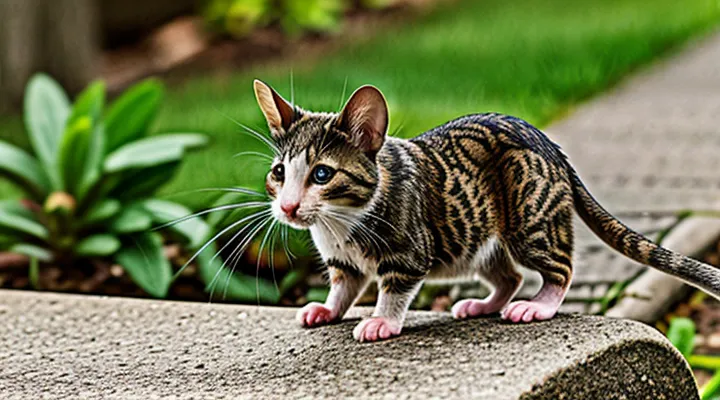
The Allure of Mouse Squeaks for Felines
Why Cats Respond to Mouse Squeaks
Instinctual Predatory Behavior
Cats possess an innate hunting drive that activates when specific sensory cues signal prey. Auditory signals resembling a small rodent’s squeak trigger the auditory‑visual pathway linked to predatory sequences, prompting stalking, pouncing, and capture behaviors without visual confirmation.
Mouse‑like squeaks exploit this pathway. The high‑frequency bursts mimic the vocalizations of a live mouse, generating a reflexive chase response. Studies show that cats respond more quickly to authentic squeak patterns than to generic toy noises, confirming the relevance of species‑specific acoustic features.
Online resources offering high‑quality mouse squeak recordings include:
- YouTube channels dedicated to feline enrichment (search terms: “mouse squeak for cats”)
- Pet‑sound libraries such as CatSounds.io and FelineAudio.com
- Academic repositories (e.g., Cornell Lab of Ornithology’s Macaulay Library) that host wildlife audio files
- Commercial apps for smartphones (e.g., “Cat Play” on iOS and Android) providing curated squeak playlists
Effective use of recordings follows simple guidelines: set volume at a level that allows the cat to hear the squeak without causing distress; play short clips (10–15 seconds) to maintain interest; alternate recordings to prevent habituation; observe the cat’s reaction and discontinue if signs of anxiety appear. These practices maximize the activation of the cat’s predatory instinct while ensuring a safe, stimulating environment.
Auditory Cues and Hunting Drive
Auditory cues that mimic the high‑frequency rustle and squeak of a small rodent trigger a cat’s innate hunting drive. The sound spectrum of a typical mouse includes rapid bursts between 4 kHz and 12 kHz, which align with the feline auditory sensitivity peak. When a recording reproduces these frequencies with appropriate amplitude modulation, cats exhibit orienting behavior, ear flicks, and predatory pouncing even in the absence of visual prey.
Effective recordings must preserve the temporal pattern of a mouse’s escape attempts—short, irregular pulses followed by brief silences. Continuous, monotone squeaks reduce responsiveness, while varied intervals maintain engagement. Playback devices should support lossless formats (e.g., WAV) to prevent distortion of subtle harmonics that contribute to realism.
Online sources offering high‑quality mouse squeak files include:
- Dedicated animal‑sound libraries (e.g., Xeno‑Canto, Freesound) with searchable tags for “mouse” and “rodent vocalization.”
- Commercial sound‑effects platforms (e.g., Soundsnap, AudioJungle) providing curated packs labeled for pet training.
- Open‑access research repositories (e.g., BioAcoustics Archive) that host recordings collected for ethological studies, often available under Creative Commons licenses.
When selecting a file, verify sample rate (minimum 44.1 kHz) and ensure the recording captures both the initial chirp and subsequent scurrying noise. Playback through a speaker with a frequency response extending to at least 15 kHz maximizes detection by the cat’s ear. Properly chosen auditory stimuli reliably activate predatory circuits, offering a practical tool for enrichment, behavior modification, or training.
Where to Find Mouse Squeak Recordings Online
Dedicated Pet Sound Websites
Features and Sound Quality
Audio recordings that mimic mouse squeaks are engineered to trigger a cat’s predatory response. Effective clips combine realistic timbre, precise pitch, and minimal extraneous noise, ensuring the stimulus remains recognizable to felines while avoiding habituation.
- Authenticity: recordings captured from live rodents or synthesized with high‑fidelity models.
- Pitch range: typically 2 kHz–8 kHz, matching the ultrasonic components of genuine mouse vocalizations.
- Duration: loops of 5–15 seconds, allowing continuous playback without noticeable repetition.
- Format: lossless files (FLAC, WAV) or high‑bit‑rate MP3 (≥256 kbps) for portable devices.
- Licensing: royalty‑free or Creative Commons options for unrestricted use.
Sound quality hinges on technical specifications. Sample rates of 44.1 kHz or higher preserve the full frequency spectrum, while 16‑bit or 24‑bit depth captures subtle amplitude variations that contribute to naturalness. Low‑noise recording environments eliminate background hum, and gentle compression maintains consistent loudness without flattening dynamic cues. Spectral analysis confirms the presence of the characteristic high‑frequency squeak peaks and the absence of artifacts that could distract the cat.
Reliable sources include specialized sound libraries, pet‑behavior research portals, and open‑access repositories. These platforms list recordings with detailed metadata—sample rate, bit depth, duration, and licensing terms—enabling users to select files that meet precise acoustic criteria. Download links provide direct access to lossless formats, while streaming options offer immediate playback on smart speakers or mobile apps.
User Reviews and Recommendations
Cat owners frequently rely on community feedback to locate effective mouse‑squeak audio files that trigger feline interest. Review aggregators and comment sections on retailer pages reveal which recordings consistently produce observable reactions such as ear flicks, tail movement, and hunting behavior.
- Dedicated pet‑audio stores (e.g., PetSounds.com, CatTuneShop.com) host collections rated by users; top‑rated items often feature high‑frequency squeaks with minimal background noise.
- General marketplaces (Amazon, Etsy) display star ratings and written comments; filters for “audio for cats” narrow results to products with average ratings above 4.0.
- Free‑download archives (Freesound.org, YouTube) include comment threads where listeners report playback success rates and recommend specific file lengths (15–30 seconds) for short training sessions.
User commentary emphasizes three measurable criteria:
- Clarity – recordings with a single, sharp squeak are preferred; multi‑layer tracks receive lower scores for causing distraction.
- Duration – files under 30 seconds avoid habituation; longer loops are flagged as less effective.
- Format – lossless formats (FLAC, WAV) receive higher praise for preserving frequency detail; compressed MP3 files are acceptable when bandwidth is limited.
Based on aggregated feedback, the following selection strategy is advised:
- Prioritize products with ≥ 4.5‑star averages and at least ten verified purchaser reviews.
- Verify that the audio file is supplied in a lossless format or a high‑bitrate MP3 (≥ 256 kbps).
- Choose recordings labeled “single‑squeak loop” and test with a 20‑second playback interval before extending duration.
Applying these user‑driven guidelines streamlines the search for mouse‑squeak recordings that reliably engage cats and reduces trial‑and‑error experimentation.
Video Sharing Platforms
Specific Channel Types
Online sources for mouse‑squeak recordings fall into distinct channel types. Each type offers a predictable format, search functionality, and licensing options suited to pet‑owner use.
- Video‑sharing sites host compilations and single‑track recordings; filters allow selection by duration, sound quality, and viewer ratings.
- Audio‑streaming platforms provide playlists curated for feline attraction; many include metadata indicating frequency range and volume level.
- Dedicated pet‑sound libraries maintain organized archives, often with professional recordings and clear usage rights for personal or commercial applications.
- Social‑media accounts and groups share short clips; hashtags and community tagging simplify discovery of recent uploads.
- Specialty forums and discussion boards aggregate user‑generated files, offering direct download links and peer‑reviewed recommendations.
Choosing a channel depends on required format (video vs. audio), desired curation level, and licensing preferences. Video platforms excel for visual context, while audio‑streaming services deliver high‑fidelity sound without visual distraction. Pet‑sound libraries guarantee consistent quality and legal clarity. Social media provides rapid access to trending recordings, and forums supply niche or rare variations contributed by enthusiasts.
DIY Recording Quality Considerations
When creating mouse‑squeak audio for feline attraction, the recording chain determines effectiveness. Choose a condenser microphone with a flat frequency response between 2 kHz and 12 kHz, the range where cat hearing is most sensitive. Position the capsule 2–3 cm from the sound source to capture detail while avoiding overload.
Record at a minimum of 48 kHz sample rate and 24‑bit depth. Higher resolution preserves subtle high‑frequency components that trigger cat interest. Use a digital audio workstation that supports loss‑less formats; export final files as WAV or FLAC to prevent compression artifacts.
Control the acoustic environment. Record in a quiet room, eliminate background hum, and use acoustic panels or heavy blankets to reduce reflections. A pop filter prevents plosive bursts that could mask the squeak’s natural timbre.
Apply post‑processing only to enhance clarity. Perform the following steps:
- High‑pass filter at 1 kHz to remove low‑frequency rumble.
- Gentle compression with a ratio of 2:1, threshold set just above the peak, to even out dynamics without squashing the transient.
- Normalize overall level to –3 dBFS, ensuring consistent playback volume across devices.
- Inspect spectrogram for unwanted noise; use spectral editing to excise clicks or hiss.
Save each clip with a descriptive filename that includes the mouse species and recording date; this aids cataloging when uploading to audio libraries or cat‑behavior forums.
Test the final file on multiple playback devices (smartphone, laptop, Bluetooth speaker) to verify that the squeak remains audible and retains its characteristic pitch. Adjust gain or EQ as needed based on the device’s frequency response.
Mobile Applications and Software
Availability for Different OS
Online collections of mouse‑squeak audio files are accessible on all major operating systems. Windows users can download recordings directly from popular sound‑library websites or use dedicated desktop applications that support MP3, WAV, and OGG formats. macOS users enjoy the same options, with additional integration into the native Music app for seamless playback. Linux distributions provide command‑line utilities such as wget or curl to retrieve files, and graphical managers like Audacity to edit or play them. Mobile platforms are equally supported: Android devices access recordings through Google Play Store apps or web browsers, while iOS devices use the App Store or Safari to stream or store the audio. Smart‑TV and streaming‑box ecosystems often include browser or media‑player apps capable of handling standard audio formats, allowing playback in a household environment.
Key points for each OS:
- Windows: direct download, desktop player, format compatibility (MP3, WAV, OGG).
- macOS: download, Music app integration, same format support.
- Linux: command‑line retrieval, Audacity or VLC playback, open‑source format handling.
- Android: dedicated apps, browser streaming, background playback.
- iOS: App Store players, Safari streaming, offline storage via Files.
- Smart‑TV/Box: browser or media‑player apps, network‑share access, HDMI audio output.
All platforms require only an internet connection and a standard audio codec library; no proprietary drivers or additional hardware are necessary.
Additional Features (e.g., Timers, Looping)
Mouse squeak audio files designed to lure feline attention often include supplementary tools that enhance effectiveness and user control. Timers and looping functions are among the most frequently implemented utilities.
- Timer activation: Sets a predefined playback duration, preventing continuous sound that may overstimulate the cat or disturb household occupants.
- Looping mode: Repeats the recording automatically, ensuring a steady auditory stimulus without manual intervention.
- Adjustable interval: Allows users to specify pauses between loops, creating a more natural rhythm.
- Volume scaling: Provides fine‑tuned output levels to match the cat’s hearing sensitivity and the ambient noise environment.
- Pitch shift: Modifies the frequency of the squeak, enabling experimentation with variations that may be more appealing to individual cats.
Online repositories such as dedicated feline‑attraction channels, audio‑sharing platforms, and specialized mobile applications typically embed these features within their playback interfaces. Users can access configurable settings through on‑screen controls or embedded menus, often without requiring additional software. The integration of timers and looping directly within the streaming environment reduces the need for external editing tools, streamlining the process of delivering consistent auditory cues to cats.
Online Audio Libraries
Free vs. Paid Resources
Free platforms host mouse squeak audio that can be used to lure felines. YouTube channels often compile short recordings, while sites such as Freesound.org and the Internet Archive provide downloadable files under Creative Commons or public‑domain licenses. These sources usually require no monetary outlay, but the audio quality varies, file formats may be inconsistent, and usage rights can be limited to non‑commercial projects.
Paid collections deliver high‑resolution recordings with consistent sampling rates and clear waveforms. Services like SoundDogs, AudioJungle, and Pond5 sell individual tracks or subscription bundles, guaranteeing royalty‑free licensing for commercial and personal use. Professional libraries often include metadata, multiple mouse species sounds, and editing tools that simplify integration into cat‑attraction playlists.
Free resources
- YouTube playlists – immediate streaming, ad‑supported.
- Freesound.org – community‑uploaded clips, Creative‑Commons licensing.
- Internet Archive – public‑domain recordings, bulk download options.
Paid resources
- SoundDogs – per‑track purchase, high‑definition files.
- AudioJungle – tiered pricing, royalty‑free use.
- Pond5 – subscription model, extensive library of rodent sounds.
Licensing and Usage Rights
Audio recordings of small rodent noises used to tempt felines are subject to clear legal parameters. The creator of a sound file retains exclusive rights unless a license explicitly transfers or shares those rights. When sourcing such recordings from the internet, evaluate the following license categories:
- Public domain – No ownership claims; the sound may be used, altered, and redistributed without attribution or payment. Verify through reputable databases that the work is truly in the public domain.
- Creative Commons (CC) – Various sub‑licenses dictate permissible actions. CC0 places the work in the public domain; CC‑BY requires credit to the author; CC‑BY‑NC restricts commercial exploitation; CC‑BY‑SA mandates that derivative works share the same license. Each condition must be observed precisely.
- Royalty‑free commercial licenses – A one‑time fee grants the purchaser the right to incorporate the audio into products, advertisements, or apps. The agreement typically forbids resale of the raw file and may limit the number of end‑users or distribution channels.
- Standard copyright – The default position where all rights remain with the author. Use requires a written license, often negotiated for a specific project, with terms covering duration, territory, and exclusivity.
Platforms that host these sounds usually display the license alongside each file. Notable sources include:
- Freesound.org – Offers CC‑licensed and public‑domain recordings; each entry lists the exact CC version.
- Pond5 and AudioJungle – Provide royalty‑free tracks under commercial terms; pricing reflects the intended scope of use.
- SoundBible and ZapSplat – Supply a mix of CC and royalty‑free options; user accounts are required to download and view license details.
Before integrating a mouse squeak into a cat‑attraction product, follow a verification checklist:
- Identify the license type displayed on the download page.
- Read the full license text to confirm allowed uses (commercial, modification, redistribution).
- Record any attribution requirements, including the author’s name and a link to the source.
- Ensure the license covers the intended distribution medium (mobile app, YouTube video, physical toy).
- Retain a copy of the license agreement or receipt as evidence of compliance.
If the license is ambiguous or missing, contact the uploader directly to request clarification or a formal written permission. Ignoring licensing terms can result in copyright infringement claims, mandatory takedowns, and potential monetary damages. Proper adherence to usage rights protects both the developer and the original sound creator while maintaining the legal integrity of cat‑attracting audio projects.
Tips for Using Mouse Squeak Recordings
Optimal Playback Environment
Volume and Distance
Audio recordings of mouse squeaks are effective only when playback volume matches the hearing range of domestic cats and when the source is positioned within the audible zone. Cats detect high‑frequency sounds up to 64 kHz, but typical squeak files contain frequencies between 2 kHz and 8 kHz, which fall within their most sensitive range. A sound pressure level of 55–65 dB SPL at the cat’s ear provides sufficient stimulus without causing distress.
Distance attenuates the signal according to the inverse‑square law. At 1 m from the speaker, a 60 dB source drops to roughly 48 dB; at 2 m, the level falls to about 42 dB. Consequently, the effective radius for an average indoor environment is 1–1.5 m. To maintain target volume at the edge of this radius, increase speaker output by 6–10 dB or place the speaker closer to the intended area.
Practical guidelines for online mouse‑squeak resources:
- Choose files labeled “high volume” or “full‑scale” to avoid additional gain adjustments.
- Verify file format supports lossless playback (e.g., WAV, FLAC) to preserve acoustic fidelity.
- Use a speaker with a flat frequency response up to 10 kHz; avoid bass‑heavy models that mask squeak tones.
- Test playback at the intended distance with a decibel meter; adjust until 55–65 dB is measured at the cat’s typical location.
When sourcing recordings, prioritize platforms that provide sample rate information and user reviews regarding volume consistency. Consistent playback levels and proper placement ensure the squeak stimulus reaches the cat effectively across the intended distance.
Minimizing Distractions
Finding audio clips of mouse squeaks to lure cats requires a focused approach. Unnecessary interruptions, unrelated web pages, and background noise can reduce the effectiveness of the search and the quality of the recordings.
To keep attention on relevant sources, follow these steps:
- Use specific keywords such as “mouse squeak sound for cats” or “cat‑attracting rodent audio”.
- Apply search filters (file type, duration, upload date) to narrow results.
- Open only one tab at a time; close unrelated tabs before starting the search.
- Disable notifications on the browser and mobile device during the session.
- Work in a quiet environment; use headphones to block ambient sounds.
When evaluating a recording, verify that the file is clear, free of extraneous noises, and has a consistent volume level. Download the file directly from a reputable site, then store it in a dedicated folder to avoid mixing it with unrelated media.
Maintain a short, uninterrupted time block for the entire process. After acquiring the desired audio, test it with the cat to confirm attraction, then resume normal activities. This disciplined routine minimizes distractions and maximizes the likelihood of success.
Observing Your Cat«s Reaction
Signs of Engagement
Mouse squeak audio files are employed to trigger predatory instincts in domestic cats. Recognizing genuine engagement allows owners to gauge the effectiveness of the recordings and adjust playback settings accordingly.
- Directed gaze toward the speaker
- Erect ears and focused head orientation
- Stalk‑like pacing or low‑level crouching
- Rapid, short‑burst tail flicks
- Vocalizations such as chirps, chatters, or low growls
- Attempted paw swipes at the source of the sound
- Elevated heart rate indicated by quick, shallow breathing
When multiple indicators appear simultaneously, the cat is actively responding to the stimulus. If only peripheral signs, such as brief ear movement, are observed, reduce volume or select a recording with higher frequency content. Consistent engagement across several sessions confirms that the audio source effectively captures the feline’s attention.
When to Discontinue Playback
When a cat no longer responds to the mouse‑squeak audio, continue playing only if the animal displays renewed interest. Stop the recording as soon as any of the following occurs:
- The cat walks away, ignores the sound, or shows no change in posture.
- Signs of agitation appear, such as flattened ears, hissing, or rapid tail flicking.
- The playback has run for more than two minutes without eliciting a chase or pounce.
- The environment becomes noisy or the source device threatens to disturb other pets or people.
Prolonged exposure can desensitize the cat, reducing the effectiveness of future sessions. After discontinuation, allow a rest period of at least ten minutes before attempting another playback. This practice preserves the novelty of the squeak and maintains the cat’s natural hunting response.
Safety Considerations
Avoiding Overstimulation
Mouse squeak audio can quickly overwhelm a cat’s auditory system. Excessive volume, continuous playback, or rapid succession of high‑frequency squeaks may cause stress, reduced interest, or avoidance behavior. Managing stimulus intensity preserves the cat’s natural hunting response and prevents habituation.
- Keep recordings below 70 dB measured at the cat’s usual distance.
- Limit each clip to 5–10 seconds; pause at least 30 seconds before the next playback.
- Use a variety of squeak patterns rather than a single repetitive tone.
- Observe the cat’s ear position, tail movement, and body posture; stop if signs of agitation appear.
Many platforms host downloadable mouse squeak files, including royalty‑free sound libraries, pet‑training sites, and specialized audio repositories. When selecting a source, prioritize collections that provide volume metadata and sample previews. Download files in lossless formats (e.g., WAV) to maintain fidelity without needing excessive amplification. Use a programmable player or smartphone app that allows precise control of playback length and interval, ensuring the cat receives brief, varied cues without sensory overload.
Ensuring Animal Welfare
Audio recordings of mouse squeaks are marketed as tools to stimulate feline interest. Their use must align with established animal welfare standards. Sound levels should not exceed 70 dB SPL at the cat’s ear to prevent auditory stress. Playback duration ought to be limited to five‑minute intervals, followed by a minimum fifteen‑minute silence to avoid habituation. Recordings must originate from sources that guarantee humane capture of the original rodents, ensuring no live animals are harmed during production.
When selecting an online repository, prioritize platforms that provide clear documentation of ethical sourcing. Reputable options include:
- Specialized pet‑behavior sites that list recordings with licensing statements confirming cruelty‑free acquisition.
- Academic sound libraries that host open‑access wildlife audio, accompanied by usage guidelines.
- Commercial marketplaces that require sellers to certify that all recordings are derived from non‑invasive field recordings.
Before integrating squeak audio into a cat enrichment program, verify that the cat exhibits curiosity without signs of anxiety, such as flattened ears or rapid tail flicking. If adverse reactions appear, discontinue use immediately. Regular veterinary consultation reinforces responsible implementation and safeguards both feline health and the ethical integrity of the audio content.