
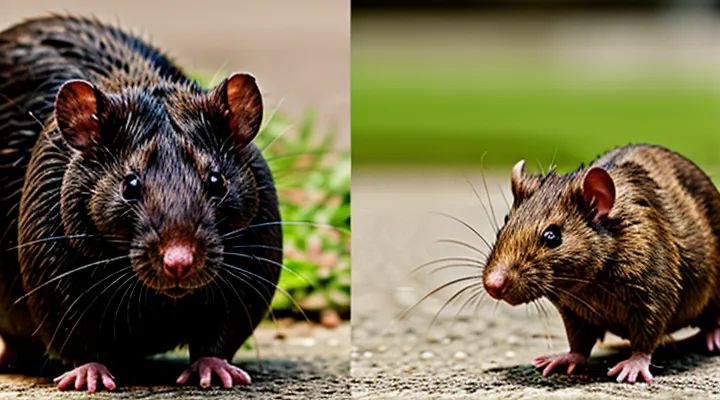
Understanding Moles and Rats: A Comparative Overview
What are Moles?
Physical Characteristics of Moles
Moles are small, cylindrical mammals adapted for a subterranean lifestyle. Their bodies range from 10 to 20 cm in length, with a weight of 30–150 g depending on species. Dense, velvety fur lies flat against the skin, reducing friction while moving through tunnels. The fur’s unique orientation helps push soil backward as the animal advances.
Limbs are short but powerfully built; the forelimbs possess elongated, clawed digits specifically for digging. Each forefoot bears three large, curved claws that generate up to 2 N of force, enabling rapid excavation of soil. Hind limbs are smaller and primarily used for propulsion and balance.
Eyes are reduced to minute, covered openings, rendering vision largely nonfunctional. The eyes are protected by a thin layer of skin, reflecting the animal’s reliance on tactile and olfactory cues. Ears lack external pinnae and consist of small openings hidden beneath fur, minimizing soil entry.
The snout is elongated and highly flexible, housing a sophisticated set of sensory receptors. Vibrissae line the muzzle, providing precise detection of vibrations and chemical signals within the earth. This tactile apparatus compensates for the limited visual capacity.
Skin is thick and resistant to abrasion, with a high concentration of keratinized cells. The epidermis secretes a lubricating oil that eases movement through tight burrows. Internally, the skeletal structure includes a reinforced vertebral column that supports the muscular effort required for digging.
Key physical traits:
- Compact, fusiform body shape (10–20 cm)
- Velvety, flat-lying fur
- Powerful forelimbs with three large digging claws
- Reduced eyes and concealed ear openings
- Elongated, highly sensitive snout with dense vibrissae
- Thick, abrasion-resistant skin with lubricating secretions
- Reinforced vertebral column for sustained digging activity
These characteristics collectively enable moles to navigate and manipulate underground environments efficiently, distinguishing them from other small mammals.
Habitat and Behavior of Moles
Moles inhabit moist, loamy soils rich in earthworms and insects. They thrive in temperate grasslands, forests, and cultivated fields where the ground remains soft enough for extensive tunneling. Preferred depth ranges from 5 cm near the surface to 30 cm underground, with deeper chambers used for nesting and food storage. Regions with high rainfall and abundant organic matter provide optimal conditions for population stability.
Behaviorally, moles are specialized diggers. Their forelimbs feature large, clawed paws that generate a rapid, sinusoidal motion, allowing the animal to displace up to 2 kg of soil per hour. This activity creates a network of surface runways and deeper burrows that facilitate foraging and predator avoidance. Feeding primarily on earthworms, larvae, and small invertebrates, moles rely on a highly developed tactile sense; the eyes are reduced, while the snout and whiskers detect vibrations and chemical cues in the soil.
Reproduction follows a seasonal pattern. Breeding occurs in early spring, with females producing one to two litters of 3–7 offspring. Young moles mature within three months, attaining full digging capability shortly thereafter. Territorial aggression is limited; individuals maintain exclusive tunnel systems but may share overlapping foraging zones without direct conflict.
Key characteristics of mole habitat and behavior include:
- Preference for moist, loose soils with abundant invertebrate prey
- Construction of extensive, multi-level tunnel networks
- Reliance on tactile and olfactory senses over vision
- Seasonal breeding with rapid juvenile development
- Minimal surface activity, reducing exposure to predators
These traits distinguish moles from other small mammals, such as rats, whose habitats are typically above ground and whose behavioral strategies emphasize opportunistic foraging and social interaction.
Dietary Habits of Moles
Moles sustain themselves almost exclusively on animal prey found in soil. Their diet consists of earthworms, insect larvae, beetles, millipedes, and occasionally small arachnids. High protein intake supports the energy demands of continuous digging.
Key characteristics of mole feeding behavior include:
- Preference for soft-bodied organisms that can be captured without extensive handling.
- Use of tactile sensors on the snout to locate prey in darkness.
- Consumption of prey whole; digestion extracts nutrients efficiently.
- Seasonal shift toward greater intake of larvae during spring and summer when they are abundant.
Moles exhibit a rapid digestive turnover, processing food within hours. This efficiency compensates for the limited caloric yield of individual prey items and maintains the metabolic rate required for burrowing activity. Unlike many rodents, moles lack the ability to store large food reserves and rely on constant foraging in moist, aerated soils where prey density remains high.
What are Rats?
Physical Characteristics of Rats
Rats are medium‑sized rodents distinguished by a compact, elongated body, a hairless, scaly tail, and prominent facial whiskers. Their physical profile contrasts sharply with that of moles, which possess a streamlined, cylindrical form and reduced visual organs.
- Length: head‑to‑body measurement typically 15–25 cm; tail adds 12–20 cm.
- Weight: 150–500 g for common species (e.g., Rattus norvegicus).
- Fur: dense, coarse hair covering most of the body; coloration ranges from brown to black, with occasional gray tones.
- Tail: naked, tapering, prehensile; surface covered with fine scales that aid thermoregulation.
- Ears: large, thin‑skinned, highly vascularized, providing acute auditory perception.
- Eyes: well‑developed, forward‑facing, enabling binocular vision.
- Whiskers (vibrissae): long, highly innervated; serve as tactile sensors for navigation and object detection.
- Dentition: continuously growing incisors with a sharp, chisel‑like edge; molars adapted for grinding plant material and insects.
- Skeletal structure: robust vertebral column, flexible pelvis, and strong hind limbs that support rapid sprinting and climbing.
- Skin: thin epidermis with a rich supply of sweat glands, facilitating heat dissipation.
These characteristics equip rats for opportunistic foraging, agile movement through narrow passages, and adaptability to diverse habitats, setting them apart from the subterranean morphology of moles.
Habitat and Behavior of Rats
Rats thrive in environments that provide shelter, water, and abundant food sources. Urban settings such as sewers, basements, and abandoned buildings are common, while rural areas host populations in grain stores, barns, and fields. Natural habitats include riverbanks, forests, and grasslands where dense vegetation offers protection from predators.
Key aspects of rat behavior include:
- Nocturnal activity; peak foraging occurs after dark.
- Highly adaptable diet, ranging from grains and fruits to carrion and human waste.
- Social organization within colonies, featuring hierarchies led by dominant individuals.
- Complex communication through ultrasonic vocalizations, scent marking, and tail gestures.
- Prolific breeding; females can produce several litters annually, each containing up to a dozen offspring.
These traits enable rats to exploit a wide spectrum of niches, contrasting sharply with the subterranean lifestyle of moles, which favor loose soil and a diet focused on earthworms and insects. The rat’s versatile habitat selection and opportunistic behavior underscore its success as a ubiquitous mammal across diverse ecosystems.
Dietary Habits of Rats
Rats are omnivorous mammals that exploit a wide range of food sources. Their diet includes grains, seeds, fruits, and vegetables, providing carbohydrates and essential vitamins. Protein is obtained from insects, carrion, and occasional small vertebrates, while fats are sourced from nuts, seeds, and animal tissue.
Key dietary components:
- Cereals (wheat, rice, barley) – primary carbohydrate supply.
- Legumes and pulses – source of protein and fiber.
- Fresh produce (apples, carrots, leafy greens) – vitamins and minerals.
- Invertebrates (beetles, larvae) – supplemental protein.
- Waste material (food scraps, garbage) – opportunistic energy source.
Rats display adaptive foraging behavior, selecting foods based on availability, nutritional content, and seasonal changes. They store excess food in cheek pouches for transport to nests, enabling consumption during periods of scarcity. Their digestive system efficiently processes both plant and animal matter, supporting rapid growth and high reproductive rates.
Key Distinctions Between Moles and Rats
Morphological Differences
Size and Body Shape
Moles are small, subterranean mammals whose body length rarely exceeds 15 cm, with a compact, cylindrical form that facilitates digging. Their forelimbs are broad, equipped with powerful claws, and the hind limbs are reduced, reinforcing a streamlined shape that minimizes resistance in tunnels. The head is wedge‑shaped, and the skin is velvety, allowing smooth movement through soil.
Rats are considerably larger, with body lengths ranging from 20 cm to 30 cm, not including the tail, which can add another 15 cm to 20 cm. Their bodies are elongated and flexible, supporting a versatile locomotion style on the surface and in confined spaces. Limbs are proportionally balanced, enabling climbing and sprinting, while the skull is robust with a pronounced snout. The fur is coarse, providing protection against varied environments.
Key morphological contrasts:
- Length: moles ≤ 15 cm; rats 20 – 30 cm (plus tail).
- Body profile: cylindrical, streamlined for moles; elongated, adaptable for rats.
- Limbs: enlarged digging forelimbs, reduced hind limbs in moles; well‑developed fore‑ and hind limbs in rats.
- Head shape: wedge‑shaped in moles; broader, longer snout in rats.
- Tail: absent or vestigial in moles; long, hairless tail in rats.
Features of the Head and Snout
The head and snout morphology provide reliable criteria for separating moles from rats.
Moles possess a compact skull with a short, tubular snout adapted for subterranean foraging. The snout is densely covered by Eimer’s organs, specialized mechanoreceptors that detect soil vibrations. Eyes are vestigial, covered by skin, and external ears are absent. The jaw muscles are reduced, reflecting a diet of soft-bodied invertebrates. These traits create a streamlined profile that minimizes resistance while moving through tunnels.
Rats exhibit a broader skull with an elongated, pointed snout suited for gnawing and manipulating objects. Prominent, forward‑facing eyes support acute vision, while large, mobile pinnae enhance auditory perception. Whiskers extend from the rostrum, providing tactile feedback in open environments. Strong masseter muscles and incisors enable the processing of a varied diet, from seeds to hard materials.
Key distinctions can be summarized:
- Snout length: short and tubular (mole) vs. long and pointed (rat)
- Sensory structures: Eimer’s organs dominate the mole snout; whiskers and large eyes dominate the rat snout
- Ear development: absent external ears (mole) vs. prominent external pinnae (rat)
- Jaw musculature: reduced in moles, robust in rats
These anatomical differences reflect the divergent ecological niches occupied by the two species and allow rapid identification in field observations.
Limb Structure and Claws
Moles possess forelimbs that are short, robust, and positioned laterally, providing powerful digging capability. Each forelimb contains a broad, spade‑shaped hand with three enlarged, curved claws that act as excavation tools. The skeletal arrangement includes a reinforced humerus and an enlarged olecranon process, enhancing leverage for soil displacement. Hind limbs are smaller, reduced in length, and primarily support locomotion underground.
Rats exhibit slender forelimbs adapted for grasping and manipulating objects rather than excavation. Their hands have five relatively straight claws, none of which are specialized for digging. The forearm bones are elongated, allowing a wide range of motion for climbing and handling food. Hind limbs are longer than those of moles, supporting rapid sprinting and agile movement on surfaces.
Key distinctions:
- Forelimb shape: broad and spade‑like in moles; narrow and dexterous in rats.
- Claw morphology: three enlarged, curved claws for moles; five straight claws for rats.
- Skeletal adaptations: reinforced humerus and olecranon in moles; elongated radius/ulna in rats.
- Hind‑limb function: primarily stabilizing in moles; propulsion and speed in rats.
Behavioral Contrasts
Burrowing and Tunneling Techniques
Moles and rats both create underground passages, yet their engineering approaches diverge sharply.
Moles employ powerful, clawed forelimbs to excavate soil in a continuous, V‑shaped tunnel. The animal’s compact, cylindrical body fits the tunnel’s dimensions, allowing rapid forward movement while displacing earth laterally. Burrows typically extend 30–150 cm below the surface, providing stable humidity and temperature for foraging on invertebrates. Soil is expelled through a series of side openings, creating a characteristic molehill pattern.
Rats construct tunnels primarily by gnawing with incisors and pushing loosened material backward with their forepaws. Their passages are broader, more irregular, and often incorporate existing cracks or root channels. Tunnels rarely exceed 20 cm in depth and serve as routes between nesting sites, food caches, and escape routes. Soil removal occurs at tunnel termini, resulting in small mounds of displaced earth.
Key distinctions:
- Limb specialization: Moles – robust, enlarged claws; Rats – standard forepaws, incisors dominate excavation.
- Tunnel geometry: Moles – narrow, V‑shaped, uniform depth; Rats – wider, irregular, shallow.
- Soil displacement: Moles – side openings, continuous mounding; Rats – terminal piles, occasional surface disturbance.
- Primary purpose: Moles – foraging habitat; Rats – connectivity between nests and resources.
Social Structures
Moles live primarily as solitary individuals, each occupying a distinct tunnel system that serves as a home, foraging zone, and breeding area. Their social interaction is limited to brief encounters during the breeding season, after which males and females separate. This isolation reduces competition for food and minimizes the spread of parasites within the population.
Rats, by contrast, form complex colonies that include hierarchical structures, defined territories, and cooperative behaviors. A typical group consists of a dominant breeding pair, subordinate adults, and juveniles, all sharing nesting sites and foraging routes. Communication relies on vocalizations, scent markings, and tactile signals, enabling coordinated activities such as nest building and predator avoidance.
Key distinctions in social organization:
- Territoriality: Moles defend exclusive underground chambers; rats defend overlapping surface territories within a colony.
- Group composition: Moles are largely solitary; rats maintain stable, multi‑generational groups.
- Reproductive strategy: Moles exhibit seasonal monogamy with brief pair bonding; rats display continuous breeding with a dominant breeding pair.
- Cooperation: Moles show no cooperative foraging or nest construction; rats cooperate in food storage, nest maintenance, and collective defense.
These contrasting social structures reflect adaptations to their respective ecological niches: subterranean, resource‑scarce environments favor solitary, tunnel‑centric lifestyles for moles, while resource‑abundant, surface habitats support the social complexity observed in rat colonies.
Activity Patterns
Moles are primarily subterranean, conducting most of their activity during daylight hours when soil temperature is moderate. Their foraging cycles consist of short, intensive bouts of digging followed by periods of rest within burrow chambers. Energy expenditure peaks during the initial excavation phase, after which metabolic rates decline as the animal conserves resources.
Rats are surface‑dwelling omnivores with a crepuscular to nocturnal activity pattern. They emerge from shelters at dusk, engage in exploratory foraging, and return to nests before dawn. Their locomotion relies on rapid sprinting and climbing, leading to higher sustained aerobic output compared to the intermittent bursts observed in moles.
Key distinctions in activity patterns:
- Temporal niche: moles operate mainly in daylight; rats are active at night.
- Spatial niche: moles remain underground; rats occupy above‑ground habitats.
- Movement style: moles perform brief, high‑intensity digging; rats perform prolonged, moderate‑intensity running and climbing.
- Rest strategy: moles rest within the same burrow system; rats seek separate nesting sites for sleep.
Ecological Roles and Impact
Soil Aeration and Insect Control by Moles
Moles improve soil structure by creating extensive tunnel networks that increase aeration, water infiltration, and root penetration. Their burrowing activity breaks compacted layers, allowing oxygen to reach deeper soil zones and promoting microbial activity essential for nutrient cycling.
In addition to physical soil benefits, moles regulate pest populations. They feed primarily on earthworms, insect larvae, and grubs, reducing the numbers of insects that damage grasses and crops. This predation lessens the need for chemical controls and supports healthier plant growth.
Key contributions of moles:
- Creation of channels that enhance gas exchange and drainage.
- Disruption of soil compaction, facilitating root expansion.
- Consumption of soil-dwelling insects, lowering pest pressure.
- Indirect promotion of plant vigor through improved soil conditions.
Agricultural Damage and Disease Transmission by Rats
Rats are prolific agricultural pests, capable of compromising food production through direct consumption, contamination, and structural damage. Their gnawing behavior destroys stored grains, root vegetables, and irrigation equipment, while their burrowing destabilizes soil and irrigation channels, reducing yield and increasing labor costs.
Key mechanisms of crop loss include:
- Consumption of standing crops and stored produce.
- Contamination with urine, feces, and hair, rendering products unsuitable for market.
- Physical damage to plant stems and roots caused by gnawing and burrowing.
- Disruption of irrigation and drainage systems through tunnel collapse.
Rats serve as vectors for a range of zoonotic pathogens that affect both livestock and humans. Transmission occurs via direct contact, contaminated feed, or aerosolized particles from rodent excreta. Major diseases associated with rodent populations are:
- Leptospirosis – bacterial infection spread through urine‑contaminated water.
- Hantavirus pulmonary syndrome – respiratory illness transmitted by inhalation of aerosolized droppings.
- Salmonellosis – bacterial gastroenteritis linked to contaminated foodstuffs.
- Lassa fever – hemorrhagic disease endemic in certain regions, carried by rodents.
- Plague – bacterial infection historically transmitted by fleas that infest rats.
Effective management combines habitat modification, exclusion techniques, and targeted baiting to reduce population density and limit the spread of disease. Monitoring rodent activity and maintaining sanitation standards are essential components of an integrated pest‑management program.
Managing Presence: Approaches and Considerations
Identifying Infestation Signs
Molehills and Tunnels
Moles and rats create markedly different surface and underground structures, a fact that clarifies their ecological niches.
Molehills appear as small, rounded mounds of displaced soil, typically 5‑15 cm high and 10‑30 cm across. The mound results from a mole pushing soil forward while extending a shallow tunnel, often a few centimeters below the surface. The soil composition remains largely unchanged, and the hill dissipates quickly after rain or wind.
Tunnels excavated by moles are narrow, uniformly cylindrical passages 2‑3 cm in diameter, extending 1‑2 m from the entrance before branching into a network of foraging shafts. The tunnels maintain a consistent depth of 10‑30 cm, allowing the animal to remain in moist, oxygen‑rich layers.
Rats construct burrows that differ in scale and purpose. Burrow entrances are larger, 5‑10 cm wide, and the chambers can reach 30 cm in height. Depth varies from shallow surface tunnels to deep chambers 50‑150 cm below ground, often incorporating multiple exits for predator avoidance.
Key differences:
- Mound formation – moles produce discrete, temporary hills; rats rarely create visible surface mounds.
- Tunnel diameter – mole passages remain under 3 cm; rat burrows exceed 5 cm.
- Depth consistency – mole tunnels stay within a narrow vertical band; rat burrows span a broader range.
- Purpose – mole tunnels serve primarily for foraging insects; rat burrows provide shelter, food storage, and escape routes.
These structural characteristics underscore the distinct adaptive strategies of the two species.
Rat Droppings and Gnaw Marks
Rat droppings are small, dark, cylindrical pellets measuring ¼ to ½ inch in length. Each pellet typically shows a tapered end and a blunt base, reflecting the rodent’s diet of grains and protein. Fresh droppings retain a glossy surface; older specimens become dry and crumbly, often accumulating in clusters near food sources, burrow entrances, or along wall voids.
Gnaw marks reveal the rat’s continuously growing incisors. Characteristic features include:
- Parallel, shallow grooves cut into wood, plastic, or insulation.
- Clean, V‑shaped cuts with smooth edges, indicating the animal’s powerful bite.
- Repeated patterns along a single surface, suggesting frequent travel routes.
Both droppings and gnaw marks differ markedly from signs produced by moles. Moles leave silvery, tunnel‑filled soil mounds and compacted earth ridges, but they do not generate pellet clusters or incisors marks. Identifying the presence of rat excrement and distinctive gnawing helps distinguish rodent activity from that of subterranean insectivores.
Humane Removal Strategies
Live Trapping and Relocation
Effective pest management hinges on accurate live trapping and relocation of both moles and rats, recognizing that their habits, habitats, and legal protections differ.
Moles inhabit underground tunnel systems, respond to soil vibrations, and rarely venture above ground. Traps must be placed within active tunnels, using bait such as earthworms or insects. Rats, as surface dwellers, occupy burrows, walls, and attics; traps should be positioned along runways, near food sources, and secured with rodent‑specific lures like peanut butter or dried fruit.
Key considerations for live trapping and relocation:
- Species identification – confirm target animal before setting traps to avoid cross‑species capture.
- Trap selection – use tunnel‑style live traps for moles; cage or snap‑free‑catch traps for rats, ensuring humane closure mechanisms.
- Placement – insert mole traps at a 45‑degree angle into active tunnels; position rat traps perpendicular to established runways, 1–2 m from walls.
- Baiting – match bait to species’ diet; avoid scented chemicals that deter non‑target wildlife.
- Monitoring frequency – check traps every 2–4 hours; prolonged confinement increases stress and injury risk.
- Handling – wear gloves, use protective sleeves; immobilize captured animal briefly before transport.
- Relocation distance – release moles at least 5 km from capture site to prevent return; release rats a minimum of 2 km away, preferably in a habitat lacking human structures.
- Release site selection – choose environments that provide natural cover and food sources for moles (e.g., moist, loamy soils); for rats, select remote wooded areas with minimal human activity.
- Legal compliance – verify local wildlife regulations; many jurisdictions require permits for trapping and relocation, especially for protected species.
- Post‑release monitoring – observe relocation area for signs of settlement; document outcomes to assess efficacy.
Adhering to these protocols ensures humane treatment, minimizes reinfestation, and aligns with regulatory standards for managing subterranean and rodent pests.
Habitat Modification
Moles excavate extensive tunnel systems that aerate soil, improve drainage, and redistribute organic material. Their burrows create pockets of loose earth that support microbial activity and facilitate root penetration for plants. The constant movement of soil also reduces compaction, enhancing water infiltration.
Rats construct nests in existing structures such as burrows, crevices, or human-made shelters. Their modifications involve the accumulation of discarded materials, food remnants, and urine, which alter the microenvironment by increasing ammonia levels and attracting insects. Nest building can lead to localized damage of vegetation and stored goods.
Key distinctions in habitat alteration:
- Soil impact: moles physically reshape the substrate; rats primarily affect surface debris and chemical composition.
- Ecosystem effect: mole tunnels promote plant growth and soil health; rat nests generate waste that may spread pathogens.
- Longevity: mole tunnel networks persist for years, influencing landscape structure; rat nests are temporary and often abandoned after a short period.
Understanding these divergent modification patterns clarifies how each species interacts with its surroundings and why their ecological footprints differ.
Prevention and Deterrence
Fencing and Barriers
Fencing and barriers serve as primary tools for controlling small mammals that inhabit gardens, fields, and urban spaces. The construction of an effective barrier depends on the animal’s size, burrowing ability, and climbing behavior.
Moles excavate tunnels just below the soil surface. A barrier must extend deep enough to intersect their tunnel system. Recommended specifications include:
- Mesh or solid material buried at least 30 cm (12 in) below ground.
- Horizontal strip placed 15–20 cm (6–8 in) above the surface to block upward movement.
- Use of galvanized steel or heavy‑duty plastic to resist soil pressure and moisture.
Rats, by contrast, rely on surface pathways and occasional burrows. Effective barriers for rats focus on preventing entry through gaps and limiting climbing opportunities. Key elements are:
- Vertical fence height of 60 cm (24 in) or greater, with smooth interior surface.
- Overhead clearance of at least 30 cm (12 in) to block jumping.
- Secure sealing of all seams, vents, and utility openings with metal flashing or hardware cloth.
Material choice influences durability. Steel offers high tensile strength and resistance to gnawing, while reinforced plastic provides corrosion resistance in wet environments. Installation should ensure continuous coverage; any discontinuity creates a breach that animals can exploit.
Maintenance involves regular inspection for corrosion, displacement, or damage caused by weather or wildlife. Prompt repair restores the barrier’s integrity and prevents re‑infestation.
By aligning barrier design with the distinct habits of burrowing versus surface‑active mammals, managers can achieve reliable exclusion without excessive expenditure.
Repellents and Natural Predators
Moles and rats, though often confused due to similar underground activity, require distinct management strategies. Repellents and natural predators address each species differently, reflecting variations in behavior, diet, and habitat preferences.
Repellents for moles focus on disrupting the sensory cues that guide their foraging. Effective options include:
- Castor oil formulations applied to soil surfaces, creating an unpalatable environment.
- Vibrational devices that emit low‑frequency pulses, deterring burrowing activity.
- Soil aeration methods that increase oxygen levels, reducing the moisture conditions moles favor.
Rat repellents target the rodents’ acute sense of smell and aversion to certain substances. Proven agents consist of:
- Concentrated peppermint oil placed on entry points, producing an odor rats avoid.
- Capsaicin‑based sprays applied to gnawing surfaces, causing irritation without toxicity.
- Ultrasonic emitters calibrated to frequencies uncomfortable for rats, limiting indoor presence.
Natural predators provide biological control that complements chemical measures. For moles, the primary predatory species are:
- Hawks and owls, which capture moles emerging at night.
- Foxes, capable of locating and excavating mole tunnels.
Rats benefit from a broader predator spectrum, including:
- Domestic cats, which hunt rats in residential settings.
- Barn owls, effective in agricultural environments.
- Snakes such as rat snakes, which pursue rats through burrows and open ground.
Integrating repellents with the encouragement of predator habitats—such as installing nesting boxes for owls or maintaining hedgerows for foxes—creates a sustainable approach to reducing mole and rat populations without reliance on lethal chemicals.