
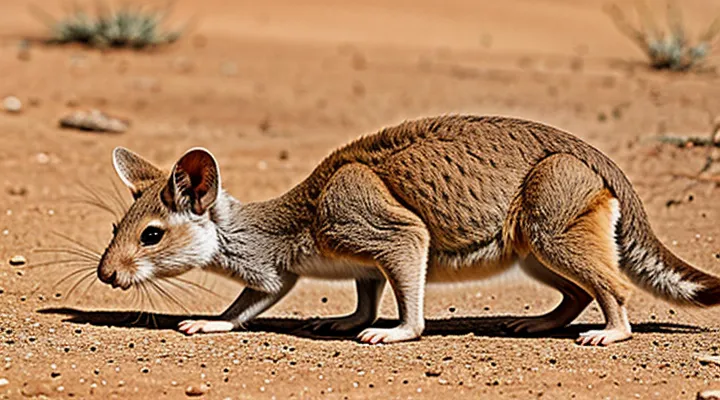
Introduction to Kangaroo Rats
What are Kangaroo Rats?
Noteworthy Features
Kangaroo rats exhibit a suite of adaptations that enable survival in arid environments. Their hind limbs are disproportionately long, producing powerful, spring‑like jumps that cover several meters in a single bound. The elongated tail functions as a counterbalance during rapid locomotion and stores fat reserves for periods of food scarcity.
Physiological mechanisms minimize water loss. Kidneys concentrate urine to an extraordinary degree, allowing the animal to derive moisture exclusively from dry seeds. Nasal passages contain specialized turbinate structures that reclaim water from exhaled air, reducing respiratory evaporation.
Morphology supports foraging efficiency. Prominent, fur‑lined cheek pouches expand to hold multiple seeds, keeping food separate from the mouth and preventing moisture loss. Large, forward‑facing ears enhance acoustic detection of predators and conspecifics, while also facilitating thermoregulation through increased surface area.
Behavioral traits further reinforce desert resilience:
- Nocturnal activity limits exposure to extreme daytime temperatures.
- Burrows, often extending several meters underground, provide stable microclimates and protection from predators.
- Food caching involves transporting seeds to multiple storage chambers, creating a dispersed reserve that mitigates the risk of depletion.
Collectively, these characteristics illustrate a highly specialized rodent lineage that thrives where water and vegetation are scarce.
Habitat and Distribution
Kangaroo rats occupy arid and semi‑arid environments where loose, well‑drained soils permit burrowing. They thrive in desert scrub, sagebrush steppe, and open grasslands with sparse vegetation. Sandy dunes, gravelly plains, and rocky foothills provide the thermal insulation and predator‑avoidance structures essential for their nocturnal foraging. Seasonal rainfall patterns influence activity cycles, but the species persist across habitats that maintain low moisture and high temperature variability.
Geographic range extends across the southwestern United States and northern Mexico. Primary distribution includes:
- Arizona, California, Nevada, New Mexico, Utah, and Texas (U.S.)
- Sonora, Chihuahua, and Baja California (Mexico)
Within these regions, populations concentrate in the Sonoran and Mojave deserts, the Great Basin, and the Chihuahuan desert margins. Elevational limits generally range from sea level to about 2,200 m, with higher densities in low‑elevation basins where substrate conditions favor extensive tunnel networks.
Unique Adaptations
Desert Survival Strategies
Water Conservation
Kangaroo rats survive in arid environments by extracting maximal moisture from food and minimizing water loss. Their physiology converts carbohydrate oxidation into metabolic water, providing a reliable internal source. Highly efficient kidneys concentrate urine, reducing fluid excretion to less than 0.2 ml per day. Nasal passages reabsorb water vapor during exhalation, preventing dehydration during respiration.
Key adaptations include:
- Dry diet utilization: Seeds and insects supply sufficient metabolic water without external intake.
- Renal concentration: Loop of Henle lengthens to generate hyperosmotic urine.
- Respiratory recovery: Countercurrent heat exchange in nasal turbinates recaptures moisture.
- Behavioral timing: Activity peaks at night, lowering evaporative loss.
These mechanisms collectively enable kangaroo rats to maintain hydration without drinking, illustrating a specialized strategy for water conservation in desert ecosystems.
Specialized Kidneys
Kangaroo rats, desert-adapted rodents, possess kidneys that concentrate urine to extraordinary levels, enabling survival without direct water intake. Their nephrons feature exceptionally long loops of Henle, which generate a steep osmotic gradient in the renal medulla. This gradient drives water reabsorption from the filtrate, producing urine with solute concentrations up to 1,200 mOsm kg⁻¹—far above that of most mammals.
Key adaptations include:
- A high proportion of juxtamedullary nephrons, each extending deep into the medulla.
- Enhanced expression of aquaporin‑2 channels in collecting ducts, increasing water permeability under antidiuretic hormone stimulation.
- Elevated activity of Na⁺/K⁺‑ATPase pumps in the thick ascending limb, intensifying solute removal and reinforcing the medullary gradient.
- Reduced glomerular filtration rate, limiting fluid loss while maintaining sufficient waste excretion.
These renal modifications allow kangaroo rats to extract water from metabolic oxidation of seeds and insects, conserving body fluids under extreme aridity. The combination of anatomical specialization and regulated transporter activity defines the efficiency of their excretory system.
Locomotion and Movement
Bipedal Hopping
Kangaroo rats, small desert-dwelling rodents, move primarily by bipedal hopping. Their hind limbs are elongated, with robust femurs and elongated metatarsals that generate powerful thrusts. Muscles attached to the pelvis contract rapidly, propelling the animal upward and forward while the forelimbs remain folded against the body.
The hopping gait conserves energy through elastic storage. Tendons in the Achilles region stretch during landing, then release stored elastic energy during the subsequent push‑off. This mechanism reduces metabolic cost compared to quadrupedal running, allowing individuals to travel long distances while foraging for seeds.
Key anatomical and physiological features that support bipedal hopping include:
- Specialized pelvic girdle that aligns the hind limbs for maximal propulsion.
- High‑density, spring‑like tendons that store and release kinetic energy.
- Large, fused sacral vertebrae that provide a rigid platform for force transmission.
- Enlarged auditory bullae that enhance detection of predator cues during rapid movement.
Bipedal hopping also influences predator avoidance. The sudden, erratic trajectory complicates visual tracking by snakes and raptors, while the ability to execute rapid, high‑angle leaps enables escape into burrows that are inaccessible to many threats.
Tail Function
The tail of desert‑dwelling kangaroo rats serves multiple physiological and behavioral purposes. Its robust, hairless shaft provides a counterbalance during powerful hind‑limb leaps, allowing precise aerial control and rapid directional changes while evading predators. Muscular attachments at the base enable fine adjustments of body orientation, reducing the risk of overshooting targets or colliding with obstacles.
In addition to locomotor support, the tail functions as a storage site for adipose tissue. Fat deposits accumulate beneath the skin, supplying metabolic energy during periods of food scarcity and extreme temperature fluctuations. When ambient heat rises, blood flow through the tail’s extensive vascular network increases, facilitating convective heat loss and assisting in thermoregulation.
The tail also conveys social information. Vibrational signals generated by tail flicks are transmitted through the substrate, alerting conspecifics to danger or territorial boundaries. These tactile cues complement auditory and olfactory communication, enhancing group cohesion in sparse habitats.
Key functions:
- Balance and maneuverability during jumps
- Energy reserve through subcutaneous fat
- Heat dissipation via vascular heat exchange
- Substrate‑borne signaling for social interaction
Diet and Foraging
Primary Food Sources
Seeds
Kangaroo rats rely heavily on seeds as their primary energy source. The high carbohydrate content of most desert seeds provides rapid glucose availability, supporting the rodents’ nocturnal foraging bursts and sustained water balance through metabolic water production.
The species exhibit selective feeding, preferring seeds with:
- Thick seed coats that protect moisture
- High lipid concentrations, such as those of mesquite and acacia
- Small size facilitating transport in cheek pouches
Caching behavior further influences seed dynamics. Individuals transport seeds to underground burrows, where they create caches that can contain thousands of items. These caches serve dual purposes: a reserve during periods of scarcity and a mechanism for seed dispersal. Unretrieved seeds often germinate, contributing to plant recruitment in arid ecosystems.
Physiological adaptations complement seed consumption. Specialized molars efficiently crack hard seed shells, while a highly efficient kidney minimizes water loss, allowing the rodents to extract water from metabolizing dry seeds alone. This combination of dietary preference, caching, and renal efficiency underpins the survival of these desert-adapted mammals and shapes the germination patterns of numerous seed-producing shrubs.
Insects
Kangaroo rats, the small desert-dwelling rodents that resemble marsupials, rely heavily on insects for protein during periods when seeds are scarce. Their nocturnal foraging behavior includes active pursuit of ground beetles, katydids, and ant larvae, which are captured using rapid hind‑foot strikes. Insect consumption supplements the high‑energy diet derived from cached seeds and improves reproductive success by providing essential amino acids.
Key insect groups encountered by these rodents:
- Beetles (Carabidae, Tenebrionidae) – abundant in sandy soils, easy to locate under debris.
- Orthopterans (grasshoppers, katydids) – captured during night flights, rich in lipids.
- Hymenopteran larvae (ants, wasps) – harvested from nests, supplying micronutrients.
Predation on insects also influences soil turnover. While extracting prey, kangaroo rats disturb leaf litter and surface substrate, facilitating aeration and seed dispersal. This bioturbation contributes to the maintenance of arid ecosystem structure, linking insect availability with habitat stability.
Foraging Behavior
Seed Pouch Usage
Kangaroo rats, distinguished by their elongated hind limbs and nocturnal habits, possess a specialized external cheek pouch that functions as a temporary seed repository. The pouch enables rapid collection of dispersed granules during foraging bouts, reducing exposure to predators.
The pouch’s elastic walls expand to accommodate volumes up to 30 % of the animal’s body mass. Upon capture, seeds are transferred to the oral cavity, where muscular contractions force them into the cheek sac. The lining secretes a mild saliva that moistens the seeds, preventing desiccation in arid environments.
Key aspects of pouch utilization include:
- Transport: Seeds are carried from foraging sites to burrow chambers, allowing relocation of food resources without immediate consumption.
- Caching: Within the burrow, rodents deposit seeds into designated storage cells; the pouch’s capacity determines the number of items transferred per trip.
- Selection: The pouch can hold mixed seed types; subsequent sorting occurs in the nest, where larger, nutrient‑rich seeds are prioritized for consumption.
- Thermal regulation: The sealed environment moderates temperature fluctuations, protecting seeds from extreme daytime heat.
Empirical observations reveal that individuals adjust pouch loading based on ambient humidity; higher moisture levels reduce the need for saliva coating, while dry conditions trigger increased secretion to maintain seed viability. This adaptive behavior enhances survival in unpredictable desert climates.
Nocturnal Activity
Kangaroo rats, the small desert rodents that resemble marsupials, conduct most of their daily activities after sunset. Their nocturnal schedule aligns with the extreme temperature fluctuations of arid habitats, allowing them to avoid daytime heat while exploiting cooler, more humid conditions for foraging.
During the night, individuals emerge from burrows to locate seeds, insects, and plant material. Their large, forward‑facing eyes capture low‑light images, and elongated auditory bullae amplify faint sounds, facilitating precise navigation and predator detection. Specialized whiskers provide tactile feedback, enabling rapid movement across uneven terrain.
Key physiological and behavioral adaptations supporting nighttime activity include:
- High‑efficiency kidneys that concentrate urine, conserving water while the animal remains active for extended periods.
- Muscular hind limbs capable of powerful, leaping locomotion, reducing exposure time on open ground.
- A circadian clock synchronized to lunar cycles, optimizing foraging effort during phases of reduced predation risk.
By restricting surface activity to darkness, kangaroo rats minimize water loss, evade visual hunters such as owls and snakes, and maintain energy balance in environments where resources are scarce and temperatures are extreme.
Social Structure and Reproduction
Solitary Nature
Burrow Systems
Kangaroo rats construct extensive subterranean networks that serve multiple physiological and ecological functions. Primary tunnels extend horizontally from a central nest chamber, often reaching lengths of 5–10 m. Side passages branch toward foraging zones, water sources, or escape routes, creating a maze that reduces predator detection.
Key architectural elements include:
- Nest chamber: Deeply buried, insulated by compacted soil; maintains temperatures between 20 °C and 28 °C despite surface fluctuations.
- Food cache cells: Small, sealed compartments lined with dry sand; store seeds and insects for periods of scarcity.
- Ventilation shafts: Narrow vertical openings that promote airflow, preventing carbon‑dioxide buildup and regulating humidity.
- Multiple entrances: Strategically spaced around the perimeter; enable rapid retreat and reduce the likelihood of simultaneous blockage.
Burrow depth varies with regional climate. In arid deserts, chambers are situated 30–50 cm below the surface to exploit cooler substrate, whereas in semi‑arid grasslands they may descend 1 m to access more stable moisture levels. Soil composition influences tunnel stability; loamy substrates support longer, straighter passages, while sandy soils require frequent reinforcement with compacted walls.
Population density affects system complexity. Individuals occupying a shared burrow network exhibit overlapping foraging zones but maintain distinct nest chambers, minimizing direct competition. Studies using radio telemetry and infrared cameras reveal that burrow systems contribute to ecosystem engineering by aerating soil, redistributing nutrients, and providing refuge for other small vertebrates and invertebrates.
Territoriality
Kangaroo rats, small heteromyid rodents adapted to arid environments, possess a well‑developed pouch for offspring transport. Their survival hinges on precise spatial organization, which manifests as strict territoriality.
Individuals occupy exclusive home ranges that rarely overlap with those of same‑sex rivals. Defense relies on a combination of acoustic signals, foot‑drumming, and scent deposition from flank glands. Intruders provoke rapid pursuit, tail‑flipping displays, and, when necessary, brief physical confrontations.
Territorial boundaries are reinforced through:
- Burrow architecture that limits entry points
- Scent marks placed at tunnel mouths and perimeters
- Consistent foot‑drumming patterns that broadcast occupancy
Territoriality regulates population density by preventing overexploitation of limited seeds and insects. It also reduces intra‑specific competition, allowing individuals to allocate more energy to foraging and reproduction. Moreover, defined home ranges facilitate predator avoidance, as rats become familiar with safe escape routes within their own burrow networks.
Research indicates that males maintain larger territories during the breeding season, while females defend smaller, resource‑rich areas that support offspring development. This spatial segregation aligns reproductive success with the availability of food caches and shelter.
Mating and Offspring
Breeding Season
Kangaroo rats enter the breeding season during the spring months, typically from March to May, when rainfall increases vegetation and insect activity. Elevated food availability stimulates hormonal changes that trigger estrus in females and heightened male courtship behavior.
Mating occurs shortly after females become receptive; males engage in rapid, high‑frequency vocalizations and vigorous pursuits. Copulation lasts only a few seconds, but repeated attempts ensure successful fertilization.
Gestation lasts approximately 28 days, after which females give birth to litters of two to four altricial young. Neonates are born hairless, blind, and dependent on maternal care for the first three weeks.
Key reproductive parameters:
- Estrus onset: early spring, linked to moisture‑driven plant growth.
- Mating frequency: multiple copulations per receptive period.
- Gestation length: 27–29 days.
- Litter size: 2–4 offspring.
- Weaning age: 21–25 days.
After weaning, juveniles disperse to establish individual territories, reducing intraspecific competition and preparing for the next breeding cycle. Seasonal timing aligns reproductive output with optimal environmental conditions, maximizing offspring survival.
Parental Care
Kangaroo rats, small desert rodents with a marsupial‑like pouch, exhibit a highly specialized system of parental care that maximizes offspring survival in arid environments.
Females construct shallow burrows lined with dry vegetation, providing thermal insulation and protection from predators. The nest is sealed during daylight hours, reducing moisture loss and exposure to extreme temperatures.
Lactation begins shortly after birth; milk composition is rich in lipids, supporting rapid growth of the altricial young. Pups remain attached to the mother’s teats for several weeks, receiving nourishment without leaving the safety of the burrow.
Weaning occurs when juveniles develop sufficient fur and locomotor ability to forage independently. At this stage, mothers gradually reduce provisioning, encouraging self‑sufficiency while maintaining proximity for occasional shelter.
Key aspects of kangaroo rat parental care:
- Burrow construction and sealing for climate control
- High‑energy milk tailored to desert conditions
- Extended attachment period within the nest
- Timed weaning aligned with developmental milestones
These coordinated behaviors ensure that each generation can thrive despite the harshness of their habitat.
Conservation Status and Threats
Current Status
Endangered Species
Kangaroo rats, small nocturnal rodents adapted to arid environments, belong to the family Heteromyidae. Their distinctive bipedal locomotion and cheek pouches enable efficient foraging on seeds and insects across desert shrublands and grasslands of North America.
The International Union for Conservation of Nature classifies several species within this group as threatened, ranging from Vulnerable to Critically Endangered. Population assessments indicate rapid declines in fragmented habitats, with some local extirpations documented over the past two decades.
Key drivers of endangerment include:
- Habitat loss from agricultural expansion and urban development.
- Altered fire regimes that reduce native vegetation cover.
- Invasive predators such as domestic cats and feral dogs.
- Climate‑driven droughts that diminish seed availability.
Conservation actions currently implemented:
- Protection of critical habitats through federal and state land designations.
- Restoration projects that reestablish native plant communities and soil structure.
- Predator control programs targeting introduced carnivores.
- Monitoring networks that track population trends and genetic diversity.
Ongoing research priorities focus on fine‑scale habitat modeling, assessment of climate resilience, and evaluation of translocation success. Effective implementation of these measures is essential to halt further declines and secure the long‑term survival of these desert specialists.
Habitat Loss
Kangaroo rats inhabit arid and semi‑arid regions where sparse vegetation and loose soils provide the burrowing substrate essential for their nocturnal foraging and predator avoidance. Their distribution is tightly linked to native desert scrub, sagebrush, and grassland mosaics that maintain the microclimate and seed availability required for survival.
Habitat loss results from several anthropogenic pressures:
- Urban and suburban development that replaces native cover with impermeable surfaces.
- Agricultural conversion, especially irrigation‑intensive crops that alter soil texture and vegetation structure.
- Energy infrastructure expansion, including solar farms and transmission lines, which fragments continuous desert landscapes.
- Climate‑driven shifts in precipitation patterns that reduce the extent of suitable scrub and increase invasive plant encroachment.
These pressures produce measurable impacts. Population surveys show reduced density in fragmented patches, while genetic analyses reveal decreased heterozygosity, indicating limited gene flow. Declining burrow availability forces individuals into marginal habitats, raising exposure to predators and extreme temperatures. The loss of kangaroo rat activity also diminishes seed dispersal rates, affecting plant regeneration and overall desert ecosystem resilience.
Mitigation strategies focus on preserving and reconnecting remaining habitats. Designating critical desert zones as protected areas limits further conversion. Restoring native vegetation in degraded sections reestablishes suitable burrowing substrates. Implementing land‑use planning that incorporates wildlife corridors maintains genetic exchange between isolated populations. Ongoing monitoring programs track population trends, informing adaptive management decisions.
Conservation Efforts
Protected Areas
Protected areas represent the principal mechanism for preserving the desert habitats that sustain kangaroo rats, the small, nocturnal rodents adapted to arid environments. By restricting land conversion, regulating human activity, and maintaining ecological integrity, these reserves mitigate the primary threats of habitat loss and fragmentation.
Management strategies within reserves focus on maintaining native vegetation structure, controlling invasive species, and monitoring population dynamics. Effective programs integrate long‑term data collection, habitat restoration, and predator management to ensure stable or increasing kangaroo rat numbers.
Key categories of protected lands that benefit these rodents include:
- National wildlife refuges that prioritize native fauna and enforce strict access controls.
- State and provincial conservation areas that protect critical sand‑hill and shrub‑steppe ecosystems.
- Designated wildlife management zones where controlled grazing and fire regimes preserve suitable burrowing substrates.
Legal frameworks such as the Endangered Species Act and the Migratory Bird Treaty Act provide additional safeguards by obligating agencies to assess impacts on habitat quality before approving development projects. Conservation plans often require environmental impact assessments that specifically address the needs of desert‑dwelling rodent species.
Successful examples illustrate the impact of protected status. The Mojave National Preserve maintains extensive dunes and scrub where several kangaroo rat species thrive, while the Great Basin National Park conserves high‑elevation sagebrush habitats that support distinct populations. In both cases, regular population surveys have documented stable or rising trends, confirming the efficacy of protected area designation.
Continued investment in land acquisition, habitat restoration, and collaborative management with local stakeholders remains essential. By preserving the ecological conditions that kangaroo rats require, protected areas secure the long‑term survival of these specialized desert mammals.
Research Initiatives
Research on kangaroo rats, the small nocturnal rodents adapted to arid environments, has been organized into several coordinated initiatives that address ecological function, physiological adaptation, and conservation management.
Current programs include:
- Long‑term population monitoring across desert reserves, employing automated traps and radio‑telemetry to quantify survival rates, reproductive output, and spatial distribution.
- Genomic sequencing projects that generate reference genomes for multiple species, enabling comparative analyses of desert‑adaptation genes and assessment of genetic diversity within fragmented habitats.
- Water‑balance studies that measure evaporative loss, kidney morphology, and metabolic rates under controlled humidity gradients, providing insight into mechanisms of extreme dehydration tolerance.
- Climate‑impact modeling that integrates temperature projections, precipitation patterns, and habitat connectivity to forecast range shifts and identify priority corridors for preservation.
- Community‑engaged outreach that trains local stakeholders in habitat restoration techniques, monitors invasive plant encroachment, and promotes citizen‑science data collection.
Funding agencies, including the National Science Foundation and the U.S. Department of Agriculture, support these efforts through multi‑year grants that mandate open data sharing and interdisciplinary collaboration. Peer‑reviewed publications emerging from the initiatives have established baseline metrics for population health, revealed candidate genes linked to water conservation, and informed management plans that mitigate the effects of land‑use change.
Fascinating Facts
Longevity
Kangaroo rats, small desert-dwelling rodents, often exceed the life expectancy typical of similarly sized mammals. Field observations record individuals living up to 4 years, while captive specimens regularly reach 6–8 years, suggesting that environmental pressures rather than intrinsic biology limit longevity in the wild.
Two primary lifespan metrics illustrate this pattern:
- Maximum recorded age: 8 years in controlled environments.
- Median wild lifespan: approximately 2.5 years, reflecting predation and resource scarcity.
Several physiological and ecological traits underlie the extended lifespan of these animals:
- Efficient water conservation: Highly concentrated urine and minimal evaporative loss reduce metabolic stress.
- Low basal metabolic rate: Energy expenditure aligns with sparse food availability, slowing cellular wear.
- Robust DNA repair mechanisms: Elevated expression of repair enzymes mitigates oxidative damage.
- Burrow microclimate: Stable temperature and humidity within tunnels buffer external extremes, decreasing physiological strain.
Recent studies link the combination of metabolic restraint and superior cellular maintenance to the species’ capacity for prolonged survival. Understanding these mechanisms offers potential insights for biomedical research on aging and for conservation strategies aimed at preserving long-lived desert populations.
Unique Sounds and Communication
Desert hopping rodents emit a limited yet highly specialized acoustic repertoire that supports survival in arid environments. Vocalizations consist primarily of high‑frequency squeaks produced by rapid laryngeal vibration. These calls serve as alarm signals; their frequency range (30–50 kHz) exceeds the hearing threshold of most predators, enabling conspecifics to detect danger while remaining undetected.
Mechanical sounds complement vocal output. Foot‑drumming, generated by rapid fore‑foot strikes against the substrate, creates low‑frequency thuds (10–20 Hz) that travel efficiently through loose sand. Individuals employ this behavior to establish territory and to deter intruders. Tail‑slaps, executed by swinging the tail against the ground, produce sharp percussive bursts that convey aggressive intent during male‑male encounters.
Communication contexts include:
- Predator alert: brief, high‑pitched squeals emitted at the first sign of threat.
- Territorial display: rhythmic foot‑drumming sequences lasting several seconds, often paired with tail‑slaps.
- Mating call: elongated, modulated squeaks repeated at dusk, accompanied by subtle foot‑drumming to attract females.
- Social cohesion: low‑intensity chirps exchanged between parents and offspring within burrows, facilitating coordination of foraging and care.
Neurophysiological studies reveal that auditory receptors are tuned to the species‑specific frequency bands, allowing rapid discrimination of conspecific signals from ambient desert noise. Acoustic signals also convey individual identity through subtle variations in temporal pattern and amplitude, supporting recognition among closely spaced colonies.