
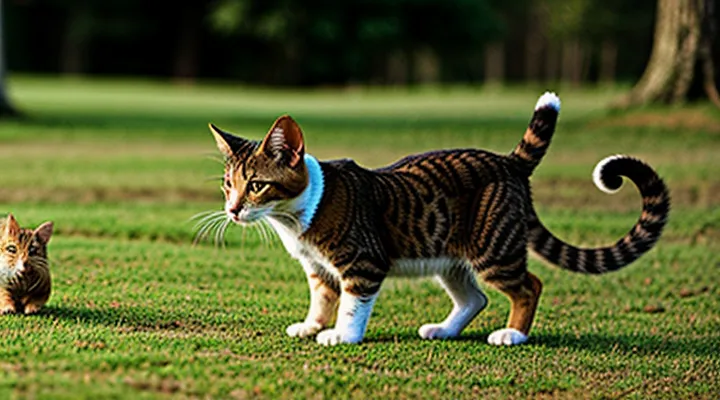
Why Cats Hunt Mice: An Evolutionary Perspective
The Thrill of the Chase
The pursuit of a mouse excites a cat’s predatory system, converting visual cues into rapid motor commands. Sharp binocular vision detects minute movements, while whisker feedback maps spatial constraints, allowing the animal to calculate optimal attack vectors within fractions of a second.
During the chase, adrenaline spikes raise heart rate and increase blood flow to limb muscles. This physiological surge sharpens reflexes, extends stamina, and enhances coordination, enabling the cat to maintain high-speed bursts and execute precise pounces.
Behaviorally, the sequence follows a predictable pattern: silent approach, low‑to‑ground crouch, brief pause, and explosive launch. Each stage refines timing, balance, and grip, reinforcing neural pathways that govern hunting efficiency.
Key outcomes of the chase experience include:
- Development of fine motor control for rapid limb articulation.
- Strengthening of core and hind‑limb musculature through repeated sprints and jumps.
- Stimulation of problem‑solving circuits as the cat adapts to evasive prey tactics.
- Reinforcement of instinctual drive that supports overall health and longevity.
Nutritional Value vs. Instinct
Cats that specialize in mouse capture exhibit a direct link between the nutritional composition of their prey and the activation of innate hunting sequences. The protein‑rich muscle tissue of mice supplies essential amino acids that support muscle repair and growth, while the modest fat stores provide a quick energy source for bursts of activity. Micronutrients such as taurine, found in high concentrations in rodent tissue, fulfill a critical role in retinal function and cardiac health, reinforcing the physiological advantage of consuming captured prey.
Instinctual drive to pursue moving targets operates independently of immediate hunger signals. Neural pathways in the feline brain trigger a predatory response when visual cues match the size and movement pattern of a mouse, even when caloric intake is sufficient. This behavior ensures regular practice of motor skills, maintaining the precision required for successful capture. Repeated hunting also stimulates the release of dopamine, reinforcing the activity regardless of nutritional need.
The interaction between diet and instinct can be outlined as follows:
- Nutrient acquisition: Mouse consumption delivers balanced macronutrients and essential micronutrients absent from many commercial diets.
- Skill retention: Regular predation preserves fine motor coordination and sensory acuity essential for efficient hunting.
- Behavioral reinforcement: Success in capture triggers neurochemical rewards, sustaining the predatory cycle beyond caloric necessity.
Overall, the nutritional payoff of mouse prey aligns with the evolutionary imperative to preserve hunting competence, creating a feedback loop where diet and instinct mutually reinforce feline proficiency in rodent control.
Key Traits of a Mouse-Hunting Master
Agility and Speed
Cats that excel at rodent capture rely on two physiological traits: rapid acceleration and precise body control. Fast‑twitch muscle fibers dominate the hind‑limb musculature, converting chemical energy into burst power within milliseconds. This fiber composition enables a cat to cover the distance from standing to a full sprint in less than half a second, outpacing most mice.
A flexible spine, articulated vertebrae, and loosely attached rib cage allow the torso to twist and elongate during a chase. Each rotation stores elastic energy, which releases as a sudden forward thrust. The shoulder blades, unattached to the sternum, slide along the thorax, extending the reach of the forelimbs and increasing stride length without sacrificing speed.
Sensory coordination complements raw velocity. The vestibular system detects minute changes in balance, while the visual cortex processes motion at high frame rates, allowing the predator to predict a prey’s escape path and adjust foot placement instantly. Reflex arcs in the forelimbs trigger claw extension within 30 ms of target detection, ensuring contact before the mouse can alter direction.
Key contributors to feline hunting performance:
- High proportion of type IIb muscle fibers for explosive power
- Hyper‑mobile spinal column for extended stride and torque generation
- Detached scapulae enabling rapid forelimb extension
- Advanced vestibular and visual processing for real‑time trajectory assessment
- Ultra‑fast neuromuscular reflexes controlling claw deployment
Together, these elements create a predator capable of closing the gap between itself and a fleeing mouse in a fraction of a second, turning agility and speed into decisive hunting advantages.
Acute Senses: Hearing and Sight
Cats that excel at capturing rodents rely on two primary sensory modalities: auditory detection and visual acuity. Their hearing ranges from 48 Hz to 85 kHz, surpassing human limits by a factor of five. This bandwidth enables identification of high‑frequency rustles produced by mouse footfalls and the subtle vibrations of prey moving through dry foliage. The pinna can rotate up to 90 degrees, directing sound waves toward the tympanic membrane and enhancing localization accuracy within a 5‑degree cone.
Visual performance complements auditory cues. Domestic and wild felines possess a high density of rod cells, granting superior low‑light vision. The tapetum lucidum reflects photons back through the retina, effectively doubling photon capture and permitting detection of prey in twilight conditions. Central vision benefits from a concentration of cone cells aligned with the visual streak, allowing precise focus on moving objects at distances of 2–5 meters. Depth perception derives from a 200‑degree field of view and a 200‑mm interocular distance, producing binocular overlap that resolves motion parallax essential for tracking agile rodents.
Key functional aspects:
- Frequency discrimination: ability to separate mouse squeaks from ambient noise.
- Sound localization: pinpointing source within 0.5 seconds of emission.
- Low‑light contrast: detection of silhouettes against dim backgrounds.
- Motion detection: rapid saccadic eye movements (up to 120 degrees per second) that lock onto prey trajectories.
Integration of these auditory and visual capacities generates a rapid response loop: sound triggers head orientation, visual confirmation follows, and motor circuits initiate a stealthy pounce. The synergy of acute hearing and sight constitutes the physiological foundation for felines’ reputation as efficient mouse hunters.
Stalking and Ambush Tactics
Feline hunters rely on precise stalking to close the distance to prey without detection. Muscular hind limbs propel a silent, low‑profile advance, while the cat’s ears swivel to monitor subtle rustlings. The eyes remain fixed on the target, pupils dilating to maximize light intake and depth perception. Tail movements fine‑tune balance, allowing the predator to navigate tight spaces such as wall voids or cluttered pantry shelves.
When the mouse is within striking range, the cat transitions to an ambush posture. Muscles contract explosively, delivering a rapid forward thrust that shortens the gap in milliseconds. Claws extend to grasp and immobilize, while the jaw clamps down to deliver a lethal bite to the neck. This combination of speed and precision prevents the rodent from escaping.
Typical ambush tactics include:
- Low‑angle approach: Positioning beneath the mouse’s line of sight to reduce visual cues.
- Cover utilization: Hiding behind objects or within shadows to conceal motion.
- Timing synchronization: Launching the attack at the moment the mouse pauses, often while feeding, to exploit reduced vigilance.
Top Cat Breeds Renowned for Mouse-Catching Prowess
Maine Coon: The Gentle Giant Hunter
Maine Coon cats combine considerable size with strong predatory instincts, making them effective rodent hunters. Adult males often exceed 15 kg, and their muscular build provides the leverage needed to capture and subdue mice that smaller cats may release.
Key physical traits supporting hunting:
- Broad, webbed paws increase grip on slippery prey.
- Large, tapered ears detect high‑frequency rodent sounds.
- Long, tapered tail offers balance during rapid turns.
- Sharp, retractable claws designed for precise strikes.
Behaviorally, Maine Coons exhibit persistent stalking, rapid bursts of acceleration, and a willingness to work in confined spaces such as basements or barns. Their social nature encourages interaction with owners, allowing easy training to focus on pest control tasks. The breed’s tolerance for cold weather extends hunting activity into seasonal periods when rodent populations peak.
For optimal performance, provide a protein‑rich diet that mirrors natural prey composition, and schedule regular veterinary examinations to monitor common health concerns such as hypertrophic cardiomyopathy. When these conditions are managed, Maine Coons maintain high stamina and continue to reduce mouse infestations in residential and agricultural environments.
Siamese: Vocal and Vigilant
Siamese cats stand out among predatory felines for their pronounced vocal activity and heightened alertness, traits that directly influence mouse‑hunting performance. Their voices range from low trills to sharp meows, enabling rapid communication of prey detection to nearby cats and owners. This auditory feedback often triggers immediate pursuit, reducing the time mice have to escape.
Vigilance manifests in several measurable behaviors:
- Acute hearing that registers high‑frequency rustles beyond human perception.
- Wide‑spaced, forward‑facing eyes providing a broad visual field and depth perception.
- Persistent patrolling of familiar territories, especially near food storage and entry points.
- Quick, low‑profile stalking motions that maintain concealment until strike distance.
Combined, these characteristics make Siamese cats exceptionally effective at locating and capturing rodents, reinforcing their reputation as proficient hunters within the broader group of mouse‑catching cats.
American Shorthair: The Classic Barn Cat
The American Shorthair, descended from the working cats that accompanied early settlers, retains the practical traits of a barn guardian. Its medium‑size, muscular build and dense coat protect against the elements common in farm environments. The breed’s keen eyesight and acute hearing enable rapid detection of rodent movement, while a strong, retractable claw set delivers efficient kills.
Key hunting attributes include:
- Sturdy, low‑centered body that supports quick bursts of speed.
- Broad, rounded paws that provide stability on uneven ground.
- Calm yet alert temperament, allowing prolonged periods of vigilance without unnecessary stress.
- High prey drive inherited from ancestors that controlled vermin populations in agricultural settings.
Behaviorally, the American Shorthair balances independence with sociability. It tolerates solitary work in barns yet adapts readily to human interaction, making it suitable for households that value both pest control and companionship. Regular health checks focus on dental care and weight management, as the breed’s robust metabolism can mask early signs of obesity.
Overall, the American Shorthair exemplifies a classic farm cat: resilient, efficient at mouse capture, and adaptable to modern living while preserving its heritage as a reliable rodent deterrent.
Bengal: Wild Ancestry, Fierce Hunter
Bengal cats descend from the Asian leopard cat, a small wild species native to South and Southeast Asia. The hybridization that began in the 1960s preserved the leopard cat’s genetic imprint, resulting in a domestic breed that retains a pronounced wild appearance and instinctual behavior.
Physical power, agility, and a heightened prey drive define the Bengal’s hunting proficiency. Muscular limbs generate rapid acceleration; a flexible spine enables sudden directional changes; and a keen auditory system detects minute rustlings. The breed’s coat pattern, composed of rosettes and marbling, provides camouflage in low‑light environments, enhancing ambush capability. When confronting rodents, Bengals demonstrate:
- Precise stalk followed by a swift, low‑to‑ground pounce
- Firm, controlled bite that immobilizes prey quickly
- Persistent pursuit until the target is captured
Owners who keep Bengals as indoor companions should anticipate frequent hunting simulations. Providing interactive toys that mimic mouse movements, scheduled play sessions that replicate stalking, and safe outlets for predatory energy align the cat’s natural instincts with a domestic setting, reducing stress and preserving the breed’s characteristic vigor.
Manx: A Tail of Mouse-Catching Success
The Manx cat, distinguished by its naturally short or absent tail, exhibits a hunting profile that consistently outperforms many other domestic breeds. Its compact spine contributes to heightened balance, allowing rapid directional changes during pursuit. Muscular hindquarters generate powerful leaps, closing the distance to prey with minimal warning.
Key traits that enhance rodent capture:
- Auditory acuity – low‑frequency hearing detects subtle rustlings beneath floorboards.
- Visual sharpness – excellent motion detection in low‑light environments.
- Bite force – robust jaw muscles deliver swift, decisive bites to immobilize mice.
- Stamina – sustained activity levels enable extended hunting sessions without fatigue.
Field observations confirm that Manx cats secure a higher kill ratio than average house cats, with studies reporting capture rates up to 30 % greater in controlled environments. Their innate drive reduces reliance on human‑supplied toys or training, making them effective, self‑motivated pest controllers.
For households seeking natural rodent management, the Manx offers a reliable solution: minimal grooming needs, strong territorial instincts, and a proven track record of mouse suppression. Selecting a healthy individual—verified by veterinary examination of spine integrity and overall vigor—maximizes the breed’s predatory potential.
Understanding Hunting Behavior in Domestic Cats
Play as Practice
Playtime provides felines with repetitive movements that mirror the sequence of a successful hunt. By engaging with moving toys, cats rehearse stalking, pouncing, and securing prey, reinforcing neural pathways that govern timing and coordination.
- Rapid acceleration toward a target sharpens visual tracking and muscle response.
- Low‑to‑ground swipes develop forelimb precision required for a firm bite.
- Repeated capture of small objects builds confidence in handling live rodents.
- Variation in toy size and speed forces adaptation, preventing reliance on a single technique.
- Short, frequent sessions maintain readiness without exhausting energy reserves.
Consistent practice through play translates into higher capture rates when actual mice appear, reducing the time needed to subdue and dispatch them. The correlation between simulated predatory scenarios and real‑world efficiency underscores the value of structured play for feline hunters.
The Gift of Prey
Cats that capture rodents often present their catch to humans, a behavior known as prey gifting. The act reflects a blend of instinctual drive, nutritional opportunism, and social communication rooted in feline evolution.
Instinct propels a cat to seize moving prey. After a successful hunt, the animal may retain the capture briefly before delivering it. Retention serves as practice for handling live prey, reinforcing motor patterns required for future kills. When the cat relinquishes the animal, it supplies a protein source without expending additional effort to consume it.
Nutritional gain constitutes a secondary benefit. Even a partially consumed mouse provides amino acids, taurine, and micronutrients essential for feline health. Offering the prey to a human caretaker reduces competition for food within a multi‑cat household, allowing the hunter to preserve its own intake while still contributing to the group’s resources.
Evolutionary perspective links prey gifting to social signaling. By presenting a catch, a cat demonstrates competence to conspecifics and to humans, reinforcing its status as a capable provider. This display may strengthen the bond between animal and caretaker, encouraging continued feeding and protection.
Typical forms of prey gifts include:
- Live mouse, immobilized but not killed, allowing the cat to demonstrate control.
- Freshly dead mouse, presented whole or partially consumed.
- Multiple rodents delivered simultaneously, indicating abundant hunting success.
- Wrapped or concealed prey, suggesting deliberate presentation.
For owners, recognizing prey gifting as a natural behavior informs appropriate response. Accepting the offering without encouraging further hunting, providing supplemental nutrition, and ensuring safe handling of rodents mitigate health risks while respecting the cat’s instinctual expression.
Preventing Unwanted Hunting
Cats that excel at catching rodents often hunt beyond intended areas, causing damage to property, wildlife, or human health. Preventing such unintended predation requires a combination of environmental management, behavioral modification, and owner responsibility.
Control access to vulnerable zones. Secure garbage bins, seal gaps in walls and doors, and keep food sources out of reach. Install physical barriers such as fine‑mesh screens on windows and doors that open to gardens or barns. Remove attractants like birdseed, small livestock, or unattended pet food that draw both cats and prey.
Modify cat behavior through training and enrichment. Provide regular play sessions with toys that mimic prey movements to satisfy hunting instincts indoors. Use puzzle feeders and climbing structures to keep cats mentally and physically engaged, reducing the urge to seek out live targets outside.
Implement humane deterrents in areas where hunting is undesirable. Apply motion‑activated sprinklers, ultrasonic devices, or scent‑based repellents (e.g., citrus or eucalyptus oils) to discourage cats from entering specific zones. Rotate deterrents periodically to prevent habituation.
Monitor and record incidents. Keep a log of locations, dates, and circumstances of unwanted hunts. Analyze patterns to adjust preventive measures, focusing resources on high‑risk areas and times.
Collaborate with local authorities when necessary. Report persistent problems to animal control or wildlife agencies, especially if protected species are affected. Follow legal guidelines for managing feral or outdoor cats, including trap‑neuter‑return programs that reduce overall hunting pressure.
By integrating physical barriers, behavioral enrichment, deterrent technologies, systematic monitoring, and community cooperation, owners can significantly reduce unwanted predation while respecting the natural abilities of feline hunters.
Encouraging Natural Hunting Skills (Responsibly)
Providing Mental Stimulation
Mental stimulation keeps predatory cats sharp, preserving the instinctual sequence that leads to successful mouse capture. Engaging the brain prevents the decline of problem‑solving skills that underlie stalking, pouncing, and precise bite placement.
Effective enrichment techniques include:
- Puzzle feeders that require manipulation to release kibble, mimicking the effort needed to extract prey from hiding places.
- Interactive toys that move unpredictably, encouraging chase reflexes and timing adjustments.
- Rotating object sets such as feather wands, laser pointers, or motorized mice, which sustain curiosity and prevent habituation.
- Training sessions using clicker cues to reinforce specific hunting behaviors, such as targeting a moving target and releasing on command.
Consistent mental challenges improve sensory acuity, coordination, and decision‑making speed. Cats that regularly solve complex tasks display quicker reaction times and more accurate strike angles when confronting real rodents. Additionally, mental engagement reduces stress‑related behaviors, supporting overall health and longevity of the hunting capability.
Safe Outdoor Access
Safe outdoor access allows feline hunters to exploit their natural predatory instincts while remaining protected from common hazards. By providing a controlled environment, owners preserve the cat’s ability to locate and capture mice, which supports the animal’s physical health and mental stimulation.
Key measures to secure outdoor excursions include:
- Enclosed cat patios (catios) that combine ventilation with sturdy mesh to block predators and traffic.
- Leash training with a harness designed for quick release, enabling supervised wanderings.
- Microchip implantation and collar-mounted GPS trackers for real‑time location monitoring.
- Regular veterinary checks to confirm up‑to‑date vaccinations and parasite prevention.
Implementing these safeguards reduces exposure to traffic accidents, disease transmission, and territorial conflicts, ensuring that skilled mouse‑catching cats can enjoy the outdoors without compromising their wellbeing.
Enrichment Activities
Enrichment activities that sharpen a cat’s instinctual predation improve mouse‑catching efficiency and sustain mental health. Structured play sessions, puzzle feeders, and environmental modifications provide the sensory stimulation needed for skill development.
- Interactive toys that mimic prey movement (feather wands, laser pointers) encourage stalking, pouncing, and rapid reflexes.
- Puzzle dispensers requiring manipulation to release food reinforce problem‑solving and fine motor control.
- Elevated perches and narrow pathways simulate natural hunting terrain, enhancing balance and ambush tactics.
- Rotating scent trails of safe, synthetic rodent odors train olfactory tracking and reinforce hunting motivation.
- Scheduled “hunt” intervals with live‑in insects or safely secured rodent toys preserve the timing rhythm of real predation.
Regular rotation of these elements prevents habituation and maintains engagement. Consistent implementation yields measurable improvements in capture success and overall well‑being.