
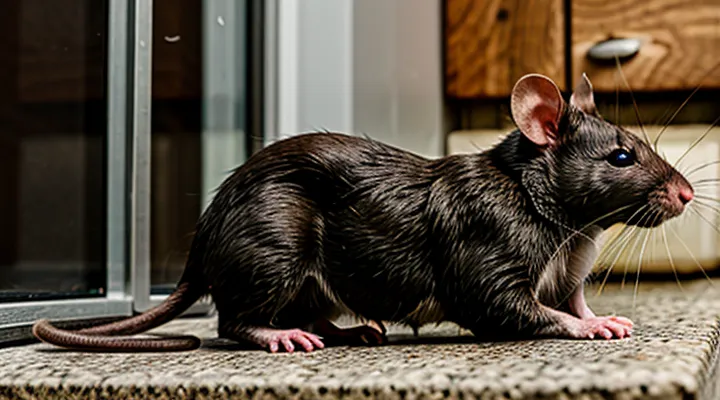
Understanding Euthanasia for Rats
When Euthanasia Becomes Necessary
Recognizing Signs of Suffering
Recognizing the onset of distress in pet rodents is a prerequisite for humane end‑of‑life decisions. Observable indicators provide the only reliable basis for timely intervention, preventing prolonged suffering.
‑ Rapid, shallow breathing or audible wheezing
‑ Hunched posture, reluctance to move, or inability to support body weight
‑ Dull, glazed eyes and reduced response to tactile stimuli
‑ Persistent vocalizations, especially high‑pitched squeaks
‑ Excessive grooming of a single area, leading to self‑injury
‑ Loss of appetite combined with weight loss exceeding 10 percent of normal body mass
«When a rat displays two or more of these signs consistently, immediate veterinary consultation is warranted to assess humane euthanasia options».
Quality of Life Assessment
Assessing a rat’s well‑being is essential when considering compassionate end‑of‑life care at home. Objective evaluation reduces uncertainty and supports humane decision‑making.
Key indicators of a rat’s condition include:
- Physical health: weight stability, coat condition, respiratory effort.
- Behavioral signs: activity level, curiosity, grooming.
- Pain expression: vocalization, guarding, altered posture.
- Mobility: ability to climb, navigate tunnels, maintain balance.
- Nutritional intake: consistent food and water consumption.
- Social interaction: response to cage mates, willingness to engage.
Standardized tools assign numerical scores to each indicator, producing an overall «quality of life» index. Scores are recorded daily; a declining trend below a predefined threshold signals that humane euthanasia may be the most ethical option.
Documentation of observations, scores, and veterinary consultation ensures transparency and provides a clear rationale for the final decision.
Ethical Considerations and Decision-Making
The Emotional Impact on Owners
When an owner decides to perform a compassionate end‑of‑life procedure for a pet rat at home, the emotional response is immediate and multifaceted. Grief emerges from the loss of a companion that, despite its size, often occupies a significant place in daily routines. Guilt may arise from concerns about the adequacy of the method chosen, while relief can develop as suffering ceases.
Key emotional components include:
- Deep sorrow for the animal’s departure
- Self‑directed criticism regarding the decision process
- Calm after the cessation of observable distress
- Heightened awareness of the owner’s responsibility toward vulnerable pets
Short‑term psychological effects typically involve persistent sadness, occasional intrusive thoughts about the event, and a need for emotional closure. Over time, many owners report a restored sense of agency and an increased confidence in handling future health crises for small mammals. Persistent depressive symptoms may signal the need for professional support.
Effective coping strategies comprise:
- Access to veterinary counseling that addresses both procedural and emotional aspects
- Participation in online forums or local groups focused on small‑animal welfare
- Utilization of educational materials that clarify humane techniques and expected emotional reactions
«The decision to end a pet’s life is profoundly personal, yet it carries universal emotional challenges.» Proper acknowledgment of these challenges can mitigate adverse mental health outcomes and foster healthier attitudes toward responsible pet stewardship.
Consulting with a Veterinarian
Consultation with a qualified veterinarian is a prerequisite for any at‑home procedure intended to end a rat’s life humanely. Veterinary expertise guarantees compliance with legal regulations, ensures selection of an appropriate euthanasia method, and provides precise dosage calculations that minimize distress.
Key actions when seeking veterinary guidance:
- Contact a clinic that handles small‑animal or exotic species; request an appointment specifically for rodent euthanasia.
- Prepare a concise health record: age, weight, recent illnesses, medications, and any observed behavioral changes.
- During the consultation, describe the intended home setting and ask for a step‑by‑step protocol, including recommended drugs, administration route, and safety precautions.
- Obtain a prescription for the approved agent; verify expiration date and storage requirements.
- Request instructions for humane disposal of the carcass and for sanitizing equipment after use.
Additional considerations:
- Verify that the prescribed dose matches the rat’s exact weight; even minor deviations can cause prolonged suffering or ineffective euthanasia.
- Ask the veterinarian to demonstrate the injection technique or to provide a video illustration; accurate placement reduces tissue damage.
- Inquire about post‑procedure support resources, such as counseling services or support groups, to address the emotional impact on the owner.
- Confirm that emergency contact information is available should an adverse reaction occur during the process.
Methods for Humane Euthanasia at Home
Carbon Dioxide (CO2) Euthanasia
Preparation and Setup
Preparation for humane rodent euthanasia at home begins with a dedicated workspace. Choose a quiet, low‑traffic area where the animal will not be startled. Cover the surface with a disposable, non‑slip mat to protect both the rodent and the surrounding environment. Ensure the space is well‑ventilated but free from drafts that could cause discomfort.
Essential equipment must be gathered in advance. The following items are required:
- A calibrated CO₂ delivery system or an approved injectable agent, stored according to manufacturer guidelines.
- A sealed container large enough to accommodate the rat without restriction, equipped with a secure lid.
- Personal protective equipment: nitrile gloves, a surgical mask, and eye protection.
- Absorbent pads and a biohazard waste bag for immediate disposal of tissues and carcass.
- A timer or stopwatch to monitor exposure duration precisely.
Sanitation procedures are critical before and after the procedure. Disinfect the work surface with a solution effective against zoonotic pathogens, allow it to air‑dry, then place a fresh disposable mat. After euthanasia, remove all reusable items for laundering at ≥ 60 °C, and seal waste in the biohazard bag for proper incineration or disposal according to local regulations.
Documentation supports ethical compliance. Record the date, method, dosage, and duration of exposure in a logbook. Include the identification details of the animal and the operator’s certification number, if applicable. Maintaining accurate records facilitates review by veterinary authorities and ensures accountability.
Step-by-Step Procedure
A humane method for terminating a rat’s life at home requires preparation, proper equipment, and adherence to a defined protocol. The environment should be quiet, free of drafts, and at a comfortable temperature. All materials must be within easy reach before beginning.
The equipment list includes: a calibrated CO₂ chamber or a sealed container, a flow‑meter, a source of medical‑grade carbon dioxide, a secondary anesthetic agent (e.g., isoflurane) for confirmation, disposable gloves, and a disinfectant solution. Personal protective equipment – gloves and a mask – protects both the handler and the animal from contamination.
The procedure follows these steps:
- Verify that the CO₂ source is calibrated to deliver 30 %–50 % concentration within the chamber.
- Place the rat in the sealed container, ensuring minimal stress by using gentle handling techniques.
- Initiate CO₂ flow, gradually increasing to the target concentration over 30 seconds to avoid sudden exposure.
- Maintain the concentration for 5 minutes, allowing loss of consciousness and subsequent death.
- Confirm cessation of respiratory movement by observing the thoracic region for at least 30 seconds.
- Apply a secondary anesthetic (e.g., a brief exposure to isoflurane) to guarantee irreversible loss of brain activity.
- Remove the carcass, place it in a sealed biohazard bag, and disinfect the chamber and surrounding surfaces.
- Record the date, time, and method used for future reference and compliance with local regulations.
All steps must be performed without interruption. Documentation ensures accountability and facilitates review if required by veterinary or animal‑welfare authorities.
Ensuring Proper Ventilation
Proper ventilation is a non‑negotiable element of humane rodent euthanasia performed in a domestic setting. Adequate airflow prevents accumulation of anesthetic gases, protects the caregiver’s respiratory health, and maintains a stable environment for the animal.
- Supply a minimum of 12 air changes per hour within the euthanasia area.
- Position a high‑efficiency exhaust fan to draw contaminated air directly outside.
- Use a portable fume hood or a sealed chamber equipped with a venting system.
- Keep windows and doors open when possible to enhance natural circulation.
- Monitor ambient CO₂ concentration; keep levels below 1 % to avoid secondary distress.
Ventilation equipment must be inspected before each use. Filters require replacement according to manufacturer specifications. After the procedure, allow the space to air out for at least 15 minutes before re‑entry. These measures ensure that the euthanasia process remains humane while safeguarding human occupants.
Anesthetic Overdose (When Vet-Prescribed)
Administering the Medication
Administering the medication for humane rodent euthanasia at home demands strict adherence to dosage calculations, appropriate delivery method, and safety protocols. Accurate dosing prevents prolonged distress and ensures a rapid, painless outcome.
- Verify the animal’s weight with a calibrated scale.
- Calculate the required volume using the formula provided by the manufacturer, for example «0.5 ml per 100 g».
- Prepare the injection site by cleaning with an alcohol swab to reduce infection risk.
- Draw the exact volume into a sterile syringe, avoiding air bubbles.
The injection should be performed intraperitoneally with the needle inserted at a 30‑degree angle, directed toward the lower abdomen. Apply steady pressure to deliver the medication smoothly; abrupt force can cause tissue damage. After injection, observe the animal for loss of consciousness within a few seconds. If reflexes persist, a second dose may be administered following the same calculation.
Post‑procedure steps include:
- Confirm cessation of breathing and heartbeat through visual inspection.
- Place the carcass in a sealed container for appropriate disposal in accordance with local regulations.
- Clean all equipment with disinfectant and document the procedure for record‑keeping.
Compliance with these precise actions eliminates unnecessary suffering and upholds ethical standards for at‑home euthanasia.
Monitoring the Rat's Response
Monitoring a rat’s physiological and behavioral reactions during a compassionate at‑home euthanasia procedure is essential for confirming the effectiveness of the method and preventing unnecessary distress. Continuous observation begins with the initiation of the euthanasia agent and continues until the animal exhibits irreversible loss of consciousness and cessation of vital functions.
Key indicators to assess include:
- Absence of righting reflex; the animal cannot right itself when placed on its back.
- Lack of purposeful movement; spontaneous locomotion and grooming cease.
- Diminished respiratory effort; breathing becomes shallow or stops entirely.
- Unresponsiveness to tactile stimulation; gentle pressure on the limbs or snout elicits no reaction.
- Pupillary constriction or fixed, dilated pupils indicating loss of central nervous system activity.
Equipment that facilitates accurate monitoring comprises a digital timer, a stethoscope for auscultation of heart and lung sounds, and a video recorder to document the sequence of events for later review. Recording timestamps for each observed change provides objective data that can be referenced in veterinary consultations or ethical reviews.
After confirming death, the rat should be left undisturbed for a minimum of five minutes to ensure complete cessation of brain activity. Documentation of the monitoring process, including observed signs and time intervals, must be retained as part of responsible animal care records.
Methods to Avoid
Inhumane Practices
Inhumane practices undermine the goal of compassionate rodent euthanasia in domestic settings. They cause unnecessary distress, prolong suffering, and risk inaccurate death confirmation.
Commonly observed methods include:
- CO₂ exposure without proper flow‑rate control – rapid concentration changes trigger panic, while insufficient levels may induce prolonged asphyxiation.
- Physical trauma applied without verification – blunt force or cervical dislocation performed without immediate assessment can result in incomplete brain death.
- Improper chemical injection – dosing errors or use of unsuitable agents lead to pain, convulsions, or delayed loss of consciousness.
- Drowning or submersion – water deprivation induces panic, suffocation, and severe physiological stress before death occurs.
Each technique fails to meet established welfare criteria, which require rapid loss of consciousness, minimal pain, and reliable confirmation of death. Adoption of validated, humane alternatives eliminates these ethical and practical deficiencies.
Why Certain Methods are Unacceptable
When a pet rodent requires end‑of‑life care, the method chosen must eliminate pain, prevent distress, and ensure a rapid, predictable outcome. Certain techniques fail to meet these criteria and are therefore deemed unacceptable for home use.
• Physical trauma such as cervical dislocation or decapitation without proper restraint can cause prolonged suffering because muscular reflexes may persist for several seconds. The lack of immediate loss of consciousness violates the principle of painless death.
• Carbon dioxide exposure, when administered without precise flow‑rate control, produces a period of hypoxia followed by acidosis. Studies show that rats experience aversive behaviors during the induction phase, indicating that the method is not humane.
• Overdose of injectable anesthetics delivered intraperitoneally may result in uneven absorption, leading to delayed unconsciousness and potential peritonitis. Inconsistent dosing undermines reliability and can cause unnecessary pain.
• Use of blunt force or crushing devices does not guarantee instantaneous brain death. Mechanical failure or improper placement can prolong consciousness, making the approach ethically unacceptable.
Regulatory guidance from veterinary authorities requires that any at‑home euthanasia protocol incorporate agents that act rapidly on the central nervous system, such as approved injectable barbiturates, and that the procedure be performed by individuals trained in proper technique. Methods lacking these safeguards are excluded from recommended practice because they compromise animal welfare and may expose caregivers to health hazards.
Post-Euthanasia Procedures
Verifying Passing
Signs of Death
Recognizing imminent death signals enables a swift, painless conclusion during compassionate rodent euthanasia performed at home. Accurate assessment prevents prolonged distress and guides the caregiver toward an appropriate humane method.
• Absence of movement for several minutes, even when gently stimulated
• Loss of responsiveness to tactile or auditory cues
• Cessation of breathing, indicated by the lack of chest rise and no audible breaths
• Fixed, dilated pupils that do not react to light
• Coolness of extremities, especially the tail and paws, contrasting with the body’s core temperature
• Rigor mortis development, observable as stiffness in the limbs and spine within a short period after cessation of life signs
Monitoring these indicators ensures that the euthanasia process concludes before irreversible physiological decline occurs, preserving the animal’s dignity and minimizing suffering.
Aftercare and Grieving
Respectful Disposal Options
Respectful disposal of a pet rat after humane termination in a domestic setting requires methods that preserve dignity and comply with local regulations.
Burial offers a simple, low‑cost solution when permitted by municipal ordinances. Selecting a location free from water sources prevents contamination; a shallow trench, covered with soil, protects the remains. A biodegradable container, such as a cardboard box, reduces environmental impact.
Cremation provides an alternative that eliminates the need for a burial site. Home‑based cremation kits, designed for small animals, operate at temperatures sufficient to reduce tissue to ash within a short cycle. Professional crematoriums handle larger volumes and supply the ashes in a sealed container, allowing owners to retain a memorial token.
Professional disposal services, often offered by veterinary clinics, manage both cremation and environmentally safe incineration. These providers follow biohazard protocols, ensuring that the process meets health standards.
Key considerations for each option include:
- Legal compliance: verify local statutes regarding animal burial depth and permitted zones.
- Environmental impact: choose biodegradable materials for burial; select low‑emission cremation devices.
- Emotional closure: retain ashes or a memorial token if desired; document the process for personal record.
Implementing one of these methods guarantees that the final handling of a pet rat aligns with ethical standards and respects the animal’s life.
Coping with Loss
When a pet rat is peacefully euthanized at home, the caregiver confronts a distinct form of bereavement. The sudden absence of a small, active companion can generate feelings of sorrow, relief, and self‑questioning. Recognizing these emotions as normal mitigates the risk of prolonged distress.
Allowing time for mourning supports emotional adjustment. Practical actions include:
- Preparing a simple memorial, such as a dedicated shoebox, a photograph, or a written note.
- Sharing memories with friends, family, or online groups focused on rodent care.
- Consulting a veterinarian or mental‑health professional for guidance on grief processing.
Maintaining daily routines contributes to stability. Suggestions:
- Scheduling regular meals and exercise at usual times.
- Engaging in gentle physical activity, such as a short walk, to reduce tension.
- Reserving moments for quiet reflection, perhaps by lighting a small candle in the memorial space.
External resources reinforce coping. Veterinary clinics often provide pamphlets on loss. Community forums offer peer support without judgment. Professional counselors specialize in pet grief and can introduce coping techniques such as journaling or mindfulness.
«Grief is a natural response to loss». Acceptance of this reality, combined with concrete memorial practices and supportive networks, enables the caregiver to honor the rat’s life while gradually restoring emotional equilibrium.
Legal and Safety Aspects
Local Regulations
Permissibility of Home Euthanasia
Euthanasia of pet rats can be carried out in a domestic setting when legal and professional criteria are satisfied.
Legislation governing the practice differs across regions. In many jurisdictions, the administration of lethal agents to small mammals is permitted only by licensed veterinarians or under direct veterinary supervision. Some areas allow owners to act on a veterinarian’s written order, provided the drug is obtained through a licensed pharmacy.
Ethical justification rests on the principle of minimizing unnecessary pain. When a rat exhibits terminal illness, severe injury, or irreversible decline, humane termination aligns with accepted animal‑welfare standards. The decision must be based on a veterinary assessment that confirms the absence of viable therapeutic options.
Practical considerations include:
- Use of an approved euthanasia agent, such as carbon dioxide or injectable barbiturates, administered at the recommended concentration or dosage.
- Execution in a quiet, low‑stress environment to reduce anxiety for the animal.
- Presence of a qualified professional to oversee the procedure or verify compliance with the written order.
- Documentation of the decision, the agent used, dosage, and the outcome for record‑keeping and potential regulatory review.
Compliance with local statutes, adherence to veterinary guidance, and implementation of controlled procedures collectively determine the permissibility of conducting euthanasia for rats within the home.
Safety for Humans and Other Pets
Handling Medications and Equipment
Effective management of pharmacological agents and related tools is critical for compassionate rodent euthanasia performed in a domestic setting. Proper handling minimizes stress for the animal, ensures accurate dosing, and protects the caretaker from accidental exposure.
Medication preparation begins with verification of the product’s expiration date and integrity of the container. Use a calibrated syringe or micropipette to draw the exact volume required for the individual animal’s weight. Record the dose, time of preparation, and batch number on a dedicated log sheet. Store unused portions in a clearly labeled, sealed container within a locked refrigerator, separate from food items. Dispose of any remaining solution according to local hazardous waste regulations; never pour chemicals down household drains.
Equipment readiness involves several key steps:
- Inspect syringes, needles, and delivery devices for damage or blockage before each use.
- Sterilize reusable tools with an approved disinfectant, rinse thoroughly, and allow to air‑dry on a clean surface.
- Arrange a quiet, low‑light environment to reduce the animal’s agitation during the procedure.
- Keep a spill containment tray beneath the work area to capture accidental leaks.
Personal protective equipment must be worn throughout the process. Gloves, eye protection, and a lab coat protect skin and mucous membranes from potential irritation. After completion, remove and discard gloves, wash hands with soap and water, and decontaminate reusable gear with an appropriate antiseptic solution.
Documentation of each euthanasia event should include the animal’s identification, weight, administered agent, dosage, and any observations of adverse reactions. Maintaining accurate records supports compliance with veterinary guidelines and facilitates review of best practices.