
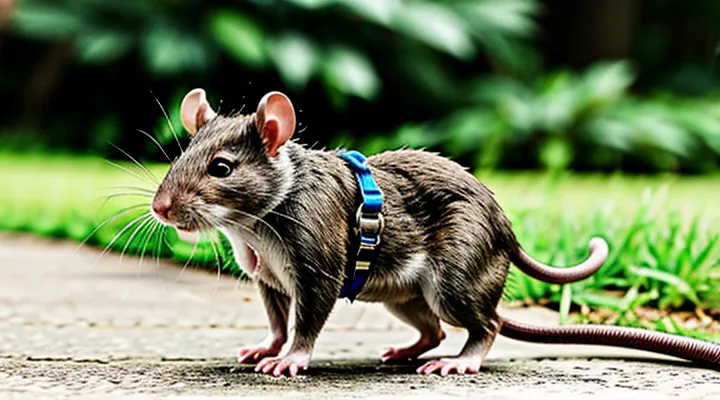
«Understanding the Purpose of a Rat Harness»
«Why Use a Harness for Your Rat?»
Using a harness for a pet rat provides several practical benefits that enhance both animal welfare and owner convenience.
A well‑fitted harness allows controlled outdoor exploration without exposing the rat to predators, traffic, or hazardous objects. It also prevents accidental escapes from cages or enclosures, reducing the risk of injury and the stress of recapturing a lost pet.
When the rat is securely restrained, handling becomes safer for the owner. The harness distributes pressure across the torso rather than the delicate neck, minimizing the chance of bruising or choking that can occur with improper restraint methods.
A harness supports training and enrichment activities. It enables the rat to participate in supervised walks, obstacle courses, and scent‑tracking exercises, which stimulate mental and physical health. Regular, structured outings can improve muscle tone, coordination, and confidence.
For veterinary or health monitoring, a harness provides a stable point to attach a carrier or a leash, facilitating transport to appointments without the need for a cage that may cause stress.
Key reasons to employ a harness:
- Safety – limits exposure to external dangers and prevents escape.
- Humane restraint – avoids neck pressure, reduces injury risk.
- Behavioral enrichment – enables supervised exploration and training.
- Ease of transport – simplifies moving the rat to veterinary or grooming sessions.
Choosing a harness designed specifically for small rodents ensures an appropriate fit, adjustable straps, and breathable material, which together maintain comfort and prevent skin irritation. Proper use of a harness therefore contributes directly to the rat’s health, security, and quality of life.
«Potential Benefits of Harness Training»
Harness training for rats yields measurable advantages that support both animal welfare and research integrity. Properly fitted equipment allows precise movement control, reducing the risk of accidental escapes during handling. Secure attachment minimizes stress responses by preventing sudden jerks that can trigger fear‑related behaviors.
- Enhanced safety for handlers: a well‑adjusted harness distributes pressure evenly, preventing injury to both the rat and the operator.
- Improved health monitoring: the harness can incorporate lightweight sensors that track heart rate, activity levels, and temperature without restraining the animal.
- Enrichment through voluntary participation: rats that learn to accept a harness often display increased exploratory behavior, indicating reduced anxiety.
- Streamlined data collection: consistent positioning facilitates repeatable measurements in behavioral assays, leading to more reliable results.
- Facilitated transport: a harness provides a stable platform for moving rats between cages or experimental stations, eliminating the need for cumbersome carriers.
Implementing harness training as part of routine handling protocols strengthens experimental reproducibility while promoting humane treatment.
«Important Considerations Before Starting»
Before securing a harness on a rat, verify that the animal is healthy, calm, and accustomed to handling. A thorough health check should include inspection of the skin for lesions, assessment of weight to select an appropriately sized device, and confirmation that the rat’s coat is free of parasites that could cause irritation.
Ensure the environment is quiet, well‑ventilated, and maintains a stable temperature between 20–24 °C. Ambient noise and drafts increase stress, which can lead to resistance during fitting.
Prepare all equipment in advance: the harness, a set of gentle restraints (such as a soft tube or a small cradle), cleaning wipes, and a small syringe of saline for occasional eye or nose cleaning. Having each item within arm’s reach prevents unnecessary movement and reduces handling time.
Confirm that the harness material is non‑abrasive, lightweight, and free of toxic dyes. Conduct a brief test on a sample piece of fabric to ensure the stitching does not unravel under slight tension.
Document the rat’s identification, weight, and any pre‑existing conditions before beginning. Record the chosen harness size and any adjustments made during the process for future reference.
- Health status verified
- Weight measured for size selection
- Environment stabilized
- Equipment arranged and inspected
- Harness material suitability confirmed
- Detailed records created
«Choosing the Right Harness»
«Types of Rat Harnesses»
«Figure-8 Harnesses»
Figure‑8 harnesses consist of two interlocking loops that create a stable, evenly distributed load across a rat’s torso. The design prevents the animal from slipping out while allowing natural movement of the forelimbs and hindquarters.
When selecting a Figure‑8 harness, measure the rat at three points: chest girth, neck circumference, and back length from the base of the skull to the base of the tail. Choose a size where the loops sit snugly against the body without compressing the rib cage; most commercial sets offer small (5‑7 cm chest), medium (7‑9 cm chest), and large (9‑11 cm chest) options.
Fitting procedure:
- Position the rat on a stable surface, gently extend the forelimbs forward.
- Slip the first loop over the head, ensuring the strap rests on the dorsal side of the neck.
- Bring the second loop around the chest, aligning it just behind the forelimbs.
- Pull the connecting strap until the harness is firm but not restrictive; a fingertip should fit between the strap and the skin.
- Secure the quick‑release buckles, verify that the loops lie flat and do not twist.
Safety checks include confirming that the rat can breathe freely, that the harness does not impede grooming, and that the quick‑release mechanism functions smoothly. Observe the animal for a few minutes after dressing; any signs of distress or abnormal gait indicate an improper fit.
Routine care requires washing the harness in warm, mild soap after each use, rinsing thoroughly, and air‑drying. Inspect the material for fraying or buckle wear before every session; replace any compromised component immediately to avoid accidental escape.
«Vest-Style Harnesses»
Vest‑style harnesses consist of a soft, sleeved body that wraps around the rat’s torso and a pair of adjustable straps that secure the front and back. The design distributes pressure evenly, reducing the risk of choking or shoulder strain.
Key characteristics:
- Lightweight, breathable fabric prevents overheating.
- Wide strap width spreads load across the chest and hips.
- Quick‑release buckles allow rapid removal in emergencies.
- Multiple size options accommodate growth and breed variations.
Before fitting, measure the rat’s chest circumference just behind the forelimbs and its length from base of the neck to the base of the tail. Select a harness whose dimensions exceed these measurements by 10–15 % to allow room for movement without excess slack. Inspect all buckles and seams for wear; replace any damaged components.
Procedure for applying a vest‑style harness:
- Lay the harness flat on a stable surface, opening the front strap wide.
- Gently place the rat on its back, guiding its head through the neck opening while supporting the body with one hand.
- Pull the front strap forward, positioning it snugly against the chest without compressing the ribcage.
- Slide the rear strap around the hindquarters, ensuring it rests low on the hips.
- Fasten the buckles, then adjust both straps until the harness fits snugly but allows a finger’s width of clearance at the chest and hips.
- Release the rat, observing its posture; the harness should stay in place without slipping.
After the rat is secured, monitor its activity for several minutes. Verify that the harness does not restrict breathing, impede limb movement, or cause visible discomfort. Re‑adjust straps if the animal attempts to loosen the fit. Regularly clean the fabric according to the manufacturer’s instructions to maintain hygiene and prolong durability.
«Key Features to Look For»
«Material Durability and Comfort»
When choosing a harness for a rat, prioritize fabrics that resist tearing, abrasions, and repeated washing. Nylon ripstop, polyester blends, and tightly woven cotton provide the strength needed for active rodents without adding bulk. Look for reinforced stitching at stress points such as loops and buckles; double or bar‑tack seams prevent seam failure during climbing or chewing.
Comfort depends on weight, breathability, and surface texture. Materials under 0.5 g cm⁻² keep the harness light enough not to hinder movement. Mesh inserts or perforated panels allow airflow, reducing heat buildup. Soft, rounded edges on buckles and strap pads avoid skin irritation and pressure sores.
Key material criteria:
- Tensile strength: ≥ 30 N per strap width
- Abrasion resistance: minimum 5 k cycles in Martindale test
- Washability: machine‑safe at ≤ 30 °C, quick‑drying fibers
- Flexibility: retains shape after > 200 bending cycles
- Skin safety: hypoallergenic, free of latex or dyes that may cause reactions
Selecting a harness that meets these durability and comfort standards ensures a secure fit while preserving the rat’s well‑being during handling.
«Adjustability and Secure Fit»
When fitting a harness to a rat, the ability to adjust the straps is essential for a secure, comfortable fit. Adjustable components—such as sliding buckles, Velcro, or snap closures—allow the caregiver to tailor the harness size to the individual animal’s body dimensions. Proper adjustment prevents the harness from slipping off while avoiding excessive pressure that could impair circulation or cause injury.
Key considerations for achieving a secure fit:
- Measure the rat’s chest circumference just behind the forelimbs; add a margin of 1–2 mm for movement.
- Position the harness so the central ring sits over the animal’s back, aligning with the spine.
- Tighten each strap until it is snug against the skin, then test by gently pulling the harness; it should resist displacement without indenting the fur.
- Verify that the rat can walk, turn, and groom without restriction; observe for signs of discomfort such as excessive scratching or altered gait.
- Re‑check strap tension after the first 15 minutes of wear, as the material may settle and require minor readjustment.
Consistent use of adjustable fastenings combined with regular fit checks ensures the harness remains secure throughout the session, reducing the risk of escape or injury.
«Measuring Your Rat for a Harness»
Accurate measurements ensure a harness fits securely without restricting movement or causing injury. Begin by gently restraining the rat on a flat surface; a calm animal yields more reliable data.
- Neck circumference: Wrap a flexible measuring tape around the base of the skull where the neck meets the shoulders. Record the smallest complete loop that does not compress the fur.
- Chest girth: Position the tape just behind the forepaws, encircling the ribcage at its widest point. Allow a fingertip’s width of slack to prevent tightness.
- Back length: Measure from the base of the tail (where it joins the body) to the point where the neck meets the shoulders. This dimension guides strap length for the dorsal portion of the harness.
Compare each measurement with the manufacturer’s size chart. Choose the smallest size that exceeds the recorded values by 10–15 % to accommodate growth and fur thickness. Verify that the harness straps lie flat against the skin and that the closure mechanism (e.g., Velcro or snap) can be tightened without pinching. A correctly sized harness will stay in place during walking, climbing, or brief handling, while allowing the rat to breathe and move freely.
«Preparing for Harness Training»
«Gathering Necessary Supplies»
Before attempting to fit a rat with a harness, assemble all required items to avoid interruptions and reduce stress for the animal.
You will need:
- A small‑size, adjustable harness designed for rodents (preferably fabric with quick‑release buckles).
- Soft, lightweight padding or fleece strips for added comfort.
- A pair of fine‑pointed, stainless‑steel tweezers for handling tiny limbs.
- A gentle, non‑irritating disinfectant wipe to clean the harness before use.
- A clean, flat surface covered with a soft towel to provide a stable work area.
- A small treat (e.g., a piece of fruit or seed) to reward the rat after fitting.
Verify that the harness size matches the rat’s chest circumference; the strap should allow one finger to slide underneath when snug. Confirm that all components are free of sharp edges or loose threads that could cause injury. Keep the supplies within arm’s reach to maintain a calm environment throughout the procedure.
«Creating a Calm Environment»
A quiet setting lowers stress levels and encourages a rat to remain still while a harness is being fitted.
- Choose a room with minimal traffic and low ambient noise.
- Dim the lights to a level similar to the animal’s usual cage lighting.
- Place familiar bedding or a soft towel on the work surface to provide a familiar scent.
- Keep the temperature stable, avoiding drafts or sudden temperature changes.
- Limit the presence of other pets or people that could cause agitation.
Before beginning, allow the rat several minutes to explore the prepared area. Observe its behavior; signs of calmness include relaxed whiskers and steady breathing. If the animal shows signs of anxiety, pause, adjust the environment, and retry after a brief acclimation period.
During handling, support the rat’s body gently, using one hand to hold the shoulders and the other to guide the harness. Maintain a steady, low voice to reinforce the calm atmosphere. Once the harness is positioned correctly, release the rat back into its cage and monitor for any immediate signs of distress.
«Familiarizing Your Rat with the Harness»
«Scent Association»
Rats rely heavily on olfactory cues to identify safe objects and individuals. When a new item, such as a harness, carries a familiar scent, the animal is more likely to accept it without heightened vigilance.
A familiar odor attached to the harness reduces stress during the fitting process, encouraging the rat to remain calm and cooperate. This behavioral response streamlines the transition from loose handling to secure harness placement.
To apply scent association effectively:
- Select a neutral, non‑allergenic scent (e.g., a few drops of diluted vanilla extract or a scent used routinely in the rat’s environment).
- Apply the scent evenly to the interior surface of the harness, avoiding excess that could irritate the skin.
- Present the scented harness to the rat during a regular handling session, allowing the animal to sniff and explore it for several minutes before attempting to put it on.
- Repeat the exposure for at least three consecutive sessions, pairing the scent with gentle petting and positive reinforcement (e.g., a small treat).
- Once the rat shows relaxed behavior around the harness, proceed with the fitting while maintaining the same scent.
Consistent use of the chosen odor across multiple sessions reinforces the association. Switching scents or applying the scent sporadically can disrupt the learned response and increase aversion. Monitoring the rat’s reaction after each fitting ensures that the scent remains a calming factor rather than a source of irritation.
«Positive Reinforcement with Treats»
Positive reinforcement with treats accelerates a rat’s acceptance of a harness by linking the equipment with a rewarding experience. The rat learns to associate the presence of the harness with immediate, desirable outcomes, reducing stress and increasing cooperation.
Choose small, high‑value foods such as millet seeds, bits of fruit, or commercial rodent treats. Offer the reward only after the rat shows a calm response to the harness, such as remaining still while the strap is near its body. This timing reinforces the specific behavior you want to encourage.
- Present the treat before handling; allow the rat to sniff and eat while you hold the harness loosely.
- Gently place the harness around the rat’s torso, keeping the material slack enough to avoid discomfort.
- Immediately give a treat when the rat tolerates the harness for a few seconds without attempting to escape.
- Repeat the brief exposure‑treat cycle several times a day, gradually increasing the duration the harness stays on.
- After the rat consistently accepts the harness for several minutes, introduce a short walk or supervised activity, rewarding each successful step with a treat.
Consistent pairing of the harness with a preferred food item builds a reliable behavioral pattern, enabling smooth and stress‑free fitting for future handling.
«Step-by-Step Guide to Putting on the Harness»
«Approaching Your Rat Safely»
Approaching a rat calmly reduces stress and increases cooperation during harness fitting. Begin by lowering yourself to the animal’s level; this eliminates a perceived threat from height. Keep movements slow and predictable, allowing the rat to observe each action before it occurs.
- Place a hand palm‑up near the cage opening, fingers relaxed.
- Allow the rat to approach voluntarily; do not reach out abruptly.
- When the rat steps onto your palm, support its hindquarters with the opposite hand.
- Speak in a soft, consistent tone to reinforce a sense of safety.
- Pause briefly after each contact to let the rat adjust before proceeding to the next step.
Maintain a quiet environment free of sudden noises or abrupt lighting changes. Ensure the cage is clean and free of clutter that could distract the animal. After the rat is settled on your hand, gently guide it toward the harness without pulling or restraining.
Consistent, gentle handling builds trust, making the subsequent harness placement smoother and safer for both rat and handler.
«The Initial Placement (Looping Over the Head)»
Begin by securing a calm environment; a stressed rodent resists manipulation and may injure itself. Hold the rat gently but firmly with one hand, supporting the torso just behind the forelimbs. With the other hand, take the harness, ensuring the wider strap lies on top and the narrower strap underneath.
Position the harness behind the animal’s neck, then lift the wider strap and guide it over the head. Slide the strap forward until it rests just above the eyes, keeping the material clear of the ears and whiskers. Pull the narrower strap forward, allowing it to settle beneath the chin. Adjust both straps so they meet at the front of the neck without creating a gap or excessive pressure.
Verify placement by observing the rat’s posture: the head should be level, ears upright, and breathing unimpeded. If the harness shifts or the animal attempts to remove it, reposition the straps and repeat the loop until the fit is secure yet comfortable.
«Securing the Body Straps»
«Adjusting for a Snug, Comfortable Fit»
A correctly adjusted harness prevents slipping, reduces stress on the animal’s spine, and allows free movement. The strap should be tight enough to stay in place yet loose enough to avoid restricting breathing or circulation.
- Position the harness so the front loop rests just behind the forepaws.
- Pull each side strap snugly around the torso, aligning with the ribcage.
- Slide a finger between the strap and the skin; the space should accommodate one finger comfortably.
- Secure the buckles, then tug gently to confirm the harness does not shift when the rat moves.
After fastening, observe the rat for signs of discomfort: rapid breathing, attempts to remove the device, or altered gait. Adjust the tension by loosening or tightening the straps until the rat can walk normally while the harness remains stable.
«Checking for Restrictions or Discomfort»
After securing the harness, verify that the animal can move freely. Observe the rat walking, climbing, and turning for any hesitation or abnormal gait.
- Check the strap placement around the neck and torso; the material should lie snugly without compressing the trachea or rib cage.
- Ensure the harness does not press against the forelimb joints or hind‑limb hips; a slight gap—approximately the width of a fingertip—should remain.
- Inspect the skin under the straps for redness, hair loss, or swelling; any sign of irritation requires immediate adjustment.
- Confirm the tail can swing without obstruction; the harness must not trap or restrict its motion.
- Listen for altered respiration; rapid or labored breathing indicates excessive pressure.
If any of these criteria fail, loosen the strap, reposition the harness, or select a smaller size. Re‑test the rat after each adjustment until unrestricted movement and normal behavior are evident.
«Attaching the Leash»
Attach the leash only after the harness fits snugly around the rat’s torso, with the adjustment tabs secured and the front ring positioned at the neck‑chest junction. The leash must connect to the metal D‑ring to prevent accidental disengagement.
- Hold the leash in one hand, keeping the clip end free of tangles.
- Slide the clip onto the D‑ring, confirming that the clip’s jaws close completely around the ring.
- Pull gently on the leash to verify that the connection does not slip; a firm “click” indicates proper engagement.
- Allow the rat a brief moment to move; observe that the leash remains attached while the animal walks or explores.
- If the leash slides or the clip loosens, re‑attach using a new clip or replace the D‑ring if damaged.
Maintain a short leash length (approximately 12–18 inches) to retain control while giving the rat sufficient freedom to move without risk of entanglement. Regularly inspect the clip and D‑ring for wear before each use.
«Troubleshooting Common Issues»
«When Your Rat Resists the Harness»
«Patience and Gradual Introduction»
Patience prevents stress and allows the animal to associate the harness with safety rather than threat. Rushing the process can cause frantic movements, making the device harder to secure and increasing the risk of injury.
Gradual introduction builds familiarity. Begin by placing the harness near the cage, allowing the rat to sniff and explore it for several minutes. Progress to holding the harness loosely while the rat is stationary, rewarding calm behavior with a treat. Only after the animal tolerates these stages should you attempt to slip the harness over its back, adjusting gently and securing the straps while monitoring for resistance.
- Offer a treat each time the rat permits contact with the harness.
- Increase contact time by 30‑60 seconds per session.
- Pause the session if the rat shows signs of agitation; resume after a short rest.
- Once the harness fits loosely, practice short walks inside the enclosure before moving outdoors.
«Distraction Techniques»
When a rat resists handling, diversion of its attention can prevent stress and facilitate a smooth harness application. Effective distraction relies on sensory stimulation that temporarily shifts focus away from the restraint.
- Offer a small piece of fresh fruit or vegetable, such as a strawberry slice or carrot tip, just before approaching the animal. The scent and taste draw the rat’s gaze and encourage a brief pause in exploratory behavior.
- Use a gentle auditory cue, like a soft click or brief rustle of paper, delivered from the opposite side of the intended harness placement. The unexpected sound prompts the rat to turn its head, creating a momentary opening.
- Apply a light tactile stimulus, such as a soft brush stroke along the back or a brief whisker tickle, to occupy the somatosensory system. This mild contact distracts without causing discomfort.
- Introduce a novel object, for example a small plastic tube or a piece of tubing, positioned near the cage entrance. Curiosity drives the rat to investigate, reducing resistance during harness positioning.
Timing is critical: present the distraction immediately before the harness is slipped over the forelimbs, maintain it for a few seconds, then withdraw the stimulus while the harness settles. Consistent use of these methods minimizes struggle, lowers cortisol spikes, and improves the likelihood of a secure fit.
«Ensuring Proper Fit and Preventing Escapes»
When a harness is too loose, a rat can slip out and suffer injury; when it is too tight, circulation is compromised. The first step is to measure the animal accurately. Use a flexible ruler to record the distance from the base of the neck to the base of the tail, then add a margin of 0.5 cm to allow for movement without excess slack.
Select a harness designed for small rodents, preferably with adjustable buckles and a quick‑release mechanism. Place the harness over the rat’s head, ensuring the neck strap rests just behind the ears. Pull the chest strap snugly around the torso, aligning it with the sternum. The strap should be firm enough to prevent the rat from turning sideways and slipping through, yet loose enough to allow two fingers to slide comfortably between strap and skin.
Verify fit with the following checks:
- Two‑finger test: Insert two fingers between each strap and the body; any tighter spacing indicates over‑restriction.
- Mobility test: Observe the rat for normal gait, grooming, and ability to climb a short incline; restricted movement signals excessive tightness.
- Escape test: Gently lift the rat and shake it lightly; the harness should remain in place without sliding forward or backward.
After confirming proper fit, inspect the buckles for any sharp edges or protrusions that could catch fur. Trim excess strap material if it hangs freely, as dangling ends can become leverage points for escape. Finally, monitor the harness daily for signs of wear, skin irritation, or loosening, and adjust as the animal grows or gains weight. Consistent verification eliminates the risk of accidental release and ensures the rat remains comfortable throughout its use.
«Addressing Behavioral Changes After Harnessing»
Rats often display measurable changes after a harness is applied. Common reactions include heightened grooming, brief periods of immobility, reduced exploration of the enclosure, and occasional attempts to remove the device. These behaviors indicate discomfort, stress, or unfamiliarity with the new constraint.
Observe the animal for the first 10–15 minutes following harness placement. Verify that the harness sits snugly without pinching, allowing free movement of the forelimbs and tail. If the rat shows persistent agitation, loosen the strap by 1–2 mm and reassess fit. Remove the harness immediately if signs of injury or extreme distress appear.
Implement a desensitization protocol:
- Begin with 1‑minute sessions, gradually extending duration by 30‑second increments each day.
- Pair each session with a high‑value treat delivered directly after the rat tolerates the harness.
- Alternate sessions with periods of unrestrained play to prevent association of the harness with confinement.
- Record the rat’s response after each session; adjust timing or reward intensity based on observed tolerance.
Maintain a behavioral log for at least two weeks. Note frequency of grooming spikes, attempts to escape, and changes in food or water intake. If negative patterns persist beyond the acclimation period, consider a different harness model or consult a veterinarian for health assessment. Continuous monitoring ensures the harness remains a functional tool without compromising the rat’s welfare.
«Post-Harnessing Care and Activities»
«Monitoring Your Rat's Comfort»
When a rat wears a harness, continuous assessment of its well‑being prevents injury and stress. Observe the animal’s posture: a relaxed spine, natural gait, and the ability to sit or lie down without effort indicate proper fit. Any hunched back, reluctance to move, or frequent attempts to remove the device signal discomfort.
Key indicators to monitor include:
- Skin condition – check for redness, chafing, or hair loss around straps.
- Behavioral changes – reduced grooming, excessive grooming of the harness area, or sudden aggression.
- Breathing pattern – shallow or labored breaths suggest the harness may be too tight around the chest.
- Weight distribution – ensure the harness does not impede the rat’s ability to balance on narrow surfaces.
Conduct checks at least twice daily during the initial adjustment period, then at regular intervals thereafter. If any adverse signs appear, remove the harness immediately, assess the cause, and modify strap tension or padding before re‑application. Maintaining these observation routines ensures the rat remains comfortable while safely secured.
«Safe Outdoor Exploration Tips»
When a rat is equipped with a properly fitted harness, outdoor excursions become possible, but safety requires systematic preparation and vigilant supervision.
A secure harness must allow free limb movement while preventing escape. Verify that the straps are snug but not restrictive; a quick‑release clasp should be accessible at all times. Before leaving the indoor area, let the rat wear the harness for a short period to confirm comfort and to identify any chafing.
Safe outdoor exploration follows these practical steps:
- Choose a calm, enclosed space such as a fenced yard or a secure playpen; avoid traffic, predators, and steep terrain.
- Inspect the area for hazards: sharp objects, toxic plants, exposed wires, and standing water.
- Keep the rat within arm’s reach; use a short leash that prevents tangling and allows quick retrieval.
- Monitor temperature; limit activity to moderate conditions to prevent overheating or hypothermia.
- Carry a small carrier or hand‑held enclosure for sudden retreats or unexpected stress.
After the outing, examine the harness for wear, clean any soiled sections, and provide the rat with fresh water and a quiet recovery zone. Consistent adherence to these measures minimizes risk and supports a positive outdoor experience.
«Maintaining and Cleaning the Harness»
Maintaining a rat harness prolongs its lifespan and keeps the animal comfortable. After each use, inspect every strap, buckle, and adjustment ring for signs of wear, fraying, or corrosion. Replace any compromised component before the next session.
Cleaning removes debris, saliva, and urine that can degrade materials and cause odor. Follow these steps:
- Rinse the harness under lukewarm running water to dislodge loose particles.
- Submerge it in a solution of mild dish soap (1 % concentration) and warm water for 5–10 minutes.
- Gently scrub seams and buckles with a soft brush; avoid abrasive pads that could damage nylon fibers.
- Rinse thoroughly until no soap residue remains.
- Pat dry with a lint‑free cloth, then air‑dry in a shaded, well‑ventilated area. Do not expose the harness to direct sunlight or high heat, as these can weaken the fabric.
For routine maintenance, apply a water‑repellent spray designed for technical textiles once a month. Store the harness loosely in a clean, dry container to prevent creasing and moisture buildup. Regular checks and proper cleaning ensure the harness remains safe and functional for repeated use.