
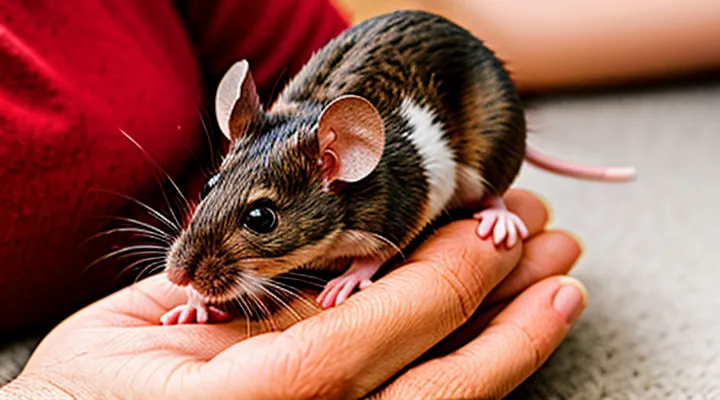
Understanding Mouse Behavior and Safety
Recognizing Mouse Cues
Signs of Stress or Fear
When a mouse is being handled, immediate recognition of stress or fear prevents injury and ensures reliable experimental results. Observable indicators fall into three categories: behavior, physiological response, and vocalization.
- Rapid, erratic movements; attempts to escape the grip.
- Freezing in place, reduced locomotion, or clinging to the handler’s fingers.
- Excessive grooming or self‑biting, which signals heightened anxiety.
- Elevated respiration rate, shallow breathing, or panting.
- Dilated pupils, darkened eye rings, and reddened ears.
- Vocalizations such as high‑pitched squeaks or continual chirping.
These signs appear within seconds of improper handling and may intensify if the mouse remains restrained. Promptly releasing the animal, adjusting grip technique, and providing a calm environment mitigate stress and restore normal behavior. Continuous monitoring of these cues is essential for ethical and accurate mouse handling.
Signs of Calmness
Recognizing a calm mouse is essential for safe and humane handling. When the animal shows minimal stress, the risk of injury to both mouse and handler decreases, and the procedure proceeds smoothly.
- Steady, regular breathing without rapid panting.
- Absence of vocalizations such as squeaks or high‑pitched cries.
- Still or slow whisker movement; whiskers remain relaxed rather than twitching aggressively.
- Pupils dilated only slightly, not fully dilated or constricted sharply.
- Body posture low to the ground, with limbs relaxed and not clenched.
- Tail lying loosely along the body, not thrashing or curling tightly.
If these indicators are present, maintain a gentle yet firm grip, supporting the mouse’s torso with one hand while the other stabilizes the hindquarters. Adjust pressure immediately if any sign of agitation appears, such as sudden movement or vocalization, to prevent escalation. Continuous observation of the listed cues ensures that the handling technique remains appropriate throughout the interaction.
Essential Safety Precautions
Personal Hygiene
When handling a live mouse, personal hygiene directly affects both animal welfare and researcher safety. Clean hands prevent pathogen transmission, while proper attire reduces contamination of the animal and the work environment.
- Wash hands with antimicrobial soap before and after each handling session; dry with disposable towels.
- Wear disposable gloves; replace them if torn or visibly soiled.
- Use a lab coat or gown that covers clothing; change it if it contacts the mouse or waste.
- Clean work surfaces with an appropriate disinfectant before setup and after completion.
- Dispose of used absorbent pads, bedding, and sharps in designated containers; avoid cross‑contamination by separating clean and dirty zones.
Maintaining strict hygiene protocols during mouse restraint minimizes infection risk, preserves experimental integrity, and complies with institutional biosafety standards.
Handling Environment
A suitable handling environment minimizes stress for the animal and reduces the risk of injury to the operator. The workspace should be flat, stable, and free of clutter. Surfaces must be easy to clean and disinfect between sessions; stainless steel or sealed plastic are preferred. Ambient temperature should remain within the species‑specific range (typically 20‑26 °C) and drafts avoided. Lighting should be bright enough to see the mouse’s movements but not so intense as to cause glare; indirect or diffused illumination works best.
Equipment placed within arm’s reach includes:
- Soft, non‑slip pads or towels to provide a gentle surface.
- Fine‑tipped forceps or tweezers for brief manipulations that do not require direct hand contact.
- Small, open containers with secure lids for temporary holding.
- Personal protective equipment (gloves, lab coat) to maintain hygiene and protect against bites.
Ventilation must supply fresh air without creating strong currents that could displace the mouse. Noise levels should be kept low; sudden sounds can trigger escape responses. After each use, all surfaces and tools should be cleaned with an appropriate disinfectant and allowed to dry before the next procedure.
Maintaining these conditions ensures consistent handling performance, supports animal welfare, and upholds experimental reliability.
Preparing for Handling
Gathering Necessary Supplies
Appropriate Container or Enclosure
When a live mouse must be restrained for observation, transport, or brief procedures, the container used directly influences animal welfare and operator safety. Selecting an enclosure that meets specific functional criteria eliminates stress, prevents escape, and reduces the risk of bites.
The enclosure should provide enough interior space for the mouse to remain upright without crowding. Minimum dimensions of 5 cm × 5 cm × 5 cm accommodate an adult mouse; larger specimens require proportionally larger volumes. A rectangular or cylindrical shape with smooth interior surfaces prevents injury from sharp edges.
Transparent, non‑porous materials such as polycarbonate or clear acrylic enable visual monitoring without opening the container. These substances resist cracking, are easy to disinfect, and do not emit odors that could affect the mouse’s behavior.
Adequate ventilation is essential. At least two opposite mesh or perforated panels allow airflow while maintaining a barrier against escape. Mesh openings must be ≤ 1 mm to exclude the animal yet permit sufficient gas exchange.
Secure closure mechanisms prevent accidental opening. Snap‑fit lids with a locking tab, or screw‑on caps with a tight seal, are preferred. The closure system should be operable with one hand, leaving the other free to handle the mouse.
Cleaning protocols depend on the material. Smooth surfaces can be washed with warm water, followed by an approved disinfectant (e.g., 10 % bleach solution) and rinsed thoroughly. The enclosure must dry completely before reuse to avoid residual moisture.
Optional accessories improve comfort during short holding periods:
- A thin layer of sterile paper bedding for traction.
- A small hideaway (e.g., a PVC tunnel) to reduce anxiety.
- A non‑slipping base (e.g., rubber mat) to stabilize the container on work surfaces.
By adhering to these specifications, the enclosure serves as a reliable tool for the proper handling of live mice, ensuring consistent results and compliance with animal‑care standards.
Protective Gear
When handling a live mouse, protective equipment safeguards both the animal and the researcher.
Gloves made of nitrile or latex provide a barrier against bites and potential pathogen transfer. Choose a size that allows dexterity while preventing the mouse from slipping through gaps.
A lab coat or disposable gown protects clothing and skin from accidental contact with urine, feces, or blood. Ensure the garment is buttoned or fastened to avoid exposure.
Eye protection—safety glasses or a face shield—prevents splashes from aerosols or accidental scratches. The shield must cover the entire field of view and be securely fitted.
Footwear should be closed-toe and resistant to chemical spills; shoe covers add an extra layer when working in a biosafety cabinet.
Disinfectant wipes or a spray bottle should be readily available for immediate decontamination of surfaces and equipment after each handling session.
Key items to prepare before each session
- Nitrile or latex gloves, correctly sized
- Full-length lab coat or disposable gown, secured
- Safety glasses or face shield, adjusted for comfort
- Closed-toe, chemical‑resistant shoes or shoe covers
- Disinfectant wipes or spray, within arm’s reach
Proper selection and consistent use of these items minimize risk of injury, contamination, and stress to the mouse, thereby supporting reliable experimental outcomes.
Creating a Calm Atmosphere
Minimizing Disturbances
Minimizing disturbances is essential when securing a live mouse to prevent stress and ensure reliable experimental outcomes. Use a calm environment: dim lighting, low ambient noise, and avoid sudden movements. Keep the handling area free of extraneous equipment that could generate vibrations or sounds.
- Approach the animal from the side, not from above, to reduce the perception of threat.
- Use a soft, non‑slipping surface such as a silicone mat to support the mouse and dampen vibrations.
- Employ a gentle, two‑hand grip: one hand supports the torso, the other stabilizes the tail or hind limbs, maintaining consistent pressure without squeezing.
- Limit the duration of each handling episode to the shortest time needed for the procedure.
Maintain consistent handling techniques across all sessions. Document any deviations from the standard protocol, as variations can introduce additional stress factors that compromise data integrity.
Gentle Approach
A gentle approach minimizes stress and reduces the risk of injury to both the animal and the handler. It relies on calm movements, appropriate grip, and immediate response to the mouse’s reactions.
Before contact, verify that hands are clean, free of strong odors, and warmed to avoid thermal shock. Use a soft, non‑slipping surface such as a silicone mat or a dry, padded container. Ensure the mouse is acclimated to the environment for a few minutes to lower baseline agitation.
Steps for a gentle hold
- Approach the mouse from the side, keeping the hand low and steady.
- Place the thumb and index finger on either side of the torso, just behind the forelimbs, forming a shallow cradle.
- Allow the mouse’s hind limbs to rest naturally on the palm; avoid squeezing the tail or limbs.
- Apply just enough pressure to support the body without restricting breathing; the mouse should be able to move its head freely.
- Maintain the position for the required duration, monitoring for signs of distress such as rapid breathing or vocalization.
- Release the mouse by supporting the body while gently lifting it onto the prepared surface, allowing it to walk away voluntarily.
Consistent use of this method improves handling efficiency and aligns with ethical standards for laboratory animal care.
Proper Handling Techniques
The Scruff Method
Positioning for Scruffing
When securing a live mouse, the initial hand placement determines both animal welfare and handler safety. Position the mouse so its dorsal spine aligns with the thumb side of the dominant hand. Use the thumb and index finger to form a gentle cradle around the neck region, avoiding excessive pressure on the skull.
- Place the thumb behind the skin of the neck (the scruff) and the index finger opposite, creating a firm but brief grip.
- Ensure the remaining three fingers wrap around the torso, supporting the body without clamping the limbs.
- Keep the mouse’s head tilted slightly upward; this aligns the spine and reduces stress on the cervical vertebrae.
- Maintain the grip for no longer than necessary—typically 1–2 seconds—to relocate the animal or perform a procedure.
The scruff should be grasped at the midpoint of the neck, where loose skin permits a secure hold without damaging underlying structures. Avoid contacting the eyes, ears, or tail, as these areas are sensitive and prone to injury. After release, allow the mouse to reorient itself on a stable surface before moving it again. This positioning method minimizes escape attempts and ensures consistent control during experimental or veterinary handling.
Gentle Grip and Support
A secure yet gentle grip minimizes stress and prevents injury. Position the mouse on a flat surface, then place the thumb and index finger on either side of the animal’s torso, forming a shallow “C” shape. The remaining fingers support the hindquarters, keeping the spine aligned without compression. Maintain contact with the mouse’s body at all times; avoid gripping the tail, limbs, or neck.
- Align the mouse’s back against the palm, allowing the chest to rest on the hand.
- Use light pressure; the grip should be firm enough to prevent escape but not so tight as to restrict breathing.
- Keep the wrist neutral to reduce torque on the animal’s spine.
- If additional support is needed, cup the mouse gently in the palm of the opposite hand while the first hand maintains the torso grip.
- For extended handling, consider a soft, breathable glove to improve traction and protect the handler’s skin.
Consistent application of these techniques ensures the mouse remains stable, reduces physiological stress, and facilitates safe manipulation for experimental or veterinary procedures.
The Cupping Method
Initial Approach
Begin by ensuring the work area is clean, well‑lit, and free of obstacles that could startle the animal. Place a sturdy, non‑slipping surface such as a plexiglass board or a clean cage lid within arm’s reach.
Gather required tools before contacting the mouse: disposable gloves, a soft cloth or paper towel, and a small restraining cup if needed. Verify that gloves are intact and that the restraining device is free of cracks.
Observe the mouse from a short distance to assess its posture and activity level. A calm animal exhibits normal grooming and occasional movement; signs of distress—rapid breathing, vocalizations, or frantic running—indicate that additional acclimation time is required before handling.
Approach the mouse from the side rather than from above to minimize perceived threat. Extend a gloved hand slowly, palm down, and allow the animal to step onto the fingers voluntarily. Once the mouse is balanced, gently close the thumb and forefinger around the torso, supporting the hindquarters with the other hand. Maintain a secure but gentle grip to prevent injury to either the animal or the handler.
Full Palm Support
Full‑palm support provides a stable platform that distributes the mouse’s weight evenly across the hand, reducing stress on the animal’s spine and limbs. Position the palm flat, fingers gently curved around the torso, and thumb placed opposite the forepaws to create a cradle. This configuration prevents the mouse from slipping or twisting, allowing precise manipulation during procedures such as injections, examinations, or transport.
Key actions for implementing full‑palm support:
- Align the mouse’s body with the center of the palm, ensuring the head faces outward.
- Keep the fingers relaxed, avoiding excessive pressure on the ribcage.
- Use the thumb to counterbalance the forepaws, maintaining a neutral spine.
- Maintain a firm yet gentle grip; the mouse should feel supported but not restrained.
- Release the animal promptly after the task, allowing it to stand on a stable surface.
Consistent use of this technique minimizes injuries, facilitates quick handling, and complies with standard laboratory animal welfare guidelines.
Transferring the Mouse
From Hand to Enclosure
Handling a live mouse safely requires a clear transition from hand grip to cage placement. The operator must maintain control while minimizing stress for the animal and preventing injury to both parties.
Key actions during the transfer:
- Position the cage within arm’s reach, lid slightly ajar, and ensure a clean, dry surface inside.
- Approach the mouse calmly; place thumb and index finger on either side of the torso, avoiding the tail and limbs.
- Apply gentle, firm pressure to immobilize the torso, allowing the animal’s hindquarters to rest against the palm.
- Lift the mouse just enough to clear the cage opening, keeping the body horizontal to prevent rotation.
- Lower the mouse directly into the enclosure, releasing the grip by sliding the fingers forward and allowing it to settle on the bedding.
- Close the cage promptly to restore a secure environment.
Additional considerations:
- Wear disposable gloves to reduce scent transfer and protect against bites.
- Keep the enclosure at a stable temperature; abrupt temperature changes increase stress.
- Monitor the mouse for signs of distress (e.g., rapid breathing, vocalization) and adjust handling speed accordingly.
By following these precise steps, the operator moves the mouse from hand to enclosure efficiently, preserving animal welfare and ensuring a safe working environment.
From Enclosure to Hand
Transitioning a mouse from its enclosure to a handler’s hand requires a controlled sequence that minimizes stress for the animal and reduces injury risk for the operator. The process begins with environmental preparation, proceeds through capture, and ends with secure hand‑holding.
- Verify that the work surface is clean, dry, and free of gaps where the mouse could escape.
- Gather necessary tools: clean gloves (optional for hygiene), a small transparent container or a soft‑tipped forceps, and a towel or paper towel for temporary restraint.
- Adjust lighting to reduce shadows; bright, uniform illumination helps the mouse locate the handler’s hand.
Approach the cage calmly, keep movements slow, and position the hand at the cage opening without sudden gestures. Open the lid fully to avoid trapping the animal. If the mouse is active, allow it to explore the opening for a few seconds before initiating capture.
Capture method:
- Place a clean towel over the cage opening, creating a shallow pocket.
- Gently coax the mouse onto the towel using a quiet voice and minimal air disturbance.
- Slide the towel partially under the mouse, then lift the towel to lift the animal off the floor while supporting its body.
Once the mouse is in the towel, transfer it to the hand:
- Hold the towel with one hand, exposing the mouse’s dorsal side.
- Position the thumb and index finger around the mouse’s torso, forming a shallow “cup” that supports the chest without compressing the lungs.
- Allow the hind limbs to drape naturally; avoid gripping the tail or limbs directly.
- Maintain a firm yet gentle pressure; the mouse should be immobilized without visible distress.
After the required handling (e.g., sampling, tagging), release the mouse by lowering it onto a soft surface, removing the hand’s support gradually, and ensuring the animal regains footing before returning it to its enclosure. Clean any reusable equipment immediately to prevent cross‑contamination.
Post-Handling Care
Returning the Mouse to Its Enclosure
Smooth Transition
When transferring a live mouse between hands or repositioning it during an experiment, the movement must remain fluid to prevent injury and reduce stress. A steady motion preserves the animal’s balance and ensures consistent data collection.
- Position the mouse securely in the palm of the dominant hand, fingers forming a gentle cradle while the thumb supports the back.
- Align the secondary hand above the mouse, thumb and fingers mirroring the grip of the first hand.
- Initiate the transfer by slightly loosening pressure with the primary hand while the secondary hand increases support, maintaining continuous contact with the animal’s body.
- Complete the handover by fully releasing the original grip once the secondary hand bears the mouse’s weight, then adjust the new grip as needed for the next procedure.
- Observe the mouse’s posture throughout; any sudden tension or abnormal movement signals an unsafe transition and requires immediate correction.
Consistent application of these steps yields a seamless handover, minimizes physiological stress, and upholds experimental integrity.
Observing for Stress
When a mouse is restrained, immediate assessment of its stress level guides humane handling and experimental reliability. Observe the animal’s posture, movements, and vocalizations within seconds of contact. A flattened body, rapid trembling, or attempts to escape indicate acute stress. Vocalizations, especially high‑pitched squeaks, also signal discomfort.
Key behavioral and physiological markers include:
- Rigid or curled posture, hind‑limb retraction
- Rapid, shallow breathing or open‑mouth panting
- Excessive grooming or biting at the grip area
- Pupil dilation visible through the cornea
- Elevated heart rate detectable with a pulse sensor or infrared monitor
If any of these signs appear, adjust the grip immediately: reduce pressure, support the torso with both hands, and allow the mouse a brief recovery period before continuing. Maintain a stable temperature and minimize ambient noise to prevent additional stressors.
Continuous monitoring throughout the handling session ensures that stress does not compromise the animal’s welfare or the validity of data. Recording observations in a log facilitates trend analysis and informs refinements to the restraint technique.
Sanitization and Clean-Up
Hand Washing
Hand hygiene is a mandatory component of any protocol that involves restraining a laboratory mouse. Clean hands reduce the risk of transferring pathogens to the animal and prevent contamination of samples or equipment.
- Wet hands with running water.
- Apply an adequate amount of antimicrobial soap.
- Lather for at least 20 seconds, covering palms, backs of hands, between fingers, and under nails.
- Rinse thoroughly under running water.
- Dry with a disposable paper towel.
- Use the towel to turn off the faucet without re‑contaminating hands.
Perform hand washing immediately before and after each mouse handling session. Replace gloves if they become soiled or damaged, and follow the same washing procedure after glove removal. Consistent application of these steps protects animal welfare and maintains the integrity of experimental results.
Cleaning Surfaces and Equipment
When handling a live mouse, the work area and tools must be free of contaminants to prevent disease transmission and protect animal welfare. Clean surfaces before each session, after each session, and whenever spills occur.
- Remove debris with disposable paper towels.
- Apply an EPA‑registered disinfectant approved for laboratory use.
- Follow the product’s contact time; wipe surfaces with a clean cloth after the required interval.
- Allow surfaces to air‑dry or use a lint‑free towel to dry them completely.
Equipment that contacts the mouse, such as restraining tubes, gloves, and forceps, requires routine decontamination.
- Rinse removable parts under running water to eliminate visible residue.
- Immerse items in a 10 % bleach solution for at least five minutes.
- Rinse thoroughly with sterile water to remove residual bleach.
- Dry with a sterile, disposable towel or place in a certified drying cabinet.
Reusable items that cannot be submerged, such as certain plastic restrainers, should be placed in a certified autoclave cycle (121 °C, 15 psi, 15 min). Verify that the autoclave log records a successful cycle before reuse.
Personal protective equipment (PPE) must be changed or disinfected after each handling episode. Remove gloves, discard them in biohazard waste, and wash hands with antimicrobial soap for 20 seconds before donning new gloves.
Document each cleaning event in the laboratory log, noting the date, disinfectant used, and any deviations from the protocol. This record supports compliance with institutional biosafety standards and ensures consistency in handling practices.