
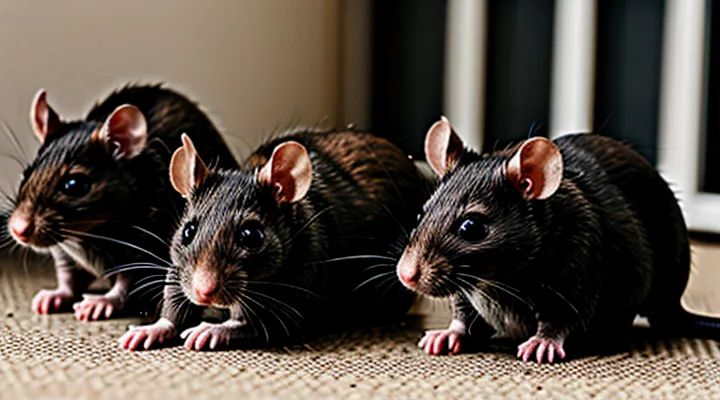
The Joy of Naming Your Female Rats
Why Choosing the Right Names Matters
Building a Bond
Establishing a strong connection with a pair of female rats begins with consistent interaction. Offer fresh vegetables, small pieces of fruit, or a favorite chewable treat at the same time each day. Hand‑feed the items while maintaining eye contact; the routine signals safety and encourages the animals to associate your presence with positive experiences.
Create a shared environment that supports cooperation. Provide a spacious cage with multiple nesting zones, tunnels, and climbing structures. Place identical enrichment objects in each zone so the rats can explore together without competition. Observe their behavior; if one individual consistently avoids a particular area, adjust the layout to prevent stress and promote joint activity.
When assigning names, use clear, distinct syllables that differ in vowel and consonant patterns. This reduces auditory confusion and helps each rat recognize her own identifier. Example naming guidelines:
- Choose two‑syllable words with contrasting vowel sounds (e.g., “Mira” and “Luna”).
- Ensure the initial consonants are not phonetically similar (e.g., avoid “Mira” and “Mira”).
- Pair each name with a consistent tone of voice during calls and rewards.
Regular verbal reinforcement solidifies the bond. Speak each name in a calm, steady pitch while delivering a treat. Over several weeks the rats will respond to their specific name, reinforcing individual recognition and strengthening the pair’s overall relationship.
Reflecting Personalities
When choosing names for a pair of female rats, the most effective approach is to let each name convey the individual’s temperament, habits, and social role. Observe the rodents over several days; note differences in activity level, curiosity, grooming, and interaction with humans. Translate those traits into concise, memorable words that also complement each other.
- A lively, exploratory rat may be called Scout, while a calmer, observant companion could be Muse.
- A rat that frequently seeks attention might receive the name Echo, paired with a more reserved sibling named Shade.
- For a duo that displays playful rivalry, consider Fizz and Pop, reflecting energetic contrast.
Avoid overly elaborate or human‑centric names that obscure the animal’s innate character. Prefer single‑syllable or two‑syllable words that are easy to pronounce and distinct enough for the rats to recognize. Consistency in phonetic style—such as both names ending in a vowel or sharing a consonant—reinforces the pair’s bond while preserving individuality.
Finally, test the chosen names by calling each rat separately. A correct name should elicit a clear response, confirming that the label aligns with the rat’s personality and that the pair can be distinguished reliably. This method ensures that naming serves both functional communication and an accurate reflection of each rat’s unique disposition.
Brainstorming Naming Approaches
Themed Naming Ideas
Famous Duos («Thelma & Louise», «Bonnie & Clyde»)
When assigning names to a pair of female laboratory or pet rats, drawing from well‑known female duos provides instant recognition and character depth. Such pairings convey a shared narrative, simplify record‑keeping, and enhance owner–animal interaction.
Select duos that are culturally resonant and easily pronounced. Consider the following categories:
- Classic cinematic partners: Thelma & Louise, Bonnie & Clyde – evoke adventure and loyalty.
- Literary companions: Jane & Elizabeth (Austen’s heroines), Anne & Mary (Brontë sisters) – suggest intellect and independence.
- Mythological figures: Athena & Artemis, Morrigan & Brigid – convey strength and mystique.
- Pop‑culture icons: Luna & Daisy (from Harry Potter), Molly & Rosie (from The Big Bang Theory) – offer a playful tone.
Apply a consistent format: first name for the older or larger rat, second name for the younger or smaller. Record the pair in lab logs, breeding records, or pet files as “Thelma‑Louise” or “Bonnie‑Clyde” to maintain clarity.
When choosing, verify that the pair does not conflict with existing facility naming conventions and that both names are distinct enough to avoid confusion during handling or data entry. This approach streamlines communication, supports humane animal care, and enriches the narrative surrounding the rats.
Food Pairs («Peaches & Cream», «Salt & Pepper»)
Choosing complementary food‑based names for a pair of female rats creates a memorable identity and reinforces their partnership. The names should be easy to pronounce, distinct in sound, and reflect a balanced flavor contrast.
- Peaches & Cream – soft, sweet, and gentle; suitable for a lighter‑colored rat paired with a creamy‑toned sister.
- Salt & Pepper – sharp and savory; works for a darker rat matched with a speckled companion.
- Lemon & Lime – bright, citrusy notes; ideal for two energetic rats with pale fur.
- Basil & Thyme – herbaceous and subtle; appropriate for calm, inquisitive individuals.
- Cocoa & Vanilla – rich and smooth; fits a duo with contrasting coat shades.
When selecting a pair, verify that each name is unique enough to avoid confusion during handling and training. Consistency in theme—such as pairing sweet with savory or citrus with herb—strengthens the association and aids in recall.
Nature Inspired («Willow & Fern», «Rain & Sky»)
When selecting names for a pair of female rats, a nature‑inspired approach offers clear thematic cohesion and memorable imagery. Choose terms that evoke complementary elements, share a similar linguistic rhythm, and remain easy to pronounce for caretakers.
Key considerations:
- Pairings should reflect a balanced relationship, such as a plant with a weather phenomenon or two related habitats.
- Each name should be a single word or short phrase, avoiding hyphens or complex spellings that could confuse training commands.
- Preference for words that convey gentle or nurturing qualities aligns with the typical temperament of pet rodents.
Examples of effective nature‑based duos:
- Willow & Fern
- Rain & Sky
- Meadow & Brook
- Dawn & Dusk
- Pebble & Moss
These combinations illustrate how botanical and atmospheric motifs can be paired to create distinct yet harmonious identities for two female rats. The selected names support clear communication, reinforce a unified theme, and enhance the personal connection between owner and pets.
Mythology & Folklore («Hera & Athena», «Freya & Sif»)
Choosing names for a pair of female rodents can draw on mythic archetypes that convey distinct personalities. Greek mythology offers the duo Hera and Athena: Hera embodies sovereignty and matriarchal authority; Athena represents wisdom, strategic thought, and craft. Assigning these names suggests one rat may dominate the social hierarchy while the other displays problem‑solving behavior.
Norse tradition contributes the pair Freya and Sif. Freya is associated with fertility, beauty, and fierce independence; Sif is linked to harvest, golden hair, and steadfastness. These names imply one rat may exhibit curiosity and boldness, whereas the companion exudes calm resilience.
Practical naming options:
- Hera – appropriate for a rat that asserts dominance over peers.
- Athena – fitting for a rat that solves puzzles and navigates mazes.
- Freya – suitable for a rat with expressive, adventurous traits.
- Sif – ideal for a rat that maintains routine and displays reliable temperament.
Selecting from these mythic pairs provides clear, contrasting identities that reflect observable behaviors without resorting to generic descriptors.
Pop Culture References («Rey & Leia», «Hermione & Ginny»)
When selecting paired names for two female laboratory or pet rodents, drawing on well‑known duos from movies, literature, or television provides instant recognizability and thematic cohesion. Such references convey personality traits without elaborate description, allowing observers to infer character with a single utterance.
- Rey & Leia – both heroines embody leadership, resilience, and a rebellious spirit. The contrast between Rey’s galaxy‑spanning quest and Leia’s diplomatic authority offers a balanced dynamic for a pair of rats that exhibit independence and cooperation.
- Hermione & Ginny – represent intellect and spirited bravery. Hermione’s scholarly precision pairs with Ginny’s confident assertiveness, making the combination suitable for rodents that display curiosity and bold exploration.
Choosing names from popular culture also simplifies communication among caretakers, researchers, and visitors. The familiarity of these pairs reduces ambiguity, ensures consistent labeling in records, and enhances engagement during public outreach or educational demonstrations.
Individual Naming Strategies
Based on Appearance
When selecting names for a duo of female rats, visual characteristics provide a reliable framework. Observe coat color, pattern, and size; translate these traits into concise, memorable labels.
Consider the following guidelines:
- Color reference: Use straightforward descriptors such as “Ivory” for a pale coat, “Ebony” for deep black fur, or “Chestnut” for reddish tones.
- Pattern identification: If the fur displays distinct markings, choose names like “Stripe” for linear patterns, “Spot” for isolated patches, or “Marble” for mottled designs.
- Size distinction: For a notably larger specimen, names such as “Titan” or “Grande” convey stature; for a smaller counterpart, options include “Mini” or “Petite.”
- Combined traits: Pair complementary terms to reflect both animals, for example, “Snow & Coal” for a white and a black rat, or “Gold & Silver” for golden‑brown and silvery‑gray coats.
Apply the same method consistently: record each rat’s primary visual attribute, select a single word or short phrase that encapsulates it, and ensure the two names form a logical pair. This approach yields clear, descriptive identifiers that align with the animals’ appearance.
Based on Personality
When selecting names for a pair of female rats, base the decision on observable temperament, activity level, and social behavior. Identify each animal’s dominant traits through consistent observation: boldness, curiosity, calmness, or playfulness. Record these traits to create a clear personality profile for each rat.
Use the profiles to match names that reflect the individual characteristics while maintaining a complementary pair. For example:
- Bold & adventurous – names such as Raven or Blaze convey confidence.
- Quiet & observant – names like Mira or Luna suggest calmness.
- Highly social – names such as Pippa or Nora emphasize friendliness.
- Curious explorer – names like Scout or Tinker highlight inquisitiveness.
Choose names that are easy to pronounce, distinct from one another, and appropriate for the rats’ environment. Consistent use of the selected names reinforces recognition and strengthens the bond between caretaker and animal.
Sound-Alike Names
When selecting names for a pair of female rats, sound‑alike pairs offer easy recall while preserving individuality. The similarity aids vocal cues, but subtle differences prevent confusion during handling and training.
Key guidelines for sound‑alike naming:
- Choose monosyllabic or bisyllabic words that share the same vowel or consonant pattern (e.g., “Mia” and “Nia”).
- Ensure the final phoneme differs, allowing clear auditory distinction.
- Avoid homophones that could be mistaken for the same command (e.g., “Bee” and “Be”).
- Prefer names with distinct stress patterns to reinforce separate identity.
- Verify that the chosen pair does not conflict with common laboratory commands or equipment labels.
Practical examples:
- Luna – Lunae – identical vowel sound, distinct ending.
- Mara – Marae – shared consonants, divergent suffix.
- Pip – Pipz – same onset, altered terminal consonant.
- Tess – Tessy – base name retained, diminutive adds clarity.
- Rae – Ray – identical pronunciation but different spelling, useful for written records.
Applying these principles yields memorable, functional names that support efficient communication and animal welfare.
Rhyming Names
When assigning paired names to a duo of female rodents, rhyming options create a memorable, cohesive identity. Rhyming pairs reinforce the sense of companionship and simplify recall during handling or record‑keeping.
Effective rhyming names share the same ending sound while remaining distinct enough to avoid confusion. Choose a vowel or consonant pattern that fits the animals’ personalities, coat colors, or behavioral traits. Avoid overly complex syllables that could be misheard in a busy environment.
Examples of suitable rhyming pairs:
- Misty & Whisty – gentle, cloud‑like fur tones.
- Luna & Tuna – nocturnal activity, preference for fish treats.
- Pippa & Kippa – energetic, playful demeanor.
- Bella & Stella – elegant appearance, bright eyes.
- Nora & Flora – calm temperament, love for leafy enrichment.
Guidelines for selecting rhyming names:
- Verify that each name is easily distinguishable when spoken aloud.
- Ensure the rhyme does not obscure the first sound, preserving individual recognition.
- Align the semantic meaning of each name with observable traits to reinforce training cues.
- Test the pair in a quiet setting to confirm clear auditory separation.
Consistent use of the chosen rhyming pair throughout feeding, cleaning, and veterinary visits strengthens the association between name and individual, supporting effective care and monitoring.
Alliterative Names
Alliterative naming creates a memorable link between two female rats by pairing identical initial sounds. Select consonants that flow easily when spoken, such as soft “B” or bright “L,” to avoid harshness that may confuse handlers. Align name lengths—matching two‑syllable names with two‑syllable names, three with three—to reinforce rhythm and simplify calls.
Practical guidelines
- Choose initials that reflect personality traits (e.g., “B” for bubbly, “S” for spry).
- Ensure names differ enough to prevent misidentification; vary vowel sounds while keeping the consonant constant.
- Test pronunciation aloud; clarity matters during feeding or health checks.
Sample alliterative pairs
- Bella & Bessie
- Luna & Lila
- Daisy & Dottie
- Olive & Opal
- Ruby & Roxy
Adopt these principles to craft distinctive, cohesive names that enhance communication and strengthen the bond with each pet.
Tips for the Naming Process
Involving the Whole Family
Involving every household member in the naming process for a pair of female rodents creates shared ownership and reduces disagreement later. Each participant contributes observations of the animals’ behavior, appearance, and personality, which enriches the pool of candidate names.
A structured approach ensures efficiency:
- Gather initial ideas from all ages; record each suggestion without filtering.
- Group suggestions by themes (e.g., literary characters, colors, traits).
- Vote on each theme, allowing each family member one vote per category.
- Select the top‑ranked theme and conduct a second round of voting to choose the final two names, ensuring the chosen pair complements each other.
Parents should moderate the discussion, clarifying any ambiguous meanings and confirming that selected names are appropriate for public settings. Children benefit from learning how collective decision‑making operates, while seniors often provide historical or cultural context that enriches the final choice.
Document the agreed names in a visible location, such as a pet journal or a wall chart, to reinforce the collective decision and serve as a reference for future interactions with the animals. This practice strengthens family cohesion and establishes a clear, agreed‑upon identity for the pets.
Testing Names Out
When selecting names for a pair of female laboratory rats, empirical testing ensures that the chosen identifiers are practical, recognizable, and non‑conflicting within the research environment.
Begin by compiling a short list of candidate names, prioritizing brevity (one to two syllables) and phonetic distinctiveness. Avoid homophones or names that resemble common commands, as these can create ambiguity during handling.
Implement a trial phase lasting several days:
- Assign each rat a provisional name from the list.
- Record response latency when staff call each name aloud.
- Note any misidentification incidents during cage cleaning, weighing, or behavioral testing.
- Evaluate compatibility with data‑logging software that tags observations by name.
Analyze the collected metrics. Select the pair that yields the lowest average response time and zero misidentification events. Document the final names alongside the test results to provide a reference for future personnel and to maintain consistency across experimental records.
Avoiding Common Pitfalls
Overly Complicated Names
Choosing names for a pair of female rats can become unnecessarily convoluted when owners favor excessive length, obscure references, or intricate spelling. Overly elaborate designations hinder clear communication, complicate record‑keeping, and may cause confusion during veterinary visits or research documentation.
Common pitfalls include:
- Multiple words separated by hyphens or underscores (e.g., “Euphoric‑Quantum‑Nimbus”).
- Obscure literary or mythological allusions that require explanation.
- Non‑standard characters or diacritics that are incompatible with common software.
- Names that exceed ten characters per word, leading to truncation in databases.
Practical guidelines:
- Limit each name to two simple words, each no longer than eight characters.
- Prefer familiar phonetics; avoid silent letters or unconventional spellings.
- Ensure the pair of names share a thematic link without mirroring each other verbatim (e.g., “Luna” and “Stella”).
- Verify compatibility with veterinary forms, lab tags, and pet‑tracking apps.
- Test pronunciation aloud to confirm ease of use in daily interaction.
Adhering to these principles yields concise, memorable identifiers that serve both the owner’s preference and the practical demands of animal care and research.
Names That Sound Similar to Commands
When selecting names for a pair of female rats, choosing words that resemble commands creates immediate, recognizable cues that support training and daily interaction.
Effective command‑like names share several characteristics: brevity, a single stressed syllable, clear vowel contrast, and a phonetic structure that differs enough to avoid confusion during rapid speech.
- Bark – reminiscent of a short, sharp command; easy to associate with a quick alert.
- Ping – crisp, high‑frequency sound; suitable for a nimble, responsive rat.
- Snap – conveys swift action; useful for encouraging quick movements.
- Dart – evokes rapid motion; reinforces agility.
- Flip – suggests a playful turn; aligns with a curious temperament.
- Chirp – light, melodic cue; fits a vocal or expressive animal.
- Zoom – conveys speed; motivates energetic behavior.
- Nudge – gentle prompt; appropriate for a shy or inquisitive rat.
- Whisk – directly references a rat’s prominent feature; doubles as an instruction to move the whiskers.
Apply each name as a verbal cue during handling: say the name, pause, then reward the desired response. Consistent pairing of the spoken name with a specific action reinforces the association, making the command‑like name both a label and a functional prompt.
Names That Could Become Embarrassing Later
Choosing names for two female rats requires awareness of how language evolves and how names may be perceived in different settings. Some names that seem charming initially can acquire unintended connotations, cause awkward jokes, or clash with professional environments as the animals become part of public presentations or social media accounts.
Potentially embarrassing names share common traits: they are homophones of vulgar terms, reference adult entertainment, mimic popular human names that may cause confusion, or reference slang that could fall out of favor. Evaluating a name against these criteria reduces the risk of future discomfort.
- Bunny – evokes a common pet nickname but may be misread as a slang term for a sexually attractive woman, leading to inappropriate remarks.
- Muffin – sounds sweet; however, “muff” is a well‑known euphemism, and the similarity can provoke jokes in adult‑oriented contexts.
- Sugar – pleasant on the surface, yet “sugar” is frequently used as a flirtatious nickname, potentially blurring professional boundaries.
- Peaches – a fruit name that can be interpreted as a reference to a curvy figure, especially in informal conversation.
- Kitty – directly associated with cats; using it for rats may cause confusion and invite teasing about species misidentification.
- Lola – popular in entertainment; the name appears in songs with sexual overtones, which could be awkward during formal introductions.
- Roxy – sounds edgy, but is also linked to adult nightlife venues, raising the chance of misinterpretation.
- Foxy – conveys cleverness but doubles as a slang term for an attractive woman, risking unwanted comments.
- Honey – affectionate yet double‑used as a term of endearment in romantic contexts, possibly leading to misread intentions.
- Bella – common human name; when used for rodents, it may cause confusion in veterinary records or research papers.
Selecting names that avoid these pitfalls ensures the rats’ identities remain clear, respectful, and suitable for any future audience.
Making the Final Decision
The «Feel Right» Factor
Naming two female rats demands a practical approach that respects the animals’ individuality while remaining functional for caretakers. The “Feel Right” factor captures the intuitive judgment that a name aligns with the rat’s appearance, behavior, and the owner’s perception. This factor influences recall, communication, and the bond between human and rodent.
When evaluating the “Feel Right” factor, consider the following elements:
- Auditory compatibility – short, vowel‑rich names are easier for the animal to recognize and for the owner to pronounce clearly.
- Behavioral resonance – choose names that reflect observable traits such as activity level, curiosity, or temperament.
- Visual association – colors, markings, or size can inspire appropriate names, reinforcing the connection between label and subject.
- Distinctiveness – ensure the two names differ sufficiently in sound to avoid confusion during handling or training.
- Cultural neutrality – select names without strong regional or gendered connotations to maintain broad applicability.
Applying these criteria yields names that feel appropriate to both caretaker and animal, enhancing daily interaction and reducing ambiguity.
Observing Their Reactions
Selecting appropriate identifiers for a pair of female rats requires direct observation of their behavioral responses. Names that elicit clear, positive reactions can reinforce social bonds and simplify handling.
Begin by establishing a neutral baseline. Record activity levels, grooming frequency, and exploratory patterns during a 10‑minute interval without vocal cues. This data provides a reference point for later comparisons.
Introduce each proposed name aloud in a calm, consistent tone. Observe the following indicators during the subsequent minute:
- Ear twitch or forward tilt toward the speaker
- Increased locomotion or approach toward the source of the sound
- Reduced grooming or pause in activity, suggesting attention
- Vocalizations such as squeaks or chirps
Quantify each response by counting occurrences or measuring latency from name utterance to the first observable reaction. Higher frequency and shorter latency typically denote stronger recognition.
Compare the metrics across all candidate names. Prefer the name that generates the most frequent and rapid attention signals while maintaining the rats’ overall calmness. Consistent positive responses confirm that the chosen identifiers are effectively perceived by the animals.
Celebrating Your New Family Members
Welcoming two new female rats into your household calls for a clear plan that blends celebration with thoughtful naming. Begin by establishing a brief ceremony: gather a small group of friends or family, present each rat in a carrier, and announce the chosen names aloud. This moment creates a memorable introduction and reinforces the bond between owner and pets.
To support the naming effort, consider the following practical steps:
- Compile a shortlist of names that reflect distinct personalities, physical traits, or favorite literary characters.
- Verify that each name is easy to pronounce and distinct enough to avoid confusion during training.
- Write the names on individual tags attached to the cages, ensuring visibility for both humans and the animals.
Conclude the event with a modest celebration: provide fresh bedding, a selection of safe chew toys, and a special treat for each rat. Document the occasion with photos and notes on the naming rationale; this record serves as a reference for future care and reinforces the sense of family that the new members bring.