
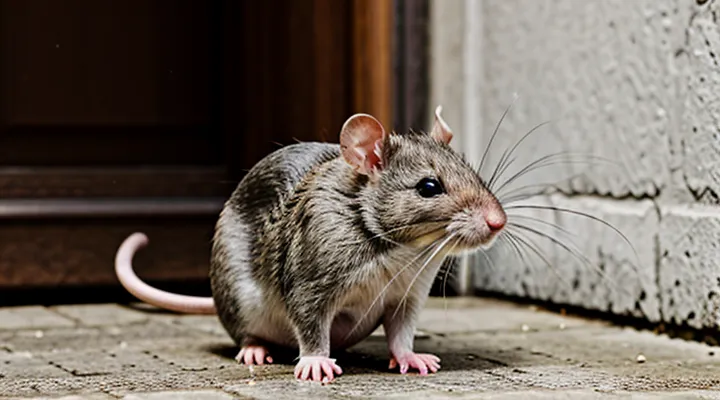
Understanding Rat Vision
Normal Rat Vision
Visual Acuity
Visual acuity describes the ability of an eye to resolve fine spatial detail. In rodents it quantifies the smallest pattern or stripe that elicits a reliable response, providing a direct measure of functional sight.
Typical laboratory rats exhibit visual acuity between 0.5 and 1.0 cycles per degree (cpd). Values below 0.2 cpd indicate severe impairment, while a complete lack of response suggests total blindness.
Assessment of rat sight for diagnostic purposes relies on behavioral and physiological tests:
- Optokinetic drum: rotating vertical stripes provoke reflexive head movements; the highest stripe frequency that triggers tracking defines the acuity limit.
- Visual cliff apparatus: rats placed on a platform with a patterned surface and a transparent “cliff” edge; hesitation or avoidance of the “deep” side signals visual perception.
- Pattern discrimination tasks: training rats to differentiate between contrasting gratings; failure to learn or perform above chance reflects reduced acuity.
- Electroretinography (ERG): records retinal responses to light flashes; absent or markedly diminished waveforms corroborate functional blindness.
Interpretation follows established thresholds: acuity ≤ 0.2 cpd, absence of optokinetic tracking, and lack of avoidance on the visual cliff collectively confirm blindness. Consistent ERG null results reinforce the diagnosis.
Field of Vision
Rats possess a wide, laterally positioned visual field that extends roughly 300 degrees, leaving only a small blind spot directly behind the head. The majority of their retina is devoted to peripheral detection, enabling quick responses to motion and potential predators. Central vision is limited; detailed focus occurs within a narrow cone of about 30 degrees directly ahead.
When assessing whether a rat lacks sight, observe the following indicators related to its field of vision:
- Failure to react to objects approaching from the sides.
- Absence of head or whisker movements that usually align with moving stimuli.
- Persistent collisions with enclosure walls or obstacles placed at the periphery.
- Lack of avoidance behavior when a light source is introduced from the side.
Practical evaluation of visual range can be performed with simple, repeatable steps:
- Place the animal in a dimly lit enclosure with a clear, unobstructed perimeter.
- Introduce a small, moving object (e.g., a feather or a laser pointer) at various angles around the cage.
- Record the rat’s orientation changes, whisker positioning, and any attempts to evade the stimulus.
- Repeat the test with the object positioned directly behind the animal to confirm the presence of the known blind spot.
Consistent non‑response across multiple lateral positions suggests compromised peripheral vision, a strong indicator of blindness. Combining these observations with other sensory tests (auditory startle, tactile navigation) provides a comprehensive assessment of visual impairment.
Color Perception
Rats possess a dichromatic visual system, detecting short‑wave (ultraviolet/blue) and medium‑wave (green) light while lacking sensitivity to longer wavelengths. Their ability to discern color relies on contrast between these spectra rather than fine hue discrimination. Consequently, a rat with normal vision will respond to changes in luminance and to objects that differ in blue‑green versus gray tones, whereas a visually impaired or blind rat will show little or no reaction to such variations.
When evaluating visual impairment, color perception provides a practical indicator. Behavioral assays that present colored stimuli alongside neutral controls can reveal whether the animal distinguishes between them. A typical protocol includes:
- Placing the rat in a two‑choice chamber where one side displays a blue‑green panel and the other a gray panel of equal brightness.
- Recording the number of entries or time spent on each side over a fixed period.
- Repeating the test with reversed panel positions to control for side bias.
- Analyzing the preference index; a value near 0.5 suggests no discrimination, consistent with reduced visual function.
Additional observations support the assessment. Rats rely on whisker‑mediated tactile cues; if a subject consistently investigates both panels regardless of color, tactile exploration may dominate, indicating compromised vision. Likewise, a lack of avoidance of brightly lit areas when presented with colored illumination can signal diminished photoreceptor activity.
In summary, color perception tests exploit the rat’s limited chromatic range to differentiate between functional and non‑functional visual pathways. Failure to exhibit consistent choices based on colored cues, coupled with unchanged behavior in control conditions, strengthens the conclusion of visual deficiency.
Signs of Blindness in Rats
Behavioral Indicators
Bumping into Objects
Observing a rat’s interaction with its environment provides direct evidence of visual capability. When a rat repeatedly collides with stationary objects—cage bars, walls, or feeding stations—it suggests a deficit in sight.
Key indicators derived from collision behavior:
- Frequency of impacts: multiple contacts within a short observation period signal impaired vision.
- Reaction time: delayed or absent avoidance maneuvers after initial contact indicate lack of visual cues.
- Consistency across contexts: similar bumping patterns in different enclosure sections reinforce the diagnosis.
Additional observations support the assessment:
- The animal navigates by whisker contact rather than eye guidance, evident when it relies on tactile exploration after each collision.
- Absence of startled responses to moving shadows or light changes further confirms visual impairment.
Systematic recording of bumping incidents, combined with controlled placement of obstacles, yields a reliable measure of a rat’s blindness.
Hesitation and Cautiousness
Rats that cannot see often display pronounced hesitation and heightened cautiousness when introduced to new environments. Hesitation appears as a measurable delay before initiating movement, frequent pauses during locomotion, and an overall slower progression through open spaces. Cautiousness manifests as reduced speed, a preference for close contact with walls, deliberate testing of surfaces before full traversal, and avoidance of obstacles that sighted rats readily bypass.
Observing these behaviors requires a controlled setting that minimizes external stressors. Place each animal in an unfamiliar arena and record the following parameters:
- Time elapsed before the first forward movement.
- Number and duration of pauses during the trial.
- Distance maintained from walls versus central zones.
- Frequency of obstacle avoidance or tactile probing with whiskers.
Data collected from a blind rat typically show longer initial latency, increased pause frequency, and a strong tendency to remain near the perimeter. When these metrics differ markedly from those of a sighted control group, they provide reliable evidence of visual impairment. Distinguishing visual loss from anxiety involves confirming that the same rat exhibits normal exploratory behavior in a familiar cage, where hesitation and cautiousness diminish.
Difficulty Navigating Familiar Environments
Rats that cannot see well often fail to move through areas they have previously explored. When visual input is lost, the animal relies on tactile and olfactory cues, which slows progress and increases hesitation at familiar landmarks.
Observable indicators include:
- Repeated pauses at corners, doorways, or junctions where the rat previously moved without interruption.
- Frequent collisions with walls, cage bars, or objects that were once navigated effortlessly.
- Disorientation when returning to a known feeding station, resulting in circling or back‑tracking.
- Reduced speed and increased time to reach a destination that was previously covered in seconds.
- Preference for using whisker contact to explore surfaces rather than direct movement.
Behavioral tests that reveal these patterns involve placing the rat in a maze it has already completed and recording the number of errors, latency to exit, and the proportion of tactile exploratory movements. A significant rise in these metrics compared to baseline performance suggests visual impairment.
In summary, difficulty negotiating previously mastered environments serves as a reliable indicator of compromised sight in rats. Systematic observation of navigation errors, combined with controlled re‑exposure to familiar layouts, provides clear evidence for assessing rat blindness.
Startle Response to Unexpected Touch
The reaction of a rat to an abrupt tactile stimulus provides a practical indicator of visual function. When a rat with normal sight perceives an unexpected touch, it typically exhibits a rapid, coordinated withdrawal accompanied by ear and whisker movements. This response relies on visual cues that help the animal locate the point of contact and execute a swift defensive maneuver.
Rats lacking functional vision show a noticeably attenuated startle. The withdrawal is slower, the amplitude of ear flicks is reduced, and the overall latency from touch to movement increases. The diminished response reflects impaired integration of sensory information that normally guides rapid escape.
To evaluate visual status using the startle reaction, follow a standardized procedure:
- Place the animal in a quiet, dimly lit enclosure to minimize external stimuli.
- Allow a 5‑minute acclimation period.
- Deliver a brief, gentle poke to the dorsal hindlimb with a calibrated filament; ensure the force is consistent across trials.
- Record the latency (milliseconds) from contact to the onset of movement, the peak displacement of the forelimb, and the presence of ear or whisker flicks.
- Repeat the test three times per animal, with at least 2‑minute intervals between touches.
- Compare measured parameters against established norms for sighted rats; values exceeding the normative latency threshold or lacking characteristic ear flicks suggest visual impairment.
Consistent application of this protocol yields reliable data for distinguishing blind from sighted rodents without requiring invasive techniques.
Increased Reliance on Other Senses
Rats that have lost vision display pronounced dependence on tactile, auditory, and olfactory cues. The vibrissae become the primary tool for spatial navigation; rapid whisker sweeps and increased contact with surfaces allow the animal to construct a three‑dimensional map of its environment. Auditory sensitivity sharpens, evident by orienting ears toward faint sounds and reacting to subtle acoustic changes such as the rustle of bedding or the footfall of a predator. Olfactory investigation intensifies, with frequent nose‑to‑object contacts and prolonged sniffing bouts that help locate food, identify conspecifics, and avoid hazards. Behavioral patterns reflecting this shift include:
- Persistent head‑tilting to align whiskers with obstacles.
- Elevated frequency of ear twitches in response to ambient noise.
- Continuous probing of floor and walls with the snout.
- Reduced reliance on visual landmarks, replaced by repetitive tactile routes.
These observable adjustments provide reliable indicators that a rat is compensating for impaired sight through heightened use of its remaining senses.
Physical Indicators
Eye Appearance Anomalies
Rats with compromised vision often exhibit distinct changes in ocular morphology that can be observed without specialized equipment. Recognizing these alterations allows caretakers and researchers to assess visual function promptly.
Typical signs include:
- Cloudy or milky cornea, indicating cataract formation or corneal opacity.
- Pupils that remain fixed and unresponsive to light, suggesting optic nerve damage or retinal degeneration.
- Asymmetrical eye size or positioning, reflecting developmental anomalies or trauma.
- Visible blood vessels crossing the corneal surface (neovascularization), which may obstruct light transmission.
- Abnormal coloration of the iris, such as a pale or whitish hue, associated with pigment loss in the retinal pigment epithelium.
Additional observations useful for diagnosis:
- Excessive tearing or discharge, often accompanying ocular infection that can impair vision.
- Persistent squinting or eye closure, signaling discomfort or inability to focus.
- Lack of the normal shine or gloss of a healthy rat eye, indicating surface irregularities.
Documenting these features alongside behavioral cues—such as failure to navigate mazes, reduced response to moving objects, or reluctance to explore illuminated areas—provides a comprehensive assessment of visual impairment. Early detection through careful examination of eye appearance supports timely intervention and improves animal welfare.
Pupillary Response Testing
Pupillary response testing provides a direct assessment of visual function in rodents. When light is projected onto the cornea, a healthy rat constricts the pupil; absence of constriction suggests compromised retinal or optic nerve pathways.
The procedure begins with acclimatizing the animal to a quiet environment to reduce stress‑induced autonomic fluctuations. A handheld ophthalmoscope or a calibrated LED light source delivers a brief, uniform flash of illumination to each eye. The examiner observes the pupil through a magnifying lens or video capture system, noting the latency, magnitude, and symmetry of constriction.
Key observations include:
- Immediate constriction (≤0.2 s) indicates intact photoreceptor signaling.
- Delayed or absent response suggests retinal degeneration, optic nerve damage, or central visual pathway impairment.
- Asymmetrical reactions may reveal unilateral injury or disease.
Control measurements with a known sighted rat establish baseline response parameters. Repeating the test after pharmacological dilation confirms that the observed lack of constriction is not due to pharmacologic pupil fixation.
Interpretation must consider confounding factors such as anesthesia, ambient lighting, and systemic illness, which can blunt reflexes. When pupillary reflexes are consistently absent across multiple trials and conditions, the evidence strongly supports a diagnosis of blindness.
Nystagmus or Uncontrolled Eye Movements
Nystagmus, characterized by rapid, involuntary oscillations of the eyes, frequently appears in rats with compromised visual input. The presence of such movements indicates a failure of the visual system to stabilize gaze, often caused by retinal degeneration, optic nerve damage, or central processing deficits.
Observation of uncontrolled eye movements requires a quiet environment, minimal handling stress, and adequate lighting. When the animal is positioned on a flat surface, note any of the following behaviors:
- Horizontal or vertical eye flickering occurring without external stimuli.
- Alternating slow phases followed by quick corrective saccades.
- Continuous tremor that persists when the rat is stationary or while it explores.
These signs become more apparent when the rat is placed in front of a contrasting pattern or a moving object; a blind subject will not track the stimulus, and the eyes will default to a rhythmic swing.
Differentiating nystagmus from normal whisker‑driven head movements involves focusing exclusively on ocular activity. Use a magnifying lens or a video recording device to capture eye motion, then replay at reduced speed to verify the characteristic slow‑fast cycle. Absence of visual tracking combined with the documented oscillation pattern provides reliable evidence of visual impairment.
Causes of Blindness in Rats
Genetic Conditions
Genetic mutations are a primary source of visual impairment in laboratory and pet rats. Mutations in the Pde6b gene, which encodes the phosphodiesterase enzyme essential for phototransduction, produce a progressive degeneration of photoreceptor cells, leading to complete loss of sight by adulthood. Rax gene disruptions interfere with retinal development, resulting in malformed optic structures and congenital blindness. Defects in the Crb1 gene compromise the integrity of the retinal pigment epithelium, causing early‑onset retinal dystrophy. Rho and Gnat1 mutations affect rod photoreceptor function, producing night‑blindness that may progress to total blindness.
When evaluating a rat for visual deficits, genetic screening should accompany functional tests. DNA analysis of the aforementioned loci identifies carriers and affected individuals before phenotypic signs appear. Combining polymerase chain reaction (PCR) assays with sequencing confirms the presence of pathogenic alleles. In the absence of genetic data, behavioral assessments—such as the visual placing reflex, obstacle navigation, and light‑avoidance tests—provide indirect evidence of visual loss but cannot differentiate genetic from acquired causes.
A systematic approach to diagnosing blindness therefore includes:
- Collection of a tissue sample (e.g., ear notch) for DNA extraction.
- PCR amplification of target gene regions (Pde6b, Rax, Crb1, Rho, Gnat1).
- Sequencing or allele‑specific PCR to detect known mutations.
- Correlation of genetic results with behavioral observations.
Recognition of hereditary ocular disorders enables early intervention, informed breeding decisions, and appropriate welfare measures for affected rats.
Age-Related Degeneration
Age‑related degeneration of the retinal and optic nerve structures is a primary factor when assessing visual impairment in laboratory rats. Progressive loss of photoreceptor cells, thinning of the retinal pigment epithelium, and demyelination of optic axons reduce visual acuity and can culminate in complete blindness. These changes occur predictably after the third month of life in most strains, accelerating in genetically predisposed or environmentally stressed populations.
Observable indicators of age‑linked visual decline include:
- Reduced startle response to sudden light flashes.
- Failure to navigate toward a visible platform in a water maze.
- Decreased pupil constriction amplitude measured with an infrared pupillometer.
- Diminished electroretinogram (ERG) amplitudes, especially in the b‑wave component.
When evaluating an older rat, combine behavioral assays with physiological measurements. Begin with a light‑avoidance test: place the animal in a chamber divided by a transparent barrier; a blind subject will not preferentially occupy the dark side. Follow with ERG recording under scotopic and photopic conditions; a marked reduction in waveform amplitude confirms retinal degeneration. Finally, perform histological examination of retinal layers and optic nerve cross‑sections to document cellular loss and myelin degradation.
Interpreting these data alongside the animal’s chronological age enables a reliable determination of blindness attributable to senescent degeneration, distinguishing it from acute injury or congenital defects.
Injury or Trauma
Injury or trauma can directly impair a rat’s visual system, making it a primary factor to consider when evaluating potential blindness. Physical damage to the eye, optic nerve, or surrounding structures may produce immediate loss of sight or gradual deterioration.
Observable indicators of ocular or neurological injury include:
- Cloudy or hemorrhagic cornea
- Visible pupil irregularities such as dilation or lack of reflex
- Abnormal eye positioning (strabismus)
- Absence of response to moving objects or light sources
- Unsteady gait, frequent collisions with obstacles, or reluctance to explore
When trauma is suspected, a systematic examination should follow:
- Inspect both eyes for external wounds, swelling, or discharge.
- Perform a light‑reflex test by directing a focused beam at each pupil; note any lack of constriction.
- Gently palpate the orbital region to detect fractures or tissue swelling.
- Assess neurological function by observing head orientation, whisker movement, and balance on a narrow platform.
- If possible, conduct a fundoscopic evaluation to identify retinal hemorrhage or optic nerve damage.
Distinguishing injury‑related blindness from other causes, such as genetic defects or age‑related degeneration, relies on the presence of acute physical signs and a clear history of trauma. Absence of these markers suggests alternative etiologies and warrants further diagnostic steps.
Infections and Diseases
Infections and diseases are frequent causes of visual impairment in laboratory rats. Bacterial keratitis, viral encephalitis, and parasitic ocular invasion can damage the retina, optic nerve, or corneal surface, leading to blindness.
Common ocular pathogens include:
- Staphylococcus aureus – induces corneal ulceration and opacity.
- Pseudomonas aeruginosa – produces rapid corneal necrosis.
- Mucosal‑associated lymphoid tissue virus (MALTV) – causes retinal degeneration.
- Sendai virus – leads to optic neuritis.
- Toxoplasma gondii – forms cysts in retinal tissue.
Clinical indicators of loss of vision are:
- Absence of pupillary light reflex.
- Failure to avoid obstacles.
- Lack of response to moving objects or hand gestures.
- Persistent head tilting or circling.
Diagnostic protocol:
- Observe pupillary response under controlled lighting.
- Perform menace‑response test using a moving object toward the eye.
- Examine cornea and anterior chamber with a handheld ophthalmoscope.
- Collect conjunctival swabs for bacterial culture and PCR for viral agents.
- Conduct serologic assays for Toxoplasma antibodies when parasitic infection is suspected.
Treatment focuses on eliminating the underlying pathogen and supporting ocular health. Antibiotic eye drops (e.g., gentamicin) address bacterial keratitis; antiviral agents (e.g., ribavirin) are employed for viral infections; antiparasitic therapy (e.g., sulfadiazine) targets Toxoplasma. Anti‑inflammatory drops reduce edema, while protective eyewear prevents secondary trauma.
Prompt identification of infectious or disease‑related causes, followed by targeted therapy, restores visual function in many cases and prevents irreversible blindness in rat colonies.
Nutritional Deficiencies
Nutritional deficiencies can impair a rat’s visual system, making dietary assessment essential when evaluating suspected blindness. Deficiencies affect ocular structures, alter neural pathways, and may produce symptoms indistinguishable from primary eye disease.
Common deficiencies linked to visual impairment include:
- Vitamin A: leads to retinal degeneration and night‑blindness.
- Vitamin B12: causes optic nerve demyelination.
- Thiamine (Vitamin B1): results in cortical visual deficits.
- Riboflavin (Vitamin B2): contributes to cataract formation.
- Essential fatty acids: affect photoreceptor membrane integrity.
When a rat presents with reduced visual responsiveness, follow these steps:
- Review the diet for adequacy of the nutrients listed above.
- Perform a basic ophthalmic examination: assess pupil reflexes, lens clarity, and fundus appearance.
- Collect blood samples for serum levels of vitamin A, B12, thiamine, and fatty acid profiles.
- Correlate laboratory findings with clinical signs; low concentrations of the identified nutrients confirm a nutritional etiology.
Correcting deficiencies typically restores visual function if damage is not irreversible. Supplement the diet with appropriate vitamin and fatty‑acid sources, monitor serum levels, and repeat the ophthalmic exam after a two‑week adjustment period. Persistent deficits after nutritional correction suggest alternative causes and warrant further neurological or ophthalmic investigation.
Performing Simple Tests at Home
The Obstacle Course Test
The obstacle course test evaluates visual function by requiring a rat to navigate a series‑of barriers that demand precise spatial judgments. A typical apparatus consists of a straight runway, a series of low walls, a narrow tunnel, and a platform with a visible cue. All elements are positioned on a uniformly lit surface to eliminate shadows that could confound results.
During the trial, the rat is placed at the start line and released without tactile guidance. The observer records the time required to reach the final platform and notes any collisions with walls, hesitations at turns, or failures to enter the tunnel. Each animal completes three consecutive runs; the average latency and error count constitute the performance metric.
Interpretation follows established thresholds:
- Average latency below 15 seconds with zero collisions indicates normal vision.
- Latency between 15 and 30 seconds accompanied by one or two minor contacts suggests reduced acuity.
- Latency exceeding 30 seconds, multiple collisions, or complete avoidance of the tunnel signals probable blindness.
Control measures improve reliability. Ensure consistent lighting (approximately 300 lux), keep the runway surface free of odors, and randomize the visual cue’s position between trials to prevent reliance on memory. Conduct the test during the animal’s active phase (dark cycle) and limit each session to five minutes to avoid fatigue.
The obstacle course test provides a rapid, quantifiable assessment of rat visual capability without invasive procedures, making it suitable for routine screening in laboratory settings.
The Startle Response Test
The startle response test evaluates visual function by measuring a rat’s reaction to a sudden, bright flash of light. When vision is intact, the animal exhibits a rapid, involuntary motor response; absence or attenuation of this reaction suggests visual impairment.
Procedure
- Place the rat in a quiet chamber equipped with a motion‑sensing platform.
- Acclimate the subject for 5 minutes to reduce stress‑related movements.
- Deliver a brief (≤10 ms) white‑light pulse at an intensity of 10 lux, directed from a fixed angle.
- Record the latency and amplitude of the startle reflex using the platform’s sensors.
- Repeat the stimulus three times with inter‑trial intervals of 30 seconds to account for habituation.
Interpretation
- Normal vision: startle latency ≤ 100 ms, peak amplitude ≥ 0.5 g.
- Partial vision loss: delayed latency (100–200 ms) or reduced amplitude (0.2–0.5 g).
- Complete blindness: no measurable startle or latency exceeding 200 ms.
Control measures
- Verify auditory and tactile stimuli are absent; conduct a separate acoustic startle test to rule out hearing deficits.
- Use a cohort of sighted rats to establish baseline response parameters under identical conditions.
- Maintain consistent ambient lighting and chamber temperature to avoid confounding variables.
Limitations
- The test cannot differentiate between retinal degeneration and optic nerve damage; complementary examinations (e.g., electroretinography) are required for precise diagnosis.
- Habituation may diminish responses if trials exceed recommended intervals, potentially leading to false‑negative results.
When applied correctly, the startle response test provides a rapid, non‑invasive indicator of visual capability in rodents, supporting broader assessments of ocular health.
The Food Location Test
The Food Location Test evaluates visual capacity by measuring a rat’s ability to locate a hidden food reward using spatial cues. The procedure begins with a familiarization phase in which the animal explores an arena devoid of obstacles for several minutes, establishing baseline locomotor activity. Afterward, a small piece of highly palatable food is buried beneath a consistent surface marker (e.g., a distinct tile) in a fixed corner of the arena. The rat is then released from a neutral starting point opposite the baited corner.
During the test trial, the animal’s latency to reach the food, the path length traveled, and the number of incorrect entries into non‑baited corners are recorded. Typical performance metrics for sighted rats include rapid, direct approaches with minimal errors. Significant increases in latency, circuitous routes, or repeated visits to incorrect locations suggest impairment of visual perception.
Key controls enhance reliability:
- Blindness verification – conduct a parallel test in complete darkness; similar performance in light and dark conditions indicates non‑visual strategies.
- Olfactory masking – cover the food with an impermeable but transparent barrier to eliminate scent cues.
- Motivation assessment – confirm that the rat remains motivated by measuring consumption of the food when presented openly.
Interpretation follows a comparative framework. If a rat consistently fails to locate the baited spot under illuminated conditions while succeeding when visual cues are removed, the result supports a diagnosis of visual deficit. Conversely, accurate navigation despite visual obstruction implies reliance on non‑visual senses, reducing the likelihood of blindness.
The Food Location Test provides a straightforward, quantifiable method for assessing ocular function in rodents, offering clear criteria for distinguishing visual impairment from alternative sensory strategies.
The Light Sensitivity Test
The light sensitivity test evaluates visual function by measuring a rat’s behavioral response to controlled illumination. Researchers place the animal in a dimly lit arena and introduce a sudden light source. A sighted rat typically exhibits a rapid avoidance reaction, such as freezing, moving away, or seeking shelter. Absence of such a response suggests compromised vision.
Procedure
- Acclimate the rat to the testing chamber for several minutes in low light.
- Position a calibrated LED or lamp at a fixed distance from the animal’s line of sight.
- Activate the light for a brief interval (1–2 seconds) and observe the immediate behavior.
- Record latency to movement, direction of escape, and any vocalizations.
- Repeat the trial three times with inter‑trial intervals of at least five minutes to reduce habituation.
Interpretation
- Prompt avoidance (latency < 2 seconds) indicates normal photic perception.
- Delayed or absent reaction (latency > 5 seconds or no movement) points to potential blindness.
- Consistent lack of response across repetitions strengthens the diagnostic conclusion.
Controls and considerations
- Use a blind control group to establish baseline non‑responsive behavior.
- Verify that the light intensity exceeds the rat’s threshold for photic detection (typically ≥ 100 lux).
- Ensure the testing environment is free of auditory or olfactory cues that could mask the visual stimulus.
- Monitor the animal’s health status; systemic illness may alter responsiveness independent of vision.
The light sensitivity test provides a rapid, non‑invasive method for assessing visual impairment in rodents, supporting broader investigations into ocular pathology or neurological disorders affecting sight.
Consulting a Veterinarian
Professional Diagnosis Methods
Professional assessment of visual impairment in rats relies on objective, reproducible techniques that eliminate speculation. Veterinarians and researchers employ a suite of validated procedures to confirm blindness and identify underlying pathology.
- Optokinetic response (OKR) testing – a rotating striped drum elicits involuntary head tracking; absence of tracking indicates compromised visual processing.
- Visual placing reflex – gentle lowering of the animal toward a surface triggers forelimb extension when sight is functional; failure of the reflex suggests loss of visual input.
- Electroretinography (ERG) – electrodes record retinal electrical activity in response to light flashes; markedly reduced amplitudes confirm retinal dysfunction.
- Pupillary light reflex measurement – infrared pupillometers quantify constriction speed and magnitude; delayed or absent constriction denotes optic nerve or retinal failure.
- Behavioral maze assays – navigation of a light‑dark box or water maze under controlled illumination assesses functional vision; performance at chance level signals blindness.
- Histopathological examination – post‑mortem analysis of retinal layers and optic nerve fibers reveals degenerative changes correlating with clinical findings.
Combining behavioral observations with physiological recordings provides a comprehensive diagnosis, enabling targeted treatment or humane management decisions.
Treatment Options and Management
Adapting the Environment
Adapting the environment provides observable cues that differentiate sighted rats from those lacking vision. Modifications should emphasize contrast, tactile feedback, and predictable layouts to reveal navigation difficulties.
- Install low‑intensity, uniform lighting; eliminate shadows that could mask visual impairment.
- Arrange a straight corridor with evenly spaced obstacles; record hesitation, collisions, or detours.
- Place textured flooring (e.g., sandpaper strips) alongside smooth sections; note preference for textured paths, indicating reliance on whisker input.
- Use auditory landmarks (soft clicks or tones) at fixed points; compare response times between rats with functional eyes and those without.
- Maintain consistent scent markers; ensure that changes in movement are not attributed to olfactory cues.
Observe behavior over multiple trials. Consistent reliance on whisker contact, frequent bumps, or inability to follow auditory cues suggests visual deficiency. Adjustments to lighting and obstacle placement can be repeated to confirm findings.
Supportive Care
When a rat shows signs of visual impairment, immediate supportive care reduces stress and prevents secondary injuries. Provide a stable environment that limits hazards: keep the cage free of sharp objects, maintain consistent lighting, and arrange food and water sources in the same location each day. Use low‑profile bedding to prevent the animal from stumbling over uneven surfaces.
Implement nutritional support. Offer easily accessible, high‑calorie foods such as soft pellets or fresh fruit placed on a shallow dish. Ensure water is reachable without the need for climbing; a shallow water bottle or dish reduces the risk of spills that could cause slipping.
Monitor health closely. Record weight, food intake, and activity levels at least twice daily. If the rat loses weight or exhibits lethargy, consult a veterinarian for possible vitamin supplementation or analgesics.
Key supportive measures:
- Secure cage layout with predictable arrangement
- Soft, uniform bedding to minimize obstacles
- Consistent placement of food, water, and enrichment items
- Regular health checks and weight monitoring
- Prompt veterinary intervention for worsening condition
Quality of Life Considerations
When a rat’s visual impairment is suspected, assessing its well‑being becomes a priority. Blindness can alter a rodent’s interaction with the environment, so every aspect of care must be adapted to preserve comfort and functionality.
Safe housing requires elimination of sharp objects and protruding structures that could cause injury during navigation. Bedding should be low‑profile and uniformly spread to provide consistent tactile cues. Enclosures that allow easy access to food, water, and shelter reduce stress caused by disorientation.
Environmental enrichment must rely on senses other than sight. Textured toys, scented objects, and auditory stimuli stimulate natural behaviors and prevent stereotypies. Placement of enrichment items should follow a predictable pattern to enable the animal to locate them by touch or smell.
Nutritional support should remain unchanged unless the rat shows difficulty locating the feeder. In such cases, repositioning the dispenser to a fixed corner or using a low‑profile bowl ensures reliable access. Monitoring intake daily detects early signs of reduced consumption.
Handling techniques need modification. Gentle guidance with a hand‑held tunnel or a soft brush directs the rat without forcing it to rely on visual cues. Restraint should be brief and performed only when necessary to avoid heightened anxiety.
Social interaction influences emotional health. Cohabiting blind rats with sighted conspecifics promotes natural grooming and nesting behaviors, provided the group size does not increase competition for resources.
Health surveillance must include regular checks for injuries, weight loss, and changes in grooming. Early detection of secondary problems, such as skin lesions from accidental bumps, prevents deterioration of overall condition.
Key quality‑of‑life measures
- Secure, obstacle‑free enclosure
- Multi‑sensory enrichment
- Consistent food and water placement
- Modified handling protocols
- Stable social environment
- Routine health assessments
Implementing these measures maintains functional independence and reduces distress, ensuring that a visually impaired rat continues to thrive.