
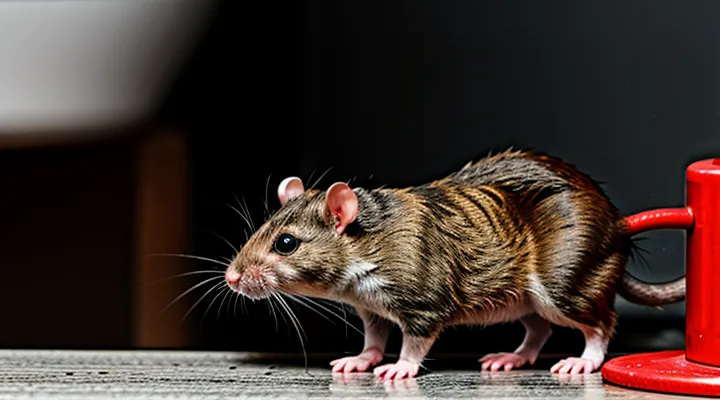
Understanding Rat Fever
What Constitutes a Fever in Rats?
Normal Body Temperature Range
Rats maintain a core temperature that typically falls between 37.5 °C and 38.5 °C (99.5 °F–101.3 °F) when healthy. This range reflects the species’ high metabolic rate and is consistent across common laboratory strains such as Sprague‑Dawley and Wistar, although slight deviations may occur due to age, sex, and ambient conditions.
-
Baseline values:
• Adult rats: 37.5 °C – 38.5 °C
• Juvenile rats: 37.0 °C – 38.0 °C -
Factors influencing temperature:
- Ambient temperature: exposure to environments below 20 °C or above 30 °C can shift measured values by up to 0.5 °C.
- Time of day: circadian rhythm causes a 0.3 °C rise during the active dark phase.
- Handling stress: brief restraint may increase temperature by 0.2 °C–0.4 °C.
Accurate assessment requires rectal thermometry or implanted telemetry probes, calibrated to ±0.1 °C. Measurements should be taken after a minimum five‑minute acclimation period to minimize stress‑induced fluctuations. Values consistently above 38.5 °C indicate hyperthermia and warrant further diagnostic evaluation.
Deviations Indicating Fever
Detecting fever in a rodent requires observation of physiological and behavioral deviations that reliably correlate with elevated core temperature. Core temperature rise manifests as a measurable increase of 1–2 °C above the normal range of 37–38 °C, detectable with a rectal probe or implanted telemetry device. Accompanying signs include tachycardia (heart rate > 400 bpm in adult rats), tachypnea (respiratory rate exceeding 120 breaths per minute), and peripheral vasodilation evident by expanded tail blood vessels.
Behavioral alterations provide additional diagnostic clues. Rats with fever often display reduced locomotor activity, diminished exploratory behavior in open‑field tests, and increased latency to engage with novel objects. Grooming frequency may decline, while huddling behavior and piloerection become more pronounced as the animal attempts to conserve heat.
Laboratory indicators further support the diagnosis:
- Elevated white‑blood‑cell count, particularly neutrophilia.
- Increased serum concentrations of acute‑phase proteins such as C‑reactive protein and serum amyloid A.
- Raised plasma cytokine levels (e.g., IL‑1β, IL‑6, TNF‑α) measurable by ELISA.
Combining direct temperature measurement with these physiological, behavioral, and biochemical deviations yields a robust assessment of febrile status in rats.
Methods for Fever Detection
Behavioral Indicators
Lethargy and Reduced Activity
Lethargy in rats appears as a marked decrease in spontaneous movement. The animal may remain motionless for extended periods, show reluctance to explore, and fail to respond promptly to gentle stimuli. Observation should focus on the frequency of locomotion, time spent grooming, and willingness to engage with cage mates. A sudden shift from normal activity levels to near‑immobility often signals an underlying temperature elevation.
Reduced activity complements lethargy and is evident when rats spend most of their time lying down or huddling in a corner. Typical indicators include:
- Minimal climbing or climbing attempts on cage structures.
- Decreased interaction with enrichment objects.
- Shortened periods of foraging or feeding, even when food is readily available.
Both signs may arise from infections, inflammation, or metabolic disturbances that raise core temperature. To confirm fever, measure rectal temperature with a calibrated thermometer; values above 38.5 °C (101.3 °F) generally denote hyperthermia in adult rats. Correlate temperature data with observed lethargy and reduced activity to differentiate fever from other conditions such as pain or neurological impairment. Continuous monitoring over several hours improves diagnostic reliability, as transient fluctuations can mask the true physiological state.
Changes in Appetite and Water Intake
Detecting fever in rats often relies on observable physiological changes, and alterations in eating and drinking behavior provide reliable clues. A febrile rat typically exhibits a reduction in solid food consumption. Within 12–24 hours of temperature elevation, food intake may drop to 30–50 % of baseline levels. This decline reflects metabolic suppression and discomfort associated with hyperthermia.
Simultaneously, water intake can increase markedly. Rats may drink up to twice their normal volume, seeking to compensate for evaporative heat loss and maintain hydration. In some cases, excessive drinking precedes the observable decrease in food consumption, offering an early indicator of rising body temperature.
Quantifying these shifts improves diagnostic accuracy. Record daily food weight and water volume for each cage; compare values to the animal’s established baseline (e.g., average of the preceding five days). Significant deviations—food intake < 60 % of baseline and water consumption > 150 % of baseline—warrant temperature measurement with a rectal probe or infrared thermometer.
Additional considerations:
- Stress: Handling or environmental disturbances can temporarily suppress appetite, mimicking fever signs.
- Illness spectrum: Infections, inflammation, or metabolic disorders may also alter intake patterns; confirm fever with direct temperature assessment.
- Age and strain: Younger or strain‑specific rats may show less pronounced appetite changes, relying more on water consumption as a marker.
Consistent monitoring of feeding and drinking patterns, coupled with objective temperature checks, enables early detection of febrile episodes in laboratory rats.
Piloerection («Ruffled Fur»)
Piloerection, the visible raising of a rat’s fur, is a reliable external indicator of elevated body temperature. When core temperature rises, the autonomic nervous system triggers contraction of the arrector pili muscles, causing the coat to appear ruffled. This response occurs rapidly, often within minutes of the onset of hyperthermia, and can be observed without handling the animal.
To assess piloerection effectively:
- Examine the dorsal and lateral surfaces while the rat is in its cage; a uniform, upright coat distinguishes fever from localized grooming.
- Compare the current coat condition with baseline observations taken under normal temperature conditions.
- Record the presence or absence of piloerection alongside other physiological signs such as increased respiratory rate and reduced activity.
Piloerection alone does not confirm fever; it must be corroborated with core temperature measurements (e.g., rectal probe or infrared thermography). However, in situations where immediate temperature data are unavailable, the ruffled fur sign provides a quick screening tool that can prompt further diagnostic steps.
Huddling Behavior
Huddling behavior describes the tendency of rats to group tightly together, often assuming a curled posture with bodies pressed against one another. Under normal conditions, rats display brief periods of clustering for social interaction or warmth, but the pattern changes markedly when body temperature rises due to fever.
Elevated core temperature disrupts thermoregulatory balance, prompting rats to conserve heat by reducing surface exposure. The physiological response manifests as sustained, dense huddles that persist longer than typical social aggregations. This shift provides a visual cue that correlates with febrile states.
To use huddling as an indicator of fever, observe the following:
- Frequency: clusters appear more often throughout the active phase.
- Duration: each huddle lasts several minutes to hours, rather than fleeting contacts.
- Density: rats press bodies closely, minimizing air gaps.
- Posture: individuals adopt a low, curled stance, limiting exposed surface area.
- Mobility: reduced locomotion within the group, with few attempts to separate.
Record observations at consistent times to distinguish fever‑related huddling from normal seasonal or circadian variations. Complement visual assessment with direct temperature measurements, such as rectal probes or infrared thermography, to confirm febrile conditions.
Integrating huddling analysis with quantitative thermometry enhances reliability, allowing rapid identification of rats experiencing fever without invasive procedures.
Increased Respiration Rate
In rodents, a rise in respiratory frequency often signals thermoregulatory distress. When body temperature exceeds normal limits, metabolic demand increases, prompting faster breathing to enhance heat dissipation and oxygen delivery. This physiological response can be observed without invasive procedures, making it a practical early indicator of febrile conditions.
To evaluate respiration rate in a laboratory rat:
- Place the animal in a quiet, temperature‑controlled environment to avoid stress‑induced tachypnea.
- Observe the thoracic wall or flank movements for a full minute; count each complete inhalation‑exhalation cycle.
- Compare the count to established baseline values (approximately 70–115 breaths per minute for adult rats).
- Record any sustained elevation above the normal range; values consistently above 130 breaths per minute strongly suggest hyperthermia.
Correlating this data with additional signs—such as reduced activity, peripheral vasodilation, or changes in body weight—provides a comprehensive assessment of fever in the subject.
Physical Examination Techniques
Palpation for Warmth
Palpation for warmth provides a quick, hands‑on assessment of elevated body temperature in laboratory rats. The technique relies on the examiner’s ability to detect abnormal heat through the skin, especially over the abdomen and thorax where vascular flow is pronounced.
To perform the examination:
- Wear clean, latex‑free gloves to prevent contamination and maintain consistent tactile sensitivity.
- Position the rat on a stable surface, allowing free access to the ventral side without restraining stress.
- Gently place the fingertips on the abdomen, moving slowly from the midline outward while maintaining light pressure.
- Note any area that feels noticeably hotter than surrounding tissue; typical febrile zones register 1–2 °C above the normal range of 37.5–38.5 °C for a rat.
- Confirm the finding by repeating the palpation on the thoracic region; concordant warmth strengthens the indication of fever.
Key considerations:
- Ambient temperature influences perceived warmth; conduct the assessment in a room kept at 20–22 °C and allow the animal to acclimate for at least five minutes.
- Individual variation exists; baseline temperature for each subject, obtained via rectal probe or infrared thermography, improves interpretation.
- Palpation does not replace quantitative measurement; it serves as an early screening tool that prompts confirmatory methods when abnormal heat is detected.
When applied correctly, palpation for warmth offers a reliable, low‑stress initial indicator of fever in rats, facilitating timely intervention and accurate health monitoring.
Visual Inspection for Other Symptoms
Visual examination provides immediate clues that complement temperature measurement when assessing a rat for possible fever. Observable changes often precede or accompany a rise in body heat and can guide further diagnostic steps.
- Reduced activity or prolonged immobility
- Hunched posture and diminished grooming
- Piloerection or flattened fur, especially along the spine
- Darkened or watery eyes, indicating possible dehydration
- Nasal discharge or sneezing, suggesting respiratory involvement
- Accelerated breathing rate, detectable by chest wall movement
- Warm, reddened extremities or tail compared with normal pink coloration
- Unusual vocalizations or irritability when handled
Each sign should be recorded alongside the measured temperature. Consistent lethargy, piloerection, and increased respiratory effort together strengthen the suspicion of fever. Absence of these indicators does not rule out elevated temperature, but their presence warrants prompt veterinary evaluation.
Temperature Measurement Techniques
Rectal Thermometry
Rectal thermometry provides the most reliable measurement of core temperature in laboratory rats, allowing accurate identification of hyperthermia. The method directly contacts the gastrointestinal tract, eliminating the variability associated with peripheral sites.
A typical setup includes a calibrated digital thermometer, a lubricated stainless‑steel probe of 2–3 mm diameter, and a restraining device that minimizes stress while permitting access to the anus. Calibration should be checked against a certified reference before each use.
Procedure:
- Place the rat in a gently restrained position, head slightly elevated.
- Apply a thin layer of sterile lubricant to the probe tip.
- Insert the probe 1–1.5 cm into the rectum, ensuring smooth entry without bending the animal’s tail.
- Record the temperature once the display stabilizes, usually within 10–15 seconds.
- Remove the probe, clean it with an appropriate disinfectant, and return the animal to its cage.
Key considerations:
- Use probes designed for small rodents to avoid tissue damage.
- Maintain consistent insertion depth to ensure comparable readings across subjects.
- Conduct measurements at the same time of day to reduce circadian influences.
- Record ambient temperature, as it can affect rectal readings if the animal is not acclimated.
When performed correctly, rectal thermometry yields precise core temperature data, enabling definitive detection of fever in rats.
Non-Contact Infrared Thermometry
Non‑contact infrared thermometry provides a rapid, stress‑free method for assessing elevated body temperature in laboratory rats. The device measures emitted infrared radiation from the animal’s surface, converting it to a temperature reading without physical contact. This approach eliminates handling‑induced stress, which can artificially raise core temperature and compromise data integrity.
Key advantages include:
- Immediate results within seconds, facilitating real‑time monitoring.
- Compatibility with cage‑side observations, reducing disruption of experimental protocols.
- Minimal calibration requirements when used within the manufacturer‑specified temperature range.
Effective implementation follows a defined procedure:
- Acclimatization – Allow the rat to rest in a temperature‑controlled environment for at least five minutes before measurement.
- Positioning – Align the sensor perpendicular to the targeted body region (commonly the dorsal surface near the interscapular area) at the distance specified by the instrument’s manual.
- Background control – Ensure ambient temperature remains stable; fluctuations greater than ±1 °C can affect emissivity calculations.
- Emissivity setting – Adjust the device to the emissivity value appropriate for rodent fur, typically 0.95, to improve accuracy.
- Repeated readings – Record three consecutive measurements and calculate the mean to mitigate random variance.
- Reference comparison – Compare the mean reading to established baseline values for the specific strain and age; a temperature exceeding the normal range by 1–2 °C indicates febrile response.
Limitations to consider:
- Surface temperature may differ from core temperature; correlation studies suggest a consistent offset that must be accounted for in experimental design.
- Fur density and color influence emissivity; dark‑pigmented coats require validation of emissivity settings.
- External heat sources (e.g., lighting, equipment) can produce false elevations; maintain a controlled environment.
Selection criteria for infrared thermometers include:
- Adjustable emissivity controls.
- High resolution (≤0.1 °C) and fast response time (<0.5 s).
- Validation data for small‑animal applications provided by the manufacturer.
When integrated correctly, non‑contact infrared thermometry delivers reliable, repeatable temperature assessments, supporting accurate detection of febrile conditions in rats while preserving animal welfare and experimental consistency.
Implantable Telemetry
Implantable telemetry devices provide continuous core‑body temperature measurements in laboratory rats, allowing rapid identification of febrile episodes without handling stress. The sensor, typically a miniature thermistor or thermocouple, is placed intraperitoneally or subcutaneously during a sterile surgical procedure. The transmitter, sealed in biocompatible polymer, emits radiofrequency signals that are captured by a receiver placed above the animal’s cage. Data are logged in real time and can be visualized on a computer interface, enabling researchers to set temperature thresholds that trigger alerts when a rat’s temperature exceeds normal ranges.
Key operational aspects include:
- Surgical implantation: performed under anesthesia; incision closed with absorbable sutures; postoperative analgesia administered.
- Calibration: device calibrated against a precision thermometer before implantation; periodic verification ensures accuracy within ±0.1 °C.
- Signal acquisition: 400–900 MHz band used to avoid interference; sampling rate adjustable (commonly 1 Hz for continuous monitoring).
- Data handling: software stores timestamps, averages, and peak values; exportable formats compatible with statistical packages.
Advantages over external methods consist of reduced handling‑induced hypothermia, higher temporal resolution, and the ability to monitor multiple subjects simultaneously. Limitations involve surgical expertise, initial cost, and the need for regular battery checks or wireless power management. Proper implantation technique and routine maintenance maximize reliability of temperature detection in rodent fever studies.
Interpreting Results and Next Steps
When to Seek Veterinary Advice
Detecting an elevated body temperature in a rodent is only the first step; recognizing when the condition demands professional intervention prevents complications and saves lives.
- Body temperature above 103 °F (39.5 °C) measured rectally or with a calibrated infrared device.
- Persistent fever lasting longer than 12 hours despite supportive care.
- Accompanying signs such as lethargy, loss of appetite, rapid breathing, or tremors.
- Observable discharge from eyes, nose, or mouth, indicating possible infection.
- Visible wounds, swelling, or abscesses that could be sources of systemic inflammation.
Young, pregnant, or immunocompromised rats require immediate veterinary assessment even if fever is mild, because their physiological reserves are limited. Animals with a history of chronic disease, previous surgeries, or ongoing medication should also be presented promptly, as fever may signal a relapse or drug interaction.
When contacting a veterinarian, provide the exact temperature reading, duration of fever, and any additional symptoms. Prepare a clean, quiet transport container and, if possible, a short video or photo of the rat’s behavior to aid remote triage. Early professional guidance reduces the risk of severe organ damage and improves recovery odds.
Differential Diagnoses
When a rat presents with an elevated body temperature, the clinician must distinguish true fever from other physiological or pathological processes that can raise temperature. Accurate differentiation guides treatment, prevents unnecessary antimicrobial use, and reduces morbidity.
- Bacterial infection – often accompanied by lethargy, anorexia, purulent discharge, and positive bacterial culture from blood or tissue. Fever spikes are irregular and may correlate with systemic inflammatory markers such as elevated C‑reactive protein.
- Viral infection – may cause fever with respiratory or gastrointestinal signs, but bacterial cultures remain negative. Serologic assays or PCR confirm viral agents.
- Inflammatory disorders – conditions like arthritis or peritonitis produce localized swelling, pain on palpation, and increased white‑blood‑cell count, while temperature elevation is moderate and persistent.
- Stress‑induced hyperthermia – results from handling, environmental changes, or cage overcrowding. Temperature rises rapidly after the stressor and normalizes within hours; cortisol levels are elevated, and no infectious markers appear.
- Environmental heat exposure – occurs when ambient temperature exceeds the rat’s thermoneutral zone. Skin feels warm, and core temperature normalizes after moving to a cooler area; no systemic inflammation is observed.
- Metabolic disorders – hyperthyroidism or adrenal hyperactivity can cause sustained temperature increase. Laboratory tests reveal altered hormone concentrations without infectious evidence.
- Drug‑induced fever – certain antibiotics or anesthetics trigger immune‑mediated temperature rise. Fever persists despite antimicrobial therapy and resolves after discontinuation of the offending agent.
Laboratory evaluation—complete blood count, serum chemistry, culture, PCR, and hormone panels—combined with observation of clinical signs, enables the practitioner to isolate the underlying cause. Only after excluding these alternatives should the presence of a genuine febrile response be confirmed and treated accordingly.
Importance of Baseline Data
Baseline temperature recordings establish the normal range for each experimental cohort. Values differ by strain, sex, age, and housing conditions; a single set of reference points captures this variability.
When a rat’s body temperature exceeds its established baseline by a statistically defined margin, the deviation indicates febrile response. Baseline data supply the numeric thresholds required to distinguish physiological fluctuations from pathologically elevated temperatures.
Consistent baseline measurements reduce false‑positive fever detection caused by environmental stressors or handling artifacts. They also enable comparison across studies, because each investigation references the same physiological context.
Key advantages of baseline data:
- Provide individualized normal temperature ranges for precise fever identification.
- Support calculation of confidence intervals and significance levels for temperature changes.
- Enhance reproducibility by anchoring experimental results to pre‑defined standards.
- Allow early detection of subtle temperature shifts that might precede overt clinical signs.
Without accurate baseline information, temperature assessments lack the quantitative foundation needed for reliable fever detection in laboratory rats.