
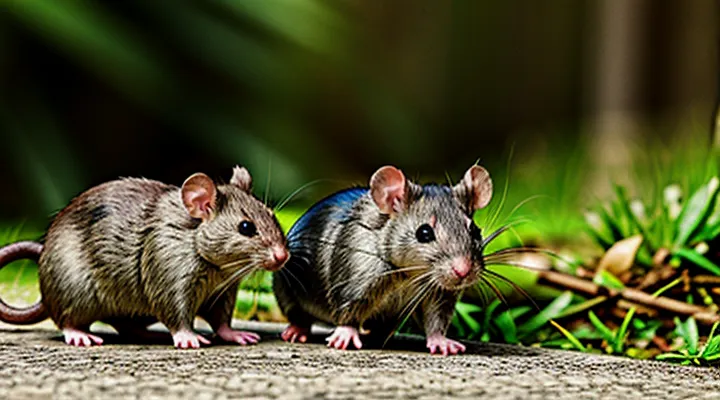
The Biology of Rat Reproduction
Sexual Dimorphism and Maturity
Male Reproductive Anatomy
The male rat reproductive system consists of paired testes, epididymides, vas deferens, seminal vesicles, prostate gland, bulbourethral glands, and a penis surrounded by a preputial sheath. Testes are located within the scrotum, produce spermatozoa and testosterone, and are composed of seminiferous tubules lined by Sertoli cells. Epididymides lie dorsal to the testes; sperm mature and acquire motility while traversing the caput, corpus, and cauda regions. The vas deferens transports sperm from the cauda epididymis to the ejaculatory ducts, merging with secretions from the seminal vesicles and prostate before entry into the urethra. Seminal vesicles contribute a fluid rich in fructose and prostaglandins, supporting sperm viability. The prostate gland adds a milky secretion containing enzymes and zinc, influencing sperm membrane stability. Bulbourethral glands secrete a lubricating mucus that neutralizes residual acidity in the urethra. The penis, composed of erectile tissue, expands during erection; the glans is covered by a keratinized prepuce that retracts during copulation.
- Paired testes: sperm production, testosterone synthesis.
- Epididymides: sperm maturation, storage.
- Vas deferens: conduit for sperm transport.
- Seminal vesicles: fructose‑rich fluid.
- Prostate gland: enzymatic and zinc‑rich secretion.
- Bulbourethral glands: lubricating mucus.
- Penis with preputial sheath: mechanical delivery of ejaculate.
Testosterone levels, regulated by the hypothalamic‑pituitary‑gonadal axis, peak during the dark phase of the light cycle, coinciding with heightened sexual activity. Luteinizing hormone stimulates Leydig cells in the testes to produce testosterone, while follicle‑stimulating hormone supports Sertoli cell function and spermatogenesis.
During copulation, rhythmic contraction of the vas deferens and accessory gland ducts expels sperm and seminal fluids into the urethra. The penis undergoes rapid engorgement, enabling penetration of the female’s vaginal canal. Ejaculation occurs in a brief burst lasting less than a second, delivering a concentrated sperm packet surrounded by accessory gland secretions that facilitate sperm motility and survival within the female reproductive tract.
Female Reproductive Anatomy
The female rat reproductive system consists of paired and singular structures that coordinate ovulation, fertilization, gestation, and parturition. Ovaries produce oocytes and secrete estrogen and progesterone, regulating the estrous cycle. Each ovary connects to an oviduct (fallopian tube) where sperm encounter the oocyte; the ampullary region of the oviduct is the typical site of fertilization. The uterus is a bicornuate organ, with two horns that expand during pregnancy to accommodate developing embryos. The uterine lumen is lined by a glandular endometrium that secretes nutrients essential for early embryo development. The cervix forms a muscular passage between the uterine horns and the vagina, providing a barrier that relaxes during parturition. The vagina is a muscular tube leading to the external genitalia, which include the vulva and a small clitoral structure. Mammary glands develop during gestation and lactation, supplying milk to newborns.
Key anatomical components:
- Ovaries – oocyte production, hormone secretion
- Oviducts – site of fertilization, transport of gametes
- Uterine horns – implantation, fetal growth
- Cervix – muscular valve, parturition control
- Vagina – conduit to external genitalia
- Vulva and clitoris – external reproductive opening
- Mammary glands – postnatal nutrition
Understanding these structures clarifies how female rats support successful reproduction within the broader context of rodent mating biology.
Puberty and Sexual Readiness
Puberty in laboratory rats begins around post‑natal day 35 for females and day 45 for males, marked by the first estrous cycle and the emergence of spermatogenesis, respectively. Hormonal shifts include a rise in luteinizing hormone, follicle‑stimulating hormone, and sex steroids, which trigger the development of secondary sexual characteristics such as mammary gland growth in females and increased testicular size in males.
Sexual readiness follows hormonal maturation. Females enter estrus approximately every four days, displaying lordosis when presented with a receptive male. Males exhibit mounting behavior after a latency of 30–60 seconds of investigation, accompanied by penile erection and ejaculation within a few minutes. The critical window for successful copulation aligns with the female’s proestrus and estrus phases, during which pheromonal cues intensify.
Key physiological indicators of readiness:
- Elevated circulating estradiol in females
- Increased testosterone and seminal vesicle weight in males
- Full development of the hypothalamic‑pituitary‑gonadal axis
- Presence of vaginal cytology indicating cornified cells (females) or sperm in the epididymis (males)
Environmental factors such as housing density, lighting cycles, and nutritional status modulate the timing of puberty and the expression of mating behaviors. Controlled conditions that mimic natural photoperiods and provide adequate protein accelerate maturation, whereas stressors delay onset and reduce fertility.
Understanding the onset of puberty and the associated behavioral repertoire is essential for designing experiments that assess reproductive outcomes, pharmacological interventions, or genetic modifications in rodent models. Accurate identification of sexual maturity ensures that breeding pairs are selected at the optimal stage, maximizing litter size and reducing variability in research data.
Courtship and Mating Behavior
Pheromonal Communication
Pheromonal communication governs the exchange of chemical signals that coordinate reproductive activities in rodents. Male rats release volatile compounds from the preputial gland and urine, which travel through the air and bind to olfactory receptors in females. Detection of these cues triggers physiological changes, such as estrous cycle acceleration and increased receptivity.
Female rats emit estrus‑specific scents from the vaginal region and skin secretions. These signals convey fertility status to potential mates, prompting males to initiate courtship behaviors, including mounting attempts and ultrasonic vocalizations. The reciprocal exchange of pheromones creates a feedback loop that synchronizes mating readiness.
Key pheromones involved include:
- 2‑methoxy‑4‑ethylphenol, dominant in male urine, stimulates female investigation.
- 4‑ethyl‑phenol, abundant in female secretions, enhances male arousal.
- Major urinary proteins (MUPs) that bind and transport volatile molecules, extending signal duration.
The vomeronasal organ (VNO) processes non‑volatile pheromones, while the main olfactory epithelium handles airborne compounds. Activation of VNO neurons leads to immediate behavioral responses, whereas main olfactory input modulates longer‑term hormonal regulation.
Environmental factors such as population density and stress modify pheromone production, influencing mate selection dynamics. Elevated cortisol reduces secretion of attractiveness cues, decreasing male interest and altering reproductive timing.
Vocalizations and Body Language
Rats coordinate reproductive activity through a combination of acoustic signals and visual cues. During courtship, males emit ultrasonic vocalizations that differ in duration and frequency from those produced in aggressive encounters. Short, high‑frequency calls appear when a male approaches a receptive female, while longer, modulated sweeps accompany mounting attempts. Females respond with low‑amplitude chirps that signal acceptance or rejection, allowing rapid assessment of mate suitability.
Body language provides complementary information. Observable elements include:
- Forward‑leaning posture, indicating heightened arousal.
- Raised whiskers and flattened ears, enhancing tactile perception.
- Tail flicking at a steady rhythm, associated with readiness to copulate.
- Grooming of the genital area, often preceding mounting behavior.
These signals form a synchronized communication system that reduces ambiguity during mating. Male and female rats adjust vocal output and posture in real time, ensuring successful copulatory sequences without reliance on visual contact alone.
The Mating Dance
Rats coordinate reproduction through a brief, stereotyped courtship display. The sequence, commonly termed the mating dance, facilitates partner recognition, synchronizes physiological readiness, and culminates in copulation.
Male rats initiate the display by approaching the female at a measured pace. They engage in extensive olfactory investigation, using the vomeronasal organ to detect pheromonal cues. Concurrently, ultrasonic vocalizations rise in frequency, providing auditory signals beyond human hearing. The male adopts a low, crouched posture, arches the back, and rapidly vibrates the whiskers, creating a visual cue that signals intent.
Female rats respond when receptive. The tail lifts slightly, exposing the genital region, while the body remains stationary or makes subtle forward movements. A receptive posture signals readiness for mounting and reduces the likelihood of aggressive rejection.
The mating dance proceeds through the following steps:
- Approach and olfactory assessment by the male.
- Emission of ultrasonic calls and whisker vibration.
- Male assumes a crouched, arched stance.
- Female displays tail elevation and receptive posture.
- Male mounts, aligns genitalia, and initiates copulation.
Successful completion of this choreography ensures sperm transfer and maximizes reproductive efficiency in the species.
Copulation Sequence
Rats exhibit a stereotyped copulatory pattern that proceeds through a series of discrete phases. The sequence begins with a brief period of mutual investigation, during which the female emits ultrasonic vocalizations that signal receptivity. The male responds with increased locomotor activity and approaches the female’s flank.
The core of the process can be outlined as follows:
- Mounting – The male climbs onto the female’s back, securing his grip with the forepaws. This action aligns the genitalia for subsequent contact.
- Intromission – Penile insertion occurs, accompanied by rhythmic pelvic thrusts. Each thrust lasts approximately 0.5 seconds and is repeated at a frequency of 6–8 Hz.
- Ejaculation – After a series of thrusts, the male deposits sperm. The ejaculatory phase typically lasts 2–3 seconds and is followed by a brief refractory interval.
- Post‑copulatory behavior – The male disengages and may groom the female. The female often displays a brief period of immobility before resuming normal activity.
Throughout the entire «copulation sequence», hormonal cues, such as elevated testosterone in males and estradiol in females, modulate the timing of each phase. Precise coordination of motor patterns ensures successful sperm transfer and maximizes reproductive efficiency.
Lordosis and Mounting
Lordosis in female rats appears as a pronounced arched back, tail elevation, and hind‑limb extension. This posture signals receptivity and facilitates copulatory contact. The male responds by approaching, sniffing, and positioning over the female’s dorsum.
The mounting sequence typically follows these steps:
- Male approaches the receptive female and initiates brief nose‑to‑nose contact.
- Female adopts lordosis, maintaining the posture for several seconds.
- Male climbs onto the female’s back, aligning his pelvis with hers.
- Penile intromission occurs, followed by ejaculation and subsequent disengagement.
Successful intromission depends on the synchrony of lordosis intensity and male mounting timing; deviations often result in aborted attempts or reduced fertilisation rates.
Ejaculation and Refractory Period
Male rats release seminal fluid following a series of intromissions that culminate in a rapid expulsion of sperm. The ejaculatory event lasts approximately 0.5–1 second and is accompanied by a characteristic increase in abdominal muscle activity. Hormonal spikes, chiefly in testosterone and prolactin, trigger the contractile cascade that propels sperm through the urethra.
The refractory interval that follows ejaculation varies with age, sexual experience, and strain. Naïve adults display a refractory period of 20–30 minutes, whereas experienced individuals can resume copulation after 5–10 minutes. Elevated prolactin levels prolong the refractory phase, while dopamine agonists shorten it. Environmental factors such as lighting and cage density also modulate the duration.
Key parameters:
- Ejaculation latency: 3–5 seconds from the final intromission to expulsion.
- Sperm count per ejaculate: 1–1.5 × 10⁸ sperm.
- Typical refractory period: 5–30 minutes, dependent on prior sexual exposure.
- Neuroendocrine regulators: testosterone, prolactin, dopamine, oxytocin.
Understanding these dynamics informs experimental designs that assess fertility, drug effects, and behavioral phenotypes in rodent models.
Multiple Copulations and Pacing
Rats frequently perform more than one copulatory act during a single estrus, a strategy that increases the probability of successful fertilization and enhances genetic diversity among offspring. Multiple ejaculations deliver additional sperm, reduce the likelihood of sperm depletion, and provide a competitive edge when rival males are present.
Key aspects of repeated mating events include:
- Elevated sperm count in the reproductive tract after successive copulations.
- Shortened latency to subsequent intromission when females remain receptive.
- Increased litter size correlated with higher numbers of copulatory bouts.
Pacing refers to the female’s ability to regulate the interval between successive copulations. Behavioral cues such as withdrawal from the male, increased locomotion, and specific postural changes signal a temporary rejection, allowing recovery of the reproductive tract and preventing premature sperm exhaustion. Neuroendocrine feedback involving oxytocin and dopamine modulates this control, aligning sexual activity with optimal physiological conditions.
The interaction between repeated copulations and pacing produces a balanced reproductive outcome. Females that pace effectively limit the total number of ejaculations while ensuring sufficient sperm transfer, thereby maximizing fertilization efficiency without compromising maternal health. Empirical studies demonstrate that paced mating results in higher conception rates compared with uninterrupted copulation, highlighting the adaptive significance of this behavior in rodent populations.
Pregnancy and Parental Care
Gestation Period
Implantation and Embryonic Development
Implantation in rats occurs approximately 4–5 days after fertilization when the blastocyst reaches the uterine lumen. The trophectoderm adheres to the luminal epithelium, followed by trophoblast invasion that establishes a connection with maternal blood vessels. This process secures nutrient and gas exchange essential for embryonic growth.
During the subsequent embryonic period, development proceeds through defined stages:
- Days 6–8: Formation of the primitive streak marks the onset of gastrulation, establishing the three germ layers—ectoderm, mesoderm, and endoderm.
- Days 9–12: Neural tube closure and early organ primordia appear; the heart begins rhythmic contractions.
- Days 13–15: Limb buds emerge, and somite segmentation intensifies, providing the foundation for the musculoskeletal system.
- Days 16–20: Major organ systems differentiate, including the respiratory and gastrointestinal tracts; fetal circulation adapts to extra‑uterine conditions.
By day 21, the embryo is classified as a fetus, exhibiting recognizable morphological features and functional organ systems. Throughout this interval, hormonal regulation—primarily progesterone and estrogen—maintains uterine receptivity and supports placental development. The coordinated sequence of implantation and embryogenesis ensures successful propagation of the species.
Nutritional Needs During Pregnancy
Pregnant rats require a diet that exceeds the nutritional intake of non‑reproductive females. The increased demand supports fetal growth, placental development, and the metabolic changes associated with gestation.
Key macronutrient adjustments include:
- Protein: 20–25 % of total diet, supplied by casein, soy, or fish meal.
- Energy: 15–20 % more calories than standard chow, primarily from carbohydrates and moderate fat.
- Fat: 4–6 % of diet, enriched with essential fatty acids such as linoleic acid.
Micronutrient requirements rise proportionally. Essential minerals and vitamins are:
- Calcium and phosphorus: maintain a 1.5:1 ratio to sustain skeletal mineralization.
- Vitamin A: 3000–5000 IU kg⁻¹ diet, preventing teratogenic deficits.
- Vitamin E: 100 IU kg⁻¹, protecting cellular membranes from oxidative stress.
- B‑complex vitamins: support metabolic pathways critical for embryonic development.
Feeding strategies focus on consistency and gradual increase. Provide ad libitum access to a fortified diet beginning two weeks before mating and continue throughout gestation. Supplement water with a low‑concentration electrolyte solution to offset increased fluid loss. Monitor body weight weekly; a gain of 5–7 g per day indicates adequate nutrient provision.
These guidelines ensure that gestating rats receive the nutrients necessary for successful reproduction and healthy offspring.
Birthing Process
Nest Building
Nest construction constitutes a critical element of rat reproductive strategy. Females initiate the process shortly before estrus, selecting sheltered locations that protect against predators and environmental fluctuations. The chosen site often lies within burrows, under debris, or in corners of structures where ventilation is limited.
Materials are gathered from the immediate environment. Common components include:
- shredded paper fibers
- cotton fragments
- soft plant matter
- lint and synthetic fibers
Each material is arranged to create a compact, insulated chamber. The female manipulates items with forepaws, forming layers that retain heat and moisture. The resulting nest maintains a stable microclimate, raising ambient temperature by several degrees relative to surrounding air.
Thermal stability directly influences female receptivity and sperm viability. Elevated nest temperature accelerates ovarian development, shortening the interval between copulation and parturition. Moreover, the insulated environment reduces embryonic mortality caused by hypothermia.
Hormonal cues coordinate nest building with reproductive timing. Rising estradiol levels trigger material collection, while prolactin promotes sustained construction activity. Completion of the nest often coincides with the peak of sexual receptivity, ensuring that mating occurs within a protected setting.
«The nest provides thermal stability, enhances reproductive efficiency, and safeguards early offspring» summarizes the functional significance of this behavior within the broader context of rat breeding.
Parturition
Rats experience a relatively brief gestation of 21–23 days, after which a single litter of 6–12 offspring is typically delivered. The short gestational interval enables rapid population turnover and supports the species’ high reproductive output.
Hormonal shifts precipitate parturition. A marked decline in progesterone removes the inhibitory effect on uterine contractility, while rising prolactin prepares the mammary glands for lactation. Oxytocin release triggers coordinated myometrial contractions that expel the pups.
Observable precursors of birth include intensified nest construction, swelling of the vulva, and reduced activity. These behavioral and physiological cues signal the imminent onset of labor and allow caretakers to anticipate the event.
The delivery sequence proceeds through three distinct phases:
- Dilation – cervical opening expands, accompanied by mild uterine contractions.
- Expulsion – strong rhythmic contractions deliver each pup, usually in a head‑first orientation.
- Placental expulsion – after each pup, the placenta separates and is expelled, often within a few minutes.
The entire birthing episode typically lasts 30–45 minutes, with intervals of 5–10 minutes between successive pups.
Immediately following parturition, the dam cleans each neonate with her mouth, stimulates respiration, and initiates suckling. Milk secretion commences within hours, providing essential nutrients. Maternal aggression toward intruders intensifies, ensuring protection of the vulnerable litter during this critical period.
Care of the Young
Nursing and Weaning
Rats provide intensive maternal care during the first three weeks after birth. The dam remains in the nest, delivering milk through a simple suckling mechanism that supplies protein, fat, and antibodies essential for pup survival. Litters typically consist of 6‑12 pups, each accessing the nipple in rapid succession; the dam regulates milk flow by altering her posture and nipple exposure.
During the nursing phase, pups exhibit a characteristic stretch‑and‑crawl behavior to locate the nipple, then display a brief suckling bout lasting 1‑2 minutes before returning to the nest. The dam frequently licks the pups, stimulating circulation and stimulating urination and defecation. This grooming also reinforces the mother‑infant bond and reduces the risk of hypothermia.
Weaning commences around post‑natal day 14 and concludes by day 21. At this stage, pups progressively consume solid food, and the dam reduces nursing frequency. Physiological adaptations include maturation of the gastrointestinal tract, increased production of digestive enzymes, and a shift in gut microbiota toward an adult profile. The dam’s hormonal profile changes, leading to diminished prolactin secretion and a return to estrus cycles.
Key milestones in the weaning process:
- Day 14: Introduction of solid chow; nursing episodes decrease to 2‑3 per day.
- Day 17: Pups spend ≥50 % of time away from the nest; weight gain continues primarily from solid intake.
- Day 19: Full transition to solid diet; nursing episodes cease.
- Day 21: Independent foraging established; pup body weight reaches ≈90 % of adult levels.
Successful weaning correlates with increased survival rates and accelerated development of adult behaviors such as territorial exploration and social interaction.
Parental Roles and Responsibilities
Rats exhibit a well‑defined division of labor after successful copulation. The female initiates nest construction, selects a secluded site, and gathers soft material to create a secure chamber. She remains inside the nest throughout gestation, maintaining optimal temperature and humidity for embryonic development.
The female’s responsibilities extend to the early post‑natal period. Primary duties include:
- Delivering a litter of altricial pups after a gestation of approximately 21‑23 days.
- Providing continuous nursing through milk secretion rich in proteins and fats.
- Grooming each pup to stimulate circulation and remove waste.
- Protecting the nest from predators and intruders.
The male’s involvement is limited but purposeful. After mating, the male typically departs the immediate vicinity, reducing the risk of infanticide. In some populations, the male may remain nearby to deter rival males and to emit ultrasonic vocalizations that reinforce the pair bond. Occasional observations document paternal scent marking around the nest entrance, contributing to territorial defense.
Both parents influence pup development indirectly. The female’s hormonal profile, shaped by mating cues, regulates milk composition and maternal behavior. The male’s presence, when sustained, can lower stress levels in the female, thereby enhancing pup growth rates. Weaning begins around three weeks of age; at this stage, pups transition to solid food, and parental care gradually diminishes.
Development of Pups
The reproductive cycle of rats culminates in the birth of altricial offspring that undergo rapid physiological and behavioral changes. Gestation lasts approximately 21‑23 days, after which a litter of 6‑12 pups emerges, each weighing 5‑7 g. Neonates are blind, hairless, and dependent on maternal care for thermoregulation, nutrition, and protection.
During the first week, pups experience critical growth phases:
- Day 1‑3: Pup weight increases by 30‑40 % due to frequent nursing; umbilical cord detaches.
- Day 4‑7: Incisor eruption begins; auditory canals open, allowing response to maternal vocalizations.
- Day 8‑14: Fur development accelerates; eye opening occurs around day 14, marking the transition to visual exploration.
- Day 15‑21: Motor coordination improves; pups begin to crawl and climb within the nest.
Weaning typically occurs between days 21‑28, when solid food is introduced and maternal lactation declines. Post‑weaning growth continues at a rate of 2‑3 g per day, reaching sexual maturity by 6‑8 weeks of age. At this stage, males exhibit increased testosterone and develop seminal vesicles, while females establish estrous cycles approximately every four days.
Survival rates are highest when litters receive adequate maternal grooming and a stable environment, factors that directly influence pup development and subsequent reproductive success.