
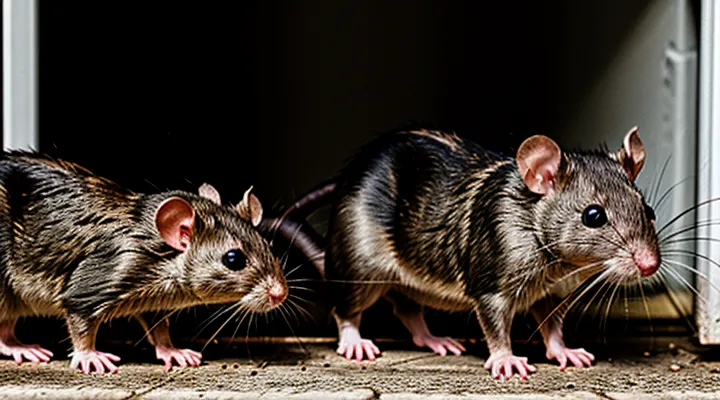
Understanding Rat Mating Behavior
Factors Influencing Mating
Rats achieve high reproductive output because mating is driven by several physiological and environmental variables. Hormonal cycles, population density, availability of food, and ambient temperature each exert measurable effects on the frequency and success of copulation.
- Hormonal regulation – Elevated levels of gonadotropin‑releasing hormone trigger estrus in females, shortening the interval between receptive periods. Males respond to pheromonal cues with increased testosterone, enhancing libido and mounting behavior.
- Population density – Moderate crowding raises encounter rates, leading to more mating opportunities. Excessive density can suppress reproductive hormones through stress‑induced cortisol elevation.
- Nutritional status – Adequate protein and caloric intake sustain gonadal development and sperm production. Deficient diets delay sexual maturation and reduce litter size.
- Ambient temperature – Temperatures between 20 °C and 25 °C optimize fertility; lower temperatures prolong estrous cycles, while higher temperatures increase heat‑stress hormones that inhibit mating.
- Photoperiod – Longer daylight exposure stimulates melatonin suppression, which indirectly supports gonadal activity; shorter days can delay estrus onset.
These determinants interact to shape the overall breeding tempo of laboratory and wild rat populations. Understanding their relative contributions enables precise manipulation of reproductive rates for research, pest control, and breeding programs.
Gestation and Litter Size
Duration of Pregnancy
Rats complete gestation in roughly three weeks, a period that defines the speed of their population expansion.
The typical gestation span for the common Norway rat (Rattus norvegicus) ranges from 21 to 23 days; laboratory strains of the domestic rat (Rattus rattus) exhibit a similar interval, with occasional reports of 20‑day pregnancies in highly selected lines.
Factors that modify this interval include:
- Ambient temperature: 22‑25 °C maintains the standard range; lower temperatures can extend gestation by one to two days.
- Nutritional status: protein‑deficient diets may add up to 24 hours.
- Parity: first‑time breeders often experience slightly longer pregnancies than experienced females.
- Genetic line: selective breeding for rapid growth can reduce gestation to 20 days.
Researchers determine gestation length by recording the day of copulation (identified by the presence of a vaginal plug) and counting days until parturition. Precise timing allows calculation of litter turnover rates, which, combined with the short gestation, explains the capacity of rat populations to double within a month under optimal conditions.
Average Number of Pups per Litter
Rats typically produce 6–12 pups per litter under laboratory conditions, with most litters containing 8–10 offspring. Wild populations average slightly fewer, generally 5–7 pups, though some species reach up to 9. The range reflects genetic strain, maternal age, and environmental quality.
- Laboratory strains: 6–12 pups (average ≈ 9)
- Wild species: 5–7 pups (average ≈ 6)
- First‑time mothers: 5–8 pups
- Experienced breeders: 8–12 pups
Litter size correlates with several variables. Genetic line determines baseline potential; selective breeding can increase or decrease the count. Parity influences output, with second and third pregnancies producing larger litters than the first. Adequate protein, caloric intake, and low stress environments raise pup numbers, while poor nutrition or overcrowding suppress them. Seasonal changes affect wild rats, with longer daylight periods often associated with higher fecundity.
Understanding average litter size is essential for managing colony growth and predicting population expansion. A litter of eight pups, each capable of reaching sexual maturity within 5–6 weeks, can generate exponential increases in just a few months. Accurate estimates of pups per litter therefore inform housing capacity, resource allocation, and experimental design in research facilities.
Factors Affecting Reproduction Rates
Environmental Conditions
Rats reach sexual maturity within weeks, yet the pace of their breeding depends heavily on external factors. Temperature, food supply, light exposure, moisture levels, and crowding each alter the interval between litters and the number of offspring per litter.
- Ambient temperature: 22‑28 °C (72‑82 °F) maximizes spermatogenesis and estrous cycles; temperatures below 15 °C (59 °F) suppress ovulation and extend gestation.
- Food abundance: protein‑rich diets increase litter size from an average of five to eight pups; caloric restriction reduces both litter size and mating frequency.
- Photoperiod: day lengths exceeding 12 hours stimulate gonadal hormone production, shortening the estrous cycle; short days delay sexual receptivity.
- Humidity: 50‑70 % relative humidity supports optimal uterine environment; extreme dryness or excess moisture heighten stress hormones, lowering conception rates.
- Population density: moderate group sizes (3‑5 individuals) encourage mating; overcrowding elevates aggression and cortisol, decreasing reproductive output.
Warm environments accelerate sperm maturation, leading to earlier successful copulations. Adequate nutrition supplies the energy required for gestation and lactation, directly influencing pup viability. Extended daylight triggers melatonin suppression, which in turn raises reproductive hormone levels. Stable moisture prevents dehydration‑induced stress, preserving fertility. Balanced social structures reduce conflict, allowing frequent breeding encounters.
When conditions fall outside these optimal ranges, rats extend the interval between pregnancies, produce fewer offspring, and may experience higher infant mortality. Conversely, ideal environmental parameters compress the reproductive cycle, enabling multiple litters within a single year.
Food Availability
Food abundance accelerates rat reproductive cycles. When caloric intake rises, females reach sexual maturity earlier, often within five weeks of birth rather than the typical six to eight weeks observed under limited nutrition. Elevated protein levels shorten the estrous interval, allowing litters to be produced at intervals of 21–23 days instead of the usual 28–30 days.
Nutrient‑rich environments increase litter size. Studies show that rats fed diets containing 20 % protein produce an average of 10–12 pups per litter, compared with 6–8 pups in low‑protein regimes. Sufficient energy stores also improve pup survival, reducing neonatal mortality from 30 % to below 10 %.
The following points summarize the relationship between food supply and reproductive output:
- Accelerated puberty: High‑energy diets trigger earlier onset of estrus.
- Shortened gestation: Adequate nutrition reduces gestational length by 1–2 days.
- Increased litter size: Protein‑rich intake raises average pup count per litter.
- Higher pup viability: Improved maternal condition lowers early‑life deaths.
Conversely, scarcity prolongs the pre‑breeding period, lengthens estrous cycles, and reduces both litter size and offspring survival. Continuous monitoring of food availability therefore provides a reliable predictor of rat population growth rates.
Predation and Population Control
Predators such as owls, hawks, snakes, feral cats, and foxes impose direct mortality on rats, thereby decreasing the number of individuals that can contribute to subsequent litters. When a predator removes a breeding adult, the immediate loss of potential offspring reduces the effective reproductive output of the local rat population.
The rapid breeding capacity of rats—characterized by short gestation, early sexual maturity, and large litter sizes—creates a high intrinsic growth rate. Predation lowers this rate by increasing the proportion of individuals that die before reproducing, shifting the population’s net reproductive rate (R₀) toward stability or decline. Functional responses of predators (the rate at which they consume rats as prey density changes) and numerical responses (predator population growth in response to prey abundance) together shape the equilibrium density of rats.
Human‑implemented biological control exploits natural predation. Strategies include installing nesting boxes for raptors, conserving habitats that support snake populations, and managing feral cat colonies. These measures enhance predator presence without relying on chemical exterminants. Effectiveness varies with predator hunting efficiency, prey refuge availability, and seasonal fluctuations in predator activity.
Effective rat population management integrates predation with sanitation, exclusion, trapping, and, where appropriate, fertility‑reducing agents. Continuous monitoring of rat density and predator activity allows adjustment of control tactics to maintain rat numbers below thresholds that would otherwise lead to rapid population expansion.
Rapid Growth and Maturation
Weaning and Independence
Rats detach from maternal care within a narrow window that directly influences their breeding tempo. Pups typically begin to sample solid food at 10–12 days, and by 21 days they are fully weaned, no longer dependent on nursing. At this stage they acquire basic foraging skills and can regulate body temperature without maternal warmth.
Within a few days after weaning, juveniles attain locomotor independence, explore beyond the nest, and establish social hierarchies. By 5–6 weeks of age they reach sexual maturity, allowing them to enter the breeding population shortly after independence. This rapid transition from reliance to self‑sufficiency sustains the species’ swift reproductive turnover.
Key developmental milestones:
- 10–12 days: introduction to solid food
- 21 days: complete weaning, cessation of milk intake
- 22–28 days: independent locomotion and nest exit
- 35–42 days: sexual maturity, readiness to reproduce
Sexual Maturity in Young Rats
Rats reach sexual maturity rapidly, a factor that drives their high reproductive output. Female rats (females) typically exhibit first estrus between 35 and 45 days of age, depending on strain and nutritional status. Male rats (males) show detectable spermatozoa in the epididymis as early as 40 days, with full fertility usually established by 50 days.
Key physiological indicators of puberty include:
- Vaginal opening and first estrus in females, confirmed by vaginal cytology.
- Increased testicular weight and presence of motile sperm in males, confirmed by epididymal smear.
- Surge in circulating gonadotropins (LH, FSH) and sex steroids (estradiol in females, testosterone in males).
Environmental variables influence the timing of maturity. Caloric restriction delays estrus by 5–7 days, whereas high‑protein diets can advance it by 2–3 days. Ambient temperature above 30 °C prolongs the pre‑pubertal period, while cooler, stable environments accelerate development.
The early onset of sexual capability allows a single pair of rats to produce multiple litters within a year. Each female can conceive shortly after her first estrus, and gestation lasts approximately 21–23 days. Consequently, the brief interval between puberty and reproductive competence underlies the species’ capacity for rapid population expansion.
The Impact of Rapid Reproduction
Population Dynamics
Rats achieve rapid population expansion due to a combination of biological and ecological parameters. Females reach sexual maturity within 5–6 weeks, enabling multiple breeding cycles each year. A single gestation lasts roughly 21 days, and average litter size ranges from 6 to 12 offspring. These traits produce a potential increase of several thousand individuals in a single year under optimal conditions.
Key variables that shape rat population trajectories include:
- Breeding frequency (average of 5–7 litters annually).
- Offspring survival rate, influenced by predation, disease, and food availability.
- Environmental carrying capacity, which limits growth when resources become scarce.
- Seasonal temperature fluctuations that affect reproductive timing.
Population growth follows an exponential pattern during the initial phase, described by the equation Nₜ = N₀ eʳᵗ, where r represents the intrinsic rate of increase. As density approaches the habitat’s carrying capacity, growth decelerates and conforms to a logistic curve, stabilizing the population size.
Management strategies rely on disrupting one or more of these drivers. Reducing shelter, limiting food sources, and implementing targeted control measures lower survival and breeding rates, thereby curbing the otherwise swift expansion of rat numbers.
Implications for Pest Control
Rats reach sexual maturity within six to eight weeks, produce litters of six to twelve offspring, and can breed up to five times annually. Under optimal conditions a single pair can generate several hundred descendants within a year, allowing populations to double in a matter of weeks.
Rapid population growth shortens the window between initial intrusion and detectable damage. Infestations can exceed economic injury levels before conventional inspection cycles detect them, demanding proactive surveillance and swift intervention.
Control programs must align actions with the reproductive timeline. Effective measures include:
- Eliminate accessible food sources and water points to reduce breeding success.
- Seal entry points and repair structural defects to prevent colony expansion.
- Deploy snap traps and multi‑catch devices during peak juvenile emergence (approximately three weeks after mating).
- Apply anticoagulant baits in a rotation schedule that targets successive cohorts, minimizing bait avoidance.
- Introduce biological agents such as predatory mites or rodent‑specific viruses where regulatory approval permits.
Monitoring should combine visual inspections with tracking stations placed at known travel corridors. Record capture rates weekly, calculate growth indices, and adjust treatment frequency based on projected population peaks derived from the known gestation period and litter size.
Integrating detailed knowledge of rat reproductive dynamics into pest‑management plans reduces reliance on repeated chemical applications, limits collateral wildlife impact, and sustains long‑term suppression of infestations.
Comparing Rat Species Reproductive Rates
Common Rat Species Variations
Rats do not reproduce at a uniform rate; each species exhibits distinct reproductive parameters that shape its capacity for rapid population growth.
The most widely distributed species, the Norway rat (Rattus norvegicus), reaches sexual maturity at 5–6 weeks, carries a gestation of 21–23 days, and produces 6–12 offspring per litter. Females may produce up to five litters annually under favorable conditions, resulting in exponential expansion when resources are abundant.
The black rat (Rattus rattus) matures slightly later, typically at 8–10 weeks, with a comparable gestation period of 22 days. Litters average 5–7 pups, and breeding cycles occur every 30–45 days, limiting the maximum number of litters to four per year in temperate climates.
Asian house rats (Rattus tanezumi) display accelerated development, attaining sexual maturity by 4 weeks. Gestation lasts 20–22 days, and litter sizes range from 5 to 9. Under tropical conditions, females can produce six or more litters annually, enhancing their invasive potential.
Pacific rats (Rattus exulans) mature at 6–7 weeks, gestate for 23 days, and yield 4–6 pups per litter. Breeding frequency aligns with the seasonal availability of food, typically resulting in three to four litters per year on islands.
Southeast Asian rats (Rattus argentiventer) reach reproductive readiness at 5 weeks, have a gestation of 21 days, and generate 7–10 offspring per litter. In humid lowland habitats, they may sustain five litters annually.
- Key reproductive metrics:
• Age at sexual maturity (weeks) – 4–10
• Gestation length (days) – 20–23
• Litter size – 4–12 pups
• Maximum litters per year – 3–6
These variations determine how swiftly each species can augment its numbers, influencing ecological impact, pest management strategies, and the risk of rapid infestation.