
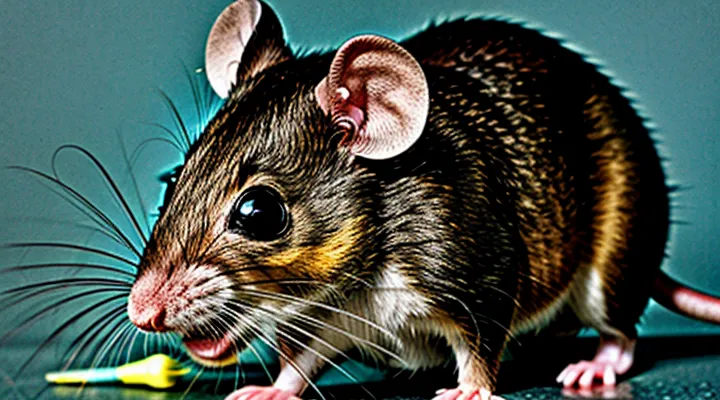
Mouse Dentition at a Glance
Mice possess a highly specialized set of teeth adapted for gnawing and processing a varied diet. Their dentition consists of 16 teeth in total: four continuously growing incisors (two upper, two lower) and twelve cheek teeth (four premolars and eight molars) located in the posterior jaw.
- Incisors: large, chisel‑shaped, enamel only on the front surface, causing a self‑sharpening edge as the softer dentin wears away.
- Premolars: three on each side of the upper jaw, two on each side of the lower jaw; crown morphology suited for crushing.
- Molars: three on each side of the upper jaw, four on each side of the lower jaw; complex occlusal surfaces facilitate grinding.
The incisors erupt shortly after birth and never cease growing, requiring constant wear through gnawing. Cheek teeth develop later, reach full size by adulthood, and do not exhibit continuous growth. Dental formula for a typical adult mouse is expressed as: (\frac{1.0.0.3}{1.0.0.3}) × 2, indicating one incisor, no canines or premolars in the upper half, and three molars per quadrant.
Dental health directly influences feeding efficiency and survival; malocclusion of incisors can impede food intake, while wear patterns on molars reveal dietary composition. Understanding the precise arrangement and function of mouse teeth provides essential context for research in genetics, toxicology, and comparative anatomy.
The Basic Count: How Many Teeth?
Incisors: The Ever-Growing Front Teeth
Function and Purpose of Incisors
Mouse incisors are the sole anterior teeth, positioned at the front of the upper and lower jaws. They emerge as a single pair per jaw and continue to grow throughout the animal’s life, compensating for constant wear caused by gnawing activities. The enamel covers only the labial (outer) surface, while the lingual (inner) side consists of softer dentin, creating a self-sharpening chisel edge as the softer material wears faster.
The functional objectives of these incisors include:
- Cutting and shearing plant material, seeds, and insects, enabling efficient food acquisition.
- Providing the mechanical leverage required for gnawing through hard substances such as wood, plastic, or metal.
- Facilitating nest construction by allowing precise removal of fibers and debris.
- Contributing to sensory perception through tactile feedback when the mouse manipulates objects with its mouth.
The continuous eruption mechanism is regulated by the dental pulp’s growth zone, which balances deposition of dentin with abrasion of the enamel surface. This dynamic ensures that the incisors retain optimal length and sharpness, essential for the mouse’s survival and ecological adaptability.
Lifelong Growth and Wear
Mice possess a dentition designed for perpetual incisor elongation. The two upper and two lower incisors erupt shortly after birth and lack true roots; instead, a specialized stem‑cell niche at the apical end continuously produces enamel and dentin. This apical growth balances the distal wear generated by gnawing, allowing the teeth to maintain functional length throughout the animal’s life.
Wear occurs primarily on the labial (front) surface, where the enamel is thin and the underlying dentin is exposed. Daily gnawing on hard materials such as seeds, wood, or cage bars creates a self‑sharpening chisel edge. The resulting wear pattern follows a predictable trajectory: the incisor tip shortens, the enamel ridge recedes, and the dentin ridge becomes more pronounced. When wear exceeds growth, the incisors may become over‑grown, leading to malocclusion and impaired feeding.
Factors influencing the balance between growth and wear include:
- Diet hardness: coarse foods increase abrasive wear, stimulating faster apical growth.
- Genetic regulation: mutations in the Fgf and Bmp pathways alter stem‑cell proliferation and enamel deposition rates.
- Environmental stress: limited access to gnawing objects reduces wear, potentially causing excessive incisor length.
Molars, numbering twelve in total, develop with true roots and do not grow after eruption. Their occlusal surfaces experience wear from mastication, but the rate is far slower than that of the incisors. Continuous incisor growth, coupled with regular wear, ensures that mice retain effective gnawing and chewing capabilities from juvenile stages to senescence.
Molars: Grinding and Processing Food
Number and Arrangement of Molars
Mice possess a highly specialized dentition adapted for gnawing and grinding. The molar series comprises three cheek teeth on each side of the upper and lower jaws, resulting in a total of twelve molars.
- Upper jaw: three molars per quadrant (M1, M2, M3)
- Lower jaw: three molars per quadrant (M1, M2, M3)
The molars are arranged in a linear, posterior sequence behind the premolars, which are absent in rodents. Each molar exhibits a crown with multiple cusps forming a complex occlusal surface. The first molar (M1) is the largest and bears the most pronounced cusps, while M2 and M3 progressively decrease in size and cusp complexity.
The alignment of molars follows a precise interlocking pattern with the corresponding lower molars, ensuring efficient mastication of plant material and seed fragments. This arrangement, combined with continuously growing incisors, defines the overall dental architecture of the mouse.
Cusps and Chewing Surfaces
Mice have a total of sixteen teeth: four incisors and twelve molars. The molars, which perform the majority of mastication, are characterized by a series of cusps that create a complex chewing surface. Each molar bears three to five cusps arranged in a staggered pattern, allowing the rodent to slice, crush, and grind a variety of foods.
The primary functions of the cusps are:
- Shearing: Sharp, pointed cusps on the anterior edge of the molar cut fibrous plant material.
- Crushing: Broad, rounded cusps on the posterior side compress seeds and grains.
- Grinding: Interlocking cusp ridges generate a triturating action that reduces particle size.
The chewing surface is divided into two zones. The occlusal zone contains the functional cusps that contact opposing teeth during each bite cycle. The buccal and lingual margins provide lateral support, guiding the mandible and preventing slippage. Wear patterns on these zones reveal the mouse’s diet: predominantly herbivorous species exhibit flattened cusps, while omnivorous mice retain more pronounced points for occasional animal tissue.
Dental enamel on the cusps is exceptionally thin, facilitating rapid wear and continual renewal through continuous growth of the incisors. This adaptation maintains effective chewing efficiency throughout the mouse’s lifespan.
The Unique Dental Formula of Mice
Understanding Rodent Dental Formulas
Mice possess a highly specialized dentition that reflects their herbivorous and gnawing habits. The dental formula for a typical laboratory mouse (Mus musculus) is 2/1 incisors, 0/0 canines, 0/0 premolars, and 3/3 molars, totaling sixteen teeth. This arrangement is consistent across most murine species, with minor variations observed in wild relatives.
The incisors are continuously growing (arrested root development) and exhibit enamel only on the labial surface, creating a self-sharpening edge. The molars are brachydont, with a closed crown and limited occlusal wear, suited for grinding plant material. Absence of canines and premolars reduces the complexity of the jaw and concentrates chewing forces on the incisors and molars.
Key points for interpreting rodent dental formulas:
- Incisor count: one per quadrant, bilateral symmetry.
- Canine and premolar absence: indicated by zero in the formula.
- Molar count: three per quadrant, providing the bulk of the chewing surface.
- Total tooth count: sixteen, a standard reference for comparative studies.
Understanding this formula aids in taxonomic identification, health assessments, and experimental design involving murine models. Deviations from the standard pattern may signal developmental anomalies or species-specific adaptations.
Mouse-Specific Formula Breakdown
Mice possess a highly specialized dentition reflected in a concise dental formula. The formula, expressed per half‑jaw, reads:
- Incisors: 1 / 1
- Canines: 0 / 0
- Premolars: 0 / 0
- Molars: 3 / 3
Each numeral denotes the count on one side of the upper and lower jaw, respectively. Multiplying by two (right and left sides) yields the total complement of 16 teeth: two incisors, twelve molars, and no canines or premolars.
The arrangement follows a strict anterior‑to‑posterior order. The single pair of incisors is continuously growing, characterized by enamel restricted to the labial surface, which creates a self‑sharpening edge as the softer dentine wears away. The three molar pairs in each quadrant are monophyodont, lacking replacement, and display a cuspid pattern optimized for grinding seeds and grains.
To verify the count in a specimen, researchers apply the formula directly: sum the upper and lower values for each tooth type, double the result, and confirm the presence of the expected 16 elements. Deviations often indicate developmental anomalies or pathological conditions.
Absence of Canines and Premolars
Evolutionary Adaptations
Mice possess a total of sixteen teeth: four continuously growing incisors and twelve molars arranged in three rows on each side of the jaw. The absence of canines and premolars creates a gap, known as the diastema, that separates the incisors from the molars.
Evolutionary pressures have shaped this dental arrangement for several functional reasons:
- Incisor growth – enamel is confined to the front surface, while dentine extends behind, producing a self‑sharpening edge ideal for gnawing tough plant material and seeds.
- Diastema development – the toothless space allows the tongue and cheek muscles to maneuver food efficiently between the incisors and molars.
- Molars specialization – flattened cusps increase surface area for grinding, reflecting a diet that includes grains, nuts, and insects.
- Root reduction – molar roots are short and lack extensive anchorage, facilitating rapid tooth replacement if wear becomes excessive.
These adaptations result from selective forces that favor high‑frequency chewing, constant tooth wear, and the need to process a varied diet while maintaining a lightweight skull structure. The combination of ever‑growing incisors, a functional diastema, and specialized molars exemplifies how dental morphology in mice has evolved to meet ecological demands.
Gaps (Diastema) and Their Significance
Mice possess a characteristic gap, the diastema, between the incisors and the cheek teeth. This space separates the continuously growing front incisors from the molars and premolars, which cease growth after eruption. The diastema prevents the incisors from contacting the posterior teeth during gnawing, thereby allowing the incisors to wear independently while the cheek teeth process food.
The significance of the diastema includes:
- Mechanical advantage – provides clearance for the powerful forward stroke of the incisors without damaging the molars.
- Cheek‑pouch accommodation – creates room for the expansion of cheek pouches used to transport food.
- Diagnostic marker – the presence, size, and shape of the diastema aid taxonomic identification and health assessment in laboratory and wild populations.
- Evolutionary adaptation – reflects selective pressure for efficient gnawing and storage, distinguishing rodents from other mammals.
Understanding the diastema’s role clarifies how mice maintain dental function throughout life and informs comparative studies of rodent dentition.
Dental Structure and Anatomy
Enamel: The Outer Layer
Enamel forms the hard, mineralized exterior of mouse teeth. Composed primarily of hydroxyapatite crystals, it provides resistance to wear and protects underlying dentin from mechanical stress and chemical erosion. In rodents, enamel is thinner than in carnivores but compensates with rapid growth and continuous eruption of incisors.
Key characteristics of mouse enamel:
- Crystallite orientation runs parallel to the tooth surface, enhancing fracture toughness.
- Surface hardness reaches 3–4 GPa, comparable to human enamel.
- High mineral content (≈96 % by weight) limits organic matrix, reducing susceptibility to decay.
Mice possess a total of 16 teeth: one pair of incisors in each jaw and three molar pairs per side. The incisors feature a pronounced enamel ridge on the labial side, while the lingual side remains largely dentin, creating a self‑sharpening chisel edge during gnawing. Molars display a uniform enamel covering that supports grinding of seeds and plant material.
Enamel formation in mice follows a tightly regulated developmental sequence. Ameloblasts secrete enamel proteins, which are subsequently replaced by mineral crystals. Disruption of this process leads to enamel hypoplasia, resulting in fragile teeth and altered chewing efficiency.
Overall, enamel’s structural properties enable mice to maintain functional dentition despite high rates of wear associated with constant gnawing.
Dentin: The Core Structure
Dentin constitutes the bulk of a mouse’s tooth, positioned beneath the thin enamel layer that crowns the incisors and molars. In the species’ dental formula, the incisors are ever‑growing, while the molars are limited in number; dentin provides the structural foundation for both types.
The tissue is a calcified matrix primarily composed of hydroxyapatite crystals interwoven with collagen fibers. Tubular channels extend from the pulp toward the enamel–dentin junction, allowing fluid movement and sensory transmission. Unlike enamel, dentin exhibits a degree of elasticity, enabling the tooth to absorb mechanical stresses without fracturing.
Key forms of dentin in rodents include:
- Primary dentin: formed during embryonic development, establishing the initial tooth architecture.
- Secondary dentin: deposited slowly after eruption, gradually reducing the pulp cavity size.
- Reparative dentin: generated in response to injury or wear, sealing exposed pulp areas.
In continuously erupting incisors, the dental pulp remains active, producing secondary dentin at a rate that balances the constant loss of enamel at the gnawing edge. This dynamic remodeling preserves tooth length and functional integrity throughout the animal’s lifespan.
Pulp: Nerves and Blood Vessels
The dental pulp of a mouse tooth is a soft tissue core that occupies the interior space of the crown and root. It consists of a loose connective matrix populated by fibroblasts, immune cells, nerve fibers, and a dense network of blood vessels. This arrangement sustains the vitality of the tooth and enables rapid physiological responses.
Nerve fibers within the pulp are primarily sensory. Myelinated A‑δ fibers transmit sharp, localized stimuli, while unmyelinated C fibers convey dull, diffuse sensations. These nerves terminate near the dentin–pulp interface, allowing the animal to detect changes in pressure, temperature, and chemical environment. The sensory input guides protective behaviors such as gnawing cessation when the tooth experiences potentially damaging forces.
Blood vessels form an extensive capillary plexus that supplies oxygen, nutrients, and immune components. Arterial inflow enters through the apical foramen, branches into arterioles that descend into the pulp chamber, and spreads through the capillary network. Venous outflow follows a similar route back to the periapical region. Continuous perfusion maintains cellular metabolism, removes waste products, and delivers reparative cells during injury.
The interaction of nerves and vessels underlies the pulp’s capacity to react to trauma. Sensory nerves trigger reflexive constriction of blood vessels, reducing intrapulpal pressure and limiting hemorrhage. Conversely, increased vascular flow supports inflammation and tissue regeneration when the dentin is breached. This coordinated response preserves tooth function throughout the mouse’s brief lifespan.
Key components of mouse dental pulp:
- Sensory nerve fibers (A‑δ and C types) near dentin interface
- Fibroblasts and immune cells within connective matrix
- Arterioles delivering oxygenated blood from apical foramen
- Capillary plexus providing nutrient exchange
- Venules returning deoxygenated blood to periapical tissue
Understanding the pulp’s innervation and vascularization clarifies how mouse dentition maintains structural integrity and adapts to the high‑frequency gnawing behavior characteristic of the species.
Dental Health and Common Issues
Malocclusion: Overgrowth and Misalignment
Mice possess continuously growing incisors that require constant wear from gnawing. When the occlusal surfaces fail to meet properly, the incisors can elongate, a condition known as malocclusion. Overgrowth leads to self‑inflicted injuries, difficulty feeding, and facial deformities. Misalignment may arise from genetic defects, nutritional deficiencies, or environmental factors such as inappropriate cage design.
Key manifestations include:
- Incisors extending beyond the lip margin
- Uneven wear patterns on the chewing edges
- Reduced ability to grasp food
- Visible curvature or crossing of the teeth
Underlying mechanisms involve disruption of the dental‑alveolar feedback loop that regulates eruption. Excessive growth results when the wear stimulus falls below the threshold required to signal eruption arrest. Misalignment often reflects asymmetrical muscle activity or skeletal anomalies that alter the bite angle.
Effective management combines preventive and corrective measures. Preventive strategies consist of providing gnawing objects with appropriate hardness, ensuring a balanced diet rich in fiber, and maintaining cage structures that promote natural chewing behavior. Corrective actions involve manual trimming of overgrown incisors under anesthesia, followed by regular monitoring to prevent recurrence. In severe cases, orthodontic devices or surgical realignment may be employed to restore functional occlusion.
Timely detection and intervention prevent secondary health complications, sustain normal feeding behavior, and preserve overall welfare of laboratory and pet rodents.
Abscesses and Infections
Mice possess a single set of continuously growing incisors and a small number of molars; the limited dentition makes them vulnerable to localized infections. When a tooth becomes damaged or overloaded, bacterial invasion can create a periapical abscess. The abscess typically expands within the jawbone, producing swelling that may be palpable through the skin.
Signs of dental infection in a mouse include:
- Rapid weight loss despite normal food intake
- Visible facial swelling or bulging around the jaw
- Pus discharge from the oral cavity or nasal passages
- Reduced grooming behavior and lethargy
Pathogens most commonly implicated are Gram‑negative anaerobes such as Porphyromonas spp. and Fusobacterium spp. These organisms thrive in the low‑oxygen environment of an infected pulp chamber, proliferating unchecked when the natural barrier of dentin is breached.
Effective management requires prompt veterinary intervention. Recommended steps are:
- Radiographic assessment to locate the abscess and evaluate bone involvement.
- Administration of broad‑spectrum antibiotics, typically a combination of a fluoroquinolone and a beta‑lactamase inhibitor, adjusted for species‑specific dosing.
- Surgical drainage or extraction of the affected tooth when necrotic tissue persists.
- Post‑operative analgesia to alleviate pain and reduce stress‑induced immunosuppression.
Preventive measures focus on maintaining optimal oral health. Providing a high‑fiber diet encourages natural tooth wear, reducing the risk of overgrowth and subsequent pulp exposure. Regular health checks that include visual inspection of the head and jaw can detect early lesions before they progress to abscess formation.
Dietary Impact on Dental Health
Mice possess 16 teeth: four continuously growing incisors and twelve molars that erupt once. Incisor growth requires regular abrasion; insufficient wear leads to malocclusion and secondary health problems.
Laboratory diets typically contain soft pellets, grains, and occasional seeds. Soft textures reduce mechanical stimulation, allowing incisors to lengthen beyond functional limits. High‑fiber components, such as shredded paper or coarse vegetable matter, increase gnawing activity and promote even wear.
Calcium and phosphorus concentrations directly affect enamel mineralization. Deficiencies manifest as softened enamel, increased susceptibility to fractures, and accelerated wear. Adequate vitamin D levels facilitate calcium absorption, supporting tooth strength.
Dental pathology correlates with diet composition:
- Low‑fiber, high‑carbohydrate feed → overgrowth, misalignment, difficulty chewing.
- High‑fiber, moderate‑protein diet → balanced wear, stable occlusion.
- Mineral‑rich feed → robust enamel, reduced fracture risk.
Maintaining optimal mouse dental health requires a diet that combines:
- Coarse, fibrous materials for continuous gnawing.
- Sufficient calcium (1.0–1.2%) and phosphorus (0.8–1.0%) levels.
- Adequate vitamin D (≈1,000 IU/kg feed) to ensure mineral utilization.
- Limited soft, high‑sugar items that impede natural abrasion.
Implementing these dietary parameters supports normal incisor length, prevents malocclusion, and preserves overall oral integrity.