
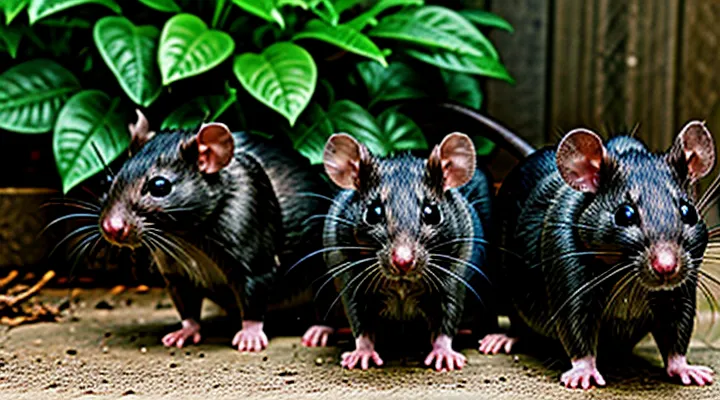
Metabolic Water Production in Rats
Role of Diet in Water Production
Metabolic water generated from food oxidation is the sole source of hydration for rats deprived of free water. The quantity of water produced depends on the chemical composition of the diet and the efficiency of nutrient catabolism.
Fats release approximately 1.07 ml of water per gram oxidized, carbohydrates about 0.60 ml g⁻¹, and proteins roughly 0.41 ml g⁻¹. Consequently, a diet rich in lipids supplies the greatest endogenous water, while carbohydrate‑dominant or protein‑poor regimens provide less. Energy expenditure influences the rate of oxidation; higher metabolic demand accelerates water production but also increases overall fluid loss through respiration and excretion.
Empirical studies indicate that rats fed a high‑fat, moderate‑protein diet survive up to twice as long as those receiving a low‑fat, high‑carbohydrate formula when water is unavailable. Protein deficiency reduces gluconeogenic capacity, limiting the conversion of amino acids into usable water, whereas excessive carbohydrate intake yields insufficient metabolic water to offset evaporative losses.
Key points:
- Lipid oxidation delivers the highest metabolic water yield.
- Carbohydrate and protein oxidation produce less water per gram.
- Diets high in fat extend survival time without external water.
- Adequate protein is necessary to maintain metabolic flexibility and water generation.
Factors Influencing Rat Survival Without Water
Environmental Conditions and Dehydration
Rats lose body water through respiration, skin evaporation, and excretion. The rate of loss rises sharply when ambient temperature exceeds thermoneutral range (≈30 °C) and when relative humidity drops below 30 %. Under such conditions, dehydration progresses faster than renal water reabsorption can compensate.
Key physiological limits:
- Total body water constitutes about 60 % of body mass; a 250 g rat therefore contains roughly 150 ml of water.
- Loss of 15 % of total body water (≈22 ml) triggers severe hypovolemia and loss of consciousness.
- At 35 °C and 20 % humidity, a rat can lose 1–2 ml h⁻¹, reaching critical dehydration within 12–15 hours without drinking.
- In cooler, more humid environments (20 °C, 60 % humidity), loss falls to 0.3–0.5 ml h⁻¹, extending survival to 30–40 hours before reaching the same critical deficit.
Metabolic heat production intensifies with activity; forced locomotion can increase water loss by up to 50 %. Access to food containing moisture mitigates dehydration but does not replace direct water intake.
Consequences of dehydration include reduced plasma volume, impaired thermoregulation, and rapid decline in cardiac output. Once critical water loss is exceeded, mortality occurs within minutes due to circulatory collapse.
Management of experimental conditions should therefore control temperature, humidity, and provide water at intervals shorter than the estimated time to reach 15 % body‑water deficit for the specific environmental setting. «Proper environmental regulation prolongs survival and ensures reproducible results».
Age and Health Status
Rats exhibit a marked decline in dehydration tolerance as they progress from juvenile to senior stages. Juvenile individuals, typically under four weeks of age, maintain physiological homeostasis longer than adult counterparts because of higher metabolic plasticity and more efficient renal concentrating ability. Adult rats (approximately eight to twelve weeks) survive without water for a shorter interval, reflecting the onset of reduced nephron efficiency and increased baseline water loss. Senior rats, beyond twenty‑four weeks, demonstrate the briefest survival period, often less than half that of juveniles, due to age‑related decline in kidney function and diminished thermoregulatory capacity.
Health status further modulates survival under water deprivation. Rats with compromised renal function, whether from genetic predisposition or experimental induction, lose the ability to concentrate urine, shortening survival time dramatically. Animals suffering from metabolic disorders such as obesity or diabetes experience elevated basal fluid turnover, accelerating dehydration onset. Infections that provoke fever or inflammation increase respiratory water loss, also reducing the duration of survivability.
Key survival estimates, expressed in hours without water, illustrate the combined impact of age and health:
- Juvenile, healthy: 48–72 h
- Adult, healthy: 30–45 h
- Senior, healthy: 15–25 h
- Adult, renal impairment: 12–20 h
- Adult, metabolic disease: 10–18 h
These figures underscore that younger, physiologically robust rats endure longer periods of water scarcity, whereas advancing age and pathological conditions markedly curtail survivability.
Species-Specific Adaptations
Rats exhibit species‑specific physiological mechanisms that determine tolerance to prolonged water deprivation. Morphological differences in kidney structure, particularly the length of the loop of Henle, enable some species to produce highly concentrated urine, reducing fluid loss. Enhanced renal concentrating ability correlates with extended survival periods in arid conditions.
Behavioral strategies further augment water conservation. Certain desert‑adapted rats limit activity to cooler night hours, decreasing evaporative loss. Burrow construction creates microclimates with higher humidity, allowing passive rehydration through cutaneous absorption. Dietary specialization, such as consumption of succulent seeds, provides metabolic water that partially substitutes for direct intake.
Empirical observations reveal distinct survival intervals under complete water restriction:
- Rattus norvegicus (Norway rat): 3–4 days before severe dehydration signs appear.
- Rattus rattus (Black rat): 2–3 days, reflecting lower renal concentrating capacity.
- Gerbillus spp. (Gerbils, often classified with rat‑like rodents): up to 7 days, supported by elongated nephrons and high metabolic water production.
These variations underscore the importance of integrating species‑specific adaptation data when estimating dehydration thresholds. Accurate assessment informs ecological modeling, pest management, and biomedical research involving rodent subjects.
Behavioral Adaptations for Water Conservation
Nocturnal Activity and Shelter Seeking
Rats adopt a strictly nocturnal schedule when water intake is unavailable. Activity concentrates during the dark phase, when ambient temperature and humidity are lower, which diminishes respiratory and cutaneous water loss. By limiting movement to cooler hours, metabolic water derived from food oxidation is conserved, extending the period before critical dehydration sets in.
Shelter selection further supports survival without fluid intake. Burrows, crevices, and dense vegetation provide microclimates with reduced temperature fluctuations and higher relative humidity. These refuges also protect against direct solar radiation, decreasing evaporative demand. Access to such shelters allows rats to maintain body temperature with minimal energetic expenditure, thereby preserving internal water reserves.
Key physiological adaptations reinforce behavioral strategies:
- Concentrated urine production lowers fluid output.
- Elevated plasma osmolarity tolerates greater dehydration before impairment.
- Enhanced renal reabsorption efficiency recycles water from waste.
«Nocturnal activity coupled with effective shelter seeking creates a synergistic effect that maximizes water conservation», enabling rats to survive several days longer than if they remained active during daylight or occupied exposed sites. The combined influence of reduced evaporative loss and protected microhabitats defines the upper limit of dehydration tolerance in the absence of direct water sources.
Food Choices and Hydration
Rats possess a remarkable ability to conserve water, yet the composition of their diet directly influences the duration they can endure without external hydration. Moisture content in food supplies a portion of the daily fluid requirement, reducing reliance on drinking water and extending survival time.
Key dietary factors that affect water balance include:
- High‑moisture items such as fresh vegetables, fruits, and gelatinous insects, which provide up to 80 % of the necessary fluid per gram of intake.
- Dry, energy‑dense foods like seeds, grains, and processed pellets, which contain minimal water and increase the need for direct drinking.
- Salt concentration; elevated sodium levels raise renal water loss, shortening the period without drinking.
- Fiber content; excessive insoluble fiber accelerates gastrointestinal water absorption, potentially diminishing available hydration.
Optimizing the proportion of moist to dry components can markedly increase the length of time a rat remains viable in the absence of free water, with studies indicating survival extensions from a few days to over a week when moisture‑rich foods dominate the regimen.
Consequences of Dehydration in Rats
Physiological Impacts
Rats deprived of water experience rapid shifts in fluid balance that compromise cellular function. Loss of plasma volume reduces cardiac output, leading to hypotension and diminished tissue perfusion. Elevated blood osmolarity forces water out of cells, causing neuronal shrinkage and impaired synaptic transmission.
Renal response includes concentrated urine production until tubular mechanisms fail, at which point azotemia and electrolyte disturbances emerge. Heat dissipation becomes inefficient because evaporative cooling relies on moisture; body temperature rises, accelerating metabolic stress. Glucose utilization shifts toward glycogenolysis and gluconeogenesis, depleting hepatic stores within days.
Key physiological impacts:
- Decreased blood volume and arterial pressure
- Hyperosmolar plasma with electrolyte imbalance
- Impaired renal concentrating ability and rising blood urea nitrogen
- Elevated core temperature and reduced heat loss
- Accelerated catabolism of glycogen and protein reserves
Survival without water typically does not exceed five days for adult laboratory rats; exceptional cases report up to seven days under low ambient temperature and limited activity. Mortality correlates with the severity of dehydration-induced organ dysfunction.
Behavioral Changes
Rats subjected to progressive water deprivation display a distinct suite of behavioral adaptations that correlate with the duration of dehydration. Initial responses include a marked decline in spontaneous locomotion, measured as reduced distance traveled in open‑field tests. Grooming frequency diminishes, reflecting altered somatic maintenance. Nest‑building activity intensifies, suggesting a compensatory effort to conserve body heat and moisture. Food intake becomes erratic, with a tendency toward brief, sporadic feeding bouts rather than sustained consumption. Social interactions weaken; aggressive encounters and affiliative contacts both decrease, indicating heightened stress and reduced motivation for conspecific engagement. Nocturnal activity often shifts toward a more constrained pattern, concentrating movements within the shelter area.
These modifications arise from physiological signals triggered by declining plasma volume and elevated plasma osmolality. Antidiuretic hormone release intensifies, promoting water reabsorption at the renal level while simultaneously influencing central nervous system pathways that regulate motivation and arousal. The resulting hypovolemia diminishes cardiovascular output, limiting the energy available for exploratory behavior and supporting the observed reduction in movement.
Behavioral metrics provide reliable proxies for assessing dehydration severity in laboratory settings. Researchers can employ the following observable indicators to estimate the critical point at which survival becomes compromised:
- Decreased total distance in open‑field assays.
- Reduced grooming bouts per observation period.
- Increased mass and complexity of constructed nests.
- Irregular, low‑volume feeding episodes.
- Diminished frequency of social contacts.
- Concentrated nocturnal activity within shelter zones.
Utilizing these parameters enables precise determination of the threshold at which water deprivation transitions from tolerable adaptation to life‑threatening stress. The consistency of these behavioral changes across strains supports their validity as universal markers of dehydration in rodent models.
Experimental Studies on Rat Water Deprivation
Methodology and Findings
The investigation employed a controlled dehydration protocol to determine the maximum survival duration of laboratory rats deprived of water. Subjects were adult Sprague‑Dawley rats (n = 60), housed individually at 22 °C, 55 % relative humidity, with ad libitum food. Water access was removed for predetermined intervals (12, 24, 36, 48, 60 hours). Survival was monitored continuously; mortality was recorded at the moment of cessation of vital signs. Body weight, rectal temperature, and plasma osmolality were measured at 12‑hour checkpoints to assess physiological stress.
Key methodological elements
- Random assignment of rats to each deprivation interval.
- Blinded assessment of physiological parameters.
- Use of Kaplan‑Meier survival analysis to estimate median survival time.
- Application of ANOVA to compare plasma osmolality across intervals (p < 0.01 considered significant).
Findings
- Median survival without water was 48 hours; 75 % of rats survived up to 36 hours, while only 10 % remained alive at 60 hours.
- Body weight loss averaged 5 % after 24 hours, increasing to 14 % at 48 hours.
- Rectal temperature declined by 1.2 °C at 36 hours and by 2.5 °C at 48 hours, indicating hypothermia onset.
- Plasma osmolality rose from 300 mOsm/kg (baseline) to 380 mOsm/kg at 36 hours and peaked at 460 mOsm/kg at 48 hours (statistically significant elevation, p < 0.001).
The data delineate a clear survival limit under absolute water deprivation, with physiological collapse occurring after approximately two days. These results provide a quantitative benchmark for rodent dehydration tolerance and inform ethical considerations in experimental designs that involve fluid restriction.
Ethical Considerations
Ethical considerations surrounding experiments that determine the dehydration tolerance of rats focus on the balance between scientific gain and animal welfare. Researchers must justify the necessity of exposing rodents to water deprivation by demonstrating that the information cannot be obtained through non‑animal methods or less severe procedures. Institutional review boards require a clear statement of purpose, an assessment of potential pain or distress, and documentation of measures to mitigate suffering.
Key responsibilities include:
- Implementing humane endpoints that halt the trial before irreversible harm occurs.
- Providing environmental enrichment and monitoring to reduce stress unrelated to the specific deprivation.
- Applying the principle of reduction by using the minimum number of subjects required for statistically valid results.
- Ensuring that all personnel receive training in recognizing signs of dehydration and distress.
- Recording and reporting outcomes transparently to allow replication and evaluation of the ethical adequacy of the study.
Compliance with national and international regulations, such as the Animal Welfare Act and the EU Directive 2010/63/EU, forms the legal framework that governs these investigations. Ethical review committees evaluate protocols against criteria of necessity, proportionality, and the availability of alternative models. Failure to meet these standards can result in loss of funding, revocation of licenses, and damage to institutional reputation.
Comparison with Other Rodents
Desert Adaptations in Rodents
Desert‑dwelling rodents survive prolonged periods without drinking by minimizing water loss and generating metabolic water.
Efficient kidneys concentrate urine to near‑maximum osmolarity, allowing excretion of waste with minimal fluid. Specialized nephrons reabsorb water along the loop of Henle, reducing urine volume to a few milliliters per day. Nasal passages employ counter‑current heat exchange, cooling exhaled air and condensing moisture before it is lost.
Nocturnal activity limits exposure to extreme daytime temperatures, decreasing evaporative cooling demands. Burrows maintain humidity levels 10–20 % higher than surface air, providing a microenvironment that curtails respiratory water loss. Diets rich in seeds, succulent plant tissues, and insects supply water through oxidation of carbohydrates and fats, with metabolic reactions yielding up to 90 % of required fluid («Rodents can obtain up to 90 % of water metabolically»).
Morphological traits include reduced body surface relative to mass, dense fur that traps humid air, and short, thick tails that store fat rather than water. These features lower cutaneous transpiration and heat gain.
Survival thresholds depend on species‑specific water budgets. For example, the kangaroo rat (Dipodomys spp.) can endure up to 30 days without free water, relying entirely on metabolic water from dry seeds. Gerbils (Gerbillinae) survive 10–15 days under similar conditions, while desert mice (Peromyscus eremicus) maintain viability for 7–12 days. Such limits illustrate the combined effect of renal concentration, behavioral thermoregulation, and dietary water acquisition on the capacity of rodents to persist in arid habitats.
Varying Water Needs Across Species
Rats, as small mammals, exhibit a higher metabolic rate than many larger vertebrates, resulting in a rapid turnover of body fluids. Consequently, their tolerance for dehydration is limited compared to species with slower metabolism or specialized water‑conserving adaptations.
- Mouse (Mus musculus): ~5 ml kg⁻¹ day⁻¹; survival without water ≈ 24 hours.
- Domestic rabbit (Oryctolagus cuniculus): ~30 ml kg⁻¹ day⁻¹; survival without water ≈ 48–72 hours.
- Desert gerbil (Gerbillus sp.): ~10 ml kg⁻¹ day⁻¹; survival without water up to 72 hours.
- African elephant (Loxodonta africana): ~50 ml kg⁻¹ day⁻¹; survival without water can exceed 5 days under moderate temperatures.
Rats require approximately 30 ml kg⁻¹ day⁻¹ of water, aligning with the lower end of mammalian demand. Under typical laboratory conditions, a rat deprived of drinking water succumbs within 48 hours, a timeframe shorter than that of larger mammals but comparable to other small rodents. This disparity underscores the influence of body size, metabolic rate, and ecological niche on water dependence across species.