
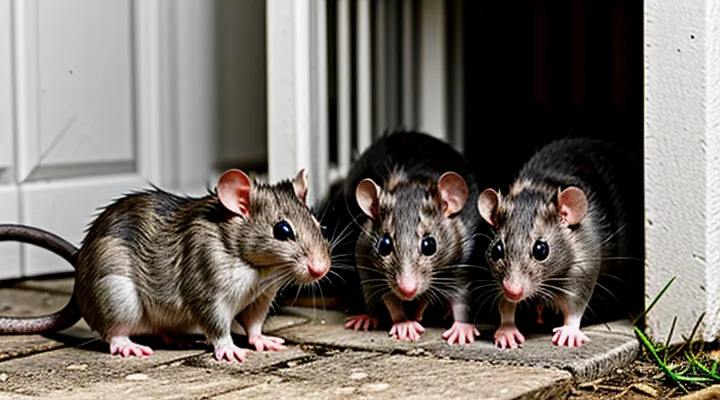
The Basics of Rat Breeding
Rat Mating Habits
Rats become sexually mature at 5–6 weeks for females and 6–8 weeks for males. The female estrous cycle lasts 4–5 days, with ovulation occurring during the proestrus phase. When a receptive female emits ultrasonic vocalizations, a male approaches, sniffs, and engages in a brief chase that culminates in copulation. A single mating session typically includes multiple intromissions spaced by a few seconds, lasting 20–30 seconds in total.
After successful insemination, gestation persists for 21–23 days. Females give birth to litters averaging 6–12 pups, though litter size can fluctuate with strain, age, nutrition, and environmental conditions. Larger litters are common in well‑fed, genetically robust colonies, while stress or suboptimal diets reduce pup numbers.
Key factors influencing reproductive output:
- Strain genetics: Selective breeding lines produce predictable litter sizes.
- Maternal age: Young adults yield moderate litters; older females often produce fewer pups.
- Nutrition: Adequate protein and caloric intake correlate with higher pup counts.
- Housing density: Overcrowding can suppress mating frequency and reduce litter size.
Understanding these mating behaviors and associated variables clarifies the typical number of offspring produced per birth in laboratory and wild rat populations.
Gestation Period in Rats
The gestation period of the common laboratory rat (Rattus norvegicus) averages 21–23 days, with 22 days representing the most frequent duration across strains. Duration can shift by one to two days depending on genetic line, ambient temperature, and maternal nutrition. Early embryonic development proceeds rapidly: implantation occurs around day 5, organogenesis by day 12, and fetal weight reaches approximately 5 g at parturition.
Key factors influencing gestational length:
- Strain differences: Inbred lines such as Wistar and Sprague‑Dawley show consistent 22‑day gestations; outbred stocks may vary by ±1 day.
- Environmental temperature: Housing at 20–22 °C maintains standard timing; temperatures below 18 °C can prolong gestation by up to 24 hours.
- Maternal diet: Protein‑deficient diets extend gestation by 1–2 days; caloric excess shortens it marginally.
The gestation timeline directly determines the interval between successive litters. A 22‑day pregnancy followed by a brief postpartum recovery (approximately 3–4 days) enables a female rat to produce multiple litters each year, which in turn affects average litter size outcomes.
Factors Affecting Litter Size
Mother's Age and Health
Maternal age exerts a measurable influence on the number of pups produced in a single rat breeding cycle. Young females, typically 8–12 weeks old, reach peak reproductive output, averaging 10–12 pups per litter. As age advances beyond six months, average litter size declines to 6–8 pups, with a noted increase in variability. Females older than one year frequently produce fewer than five pups, and the incidence of stillbirths rises sharply.
Health status directly modifies these age‑related trends. Rats maintained on a balanced diet containing 18–20 % protein, adequate vitamins, and essential minerals exhibit litter sizes consistent with age‑specific averages. Conversely, animals subjected to caloric restriction, protein deficiency, or chronic disease (e.g., respiratory infections, endotoxemia) show a 20–35 % reduction in offspring count irrespective of age.
Key factors linking maternal condition to litter size:
- Body condition score ≥ 3.5 (on a 5‑point scale) correlates with maximal pup numbers.
- Presence of systemic inflammation, indicated by elevated serum cytokines, reduces average litter size by 2–3 pups.
- Hormonal balance, particularly estradiol and progesterone concentrations during estrus, predicts successful implantation and subsequent pup count.
- Parity effects: first‑time mothers produce slightly smaller litters than experienced breeders of comparable age and health.
Optimal breeding protocols recommend pairing females at 10–12 weeks of age, confirming a healthy weight (250–300 g), and providing unrestricted access to nutritionally complete feed. Regular health monitoring, including hematology and serum biochemistry, minimizes unexpected declines in reproductive performance.
Environmental Conditions
Environmental variables exert measurable influence on the number of pups produced by a female rat in a single reproductive event. Research quantifies these effects through controlled experiments that isolate temperature, humidity, nutrition, light exposure, stress, and housing density.
- Ambient temperature: optimal range 22‑26 °C; deviations of ±4 °C reduce average pup count by 10‑20 %.
- Relative humidity: 40‑60 % maintains normal litter size; extreme humidity (>80 % or <30 %) correlates with decreased offspring numbers.
- Dietary quality: protein content ≥18 % and adequate calories sustain typical litter sizes; deficiencies lower pup numbers by up to 30 %.
- Photoperiod: 12‑hour light/dark cycles support reproductive consistency; prolonged darkness or constant light disrupts hormonal cycles, reducing pup output.
- Stressors: frequent handling, noise, or predator cues elevate corticosterone, leading to smaller litters.
- Housing density: overcrowding (>2 rats per 0.02 m²) limits space for nesting, resulting in fewer pups; moderate density maintains standard reproductive performance.
Temperature and humidity directly affect maternal metabolism and embryonic development, while nutrition supplies the substrates required for fetal growth. Light cycles regulate melatonin and gonadotropin release, influencing ovulation frequency and embryo viability. Chronic stress suppresses the hypothalamic‑pituitary‑gonadal axis, decreasing ovulation rates and implantation success. Overcrowded environments increase competition for resources and elevate stress hormones, both of which diminish litter size.
Understanding these parameters enables precise manipulation of breeding conditions to achieve predictable pup numbers, essential for laboratory colonies and commercial rodent production. Adjusting each factor within the identified optimal ranges maximizes reproductive output and reduces variability across litters.
Nutritional Impact
Nutrition directly influences the quantity of offspring produced by female rats in each breeding cycle. Adequate protein intake raises the average pup count, while deficiencies reduce it. Energy‑dense diets increase maternal body condition, allowing the development of larger ovarian follicles and supporting the implantation of more embryos.
Key dietary components affecting litter size:
- Protein: Sources such as casein or soy isolate provide essential amino acids; diets containing 20 %–24 % crude protein typically yield 10–12 pups per litter, compared with 6–8 pups on low‑protein (≤10 %) formulations.
- Caloric density: Feed providing 3.5–4.0 kcal g⁻¹ supports higher body weight gain, correlating with increased offspring numbers.
- Essential fatty acids: Omega‑3 and omega‑6 ratios around 1:4 improve placental vascularization, contributing to larger litters.
- Vitamins and minerals: Adequate levels of vitamin E, vitamin C, zinc, and selenium enhance reproductive hormone synthesis, thereby increasing pup output.
Timing of nutritional changes also matters. Introducing a high‑quality diet during the pre‑ovulatory phase (days -4 to 0 relative to estrus) produces a measurable rise in litter size, whereas alterations after implantation have minimal effect.
Experimental data indicate that rats fed a balanced diet throughout gestation maintain litter sizes close to their genetic potential, while chronic malnutrition leads to a 30 %–40 % reduction in pup numbers. Consequently, precise formulation of laboratory rodent chow is essential for reproducible breeding outcomes and for studies that depend on consistent litter sizes.
Average Litter Size
Variations by Rat Species
Rats exhibit considerable differences in average litter size across species, reflecting evolutionary adaptations and ecological pressures.
The Norway rat (Rattus norvegicus) typically produces 6–12 pups per litter, with occasional litters reaching 14 under optimal nutrition and minimal stress. In contrast, the black rat (Rattus rattus) averages 5–9 offspring, rarely exceeding 11. Roof rats (Rattus rattus domestica) display a similar range, 5–9 pups, but urban populations may show slightly higher numbers due to abundant food sources.
Domestic fancy rats, derived primarily from the Norway rat, often have litters of 8–12 pups. Controlled breeding environments and selective line development can increase this to 14–16 in some strains, though such outcomes require intensive management.
A concise summary:
- Rattus norvegicus (Norway rat): 6–12 (up to 14) pups
- Rattus rattus (Black/roof rat): 5–9 (max 11) pups
- Domesticated fancy rats: 8–12 (up to 16) pups
Variation stems from factors such as diet quality, population density, and seasonal breeding cycles, but species-specific genetic limits define the core range for each rat type.
Factors Influencing Litter Number
Rats produce litters that vary widely in size, and several biological and environmental variables determine the number of pups born.
Genetic background is a primary determinant; inbred strains such as Wistar or Sprague‑Dawley exhibit characteristic average litter sizes, while outbred populations show greater variability. Maternal age influences reproductive output, with young females (5–8 weeks) often delivering fewer pups than mature adults (12–16 weeks), after which fecundity declines. Nutritional status directly affects ovulation and embryo survival: diets rich in protein and essential fatty acids increase litter size, whereas caloric restriction or micronutrient deficiency reduces it.
Environmental conditions also modulate reproductive performance. Ambient temperature within the thermoneutral zone (22‑26 °C) supports optimal gestation; extreme heat or cold elevates stress hormones and lowers offspring numbers. Photoperiod length influences hormonal cycles; longer daylight exposure can enhance estrous frequency, leading to larger litters. Social factors such as housing density affect stress levels—overcrowding raises corticosterone, suppressing implantation and reducing litter size.
Health status of the dam is critical. Presence of parasites, viral infections, or chronic disease impairs uterine environment and fetal development, resulting in smaller litters or increased embryonic loss. Exposure to endocrine‑disrupting chemicals (e.g., bisphenol A, phthalates) interferes with reproductive hormone signaling and can diminish litter size.
Key factors influencing rat litter number
- Genetic strain and lineage
- Maternal age and parity
- Dietary composition and caloric intake
- Ambient temperature and humidity
- Photoperiod and light intensity
- Housing density and social stress
- Disease burden and parasite load
- Chemical exposures affecting endocrine function
Understanding these variables enables precise prediction and manipulation of reproductive output in laboratory and breeding programs.
Rat Offspring Development
Newborn Rat Characteristics
Newborn rats are altricial mammals that emerge from the womb blind, hairless, and wholly dependent on the dam. At birth, each pup weighs between 5 and 7 g and measures roughly 2 cm in length. Their bodies are covered by a thin, translucent membrane that soon dries and sheds, revealing a sparse coat of soft, downy fur within the first 24 hours.
Physiological traits include a rapid heart rate of 300–400 beats per minute and a body temperature maintained at approximately 35 °C through maternal warmth. The auditory and visual systems remain undeveloped; eyelids open around day 10, and ear canals become functional near day 14. Thermoregulation, locomotion, and food intake are all reliant on the mother’s milk until the weaning period, typically occurring at 21 days of age.
Developmental milestones are consistent across litters regardless of size. By day 5, pups exhibit coordinated crawling movements and begin to explore the nest. By day 12, they display increased responsiveness to tactile stimuli and start to consume solid food alongside nursing.
Key characteristics of newborn rats can be summarized as follows:
- Weight: 5–7 g; length: ~2 cm
- Hairless, with a delicate membrane that sheds within 24 h
- Eyes closed, eyelids open ≈ day 10
- Auditory canals open ≈ day 14
- Heart rate: 300–400 bpm; body temperature ≈ 35 °C
- Complete reliance on dam’s milk until weaning at day 21
These traits provide a baseline for understanding reproductive output in rats, as the number of offspring per litter directly influences the allocation of maternal resources and the timing of developmental events.
Weaning and Independence
Rat litters typically consist of several pups that remain with the dam for the first three weeks of life. During this period, the mother provides warmth, protection, and nutrition through milk. The transition from maternal dependence to self‑sufficiency begins with weaning, a critical developmental stage that prepares juveniles for autonomous survival.
Weaning occurs at approximately 21 days of age. Observable signs include:
- Reduction of nursing behavior and increased consumption of solid food.
- Development of functional incisors capable of gnawing standard laboratory chow.
- Emergence of independent locomotion and exploratory activity within the cage environment.
Following weaning, juveniles attain full independence by 28–35 days. At this stage, they:
- Exhibit efficient foraging and self‑regulation of food intake.
- Participate in social hierarchies, asserting dominance or submissiveness without maternal mediation.
- Demonstrate competency in nest building and environmental manipulation.
Litter size influences the timing and dynamics of these processes. Larger litters often experience intensified competition for milk, prompting earlier initiation of solid‑food intake. Consequently, pups from bigger litters may wean slightly before the average 21‑day mark, whereas those from smaller litters tend to remain with the dam longer, benefiting from extended maternal care. This variation affects growth rates, with early‑weaned individuals generally achieving comparable weight gain through rapid adaptation to solid diets.
Controlling Rat Populations
Reproductive Control Methods
Rats typically produce large litters, often ranging from six to twelve pups. Managing this reproductive capacity requires targeted control strategies that reduce breeding frequency and limit population growth.
Chemical sterilants, such as gonadotropin‑releasing hormone (GnRH) antagonists, suppress hormonal pathways essential for ovulation. Administration can be oral, injectable, or incorporated into bait, providing a non‑surgical option that diminishes fertility without immediate mortality.
Immunocontraceptive vaccines trigger the animal’s immune system to produce antibodies against reproductive proteins. These vaccines, delivered via injection or edible formulations, generate long‑lasting infertility after one or two doses, allowing gradual population decline.
Physical barriers include mesh or metal screens placed around nesting sites, preventing mating access. Combined with regular removal of nesting material, this method reduces encounter rates between males and females.
Population control programs often integrate multiple approaches:
- Deploy GnRH antagonists in bait stations.
- Distribute immunocontraceptive feed in high‑density areas.
- Install barrier devices around known burrows.
- Conduct periodic trapping to remove mature individuals.
Each technique requires careful dosage calculation, monitoring of non‑target species exposure, and compliance with local wildlife regulations. Effective implementation balances rapid reduction of litter output with humane treatment of the animal population.
Impact of Population Density
Rats typically produce between six and twelve pups per reproductive event, with variation driven by genetics, nutrition, and environmental pressures. The number of offspring is not fixed; it fluctuates in response to the density of conspecifics sharing the same habitat.
High population density imposes competition for resources such as food, nesting sites, and space. This competition triggers physiological adjustments that reduce litter size. Empirical studies demonstrate a consistent inverse correlation between crowding and pup count: as the number of individuals per square meter rises, the average number of pups per litter declines by 10‑30 %. The effect is mediated by stress‑induced hormonal changes, notably elevated corticosterone, which suppresses ovulation and fetal development.
Key mechanisms linking crowding to reduced reproductive output include:
- Limited nutrient availability leading to lower maternal body condition.
- Increased aggression and social stress elevating glucocorticoid levels.
- Disruption of pheromonal cues that regulate mating cycles.
- Reduced access to optimal nesting material, impairing gestation success.
Understanding these density‑dependent constraints informs pest‑control strategies and laboratory breeding protocols. Managing colony size within optimal limits preserves expected litter sizes, while intentional overcrowding can be employed to suppress population growth in urban infestations.