
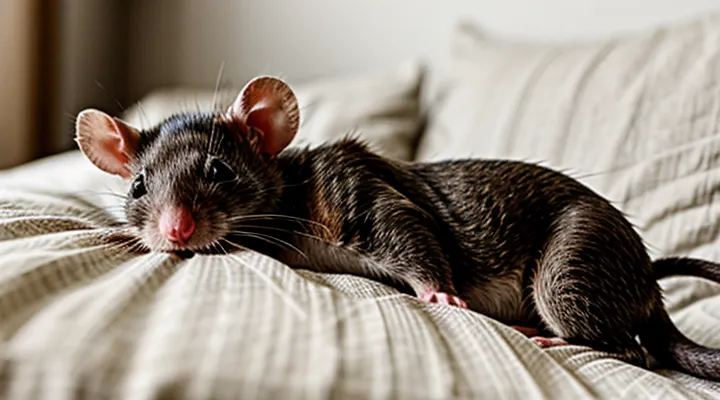
The Enigmatic Slumber of Rodents
Unraveling Rat Sleep Cycles
Circadian Rhythms in Rattus Norvegicus
Circadian rhythms in Rattus norvegicus coordinate physiological processes that determine the timing and duration of sleep episodes. Light‑dark cycles act as primary zeitgebers, entraining the suprachiasmatic nucleus (SCN) and synchronising peripheral oscillators. In laboratory conditions, a 12 h light/12 h dark schedule yields a consolidated nocturnal sleep period lasting approximately 12–14 hours per 24‑hour cycle, with fragmented micro‑arousals distributed throughout.
Key characteristics of the rat circadian system include:
- Endogenous period close to 24 hours, with a slight deviation (≈23.8 hours) that requires daily photic resetting.
- Peak melatonin secretion during the dark phase, coinciding with maximal sleep propensity.
- Temperature and hormone rhythms (corticosterone, leptin) that modulate sleep architecture.
Experimental data indicate that alterations in light intensity, wavelength, or timing shift the phase of activity onset by up to 2 hours, thereby adjusting total sleep time. Constant darkness or constant light conditions disrupt the regularity of sleep bouts, leading to increased wakefulness and fragmented sleep.
Understanding the interplay between environmental cues and the intrinsic clock provides a framework for predicting how changes in lighting regimes, such as those encountered in shift‑work models, influence the daily sleep quota of laboratory rats.
Factors Influencing Sleep Duration
Small rodents exhibit a wide range of daily sleep durations, reflecting the interaction of biological and environmental variables.
Key determinants include:
- Species‑specific circadian patterns
- Developmental stage (juvenile, adult, senescent)
- Ambient temperature and humidity
- Light‑dark cycle intensity and timing
- Nutritional intake and feeding schedule
- Presence of predators or stressors
- Social context (solitary versus group housing)
- Health condition and disease burden
Species differences set baseline sleep architecture, while younger individuals generally require longer rest periods for growth. Temperature deviations from the thermoneutral zone provoke compensatory changes in sleep length to conserve energy. Light exposure synchronizes the internal clock; prolonged darkness typically extends sleep bouts, whereas irregular lighting reduces consolidation. Food scarcity accelerates wakefulness to increase foraging activity, whereas abundant resources allow extended rest. Elevated stress hormones triggered by predator cues or overcrowding suppress sleep, whereas stable social environments promote regular sleep cycles. Illness or metabolic disorders disrupt normal patterns, often shortening total sleep time.
Typical Sleep Patterns in Domesticated Rats
Comparing Wild and Lab Rat Sleep
Observational Studies and Data Collection
Observational research on the daily sleep duration of small rodents relies on systematic data gathering under natural or semi‑natural conditions. Researchers typically employ continuous video monitoring, infrared cameras, or miniature activity sensors attached to the animal’s body. These tools record periods of immobility, body posture, and physiological signals that correlate with sleep states.
Key elements of data collection include:
- Definition of sleep episode: minimum continuous immobility lasting at least five minutes, accompanied by reduced heart rate or EEG patterns when available.
- Sampling schedule: 24‑hour observation cycles repeated across multiple days to capture circadian variations.
- Sample size: groups of 20–30 individuals provide statistical power while minimizing stress from handling.
- Environmental control: light‑dark cycles, temperature, and cage enrichment standardized to reduce confounding influences.
Data integrity is maintained through blind scoring, where observers unaware of experimental conditions classify sleep bouts. Automated algorithms process video frames or sensor outputs, generating timestamps for sleep onset and offset. Resulting datasets consist of total sleep time per 24‑hour period, sleep bout length distribution, and latency to first sleep episode.
Common challenges involve distinguishing quiet wakefulness from true sleep, especially in nocturnal species. Validation against electroencephalographic recordings, when feasible, enhances classification accuracy. Reporting standards require clear description of observation methods, criteria for sleep identification, and statistical treatment of repeated measures.
Overall, rigorous observational protocols combined with precise instrumentation yield reliable estimates of how much time these animals allocate to sleep each day, supporting comparative analyses across species and experimental manipulations.
Age-Related Sleep Variations
Small rodents exhibit marked changes in daily sleep duration as they mature. Neonatal pups, defined as animals younger than three weeks, spend the greatest proportion of each 24‑hour cycle asleep, with recordings indicating 15–18 hours of sleep per day. This high level reflects the intensive brain development and rapid growth occurring during the early post‑natal period.
Juvenile rats, approximately four to eight weeks old, reduce total sleep time to roughly 12–14 hours. The decline corresponds with increased exploratory behavior, heightened locomotor activity, and the onset of weaning. During this stage, the distribution of rapid eye movement (REM) and non‑REM sleep also begins to resemble that of mature adults.
Adult laboratory rats, aged three to twelve months, maintain a relatively stable sleep budget of 10–12 hours daily. Sleep architecture stabilizes, with REM periods constituting about 20 percent of total sleep time. This pattern persists across sexes and most strains under standard housing conditions.
In later life, rats older than eighteen months often revert to longer sleep durations, averaging 13–15 hours per day. The increase aligns with age‑related declines in metabolic rate, reduced physical activity, and alterations in circadian regulation. Observations consistently note fragmented sleep, with more frequent awakenings and shorter uninterrupted sleep bouts.
Key age‑related sleep metrics:
- Neonatal (≤ 3 weeks): 15–18 hours
- Juvenile (4–8 weeks): 12–14 hours
- Adult (3–12 months): 10–12 hours
- Aged (≥ 18 months): 13–15 hours
These figures provide a concise reference for researchers assessing sleep‑related variables in small rodent models across the lifespan.
The Impact of Environment on Rat Sleep
Stress and Its Effects on Rest
Stress markedly alters the sleep architecture of juvenile rodents, reducing total sleep time and fragmenting rest periods. Elevated corticosterone levels, triggered by unpredictable noise, handling, or social isolation, suppress slow‑wave sleep and increase wakefulness bouts. Consequently, rats exposed to chronic stress exhibit a measurable decline of 15‑30 % in daily sleep duration compared to unstressed controls.
Key physiological pathways linking stress to altered rest include:
- Activation of the hypothalamic‑pituitary‑adrenal axis, leading to sustained release of glucocorticoids;
- Disruption of the suprachiasmatic nucleus, impairing circadian rhythm synchronization;
- Heightened sympathetic nervous system activity, promoting arousal and reducing sleep propensity.
Behavioral outcomes correspond with physiological changes. Stressed rats display reduced latency to wake, increased frequency of micro‑arousals, and diminished proportion of non‑rapid eye movement sleep. These modifications impair memory consolidation and metabolic regulation, underscoring the relevance of stress management in experimental designs that assess sleep quantity in young rodents.
Mitigation strategies that restore normal sleep patterns involve environmental enrichment, predictable feeding schedules, and limited handling. Implementing such measures lowers corticosterone concentrations and re‑establishes typical sleep‑wake cycles, thereby providing more reliable data on baseline sleep duration for juvenile rat models.
Dietary Influences on Sleep Quality
Small rodents exhibit distinct sleep patterns that respond to macronutrient composition, micronutrient availability, and feeding schedule. Protein‑rich diets increase non‑REM stability, extending total sleep time by approximately 10‑15 % compared to carbohydrate‑dominant meals. High‑fat formulations elevate rapid‑eye‑movement (REM) density, often shortening overall sleep duration but enhancing sleep fragmentation. Limited intake of essential vitamins, particularly B‑complex and vitamin D, correlates with increased wakefulness episodes and reduced slow‑wave activity.
Key dietary factors influencing sleep quality in little rats:
- Protein level – ≥ 20 % of caloric intake promotes deeper, more continuous sleep.
- Fat proportion – 5‑10 % of calories supports REM cycles; excess (> 20 %) disrupts sleep architecture.
- Carbohydrate timing – feeding 2‑3 hours before the dark phase delays sleep onset; immediate post‑dark feeding shortens latency.
- Micronutrient balance – adequate magnesium and zinc reduce arousal frequency; deficiencies increase nocturnal activity.
- Feeding regularity – consistent daily schedule stabilizes circadian rhythm, yielding an average of 12‑14 hours of sleep per 24‑hour period.
Experimental data indicate that altering a single nutrient can shift sleep duration by up to 2 hours, underscoring the sensitivity of sleep regulation to dietary inputs. Monitoring nutrient ratios alongside sleep recordings provides a reliable framework for predicting sleep outcomes in laboratory rats.
The Physiology of Rat Sleep
Brain Activity During Different Sleep Stages
REM and Non-REM Sleep in Rats
Rats exhibit a biphasic sleep pattern consisting of rapid‑eye‑movement (REM) and non‑REM (NREM) phases. Total daily sleep time for adult laboratory rats ranges from 12 to 14 hours, with juveniles sleeping slightly longer.
During NREM sleep, cortical slow‑wave activity dominates, supporting synaptic down‑scaling and metabolic restoration. NREM episodes account for approximately 80 % of the total sleep budget, occurring in bouts lasting 5–10 minutes each.
REM sleep follows NREM periods and is characterized by theta‑rich hippocampal oscillations and muscle atonia. REM occupies about 20 % of total sleep time, appearing in shorter bouts of 1–2 minutes.
Key quantitative features:
- Total sleep: 12–14 hours per 24‑hour cycle.
- NREM proportion: 80 % of total sleep (≈9.6–11.2 hours).
- REM proportion: 20 % of total sleep (≈2.4–2.8 hours).
- Bout length: NREM 5–10 minutes; REM 1–2 minutes.
Sleep architecture displays ultradian cycling, with a complete NREM‑REM sequence repeating roughly every 15 minutes. Developmental studies show that younger rats experience higher REM percentages, gradually shifting toward the adult 20 % balance as maturation proceeds.
Hormonal Regulation of Sleep
Hormonal mechanisms orchestrate the sleep‑wake cycle in rodents, directly influencing the amount of rest observed in juvenile specimens. Melatonin, secreted by the pineal gland during darkness, induces rapid eye movement (REM) and non‑REM sleep phases, thereby extending total sleep time. Corticosterone peaks at the onset of the active period, suppressing sleep propensity and shortening daily rest intervals. Orexin‑A and orexin‑B, produced in the hypothalamus, promote arousal; elevated levels correlate with reduced sleep duration in young rats.
Additional hormones modulate sleep architecture. Prolactin rises during deep non‑REM sleep, supporting restorative processes. Growth hormone release aligns with slow‑wave activity, reinforcing the relationship between hormonal surges and extended sleep bouts.
Key hormones and their primary effects:
- Melatonin – facilitates sleep initiation and maintenance.
- Corticosterone – enhances wakefulness, limits total sleep.
- Orexin – drives arousal, opposes sleep onset.
- Prolactin – associated with deep sleep phases.
- Growth hormone – linked to slow‑wave sleep and recovery.
Sleep Deprivation and Its Consequences
Behavioral Changes Due to Lack of Sleep
Small rats typically rest for a majority of the daily cycle; when sleep time is reduced, observable behavioral shifts appear rapidly.
Key alterations include:
- Decreased exploratory activity in novel environments.
- Heightened anxiety-like responses, measured by reduced time in open zones.
- Impaired spatial memory, evident in poorer performance on maze tasks.
- Diminished social interaction, reflected by fewer affiliative contacts.
- Increased food intake despite unchanged body weight.
- Elevated aggression toward conspecifics during territorial encounters.
Neurochemical assessments reveal lower levels of acetylcholine and dopamine, coupled with heightened corticosterone release. These changes disrupt synaptic plasticity and stress regulation, underpinning the behavioral outcomes described above.
Consequences for laboratory research are significant: behavioral assays conducted on sleep‑deprived rodents may yield results that do not represent baseline phenotypes, potentially confounding interpretations of drug efficacy or genetic modifications. Maintaining adequate rest periods is therefore essential for reproducible and valid experimental data.
Health Implications of Insufficient Rest
Small rodents commonly obtain between four and six hours of sleep during each 24‑hour cycle. When this allotment falls short, physiological systems exhibit measurable disruption.
Key health consequences of chronic sleep deficit in these animals include:
- Suppressed immune function, reflected in lower leukocyte activity and heightened infection susceptibility.
- Altered glucose metabolism, manifested as increased blood sugar levels and impaired insulin sensitivity.
- Diminished cognitive performance, evident in slower maze navigation and reduced memory retention.
- Stunted somatic growth, with lower weight gain and delayed skeletal development.
- Elevated mortality risk, observed as shortened lifespan in laboratory colonies.
Underlying mechanisms involve heightened stress‑hormone release, disruption of circadian gene expression, and impaired cellular repair processes. Persistent elevation of corticosterone interferes with hormone regulation, while irregular expression of clock genes destabilizes metabolic cycles.
Recognizing these outcomes guides experimental design, animal‑care protocols, and translational studies linking rodent models to human sleep research. Ensuring adequate rest periods mitigates health deterioration and enhances the validity of scientific findings.
Optimizing Conditions for Rat Sleep
Creating an Ideal Habitat
Creating an optimal environment for small laboratory rats directly influences their daily rest cycles. Proper lighting, temperature, and enclosure design should align with the species’ natural nocturnal patterns, ensuring sufficient uninterrupted sleep periods.
Key elements of a suitable habitat include:
- Light control: Dim lighting during the dark phase and complete darkness for at least 12 hours each night. Use timers to maintain consistent cycles.
- Temperature stability: Maintain ambient temperature between 20 °C and 24 °C with minimal fluctuations; extreme heat or cold disrupts sleep architecture.
- Bedding quality: Provide soft, absorbent material such as shredded paper or aspen shavings. Replace regularly to prevent odor buildup that can cause arousal.
- Noise reduction: Install acoustic panels or locate enclosures away from high‑traffic areas. Background noise below 40 dB supports deeper sleep.
- Enclosure size and enrichment: Allocate a minimum floor area of 0.1 m² per animal. Include nesting boxes and tunnels to allow the rats to create private sleeping quarters, reducing stress‑induced wakefulness.
Ventilation must deliver fresh air without creating drafts. Air exchange rates of 15–20 changes per hour preserve air quality while avoiding temperature drops that could fragment rest periods.
Monitoring devices such as infrared motion sensors or video tracking can verify that the rats achieve the expected 10–12 hours of sleep per 24‑hour cycle. Adjust habitat parameters promptly when deviations appear, thereby sustaining the physiological conditions necessary for normal growth, immune function, and experimental reliability.
Enrichment and Its Role in Rest
Enrichment devices, such as nesting material, tunnels, and rotating objects, modify the sleep architecture of juvenile rodents. By providing sensory stimulation, these elements reduce the frequency of micro‑awakenings and extend uninterrupted sleep bouts, thereby increasing total daily rest time. The presence of varied substrates also promotes the natural expression of burrowing behavior, which precedes deeper, restorative sleep phases.
Key mechanisms through which enrichment influences rest include:
- Enhanced thermoregulation via insulated bedding, leading to stable body temperature during sleep.
- Increased production of neurotrophic factors as a result of exploratory activity, supporting synaptic consolidation during nocturnal sleep.
- Reduction of stress‑induced corticosterone spikes, which otherwise fragment sleep patterns.
Empirical observations indicate that groups housed with comprehensive enrichment exhibit a measurable rise in average daily sleep duration compared to barren‑environment controls. This shift aligns with the species‑specific requirement for prolonged rest periods during early development, underscoring the practical importance of environmental complexity for optimal sleep health.
Common Misconceptions About Rat Sleep
Debunking Myths
Small rodents often become subjects of exaggerated claims regarding their daily rest periods. Popular narratives suggest that diminutive rats spend the majority of daylight hours asleep, that they require uninterrupted sleep cycles, or that their sleep patterns mirror those of larger mammals.
-
Myth: Little rats sleep more than 20 hours each day.
Fact: Controlled observations record an average of 12–15 hours of sleep within a 24‑hour span. -
Myth: Their sleep occurs exclusively during the dark phase.
Fact: Polyphasic sleep distributes short bouts across both light and dark periods, with a slight increase during darkness. -
Myth: Sleep deprivation has negligible impact on their health.
Fact: Experimental restriction of sleep leads to measurable deficits in memory consolidation and immune response.
Research employing electroencephalography and motion sensors confirms that small rats exhibit fragmented, polyphasic sleep totaling roughly half of each day. Studies indicate a typical pattern of multiple 30‑ to 90‑minute episodes, interspersed with brief periods of wakefulness for foraging and social interaction. Data derive from laboratory strains maintained under standardized light‑dark cycles, ensuring reproducibility.
Understanding the accurate sleep range dispels misconceptions that could influence experimental design, animal welfare policies, and public perception. Accurate knowledge supports appropriate housing conditions, timing of behavioral testing, and interpretation of physiological results.
Understanding Rodent Behavior
Little rats exhibit a sleep pattern that differs markedly from larger rodent species. Daily sleep time typically ranges between 12 and 15 hours, with variations linked to age, environment, and activity level. Younger individuals tend toward the upper end of the range, while mature adults often consolidate sleep into shorter bouts.
Key behavioral factors influencing sleep duration include:
- Ambient temperature: cooler conditions promote longer, deeper sleep phases.
- Light exposure: extended darkness increases total sleep time, whereas sudden illumination triggers brief awakenings.
- Food availability: abundant resources reduce foraging effort, allowing more rest.
- Social context: solitary rats may sleep longer than those in densely populated cages, where hierarchical interactions create intermittent arousal.
Physiological studies reveal that REM sleep constitutes roughly 20 % of total sleep, while non‑REM stages dominate the remaining portion. This balance supports memory consolidation and metabolic regulation, essential for rapid growth and high reproductive rates characteristic of small rodents.
Understanding these patterns assists in designing laboratory housing, optimizing experimental timing, and interpreting behavioral data. Accurate assessment of sleep duration contributes to welfare standards and enhances the reliability of research outcomes involving rodent models.